

How to Reach Out to Potential Clients: A 2026 Playbook
The average cold email reply rate is 3.43%. That means roughly 97 out of 100 prospects ignore you completely. And if you're piecing together advice from a 2015 Forbes article or a 2017 SBA post, you're working from a playbook written before deliverability, domain reputation, and signal-based personalization became table stakes. The game has changed. Here's what actually works now.
The System at a Glance
Top-quartile teams hit 5.5%+ reply rates. They aren't doing anything magical - they're just disciplined about five things:
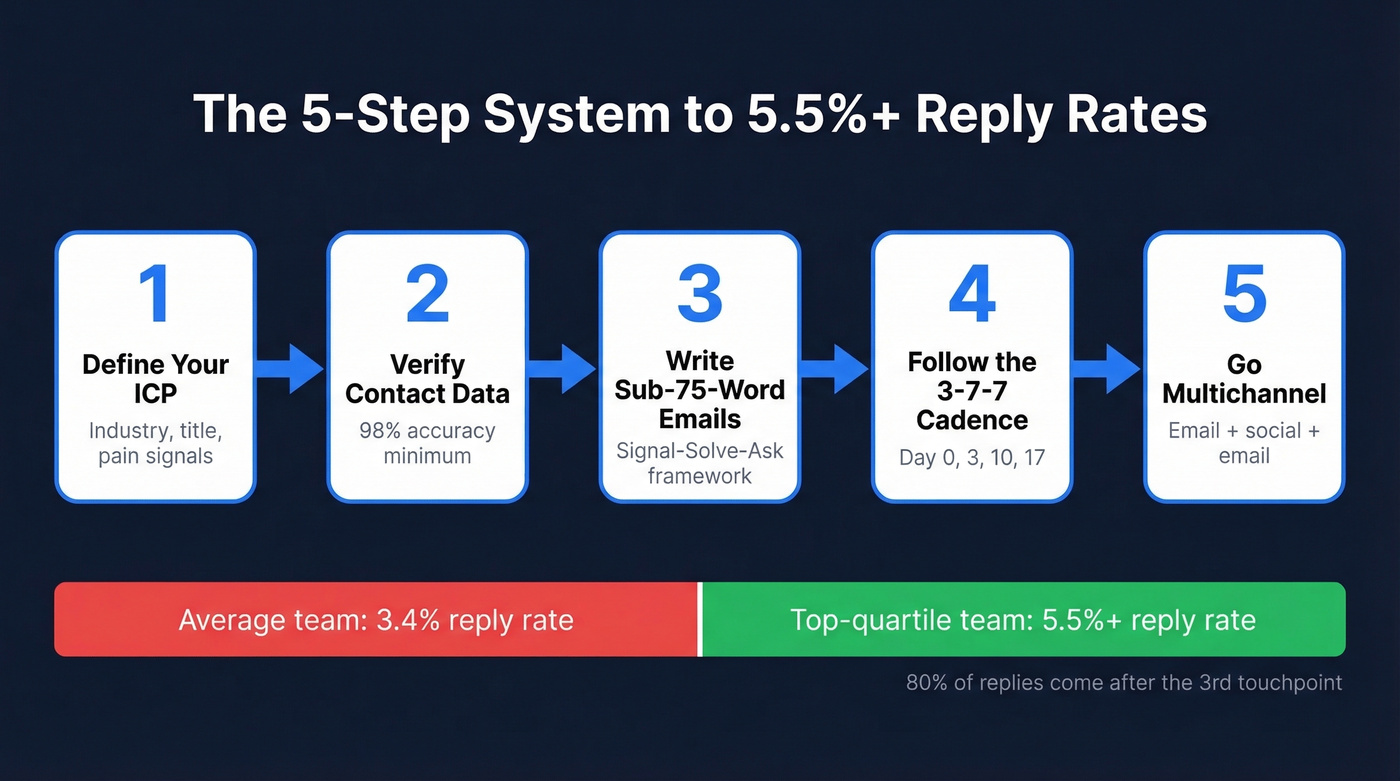
- Define your ICP. Industry, title, company size, pain signals. No ICP means spray and pray.
- Find verified emails. Bad data burns your domain. Use a tool with real-time verification.
- Write sub-75-word emails with a signal-based opener referencing something specific to the prospect.
- Follow the 3-7-7 cadence. Day 0, Day 3, Day 10, Day 17.
- Go multichannel. Email, then social, then email again. 80% of replies come after the third touchpoint.
Define Your ICP First
Outreach without an ICP is just spam with better formatting.
Well-executed campaigns generate 5%+ response rates; unfocused ones hover around 0.5%. That's a 10x gap from targeting alone. Before you write a single email, fill in these fields:
- Industry and sub-vertical - fintech, not just "financial services"
- Company size - headcount range and revenue band
- Job titles - VP Sales, Head of RevOps, etc.
- Core challenges your product solves
- Readiness signals - recent funding, job postings, tech adoption, leadership changes
- Tech stack - what they already use that you integrate with or replace
Skip a field, and your targeting degrades. Your reply rate follows. This applies whether you're contacting prospects in a startup niche or reaching out to corporate clients at Fortune 500 companies - the ICP discipline is the same.
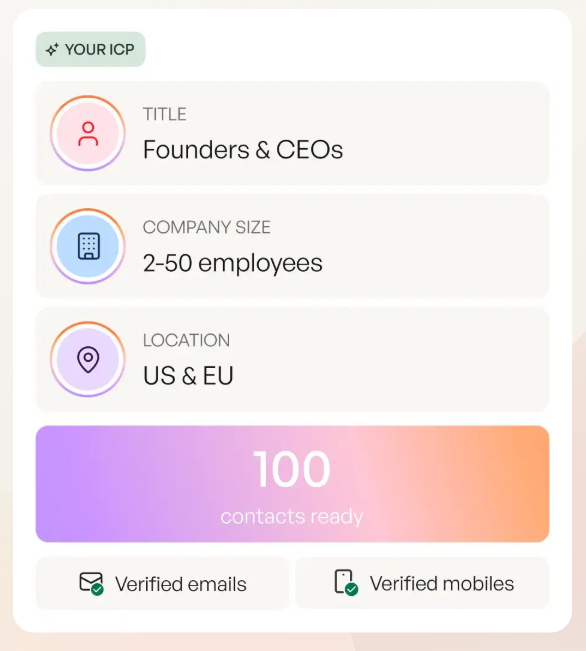
Find Verified Contact Data
Most outreach fails before the email is even written. Bad contact data means bounces, bounces mean damaged sender reputation, and damaged reputation means your emails land in spam - even the good ones.
Here's the thing: we've seen this pattern over and over. Meritt was running a 35% bounce rate before switching to verified data. After cleaning up their list, bounces dropped under 4% and their connect rate tripled to 20-25%. That's not a copywriting fix. That's a data fix.
Prospeo covers 300M+ professional profiles with 98% email accuracy and a 7-day data refresh cycle. The free tier gives you 75 verified emails per month - enough to test your first campaign without spending a dollar. For context, enterprise databases like ZoomInfo run $15-40k/year, and mid-tier email finders cost $30-100/month per user.
Stop optimizing your copy when your list is the problem. Fix the list first.

You just read that Meritt cut their bounce rate from 35% to under 4% and tripled their connect rate. That's the difference verified data makes when reaching out to potential clients. Prospeo gives you 300M+ profiles with 98% email accuracy, refreshed every 7 days - so your outreach actually lands.
Stop burning your domain on bad data. Start with 75 free verified emails.
Write Emails That Actually Get Replies
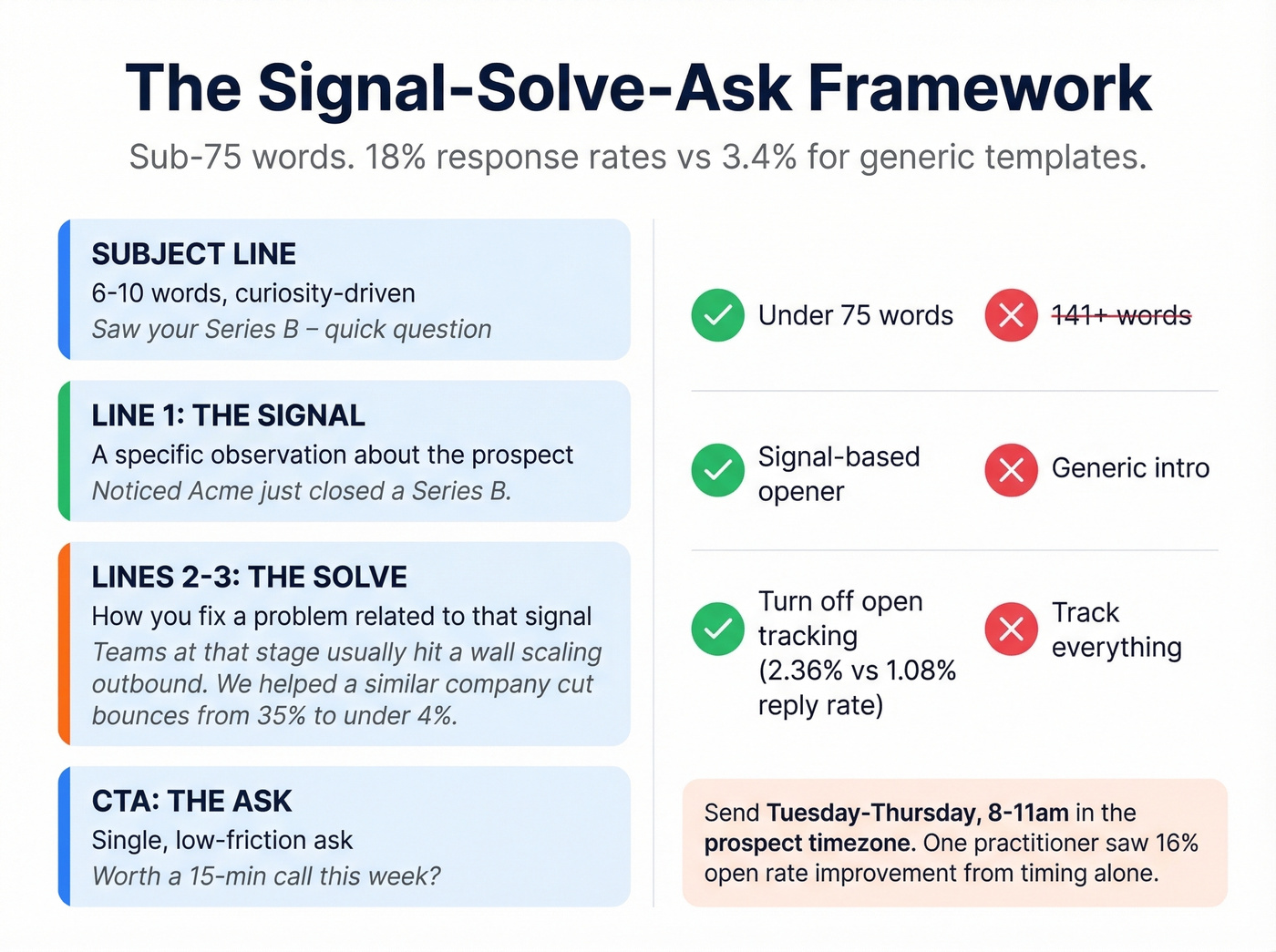
Your email is too long. One Reddit practitioner cut their emails from 141 to under 56 words and watched reply rates double. The real tension isn't whether personalization works - it's that researching 50 prospects manually takes all day. Signal-based personalization solves this by giving you a specific, observable trigger to reference without deep research. That's what separates 3.4% reply rates from 18% response rates.
If you want a deeper system for this, start with AI cold email outreach and then refine your personalized outreach process.
AI-generated emails are easy to spot in 2026, and prospects are tuning them out. The blunt takeaway on r/SaaS: "People can tell."
We call this the Signal-Solve-Ask Framework:
- Subject line: 6-10 words. "Quick question" pulled 39% opens in one practitioner's test. (For more options, see these cold email subject line examples.)
- Line 1: A specific observation about the prospect (the signal).
- Line 2-3: How you solve a problem related to that signal. One sentence.
- CTA: A single, low-friction ask. "Worth a 15-min call?" not "I'd love to schedule a demo of our full platform."
Here's what that looks like filled in:
Subject: Saw your Series B - quick question
Hi Sarah, noticed Acme just closed a Series B. Teams at that stage usually hit a wall scaling outbound without burning domains. We helped a similar company cut bounce rates from 35% to under 4% in two weeks. Worth a 15-min call this week?
Structure matters more than scripts - Saleshandy maintains a solid template library if you want 30+ scenario-specific starting points. One more thing worth knowing: a Snov.io analysis of 44M emails found that turning off open tracking more than doubled reply rates (2.36% vs 1.08%). Turn it off.
Send Tuesday through Thursday, 8-11am in the prospect's timezone. One practitioner saw a 16% open rate improvement from timing alone.
The 3-7-7 Follow-Up Cadence
42% of replies come from follow-ups, not the first email. But 70% of reps stop after one send.
If you need copy you can plug in fast, use these cold email follow-up templates and sales follow-up templates.
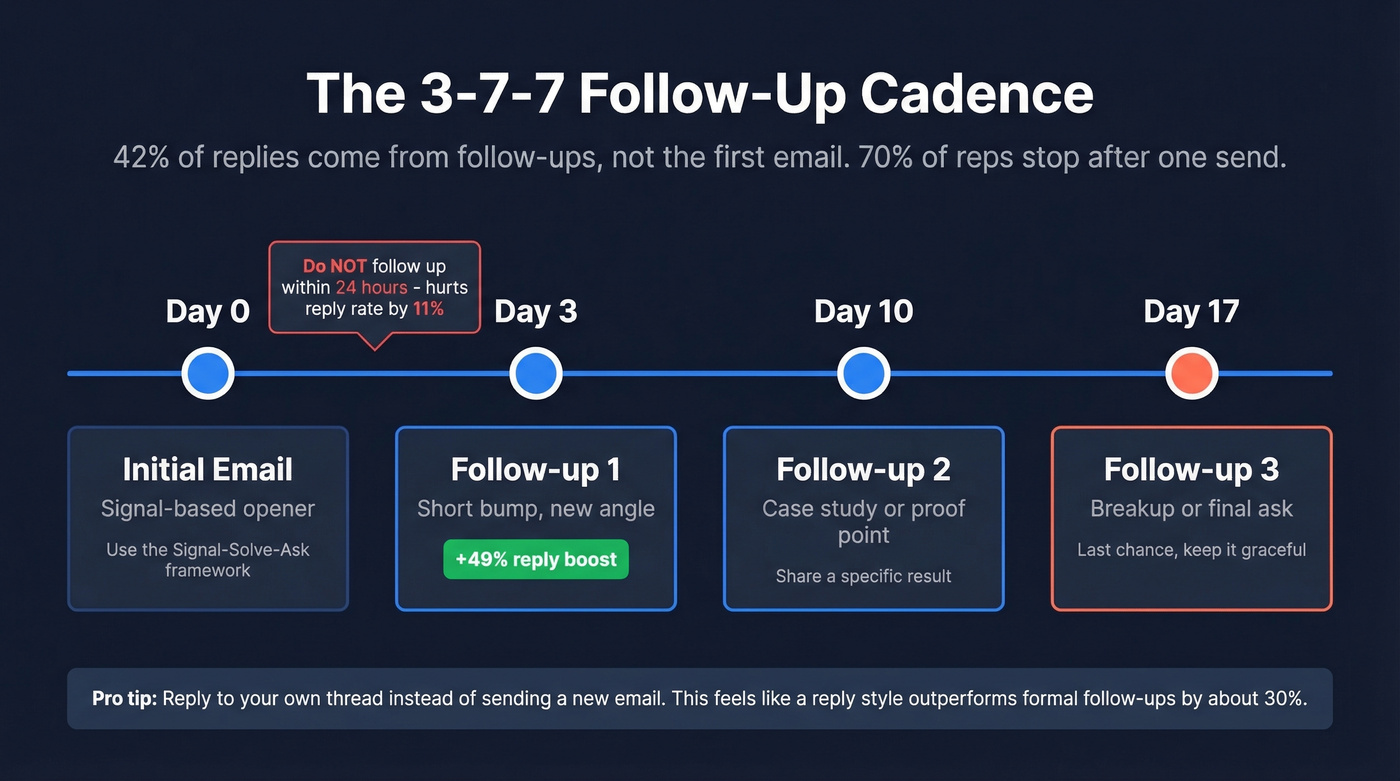
The 3-7-7 cadence fixes that:
| Touchpoint | Day | What to Send |
|---|---|---|
| Initial email | Day 0 | Signal-based opener |
| Follow-up 1 | Day 3 | Short bump, new angle |
| Follow-up 2 | Day 10 | Case study or proof |
| Follow-up 3 | Day 17 | Breakup / final ask |
The first follow-up alone boosts replies by ~49%. Following up within 24 hours, though, hurts by ~11% - it reads as desperate. Space it out.
Let's be honest about what kills most follow-ups: they sound like follow-ups. Drop the formal "Just following up on my previous email" opener and reply to your own thread with something short and conversational. This "feels like a reply" style outperforms formal follow-ups by about 30%, according to data from Woodpecker's cold email benchmarks.
Go Multichannel
Single-channel outreach is leaving replies on the table. One Reddit user running 500+ cold emails over 20 days reported a 4.2% reply rate with multichannel - a predetermined sequence of touchpoints across email, social, and other channels - and noted that 80% of replies came after the third touchpoint.
Space touchpoints 3-4 days apart and bring new value each message. Some teams are seeing strong results with personalized video messages or value-first audits, where you send a short, specific analysis of the prospect's website or process as the opener. These take more time per prospect but convert at significantly higher rates for high-value accounts.
If you're building a repeatable outbound motion, pair this with sales prospecting techniques and a clean sequence management process.
Hot take: If your average deal size is under $15k, you probably don't need a $40k/year platform or personalized video. A $420/month stack - an email finder, a sending tool, and a CRM - will outperform an enterprise suite you only use at 20% capacity. Skip the bloated tooling and spend the savings on better data.
Deliverability Matters More Than Copywriting
The biggest reply-rate gains come from infrastructure changes, not subject-line tweaks. This is especially true when contacting corporate buyers, where emails pass through stricter enterprise spam filters. One Reddit practitioner documented their entire rebuild - reply rate went from 3% to 6%, and most of the improvement came from fixing the plumbing:
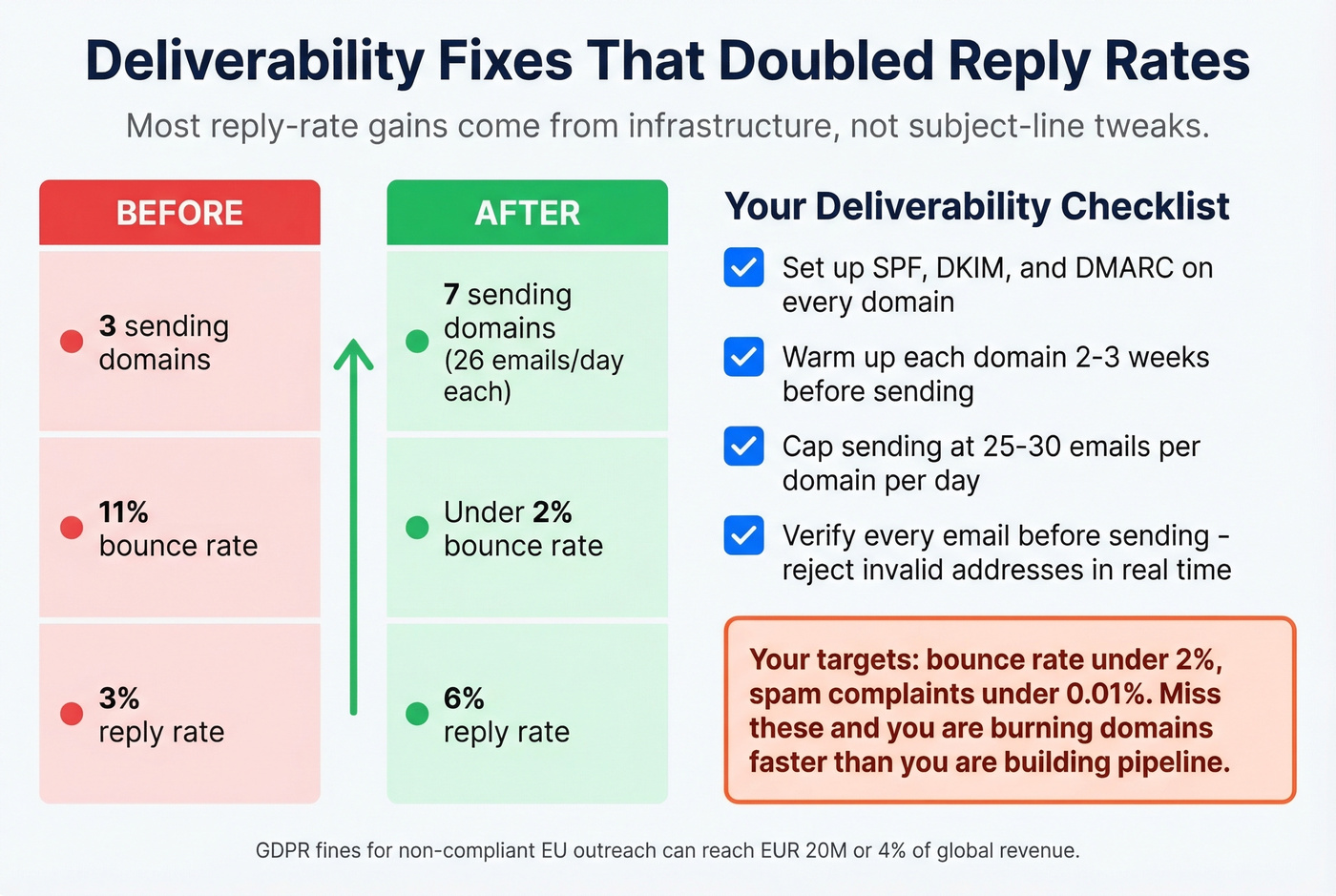
- Expanded from 3 sending domains to 7, capping each at 26 emails/day
- Dropped bounce rate from 11% to under 2% through list verification
- Set up SPF, DKIM, and DMARC on every domain
- Warmed up each domain for 2-3 weeks before sending
Your targets: bounce rate under 2%, spam complaint rate under 0.01%. Miss those and you're burning domains faster than you're building pipeline. And if you're reaching EU prospects with non-compliant data, GDPR fines can hit EUR 20M or 4% of global revenue.
Verify every email before you send. Prospeo rejects invalid addresses in real time before they damage your domain - its 5-step verification process includes catch-all handling, spam-trap removal, and honeypot filtering, so you're not just checking syntax but protecting your sender reputation at every layer. (If you want the full checklist, use this email deliverability guide and these email reputation tools.)
The 3-7-7 cadence only works if every email in the sequence hits a real inbox. One bounce tanks your sender reputation and drags the whole campaign into spam. Prospeo's 5-step verification and 7-day refresh cycle keep your lists clean so your follow-ups actually reach potential clients.
Great outreach copy means nothing if your emails bounce. Fix that first.
FAQ
How do you reach out to a potential client for the first time?
Lead with a specific signal - a funding round, a job change, a new technology. Reference it in your opening line, state the problem you solve in one sentence, and close with a low-commitment ask. Keep it under 75 words. Signal-based openers hit 18% response rates versus 3.4% for generic templates.
What's the best way to find potential clients' email addresses?
Use a verified B2B database with real-time verification. Avoid scraped or purchased lists; bounce rates above 2% damage your sender reputation and tank deliverability for every future campaign. In our experience, the single highest-ROI move for most teams isn't better copy - it's cleaner data.
How many follow-ups should you send?
Two to three follow-ups using the 3-7-7 cadence: Day 0, Day 3, Day 10, Day 17. The first follow-up boosts replies by ~49%. Beyond three, response rates decline and you risk annoying the prospect. Bring a new angle - a case study, a relevant stat - each time.
Does multichannel outreach actually work better than email alone?
Yes. Teams using email plus social touchpoints report 4-5% reply rates versus 1-2% for email-only sequences. 80% of replies come after the third touchpoint across channels. Space messages 3-4 days apart and add new value each time rather than repeating the same pitch.