

Inbound and Outbound Sales: Benchmarks and Frameworks Most Guides Skip
Cold-calling success rates dropped from 4.82% to 2.3% in a single year. That's not a death sentence for outbound - it's a signal that lazy execution doesn't work anymore. The real question about inbound and outbound sales isn't which motion to pick. It's whether your data infrastructure supports either one.
Here's the short version: inbound captures existing demand at a 14.6% lead-to-customer conversion rate and averages roughly $200 CAC across a 939-company benchmark. Outbound creates new demand at 1.7% conversion and averages about $400 CAC - but gives you direct pipeline control. Combining both motions is where the money is. 43% of sales teams already run both, and they grow revenue 2x faster than single-motion orgs.
The Benchmark Numbers
These benchmarks draw from a 939-company CAC study and multiple outbound performance reports.
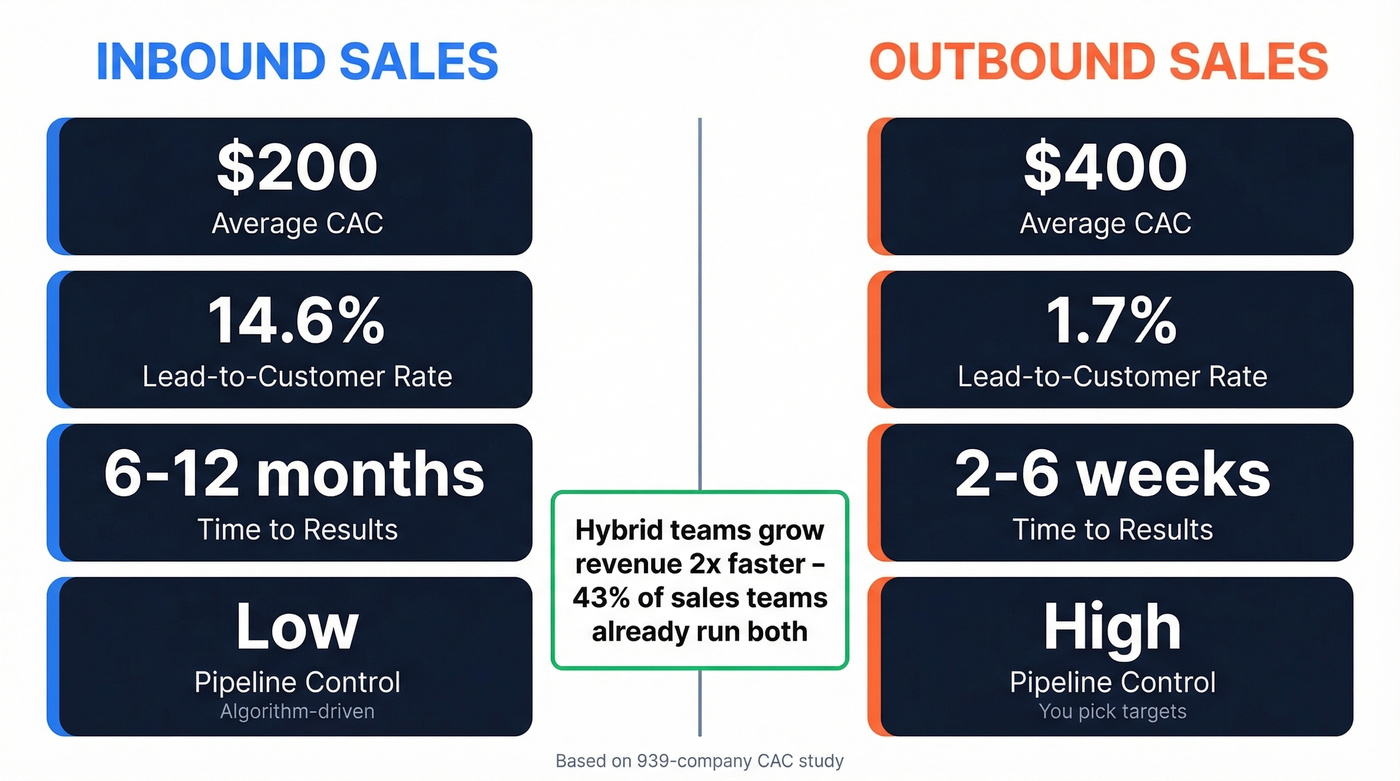
| Dimension | Inbound | Outbound |
|---|---|---|
| Avg CAC | ~$200 | ~$400 |
| Lead-to-customer | 14.6% | 1.7% |
| Pipeline control | Low, algorithm-driven | High, you pick targets |
| Time to results | 6-12 months | 2-6 weeks |
| Best for | PLG, SMB, high search vol | Enterprise, new markets, niche ICP |
| Cost structure | Upfront, then compounds | Linear with headcount |
| Cold email reply rate | N/A | 3.43% avg / 5.5% top quartile |
The conversion gap is the headline - inbound converts nearly 9x better. But that only applies to leads who already raised their hand. You can't control how many show up next quarter, which is why managing your inbound and outbound pipeline separately, with distinct metrics for each, is critical.
On the buyer side, 61% of B2B buyers prefer a rep-free experience, and 73% avoid suppliers who send irrelevant outreach. That doesn't mean outbound is dead. Generic outbound is dead.
Multi-channel execution changes the math entirely: email-only reply rates sit at 1-2%, adding phone bumps that to 4-5%, and layering social pushes it to 8-12%. Cognism's outbound teams reinforce this with an activity mix of roughly 55% phone, 30% social, and 15% email for top-performing SDR teams.
When to Use Each Motion
This isn't a philosophical debate. It's a situational decision.
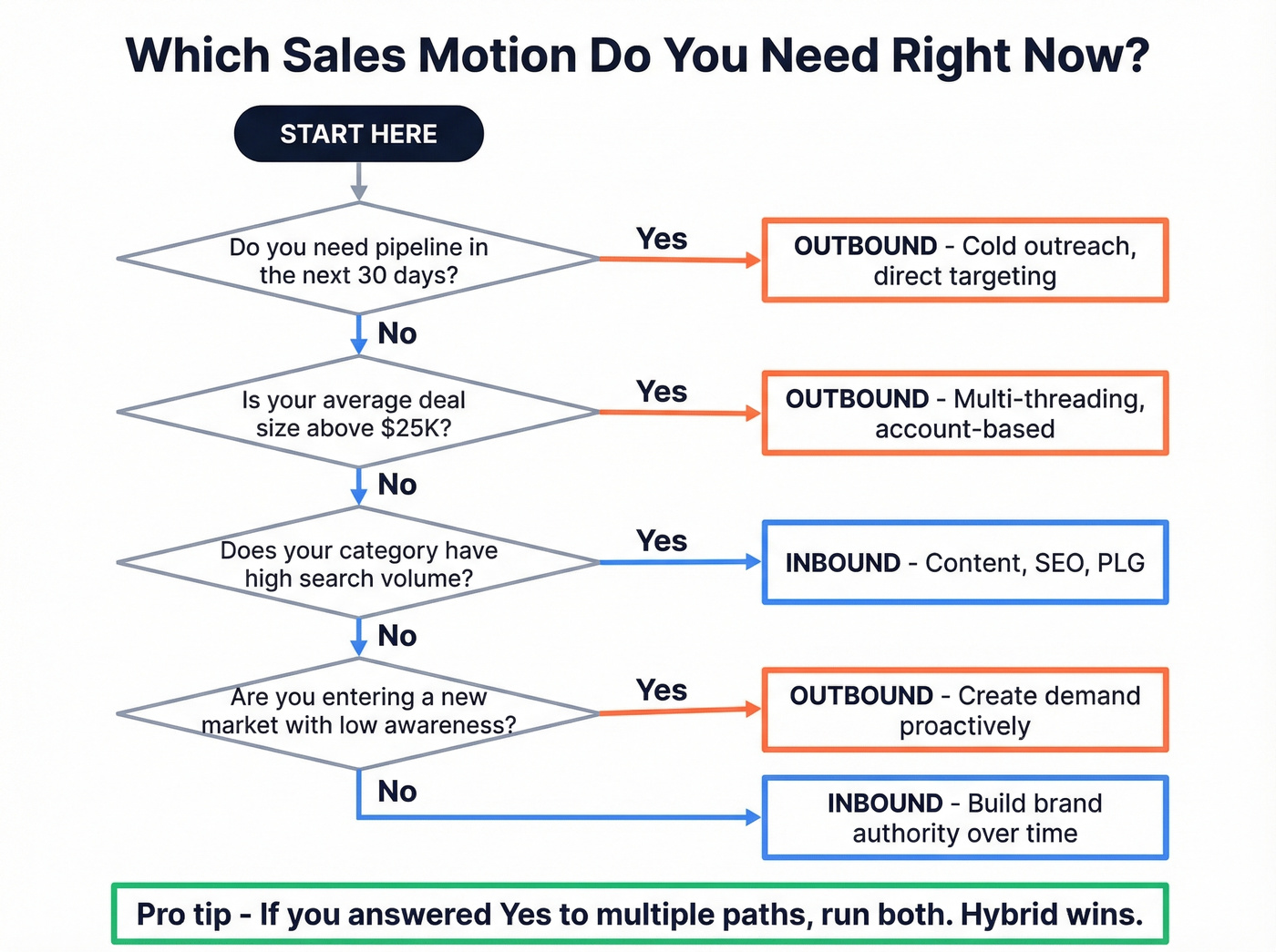
| Your Situation | Recommended Motion |
|---|---|
| Immediate pipeline gap | Outbound |
| High search volume for your category | Inbound |
| Enterprise or niche accounts | Outbound |
| PLG or self-serve product | Inbound |
| Entering a new market with low awareness | Outbound |
| Building long-term brand authority | Inbound |
Deal size matters too. For sub-$10k deals, inbound almost always wins on unit economics - the CAC math doesn't support a dedicated SDR touching each account. Once you're above $25k, outbound's targeting precision and multi-threading capabilities start earning their keep. Practitioners on r/sales confirm that landing 1,000+ employee accounts via pure cold outreach is brutal - enterprise buyers research online and check their network before engaging with any cold email.
Let's be honest: if your average deal is under five figures, you probably don't need an outbound team at all. Invest in content and PLG instead. Save outbound for the deals big enough to justify the cost per touch.

You just saw the numbers: 14.6% inbound conversion, 1.7% outbound. But both motions collapse on bad data - 30% bounce rates torch your domain and waste every dollar you spend on content or SDRs. Prospeo's 300M+ profiles with 98% email accuracy and 7-day refresh give your hybrid playbook the data layer it actually needs.
Stop letting stale data sabotage both sides of your pipeline.
Why the Hybrid Model Wins
The best SaaS companies don't pick one motion - they run both. The consensus on r/SaaSSales is that top performers wire inbound and outbound together so each motion feeds the other. Companies doing this grow revenue 2x faster. Many are shifting toward an outbound-to-inbound model, where cold outreach drives initial awareness and content nurtures prospects into self-qualifying.
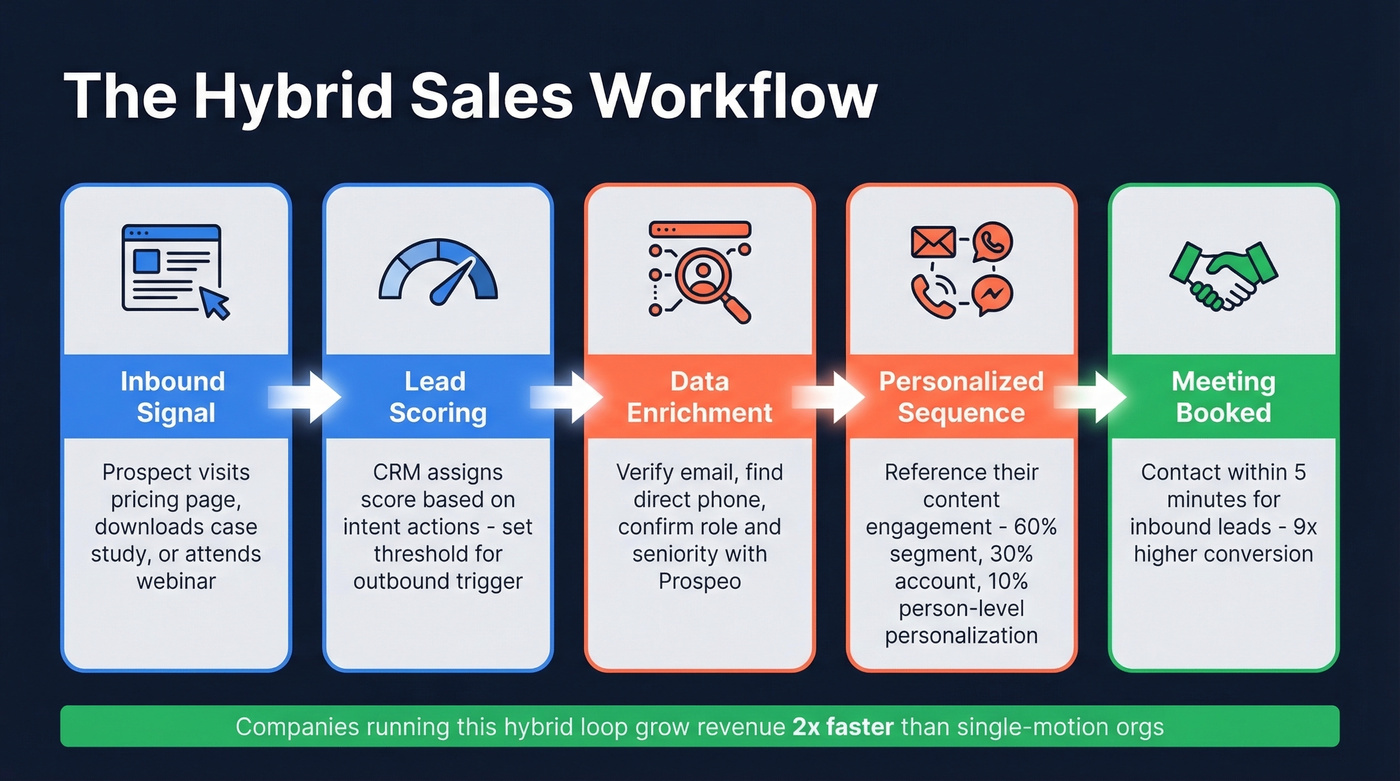
A practical hybrid workflow looks like this: track high-intent actions like pricing page visits and case study downloads in your CRM, then set a lead score threshold. Enrich those contacts with verified data - role, seniority, direct contact info - and push them into personalized sequences referencing the content they already engaged with. We've found that structuring personalization in three layers works well at scale: 60% segment-level, 30% account-level, 10% person-level.
Speed matters for inbound follow-up specifically. Contacting an inbound lead within 5 minutes increases conversion up to 9x. In our experience, the teams that struggle most aren't picking the wrong motion - they're running the right motion on bad data, and they're slow to act on the signals they do get.
Mistakes That Kill Both Motions
Inbound killers: Slow follow-up destroys conversion - the 5-minute window isn't aspirational, it's the benchmark. Treating a blog reader the same as a pricing page visitor wastes rep time. And without clear lifecycle stages and handoff criteria, marketing and sales blame each other while leads rot in the CRM.
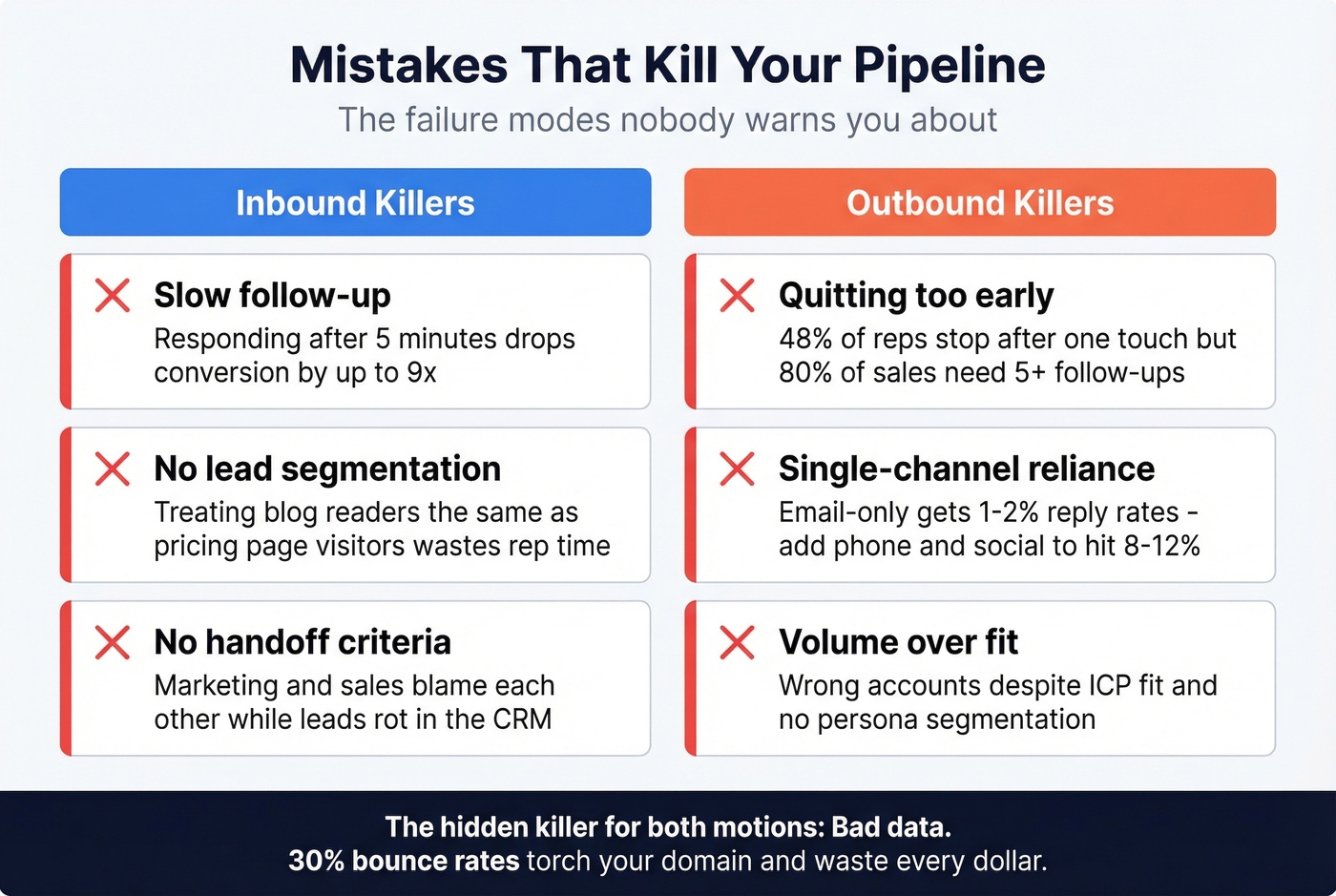
Outbound killers: 48% of reps stop after one touch, but 80% of sales require five or more follow-ups. The r/Entrepreneur community nails the failure modes: wrong accounts despite "ICP fit," no persona segmentation, single-channel reliance, and volume over fit. One AE on r/techsales reported their BDR team hadn't produced a single lead all year - outbound headcount without enablement and accountability is just overhead.
Another common mistake: confusing a nurture sequence with an outbound campaign. Nurture sequences warm existing leads over time; outbound campaigns target cold prospects who haven't engaged yet. Mixing the two dilutes both.
The hidden variable nobody talks about enough: Bad data kills both motions silently. We've seen teams with solid messaging and smart targeting fail because 30% of their list bounced on the first send, torching their domain reputation in the process. SDRs using verified contact data hit a 13.3% cold-call answered rate - nearly matching the 14.4% rate for warm leads. The data layer isn't optional regardless of your stack or team size.
Building the Outbound Stack
Think in three layers.
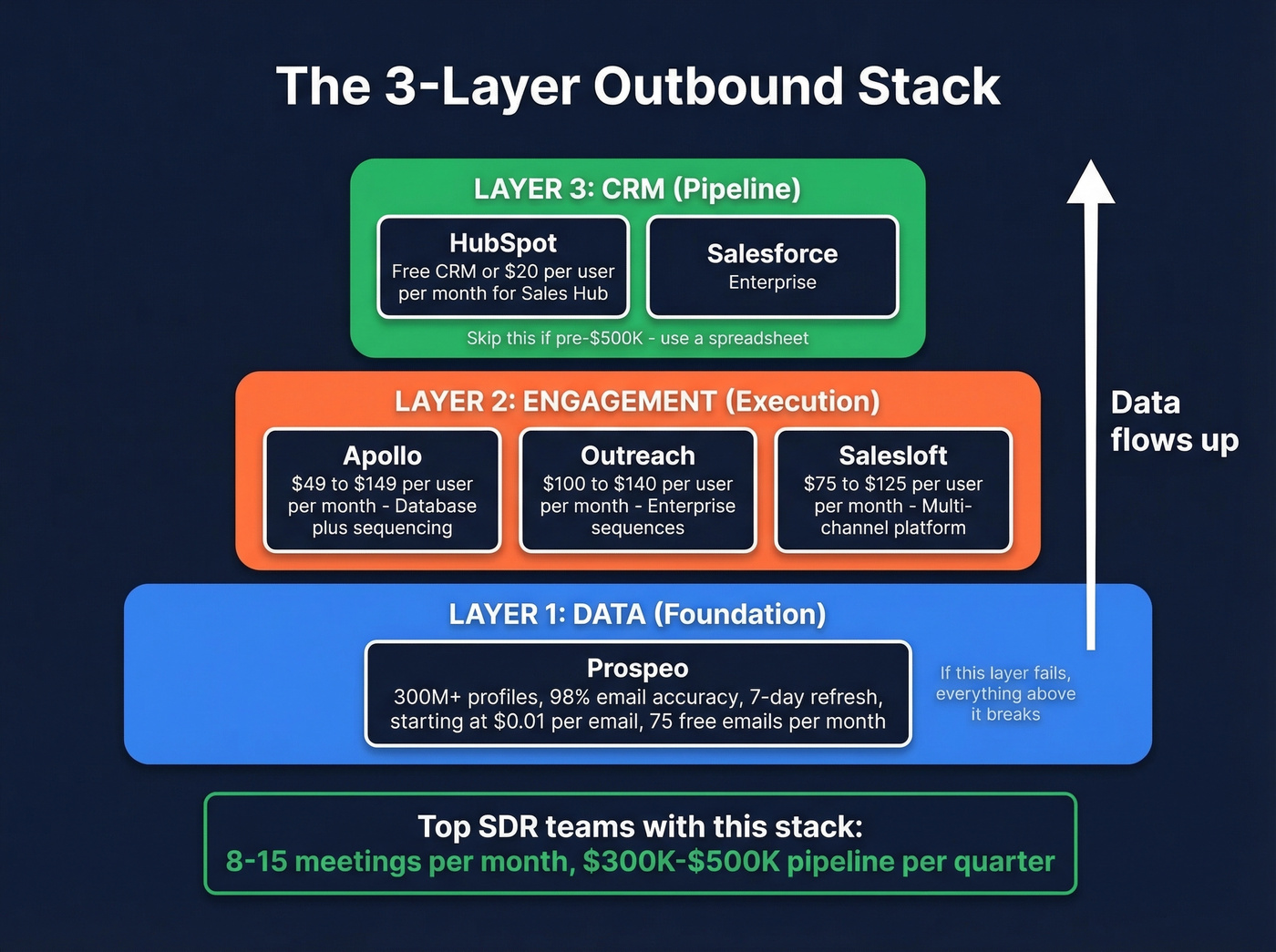
Layer 1: Data
Without verified contacts and intent signals, everything downstream fails. Prospeo gives you 300M+ profiles with 98% email accuracy on a 7-day refresh cycle, starting at roughly $0.01 per email with a free tier of 75 emails/month. Strong prospecting on both sides of the funnel depends on accurate contact data - the difference is just how you source the initial signal. (If you're comparing vendors, start with data enrichment services and sales prospecting databases.)
Layer 2: Engagement
Your sequencing and multi-channel engine. Apollo ($49-$149/user/mo) combines database and sequencing. Outreach (~$100-$140/user/mo) and Salesloft (~$75-$125/user/mo) are pure-play platforms for larger teams. Many orgs also staff an inbound-to-outbound SDR role - a rep who qualifies marketing leads and then pivots to proactive outreach on similar accounts. If you need a shortlist, see SDR tools and sales prospecting techniques.
Layer 3: CRM
HubSpot's free CRM works for early-stage teams; paid Sales Hub starts at ~$20/user/mo. Salesforce for enterprise. Skip this layer if you're a solo founder - a spreadsheet and your sequencing tool's built-in pipeline view will get you through the first $500K. (If you're still deciding, compare examples of a CRM and contact management software.)
Top-performing SDR teams book 8-15 meetings per month and generate $300K-$500K in pipeline per quarter. If your team isn't hitting those numbers, the problem is almost always in Layer 1.
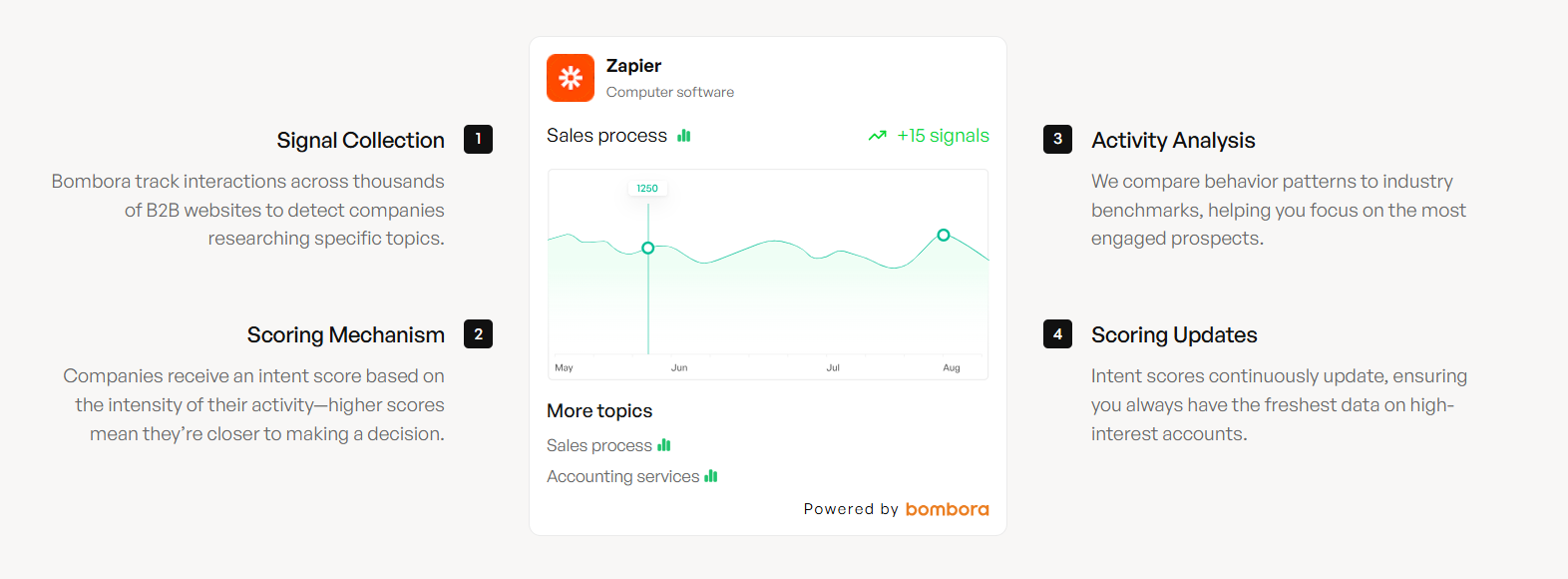
The article makes it clear - outbound lives or dies on verified contacts and multi-channel execution. Prospeo delivers 98% accurate emails, 125M+ verified mobiles with 30% pickup rates, and intent data across 15,000 topics. That's how SDRs hit 13%+ cold-call answer rates instead of burning through lists that bounce.
Get the data stack that makes outbound worth running again.
FAQ
What's the difference between inbound and outbound sales?
Inbound attracts buyers already searching via content and SEO; outbound reaches prospects proactively via cold email, calls, and social. Inbound converts at ~14.6% vs ~1.7% for outbound, but outbound delivers pipeline in weeks rather than months.
Is inbound or outbound cheaper?
Inbound averages ~$200 CAC vs ~$400 for outbound across 939 B2B companies. However, inbound requires 6-12 months of content investment before it compounds, so outbound often wins on speed-to-revenue for early-stage teams.
What tools do you need for a hybrid sales motion?
Three layers: a data provider like Prospeo for verified contacts with 98% email accuracy and a 7-day refresh cycle, a sequencing tool for multi-channel execution like Apollo or Outreach, and a CRM like HubSpot or Salesforce. Layer in intent data to trigger outbound from inbound signals.
How do you combine inbound and outbound sales effectively?
Align your teams on shared definitions for lead stages and handoff criteria. Use intent signals from inbound - content downloads, pricing page visits, webinar attendance - to prioritize outbound targets. Run separate sequences for each motion, track pipeline attribution by source, and review conversion rates weekly to shift budget toward whichever channel is performing.