

The 12 Best Intent Software Tools for 2026
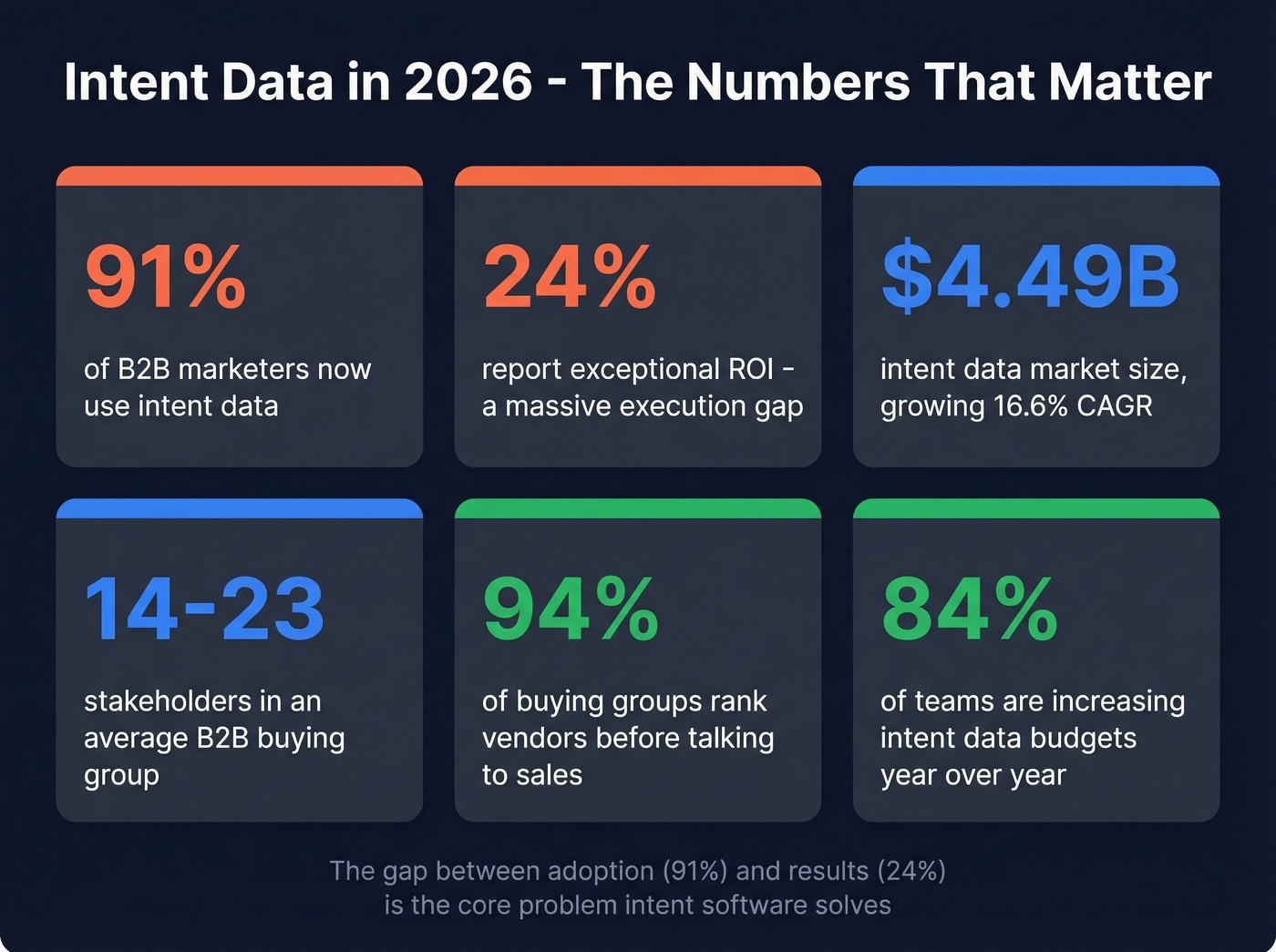
Ninety-one percent of B2B marketers now use intent data. Only 24% report exceptional ROI. That gap between adoption and results is a $4.49B problem growing at 16.6% CAGR - and the intent software market is consolidating fast. HG Insights acquired TrustRadius. HubSpot absorbed Clearbit into Breeze Intelligence. The platforms that survive are the ones connecting buying signals to actual conversations, not just dashboards.
Here's the thing: most teams aren't failing because they picked the wrong tool. They're failing because they bought a platform that delivers account-level signals with no clear path to a conversation. We've watched companies burn $80K on a 6sense implementation that never got past the dashboard stage. This guide breaks down what actually works, what doesn't, and where your money goes the furthest.
Our Picks (TL;DR)
| Use Case | Pick | Why | Starting Price |
|---|---|---|---|
| Intent + verified contacts | Prospeo | Bombora-powered intent across 15K topics + 143M+ verified emails | Free; ~$0.01/lead |
| Enterprise ABM | 6sense | Deepest orchestration + predictive AI | Free tier; ~$35K/yr paid |
| Pure-play intent data | Bombora | 5,000+ publisher co-op, 17B monthly interactions | ~$25K/yr |
| Mid-market ABM + ads | Demandbase | Native DSP + Pipeline Predict AI | ~$24K/yr |
| Contact data + intent add-on | ZoomInfo | Largest contact DB with intent at Advanced tier | ~$24K/yr (Advanced) |
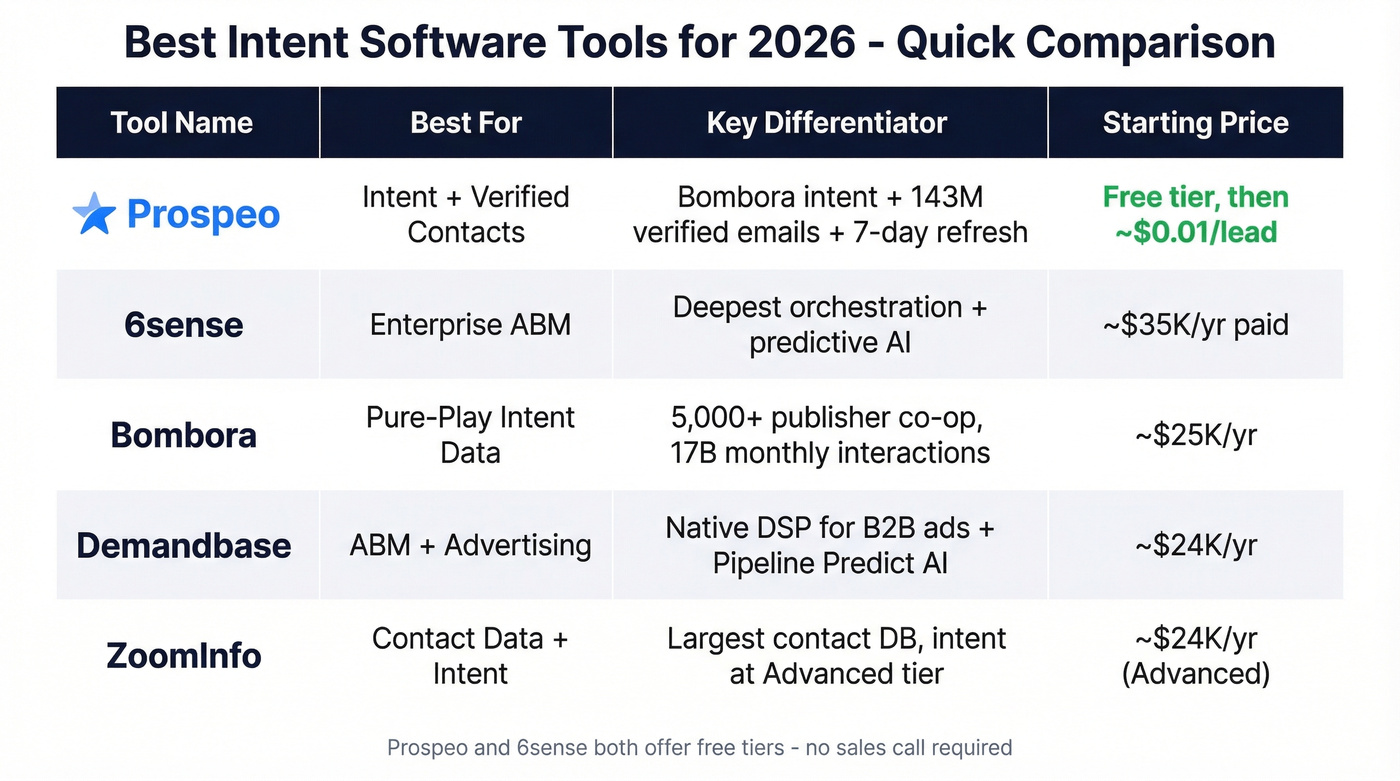
Want to avoid annual contracts? Start with Prospeo's free tier and 6sense's free plan. You'll get intent signals and verified contacts without a single sales call.
What Is Intent Software?
Intent software tracks behavioral signals indicating a company - or specific people within it - are actively researching topics related to your product. The goal: find accounts that are in-market before they fill out a form or talk to your competitor's AE.
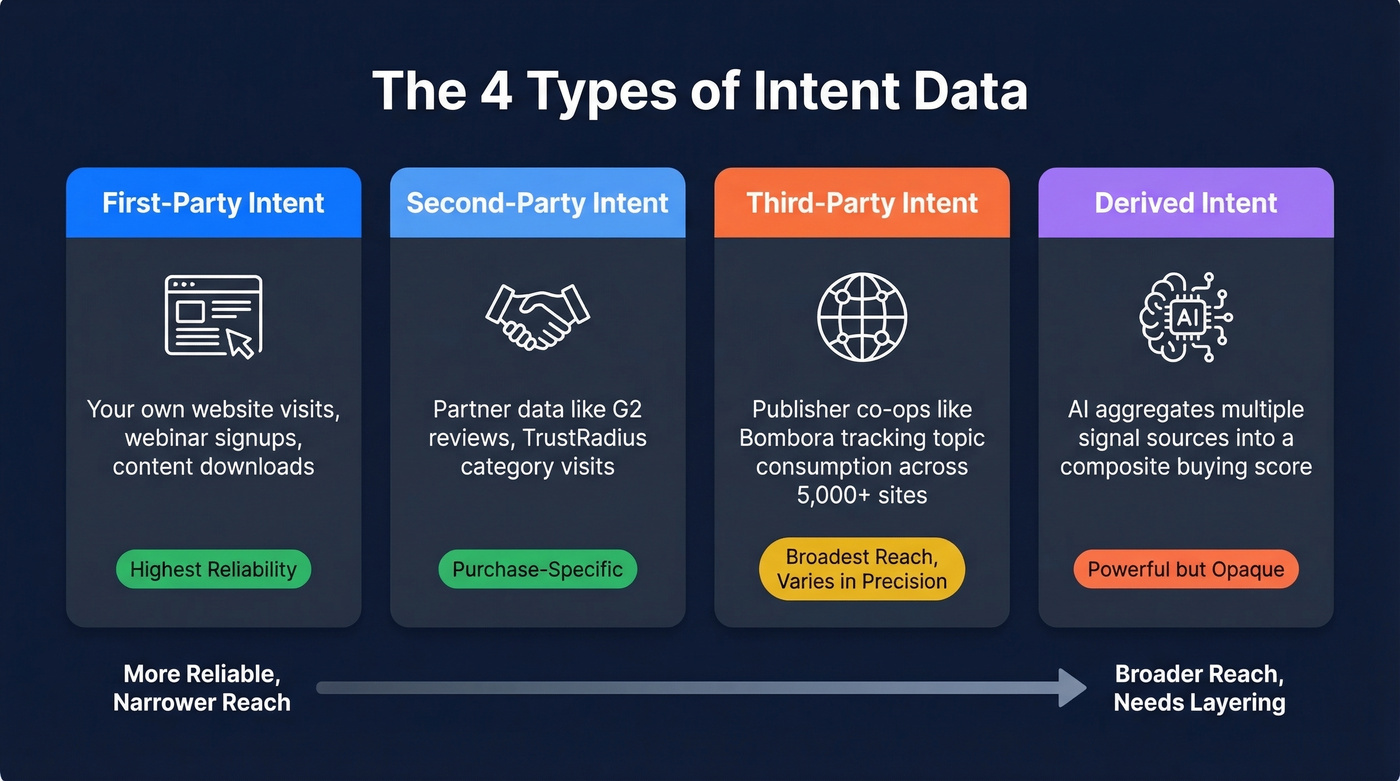
The signals come from three core sources, plus a fourth that's gaining traction.
Your own website visits, webinar attendance, and content downloads make up first-party intent - the most reliable signal you have, but it only captures the tiny slice of buyers who already know you exist. Too many teams chase third-party signals while ignoring the prospects already engaging with their own content.
What about when a prospect reads reviews in your category on G2 or TrustRadius? That's second-party intent - a partner's first-party data shared with you. It's high-quality because the action is explicitly purchase-related.
The broadest category is third-party intent. Networks like Bombora's 5,000+ publisher co-op track topic consumption across the web, flagging companies researching relevant subjects at abnormally high rates. This "surge intent" - a spike above baseline - suggests active buying behavior. Precision varies a lot by provider, topic set, and how you set thresholds, which is why third-party signals work best layered with first-party and second-party data.
A fourth category is emerging: derived intent, where AI aggregates and scores signals from multiple sources into a composite buying propensity score. Powerful but opaque - you often can't see what's driving the signal, which makes troubleshooting harder.
Here's why this matters more than it did three years ago. Buying groups now average 14-23 stakeholders who consume an average of 13 content pieces before engaging sales, and 94% of those groups have already ranked their preferred vendors before talking to a rep. If you aren't tracking buying signals, you're showing up after the shortlist is locked.
These tools aren't just for prospecting, either. An Intentsify survey found 67% of teams use intent data for digital advertising, 32% for churn prevention - detecting when existing customers start researching competitors - and 84% report increasing their budgets year over year. This isn't a niche tactic anymore. It's infrastructure.
12 Best Buyer Intent Data Tools
Prospeo - Best for Intent + Verified Contacts
Most intent platforms tell you which companies are in-market. Prospeo tells you which companies are in-market and hands you the VP of Sales's verified email and direct dial in the same workflow.
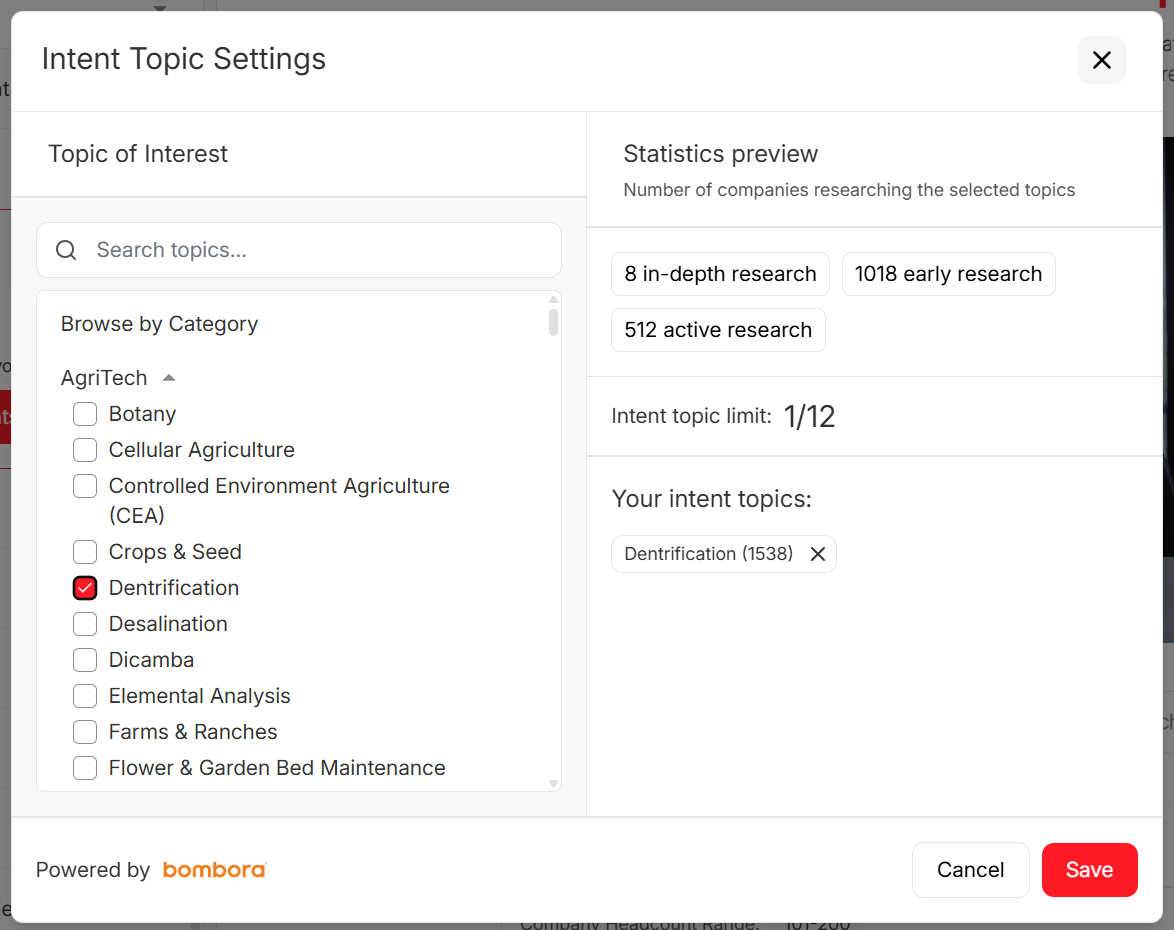
The platform layers Bombora-powered intent data across 15,000 topics on top of 300M+ professional profiles, 143M+ verified emails, and 125M+ verified mobile numbers. The 30+ search filters let you combine intent signals with technographics, job changes, headcount growth, and funding data - so you aren't just chasing "Company X is surging on cybersecurity," you're finding the specific decision-makers at Company X who match your ICP.
Data refreshes every 7 days (industry average is 6 weeks), and email accuracy runs 98%. In our testing, that refresh cycle made a measurable difference in reply rates - stale data kills email deliverability before your message even gets read. Snyk's 50-person AE team cut bounce rates from 35% to under 5% and grew AE-sourced pipeline 180% after switching. Native integrations with Salesforce, HubSpot, Smartlead, Instantly, Lemlist, Clay, Zapier, and Make mean no custom development.
Use this if: You want intent signals that lead directly to verified contact data without stitching together three platforms. The free tier (75 emails + 100 Chrome extension credits/month) lets you validate the workflow before spending a dollar.
Pricing: ~$0.01/lead. Free tier available. No contracts, no sales calls.
6sense - Best Enterprise ABM Platform
6sense is the platform enterprises buy when they want to orchestrate the entire revenue cycle - from anonymous web visits to closed-won - in one system. It's a Forrester Wave Leader, and the predictive AI, account scoring, and multi-channel orchestration are best-in-class at scale.
The catch is everything that comes with "enterprise." Implementation runs 3-6 months, plus another 2-3 months to hit capacity. Budget a 6-month ramp before you see real output. RevvyAI, their newer AI agent layer, is pushing toward automated recommendations over dashboards, but it's still early. Credits don't roll over between periods, so oversizing your contract means wasting money.

Use this if: You have 50+ reps, a dedicated RevOps team, and the patience for a multi-month rollout. The free tier (50 credits/month) is useful for testing the data before committing.
Skip this if: You need to be running outbound next week. A median contract of $58,310/year and a 6-month ramp isn't for teams that need speed.
Pricing: Free tier available. Paid starts ~$35K/year. Full stack with Predictive AI runs $100K-$200K+/year.
Bombora - Best Pure-Play Intent Data
Bombora doesn't try to be a platform. It's the data layer that powers many other tools' intent features - including Cognism and dozens of others that license its co-op data. The 5,000+ publisher network tracks 17B monthly interactions across a taxonomy of 12,000+ topics, and the Company Surge methodology is the industry standard for identifying abnormal topic consumption.
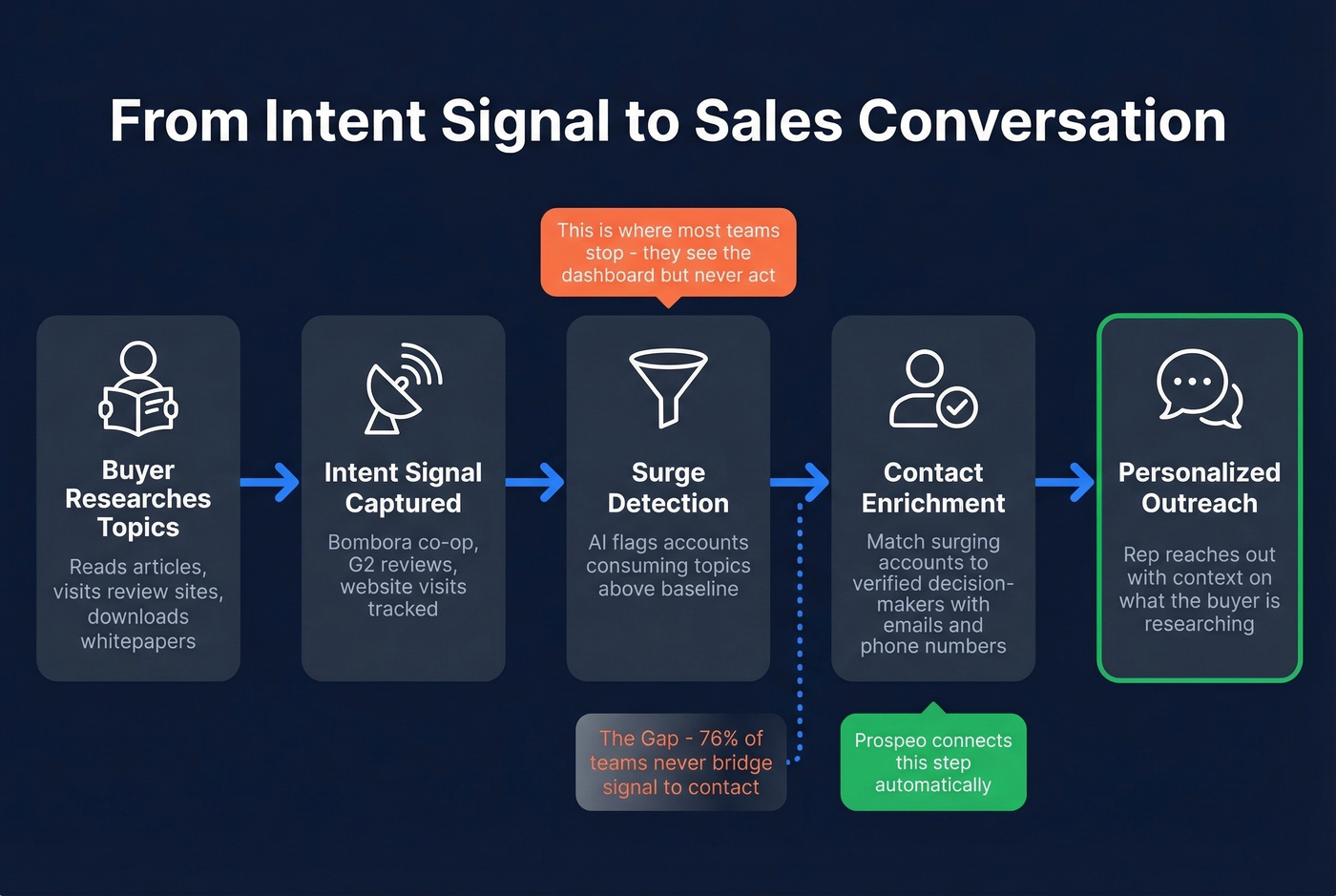
Use this if: You already have a CRM, MAP, and sequencing stack, and you just need the signal piped in. Bombora integrates with nearly everything, and buying it direct gives you the most granular control over topics and thresholds.
Skip this if: You need contact-level data alongside intent. Bombora tells you which companies are surging - not who to call. You'll need a separate contact data provider to close that gap (or collapse it with data enrichment).
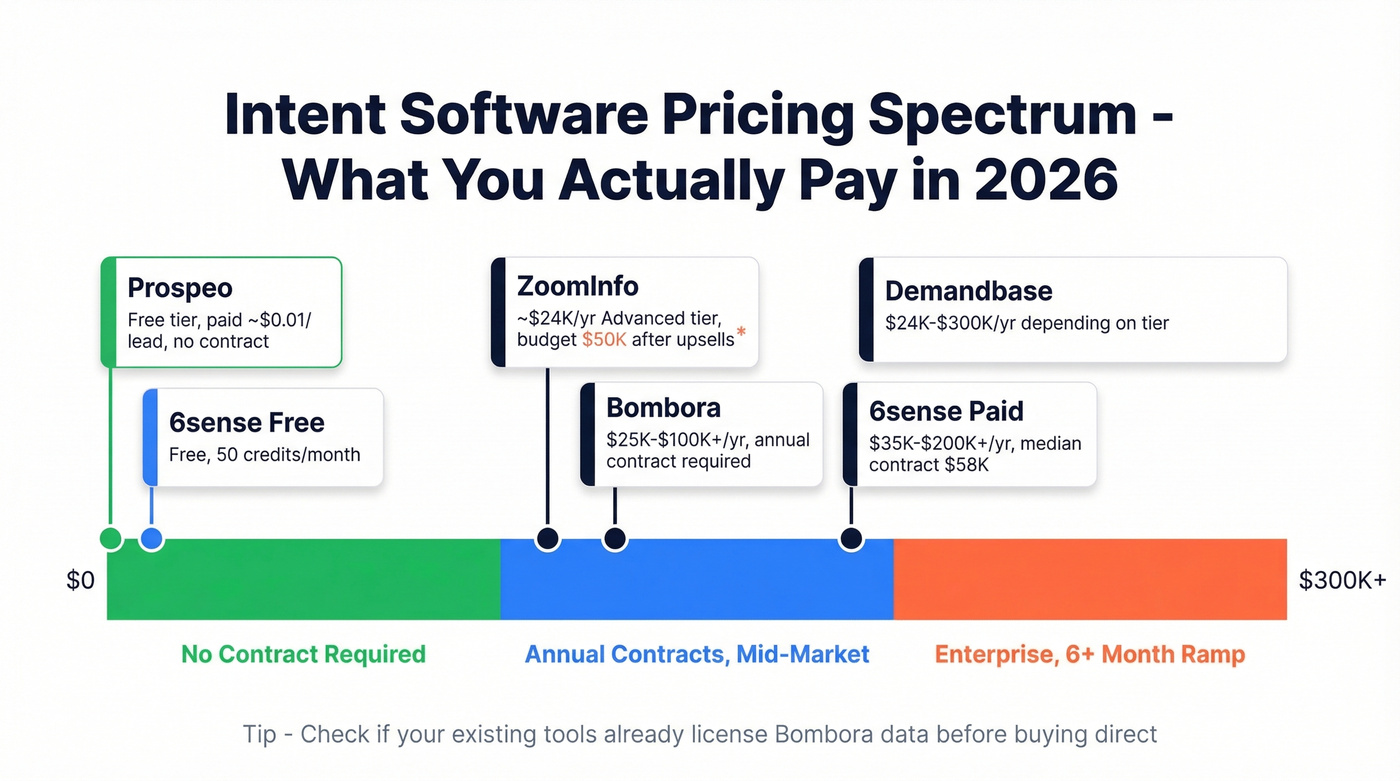
Pricing: Basic Company Surge starts ~$25K-$30K/year. Enhanced runs $50K-$100K/year. Full Audience Solutions hits $100K+. Premium implementation add-on: $5K-$15K. Annual contracts required. Many platforms license Bombora data at a fraction of the direct cost - worth checking whether your existing tools already include it.
Demandbase - Best for ABM + Advertising
Here's our hot take on the ABM market: most teams buying 6sense or Demandbase don't need either. If your average deal size is under $25K, you're probably better off with intent-filtered contact data and a good sequencing tool. But when deal sizes justify the investment and you run coordinated ad campaigns alongside sales outreach, Demandbase earns its price tag.
Demandbase is a Forrester Wave Leader and the closest competitor to 6sense, with one major differentiator: a native DSP for B2B advertising. Running display ads against intent-surging accounts without a third-party ad platform is a real advantage that 6sense can't match natively. Pipeline Predict AI scores accounts based on intent, engagement, and fit signals, and the Salesforce integration is deep enough that many RevOps teams can build workflows without custom development. G2 users give it 4.4/5 across 1,900+ reviews, with customer support and data quality as the most common praise.
The limitation: visitor identification is company-level only. No person-level de-anonymization. And like 6sense, credits don't roll over - so right-size your contract carefully. An AWS Marketplace listing anchors the full platform at $215K for 12 months, which gives you a real benchmark for enterprise negotiations.
Use this if: You're running ABM with a significant paid media component and want intent + advertising in one platform.
Skip this if: You need person-level visitor ID or you're under $30K/year in budget. Entry pricing starts at $24K-$30K/year, mid-market runs $45K-$65K, and enterprise hits $100K-$300K+.
ZoomInfo - Best for Contact Data + Intent Add-On
ZoomInfo's intent data isn't the reason you buy ZoomInfo - the contact database is. But at the Advanced tier ($24K+/year), intent comes bundled with WebSights visitor ID and alerts, making it a reasonable all-in-one for teams that want contacts and signals in one contract.
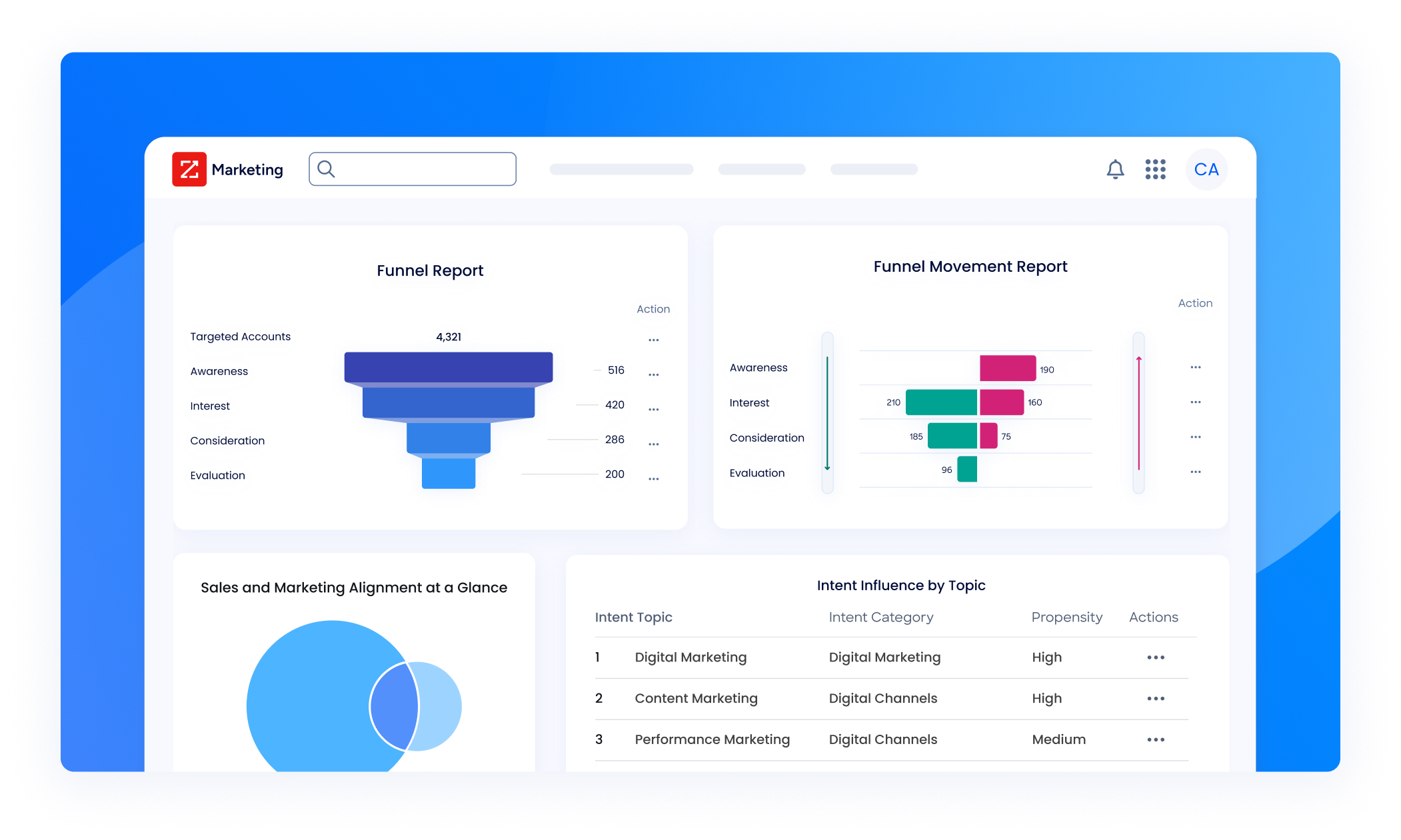
The honest trade-off: ZoomInfo has the broadest contact database, but the #1 complaint on G2 is outdated contact data. We've tested both side by side - a 7-day refresh cycle versus longer cycles produces noticeably fewer bounces on outbound sequences. The 9,033 G2 reviews (4.5/5) reflect breadth, but dig into the recent reviews and data freshness concerns are consistent.
Use this if: You're already paying for ZoomInfo and want to activate intent without adding another vendor.
Skip this if: Data freshness is your top priority, or you're trying to stay under $30K/year. Most teams land near $50K/year after credits, extra seats, and add-ons.
Pricing: Professional starts ~$15K/year (no intent). Advanced ~$24K+/year. Budget ~$50K/year after the inevitable upsells.
Intentsify - Best for Managed Activation
Intentsify is the "anti-platform" - it pipes buying group and persona-level intent directly into your existing CRM, MAP, or CDP rather than asking you to adopt another UI. It's a Forrester Wave Leader, and the case study numbers are aggressive: 49% increase in deal size, 8x MQLs, 285% increase in qualified leads.
Use this if: You have a mature tech stack and want intent data activated through your existing workflows, not another dashboard. The buying group-level signals are differentiated from anything else on this list.
Skip this if: You're looking for a self-serve tool you can spin up this afternoon. Expect $30K-$80K/year and a consultative sales process.
Cognism - Best for European Data + Intent
Cognism bundles Bombora-powered intent with the strongest EMEA contact database on the market. Phone-verified mobile numbers and deep GDPR compliance positioning make it the default for teams selling into Europe. Where Cognism wins over ZoomInfo: EMEA data quality and compliance. Where ZoomInfo still wins: US database depth and workflow breadth.
Use this if: Your ICP is heavily European and you need intent + compliant contact data in one platform.
Skip this if: You're US-focused. Expect $24K-$60K/year.
Leadfeeder (Dealfront) - Best Free Website Visitor ID
Leadfeeder identifies companies visiting your website and turns anonymous traffic into account-level signals. It's first-party intent in its purest form - no publisher co-op, no third-party data, just your own website visitors matched to company profiles. The Dealfront bundle adds European market data for teams selling into DACH and Nordics.
Use this if: You want free, first-party website intent as a starting layer.
Skip this if: You need third-party intent or contact-level data. Paid plans start ~$99/month.
DemandScience
DemandScience combines content syndication with intent data - you're buying leads that have consumed content related to your solution. The model works well for demand gen teams running top-of-funnel programs where volume matters more than signal precision. Expect $30K-$80K/year.
G2 Seller Solutions
Second-party intent from actual review activity - when prospects research your category on G2, you get the signal. It's high-quality but narrow in scope. Pricing runs $10K-$50K/year depending on category and volume. Dreamdata's analysis shows measurable impact on B2B buying journeys, and the signal quality is hard to beat because the buyer action is explicitly purchase-related.
Qualified
AI-powered conversational platform that uses buying signals to prioritize and route inbound visitors to sales reps in real time. Qualified is rated "Easiest to Use" on G2 in the Buyer Intent Data Providers category. Best for inbound-heavy teams with high website traffic. Expect ~$50K-$150K/year for the full platform.
LeadOnion
The budget entry point. SMB-focused intent + contact data starting around $500/month. The data depth doesn't match Bombora or 6sense, but for teams under 10 reps who want buying signals without enterprise pricing, it's a reasonable starting point that gets you in the game for around $6,000/year.

Most intent software tells you which accounts are surging. Prospeo tells you which accounts are surging and hands you the decision-maker's 98%-accurate email and direct dial - in one workflow, no stitching required.
Stop paying $80K for dashboards. Start at $0.01/lead with intent built in.
Intent Software Pricing Compared
Let's be honest about the money. Pricing in this category is opaque by design, and most vendors won't publish numbers. Here's what teams actually pay:
| Tool | Starting Price | Typical Annual | Free Tier | Contract |
|---|---|---|---|---|
| Prospeo | ~$0.01/lead | $0-$5K (pay-as-you-go) | Yes | No |
| 6sense | ~$35K/yr | ~$58K/yr median | Yes (50 credits) | No |
| Bombora | ~$25K/yr | $50K-$100K | No | Yes |
| Demandbase | ~$24K/yr | $45K-$300K+ | No | Yes |
| ZoomInfo | ~$24K/yr (Adv.) | ~$50K after add-ons | No | Yes |
| Intentsify | ~$30K/yr | $30K-$80K | No | Yes |
| Cognism | ~$24K/yr | $24K-$60K | No | Yes |
| Leadfeeder | ~$99/mo | ~$1.2K-$3K | Yes | No |
| DemandScience | ~$30K/yr | $30K-$80K | No | Yes |
| G2 Seller | ~$10K/yr | $10K-$50K | No | Yes |
| Qualified | ~$50K/yr | $50K-$150K | No | Yes |
| LeadOnion | ~$500/mo | ~$6K-$12K | No | No |
The enterprise stack cost is where it gets painful. Bombora + an enrichment tool + a sequencing platform + a dialer + CRM seats can run $73K-$200K+/year. Collapsing the intent + enrichment layers into one platform at ~$0.01/lead is a radically different cost structure for teams that don't need a six-figure ABM suite.
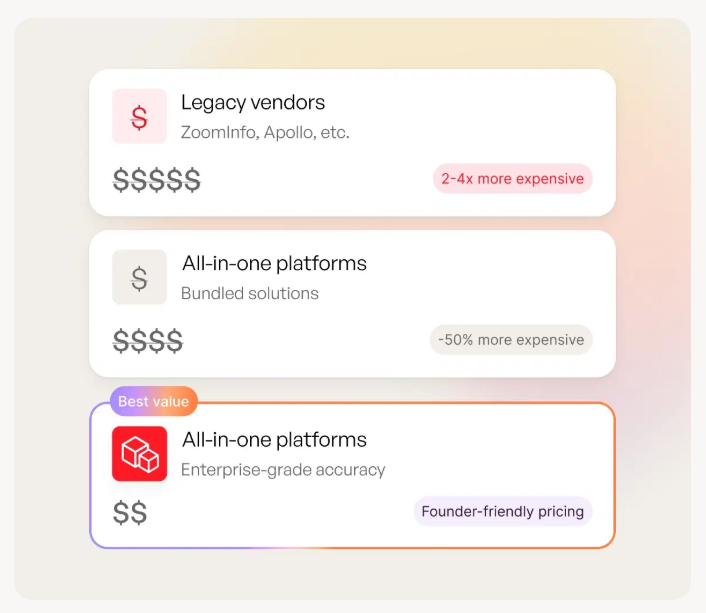
94% of buying groups rank vendors before talking to sales. Prospeo's Bombora-powered intent across 15,000 topics finds them while they're still researching - then 7-day data refresh ensures the contacts you reach are still current, not 6 weeks stale.
Reach in-market buyers before the shortlist locks. No contracts, no sales calls.
Mistakes That Make Intent Data Useless
The consensus on r/LeadGeneration isn't wrong: "most buyer intent data solutions are trash." But the problem is usually how teams use the data, not the data itself. Forrester's research on intent data mistakes lays out the most common failures:
Treating all intent sources the same. A prospect reading your pricing page isn't the same as a company consuming general industry content. First-party website visits, G2 category research, and Bombora topic surges are fundamentally different signals. Weight them accordingly.
Undervaluing first-party intent. Your own website data is the highest-quality signal you have. Too many teams chase third-party signals while ignoring the prospects already engaging with their own content. Don't make that mistake.
Ignoring data decay. Signals go stale fast. If your data refreshes monthly, everyone looks in-market because you're acting on signals that expired weeks ago. Seven-day refresh cycles versus six-week cycles is the difference between timely outreach and wasted sequences.
Using intent as a qualifier instead of a prioritization signal. Intent doesn't mean "ready to buy." It means "researching." Treating every surging account as a qualified lead is how you end up with under 2% conversion rates on outreach.
Relying on a single source. Teams that layer first-party + second-party + third-party intent see 47% better conversion and 43% larger deals. With 59% of teams planning to add new sources this year, single-source strategies are falling behind. Just avoid stacking duplicate signals from the same underlying co-op.
How to Choose the Right Tool
The right intent software depends on three things: team size, budget, and how fast you need to move.
Under 10 reps, under $20K/year: Start with a free tier for intent-filtered contact data and 6sense's free plan for account-level scoring. You'll get Bombora-powered signals and verified emails without a single contract negotiation. Validate that intent-driven outreach actually moves your pipeline before committing to an enterprise platform.
10-50 reps, $20K-$80K/year: This is where Bombora direct, Cognism, Intentsify, or ZoomInfo Advanced make sense. You need enough signal volume to feed a real SDR team. Intentsify is worth a look if you want buying group-level signals without adopting another platform.
50+ reps, $80K+ budget: 6sense or Demandbase. At this scale, you need orchestration, predictive scoring, and multi-channel activation - not just data. Budget 6 months for implementation and expect $100K+ annually for the full stack.
Don't forget churn prevention. Buyer intent tools aren't just for new business. Detecting when existing customers start researching competitors or adjacent solutions gives your CS team an early warning system that's worth the investment alone (see churn analysis).
Regardless of size, check two things before signing. First, CRM and MAP compatibility - if the tool doesn't integrate with your Salesforce or HubSpot instance cleanly, you'll spend months on custom work. Second, whether you need account-level or contact-level intent. Most enterprise platforms only tell you the company is surging. You still need a contact data layer to reach the actual humans.
FAQ
What is intent data in B2B sales?
Intent data consists of behavioral signals showing a company or person is actively researching topics related to your product. Sources include website visits (first-party), review sites like G2 (second-party), and publisher networks like Bombora's 5,000+ site co-op (third-party). Layering multiple signal types together produces the strongest results.
How much does buyer intent software cost?
It ranges from free (6sense and Prospeo free tiers) to $300,000+/year for enterprise ABM platforms like Demandbase. Most mid-market teams spend $30K-$80K/year. Pay-as-you-go models starting at ~$0.01/lead offer the most accessible entry point without enterprise commitments.
What's the difference between first-party and third-party intent?
First-party intent comes from your own properties - website visits, webinars, content downloads. Third-party intent comes from external publisher networks tracking topic consumption across the web. First-party is more reliable but limited in scope; third-party offers broader coverage but noisier signals. Combining both drives the best results.
Can you get intent data for free?
Yes. 6sense offers a free plan with 50 credits/month for account-level scoring. Prospeo's free tier includes 75 verified emails and 100 Chrome extension credits monthly with access to intent-filtered search. Leadfeeder also has a free website visitor identification plan for first-party signals.
Why does intent software fail for most teams?
Usually because teams treat noisy signals as qualified leads. Forrester found the biggest mistakes are relying on a single source, ignoring data decay, and using intent as a qualifier instead of a prioritization layer. Layer multiple signal types and pair intent with verified contact data so you can actually reach the people behind the surging accounts.