

Best Lead Scoring Software in 2026: 10 Tools That Actually Work
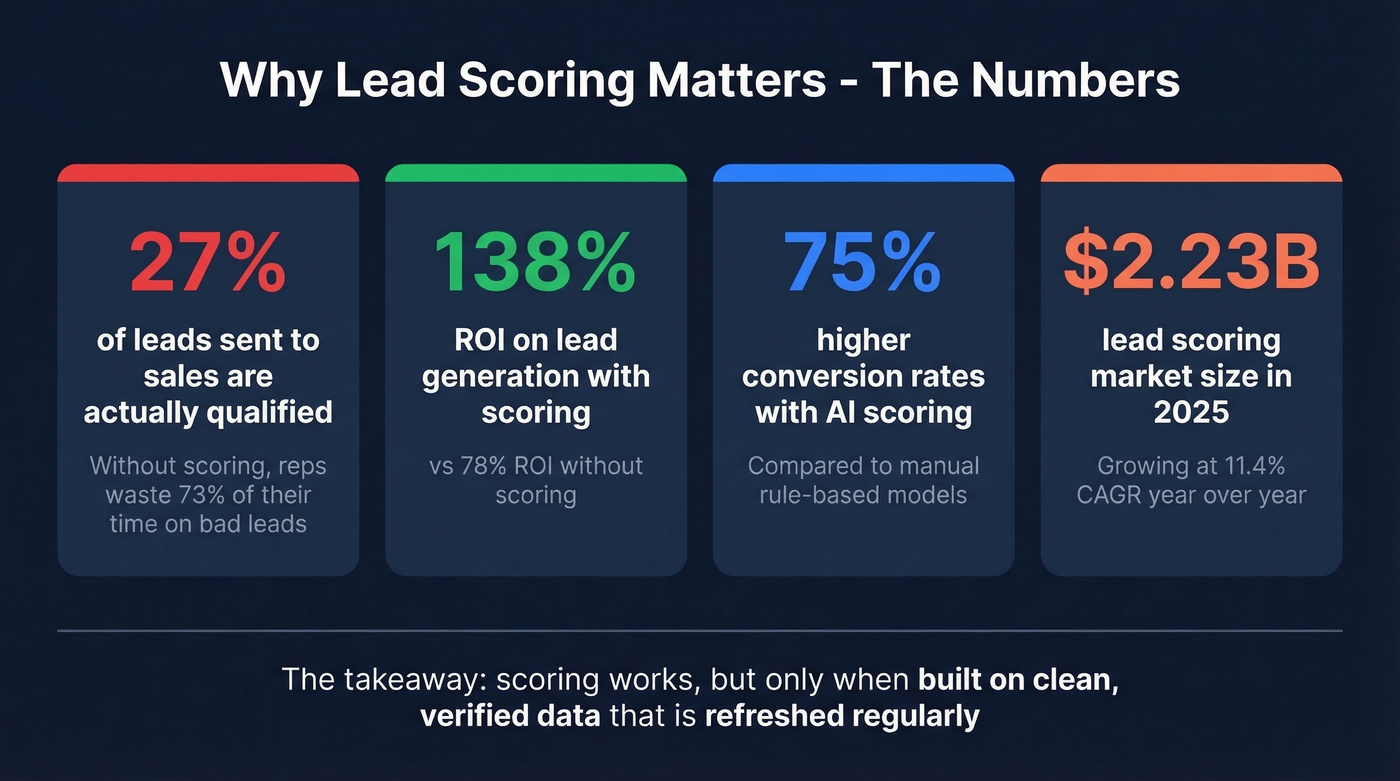
Marketing sent 500 MQLs last quarter. Sales worked 50. The other 450 sat in a queue, untouched, because reps couldn't tell which ones were real buyers and which were tire-kickers who downloaded a single whitepaper. Reps are jumping between inboxes, DMs, and spreadsheets - and by the time they follow up, the buyer's already talking to a competitor. Only 27% of leads marketing sends to sales are actually qualified, and without lead scoring software, your team is guessing which 27% that is.
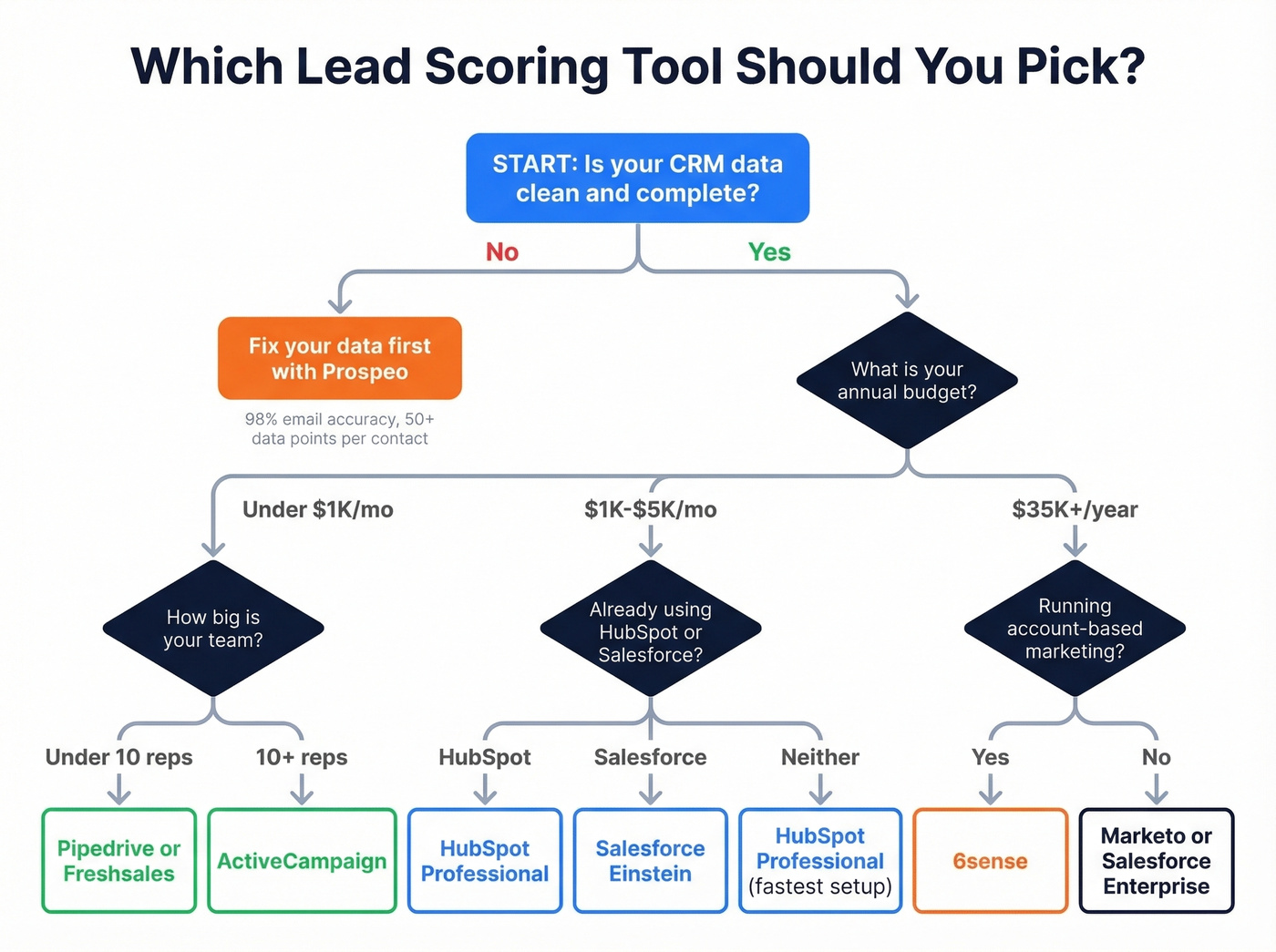
The fix isn't complicated. It's a scoring model that separates signal from noise, paired with a tool that doesn't take six months to implement. But picking the right tool matters - the gap between a $12/seat/month CRM plan and a $130K+/year enterprise predictive platform is enormous, and the expensive option isn't always the right one.
Our Picks (TL;DR)
| Use Case | Pick | Why |
|---|---|---|
| Best data foundation | Prospeo | 98% email accuracy, intent data across 15,000 topics, 7-day refresh - scoring is only as good as your data |
| Best all-in-one CRM | HubSpot | Easiest to deploy, AI-assisted scoring, most teams already use it |
| Best enterprise ABM | 6sense | Predictive AI + anonymous visitor deanonymization - if you have the budget |
Your scoring model is only as accurate as the data underneath it. Start with the data layer, then pick the scoring engine.
What Lead Scoring Is (and Why Most Models Fail)
Lead scoring assigns numerical values to leads based on two dimensions: fit (who they are) and intent (what they're doing). Fit covers firmographics - company size, industry, job title, revenue. Intent covers behavior - pricing page visits, content downloads, email engagement, repeat sessions.
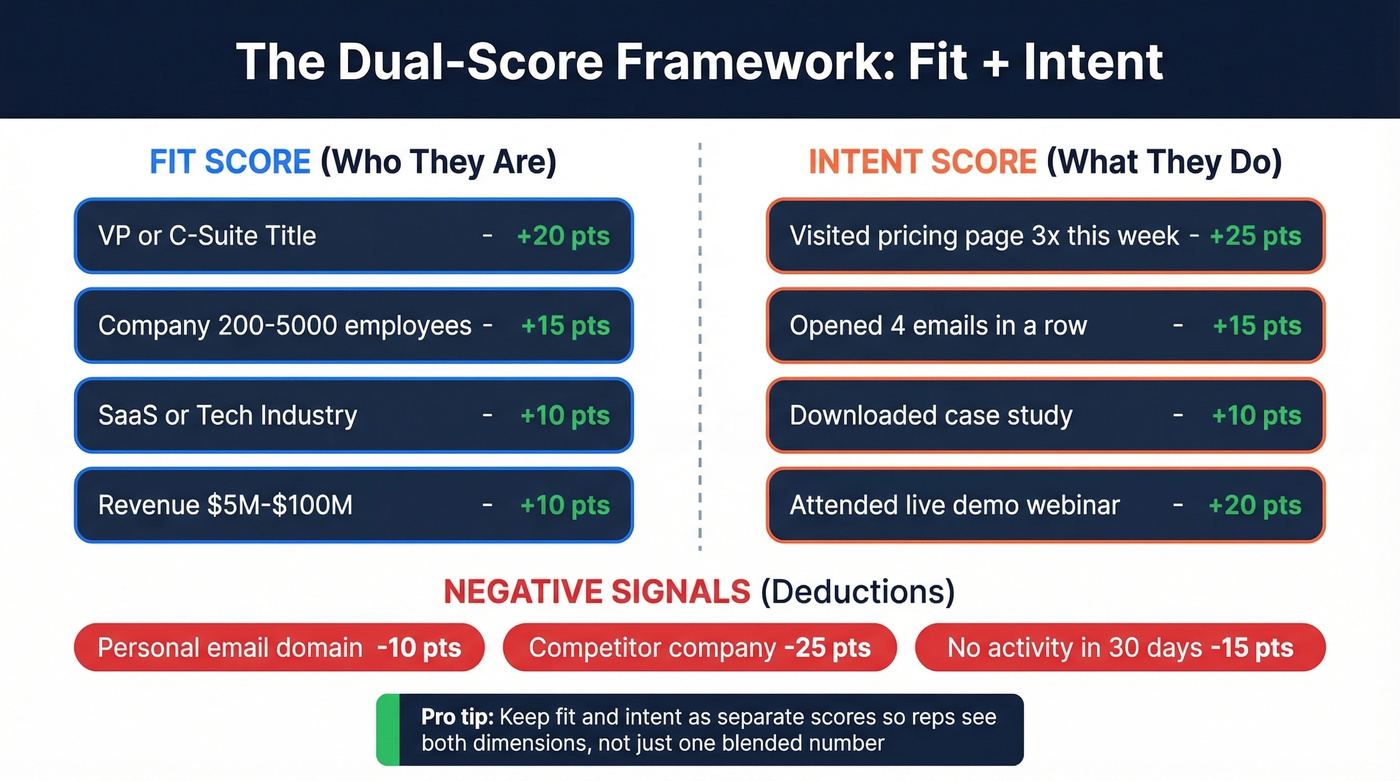
Most teams conflate the two into a single number, and that's where models break. A VP of Engineering at a 500-person SaaS company who's visited your pricing page three times this week is a fundamentally different lead than an intern at the same company who downloaded a blog PDF. A dual-score framework - separate fit and intent scores, combined with configurable weights - gives your reps the context they need. Don't forget negative scoring either: deducting points for personal email domains, competitor companies, or prolonged inactivity keeps your pipeline honest.
There are two approaches to building these scores. Rule-based scoring uses manual point assignments: +10 for visiting pricing, +15 for matching your ICP title, -5 for a personal email domain. It's simple, transparent, and works well with limited data. Predictive/AI scoring uses machine learning to identify patterns across your historical conversion data. ML models deliver 75% higher conversion rates than rule-based scoring - but only when you have enough data to train on. Most teams under 1,000 closed-won deals should start with rules.
The lead scoring solutions market hit $2.23B in 2025 at 11.4% CAGR, and companies using scoring see 138% ROI on lead generation versus 78% without it. The ROI is real, but only if the model is built on clean data and reviewed regularly.
10 Best Lead Scoring Tools in 2026
Prospeo
Use this if: your CRM data is incomplete, stale, or riddled with bounced emails - and you need verified contacts plus intent signals before your scoring model can function. Scoring a lead on firmographic fit is meaningless when 40% of your company-size fields are blank.
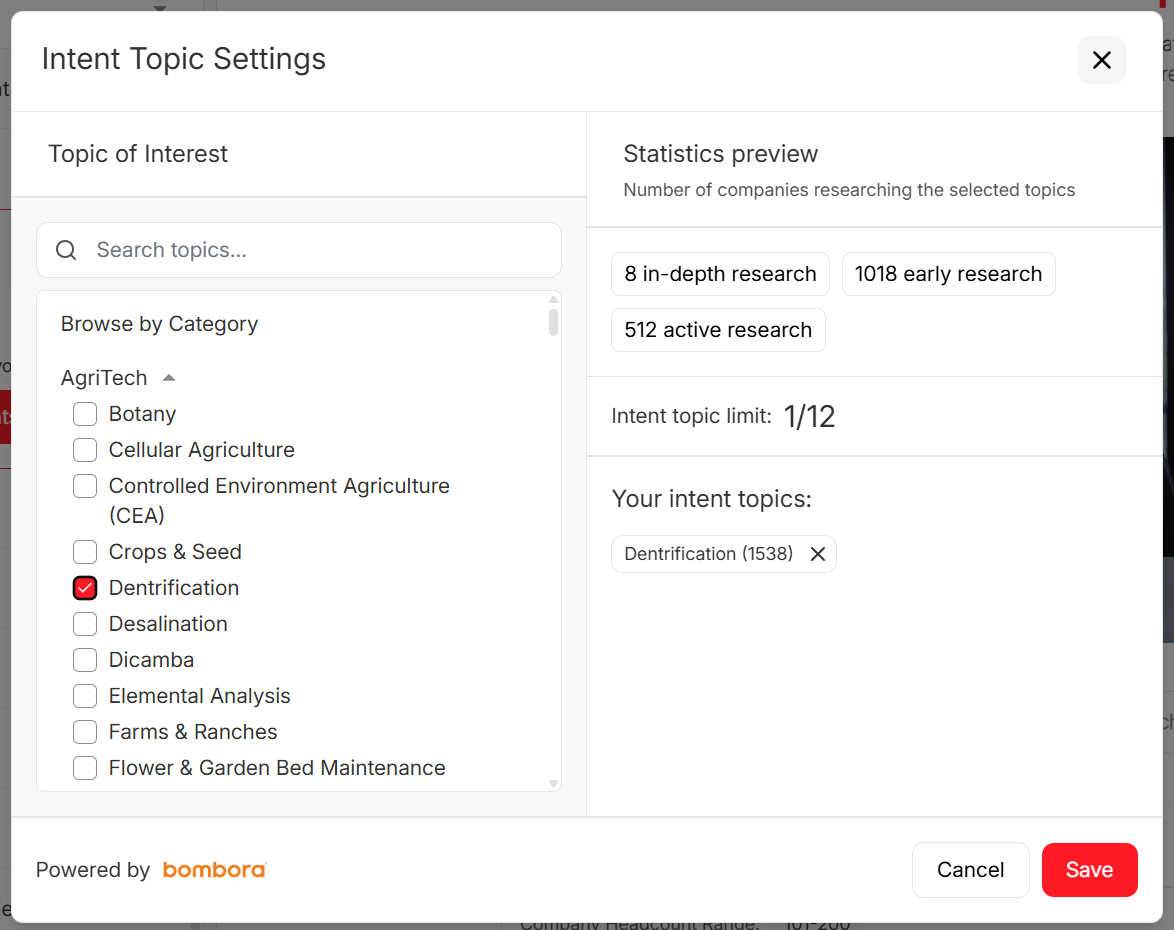
Prospeo's database covers 300M+ professional profiles with 98% email accuracy - compared to 87% for ZoomInfo and 79% for Apollo. The enrichment engine returns data on 83% of leads with 50+ data points per contact, including firmographics, technographics, and intent signals across 15,000 Bombora topics. Every record refreshes on a 7-day cycle, versus the 6-week industry average.
Here's the thing: your lead prioritization tool doesn't matter if the data feeding it is garbage. Prospeo solves the upstream problem. Enrich your CRM, verify emails in bulk, layer in intent signals, then let HubSpot or Salesforce do the point assignment on clean, complete records. It integrates natively with Salesforce, HubSpot, Lemlist, Instantly, Clay, and Zapier.
Pricing runs ~$0.01/email with a free tier of 75 emails + 100 Chrome extension credits per month. No contracts, self-serve onboarding.
Skip this if: you already have pristine CRM data with complete firmographics and verified contact info. But let's be honest - you probably don't.
HubSpot Marketing Hub
HubSpot is the default answer for teams that want scoring deployed this week, not this quarter. It supports manual and AI-powered lead scores, including AI-assisted engagement scoring that analyzes fit and engagement data points from the customer journey. For teams already running HubSpot CRM, there's zero migration friction.
The pricing ladder matters. The free CRM is excellent but doesn't include scoring. Starter starts at $15/mo/seat. Scoring requires Professional tier at $800/mo. Enterprise starts around $1,600/mo and can run to roughly $3,600/mo depending on the package and add-ons. For content-driven growth teams, it's the obvious choice. For outbound-heavy orgs, you're paying for a lot of inbound tooling you won't use.
HubSpot's strength is speed-to-value. We've seen teams go from zero scoring to live routing in under a week. The AI-assisted scoring improves as your dataset grows, and the workflow builder makes it trivial to trigger alerts, assign owners, and move leads between lifecycle stages based on score thresholds. If you're already in the HubSpot ecosystem, this is the path of least resistance.
Salesforce Sales Cloud + Einstein
Use this if: you're already all-in on Salesforce and your team has the admin capacity to configure Einstein Lead Scoring. The predictive model analyzes your historical conversion data and surfaces the leads most likely to convert - no manual rule-building required.
Skip this if: you're considering adopting Salesforce primarily for scoring. That's like buying a house because you need a mailbox. Starter plans begin around $24/user/mo (often discounted), but Einstein is typically packaged with higher tiers like Enterprise at $165/user/mo. G2 rates it 4.4/5 across 25,480 reviews, and the most consistent complaints are learning curve and add-on costs. The payoff is real for Salesforce-native orgs - Einstein integrates directly into your existing workflows and reporting. But the ramp time is measured in months, not days.
6sense
6sense delivers genuinely powerful predictive scoring - anonymous visitor deanonymization, account-level intent signals, and AI that identifies buying stages before a lead ever fills out a form. For enterprise ABM teams, it's the gold standard.
Use this if: you're running account-based motions at scale and have the budget. The median annual contract runs ~$55K/year, with a range of $35K-$130K+ depending on modules and credit volume. Contracts are typically 12-24 months, and credits don't roll over.
Skip this if: your CRM data is a mess. We've seen teams light $55K/year on fire because they deployed 6sense on top of incomplete, outdated contact records. Fix the data first. There's a free tier (50 credits/month), but it's a taste test, not a working tool.
ActiveCampaign
Underrated for SMBs who need scoring and email automation in one platform. ActiveCampaign's contact scoring lets you assign points based on email engagement, site visits, and custom field values - all within the same tool running your nurture sequences.
Scoring is available on the Plus plan at $49/mo, with Professional at $79/mo and Enterprise at $145/mo. Starter ($8/mo) doesn't include scoring. For teams that want a single platform handling both scoring and automated follow-up without stitching together three tools, it's a smart pick.
Apollo.io
Apollo's database covers 275M+ contacts with built-in AI scoring and solid CRM integrations. Starting at $49/user/month, it's an accessible entry point for teams that want prospecting and scoring in one place. The catch is data quality - users consistently report bounce rates up to 35%, which means your scoring model is working with unreliable inputs. The search and filtering are impressive, but we'd recommend running contacts through a verification layer before they hit your scoring model to avoid inflated scores on bad data.
Freshsales
Budget-friendly with Freddy AI scoring baked in. Freshsales offers a free plan for up to 3 users, with Growth at $15/user/mo, Pro at $39/user/mo, and Enterprise at $69/user/mo. Freddy AI analyzes engagement patterns and assigns predictive scores without manual configuration. For small teams that want AI-assisted scoring without enterprise pricing, it's the most accessible option on this list. The trade-off is ecosystem depth - you won't get the workflow sophistication of HubSpot or Salesforce.
Marketo (Adobe)
Complex orchestration and operational rigor for enterprise marketing teams. Marketo's scoring engine supports sophisticated behavioral triggers and lifecycle stage management. Pricing is custom, and in our experience, the learning curve is steep - plan for a dedicated marketing ops person to own it. Innovation pace has slowed relative to HubSpot. Choose Marketo if you need granular control over complex, multi-product scoring models and have the team to maintain them.
Zoho CRM
Affordable all-in-one with Zia AI scoring for budget-conscious teams already in the Zoho ecosystem. Standard starts at $14/user/mo, Enterprise at $40/user/mo, Ultimate at $52/user/mo. Solid if you're running Zoho everything - less compelling as a standalone scoring choice.
Pipedrive
Sales-focused CRM for small pipeline-driven teams. Essential at $12/seat/mo, Professional at $49/seat/mo, Enterprise at $79/seat/mo. Fine for teams under 10 reps that need simple prioritization, but don't expect the scoring depth of dedicated platforms.
Comparison Table
| Tool | Best For | Scoring Type | Starting Price | Free Tier |
|---|---|---|---|---|
| Prospeo | Data accuracy + enrichment | Data foundation | ~$0.01/email | 75 emails/mo |
| HubSpot | All-in-one CRM scoring | Rule-based + AI | $800/mo (Pro) | Free CRM |
| Salesforce Einstein | Enterprise SF orgs | Predictive AI | $165/user/mo | No |
| 6sense | Enterprise ABM | Predictive AI | ~$55K/year | 50 credits/mo |
| ActiveCampaign | SMB scoring + automation | Rule-based | $49/mo (Plus) | No |
| Apollo.io | Prospecting + scoring | AI-assisted | $49/user/mo | Yes |
| Freshsales | Budget AI scoring | AI (Freddy) | Free (3 users) | Yes |
| Marketo | Enterprise marketing ops | Rule-based + predictive | Custom | No |
| Zoho CRM | Budget all-in-one | AI (Zia) | $14/user/mo | No |
| Pipedrive | Small sales teams | Basic prioritization | $12/seat/mo | No |
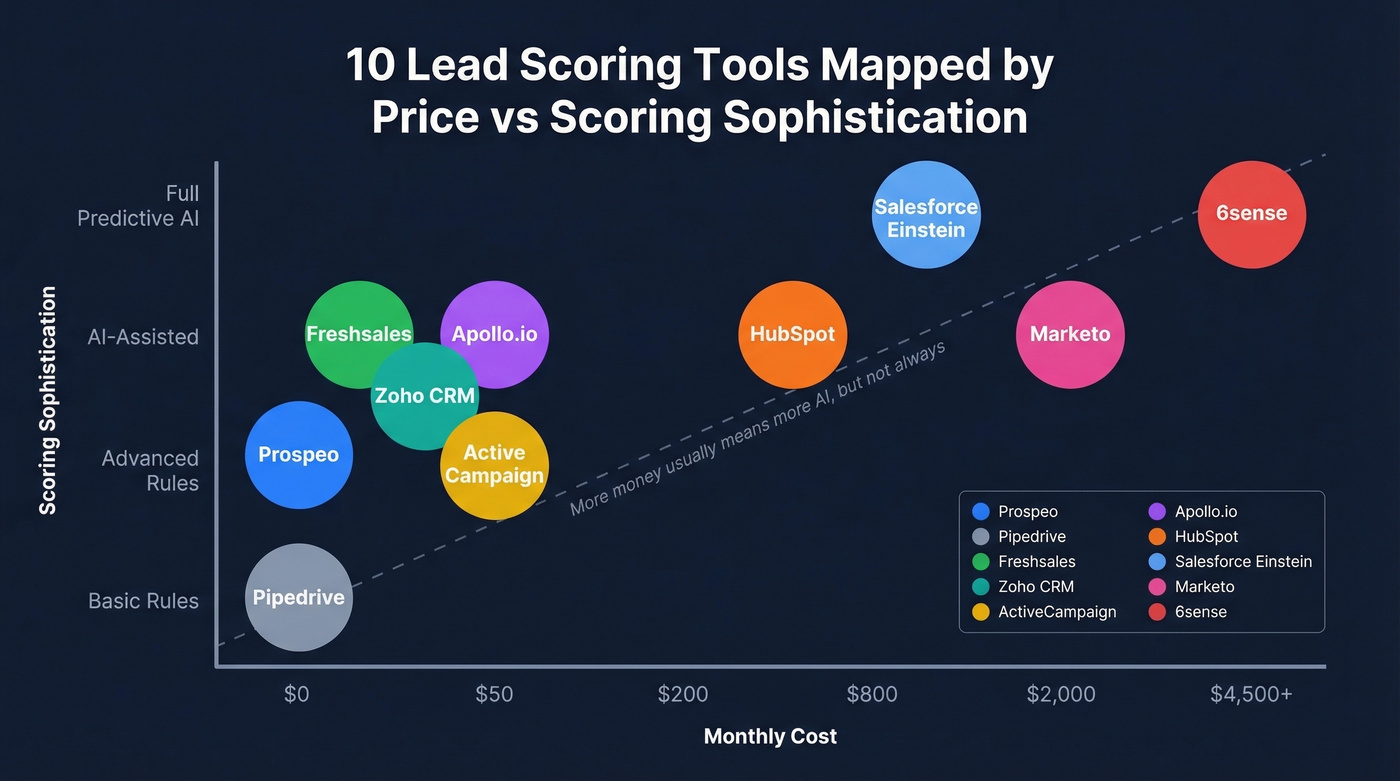
Other tools worth evaluating: Outfunnel (Pipedrive-native scoring), Dealfront (European data focus), and EngageBay (budget all-in-one).

Lead scoring on incomplete CRM data is just guessing with extra steps. Prospeo enriches 83% of leads with 50+ data points - firmographics, technographics, and intent signals across 15,000 Bombora topics - all refreshed every 7 days.
Stop scoring leads with missing fields. Enrich first, score second.
Build Your First Scoring Model This Week
Before you assign a single point, make sure your contact records are complete. Scoring on empty fields is worse than not scoring at all - I've watched a team spend two months tuning a model only to realize half their "low-scoring" leads were actually great fits with missing data.
If you need a deeper walkthrough of scoring frameworks and thresholds, start with our lead scoring guide.
Start with two score dimensions: fit (who they are) and behavior (what they're doing).
Fit scoring (100 points max):
- Matches ICP title (VP, Director, C-suite): +25
- Company size in your sweet spot: +20
- Target industry: +15
- Uses a technology you integrate with: +10
- Personal email domain: -15
Behavior scoring (100 points max):
- Visited pricing page: +20
- Attended webinar or demo: +25
- Downloaded case study: +10
- Repeat visit within 7 days: +15
- No activity in 30 days: -10 (score decay)
That -10 decay is critical. Without it, a lead who engaged six months ago still looks hot in your pipeline.
Combine the two scores using weights based on your go-to-market motion:
| Motion | Fit Weight | Behavior Weight |
|---|---|---|
| Inbound | 40% | 60% |
| Outbound | 70% | 30% |
| PLG | 30% | 70% |
| ABM | 60% | 40% |
Set three operational thresholds:
- Score >25: Route to sales immediately with an alert.
- Score 10-24: Mid-funnel nurture. Keep them warm with relevant content until behavior pushes them over.
- Score <10: Top-of-funnel. They're early. Don't waste rep time.
Add one "whale alert" rule: if a visitor from a company with 1,000+ employees hits your pricing page, bypass scoring entirely and send a Slack notification to an AE. Some opportunities are too big to wait for a score to accumulate.
Run this model for 30-45 days, then review what converted. Adjust weights, add or remove signals, and iterate. The consensus on r/b2bmarketing is clear: ship a simple v1 instead of spending three months building the "perfect" model that never launches.
Five Scoring Mistakes That Kill Adoption
1. Not involving Sales in model design. If reps don't trust the scores, they'll ignore them. Include at least two senior reps in the initial threshold-setting conversation.
2. Scoring email opens. Spam filters and security bots automatically open and click emails. Scoring these signals inflates scores on leads who've never actually engaged. Stick to meaningful actions: pricing page visits, demo requests, content downloads.
3. Scoring on fields you don't collect. If "Industry" is blank on 60% of your CRM records, assigning +15 points for target industries means most leads get scored incompletely. Only score on fields with >80% fill rates - and if your fill rates are low, fix the data layer with an enrichment tool before configuring your scoring engine. (If you're evaluating vendors, our breakdown of data enrichment services can help.)
4. Throttling demo requests through scoring. If someone fills out a "request a demo" form, route them to Sales immediately. Full stop. Don't make them accumulate 25 points first. This sounds obvious, but we've seen it happen more than once.
5. Building once and never reviewing. Your ICP shifts. Your channels change. A scoring model built 12 months ago is scoring for a business that no longer exists. Review quarterly at minimum using actual conversion outcomes, and resist the temptation to maintain multiple parallel models - a single, well-tuned model beats three competing ones every time.
How to Know If Your Model Is Working
The single most important metric is your MQL-to-SQL conversion rate. Typical teams land between 25-35%. High-alignment organizations - where Sales and Marketing agree on definitions and review scores together - hit 40-50%. Below 25%? Your model needs recalibration.
If you want benchmarks to sanity-check your funnel, compare against the average B2B lead conversion rate.
Validate scores against closed-won revenue, not just SQL creation. A model that generates SQLs that never close is just creating busywork for reps. The expected impact from proper scoring and routing: +20-40% MQL-to-SQL conversion, -30-50% unqualified handoffs, and under 5 minutes time-to-first-contact for high-value accounts.
Let's be direct: if your average deal size is under $10K, you probably don't need a $55K/year predictive platform. A well-built rule-based model in HubSpot or Freshsales will get you 80% of the way there. Save the enterprise tooling for when your data volume and deal complexity actually demand it.
Once your model is live, consider A/B testing variations - run two scoring configurations on split segments for a quarter and let conversion data pick the winner. Assign Marketing Ops ownership of the quarterly review cycle: decay rules, weight adjustments, and threshold tuning based on what's actually converting. If your reps are still slow to act on high scores, tighten your sales follow-up process and SLAs.
Teams using Prospeo cut bounce rates from 35% to under 4% and tripled pipeline. When 98% of your emails are verified and every record refreshes weekly, your scoring model finally has data worth trusting.
Clean data in, accurate scores out - starting at $0.01 per email.
FAQ
Is lead scoring software worth it for small teams?
Yes - a three-threshold model (route / nurture / TOFU) in your existing CRM takes a day to set up and immediately stops reps from chasing unqualified leads. You don't need a $55K platform. Freshsales' free tier handles basic scoring for teams under 10 people.
What's the difference between lead scoring and lead grading?
Scoring measures intent - behavioral signals like page visits and email engagement. Grading measures fit - firmographic data like company size, industry, and job title. Use both together. A high-intent lead at a bad-fit company still wastes your rep's time.
How often should I update my scoring model?
Quarterly at minimum. Review which scored leads actually converted to closed-won deals, not just which ones became SQLs. If your MQL-to-SQL rate drops below 25%, recalibrate your thresholds, weights, or both.
Does data quality affect scoring accuracy?
Enormously. If 40% of your emails bounce and half your firmographic fields are blank, your scores are fiction. Clean, verified data is the foundation - enrichment tools that return 50+ data points per contact at high match rates give your model complete records to score against.
Rule-based or AI-powered scoring - which should I start with?
Rule-based. You need at least 6 months of conversion data before a predictive model has enough signal to outperform simple rules. Start with fit + behavior thresholds, then graduate to AI scoring once you have the historical data to train on.