

How to Build a Multichannel Sales Strategy That Actually Drives Pipeline
Your SDR team is sending 500 emails a week, making 80 dials, posting on social - and pipeline hasn't moved. The problem isn't effort. It's that those channels are running in parallel silos with stale data, no sequencing logic, and zero attribution.
A multichannel sales strategy only works when the channels talk to each other and the contact data underneath them is actually accurate. We've watched teams triple their pipeline just by sequencing the same three channels they were already using - the difference was coordination, not volume.
The Short Version
You need three channels (email, phone, social), clean contact data, and a sequenced cadence - not seven channels running independently. Multichannel prospecting costs roughly $188/lead on average vs. $300 for cold calling alone. Start with verified data, build a 14-day cadence, and measure with multi-touch attribution.
What Is Multi-Channel Selling in B2B?
A multichannel sales strategy uses multiple distinct channels - email, phone, social, direct mail - to engage prospects across a coordinated sequence. The key word is "coordinated." Most teams think they're running multichannel because they send emails and make calls. They're not. They're running two single-channel motions that happen to share a CRM.
The distinction from omnichannel matters here. Multichannel means multiple channels, often managed separately. Omnichannel integrates those channels into a unified experience where context flows between touchpoints - think triggered cross-channel actions rather than batch-and-blast on each platform independently. Most B2B outbound teams start with a multichannel workflow and evolve toward omnichannel as their stack and data maturity improve.
Here's the thing: most multichannel guides are written for ecommerce retailers, not B2B sales teams. The principles translate, but the execution is completely different when you're selling to a VP of Engineering vs. someone browsing a product catalog.
Why It Works
The cost-per-lead data makes the case better than any framework. Sopro's 2026 CPL benchmarks show multichannel prospecting significantly undercutting single-channel approaches:
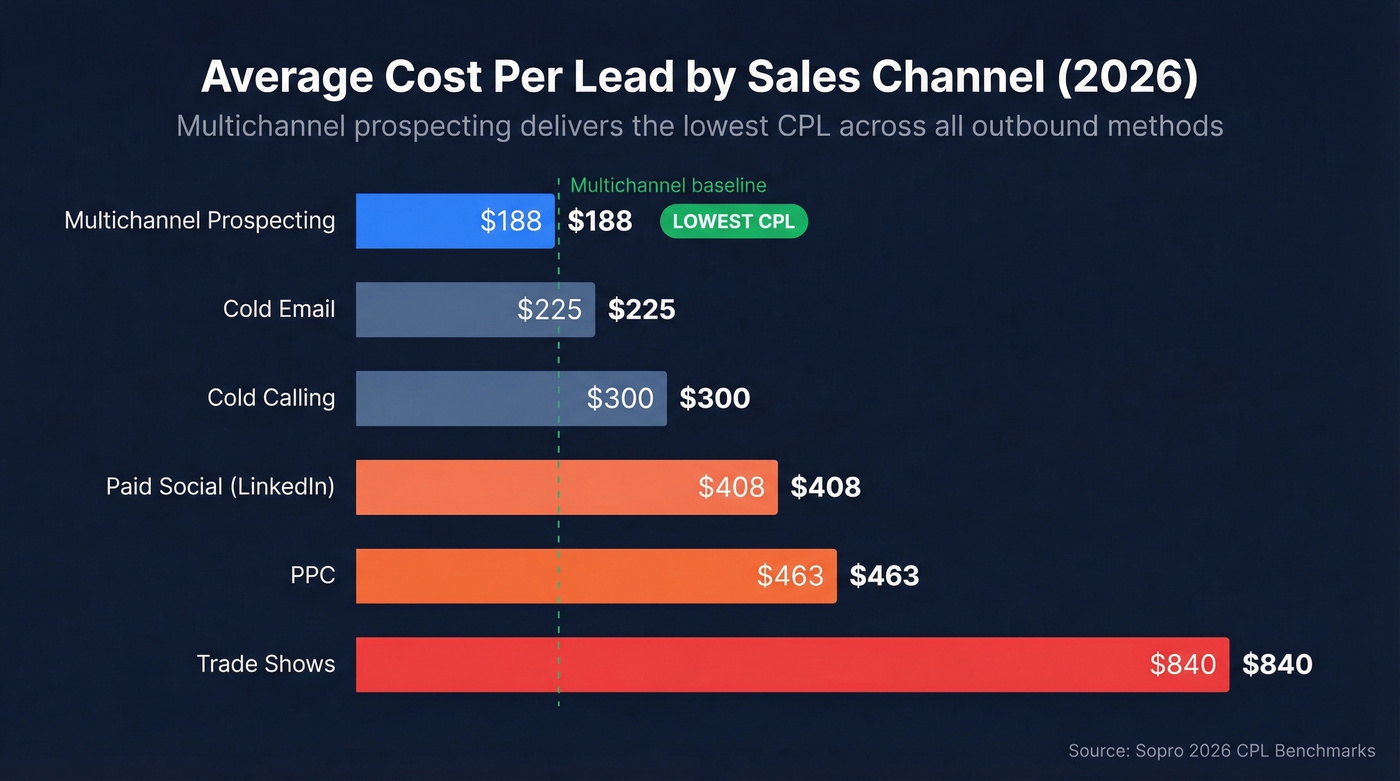
| Channel | Avg. CPL | Range |
|---|---|---|
| Multichannel prospecting | $188 | $80-$296 |
| Cold email | $225 | $150-$300 |
| Cold calling | $300 | - |
| Paid social (LinkedIn) | $408 | - |
| PPC | $463 | - |
| Trade shows | $840 | - |
B2B companies using coordinated cross-channel outreach commonly see 24% higher ROI and a 300% performance increase compared to teams using one or two sales channels. That's not a marginal improvement. That's a fundamentally different motion.
You don't need seven channels. You need three with clean data and a real cadence.
The 3 Channels That Matter for B2B Outbound
Email opens the door, phone closes it, social keeps it warm. That's the framework.
Email gives you scale and documentation. You can reach 200 prospects a day with personalized sequences, and every touchpoint is tracked. It's the backbone of any outbound motion. (If you need a starting point, use a proven B2B cold email sequence.)
Phone adds urgency and works best for high-value targets. A direct dial to a VP after they've opened your email twice converts at a fundamentally different rate than a cold call to someone who's never heard of you. Use it surgically, not as a volume play. (If your call motion is messy, build a repeatable cold calling system.)
Social - primarily professional networks - warms the relationship before and between harder touches. A profile view, a connection request, a genuine comment on their content. These micro-touches build familiarity so your email doesn't land cold.
Direct mail and events are supplementary channels worth testing once the core three are working. But if your email data bounces at 20%+ and your phone numbers are wrong, adding a fourth channel just multiplies the waste. (If you do test it, start with a tight direct mail for lead generation play.)

Your 14-day cadence falls apart when emails bounce and phone numbers are wrong. Prospeo delivers 98% email accuracy and 125M+ verified mobile numbers with a 30% pickup rate - so every channel in your sequence actually connects.
Stop multiplying waste across three channels. Start with data that works.
A 14-Day Multi-Channel Cadence
The cadence below sequences all three channels across two weeks. The key principle: each touch references or builds on the previous one. Prospects should feel like they're hearing from a person, not getting hit by three disconnected automations. (This is basically sequence management done right.)
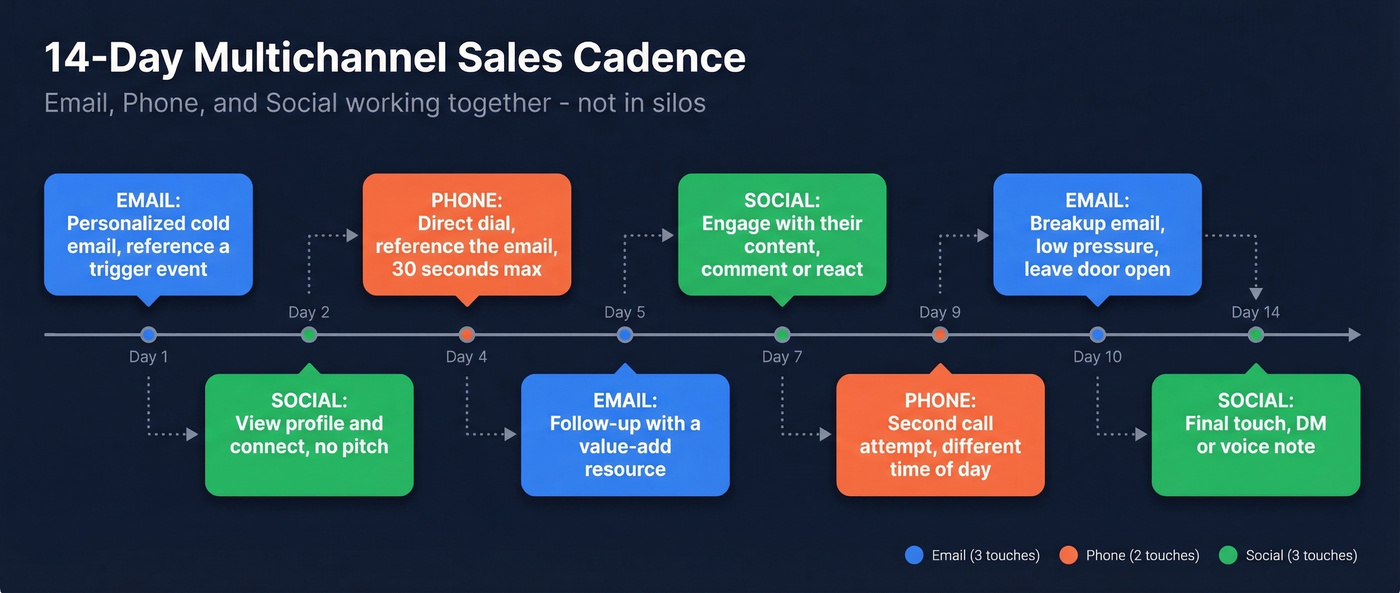
| Day | Channel | Action | Notes |
|---|---|---|---|
| 1 | Personalized cold email | Reference a trigger: job change, funding, content they published | |
| 2 | Social | View profile + connect | No pitch - warm touch only |
| 4 | Phone | Direct dial | Reference the email; 30 seconds max |
| 5 | Follow-up (value-add) | Share a relevant resource, not a re-pitch | |
| 7 | Social | Engage with their content | Comment or react - build familiarity |
| 9 | Phone | Second call attempt | Different time of day than Day 4 |
| 10 | Breakup email | Clear, low-pressure, leave the door open | |
| 14 | Social | Final touchpoint | DM or voice note if connected |
The "sounding like a bot" concern is real - it's the #1 worry we hear from SMB operators evaluating automation tools. The fix isn't less automation. It's better personalization in the automated steps. Day 1's email should reference something specific to that prospect. Day 4's call should mention the email by name. When touches connect, they feel human even at scale. (If you need help tightening the copy, start with email copywriting.)
One scenario we've seen work well: an SDR at a mid-market SaaS company noticed a prospect had just posted about switching CRMs. Day 1's email referenced the post directly, Day 4's call opened with "I saw you're evaluating CRM options - we help teams like yours during that exact transition." The prospect took a meeting within 48 hours. That's coordination, not coincidence.
How to Measure What's Working
B2B deals take 6-9 months and roughly 14 touchpoints to close. Last-touch attribution in that context is borderline useless - it gives all the credit to whatever happened right before the signature, ignoring the 13 touches that built the relationship.
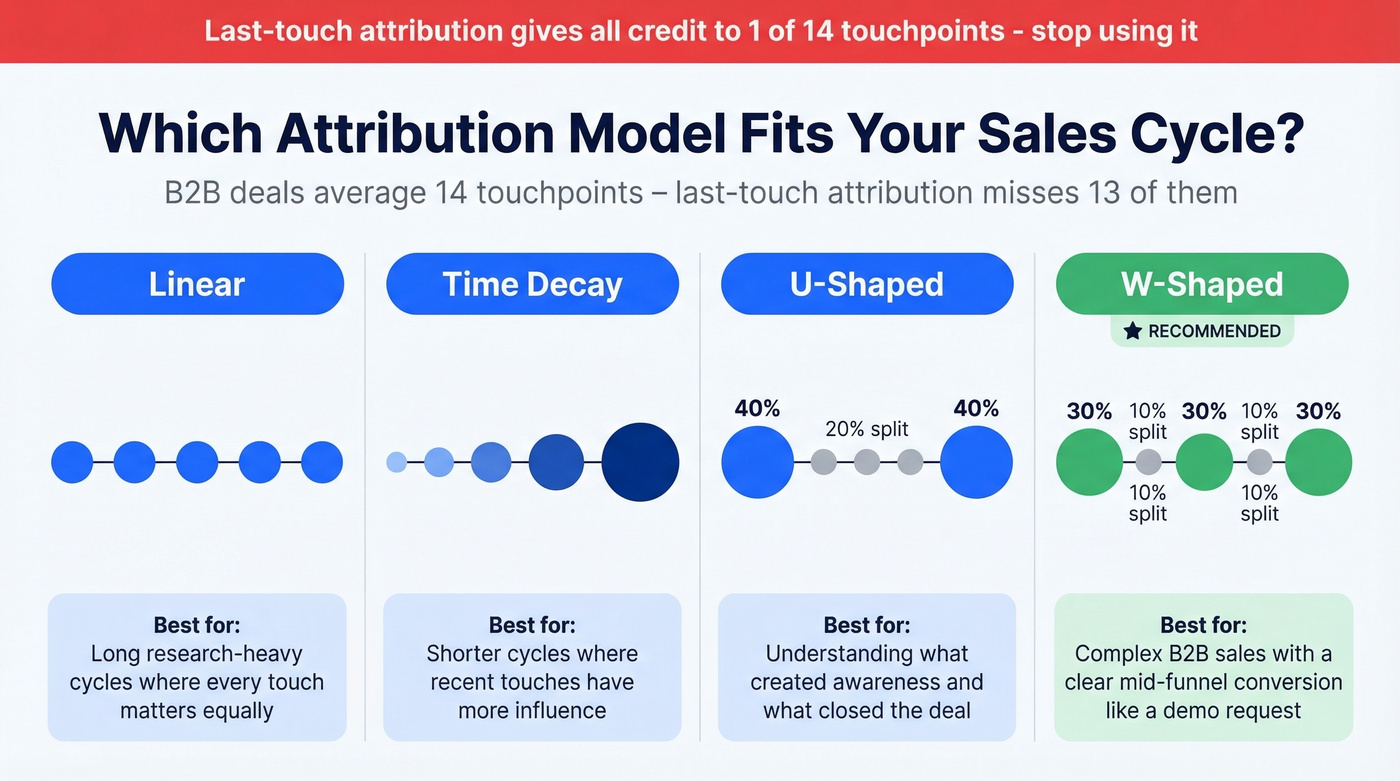
Multi-touch attribution models distribute credit more honestly:
Linear gives equal credit to every touch. Best for long, research-heavy cycles where you genuinely don't know which touch mattered most.
Time-decay weights recent touches more heavily. Works for shorter cycles where recency correlates with influence.
U-shaped (position-based) puts heavy credit on first and last touch, lighter credit in the middle. Good when you care about what generated awareness and what closed the deal.
W-shaped adds a third weight at the key mid-funnel conversion, like a demo request. This is the most nuanced model for complex B2B sales, and it's the one we'd recommend if your CRM data is clean enough to support it.
Practical steps: integrate your CRM with your engagement platform and analytics, capture offline touchpoints like calls and events, and run cohort analysis quarterly to see which channel combinations actually produce pipeline - not just activity. (If you're unsure what to track, use a simple funnel metrics checklist.)
Five Mistakes That Kill Multi-Channel Engagement
1. Running channels in silos. Your email team doesn't know what the phone team is saying. Social touches aren't logged in the CRM. You're technically "multichannel" but operationally fragmented. Every channel needs to feed the same tracking system.
2. Using tools that aren't truly multichannel. The consensus on r/sales is that many "multichannel" tools are really single-channel products with integrations bolted on. A tool that does social natively but requires a separate integration for email isn't multichannel - it's multichannel theater. Skip those.
3. Automating yourself into a robot. Automation should handle sequencing and timing. Personalization should still be human - or at least human-reviewed. If every prospect gets the same template with {{first_name}} as the only variable, you're not doing multichannel outreach. You're doing spam across multiple channels. (If you want a better baseline, borrow these sales follow-up templates.)
5. No attribution model. If you're measuring last-click when your deals take 14 touchpoints, you're making budget decisions with bad data. Pick a multi-touch model - even linear is better than last-touch - and commit to it for at least two quarters before switching.
The Tech Stack You Actually Need
A multichannel stack has five layers. You don't need the most expensive tool in each category - you need tools that integrate cleanly and keep data consistent across channels. (If you're rebuilding your stack, start with a shortlist of SDR tools.)
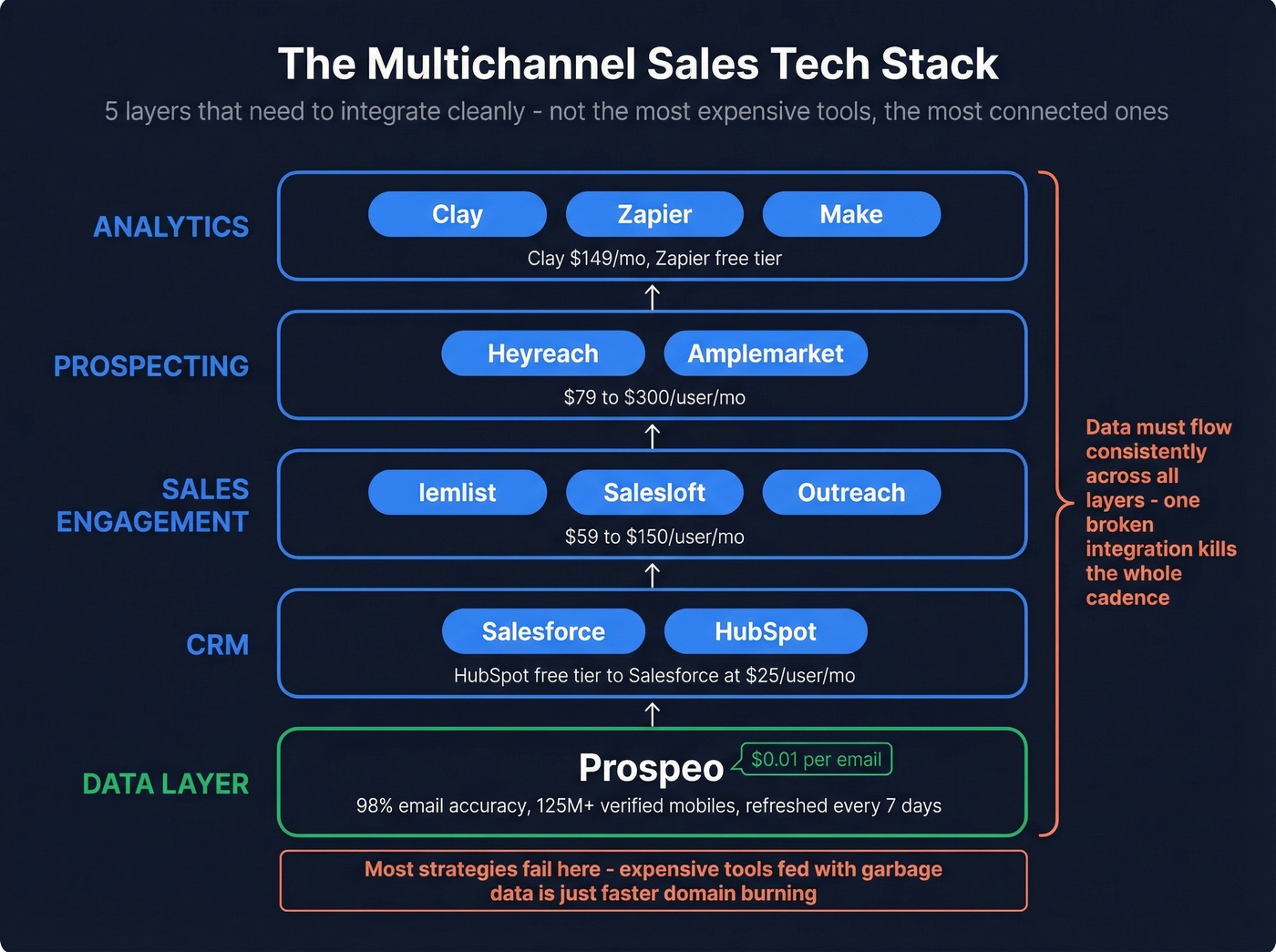
| Category | Tools | Approx. Pricing |
|---|---|---|
| CRM | Salesforce, HubSpot | HubSpot free tier; Salesforce ~$25/user/mo |
| Sales engagement | lemlist, Salesloft, Outreach | ~$59-$150/user/mo |
| Prospecting | Heyreach, Amplemarket | ~$79-$300/user/mo |
| Analytics | Clay, Zapier, Make | Clay ~$149/mo; Zapier free tier |
Your cadence is only as good as your contact data. Prospeo covers 300M+ professional profiles with 98% email accuracy and 125M+ verified mobile numbers refreshed every 7 days. It integrates natively with Salesforce, HubSpot, lemlist, Instantly, and Smartlead - so verified data flows directly into your sequences without manual CSV exports. (If you're comparing vendors, see the current data enrichment services landscape.)
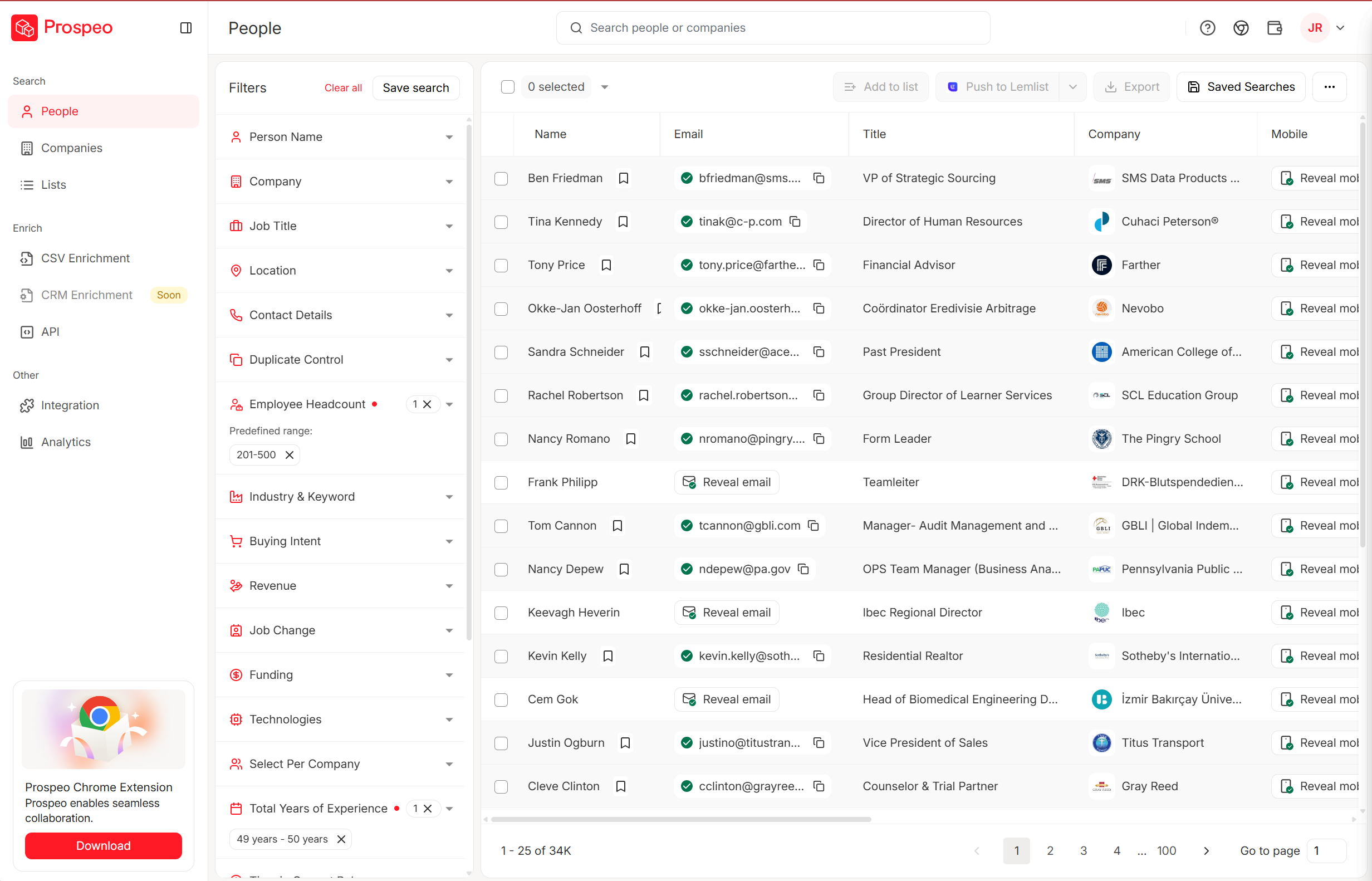
For sales engagement, lemlist is the strongest option for SMB teams that want email + social + calls in one sequence builder. Salesloft and Outreach are better fits for mid-market and enterprise teams that need deeper analytics and manager-level reporting. Heyreach is worth evaluating if you're running multiple social sender accounts at scale - it handles rotation and centralized inbox management well.
Let's be honest: the enrichment layer is where most multichannel strategies quietly fail. Teams invest in expensive engagement platforms, then feed them garbage data. A $150/month sequencer sending to unverified emails is just a faster way to burn your domain. We've seen it happen dozens of times, and the recovery takes months. (If you're seeing issues already, start with an email deliverability guide.)
Multichannel CPL drops from $300 to $188 when channels are coordinated - but only if your contact data is fresh. Prospeo refreshes every 7 days, not the 6-week industry average, so your cadence hits real inboxes and live numbers.
Clean data at $0.01/email. No contracts. No stale records.
FAQ
What's the difference between multichannel and omnichannel sales?
Multichannel uses multiple independent channels - email, phone, social - often managed separately. Omnichannel integrates those channels so data and context flow between every touchpoint automatically. Most B2B outbound teams start multichannel and evolve toward omnichannel as their tech stack and data quality mature.
How many channels should a B2B sales team use?
Three is the sweet spot: email for scale, phone for high-value targets, and one social channel for warming. Adding more channels only helps if your data is clean and your cadence is sequenced - not siloed. We've seen teams add channels four and five before the first three actually work together, which just multiplies the chaos.
How do you measure multichannel sales performance?
Use multi-touch attribution, not last-click. Linear attribution works for long sales cycles; position-based (U-shaped) models work when first and last touches matter most. Integrate your CRM with your engagement platform to capture every touchpoint, and run cohort analysis quarterly to see which channel combinations are actually producing pipeline.
What's a good free tool for multichannel contact data?
Prospeo's free tier includes 75 verified emails and 100 Chrome extension credits per month - enough for a solo founder or small team running real outbound. Apollo offers a free tier too, but 98% email accuracy and a 7-day data refresh cycle mean fewer bounces and cleaner sequences from day one.