

The 10 Best Person Email Finder Tools in 2026
You've got the prospect's name, company, and title. Now you need their email - and the person email finder you pick determines whether that message bounces, lands in spam, or actually starts a conversation. Nearly 28% of emails checked were invalid or risky according to ZeroBounce data, up from 22% two years prior. The gap between "found an email" and "found a deliverable email for the right person" is where most tools fail and most domain reputations get torched.
Every email finder will return something. The question is whether that something is a valid, deliverable address belonging to the person you actually want to reach - or a catch-all black hole that silently tanks your sender score. We've tested these tools extensively, and the differences are bigger than most people expect.
Our Top Picks
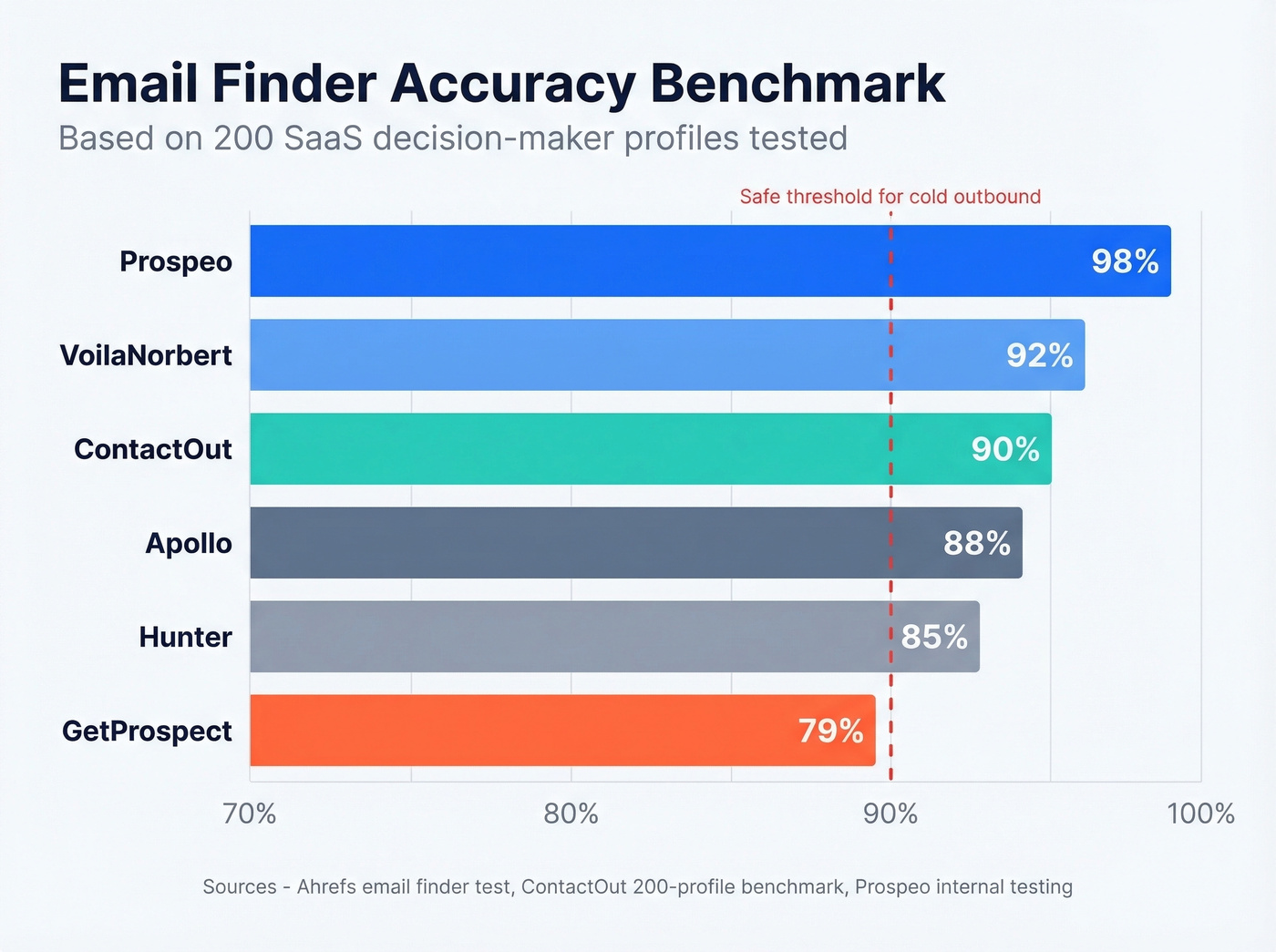
Best for accuracy and data freshness: Prospeo - 98% email accuracy, 7-day data refresh cycle, ~$0.01/email. If deliverability is your top priority, start here.
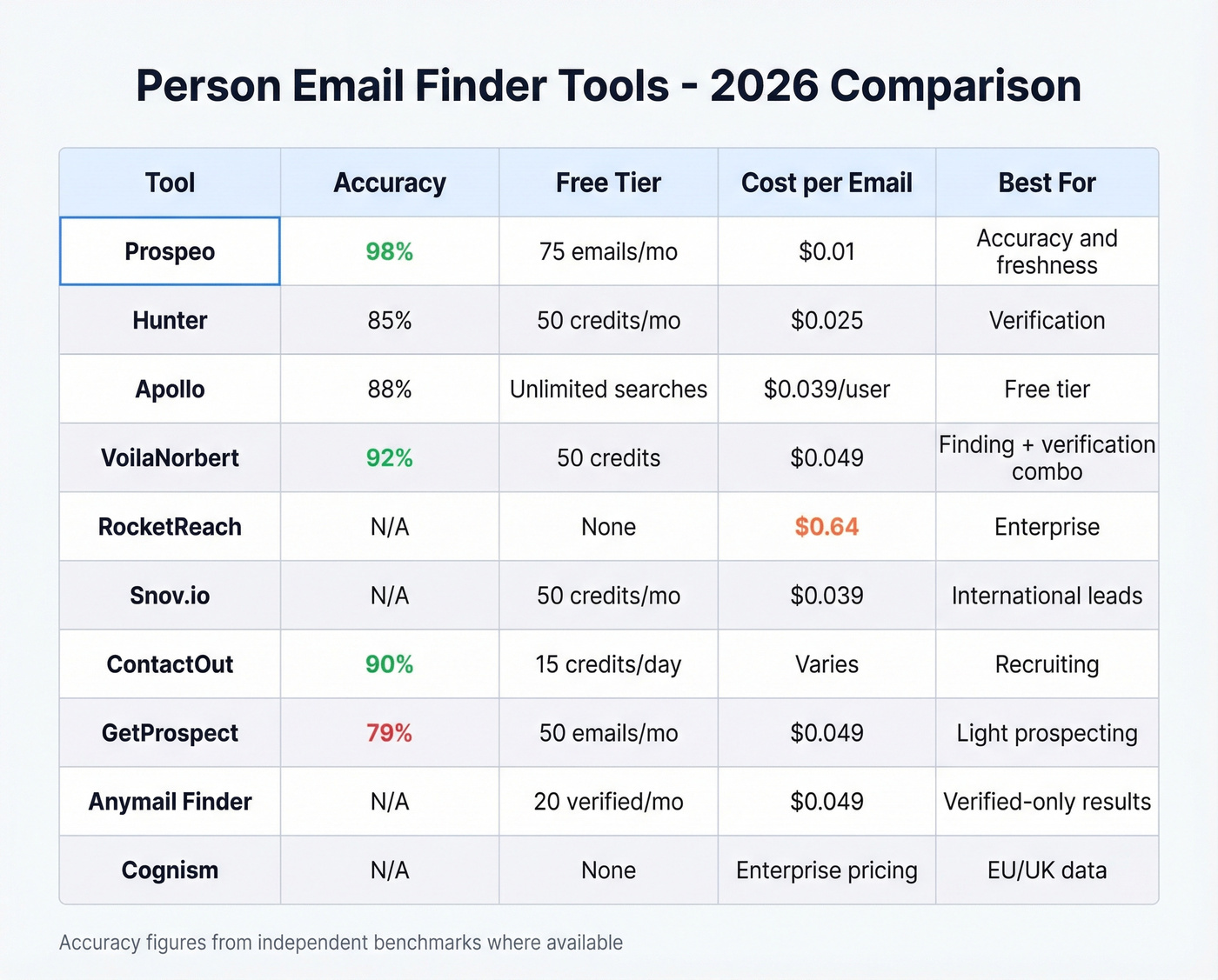
Best free tier: Apollo - unlimited email searches on the free plan, 250M+ contacts. Hard to beat for teams with zero budget, though you'll want a dedicated verifier alongside it.
Best for EU/UK data: Cognism - strongest European coverage with GDPR-native compliance. Enterprise pricing, but if you're selling into EMEA, nobody else comes close.
What Actually Matters When Finding a Person's Email
Most comparison articles rank tools by database size. That's the wrong metric. A tool with 500M contacts and 75% accuracy will burn your domain faster than one with 100M contacts at 98% accuracy. If you want a broader view of list quality, see our guide to data enrichment services.
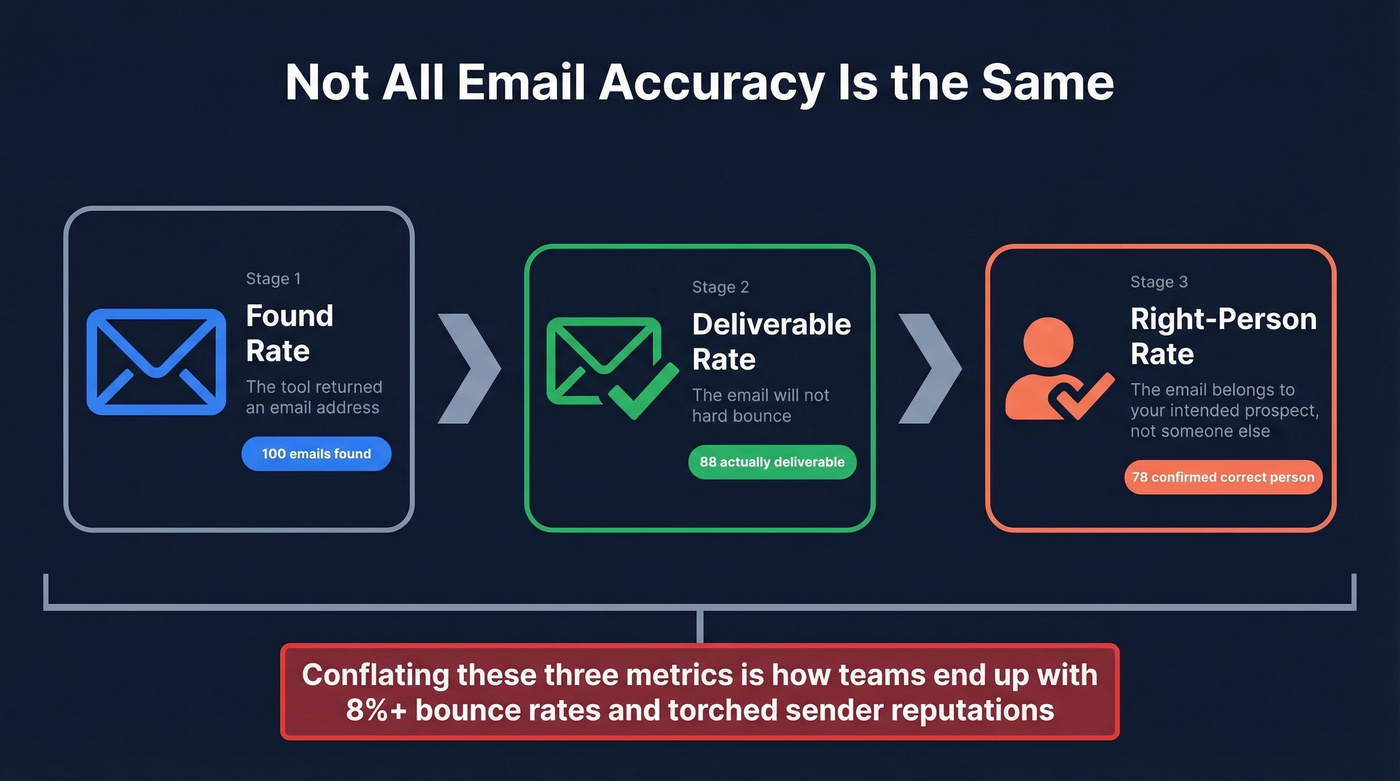
Found rate vs. deliverable rate vs. right-person rate. These are three different things, and conflating them is how teams end up with 8% bounce rates. Found rate means the tool returned an email address. Deliverable rate means that email won't hard bounce. Right-person rate means the email belongs to the person at the company you intended - not someone with the same name at a different subsidiary. A Dropcontact benchmark of 20,000 contacts found wrong-domain error rates as high as 11.7% among some tools. The email was "found" and technically deliverable, but it went to the wrong company entirely.

Data freshness matters more than database size. People change jobs. Companies get acquired. Domains expire. If your email finder refreshes data every six weeks - the industry average - you're working with stale records for a significant chunk of your list. A 7-day refresh cycle catches job changes before your sequence does. If you're building a repeatable outbound motion, pair this with proven sales prospecting techniques.
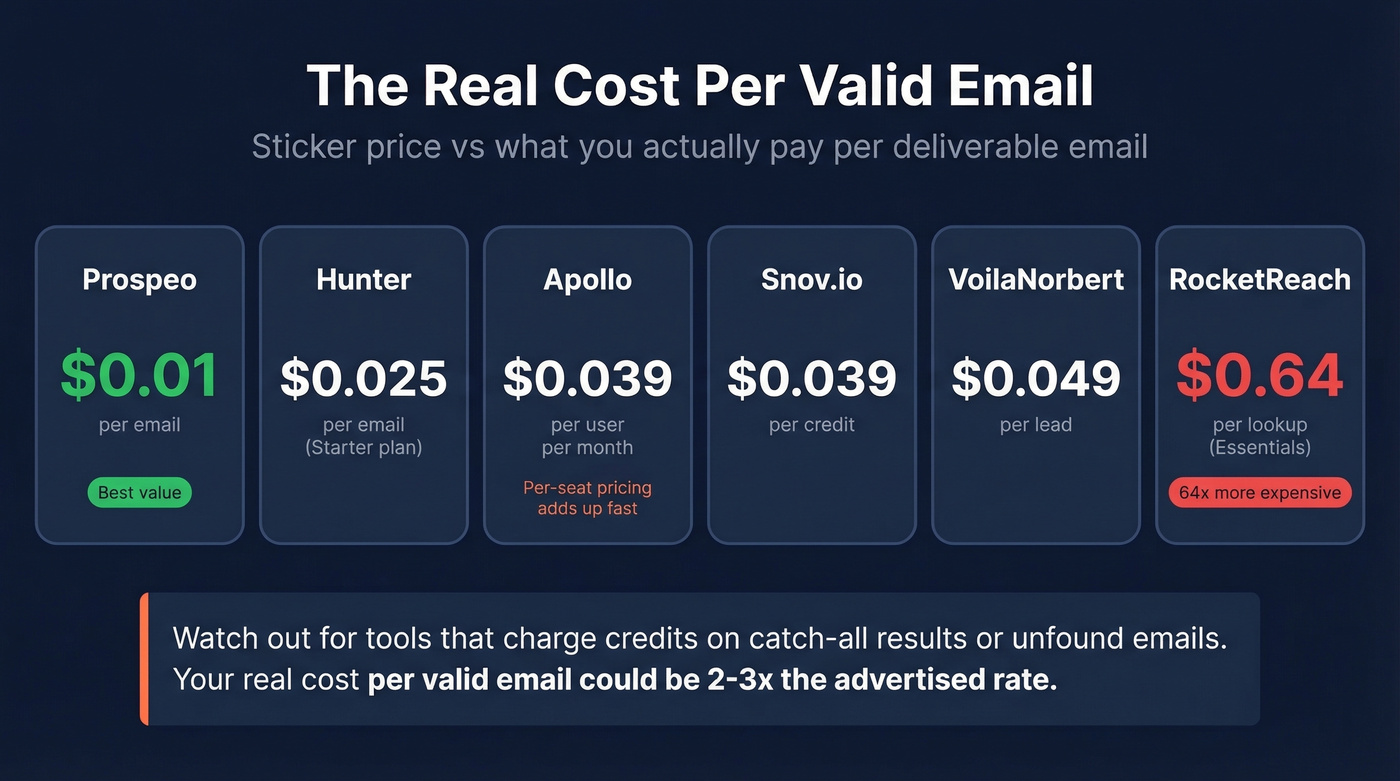
Credit economics are sneaky. Some tools charge a credit whether they find an email or not. Others charge for catch-all results that are essentially unverifiable. The real cost isn't the sticker price - it's the cost per valid, deliverable email. A $49/mo plan with 2,000 credits sounds cheap until you realize 30% of those credits returned catch-all addresses you can't safely send to. Seamless.AI has earned a brutal reputation for exactly this - users on Reddit describe the data as unusable and cancellation as a nightmare. If you're comparing vendors, our breakdown of email list providers can help.
One more data point worth knowing: roughly 70% of business emails follow the firstname.lastname@domain.com format. Any tool that just guesses patterns and verifies them can hit decent numbers on common domains. The real test is how a tool handles the other 30% - the custom formats, the catch-all domains, the recently changed roles. That's where a reliable email lookup separates itself from a glorified pattern guesser. For more tactics, see how to generate an email list.
The 10 Best Person Email Finder Tools for 2026
1. Prospeo - Best for Accuracy and Freshness
Use this if: You're running outbound at scale and can't afford bounces. Your domain reputation is either pristine and you want to keep it that way, or it's been damaged by bad data and you need a clean source. If you're also tightening your sending setup, use this email deliverability guide as your checklist.
Skip this if: You need a free-forever tool with zero budget, though the free tier gives you 75 emails/month to test.
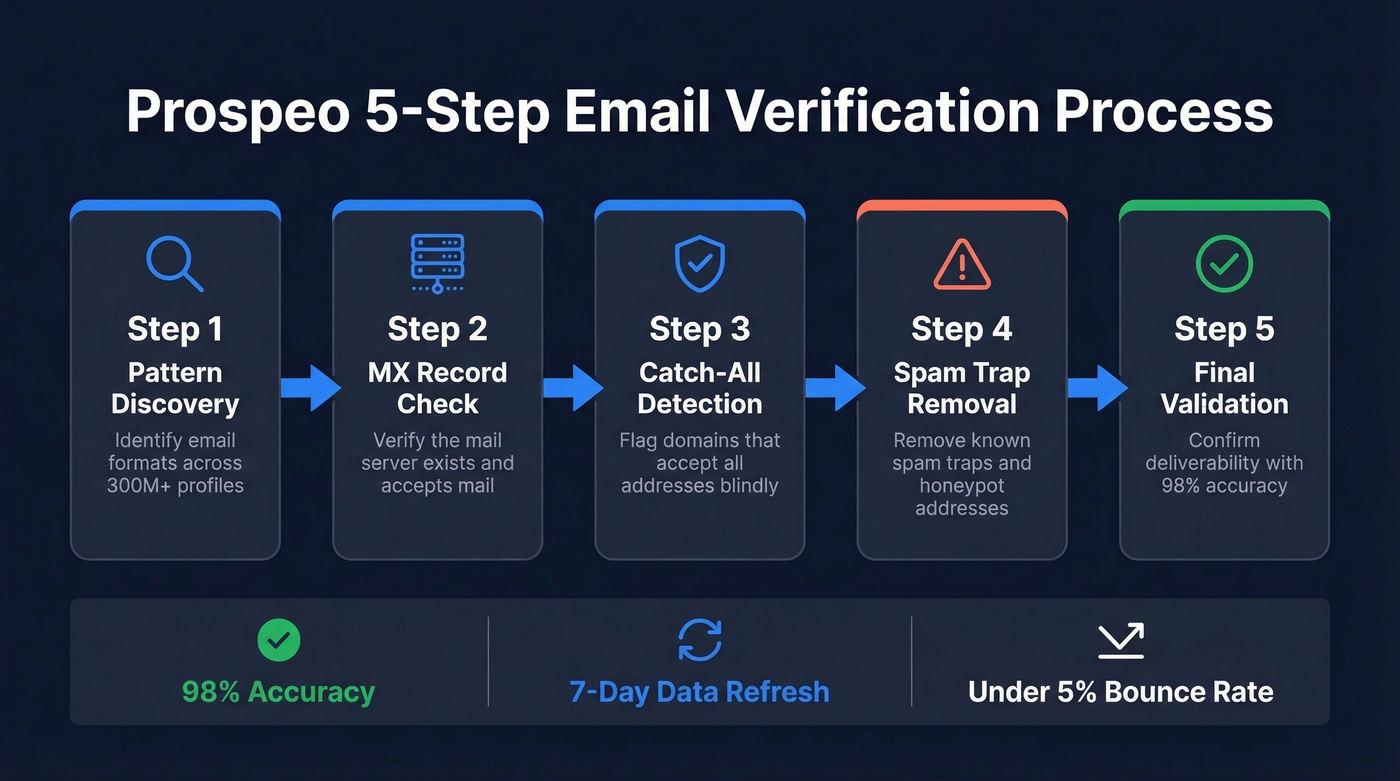
Prospeo's 300M+ profiles run through a 5-step verification process that includes catch-all handling, spam-trap removal, and honeypot filtering. The result is 98% email accuracy - not a marketing claim, but what we consistently see in production sends. Stack Optimize built from $0 to $1M ARR using Prospeo data, maintaining 94%+ deliverability with zero domain flags across all their clients. Snyk's 50-person AE team cut bounce rates from 35-40% to under 5% and generated 200+ new opportunities per month after switching.

The 7-day data refresh cycle is what matters most in practice. While most tools refresh every four to six weeks, Prospeo catches job changes and role updates weekly - critical when you're prospecting into fast-moving tech companies where 20% of your list churns every quarter. The platform includes 30+ search filters covering intent data powered by Bombora (15,000 topics), technographics, job change signals, funding events, and more, plus 125M+ verified mobile numbers with a 30% pickup rate.
Integrations cover the major stacks: Salesforce, HubSpot, Instantly, Smartlead, Lemlist, Clay, Zapier, and Make. The Chrome extension (40,000+ users) works on company websites and professional profiles for one-click prospecting.
Pricing runs ~$0.01/email with a free tier of 75 emails/month. No contracts, no sales calls required.
2. Hunter - Best for Verification
Hunter hit 85% accuracy in a 200-profile SaaS decision-maker test - solid, though not top of the pack. Its strength is verification, not discovery. The domain search lets you plug in a company URL and see every email pattern associated with it, which is great for targeted account-based prospecting. If you're evaluating alternatives, see our list of Hunter alternatives.
Reddit sentiment is consistent: Hunter has "solid verification accuracy" but the "database is pretty small" compared to dedicated prospecting platforms. If you already have prospect names and domains and need a reliable verification layer, Hunter delivers. If you need a large primary database for cold outbound, look elsewhere.

Pricing is straightforward. Free for 50 credits/month, Starter at $49/mo for 2,000 credits, Growth at $149/mo for 10,000 credits, Scale at $299/mo for 25,000 credits. That puts the Starter plan at about $0.025/email. Annual billing drops those numbers by roughly 30%. The email sequence feature (up to 2,500 recipients on Starter) makes it a decent lightweight outreach tool for small teams who don't need a separate sending platform.
3. Apollo - Best Free Tier
Use this if: You're bootstrapping and need access to a massive database without paying anything. Apollo's free plan with unlimited email searches is one of the best no-cost entry points in the market.
Skip this if: You're sending at scale without a separate verification step. The Reddit consensus on Apollo's data quality is blunt - "data feels bad sometimes" and "lots of bounces on older contacts."
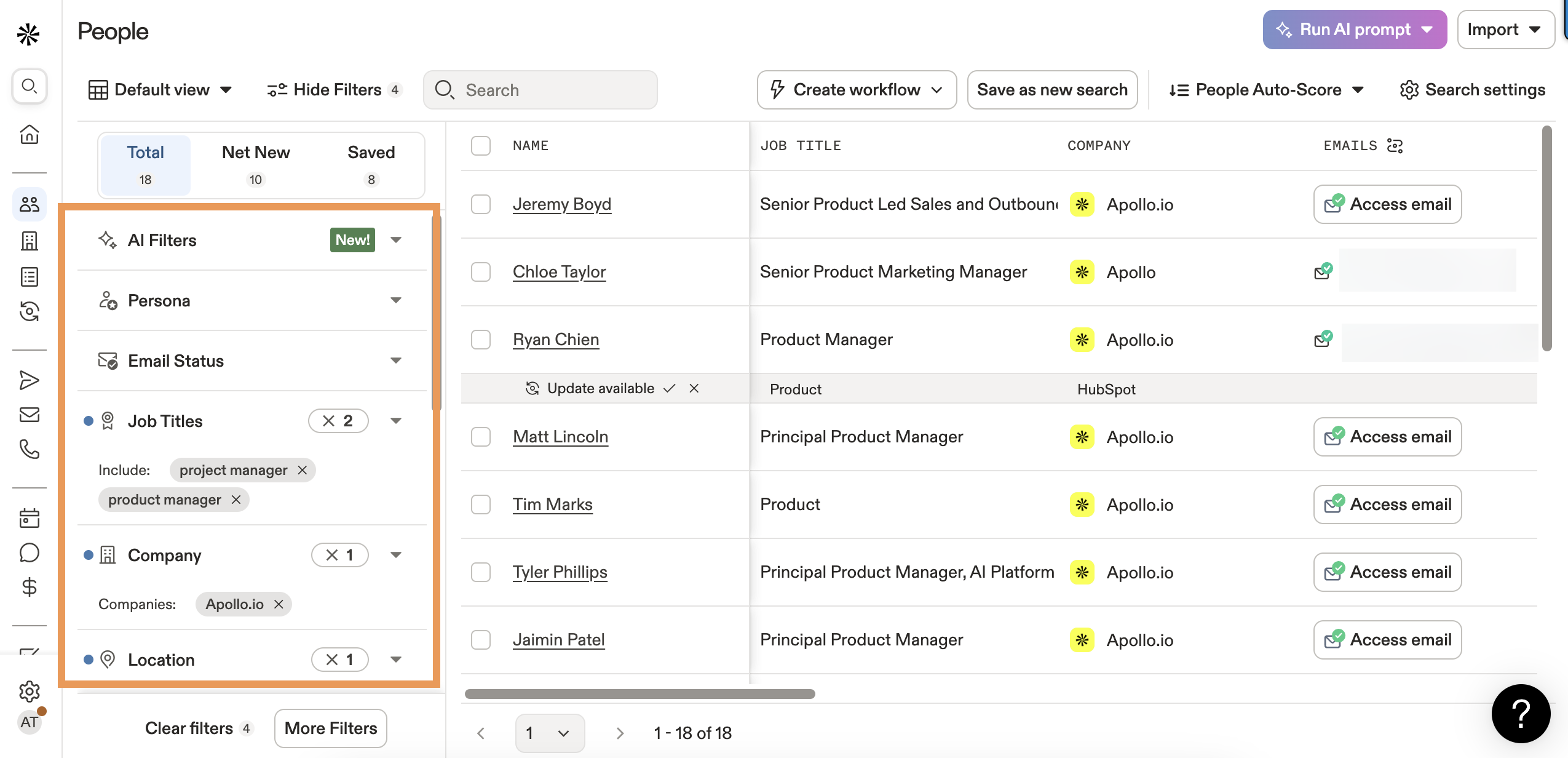
Apollo covers 250M+ contacts and the free plan offers unlimited email searches. Paid plans start at $39/mo per user, and per-seat pricing is the pain point: a 5-person SDR team is looking at $195+/mo before you've sent a single email. If you're building a broader stack, compare it with other SDR tools.
In the same 200-profile benchmark, Apollo scored 88% accuracy - respectable, but that remaining 12% will hurt at volume. We've seen teams pair Apollo's free tier with a dedicated verifier and get better results than paying for Apollo's premium plans alone. The platform also includes a built-in sequencer, which makes it appealing for teams that want to minimize tool count. Just don't trust the verification on older records without a second pass.
4. VoilaNorbert - Best Finding + Verification Combo
VoilaNorbert quietly outperformed bigger names in the Ahrefs email finder test, hitting a 92% success rate - the highest in their evaluation. Ahrefs' research puts VoilaNorbert at 1.3x Hunter's accuracy and 3.3x Snov.io's. The tool only charges for found emails, which means your credits don't evaporate on dead ends. That's a meaningful difference when you're prospecting into niche industries where match rates drop.
Pricing starts at $49/mo for 1,000 leads, scaling to $499/mo for 50,000. The real gem is the pay-as-you-go verification at $0.003/email - one of the cheapest standalone verification rates available. You get 50 free credits to test. For teams that want finding and verification from one vendor without enterprise complexity, Norbert hits a sweet spot that tools like RocketReach and Cognism price themselves out of.
5. RocketReach - Enterprise Option
RocketReach positions itself as an enterprise-grade contact database, and the pricing reflects that ambition. The Individual Essentials plan runs $80/mo for just 125 lookups - that's $0.64 per email. You're paying 64x what the cheapest tools on this list charge.
The Pro plan at $150/mo gets you 375 lookups with phone numbers included. Team plans drop to $83-$207/user/mo on annual contracts, with 3,600-10,000 lookups per user. Additional lookups run $0.30-$0.45 each. If your company already has a RocketReach contract and the data quality works for your ICP, fine. But for teams evaluating fresh, the cost-per-email math is brutal compared to nearly every alternative here.
6. Snov.io - Best for International Leads
Snov.io combines email finding with built-in outreach sequences, which makes it popular with small agencies and international teams. Reddit users consistently flag it as "good for international leads" with "affordable credits." The free tier gives you 50 credits/month, and paid plans start at $39/mo for 1,000 credits.
For teams selling outside North America - particularly into markets where the bigger databases have thinner coverage - Snov.io's breadth-over-depth approach works well. The built-in drip campaigns mean one fewer tool in your stack, though dedicated sending platforms like Instantly still offer better deliverability controls.
7. ContactOut - Best for Recruiting
ContactOut's 800M+ profile database skews heavily toward recruiting use cases. Their own benchmark of 200 SaaS decision-maker profiles showed 90% accuracy. That's a vendor-run test where ContactOut ranked #1, so take the absolute number directionally - but the relative ordering of other tools in the same test is still informative.
The free tier offers 15 credits per day, which is generous for individual recruiters doing targeted sourcing. CCPA and GDPR compliant. If you're in talent acquisition rather than sales, ContactOut is purpose-built for your workflow. Sales teams will find the database less useful for B2B prospecting at scale.
8. GetProspect
GetProspect offers a Chrome extension and 50 free emails/month, with paid plans from $49/mo for 1,000 emails. In the 200-profile benchmark, it scored 79% accuracy - the lowest among tested tools. Usable for light prospecting, but verify everything before sending.
9. Anymail Finder
Anymail Finder's pay-only-for-valid-emails model makes it the right pick for budget-conscious teams who hate wasting credits. Plans start at just $14/mo with 100 free credits to test. If zero-waste billing matters more than database depth, give it a serious look.
10. Skrapp.io
Skrapp.io offers a free tier with paid plans available, charging credits only for Valid or Catch-All results. It scored 83% accuracy in the same 200-profile test - middle of the pack. A decent budget option, but not a standout in any single category.
Pricing Comparison
The sticker price of an email finder means nothing without context. What matters is cost per valid, deliverable email.
| Tool | Free Tier | Starter Price | Credits/Mo | Cost/Email |
|---|---|---|---|---|
| Prospeo | 75 emails/mo | ~$39/mo | ~3,900 | ~$0.01 |
| Hunter | 50 credits/mo | $49/mo | 2,000 | ~$0.025 |
| Apollo | Unlimited search | $39/mo/user | - | ~$0.02-0.05 |
| VoilaNorbert | 50 credits | $49/mo | 1,000 | ~$0.049 |
| Snov.io | 50 credits/mo | $39/mo | 1,000 | ~$0.039 |
| RocketReach | None | $80/mo | 125 | ~$0.64 |
| ContactOut | ~450/mo | ~$29+/mo | - | ~$0.05-0.10 |
| GetProspect | 50 emails/mo | $49/mo | 1,000 | ~$0.049 |
| Anymail Finder | 100 credits | $14/mo | ~200 | ~$0.07 |
| Skrapp.io | Free tier | Paid plans available | - | Not public |
The cost-per-email column divides the starter plan price by included credits. Real-world cost is higher because not every credit returns a usable email - catch-all results, not-found queries, and invalid returns all eat credits on most platforms. At $0.01/email with 98% accuracy, Prospeo delivers the best cost-per-valid-email ratio on this list. RocketReach at $0.64/email is 64x more expensive per contact.

You just read that 28% of emails checked are invalid or risky. Prospeo's 5-step verification - with catch-all handling, spam-trap removal, and honeypot filtering - delivers 98% email accuracy across 300M+ profiles. Snyk cut bounce rates from 35% to under 5% after switching.
Stop paying credits for emails that bounce or belong to the wrong person.
Independent Accuracy Benchmarks
Vendor accuracy claims are marketing. Independent benchmarks are data.
The most rigorous test available is the Dropcontact benchmark: 20,000 real contacts (9,800 US, 9,700 Europe, 500 rest of world) tested across 15 tools. The methodology was unusually thorough - they actually sent emails to measure hard bounces, then manually audited domains to catch wrong-company matches. Dropcontact funded the study and ranked #1, so factor that in.
| Tool | Effective Rate | Hard Bounce | Wrong Domain | Total Error |
|---|---|---|---|---|
| Dropcontact | 54.9% | 0.9% | 1.0% | 1.9% |
| Fullenrich | 48.3% | 3.6% | 11.7% | 15.3% |
| Enrow | 40.9% | 2.3% | 5.8% | 8.1% |
| Findymail | 39.9% | 1.1% | 5.2% | 6.2% |
| Icypeas | 31.6% | 1.0% | 5.8% | 6.8% |
A separate 200-profile benchmark tested 12 tools on SaaS decision-makers. ContactOut led at 90%, followed by Apollo (88%), Cognism (86%), Hunter (85%), Skrapp (83%), and Instantly (82%). Smaller sample, vendor-run - but the relative ordering is still useful.
Ahrefs tested several tools against their own contact list and found VoilaNorbert leading at 92%.
Why do these numbers differ so wildly? Sample size (200 profiles vs. 20,000 contacts), methodology ("found an email" vs. "found a deliverable email for the right person"), and input quality (name + company vs. name + domain + title). Take any single benchmark as directional, not definitive. The pattern across all tests: most tools cluster between 80-92% on found rate, but effective deliverability after wrong-domain errors drops significantly.
Email Verification Statuses Explained
When an email finder returns a result, it comes with a status. Understanding these saves you from sending to addresses that'll damage your domain. Remember that 28% stat from the intro? That's nearly one in three. Here's what each status means and why it matters.
Valid: The email server confirmed this address exists and accepts mail. Safe to send. This is what you want.
Risky (Catch-All / Greylisting): The domain accepts mail for any address - so the tool can't confirm whether your specific email exists. Sending to these is a gamble: some are real, some bounce silently or land in spam traps. Greylisting temporarily rejects the first delivery attempt, which some verifiers misread as invalid.
Invalid: The email server explicitly rejected this address. Don't send. Ever.
Not Found: The tool couldn't locate an email for this person. No charge on most platforms, though check your tool's credit policy. If you're troubleshooting gaps, see Email Not Found? for fixes.
Here's the thing: don't re-verify emails already marked valid by a quality finder using a weaker verifier. A lower-quality tool can incorrectly flag deliverable catch-all emails as risky, causing you to discard good contacts. We've seen this happen more than once - teams running a second verification pass with a cheap tool and throwing out perfectly good addresses.
How to Find Someone's Email for Free
Not every lookup needs a paid tool. Here are four methods that work when you need to find an email address without spending a dime.
Guess and verify. Try firstname.lastname@domain.com - it works roughly 70% of the time. Then run it through a free verification tool to confirm before sending. If you want a deeper walkthrough, read our name to email guide.
Google advanced search. Use "@company.com" "person name" in Google. Company press releases, conference speaker pages, and PDF documents often expose email addresses that aren't visible on the company website. This search-by-name technique is surprisingly effective for executives who speak at conferences or publish research.
Newsletter reverse-engineering. Sign up for the company's newsletter or download a whitepaper. The sender email in the confirmation often reveals the company's email format. Once you have the pattern, you can construct any address at that domain.
Name2Email Chrome extension. Free, unlimited, no bulk capability. Type a name and domain into Gmail's compose window and it suggests likely email permutations. Great for individual lookups, useless at scale.
Don't count on social profiles for this - Ahrefs found only 7% of their list had publicly visible emails on professional platforms.
These methods don't scale past a handful of lookups per day. That's the fundamental tradeoff: free methods trade your time for money. Once you're prospecting more than 20-30 contacts per week, a paid tool pays for itself in hours saved.
Build Your Email Finding Stack
Let's be honest: if your average deal size is under $10k, you probably don't need a $500/mo data platform. A $39-49/mo tool with rigorous verification will outperform an enterprise platform where nobody checks bounce rates. The stack you build matters less than the discipline you bring to data quality.
The cold email practitioners on r/coldemail break their tooling into four layers: data, verification, inbox infrastructure, and campaign sending. Most teams buy tools for each layer separately, which creates integration headaches and data quality gaps between steps.
The minimal viable stack is two tools: a data source with built-in verification, plus a sending platform. Pair something like Prospeo with Instantly or Smartlead for sending, and you've got a complete outbound stack without the integration headaches of four separate tools. If you're scaling outreach, this pairs well with a solid B2B cold email sequence.
For budget teams: Apollo's free tier for data, a dedicated verifier, and Instantly for sending. Three tools, near-zero cost, functional outbound. The tradeoff is manual CSV exports between each step and Apollo's data quality issues on older contacts.
Operational rules that experienced operators swear by: keep your bounce rate under 1.5% (above that, your inbox infrastructure is at risk). Limit sends to 15-20 per day per inbox. And treat verification as non-optional - I've watched teams skip this step to save $50/month and lose a domain worth thousands in warmup time. Whether you're doing a single-contact lookup or bulk prospecting, verification is the step that protects your sender reputation. For bounce thresholds and fixes, see our email bounce rate guide.
A 6-week data refresh means your person email finder is returning stale contacts while prospects change jobs. Prospeo refreshes every 7 days - so the email you find today is still valid when your sequence hits their inbox tomorrow. At ~$0.01/email, no contracts required.
Find anyone's real email with 98% accuracy and weekly-fresh data.
FAQ
What's the most accurate person email finder in 2026?
In third-party benchmarks, top tools range from 82-92% accuracy depending on methodology and sample size. Prospeo reports 98% accuracy with a 5-step verification process. The Dropcontact study found wrong-domain error rates as high as 11.7%, so look beyond "found rate" to deliverable-to-the-right-person rate.
Can I find someone's email address for free?
Yes - try firstname.lastname@domain.com, which works about 70% of the time, then verify with a free checker. Google operators, Name2Email's Chrome extension, and company newsletter sign-ups also reveal email patterns. Free methods work for one-off lookups but don't scale beyond 20-30 contacts per week.
What's the difference between found rate and deliverable rate?
Found rate means the tool returned an email address. Deliverable rate means that email actually reaches an inbox without bouncing. The Dropcontact benchmark showed wrong-domain error rates up to 11.7% - the email was "found" but belonged to someone at the wrong company entirely.
How many email finder tools do I need?
Two to three, maximum. One data source with built-in verification, one sending platform, and optionally a dedicated verifier if your primary source doesn't verify natively. More tools means more integration headaches with diminishing returns.
What bounce rate is acceptable for cold email?
Keep it under 3%, ideally under 1.5%. Anything above 5% risks serious domain reputation damage. Experienced cold emailers on Reddit flag 1.5% as the red line - above that, your sender reputation is actively degrading with every send.