

The B2B Prospecting Guide That Skips the Fluff
A new SDR opens a spreadsheet on day one, guesses email formats for 200 contacts, loads them into a sequence, and watches a 28% bounce rate tank the domain within three weeks. We've seen this play out dozens of times. Roughly 30% of B2B data decays every year, so even a perfect January list is riddled with dead addresses by summer. Prospecting isn't hard because outreach is hard - it's hard because most teams start with garbage data and never recover.
This guide fixes that.
What You Need (Quick Version)
Here's the entire framework in seven lines:
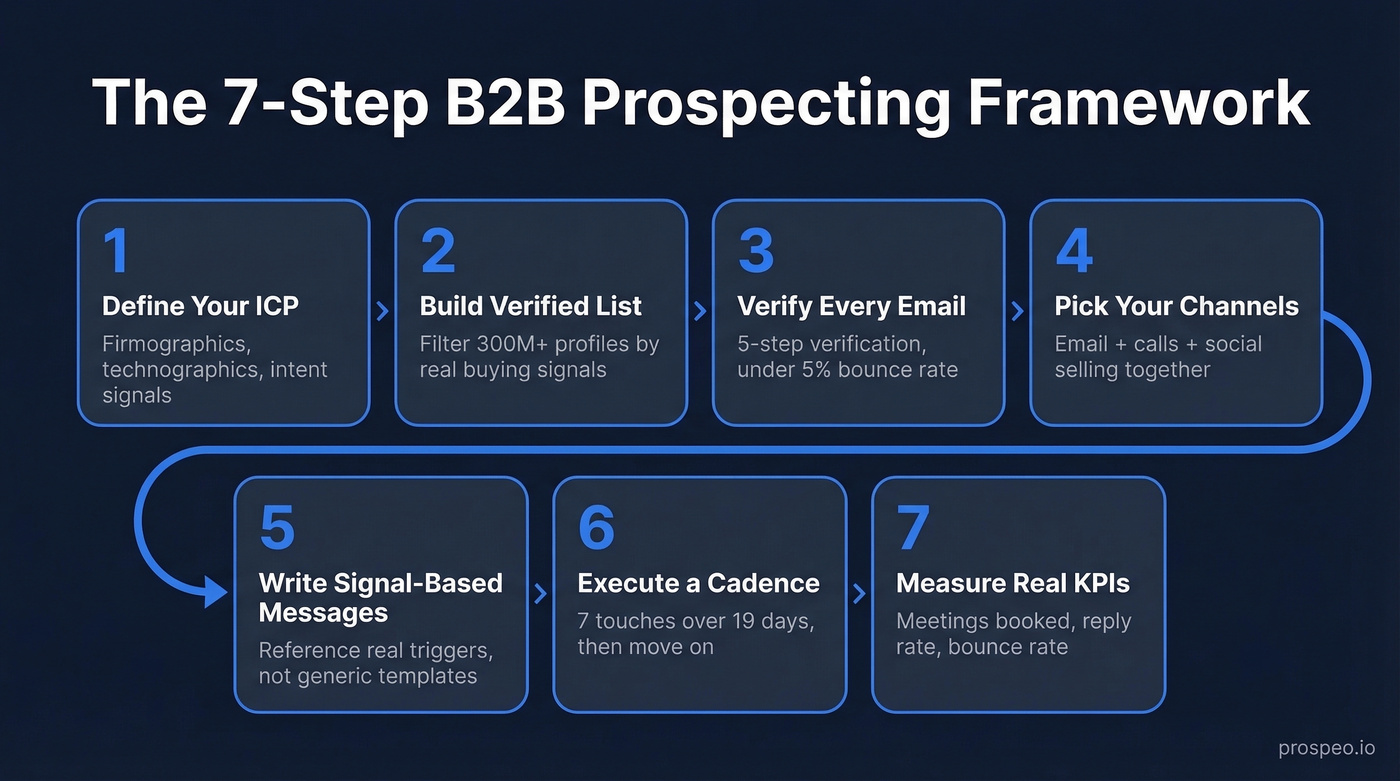
- Define your ICP before you touch a single tool
- Build a verified prospect list - not a guessed one
- Run every email through real-time verification
- Layer cold email, cold calls, and social selling
- Write signal-based messages, not generic templates
- Execute a structured multi-touch cadence
- Measure bounce rate, reply rate, and meetings booked - not "emails sent"
Hot take: most teams don't need a $15-40K/year ZoomInfo contract. A self-serve stack under $200/month books more meetings for teams under 20 reps, and the data backs that up - teams report 26% more meetings booked versus ZoomInfo and 35% more versus Apollo when using verified, frequently refreshed contact data.

This guide works best when your data doesn't fight you. Prospeo gives you 300M+ profiles filtered by intent, tech stack, and headcount growth - all verified at 98% accuracy on a 7-day refresh. Teams book 26% more meetings vs ZoomInfo at 1% of the cost.
Build your first verified prospect list in under five minutes.
The Verified Outbound Framework
Define Your ICP First
Most guides jump straight to tools. That's backwards. Your ICP should cover three dimensions:
- Firmographics - industry, company size, revenue range, geography
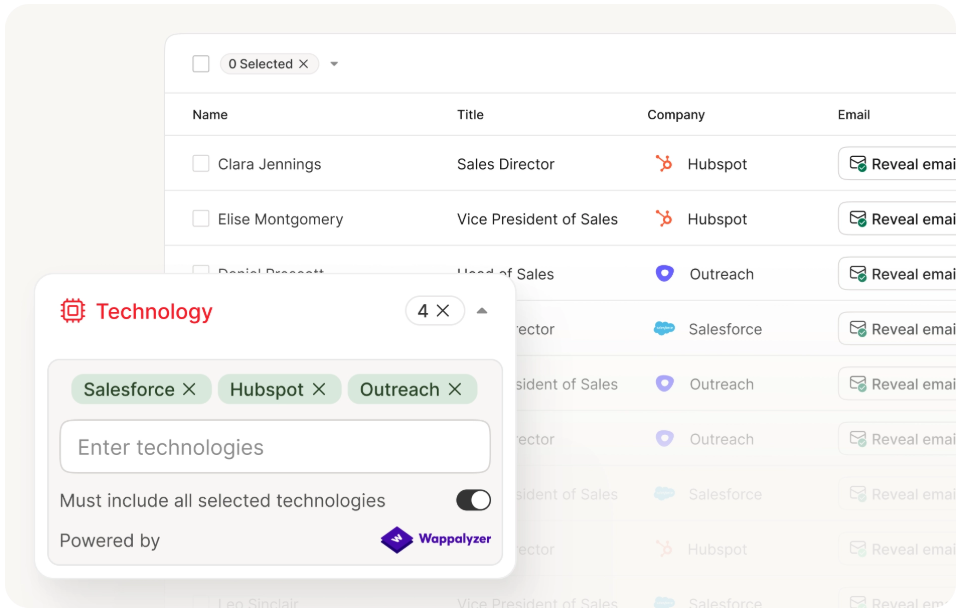
- Technographics - what software they run (a SaaS company using Salesforce and Outreach is a different buyer than one running on spreadsheets)
- Intent signals - are they actively researching solutions in your category? Bombora tracks 15,000 intent topics, and layering these signals onto firmographic filters separates spray-and-pray from precision targeting
Write this down before you open any database. A tight ICP means every downstream step - list building, messaging, channel selection - gets dramatically easier. Skip this and you'll waste weeks emailing people who were never going to buy.
If you want a plug-and-play doc, use an ICP template and scoring rubric.
Build a Verified Prospect List
Once your ICP is locked, you need contacts that match it with emails that actually work. Prospeo lets you filter across 300M+ professional profiles by buyer intent, tech stack, headcount growth, job changes, funding rounds, and 30+ other criteria. Every email is verified in real time at 98% accuracy on a 7-day data refresh cycle. The industry average refresh? Six weeks. That gap is where bounces come from.
The cost difference matters too. Legacy providers like ZoomInfo average roughly $1 per lead. Prospeo runs about $0.01 per email. For a 5,000-contact campaign, that's $50 versus $5,000 - with better accuracy.
If you're comparing providers, start with a shortlist of sales prospecting databases and how they price/refresh data.

Verify Before You Hit Send
Even if your data source is solid, verification is non-negotiable. One bad send can torch your domain reputation for months.
A proper 5-step verification process catches invalid addresses, spam traps, and honeypots before they ever hit your sequence. The results speak for themselves: Snyk's team of 50 AEs went from a 35-40% bounce rate to under 5% after switching to verified data, contributing to 200+ new AE-sourced opportunities per month. SDRs on r/sales consistently say verified data is the single biggest lever for improving reply rates - and the numbers prove them right.
If you're troubleshooting deliverability, start with bounce rate benchmarks and fixes, then work through a full email deliverability checklist.
Pick Your Outreach Channels
No single channel wins on its own. Multi-channel cadences deliver 2-3x the reply rate of email-only sequences. You need to meet buyers wherever they are - inbox, phone, or social feed - rather than betting everything on one touchpoint.
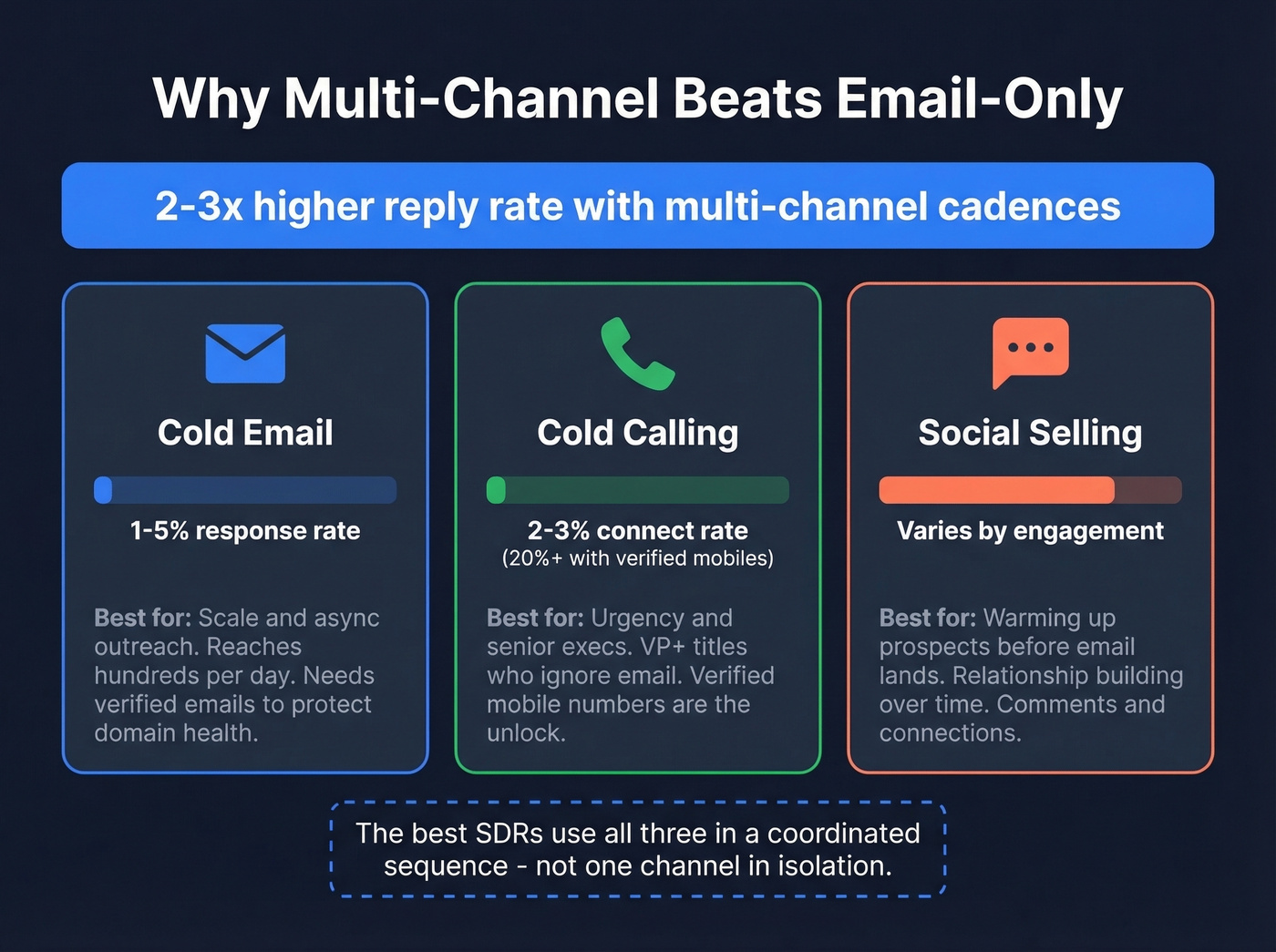
| Channel | Avg. Response Rate | Best For |
|---|---|---|
| [Cold email | 1-5%](https://www.gmass.co/blog/average-cold-email-response-rate/) | Scale, async outreach |
| Cold call | 2-3% connect | Urgency, senior execs |
| Social selling | Varies | Relationship building |
Cold email gives you scale. Cold calling gives you immediacy, especially for VP+ titles who ignore their inbox. The key to making cold calls work is verified mobile numbers - a 30% pickup rate on verified mobiles turns cold calling from a grind into a real pipeline channel. Social selling warms the ground so your email doesn't land cold.
If you want to systematize calls, build a repeatable cold calling system before you scale headcount.
The best SDRs use all three in a coordinated sequence.
Write Messages That Earn Replies
Personalization doesn't mean {first_name}. It means referencing a real signal - a job change, a funding round, a technology adoption - that explains why you're reaching out now.
We've tested both approaches extensively. Signal-based openers outperform generic ones by 3-4x. "I noticed you just hired three SDRs and are running Outreach - we help teams like yours cut list-building time by 80%" beats "I'd love to learn about your challenges" every single time. Keep subject lines under seven words. Companies with structured outreach processes generate 15% more pipeline than those winging it.
For more examples, steal from these cold email subject line examples and tighten the body with a simple email copywriting framework.
If you want a deeper dive into cold email copywriting, Jed Mahrle's practical prospecting methodology is worth studying. His signal-first, short-copy approach aligns closely with what we see working in the data.
Build a Cadence, Not a One-Off
A single email isn't prospecting. Here's a 7-touch framework that works:
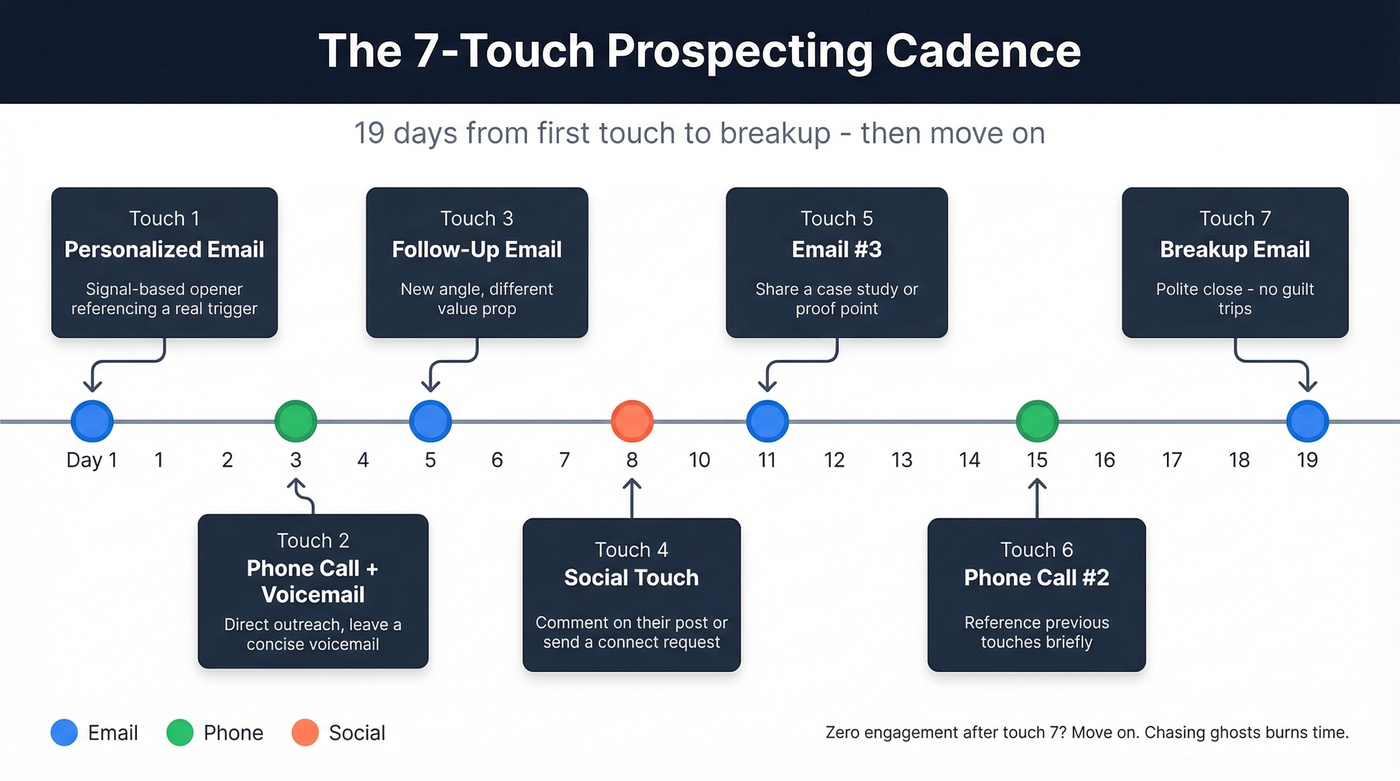
- Day 1 - Personalized email (signal-based)
- Day 3 - Phone call + voicemail
- Day 5 - Follow-up email (new angle)
- Day 8 - Social touch (comment or connect)
- Day 11 - Email #3 (case study or proof point)
- Day 15 - Phone call #2
- Day 19 - Breakup email
If there's zero engagement after touch 7, move on. Chasing ghosts burns time and morale.
For email automation, Instantly ($30-97/mo) and Smartlead ($39-94/mo) both handle sequencing well. Lemlist ($59+/mo) adds multi-channel steps if you want everything in one workflow.
If you need plug-and-play copy, keep a set of sales follow-up templates on hand for touch 3+.
Measure What Matters
Stop tracking "emails sent." These KPIs actually predict pipeline:
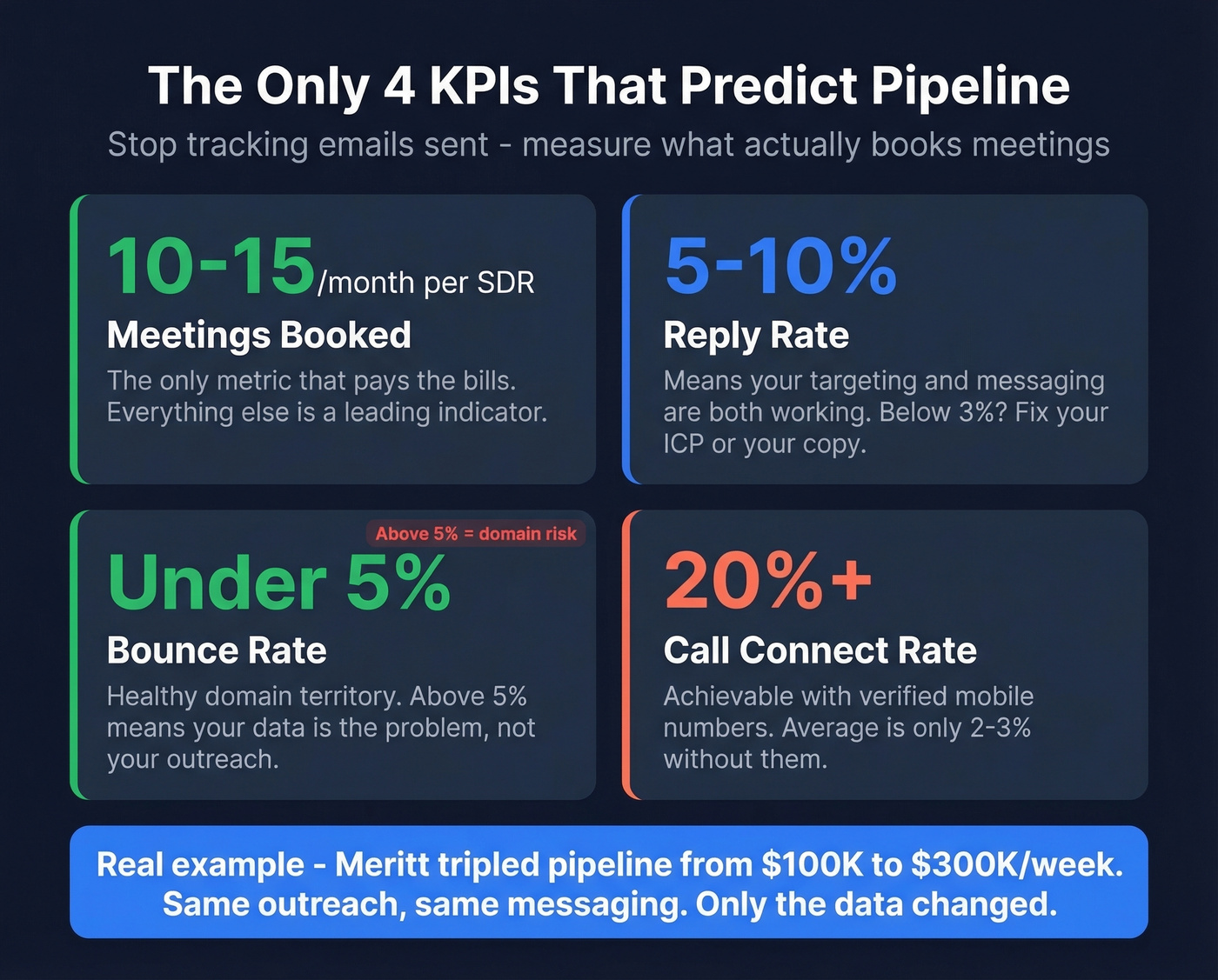
- Meetings booked - 10-15/month per SDR is a solid benchmark
- Reply rate - 5-10% means your messaging and targeting are working
- Bounce rate - under 5% is healthy; above that, your data is the problem
- Connect rate (calls) - 2-3% is average; 20%+ is achievable with verified mobile numbers
If you want to go deeper than surface-level KPIs, track funnel metrics that map directly to pipeline.
Here's a scenario that makes the point. Meritt's sales team tripled their pipeline from $100K to $300K per week after switching to verified contact data. The outreach didn't change. The messaging didn't change. The data did.
The $200/Month Prospecting Stack
You don't need a $40K platform to prospect effectively. In our experience, this stack handles everything a team of fewer than 20 reps needs:
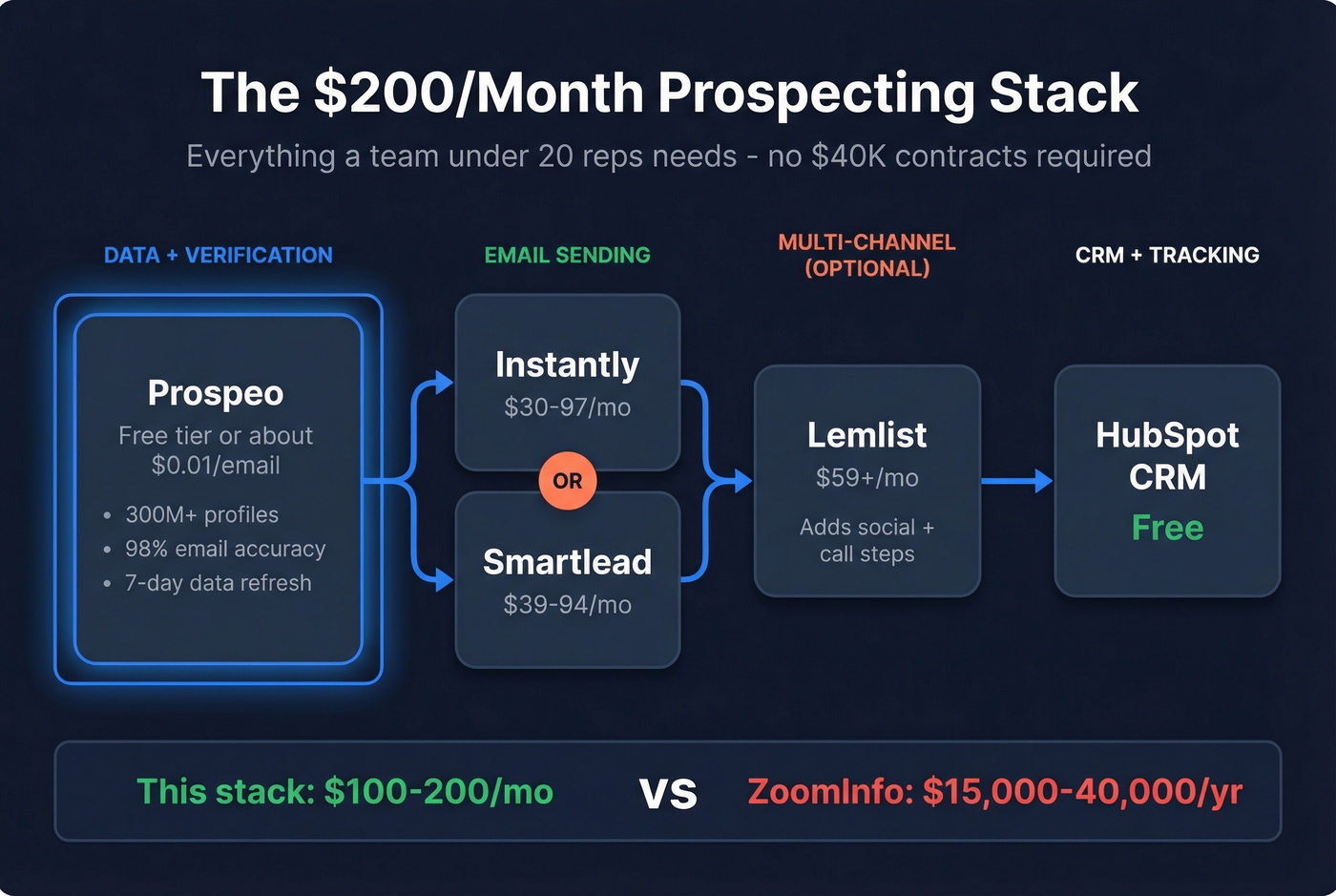
| Tool | Role | Cost |
|---|---|---|
| Prospeo | Data + verification | Free tier / ~$0.01/email |
| Instantly | Email sending | $30-97/mo |
| Smartlead | Email sending (alt) | $39-94/mo |
| HubSpot CRM | Pipeline tracking | Free |
| Lemlist (optional) | Multi-channel | $59+/mo |
Total: roughly $100-200/month. Apollo's free tier is a decent alternative database, but its email accuracy runs around 79% versus 98% with verified-first platforms - that gap shows up fast in bounce rates and domain health.
If you're building your stack from scratch, start with a shortlist of SDR tools and add only what you can operationalize.
Let's be honest: the ZoomInfo contract makes sense for 500-person sales orgs running ABM, intent, and engagement from one platform. For everyone else, skip it. This stack outperforms it at a fraction of the cost.
Bad data is the #1 reason SDRs blow up their domain in the first month. Prospeo's 5-step verification catches spam traps, honeypots, and dead addresses before they hit your sequence - the same system that took Snyk from 35% bounce rates to under 5% across 50 AEs.
Stop torching domains. Start with emails that actually land.
FAQ
How many prospects should I contact per day?
Thirty to fifty new prospects per day is a sustainable pace for most SDRs. Quality targeting beats volume - 50 well-researched contacts consistently outperform 200 scraped ones in reply rate and meetings booked.
What's a good bounce rate for cold email?
Under 5% is healthy. Above that threshold, you're risking domain reputation damage that can take weeks to repair. Always run real-time email verification before every send - a 5-step process that catches spam traps and honeypots will save you from the headaches basic validators miss.
Do I need an expensive data tool to prospect?
No. Free tiers exist that give you enough verified emails to start testing, and paid plans run about $0.01 per email - a fraction of legacy platforms charging $15-40K annually for lower accuracy. Apollo's free tier works too, though its 79% accuracy means more bounces and more domain risk over time.
What should a B2B prospecting guide cover?
At minimum: ICP definition, list building with verified data, multi-channel outreach strategy, a structured cadence, and clear KPIs. Skip any resource that starts with tools instead of targeting - that's the fastest path to wasted budget and burned domains.