

How to Purchase Sales Leads Without Burning Money or Your Domain
You buy 500 leads from a list broker. Two weeks later, you've booked two meetings, half the emails bounced, and your domain reputation is wrecked. That's not a hypothetical - it's the most common outcome when teams purchase sales leads without a framework for evaluating what they're actually getting.
We've watched this play out dozens of times. The problem isn't buying leads. It's buying the wrong kind, from the wrong source, with zero verification layer in between.
What You Need (Quick Version)
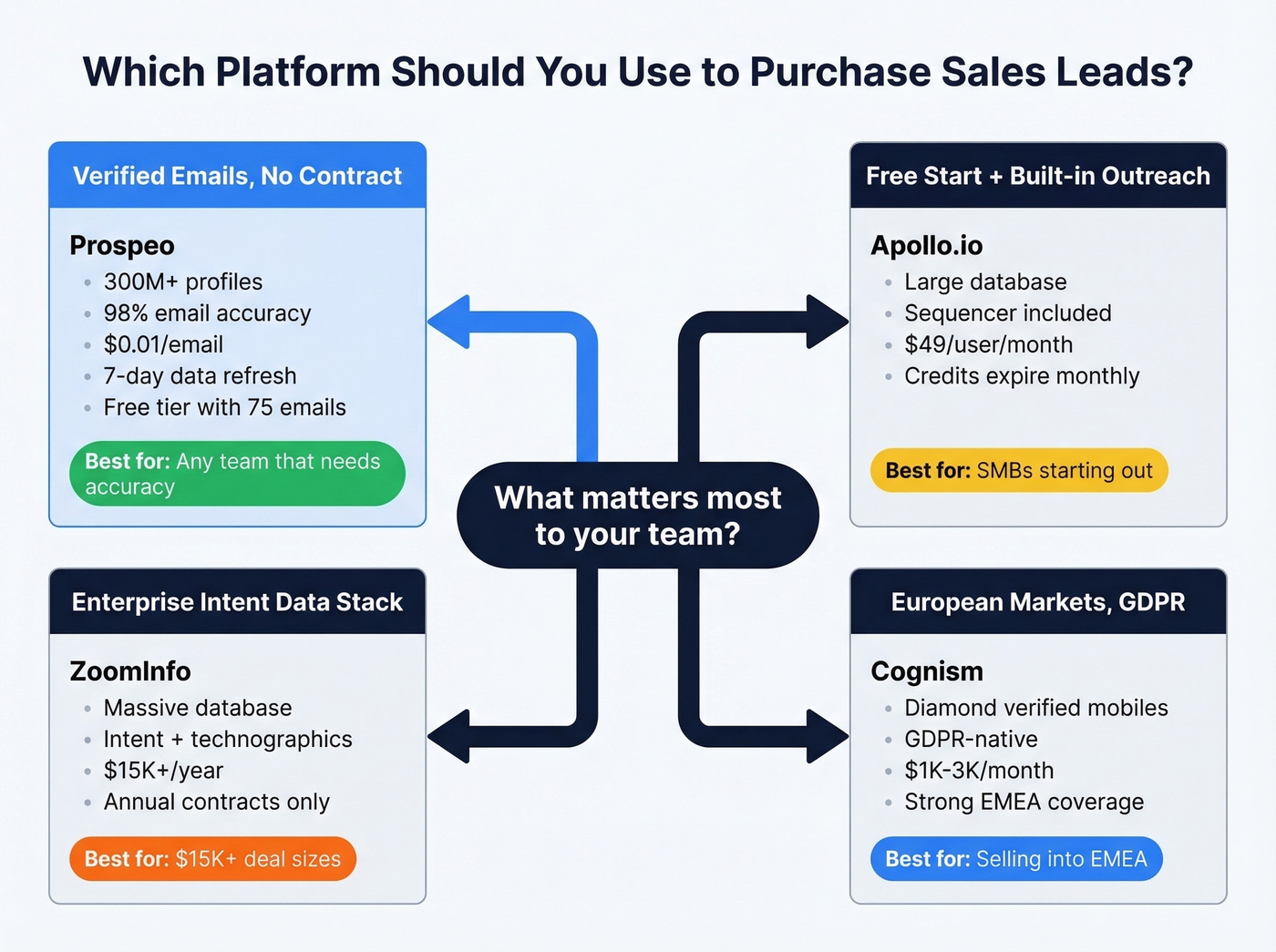
- Verified emails without a contract - Prospeo. Free tier, $0.01/email, 98% accuracy.
- Free database + built-in outreach - Apollo.io. Generous free tier, but watch credit expiration.
- Selling into Europe - Cognism. GDPR-native with Diamond-tier verified mobiles.
- $15K+ budget, enterprise needs - ZoomInfo. Intent data, technographics, the whole stack.
What "Buying Leads" Actually Means in 2026
Two fundamentally different products hide behind this phrase, and confusing them is expensive.
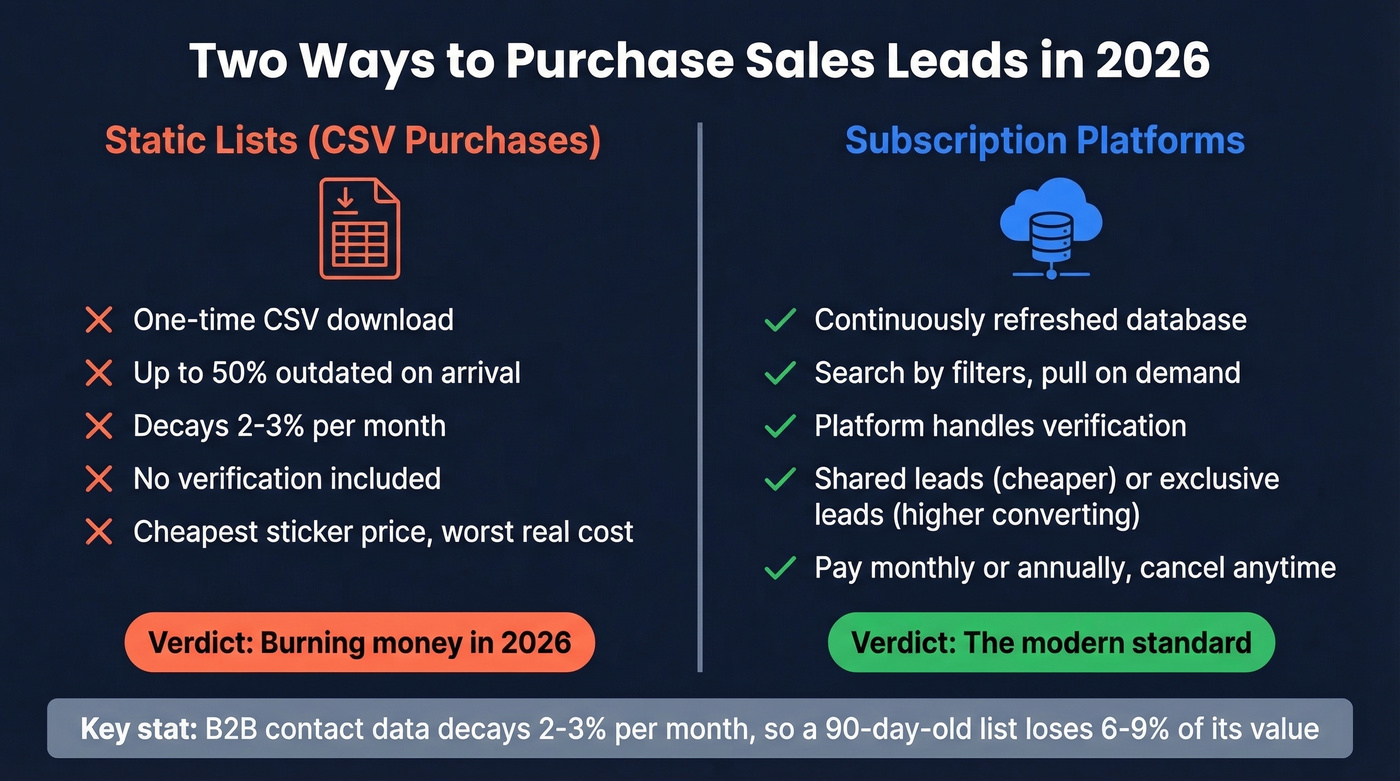
Static lists are one-time CSV purchases. You pay a few hundred bucks for 10,000 contacts, and up to 50% of them are outdated by the time you load them into your sequencer. B2B contact data decays at roughly 2-3% per month - a 90-day-old list has already lost around 6-9% of its value. If you're still buying static CSVs in 2026, you're lighting money on fire.
Subscription platforms are the modern alternative. You pay monthly or annually for access to a continuously refreshed database, search by filters, pull contacts on demand, and the platform handles verification. Two sub-types show up here: shared leads (sold to multiple buyers, cheaper but more competitive) and exclusive leads (sold to one buyer, pricier but often higher-converting since you're the only one reaching out). The market has shifted decisively toward subscriptions. The question is which platform gives you the best data for your budget.
Legal Risks You Can't Ignore
Purchasing leads is legal. Using them carelessly is not.
TCPA litigation surged nearly 95% versus the prior year. The FCC's consent revocation rules went into effect April 11, 2025 - consumers can now revoke consent by any reasonable method, and you've got 10 business days to honor it. Cross-channel effects covering both calls and texts took effect April 11, 2026.
Here's what catches people off guard: at least 15 states now have their own mini-TCPA laws. Connecticut imposes penalties up to $20,000 per violation. Texas SB 140 ties violations to treble damages and attorneys' fees. Maine requires checking the FCC Reassigned Numbers Database before initiating sales calls.
The FCC's one-to-one consent rule - which would've required separate consent for each seller - was struck down by the 11th Circuit on January 24, 2025, before it ever took effect. You can still collect consent for multiple sellers if you're otherwise TCPA-compliant. But "otherwise compliant" is doing a lot of heavy lifting in that sentence.
Practical takeaway: buy from providers who document their data sourcing. Use the data for email outreach (governed by CAN-SPAM, which is more permissive) rather than cold calling unless you've verified consent. For phone outreach, consider a consent verification layer like TrustedForm to document compliance. And if you're targeting EU contacts, GDPR applies regardless of where your company is based.
The Real Cost Per Usable Lead
Sticker price is meaningless. What matters is cost per usable lead - the price you pay divided by the contacts that actually work.
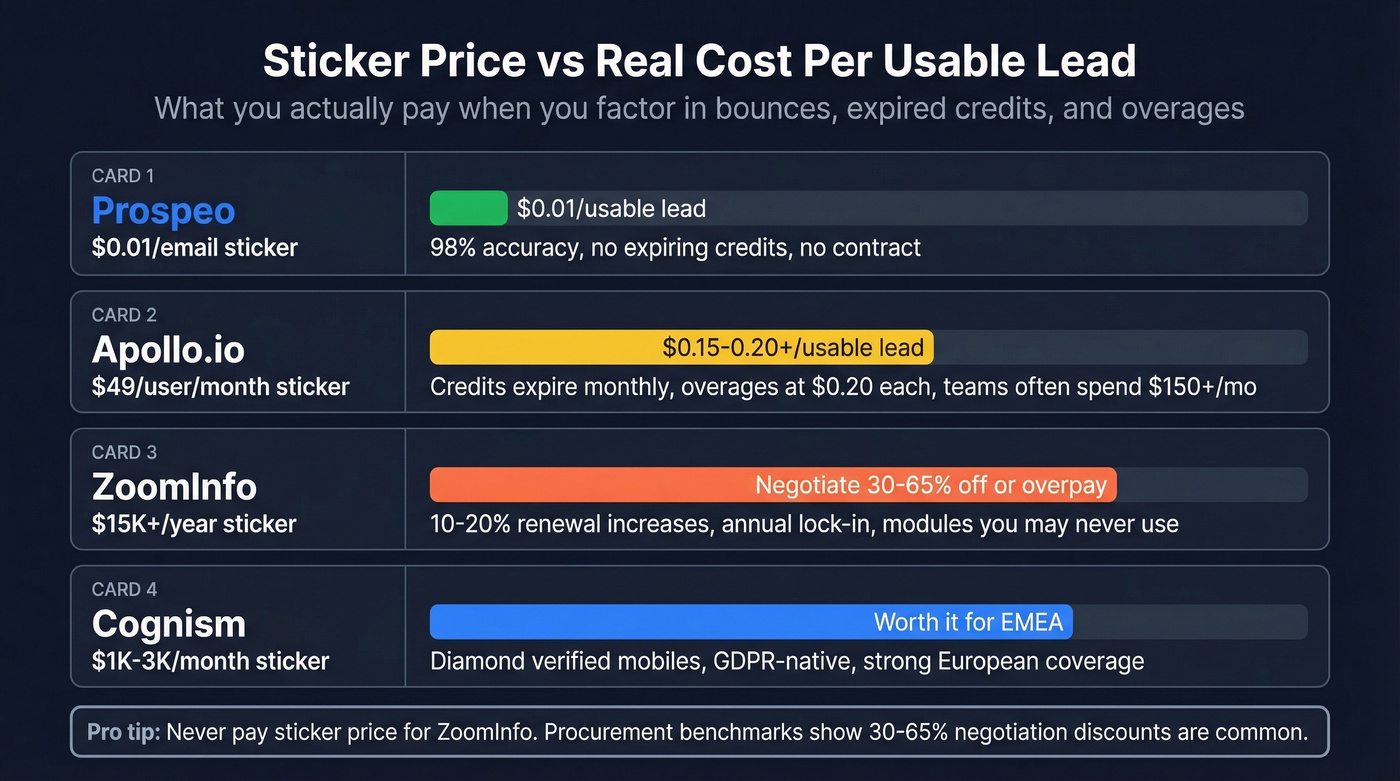
ZoomInfo's Professional tier starts around $15,000/year. But the real cost is driven by seats, credits, and add-ons, and many teams see 10-20% renewal increases. Negotiation discounts of 30-65% are common according to procurement benchmarks from Tropic, so never pay sticker price.
Apollo's "$49/month" sticker is similarly misleading. Credits expire every billing cycle and don't roll over. Extra credits cost $0.20 each. We've seen teams on the $79/month plan spend $150+/month once you factor in overages.
Let's be honest: the fact that most lead providers still won't publish pricing tells you they're optimizing for their sales team's commission, not your buying experience.

You just read the real math: sticker price means nothing if half your leads bounce. Prospeo delivers 98% email accuracy at ~$0.01/email with a 7-day data refresh - so every lead you purchase is actually usable. Snyk cut bounce rates from 35-40% to under 5%. Meritt tripled pipeline to $300K/week.
Stop paying for leads that wreck your domain. Start with 75 free verified emails.
Quick-Reference Comparison
| Tool | Starting Price | Database | Accuracy | Best For |
|---|---|---|---|---|
| Prospeo | ~$0.01/email | 300M+ profiles | 98% | Verified emails, no contract |
| Apollo.io | $49/user/mo | Large database | Varies | Free database + outreach |
| ZoomInfo | ~$15K/yr | Massive database | Varies | Enterprise, intent data |
| Cognism | ~$1K+/mo | Large database | Diamond verified mobiles | European markets, GDPR |
| UpLead | $99/mo | B2B contacts | Varies | SMBs, straightforward prospecting |
| Lusha | ~$36/user/mo | B2B contacts | Varies | Quick lookups |
| Seamless.AI | ~$125-$200/mo est. | 1.3B+ contacts | Varies | High-volume prospecting |
| Lead411 | Not public | B2B contacts | Varies | Intent + triggers |
Best Platforms to Buy Sales Leads
Prospeo
Prospeo's database covers 300M+ professional profiles with 143M+ verified emails and 125M+ verified mobile numbers (30% pickup rate). The 98% email accuracy comes from a proprietary 5-step verification process that includes catch-all handling, spam-trap removal, and honeypot filtering. Data refreshes every 7 days - the industry average is 6 weeks.

The numbers translate to real outcomes. Snyk's 50-person AE team saw bounce rates drop from 35-40% to under 5% after switching, with AE-sourced pipeline up 180%. Meritt tripled pipeline from $100K to $300K/week with bounce rates dropping from 35% to under 4%.
Pricing is transparent and credit-based: roughly $0.01/email, 10 credits per mobile number. The free tier gives you 75 emails and 100 Chrome extension credits per month. No contracts, no sales calls required.
If you want a deeper workflow beyond raw lists, pair this with data enrichment so your messaging is actually relevant.
Apollo.io
Apollo is the obvious starting point for most SMB teams - G2 rating of 4.7/5 across 9,250 reviews. The free tier is genuinely useful, and paid plans (Basic at $49, Professional at $79, Organization at $119 per user/month) include a solid sequencer, dialer, and meeting scheduler.
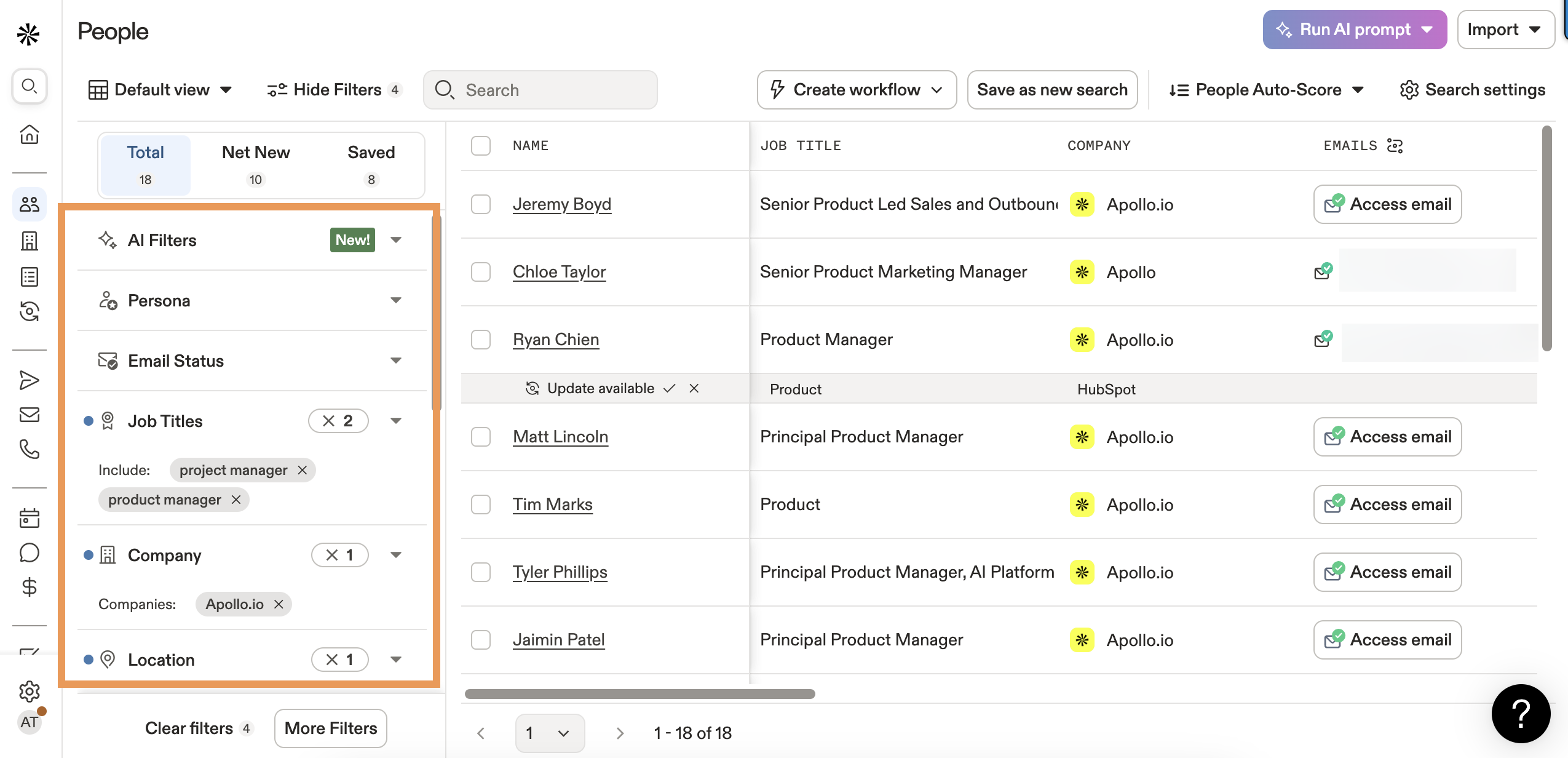
The catch: credits expire every billing cycle and don't roll over. The built-in sequencer is a genuine advantage over standalone databases, but if deliverability is your top concern, you'll want a stricter verification layer in your workflow (see email deliverability). The consensus on r/sales is that Apollo's data quality is "good enough for volume, not great for precision" - which tracks with our experience.
ZoomInfo
ZoomInfo is the default for a reason: breadth, integrations, and workflow features that no single competitor matches. G2 rating of 4.5/5 across 8,875 reviews.
The pricing reality is harsh. Professional tier runs $15,000-$18,000/year. Advanced hits $22,000-$28,000. Elite runs $35,000-$45,000+/year. Annual contracts only. The most common complaint in review forums? Price - and specifically, paying for modules you don't use.
Look, ZoomInfo is still the best all-in-one platform. But most teams don't need all-in-one. If your average deal size is under $15K, you're probably paying for capabilities you'll never touch. Skip this one unless your budget genuinely supports it and you need intent data baked into a single workflow.
If you're comparing databases specifically, start with our breakdown of sales prospecting databases.
Cognism
Cognism is the right call if you're selling into EMEA. It's GDPR-native, and the Diamond tier provides verified mobile numbers with strong European coverage. G2 rating of 4.5/5 across 1,200 reviews. Pricing typically runs $1,000-$3,000/month for small teams. For lighter-weight European coverage, Kaspr starts at EUR45/month.
UpLead, Lusha, and Others
UpLead ($99/month) is solid for SMBs that want simple list building without an enterprise contract. It also offers a free seven-day trial - enough time to test data quality against your ICP before committing.
Lusha ($36/user/month) works well for quick lookups and small teams. The Chrome extension is fast, but it's a contact-reveal tool, not a full prospecting platform.
Lead411 bundles intent-style signals and trigger-based alerts like funding rounds and job changes. Worth a look if timing your outreach matters more than raw volume (see how to track sales triggers).
Seamless.AI (estimated $125-$200/month) promotes access to 1.3B+ business contacts. Best for high-volume prospecting teams who can handle their own verification downstream.
Buying sales leads without a verification layer is how domains get burned. Prospeo's proprietary 5-step verification - catch-all handling, spam-trap removal, honeypot filtering - is built into every contact you pull from 300M+ profiles. No expired credits, no annual contracts, no sales calls.
Purchase leads you can actually send to. Free tier, no credit card required.
How to Vet a Lead Provider
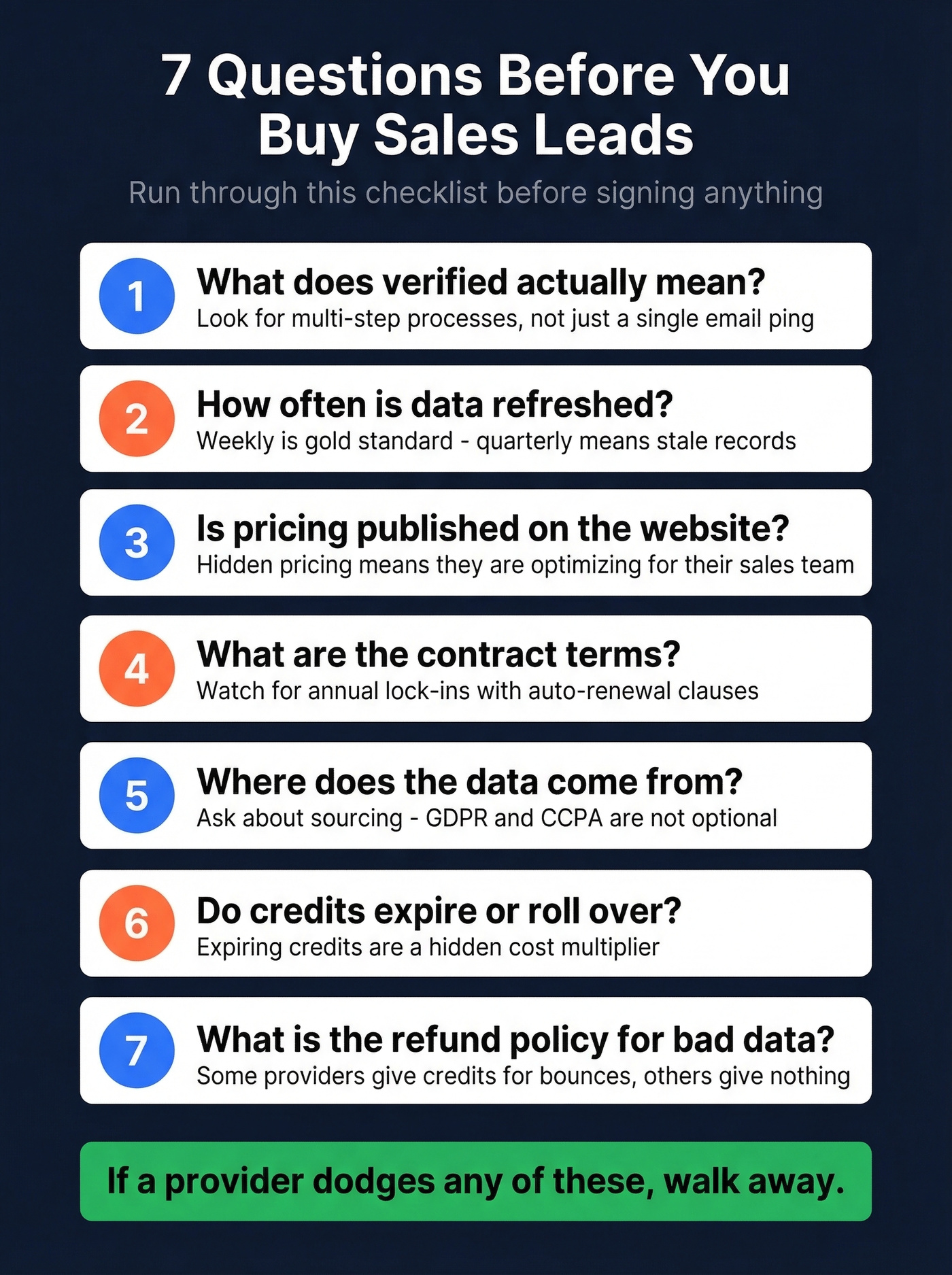
Before you sign anything, run through these questions:

- What does "verified" mean? A single email ping isn't verification. Look for multi-step processes that handle catch-all domains and filter spam traps (read our guide to spam trap removal).
- How often is data refreshed? If the answer is "quarterly" or vague, expect stale records. Weekly refresh is the gold standard.
- Is pricing published? Providers who hide pricing are optimizing for their sales team, not you.
- What are the contract terms? Annual lock-ins with auto-renewal clauses are the norm at enterprise vendors. Read the fine print.
- Where does the data come from? Ask about sourcing methodology. GDPR and CCPA aren't optional.
- Do credits expire or roll over? Expiring credits are a hidden cost multiplier that'll blow your budget projections.
- What's the refund policy for bad data? Some providers offer credits for bounced contacts. Others don't.
What to Expect After You Buy
Buying leads is step one. It's not even the hard part.
The average B2B conversion rate across industries is 2.9% - that's conversion to qualified lead, not to closed deal. The average B2B buying cycle runs 10.1 months, and 92% of buyers start with at least one vendor already in mind. The winning vendor is on the buyer's Day One shortlist 95% of the time.
Purchased leads won't generate pipeline overnight. The ROI comes from verification (so your sequences actually land), enrichment (so your messaging is relevant), and sequencing discipline (so you're following up consistently). I've talked to teams who swear "buying leads doesn't work" - and every single time, the issue was treating a raw list as a finished strategy rather than the first step in a multi-touch process. It works. But only if you build the workflow around it.
If you need help tightening the outbound motion, start with proven sales prospecting techniques and keep a set of sales follow-up templates ready for every stage.
FAQ
Is it legal to purchase sales leads?
Yes - buying contact data is legal in the US and most markets. Compliance depends on how you use it: TCPA governs calls and texts, CAN-SPAM governs email, and GDPR applies to EU contacts. Always verify your provider's data sourcing methodology before launching outbound campaigns.
How much do lead lists cost?
From $0.01/email on self-serve platforms to $1.80+/lead on enterprise platforms like ZoomInfo. Static CSV lists run a few hundred dollars for 10,000 contacts but decay at 2-3% per month, making subscriptions the better long-term value.
What's the difference between shared and exclusive leads?
Shared leads are sold to multiple buyers - cheaper but more competitive since several teams are contacting the same prospects. Exclusive leads are sold to one buyer only - typically 3-5x more expensive but often deliver higher conversion rates because you're the only one reaching out.
How do I verify a provider's data quality before committing?
Request a sample batch of 100-200 contacts and run them through an independent email verifier. Providers with genuine multi-step verification will consistently show 95%+ deliverability. A single email ping labeled "verified" usually means 70-80% at best.
Should I buy a one-time list or subscribe to a platform?
Subscribe. Static lists decay 2-3% per month, meaning a 90-day-old CSV has already lost 6-9% of its value. Subscription platforms refresh continuously, and the cost per usable lead is almost always lower over a quarter.