

The 9 Best Revenue Intelligence Platforms in 2026
A RevOps lead we know spent the first 15 minutes of every Monday forecast call reconciling numbers between Salesforce and Clari. Not discussing deals. Not coaching reps. Just arguing about which system had the right pipeline number.
That's the revenue intelligence paradox - you buy a platform to see the truth, and you end up with two versions of it.
The market is projected to hit $10.7B by 2033, growing at 12.1% CAGR. The category is also shifting from passive analytics into systems that don't just show risk but help sellers act on it with guided workflows and next-best-action queues. Vendors are multiplying, merging, and raising prices. Here are the nine platforms worth evaluating, plus the data quality problem that determines whether any of them actually work.
What Is Revenue Intelligence?
Revenue intelligence platforms use AI to analyze sales conversations, email activity, and CRM data to predict deal outcomes and surface pipeline risks. They sit on top of your CRM and try to answer the question every VP of Sales asks on Monday morning: "Is this number real?"
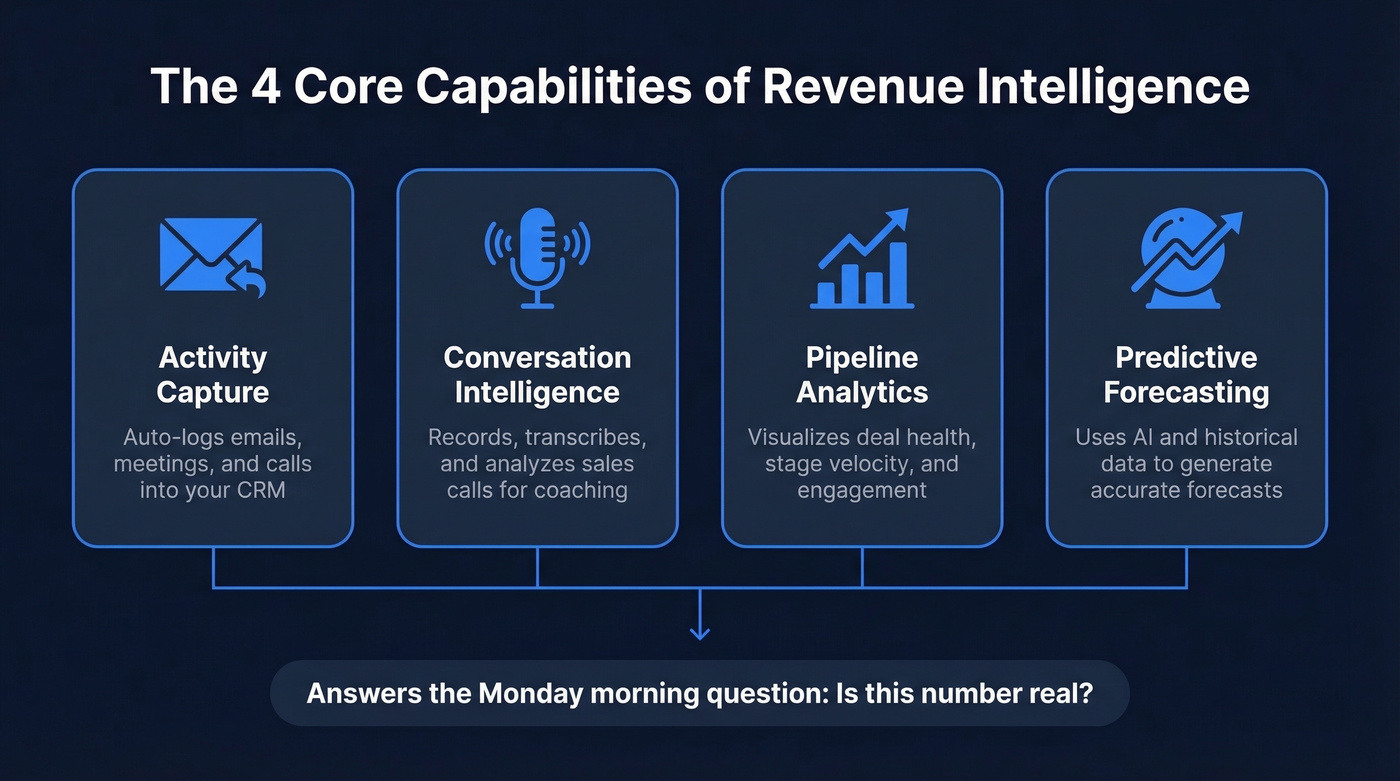
The category covers four core capabilities:
- Activity capture - automatically logging emails, meetings, and calls into the CRM
- Conversation intelligence - recording, transcribing, and analyzing sales calls for coaching insights
- Pipeline analytics - visualizing deal health, stage velocity, and engagement patterns (see pipeline health)
- Predictive forecasting - using historical data and AI to generate forecast numbers more accurate than rep gut feel (compare sales forecasting solutions)
Conversation intelligence is a subset of revenue intelligence, not a synonym. Gong started as a conversation intelligence tool and expanded into forecasting. Clari started in forecasting and acquired conversation intelligence. They're converging from opposite directions, which is why the category feels confusing. The solution you need depends on which of those four capabilities matters most right now.
Our Picks (TL;DR)
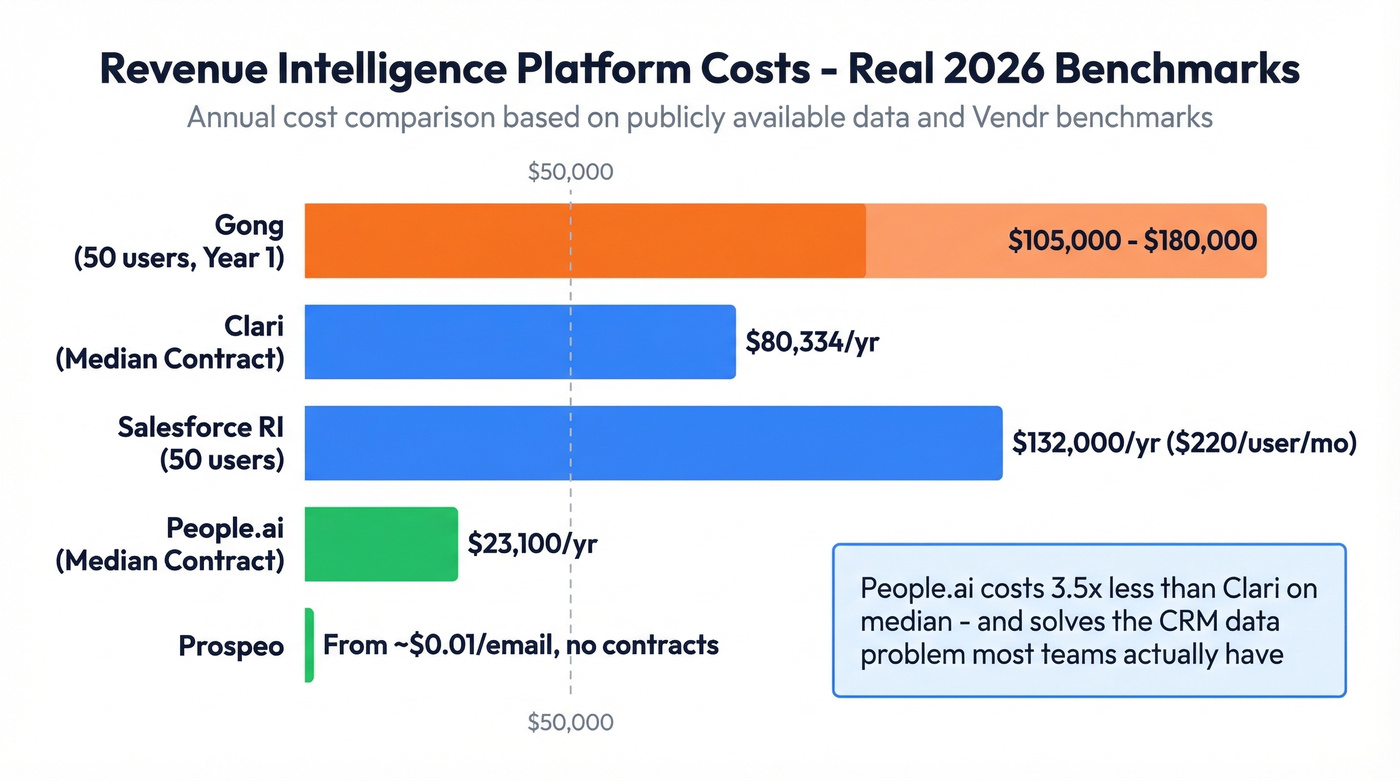
Gong - Best for conversation intelligence and coaching at scale. If your primary goal is understanding what's happening on calls, Gong is the standard. Budget accordingly - a 50-user deployment runs $105k-$180k in Year 1.
People.ai - Best for activity capture at a fraction of the enterprise forecasting suites' cost. At a median contract of $23,100/year, it's about 3.5x cheaper than Clari on median. If your problem is CRM data hygiene rather than call coaching, People.ai is the value pick.
Prospeo - Best data quality layer. Revenue intelligence is only as good as the data feeding it, and Prospeo's 98% email accuracy, 7-day refresh cycle, and credit-based pricing make it the foundation that keeps everything above it honest. (If you're evaluating vendors, start with data enrichment services.)
Let's be honest: if you're under 20 reps and don't have a CRM data problem, skip all of these and start with HubSpot's built-in revenue tools. Most teams buying six-figure analytics software would get more ROI from cleaning their CRM data and training their reps (use a 30-60-90 day plan for sales reps).
Real Costs in 2026
Nobody publishes clean pricing in this category. The fact that you need a sales call to learn what Gong costs is frustrating - and it's by design. Here are real numbers we can actually anchor.
| Tool | Pricing Reality | Contract Terms | Best For |
|---|---|---|---|
| Prospeo | Credit-based, ~$0.01/email, monthly, no lock-in | Monthly, cancel anytime | Data quality layer |
| Gong | 50-user Year 1 often lands $105k-$180k (platform fee + per-seat + implementation) | 2-3 yr, annual prepay | Call coaching |
| Clari | Modular pricing (Core + add-ons like Copilot) | Annual, modular | Forecasting |
| Salesforce RI | $220/user/month billed annually ($250/user/month with Tableau) | Annual | CRM-native analytics |
| People.ai | Median $23,100/year (range $2,316-$116,813 per Vendr) | Annual | Activity capture |
| Aviso AI | Not public; ~3-month implementation per G2 | Annual | Forecasting alternative |
| Revenue Grid | Not public; Salesforce-first positioning | Annual | Salesforce guided selling |
| Outreach | Not public; execution platform with RI add-on | Annual | Execution + RI |
| HubSpot | Built-in revenue tools inside all-in-one CRM | Annual | All-in-one simplicity |
The number that should jump out: Gong's 50-user Year 1 cost can hit $180,000. Gong uses a three-layer pricing model - per-user licenses, a mandatory platform fee, and implementation services. First-year spend often lands 40-60% above what you'd calculate by multiplying the seat price by headcount.
Clari's median contract value on Vendr is $80,334/year. People.ai's median is $23,100. That's a massive gap for tools that overlap on activity capture. If forecasting is your primary use case, Clari earns the premium. If you just need clean CRM data and activity logging, People.ai gets you a large chunk of the value at a much lower price.
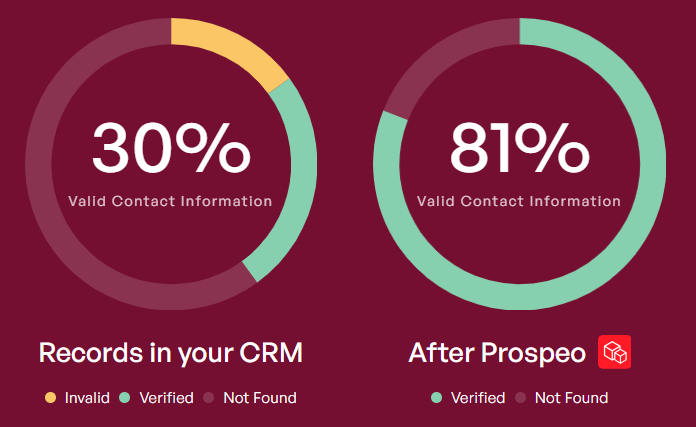

Your forecasting tool can't predict deals accurately when 35% of your contacts bounce. Prospeo's 98% email accuracy and 7-day refresh cycle keep your CRM clean so Gong, Clari, and every platform above it actually works. 92% API match rate. $0.01/email. No contracts.
Stop feeding stale data into six-figure analytics software.
The 9 Best Solutions Compared
Prospeo
Prospeo isn't a forecasting or conversation intelligence tool. It's the data quality layer that makes every platform below it actually work.
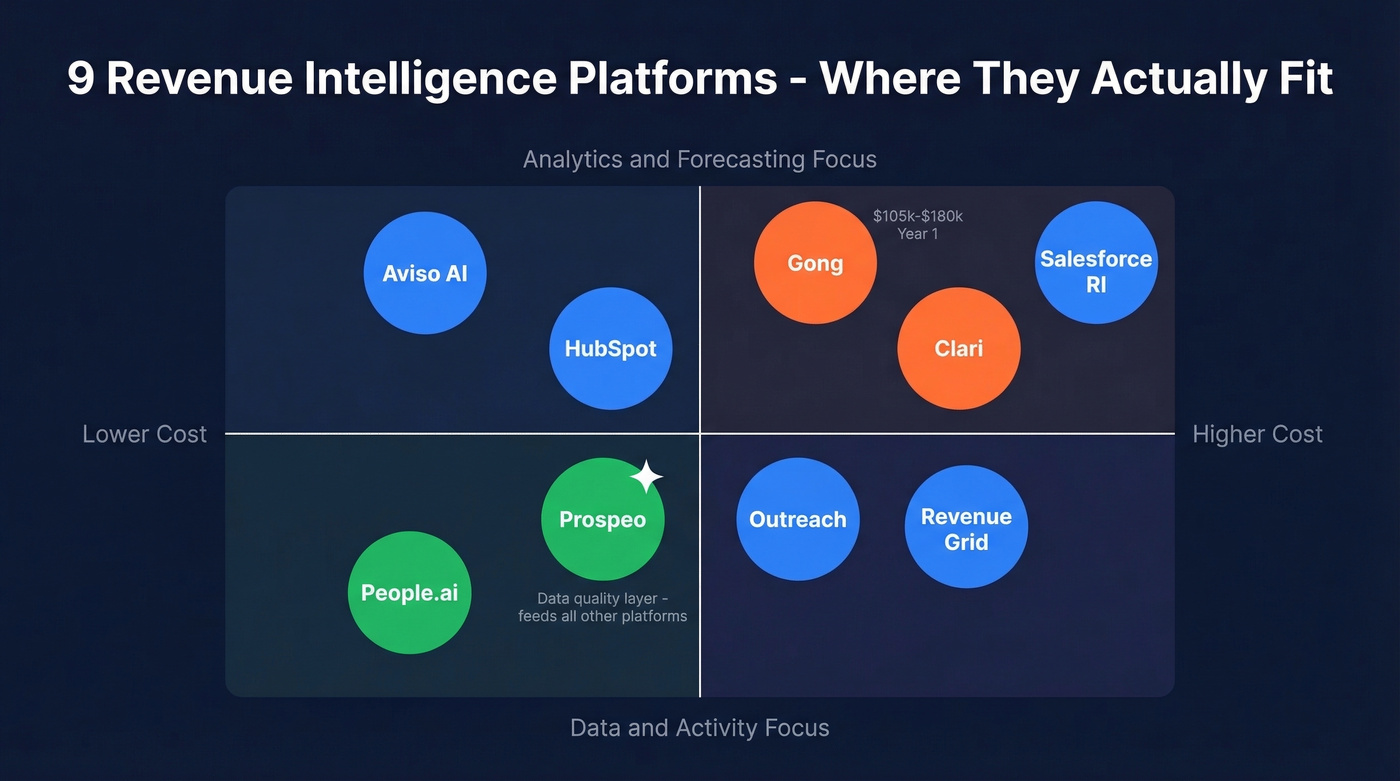
Here's the thing: we've seen teams pour $150k into Gong and Clari, then wonder why their deal scores look wrong. The answer is almost always the same - the CRM is full of stale contacts, outdated job titles, and emails that bounce. Prospeo solves that root cause with 300M+ professional profiles, 143M+ verified emails at 98% accuracy, and a 7-day data refresh cycle compared to the 6-week industry average.
CRM and CSV enrichment returns 50+ data points per contact at a 92% API match rate. Intent data powered by Bombora tracks 15,000 topics, so you can layer buyer signals directly into your pipeline before your forecasting tool even touches the data. Credit-based pricing starts at roughly $0.01/email with no contracts - a fraction of what enterprise enrichment vendors charge. Teams using Prospeo report bounce rates dropping from 35%+ to under 4%, which directly improves the signal quality feeding your forecasting and deal scoring models. (If you're troubleshooting bounces, start with email bounce rate and then audit your email deliverability.)
Gong
Gong is the conversation intelligence standard, and it prices like one. G2 rates it 4.8/5. The call recording, transcription, and deal intelligence features are a clear step above most competitors. If your primary pain is understanding what's happening on sales calls and coaching reps, Gong is the default.
But the pricing is brutal. Per-user licenses run $1,200-$3,000/year depending on the package, plus a mandatory platform fee ($5k-$50k/year), plus implementation ($7.5k-$65k one-time). Add 2-3 year lock-ins with 5-15% annual uplifts and early termination penalties hitting 50-100% of remaining contract value, and you're looking at a commitment that's hard to unwind. Review sentiment consistently praises the coaching insights and flags cost as a major barrier. If you deploy Gong without someone owning the system, it's easy to end up underusing what you paid for.
Skip Gong if you're a sub-50-rep team without a dedicated RevOps manager. The ROI is real at scale, but the cost structure punishes smaller teams.

Clari
Clari is the forecasting benchmark - but it's also in the middle of digesting a major acquisition.
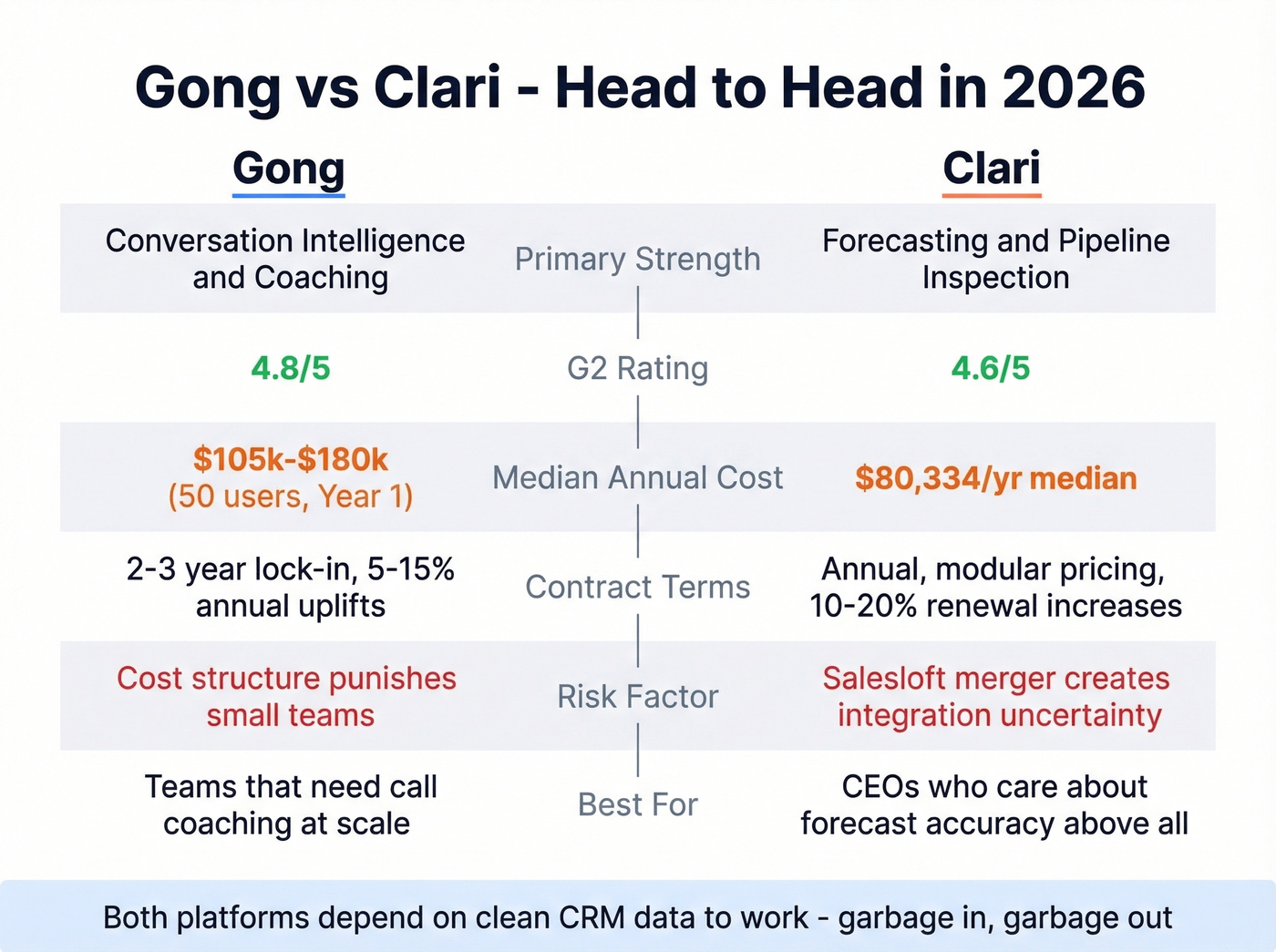
G2 rates it 4.6/5. The forecasting and pipeline inspection capabilities are the strongest part of the platform. A Forrester TEI study claims 398% ROI over three years with payback under six months (vendor-commissioned, so calibrate accordingly). If your CEO cares about forecast accuracy above all else, Clari is the default choice. Modular pricing helps: Core runs $100-$120/user/month, Copilot (conversation intelligence, formerly Wingman) at $60-$100/user/month. Median contract value on Vendr is $80,334/year.
Merger risk worth flagging: The Salesloft merger closed December 3, 2025. Clari has acquired Wingman (2022), Groove (2023), and Salesloft (2025) - creating overlap between two conversation intelligence layers and two engagement platforms. Forrester flagged "substantial technology overlap" and said the deal raises "more questions than answers." Platform unification is described as happening "over the coming years." If you're signing a contract today, you're betting the combined platform will be better than either was alone.
Budget 10-15 hours/week of RevOps time for mid-size deployments, and expect 10-20% renewal increases annually.

Salesforce Revenue Intelligence
If you're already deep in the Salesforce ecosystem (Enterprise edition or above) and want revenue analytics without adding another vendor, this is the path of least resistance. Published pricing is $220/user/month billed annually, or $250/user/month bundled with Tableau. No integration headaches, no data sync issues. The trade-off is ecosystem lock-in - and you'll still need a dedicated conversation intelligence tool if call coaching is a priority. (If you're budgeting, see Salesforce pricing.)
People.ai
People.ai is the most underrated platform on this list. While Gong and Clari get the headlines, People.ai quietly solves the problem that kills most deployments: nobody logs anything in the CRM.
The platform automates activity capture - emails, meetings, calls - and maps them to the right accounts and opportunities. No rep data entry required. That sounds simple, but it's the foundation that makes everything else in your revenue stack work. Vendr's benchmark across 47 real purchases shows a median contract of $23,100/year, with a range from $2,316 to $116,813 depending on team size. Per-seat pricing starts around $30/user/month, though enterprise quotes vary widely. If your primary problem is "reps don't log activities and our CRM data is unreliable," People.ai gets you there at a fraction of the cost of a full forecasting suite.
Aviso AI
Aviso positions itself as the value-oriented forecasting alternative. With a 4.4/5 rating across 950 G2 reviews, it's well-regarded for ease of use and pipeline management. The vendor claims a 40% increase in deal win rates and 15-36% revenue lift.
G2 lists time to implement at about 3 months. Review themes consistently flag CRM sync delays and slow loading as common frustrations. If you need a forecasting-focused tool and Clari's merger situation makes you nervous, Aviso is the logical alternative to evaluate.
Revenue Grid
A Salesforce-first tool that bakes guided selling into your CRM workflow. It's positioned as an activity capture and guided selling layer for Salesforce teams, with limited appeal outside that ecosystem. Worth a look if you're all-in on Salesforce and want tighter native integration than a standalone platform provides.
Outreach
Primarily a sales execution platform with bolted-on pipeline analytics, deal health scoring, and forecasting. If you're already running Outreach for sequencing, the RI add-on can make sense. If you're not, there are better standalone options.
HubSpot
HubSpot is the all-in-one option: CRM plus built-in revenue tools like forecasting and pipeline reporting. For teams under 50 reps who want everything in one platform without managing multiple vendors, it's the pragmatic choice.
The Data Quality Problem Nobody Talks About
Here's the uncomfortable truth: [91% of companies with 11+ employees use a CRM](https://www.glyphic.ai/post/5-revenue-execution-mistakes-costing-your-team-pipeline - and-how-to-fix-them), but fewer than 40% implement it effectively enough to produce reliable data. And [70% of companies struggle to integrate sales plays into their revenue technology](https://www.glyphic.ai/post/5-revenue-execution-mistakes-costing-your-team-pipeline - and-how-to-fix-them).
You can spend $150,000 on Gong and Clari, but if the contact records in your CRM have outdated emails, wrong job titles, and phone numbers that ring into the void, your deal signals are noise. Your forecasts are fiction.
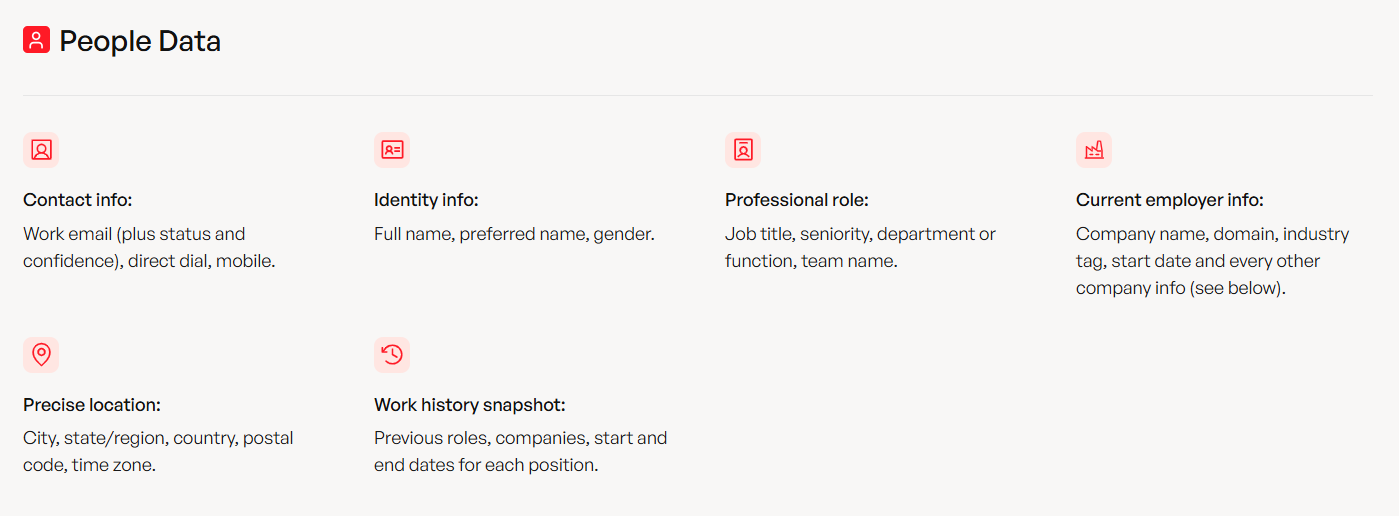
Contact data decays fast - people change jobs, get promoted, switch companies. The analytics layer doesn't know this; it just analyzes whatever's in the CRM and presents it as insight. ZoomInfo's Customer Impact Report claims 32% pipeline increases and 55% more meetings booked, but those numbers assume clean data feeding the platform. The enrichment layer isn't an add-on. It's a prerequisite. (If you're building a process around this, use a lead enrichment workflow.)
Implementation Mistakes That Kill ROI
G2 data shows the average payback period for RevOps software is about 9 months, with roughly 70% user adoption. That means 30% of users never adopt the tool. We've watched this pattern play out across dozens of teams, and the same five mistakes keep showing up.
Skipping the CRM data cleanup. Don't deploy Gong or Clari on top of a CRM full of duplicates, stale contacts, and missing fields. Clean and enrich your data first - this takes 2-4 weeks but saves months of frustration.
Underestimating admin burden. Clari needs 10-15 hours/week of RevOps time for mid-size deployments. Gong's implementation commonly runs 4-12 weeks with professional services costing $7.5k-$65k. These aren't set-it-and-forget-it tools.
No change management plan. Inadequate training is the #1 reason these tools become shelfware. If reps don't understand why they should care about deal scores, they won't use them. (A lightweight fix: standardize sales activities and train to them.)
Not connecting insights to process changes. Teams buy these platforms, look at the dashboards, and keep running the same playbook. If you're not changing behavior based on the insights, you're paying for expensive dashboards.
Failing to iterate. Deal scoring models need tuning. Forecast accuracy needs benchmarking quarter over quarter. The teams that see real ROI treat their system like a living system, not a finished project.
How to Choose the Right Platform
Think of your revenue intelligence stack in three layers: data quality, activity/conversation intelligence, and forecasting. Not every team needs all three.
Under 20 reps, budget under $30k/year: Start with HubSpot's built-in revenue tools or pair People.ai for activity capture with a data enrichment tool. You don't need Gong-level conversation intelligence until you have enough call volume to make the coaching insights statistically meaningful.
20-100 reps, budget $50k-$150k/year: This is where Gong or Clari earns its keep. Pick Gong if conversation intelligence and coaching are your priority. Pick Clari if forecasting accuracy matters more and you're comfortable with the merger integration risk. Either way, pair your chosen platform with a data enrichment layer to keep the CRM reliable.
100+ reps, enterprise budget: Full stack. Gong for conversation intelligence, Clari or Salesforce RI for forecasting, and an enrichment layer keeping your CRM fresh. At this scale, the cost of bad data compounds fast - a 5% bounce rate across 100 reps running 500 emails/week means 2,500 wasted touches per week.
The biggest mistake isn't picking the wrong platform. It's buying a $100k+ analytics layer on top of a CRM that hasn't been cleaned in six months.
Teams spend $105K-$180K on revenue intelligence, then wonder why deal scores are wrong. The answer is dirty CRM data. Prospeo enriches every contact with 50+ data points, drops bounce rates from 35% to under 4%, and refreshes every 7 days - not every 6 weeks.
Fix the data layer before you buy another dashboard.
FAQ
What is a revenue intelligence platform?
A revenue intelligence platform uses AI to analyze sales conversations, email activity, and CRM data to predict deal outcomes and surface pipeline risks. Core capabilities include activity capture, conversation intelligence, pipeline analytics, and predictive forecasting - working together to give sales leaders a single source of truth on pipeline health.
How much does revenue intelligence software cost?
Enterprise platforms range from $23,100/year (People.ai median) to $180,000+ for a 50-user Gong deployment. Most mid-market teams land in the $50k-$100k/year band. Budget 40-60% above the quoted seat price for platform fees, implementation, and annual uplifts.
What's the difference between revenue intelligence and conversation intelligence?
Conversation intelligence - call recording, transcription, and analysis - is one component of revenue intelligence. A full solution also includes activity capture, pipeline analytics, and predictive forecasting across all channels, not just calls. Gong started in conversation intelligence; Clari started in forecasting. They're converging.
Do small teams need a revenue intelligence platform?
Teams under 20 reps rarely need a standalone tool. Start with your CRM's built-in analytics, clean your contact data with an enrichment layer, and add conversation intelligence only when call volume justifies it. A $100k deployment for a 10-person team almost never pencils out.
How do I make sure my revenue intelligence tool delivers ROI?
Clean your CRM data before deployment - stale contacts and duplicates poison every insight layer above them. Assign a dedicated RevOps admin (10-15 hrs/week for mid-size teams), run structured training for reps, and benchmark forecast accuracy quarterly. Teams that treat the platform as a living system see 9-month payback on average per G2 data.