

Revenue Operations Platforms: What They Cost and Which Ones Matter in 2026
You just got three vendor quotes back. One wants $50k/year minimum. Another quoted $100k once you added the modules you actually need. The third won't give you a number without a "discovery call."
Welcome to the revenue operations platform market - where G2 lists 113 options and almost none publish real pricing. We've spent the last several months evaluating these tools, talking to buyers, and digging through contract data so you don't have to burn a quarter on demos that go nowhere.
What Is a RevOps Platform?
CRM was the system of record - a database where reps logged activities and managers ran reports. RevOps emerged as the operating model aligning sales, marketing, and customer success around shared revenue metrics. A revenue operations platform is the execution layer on top of your CRM: it unifies data across tools, automates handoffs, and gives leadership a single view of pipeline health.
Think of it as the difference between a blueprint and the machinery to build the house. Your CRM stores the data. Your RevOps platform makes it move, makes it clean, and makes it useful.
Quick Decision Framework
Enterprise forecasting and conversation intelligence? Evaluate Gong or Clari. Budget $100K+ in Year 1.
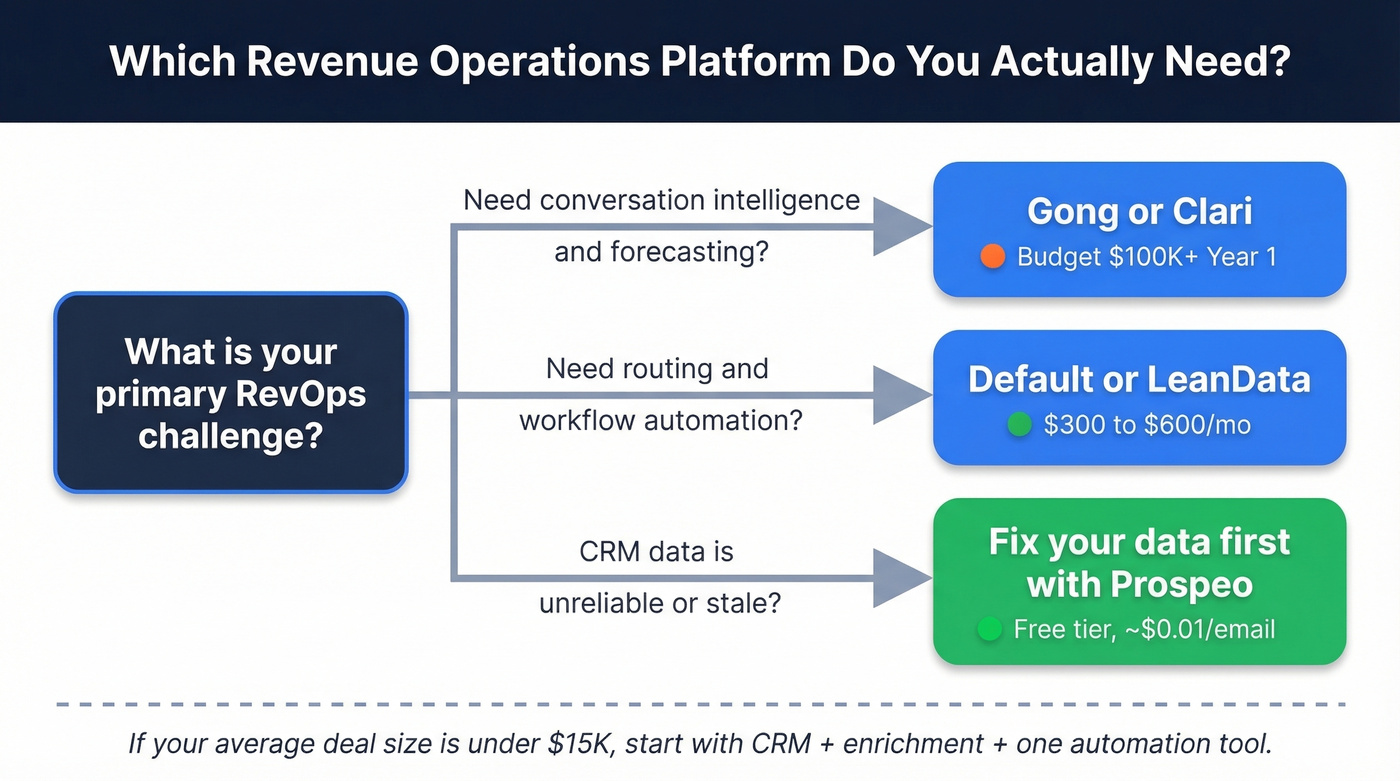
Mid-market routing and automation? Default or LeanData deliver at a fraction of the cost.
Data quality foundation? Before you sign anything, make sure your CRM data isn't the bottleneck. Prospeo verifies and enriches contact data at 98% email accuracy, starting free - no forecasting tool can fix garbage inputs. (If you’re comparing vendors, see data enrichment services.)
Why RevOps Platforms Exist
A Wakefield Research study of 400 U.S. RevOps decision-makers found that 73% of companies now have a C-suite role dedicated to RevOps, and 97% report measurable ROI from AI in their revenue workflows. Practitioners commonly cite ~36% higher revenue growth and 10-20% productivity gains when RevOps fundamentals are in place - clean data, shared KPIs, and forecasting discipline.
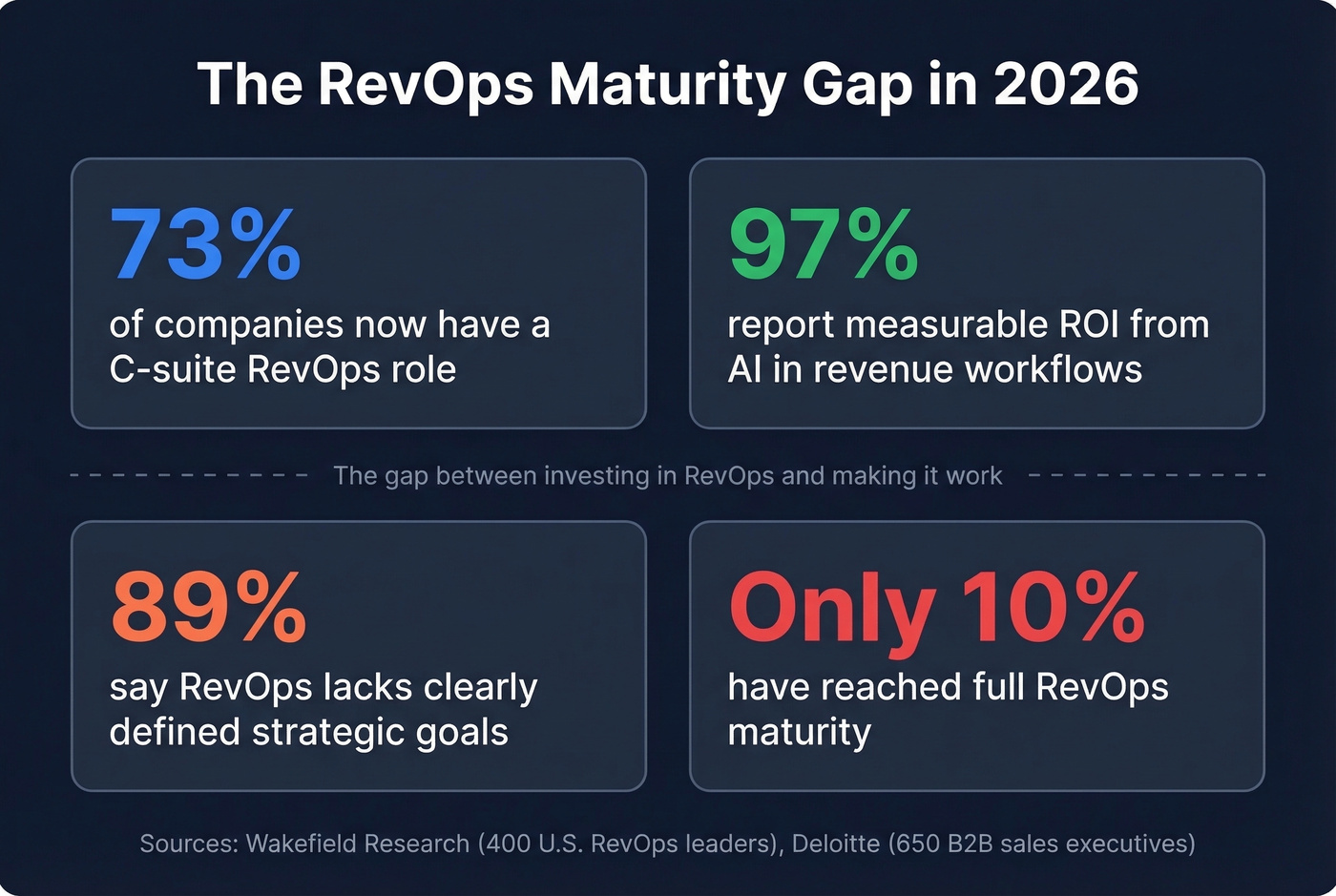
Here's the frustrating part: 89% of those same respondents say RevOps lacks clearly defined strategic goals. Everyone's investing. Most teams are still figuring out what they're investing in. A Deloitte survey of 650 B2B sales executives backs this up - firms with established RevOps are 1.4x more likely to exceed revenue targets by 10%+, yet only 10% have reached full maturity. The gap between "we have RevOps" and "RevOps is actually working" is enormous.
What These Platforms Actually Do
Strip away the marketing language and every RevOps tool does some combination of five things.
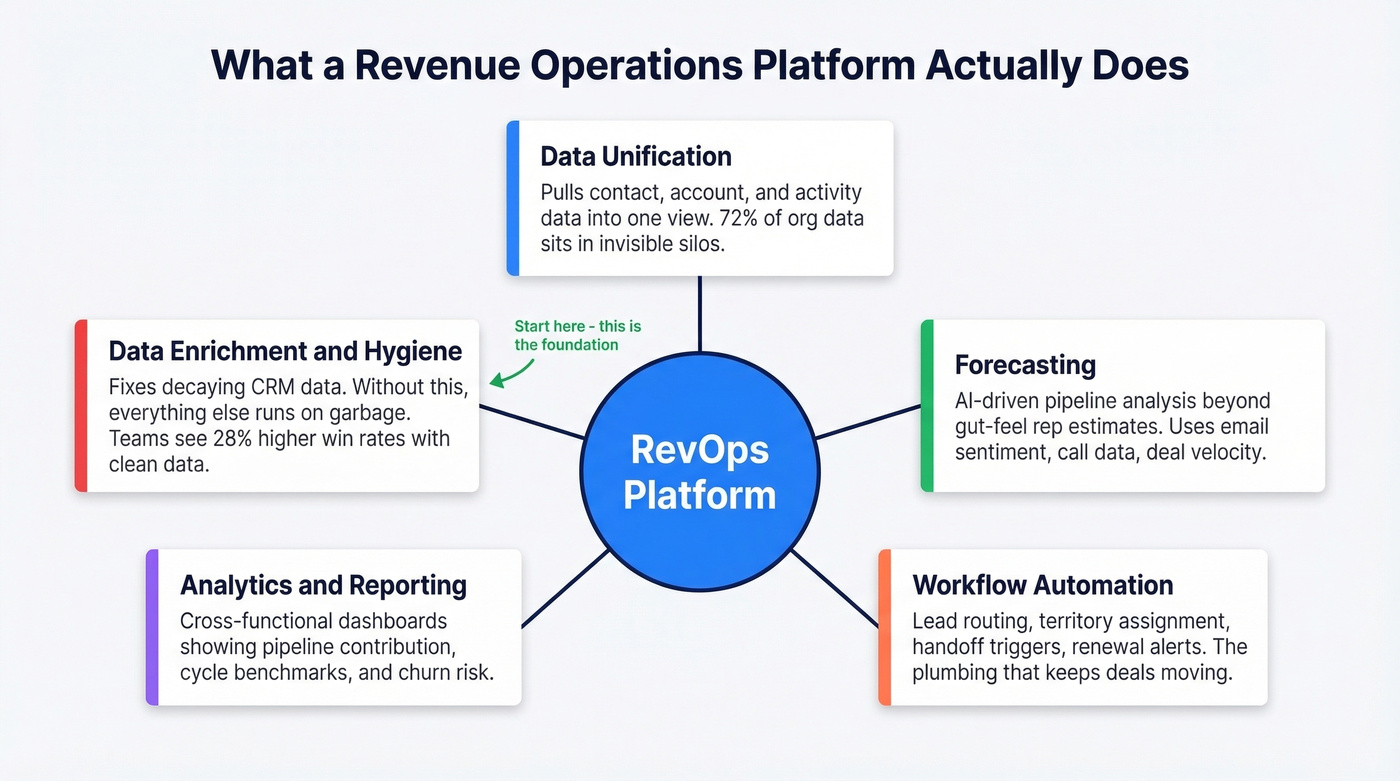
Data unification pulls contact, account, and activity data from your CRM, marketing automation, and engagement tools into one view. This is the minimum. The average org runs roughly 1,000 apps but only 28% are integrated - meaning 72% of your data sits in silos invisible to the people who need it.
Forecasting uses AI-driven pipeline analysis that goes beyond rep-submitted numbers. The best revenue operations and intelligence software ingests email sentiment, call recordings, and deal velocity to predict outcomes rather than relying on gut-feel estimates. (If forecasting is the core need, start with sales forecasting solutions.)
Workflow automation handles lead routing, territory assignment, handoff triggers between sales and CS, and renewal alerts. It's the plumbing that keeps deals moving without manual intervention. If routing is your bottleneck, it often shows up as sales pipeline challenges before it shows up in dashboards.
Analytics and reporting surfaces cross-functional dashboards showing marketing's contribution to pipeline, sales cycle benchmarks, and churn risk in one place. These revenue operations insights let leadership spot bottlenecks across the entire funnel instead of relying on siloed departmental reports.
Data enrichment and hygiene is the one most teams underestimate. Your CRM data decays constantly as people change jobs, companies get acquired, and emails go stale. Without this foundation, your forecasting and routing tools are working with garbage. Teams using the right combination of revenue tools report 28% higher win rates and 26% larger deal sizes - but only when the underlying data is accurate. (More on the mechanics in our lead enrichment guide.)
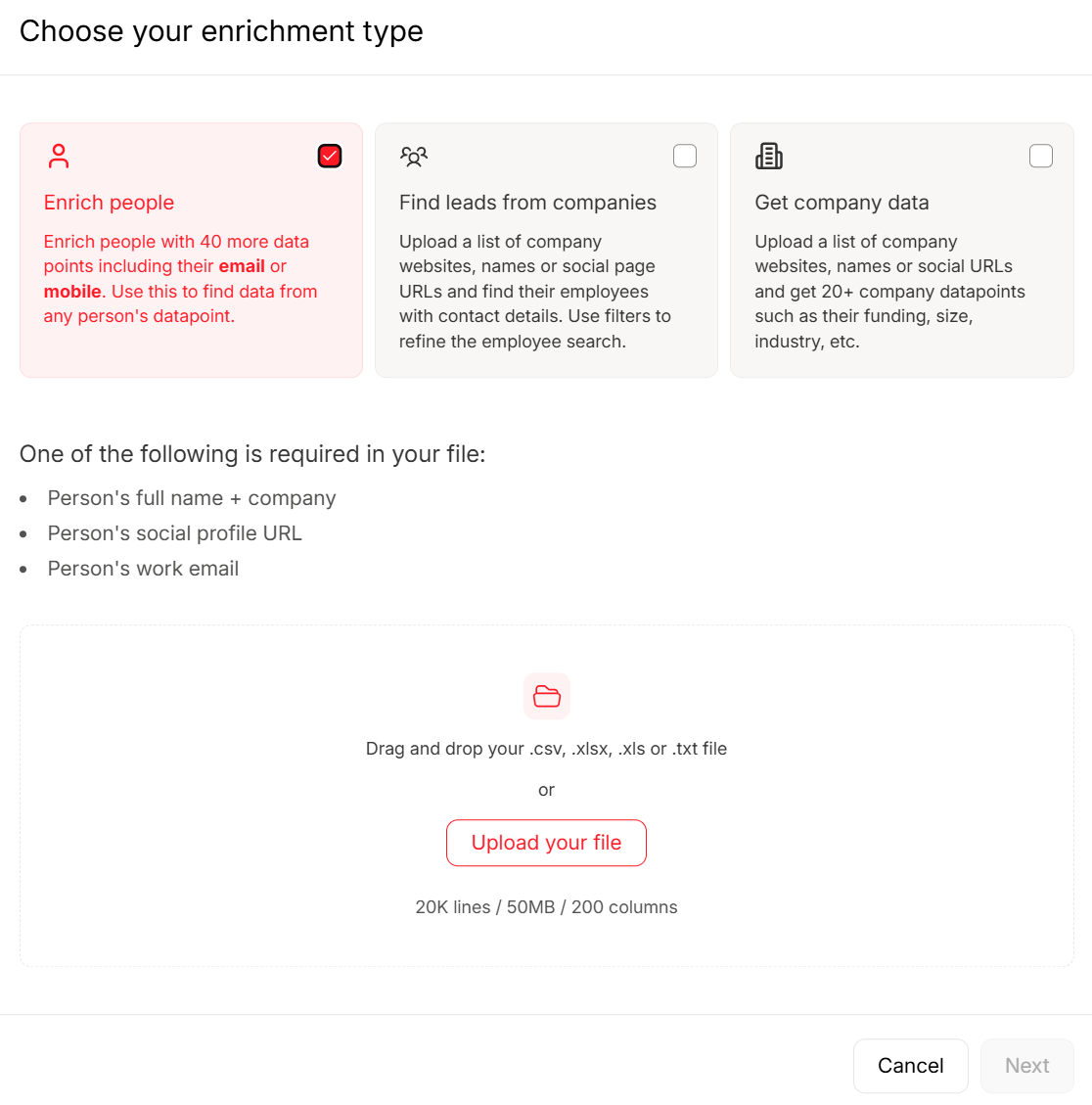

Every RevOps platform on this list depends on one thing: clean, accurate contact data. Prospeo enriches your CRM with 50+ data points per contact at a 92% match rate - refreshed every 7 days, not every 6 weeks. At ~$0.01/email, it costs less than a single Gong user seat per year.
Fix your data foundation before you spend six figures on forecasting.
Real Pricing Breakdown
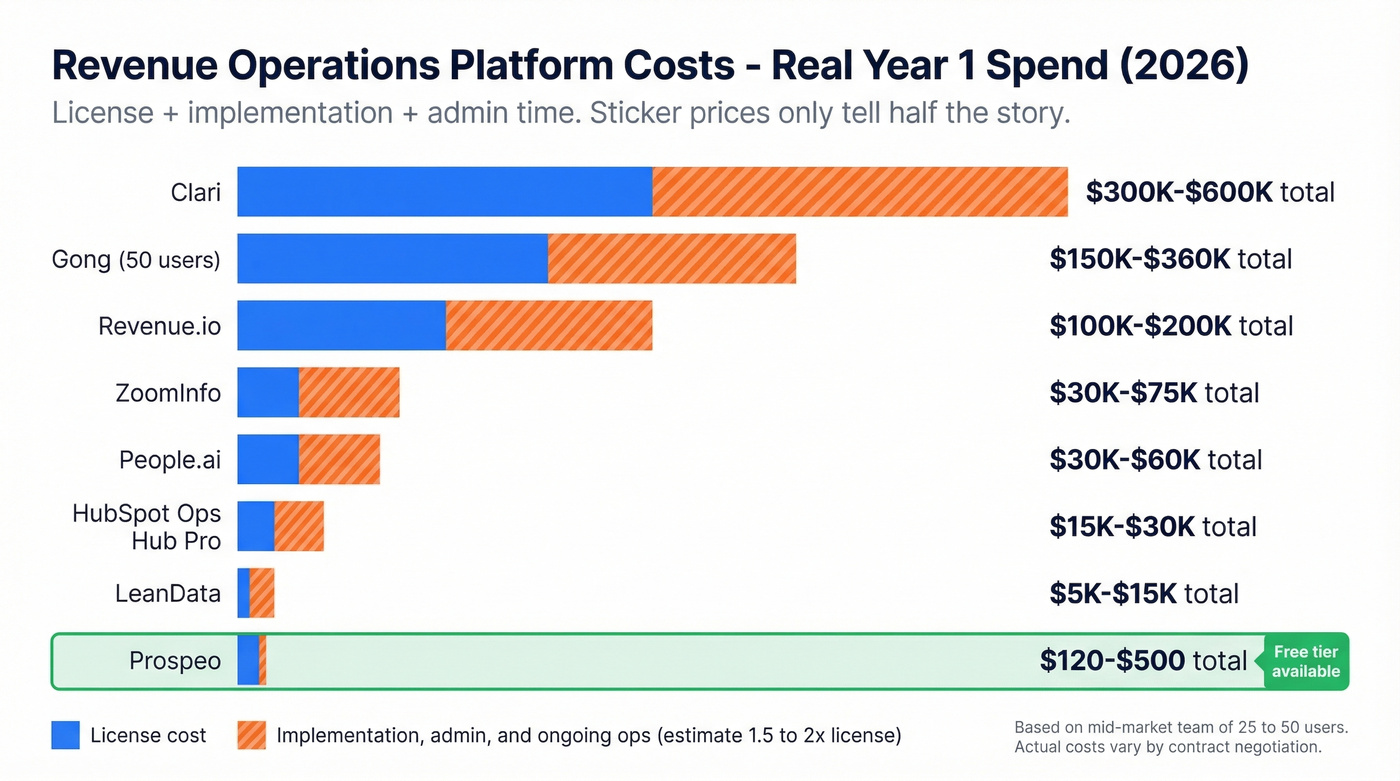
Most "RevOps platform" articles dodge pricing entirely. Here's what you'll actually pay.
| Tool | Best For | Starting Price | Contract? | Time to Value |
|---|---|---|---|---|
| Gong | Conversation intel | ~$1,600/user/yr + $50K platform fee | 2-3 yr typical | Months |
| Clari | Enterprise forecasting | ~$100K-$300K/yr | Annual | Months |
| HubSpot Ops Hub | Mid-market automation | $800/mo (Pro) | Optional | Weeks |
| LeanData | Lead routing | $39/user/mo | Annual | Weeks |
| Default | Inbound routing | ~$300-600/mo | Flexible | Days |
| Revenue.io | Sales orchestration | ~$50K+/yr | Annual | Months |
| People.ai | Activity capture | ~$50-100/user/mo | Annual | Months |
| ZoomInfo | Data + intent | $15K-25K/yr min | Annual | Weeks |
| Apollo.io | Prospecting | $49/user/mo | Optional | Immediate |
| Clay | Enrichment workflows | $149/mo | Monthly | Days |
| Prospeo | Data enrichment | Free tier -> ~$0.01/email | None | Immediate |
The sticker shock is real. One Reddit buyer evaluating 6sense, Demandbase, and HubSpot Operations Hub reported that every vendor wanted a minimum $50k/year, with most quoting $80k-$100k once required features were included. That's just licensing - implementation often requires six months of services, a dedicated ops person, and constant maintenance. Plan on 2-3x the license cost once you include implementation, admin time, and ongoing ops.
Gong's Year 1 total for a 50-user team lands between $105,000 and $180,000 when you factor in the platform fee and implementation. Renewals often carry a 5-15% annual uplift.
Let's be honest: if your average deal size is under $15k, you probably don't need a six-figure RevOps suite. A CRM plus an enrichment tool plus one focused automation layer gets 90% of the value at 10% of the cost. Save the enterprise spend for when you're managing 5+ tools with sync issues and no single source of truth.
Top RevOps Platforms in 2026
Gong
Use this if you're an enterprise team that needs conversation intelligence fused with forecasting. Gong is one of the strongest conversation intelligence platforms in the category, and the Forecast add-on ($700/user/year) gives revenue leaders pipeline visibility most CRMs can't match. The Engage add-on runs $800/user/year for sales engagement. The platform fee ($50,000/year) means this makes the most sense around 50+ seats - below that, the per-user economics get painful fast.

Skip this if you're under 30 users or don't run enough recorded calls to feed the AI. Contracts run 2-3 years with annual prepayment. Negotiate hard; Tropic's procurement data shows teams save ~19% on average through negotiation. If you want a deeper procurement angle, use an anchor in negotiation before you get on the call.
Clari
Clari doesn't publish pricing, which tells you everything about how the negotiation will go. Budget low-to-mid six figures annually. The modular approach lets you start with forecasting and expand into additional revenue operations and intelligence capabilities, but costs compound as you add modules and services. A Forrester TEI study found payback in under six months for enterprise deployments, though that assumes full adoption across your revenue team.
Best for: CROs managing complex, multi-stage pipelines across several teams who need forecasting discipline.
Skip this if you want transparent pricing or a quick implementation. In our experience, teams that aren't ready to commit a dedicated admin to Clari end up underusing it.
HubSpot Operations Hub
Use this if you're a mid-market team already running HubSpot CRM. Operations Hub Professional ($800/month) adds data sync, programmable automation, and data quality tools that plug directly into your existing workflows. A free tier makes it easy to test before committing.
Skip this if you're all-in on Salesforce and don't use HubSpot CRM. Also skip if you need enterprise-grade forecasting - HubSpot's forecasting is functional but it's not in the same league as Gong or Clari.
LeanData
The go-to for Salesforce-native lead routing and lead-to-account matching. At $39/user/month, it's one of the more affordable pieces of a RevOps stack. If leads are hitting the wrong rep or accounts aren't getting matched properly, LeanData solves that specific problem well. Not much else to say - it does one thing and does it right.
Default
Modern alternative to tools like Chili Piper and LeanData, combining inbound routing, scheduling, and lead qualification in one platform. Expect $300-600/month for mid-market teams. Worth a demo if your inbound funnel leaks because of slow response times and messy routing.
Revenue.io
Salesforce-native orchestration focused on guided selling and real-time coaching. Budget $50K+/year for meaningful deployments. Strong fit for orgs that want AI-assisted rep coaching without leaving the Salesforce ecosystem.
People.ai
Activity capture and revenue intelligence that automatically logs rep interactions into your CRM. Pricing runs ~$50-100/user/month. Strong for teams that want AI-driven activity insights without relying on manual CRM entry - though adoption depends heavily on whether reps trust the data it captures.
Apollo.io
Prospecting-first platform with a generous free tier and paid plans starting at $49/user/month. Strong for outbound teams that need a combined database and sequencing tool, but it's not a full RevOps suite. Think of it as one piece of the stack, not the whole thing. (If you’re building the outbound layer, start with sales prospecting techniques.)
How to Choose Without Wasting 3 Months
Assess your maturity first. 89% of RevOps teams lack clearly defined strategic goals. Don't buy a $100K platform to fix a strategy problem - that's an expensive band-aid.
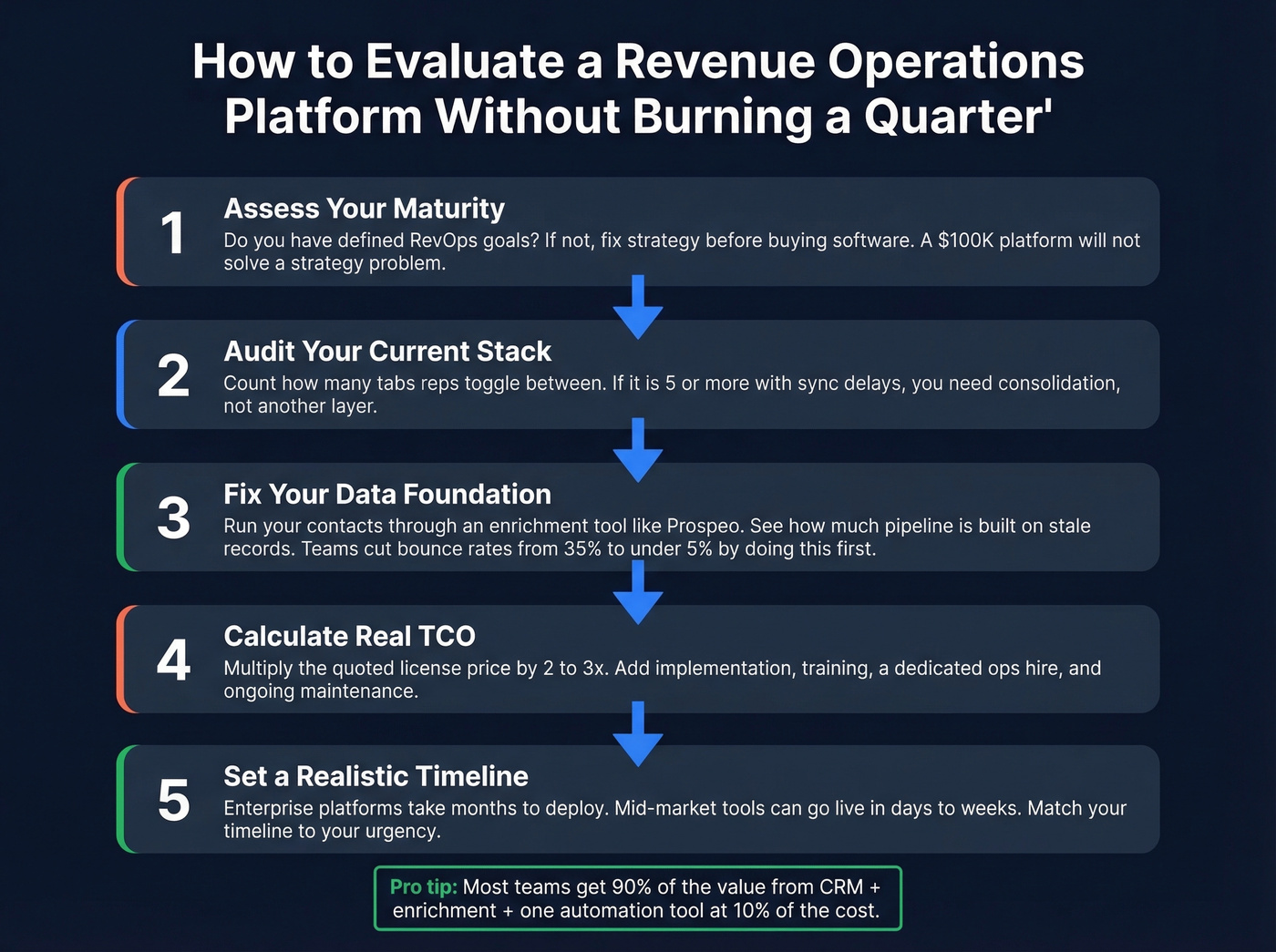
Audit your stack. If reps toggle between 5+ tabs and you've got sync delays between tools, you need consolidation, not another layer. The consensus on r/salesoperations is that "Frankenstack fatigue" is the number-one adoption killer for new platforms.
Fix your data before signing anything. Run your contact list through an enrichment API and see how much of your pipeline is built on stale records. We've seen teams like Snyk cut bounce rates from 35-40% to under 5% and grow AE-sourced pipeline 180% after fixing their data foundation first - before touching any forecasting or routing tool. (If you’re diagnosing deliverability, start with email bounce rate.)
Calculate real TCO. License cost is 30-50% of what you'll actually spend. Add implementation, training, a dedicated ops hire, and ongoing maintenance. For enterprise platforms, multiply the quoted price by 2-3x.
Set a realistic timeline. Enterprise RevOps platforms take ~6 months to implement properly. If a vendor promises 30 days, they're either oversimplifying or under-scoping.

You don't need a $100K platform to unify your revenue data. Prospeo's enrichment API plugs into Salesforce, HubSpot, Clay, and Zapier - delivering 98% email accuracy and 125M+ verified mobiles directly into the tools your RevOps team already runs. No contracts, no discovery calls.
Start enriching contacts in minutes, not months of implementation.
Implementation Pitfalls
API limits will bite you. Salesforce's monthly API limit equals the daily limit times 30. A new RevOps platform syncing thousands of records can blow through this in week one. Batch your updates and time major syncs off-hours.
Data silos don't disappear automatically. Installing a platform doesn't unify your data. You need bidirectional integrations, shared data standards, and someone owning the sync logic. I've watched teams spend six figures on a platform and still have marketing and sales looking at different pipeline numbers three months later.
Migration disruption is real. Salesforce is pushing customers from CPQ to Revenue Cloud Advanced, and the transition is creating paralysis across the ecosystem. If you're mid-migration, adding another platform compounds the chaos. Wait until the dust settles.
FAQ
What's the difference between a CRM and a RevOps platform?
A CRM stores contacts, accounts, and deal data as your system of record. A revenue operations platform sits on top, unifying data across your CRM, marketing automation, and engagement tools while automating workflows and aligning teams around shared metrics. The CRM holds the data; the RevOps layer makes it actionable.
How much does a RevOps platform cost for a 50-person team?
Enterprise platforms like Gong and Clari run $100K-$180K in Year 1 including implementation and platform fees. Mid-market options like HubSpot Operations Hub cost ~$10K-$15K/year. For the data enrichment layer, tools like Prospeo start free and scale to roughly $0.01 per verified email with no contracts required.
Do I need a full platform or a modular stack?
Teams under 200 people typically get 90% of the value from a CRM plus an enrichment tool plus one focused automation or forecasting layer. Full platforms justify their cost when you're managing 5+ tools with sync issues, duplicate data, and no single source of truth. Start modular, consolidate when the pain justifies the spend.
What revenue operations insights should I track first?
Focus on pipeline velocity, lead-to-close conversion by source, and forecast accuracy. These three metrics expose the biggest gaps between marketing, sales, and CS alignment - and they're the first things any RevOps performance tool should surface clearly without requiring custom report builds.