

How to Build a SaaS Buyer Persona That Actually Gets Used
A RevOps lead we know built a gorgeous SaaS buyer persona deck last year - stock photos, hobbies, a fictional name. It got presented once, bookmarked by nobody, and never influenced a single outbound sequence. That's the norm. 86% of B2B purchases stall before they ever reach a decision. The fix isn't a prettier PDF. It's a persona built for activation, not decoration.
The Short Version
- Start with your ICP, then map the buying group by role. Demographics-first personas are a B2C habit that doesn't work in SaaS.
- Anchor each persona to Jobs-to-Be-Done. Situation, motivation, outcome - not hobbies or coffee preferences.
- The persona must become a prospect list. Translate attributes into search filters and verified contacts. If it stays in a slide deck, it's already dead.
What Is a SaaS Buyer Persona?
A SaaS buyer persona is a research-backed profile of a specific person in the buying group - their role, pain points, decision criteria, and the job they're hiring your product to do. It's a targeting and messaging tool, not a demographic sketch. In B2B, you're not building a fictional character. You're building a decision-making archetype grounded in real data from real deals.
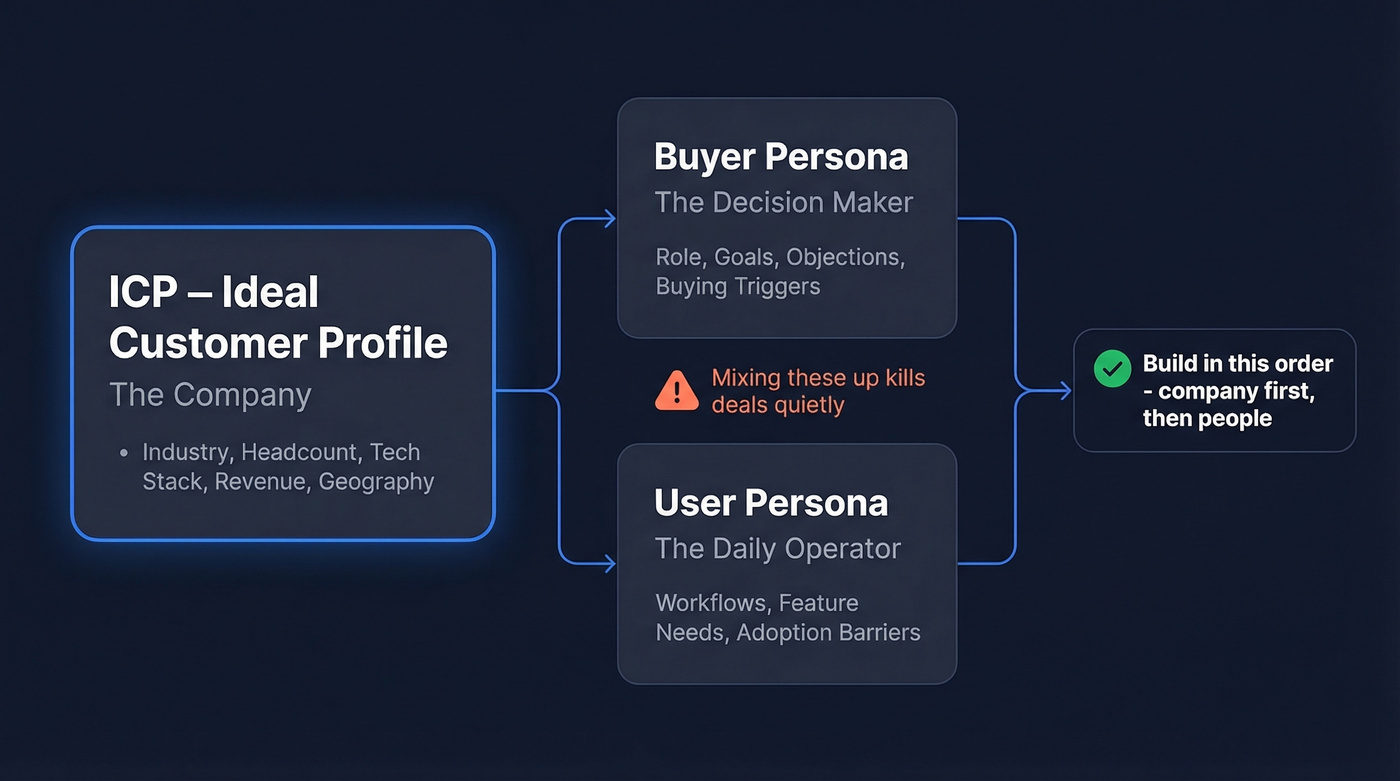
The hierarchy that matters:
- ICP (Ideal Customer Profile): The company. Industry, headcount, tech stack, revenue, geography.
- Buyer Persona: The individual. Role, goals, objections, buying triggers.
- User Persona: The person who uses the product daily, often different from the buyer. Mixing these up causes messaging mismatches that kill deals quietly.
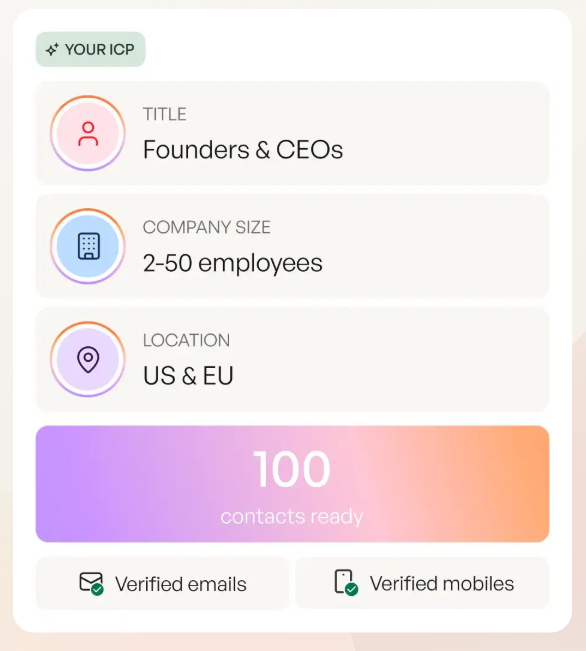
The most common failure? Teams build detailed personas but skip the ICP entirely. You end up targeting the right people at the wrong companies - a VP of Ops who matches perfectly but works at a 15-person agency that'll never hit your price point. Nail the ICP-to-persona taxonomy before you write a single persona card, and you'll save months of wasted outreach.
Why 2026 Buyers Break Old Personas
The buying environment has shifted enough that personas go stale fast. The average B2B purchase now involves 13 stakeholders across multiple departments. That's not a single decision-maker you can charm over a demo - it's a committee.
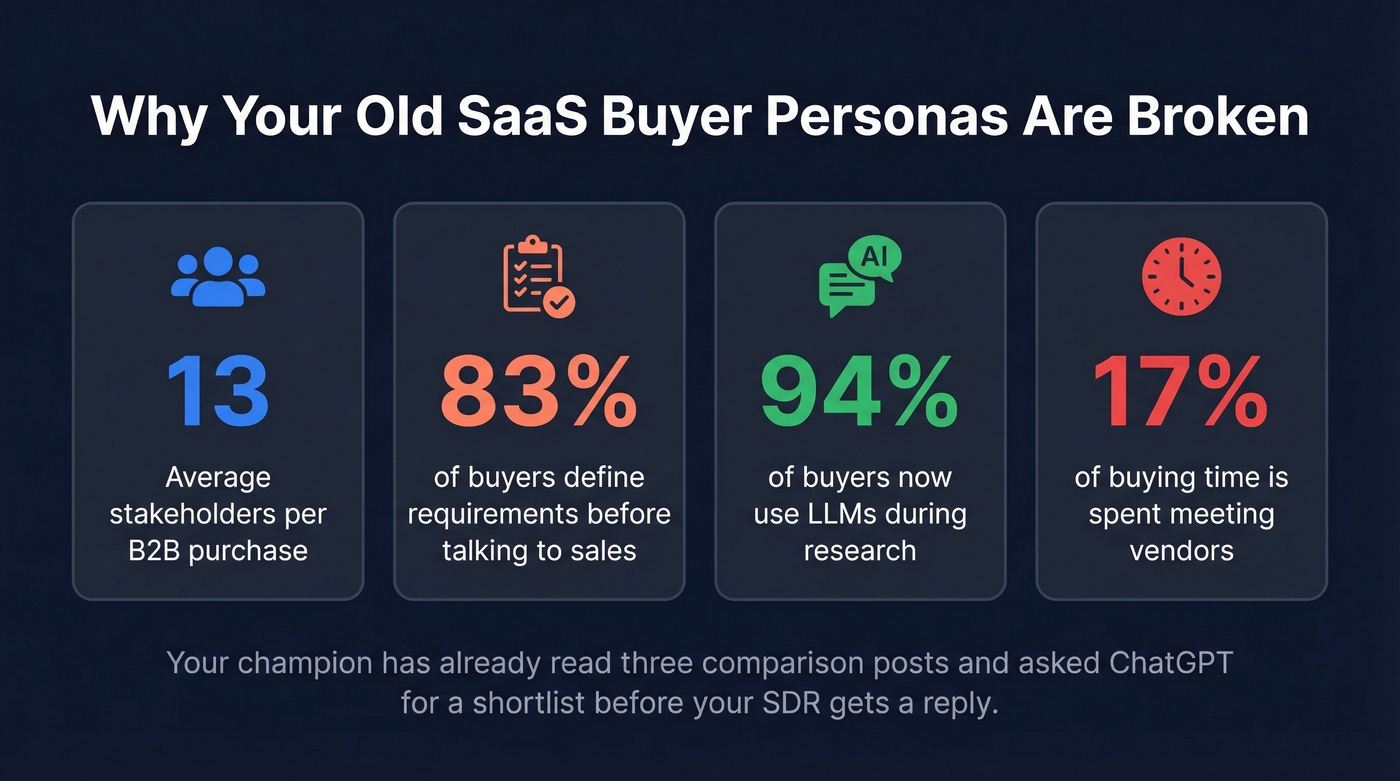
Buyers define requirements 83% of the time before they ever talk to sales. Meanwhile, 94% of buyers now use LLMs during their research process. Here's the stat that should change how you think about personas: buyers spend only 17% of their purchasing time meeting vendors. Your champion has already read three comparison posts and asked ChatGPT for a shortlist before your SDR even gets a reply.
Gen Z B2B buyers are accelerating this. They default to self-serve research, distrust gated content, and expect product-led experiences before booking a call. If your persona doesn't account for a buyer who's already done their homework and already has opinions, you're building for someone who doesn't exist anymore.
Map the Buying Group
Stop building one persona. Build a buying group.
| Role | Focus | Key Question | Content Needed |
|---|---|---|---|
| Champion | Internal advocacy | "Will this make my team look good?" | Demo clip, case study |
| Economic Buyer | Budget / ROI | "What's the payback period?" | ROI calculator |
| Technical Validator | Integration / security | "Does it work with our stack?" | API docs, security sheet |
| User / Admin | Daily workflow | "Is this easier than what we have?" | Sandbox, free trial |
| Procurement | Risk / compliance | "What are the contract terms?" | SLA, DPA, pricing |
You don't always need all five. For most teams, three personas cover the majority of campaigns and sequences. We've seen teams build five persona-specific versions of every email template and create chaos, not clarity.
The 3-Persona Shortcut
Collapse to three: User (validates the product works), Decision Maker (owns budget and timeline), and Executive Sponsor (signs off or blocks).
In PLG motions, the User surfaces first and self-qualifies. In sales-led motions, you'll typically engage executives earlier. Start outreach with the User to generate internal referrals, arm the Decision Maker with ROI content, and give the Executive Sponsor risk-mitigation proof points. When you're doing c-suite marketing, that Executive Sponsor persona needs entirely different material - think board-level metrics, competitive risk, and strategic alignment rather than feature comparisons.
Also build a negative persona - the profile you actively disqualify - to stop reps from wasting time on accounts that'll never close.

Your persona defines the role, pain points, and buying triggers. Prospeo's 30+ search filters - buyer intent, technographics, headcount growth, job changes - turn that persona into a live prospect list with 98% verified emails. No more personas that die in slide decks.
Turn your buyer persona into verified contacts in under five minutes.
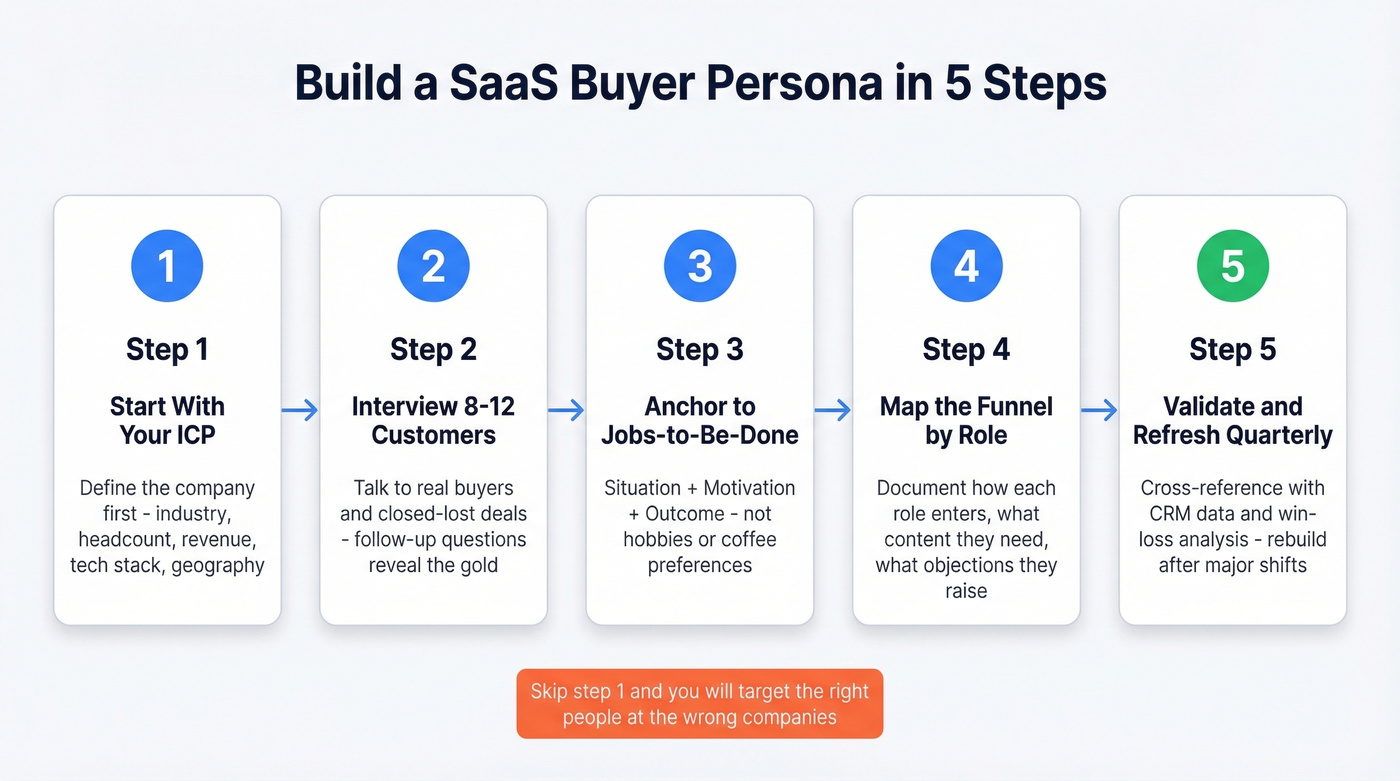
Build Personas in 5 Steps
Step 1: Start With Your ICP
Firmographics first, always. Define the company before you define the person. Industry, employee count, revenue range, tech stack, geography. If you can't describe your ideal account in two sentences, you aren't ready for personas yet.
For a fast starting point, use an Ideal Customer Profile Template to score accounts consistently.
Here's what a tight ICP statement looks like: "B2B SaaS companies, 200-500 employees, $20-80M ARR, using HubSpot or Salesforce, based in North America or Western Europe."
The same logic applies across verticals. Technology buyer personas emphasize integration requirements and security posture. Healthcare personas need to account for HIPAA and longer procurement cycles. Financial services profiles often involve risk and regulatory stakeholders that SaaS-native companies rarely encounter. Cyber security personas add another layer - they typically require SOC 2 documentation and penetration test results before a deal even reaches legal. Adapt the ICP and persona fields to your market, but the structure stays the same.
Step 2: Interview 8-12 Customers
Talk to real customers and recent closed-lost deals. In practice, eight to twelve interviews per segment is enough to surface clear patterns; twenty-plus gives you high confidence. Don't outsource this to a survey. The gold is in follow-up questions - "Why did you almost not buy?" reveals more than any checkbox ever will.
The consensus on r/sales and r/RevOps is pretty clear on this: personas built without customer input become "fairytale" artifacts that collect dust. We've found the same thing in our own process. The persona that drives pipeline is the one built from conversations, not assumptions.
Step 3: Anchor to Jobs-to-Be-Done
Every persona should map to one or two JTBDs, structured as Situation + Motivation + Outcome.
Example: "When our CRM data decays faster than we can update it (situation), we need a way to keep contacts current automatically (motivation), so reps stop wasting time on bounced emails and bad numbers (outcome)."
If your persona includes "enjoys hiking and craft coffee," you've built a dating profile, not a targeting tool.
A CMO buyer persona maps to a completely different JTBD than a RevOps lead: "When pipeline attribution is unclear and the board questions marketing spend, I need a way to tie campaigns to closed revenue so I can defend my budget and double down on what works." A business owner in a smaller company might collapse the CMO and economic buyer into one role - fewer stakeholders, faster decisions, but higher sensitivity to price.
Step 4: Map the Sales Funnel by Role
Document how each role enters the evaluation, what content they consume at each stage, and what objections they raise. Include pricing sensitivity - what's their expected budget range, and who controls it? The champion's journey looks nothing like procurement's. Integrations matter to the technical validator, total cost matters to the economic buyer, and time-to-value matters to the user.
If you need a clean way to structure this, borrow a B2B sales funnel template and annotate it by role.
For high-ticket deals above $50K ACV, expect longer evaluation cycles, more stakeholders, and a heavier emphasis on security and compliance documentation. Mapping the funnel by persona prevents your team from sending bottom-of-funnel content to someone still in the awareness stage.
Step 5: Validate and Refresh Quarterly
Cross-reference interview insights with CRM data, win/loss analysis, and product usage patterns. A light quarterly refresh keeps personas current. Do a deeper rebuild after any major product or market shift. Skip this step and your personas will be fiction within six months.
Worked Example: Persona Card
| Field | Detail |
|---|---|
| Name / Role | "Revenue Ops Rachel" - Head of RevOps |
| Company Profile | 200-500 employee B2B SaaS, $20-80M ARR |
| JTBD | When pipeline data is stale and reps waste hours on manual research, she needs automated enrichment so the team hits quota without burning out. |
| Pain Points | CRM decay, low rep productivity, unreliable contact data |
| Decision Criteria | Data accuracy, CRM integration, time-to-value under 2 weeks |
| Common Objections | "We already have a data provider." "How is this different from what we tried last year?" |
| Buying Triggers | New quota increase, vendor contract renewal, spike in email bounce rates |
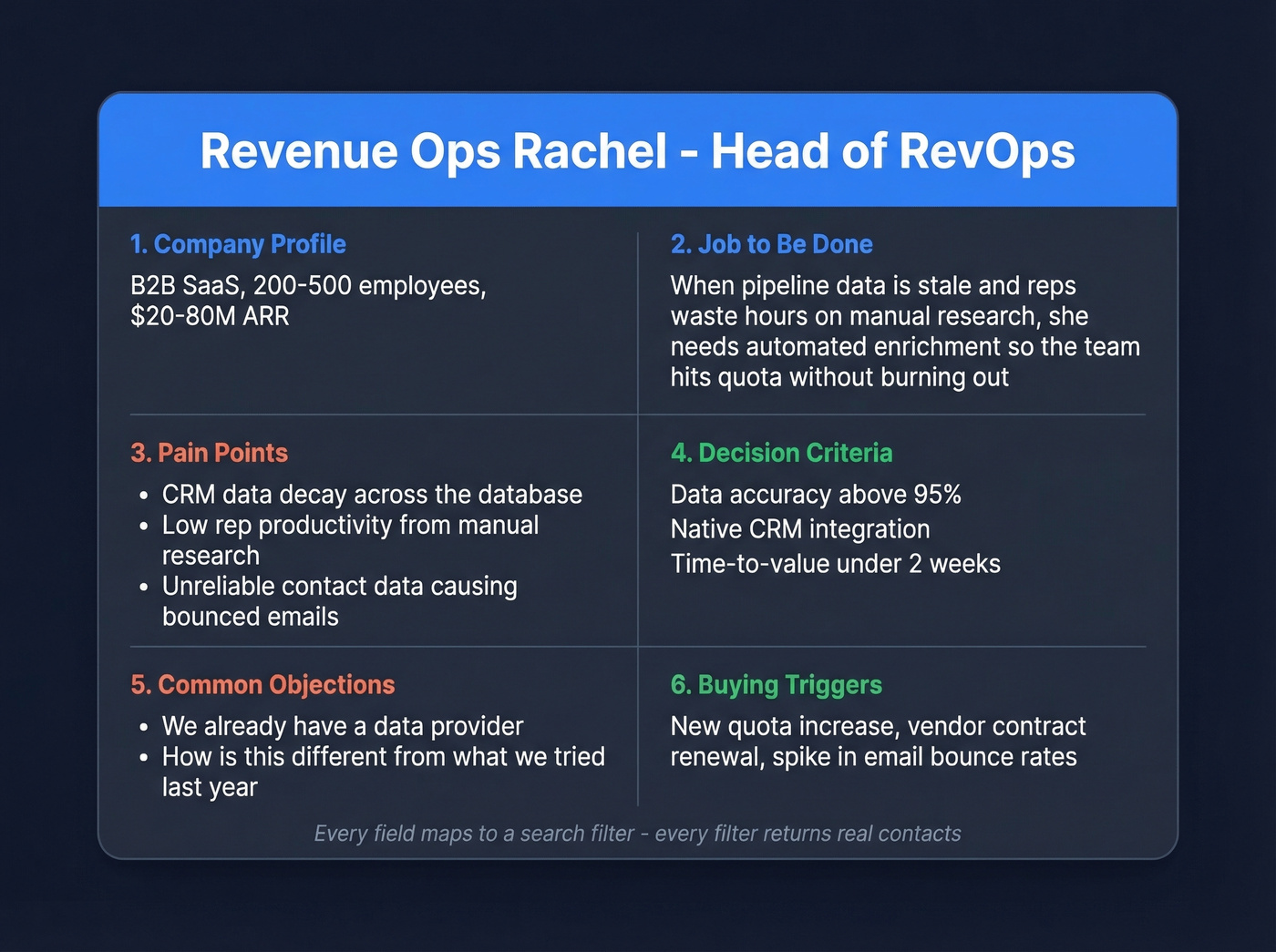
This isn't a template to admire. It's a filter to apply. Every field should translate directly into how you target, message, and sequence. If you're building a persona for business development rather than marketing, emphasize buying triggers and objection handling over content preferences.
To make those fields usable in outbound, align them with firmographic and technographic data you can actually filter on.
From Persona to Prospect List
Here's the thing: this is where every persona guide stops - and where the actual value starts.
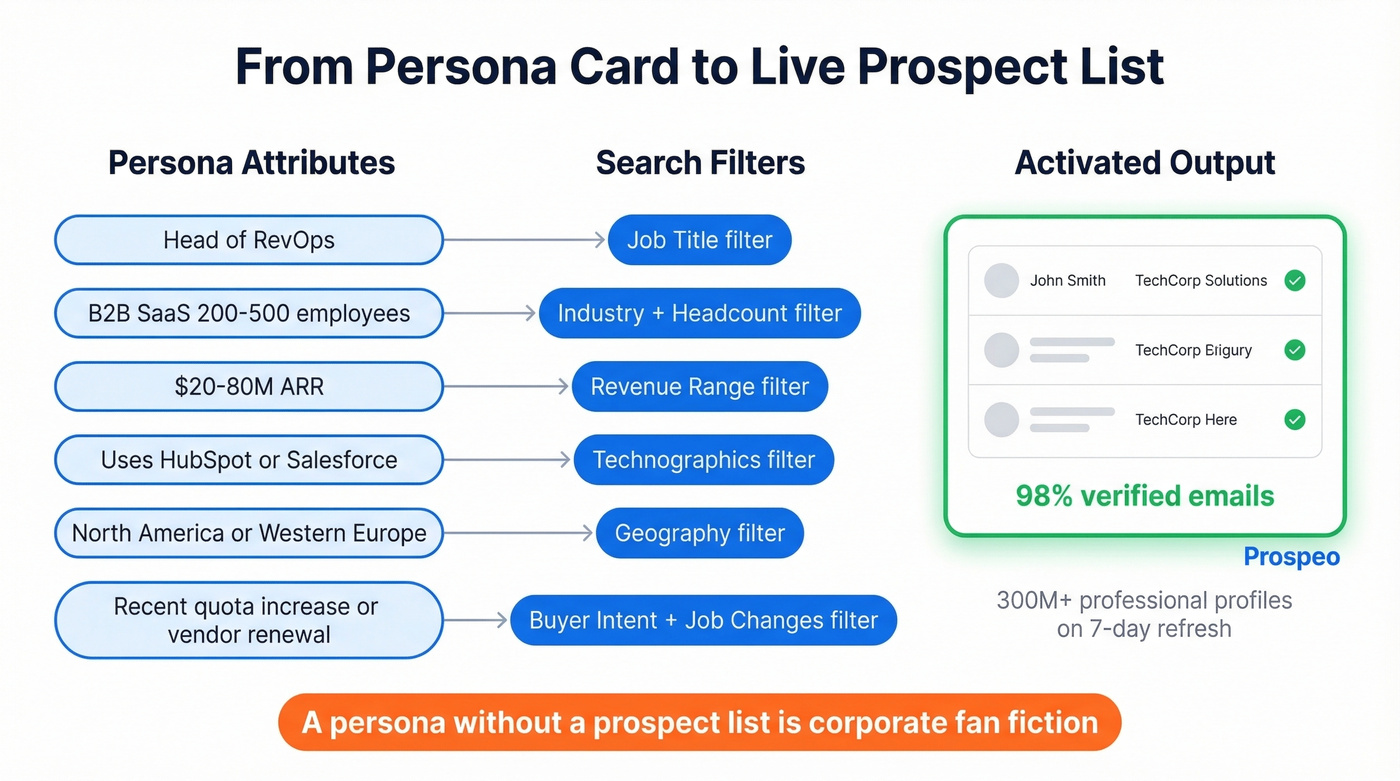
Salespeople spend 30% of their time on actual selling. The rest disappears into research, admin, and chasing leads that don't match. A persona in a Google Doc doesn't fix that. A persona translated into search filters does.
Take "Revenue Ops Rachel." Her firmographics and buying triggers map directly into Prospeo's 30+ search filters - intent signals across 15,000 topics, technographics, headcount growth, job changes, funding events. The output isn't a slide deck. It's a verified prospect list from 300M+ professional profiles with 98% email accuracy on a 7-day refresh cycle, ready to push into your sequencer.
If you're building lists across multiple segments, a repeatable lead generation workflow keeps targeting consistent across teams.
Let's be honest: most persona frameworks fail not because the research is bad, but because nobody builds the bridge to execution. A persona without a corresponding prospect list is corporate fan fiction. Every attribute on the persona card should map to a filter, and every filter should return real contacts you can email today.
For teams running persona auto-assignment in their CRM, the payoff compounds - inbound leads get routed to the rep with the right messaging playbook based on the persona match, cutting response time and improving conversion.
If you're operationalizing this in outbound, pair persona filters with modern sales prospecting techniques so reps can execute without reinventing the process.
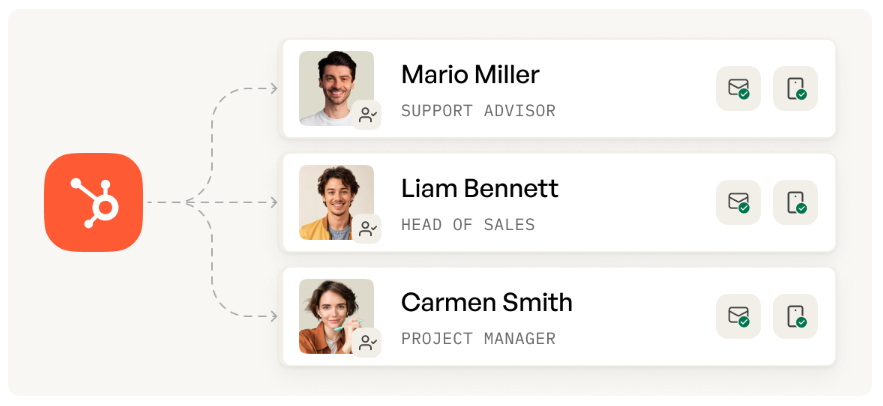
You mapped the buying group. Now reach every stakeholder - Champion, Economic Buyer, Technical Validator - with verified emails and direct dials. Prospeo covers 300M+ profiles refreshed every 7 days, so your outreach hits real people, not stale records from last quarter.
Stop building personas you can't prospect. Start with data that connects.
Measuring Persona Effectiveness
Don't measure personas by how polished the deck looks. Measure them by pipeline impact.
Track role coverage in target accounts - are you reaching all three to five buying group roles, or just one? Monitor reply and meeting rates by persona to find which converts best and which needs better messaging. Compare stage velocity between multi-threaded deals and single-threaded ones. In our experience, multi-threaded deals close at roughly 2x the rate. If yours don't, your personas need sharper differentiation.
Use persona-level data for lead qualification too. If a specific persona consistently stalls at a certain stage, the problem is usually messaging fit, not lead quality.
To quantify impact cleanly, track funnel metrics by persona and buying-group coverage.
SaaS Buyer Persona FAQ
How many personas does a SaaS company need?
Three for most teams: User, Decision Maker, Executive Sponsor. Graduate to five when selling into 200+ employee orgs with formal procurement. More than five usually signals a spreadsheet problem, not a strategy.
What's the difference between an ICP and a buyer persona?
An ICP defines the organization - industry, size, tech stack. A buyer persona defines the individual - role, pain points, buying triggers. Build the ICP first, or you'll target the right people at the wrong companies.
How do you turn a persona into actual outreach?
Translate persona attributes into search filters on a B2B data platform - firmographics, intent signals, technographics, job changes - then export verified contacts directly into your outbound sequences. The persona is the filter; the tool builds the list.
Can the same framework work for inbound and outbound?
Yes. Inbound and outbound personas share the same research foundation - role, JTBD, objections, buying triggers. The difference is activation: inbound personas shape content strategy and lead scoring, while outbound personas drive targeting filters and sequence messaging. One set of personas serving both motions prevents marketing and sales from working off different buyer definitions.
How do personas differ for EdTech versus typical SaaS?
EdTech personas often include district administrators, curriculum directors, or IT coordinators at school systems. The JTBD framework still applies, but procurement cycles are seasonal, budgets are grant-driven, and the audience is split between the institution and the end user. Adjust persona fields for deal complexity - the structure stays the same.