

How to Lead Sales Conversations That Actually Close (According to the Data)
You just finished a discovery call. You talked for 70% of it. The prospect gave one-word answers, said "interesting" three times, and ended with "send me some materials." You already know what happens next - nothing.
Most advice on sales conversations reads like a motivational poster. "Listen more." "Ask great questions." "Build rapport." None of it tells you how much to listen, how many questions to ask, or what the actual data says about what separates reps who close from reps who get ghosted. Let's fix that.
What the Data Says (Quick Version)
Before we go deep, here's the cheat sheet:
- Talk 43%, listen 57%. Reps in the 38-46% talk range close at 41%. Reps above 65% close at 14%.
- Open with "How have you been?" - it outperforms baseline by 6.6x. "Did I catch you at a bad time?" drops your booking rate by 40%.
- Ask 8-12 discovery questions, not 20. Past that threshold, you're interrogating.
- Verify your data before you dial. The best conversation skills in the world don't help if 2 of your 3 connects are wrong numbers. This is the step most reps skip entirely.
Now let's unpack each of these.
The Numbers Behind Great Sales Conversations
Gong's analysis of millions of interactions established the 43:57 talk-to-listen ratio nearly a decade ago. When they revisited it in 2025, the number held - but they found something more interesting. The real separator isn't hitting 43% exactly. It's consistency.
Low performers' talk time swings by 10% between won and lost deals - 54% talk in wins, 64% in losses. They're all over the map. Top performers stay in a tight band regardless of outcome. They've internalized the rhythm.
The close-rate data makes this concrete. An analysis of 350+ B2B sales calls across 47 teams found:
- 38-46% talk time: 41% close rate
- 55-65% talk time: 24% close rate
- 65%+ talk time: 14% close rate
That's not a marginal difference. Reps who can't stop talking close at one-third the rate of reps who listen. And here's a detail that gets buried: top reps spend 53% more time discussing next steps in the first meeting compared to average reps. They're not just listening - they're using that listening time to set up concrete forward motion.
Stage-Specific Talk Ratios
The 43:57 benchmark is an average. The right ratio shifts depending on where you are in the deal cycle.
| Stage | Rep Talk % | Key Principle |
|---|---|---|
| Cold call | 50-60% | Earn the meeting |
| Discovery | 30-40% | Let the buyer reveal pain |
| Demo | 55-65% | Show value, pause for reactions |
| Negotiation | 35-45% | Listen for buying signals |
Cold calls are the counterintuitive one. Gong found that successful cold calls actually have a higher rep talk ratio - 55% talk vs. 45% listen. The reason is straightforward: a cold call isn't a discovery session. You're earning 30 seconds of attention, delivering a reason to care, and booking a meeting. That requires you to lead.
Discovery is the opposite. If you're talking more than 40% of the time during discovery, you're presenting, not discovering. The buyer should be doing the heavy lifting while you guide with questions. Demo is where you earn back some airtime - but the best demo reps pause constantly to check reactions and pull the buyer back in.
How to Open a Sales Conversation
Openers are the most data-rich part of sales conversations, and the findings are surprisingly definitive.
Use these:
- "How have you been?" - 6.6x higher success rate than baseline. It's disarming because it sounds like you already know the person.
- State your reason for calling early. This alone increases success rate by 2.1x. "The reason I'm calling is..." removes ambiguity and earns you a few more seconds.
- "I'll be brief. In just three minutes, I can share how we help [specific outcome]. Does that sound fair?" - a Zendesk-sourced template that works because it respects the prospect's time and sets a clear boundary.
Skip these:
- "Did I catch you at a bad time?" - drops your booking rate by 40%. Success rate on calls that opened with it was 0.9%. You're literally giving the prospect an exit ramp before you've said anything of value.
- "I'm just calling to check in." No reason for the call means no reason to stay on the line.
- Any opener that starts with your company name and a feature list. Nobody cares about your platform until they care about their problem.
For gatekeepers, keep it simple and direct: "Hi, this is [name] from [company]. Could you connect me with [prospect name]?" Overexplaining to a gatekeeper signals that you don't belong on the call.
When you hear "I don't have time," don't push. Try: "I completely understand. When would be a better time for a quick three-minute call this week?" The callback framing converts better than any objection-handling trick. (If you want more scripts, see How to Respond to 'I Don't Have Time' in 2026.)
Discovery Questions That Work
Gong's research is clear on one thing: 20 discovery questions is too many. Past that threshold, you're running an interrogation, not a conversation. The practical sweet spot is 8-12 high-quality questions that build on each other. If you need a structure, use a Sales Discovery Call Script as a baseline.
The best discovery questions don't feel like a checklist. They feel like genuine curiosity. Here are the ones that consistently surface on r/sales and in practitioner communities:
- "Why now?" - The single most important question. If there's no urgency, there's no deal.
- "Walk me through how you're currently handling this." - Gets the buyer talking in narrative mode, which reveals pain they might not articulate directly.
- "Have you tried to solve this before?" - Uncovers past failures, budget history, and internal politics.
- "Who feels the pain most?" - Identifies your champion and the stakeholders you need to reach.
- "If you didn't solve it, could you live with it?" - Tests whether this is a nice-to-have or a must-fix.
- "What could you be doing that you aren't able to do today?" - Shifts the conversation from pain to aspiration, which is where the business case lives.
The key is sequencing. Start broad ("walk me through..."), narrow to impact ("who feels the pain?"), then test urgency ("why now?" and "could you live with it?"). Each answer should inform your next question. If you're asking question #7 and it has nothing to do with the answer to question #6, you're reading a script, not having a conversation.

Your talk-to-listen ratio doesn't matter if you're talking to the wrong number. Prospeo gives you 125M+ verified mobile numbers with a 30% pickup rate - so your discovery skills actually reach decision-makers.
Stop perfecting your pitch for voicemails that never get returned.
Mistakes That Kill Sales Conversations
RAIN Group's research identifies seven traps that derail conversations. The ones we see most often:
- Talking too much. Already covered - but it's the #1 killer, so it bears repeating.
- Interrogating instead of conversing. Rapid-fire questions with no reaction to answers makes the buyer feel processed, not heard.
- Seeming desperate. Discounting before being asked, following up too aggressively, or accepting any timeline the buyer suggests. Desperation is the fastest way to commoditize yourself.
- Being unprepared. Showing up without knowing the prospect's company, recent news, or tech stack. This is table stakes, and reps still blow it.
- Speaking to the wrong stakeholders. You can run a perfect discovery call with someone who has zero buying authority. That's not a conversation - it's practice.
- Jargon overload. NetSuite's research flags inaccessible language as a consistent deal-killer, especially in cross-functional selling where your buyer isn't technical.
Here's the thing: most of these mistakes come from anxiety, not incompetence. One HubSpot case study found that a sales team replacing urgency-based CTAs with data-backed proposals and tailored value maps increased their win rate by 20% over two quarters. The shift wasn't about learning new skills - it was about stopping the behaviors that were actively hurting them.
If you want to build the listening muscle behind all of this, start with active listening and bake it into your call prep.
Which Sales Methodology Should You Use?
The consensus on r/sales is refreshingly honest: all methodologies boil down to need, budget, stakeholders, and timeline. Teaching a complex framework before a rep has mastered fundamentals is like running a triple-option offense before you can throw a spiral.
That said, methodologies give you structure when conversations get complex. Here's when each one earns its keep:
| Methodology | Core Idea | Best For |
|---|---|---|
| SPIN | Question to surface cost of inaction | Reps learning discovery |
| MEDDIC | Qualify rigorously, protect forecast | Pipeline discipline |
| Challenger | Teach, tailor, take control | Displacing incumbents |
| Sandler | Mutual commitment, disqualify early | Killing bad deals fast |
My recommendation: if you're an individual rep, start with SPIN. It teaches you to ask better questions, which is the foundation of everything else. If you're a sales leader worried about forecast accuracy, MEDDIC forces rigor. If you're selling against an entrenched competitor, Challenger gives you a framework for making the status quo feel expensive. And if your pipeline is full of deals that go nowhere, Sandler's upfront qualification will save you months. (For a practical scorecard, use these deal qualification questions.)
Don't overthink this. Pick one, internalize the fundamentals, and adapt it to your style.
Multi-Threading - The Skill Nobody Covers
Here's a stat that should change how you think about sales conversations: 77% of deals are multi-threaded. Closed-won deals have twice as many buyer contacts as closed-lost. In strategic enterprise deals, the average winner involves 17 contacts.
Multi-threading boosts win rates by 130% in deals over $50K. And selling teams for won deals are 67% larger than those for lost deals - meaning the best reps aren't just talking to more buyers, they're pulling in more internal resources too.
Real talk: most reps have one contact at an account and hope that person will sell internally for them. That almost never works. You need to build relationships across the buying committee - and that starts with knowing who's actually on it. Use a B2B database with 30+ filters, like Prospeo, to find every stakeholder at a target account rather than relying on the one contact your CRM happens to have. (This is a core enterprise sales skill once deal size grows.)
AI and Sales Conversations in 2026
AI usage in sales is accelerating fast. 56% of sales professionals now use AI daily, up from 24% in 2023 to 43% in 2024.
The revenue impact is hard to ignore. Gong's analysis of 7.1 million opportunities found that sellers who frequently use AI generate 77% more revenue than those who don't. Bain's 2025 research showed early AI deployments in sales boosted win rates by 30%+. And teams using Gong's AI Briefer saw a 42% increase in win rate and 26% shorter deal cycles.
If you're building this into your workflow, start with sales enablement AI for prep, summaries, and coaching loops.
Gartner projects that by 2028, AI will close 70% of sales cycles by automating prospecting, lead qualification, and negotiations. By 2031, 35% of sales orgs will introduce EQ-related productivity metrics - measuring how well reps handle the human parts of conversations that AI can't replicate. The implication is clear: the reps who thrive won't be the ones who resist AI. They'll be the ones who use AI for preparation and data, then bring genuine human judgment to the conversation itself.
Before the Conversation - Why Data Quality Decides Outcomes
Reps make an average of 40 calls per day. Of those 40, maybe 8-10 become actual conversations. Now imagine 2 of those connects are wrong numbers or outdated contacts. You just lost 20-25% of your real conversations to bad data. No amount of talk-ratio discipline or discovery skill fixes that.
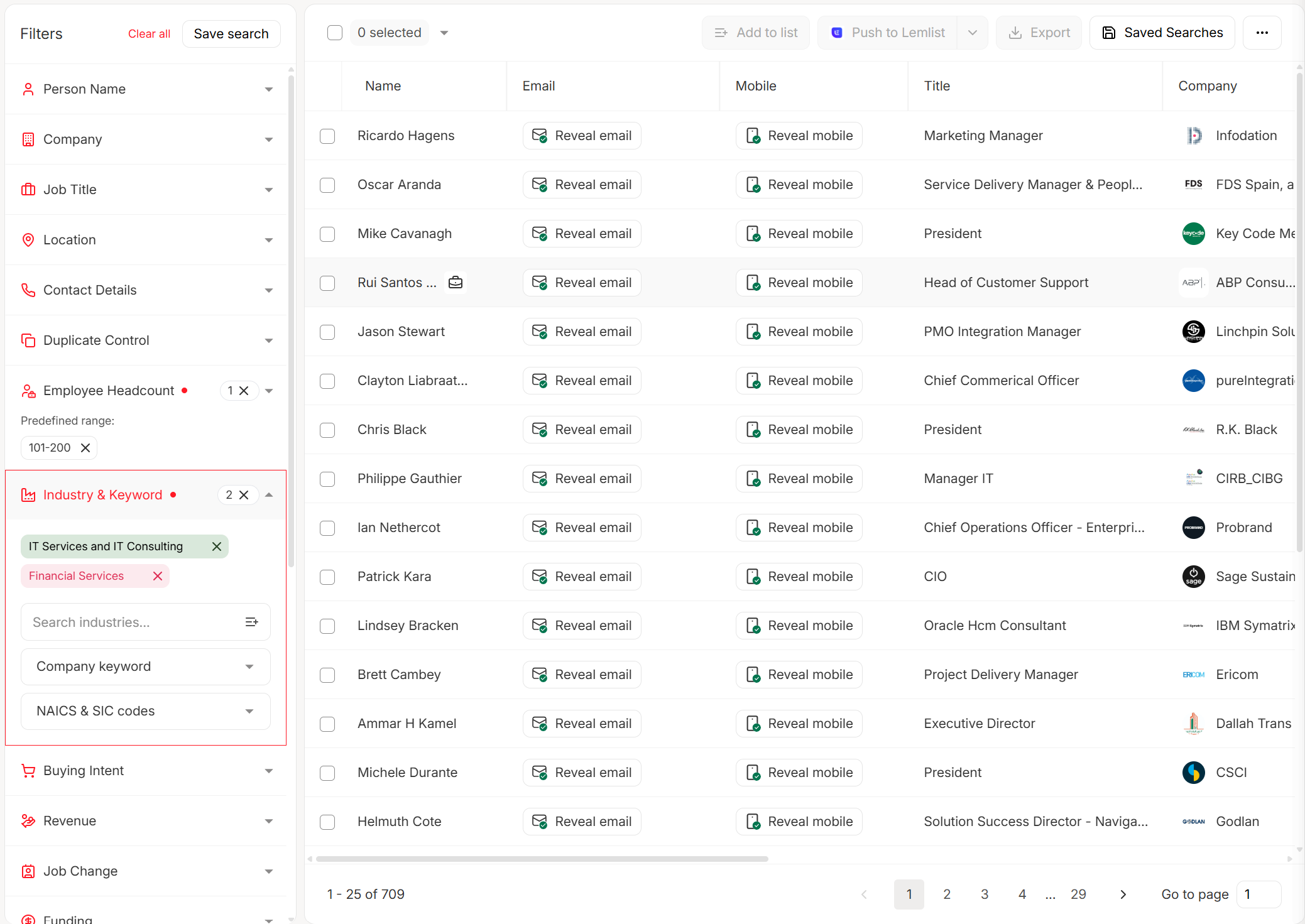
This is where most sales conversation advice falls short - it assumes you're already talking to the right person. Prospeo's database covers 300M+ professional profiles, 143M+ verified emails with 98% email accuracy, and 125M+ verified mobile numbers that deliver a 30% pickup rate. The 7-day data refresh cycle means you're not calling someone who left the company six weeks ago. More of your 40 daily calls become actual conversations, and actual conversations are where all those benchmarks and techniques start to matter. (If you want the ops side, start with data cleansing and B2B data enrichment.)
You just nailed discovery with 8 perfect questions. Now imagine 2 out of 3 follow-up emails bouncing because your data provider refreshes every 6 weeks. Prospeo refreshes every 7 days with 98% email accuracy - so your pipeline keeps moving after the conversation ends.
Great conversations deserve data that doesn't let them die in the inbox.
FAQ
What is the ideal talk-to-listen ratio in sales?
The benchmark is 43% talk, 57% listen, per Gong's analysis of millions of interactions. Reps in the 38-46% talk range close at 41%. Those above 65% close at just 14%. Consistency matters more than hitting the exact number - top performers stay in a tight band across all their calls.
How many discovery questions should I ask?
Aim for 8-12 high-quality questions per discovery call. Gong's data shows 20 is too many - past that point, you're interrogating rather than discovering. Each question should build on the previous answer, not follow a rigid script.
What's the best cold call opener?
"How have you been?" outperforms baseline by 6.6x. Avoid "Did I catch you at a bad time?" - it drops your booking rate by 40%. State your reason for calling early, which alone increases your success rate by 2.1x.
How does data quality affect sales conversations?
Bad data wastes conversations. If 2 of your daily connects are wrong numbers or outdated contacts, your skills don't matter. Prospeo verifies emails and mobiles in real time - 98% email accuracy and 125M+ verified numbers - so you're reaching the right person every time you dial.
Which sales methodology is best for conversations?
It depends on your situation. SPIN for individual reps learning discovery. MEDDIC for forecast discipline. Challenger for displacing incumbents. Sandler for eliminating unqualified deals. All share the same fundamentals: understand need, budget, stakeholders, and timeline.