

SDR Best Practices: The 2026 Playbook With Scripts, Benchmarks, and Cadences
Your reply rate dropped below 1% and your manager's solution is "send more emails." That advice was wrong two years ago and it's career-ending now. Deliverability is harsher, buyers are more guarded, and the SDRs still booking meetings have quietly rewritten their approach from the ground up - while everyone else blasts 500-word templates into spam folders.
Whether you're a seasoned rep or just ramping, these SDR best practices will help you build pipeline that actually converts.
SDR Benchmarks: What "Good" Looks Like
Before optimizing anything, you need to know the numbers you're chasing. These benchmarks pull from Bridge Group, TOPO, Operatix, Tenbound, and Gradient Works.
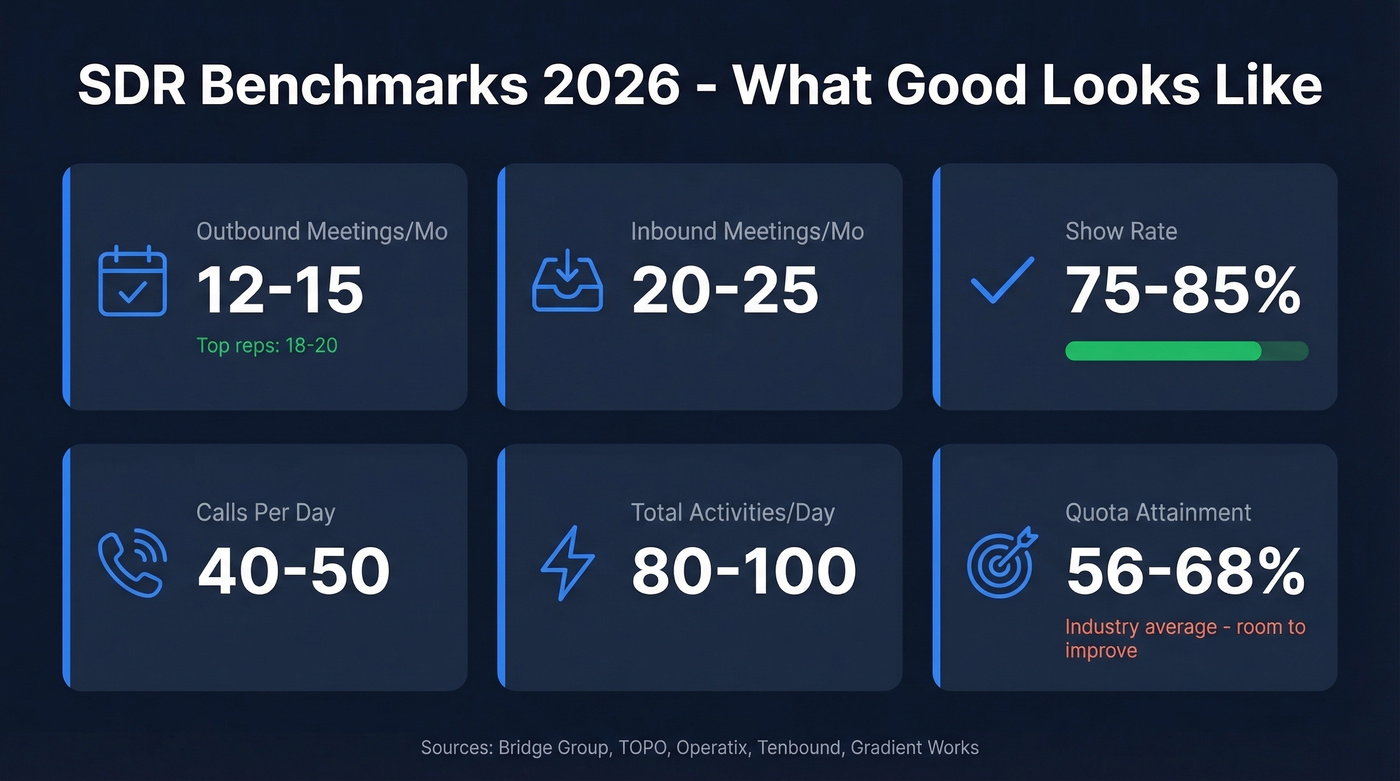
| Metric | Benchmark Range |
|---|---|
| Outbound meetings/mo | 12-15 (top: 18-20) |
| Inbound meetings/mo | 20-25 |
| Show rate | 75-85% |
| Calls/day | 40-50 |
| Total activities/day | 80-100 |
| Quota attainment | 56-68% |
Ramping reps should target 8-10 meetings/month while building pipeline. If you're consistently below 12 outbound meetings after ramp, the problem is usually targeting or data quality - not effort. A useful daily goal ladder: 1 meeting booked per day, 2 new opportunities per week, 4 sales-accepted opportunities per month.
Time-block your day or lose it to busywork. Morning block (1-2 hours): calls while prospects are fresh. Midday: email sequences, research, and list building. Afternoon: social touches, pipeline admin, and prep for tomorrow's calls. SDRs who protect their call block consistently outperform those who "find time" for dials between meetings.
Signal-Based Prospecting
Here's the thing: only 3-5% of your market is actively buying right now. Another ~7% is open to a conversation. Signal-based prospecting helps you find that ~10% instead of carpet-bombing the other 90%.
Stack 2-3 of these signals before reaching out:
- Funding round closed in the last 90 days
- New VP/Director hire in your buyer persona's department
- SDR job posts (they're scaling outbound - they need tools)
- Competitor tech removed from their stack
- Usage spike then drop on a freemium product
Layer intent data on top of firmographic filters to catch accounts researching your category. Prospeo tracks 15,000 topics via Bombora, so you can combine "who fits your ICP" with "who's actively looking" in a single search.
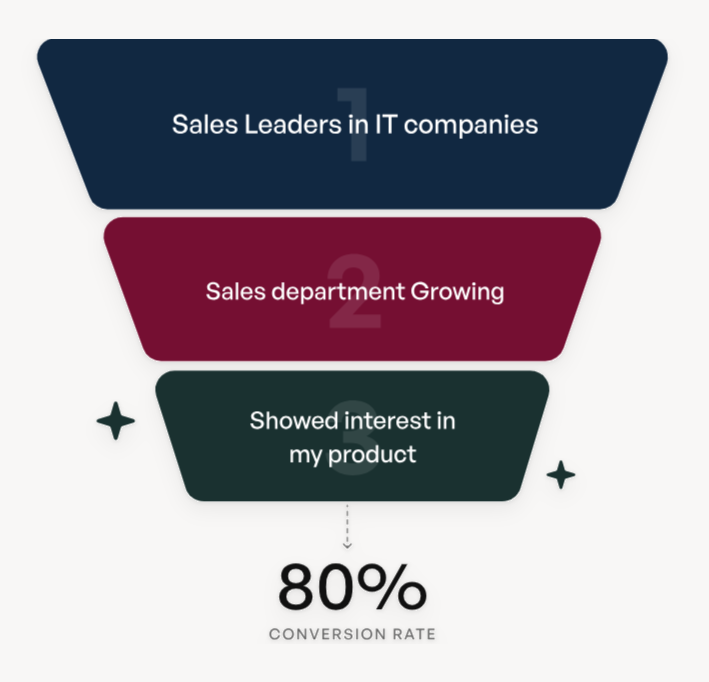
The consensus on r/SaaS is consistent: stop blasting broad ICP lists and start timing outreach around real buying triggers.
Cold Email Tactics That Book Meetings
What to Write
An analysis of 85M+ cold emails reveals patterns that separate booked meetings from spam reports:
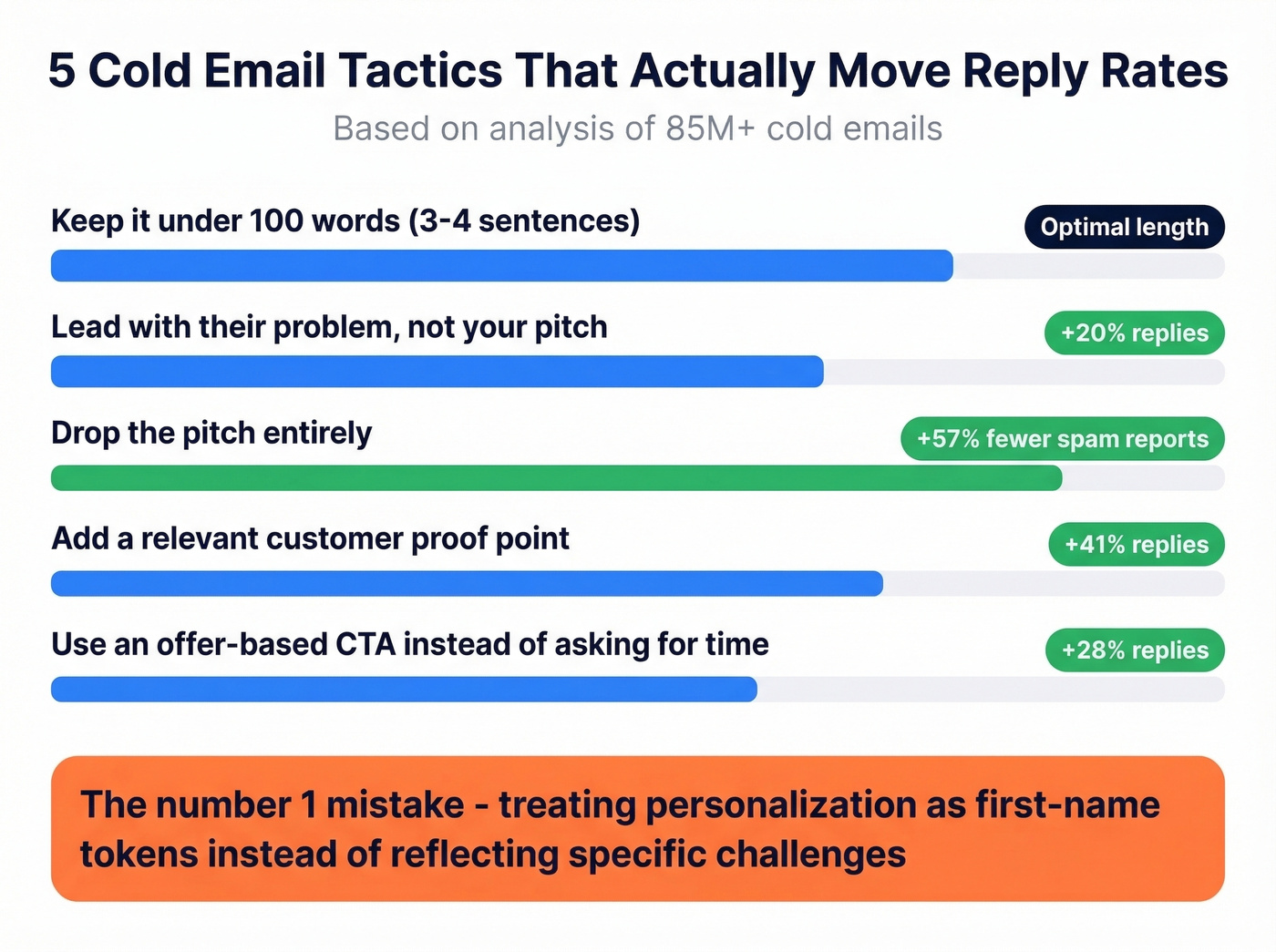
- Under 100 words. Three to four sentences. That's it.
- Don't pitch. Pitching in cold emails reduces reply rates by up to 57%.
- Lead with their problem. Problem-first framing boosts replies by 20%.
- Add social proof. A relevant customer name or result lifts replies by 41%.
- Use offer-based CTAs. "Want the playbook we used?" beats "Got 15 minutes?" - 28% higher reply rate.
The #1 mistake isn't bad copy - it's treating personalization as {{first_name}} tokens. Real personalization reflects a prospect's specific challenges, not their name jammed into a template.
One practitioner ran 4,800 emails in micro-batches of ~200 contacts sharing a specific pain point, resulting in a 17.4% reply rate across 6 touches over 12 days. For perfect-fit prospects, a 3-minute Loom video replaced the standard follow-up. The key wasn't magic copy - it was tight segmentation and relevance. If you take one sales development tip from this article, make it this micro-batch approach.
Sequence Structure
No more than 50% of your sequence steps should be email. The rest should be calls, social touches, or voicemails.
| Segment | Total Steps | Duration | Email Steps |
|---|---|---|---|
| SMB | 5-8 | ~30 days | 2-4 max |
| Mid-market | 7-12 | 30-45 days | 3-6 max |
| Enterprise | 10-18 | 30-60+ days | 5-9 max |
The hard constraint: a 0.3% spam complaint rate is the enforcement death zone - roughly 3 complaints per 1,000 emails. Aggressive daily follow-ups create velocity patterns that trigger silent spam routing. Space your emails out.
If you want a deeper breakdown of sequencing rules, see sequence management.
Deliverability Setup
SPF, DKIM, and DMARC are non-negotiable. If you haven't configured all three, stop reading and go do that first.
CRM data decays at roughly 30% per year. If you're not refreshing contacts regularly, a third of your list is dead by December - and every email to a dead address chips away at your sender reputation. Warm up your sending domains on this schedule:
| Timeframe | Emails/Day |
|---|---|
| Week 1-2 | 5-10 |
| Week 3-4 | 15-20 |
| Week 5-6 | 30-40 |
| Week 7+ | Max 50/inbox |
Monitor these thresholds weekly: bounce rate under 2%, spam complaints under 0.1%, reply rate above 5%. Avoid open tracking pixels - they tank deliverability and the data they provide isn't worth the cost.
Verify your list before sending. Prospeo's 5-step verification catches bad addresses, spam traps, and catch-all domains before they burn your sender reputation - 98% email accuracy on a 7-day refresh cycle. Snyk cut bounce rates from 35-40% to under 5% after switching.
For more on keeping inbox placement stable, use this email deliverability guide.
Cold Calling Scripts and Openers
Openers That Work
Average cold call success rate sits around 2.3%. Top teams hit 5-8% with targeted lists and structured scripts. 82% of buyers say they've accepted a meeting from a cold call that opened with a clear, outcome-driven value proposition - and the difference is almost entirely in the first 10 seconds.
Three opener frameworks with proven lift:
- Pattern interrupt ("Hey - how've you been?"): 6.6x higher success rate. It breaks the "telemarketer" pattern.
- Reason statement ("The reason I'm calling is..."): 2.1x lift. Directness builds trust.
- Permission-based ("Mind if I take 30 seconds to explain why I called?"): lowers resistance immediately.
We've tested both permission-based and pattern-interrupt openers across dozens of campaigns - the pattern interrupt wins consistently, especially when paired with a specific context reference. Mention something real ("Saw you just hired three SDRs") before asking for time. It signals you did homework.
If you need a full system (not just openers), build a repeatable cold calling system.
The 35-Second Script
Answer three questions fast: Who are you? Why are you calling? What do you want?
Keep the pitch under 35 seconds, then go directly to a specific meeting ask: "Does Thursday afternoon work for a 15-minute call?" Vague asks like "Can we find time?" get vague answers.
Most SDRs fail on calls because they pitch through objections instead of acknowledging them. Use the Mr. Miyagi method - agree with the objection first, then redirect. When they say "We already use [competitor]," don't argue. Say "That makes sense - most of our customers did too. The 15 minutes is to show what's different. Thursday work?"
Reduce no-shows by sending a strong agenda immediately (not "Intro call"), booking same-week whenever possible, and confirming the calendar invite live: "Mind checking it went through?"
If you want more talk tracks, steal from these talk track examples.

Signal-based prospecting only works if your contact data connects you to real buyers. Prospeo combines 15,000 intent topics with 30+ filters - funding, job changes, tech stack, headcount growth - so you reach the 10% who are actually in-market. 98% email accuracy means your carefully segmented micro-batches land in inboxes, not spam folders.
Stop wasting perfect messaging on dead email addresses.
The 10-Day Multi-Channel Cadence
| Day | Channel | Touch |
|---|---|---|
| 1 | Social | Connect request (no pitch) |
| 2 | Email #1 (4 lines + 2 time slots) | |
| 4 | Social | DM with micro-value offer |
| 6 | Email #2 (proof point + slots) | |
| 8 | Phone | Call + 20-second voicemail |
| 10 | Email #3 (close the loop + resource) |
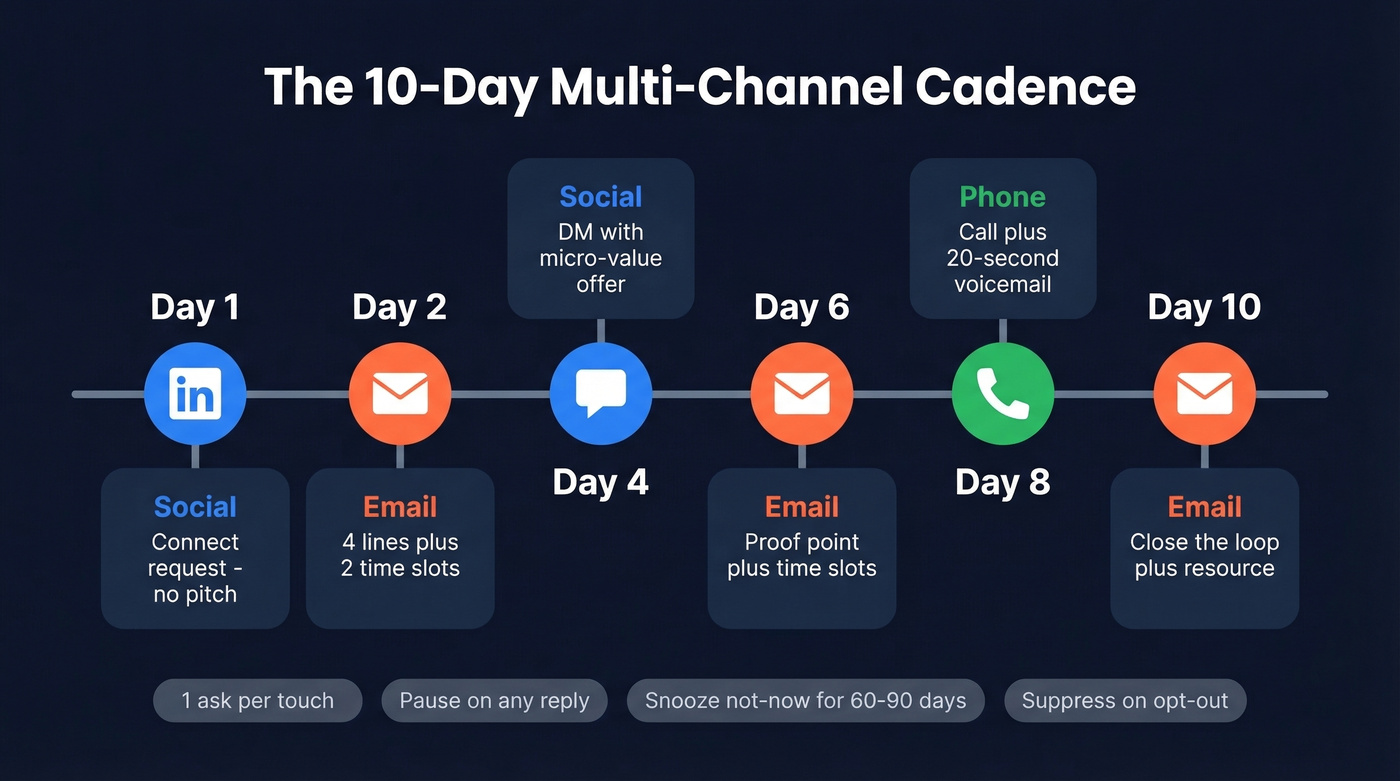
Operational rules: one ask per touch, pause the sequence on any reply, snooze "not now" responses for 60-90 days, and globally suppress on opt-out. We've seen teams run this cadence at 15-30 new contacts per day per inbox without deliverability issues - but only with warmed domains and verified data.
To tighten your follow-ups without sounding robotic, use these sales follow-up templates.
The SDR Tech Stack (What It Costs)
You don't need 12 tools. You need three good ones and clean data. The average SDR team uses 12-15 tools daily at a total cost of $2,000-$5,000 per SDR per month. Most of that spend is wasted.
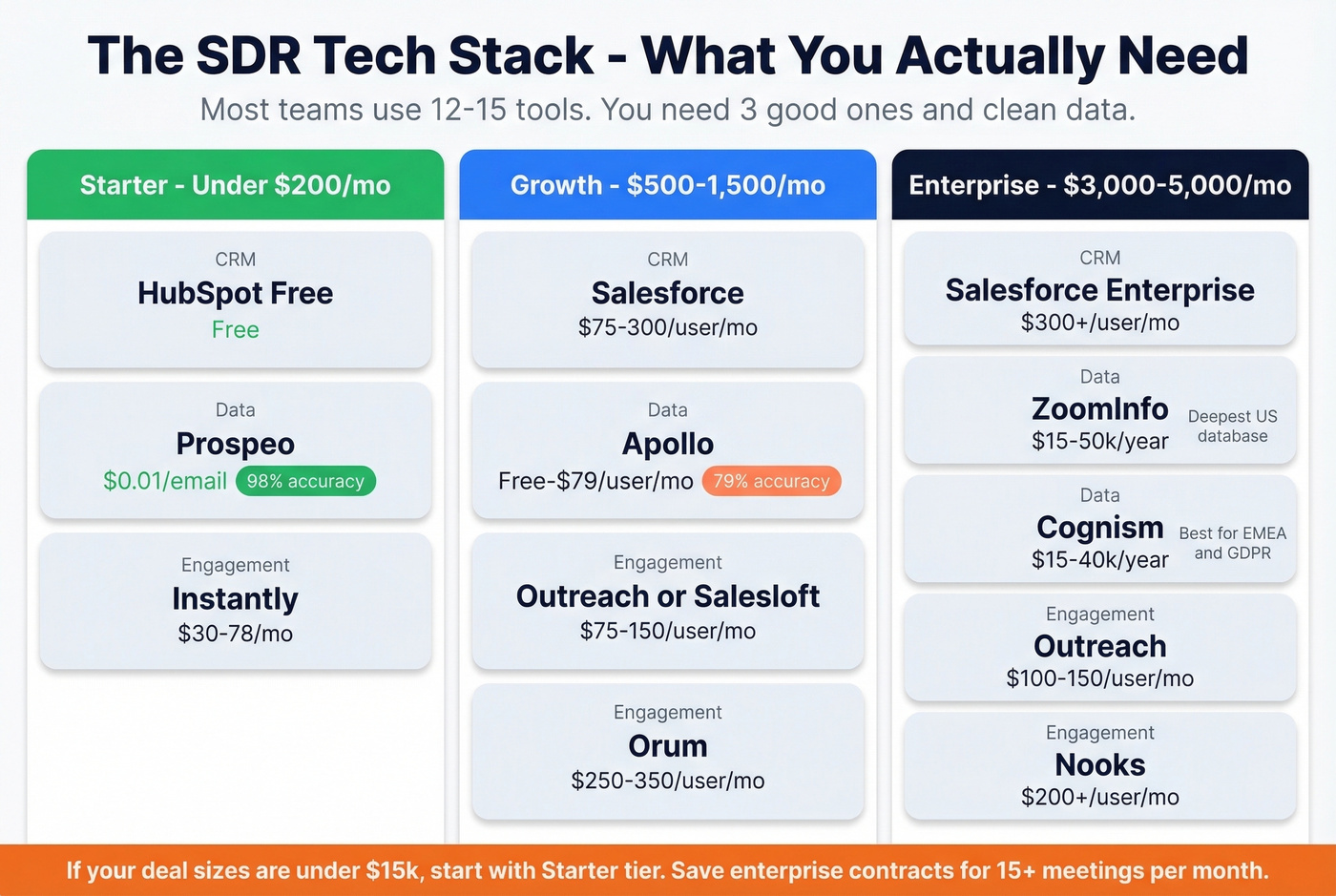
Look - if your deal sizes are under $15k, you don't need ZoomInfo-level data. A verified email finder and a solid sequencer will get you 80% of the way there at 10% of the cost. Save the enterprise contracts for when you're consistently booking 15+ meetings/month and need to scale.
Start with a CRM, a verified data source, and a sequencer. Everything else is optional.
| Category | Tool | Price |
|---|---|---|
| CRM | HubSpot / Salesforce | Free-$300/user/mo |
| Data | Prospeo | ~$0.01/email, free tier |
| Data | Apollo | Free-$79/user/mo |
| Data | ZoomInfo | $15,000-$50,000/yr |
| Data | Cognism | $15,000-$40,000/yr |
| Engagement | Outreach | ~$100-$150/user/mo |
| Engagement | Salesloft | ~$75-$125/user/mo |
| Engagement | Instantly | $30-$78/mo |
| Dialer | Orum | $250-$350/user/mo |
| Dialer | Nooks | $200+/user/mo |
Apollo is the best free starting point - solid database, built-in sequencing, generous free tier. It won't match Prospeo on email accuracy (79% vs 98%), but it's hard to beat for a team spending zero dollars. ZoomInfo is the enterprise default with one of the deepest US databases, though with intent data many teams spend $30-50k/year. Cognism is strong for EMEA-focused teams that need GDPR-compliant mobile numbers - a critical consideration for anyone prospecting in the UK or EU where data regulations are stricter.
Outreach and Salesloft are the two serious sequencing platforms - pick based on your CRM integration. Instantly is the budget play for cold email at scale. Orum and Nooks are parallel dialers that can materially increase call volume when phones are a primary channel.
If you’re evaluating tools end-to-end, start with this ranked list of SDR tools.
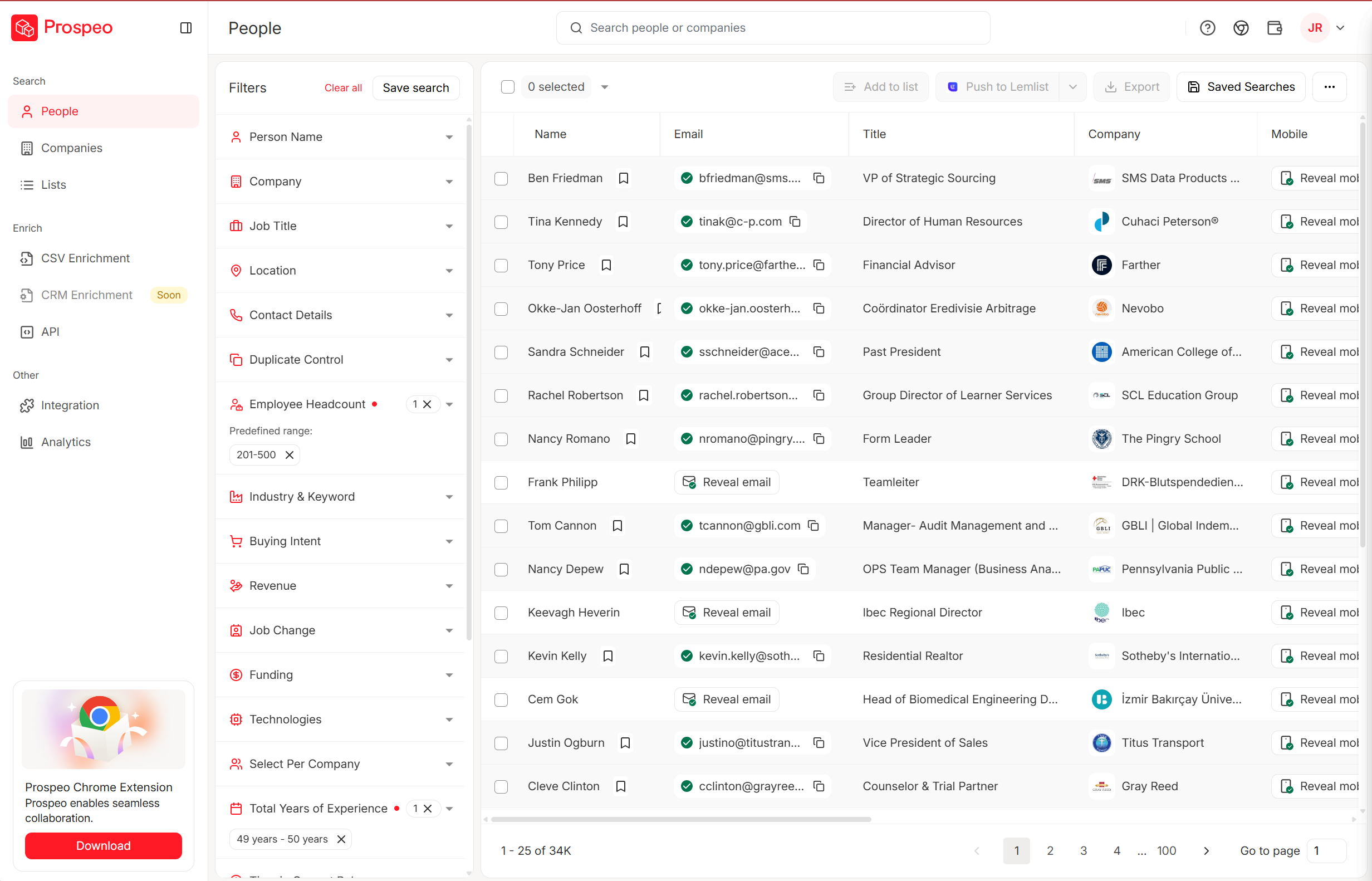
CRM data decays 30% per year. Prospeo refreshes every 7 days - not every 6 weeks like competitors. Snyk's 50 AEs cut bounce rates from 35-40% to under 5% and added 200+ new opportunities per month. At $0.01 per verified email, protecting your sender reputation costs less than a single bounced campaign.
Verify your list before it burns your domain - 75 free emails to start.
AI and the SDR Role in 2026
Let's be honest about the economics. A fully loaded human SDR costs $75k-$110k annually. An AI-heavy outbound stack runs $15k-$35k/year. One Reddit user reported their AI stack costs ~$1,800/month, contacts ~20k prospects, and produces 14 meetings - roughly $130/meeting and $600/customer acquired.
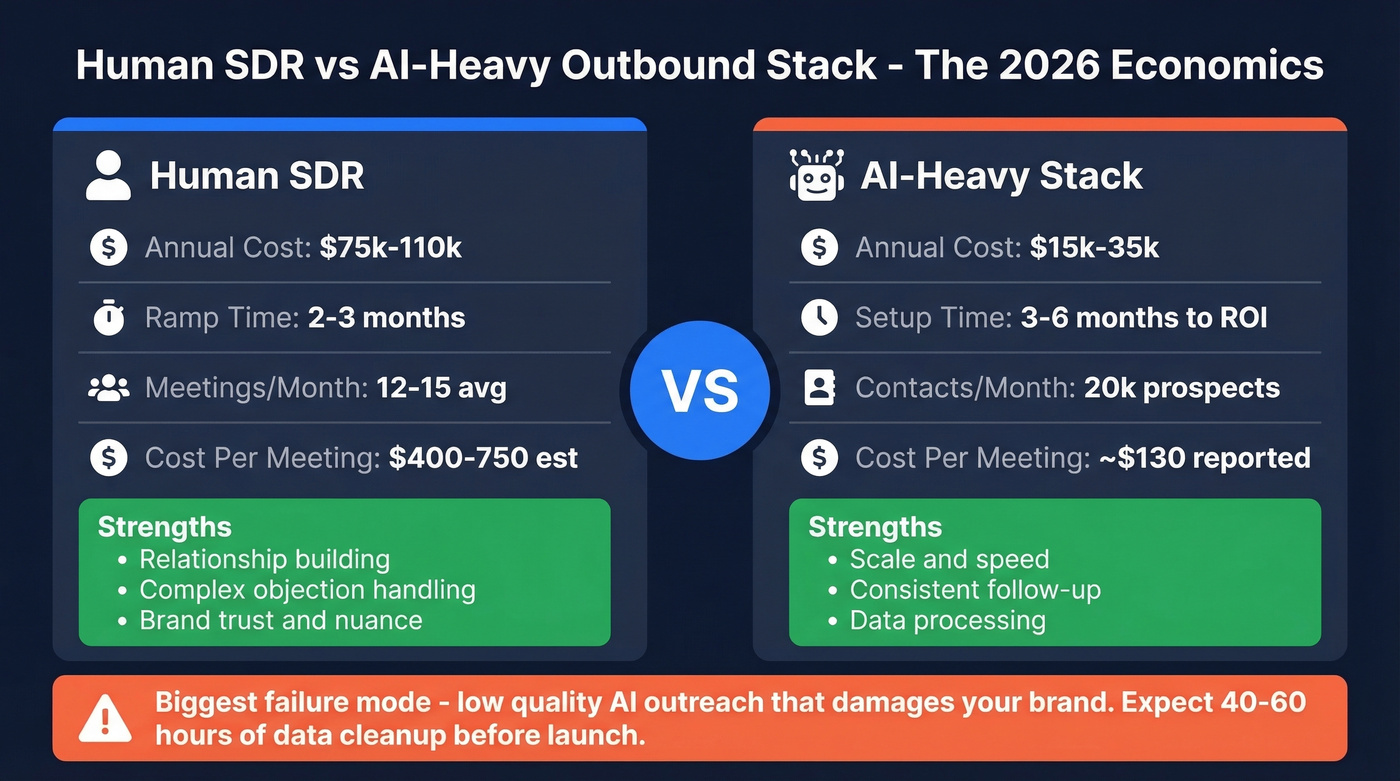
Implementation isn't instant, though. Expect 3-6 months to see ROI with clean data, and 40-60 hours of data cleanup before you can even launch. The biggest failure mode is low-quality AI outreach that damages your brand.
Where AI genuinely shines is speed-to-lead for inbound. Responding within 1 minute boosts conversions by 391% - and that's a task humans consistently fumble.
AI won't replace SDRs. It'll replace SDRs who don't use AI. The boring parts - research, list building, first drafts, follow-up scheduling, data entry - are already automatable. Creative strategy, objection handling, and relationship building aren't going anywhere.
If you’re adding automation, start with AI sales follow-up workflows before you touch net-new outbound.
Tips for a Year-End Pipeline Push
Q4 is a different animal. Budgets are expiring, decision-makers are distracted by holiday schedules, and "let's revisit in January" becomes the default objection.
Resurface every "not now" from Q2 and Q3 - budget-use-it-or-lose-it pressure makes previously cold accounts suddenly warm. Shorten your cadence too. Compress the 10-day sequence to 7 days because decision timelines shrink when fiscal years are ending.
Lead with urgency that's real, not manufactured. "Your team will have new targets in January - getting this evaluated now means you start Q1 with a solution, not a search" works because it's true. And front-load phone touches: email volume spikes in Q4 as every vendor runs year-end campaigns, so the phone becomes your competitive advantage.
The core SDR best practices don't change dramatically in Q4, but the emphasis shifts toward speed and re-engagement over net-new prospecting.
FAQ
How many meetings should an SDR book per month?
Outbound SDRs typically book 12-15 qualified meetings per month; top performers hit 18-20. Inbound SDRs average 20-25. Show rates run 75-85%, so expect ~15-25% no-shows as normal. Ramping reps should target 8-10 meetings while building pipeline and learning the ICP.
How many touches does it take to book a meeting?
Plan for 8-16 touches per account across email, phone, and social. TOPO research suggests 16 touches; HubSpot recommends at least 8. Enterprise deals skew higher - 10-18 touches over 30-60 days. The key is multi-channel: no more than 50% of touches should be email.
What's the biggest SDR mistake in 2026?
Ignoring data quality. You can write the best cold email ever crafted, but if 30% of your list is dead addresses, your domain reputation craters before the message reaches anyone. Verify before you send. Treat deliverability as a core skill, not an afterthought.
Do outreach strategies differ for UK and EMEA markets?
Yes. Prospecting in the UK and EU requires GDPR consent compliance, shorter business-hour windows across time zones, and culturally softer outreach. Use GDPR-compliant data providers, lead with value rather than hard asks, and adjust call windows - UK prospects are generally more receptive between 9-11 AM local time. The ICO's direct marketing guidance is worth bookmarking if you're running outbound into the EU.