

How to Sell Cloud Services in 2026: Pricing, Objections, and the AI Opportunity
A mid-market sales rep posted on r/sales that selling cloud services feels like selling "trust and confidence." That's exactly right - and it's exactly why most reps struggle. Cloud infrastructure services surpassed $419B in annual revenue last year, growing 30% year-over-year. AWS still leads at 28% market share, followed by Microsoft at 21% and Google at 14%, but a lot of the momentum is coming from tier-two providers like CoreWeave, Oracle, Crusoe, and Nebius. Meanwhile, the average cloud seller is still fumbling through discovery calls and losing to incumbents who've held the account for years.
Here's what actually moves the needle right now:
- Get into a hyperscaler co-sell program. AWS co-sell partners see 65% higher close rates and larger deal sizes.
- Package managed services at 60%+ gross margin - not license resale, where margins are razor-thin and publicly visible. (If you need a quick refresher on margin math, see gross margin.)
- Add AI/GPU cloud to your catalog before every competitor in your territory does.
What Changed in Cloud Sales
Three structural shifts reshaped how cloud services get sold.
Marketplace-led GTM became the default. Cloud marketplaces are projected to hit $163B in sales by 2030, with roughly 60% of deals influenced by channel partners. Buyers now prioritize solutions that count toward their pre-committed AWS, Azure, or GCP spend. If your offer isn't transactable on a marketplace, you're creating procurement friction your competitor doesn't have.
Co-selling with hyperscalers went from "nice to have" to strategic revenue engine. Google Cloud partners reported a 200% increase in co-sell bookings starting in early 2023, a trend that's only accelerated since. Microsoft requires a transactable marketplace offer plus $100K in marketplace billed sales just to qualify for Azure IP co-sell status. The bar keeps rising, but the payoff is real - and it compounds as your marketplace track record grows.
Third, AI and GPU cloud created an entirely new selling category. It's the biggest margin opportunity most cloud sellers are ignoring.
How to Price Cloud Services
Your customers expect cloud to be cheaper than on-prem. They see public pricing for Microsoft 365 licenses and assume your management layer should cost next to nothing. As one MSP put it on r/msp, customers expect that removing physical hardware should automatically reduce their bill. Your job is to redefine what they're paying for.
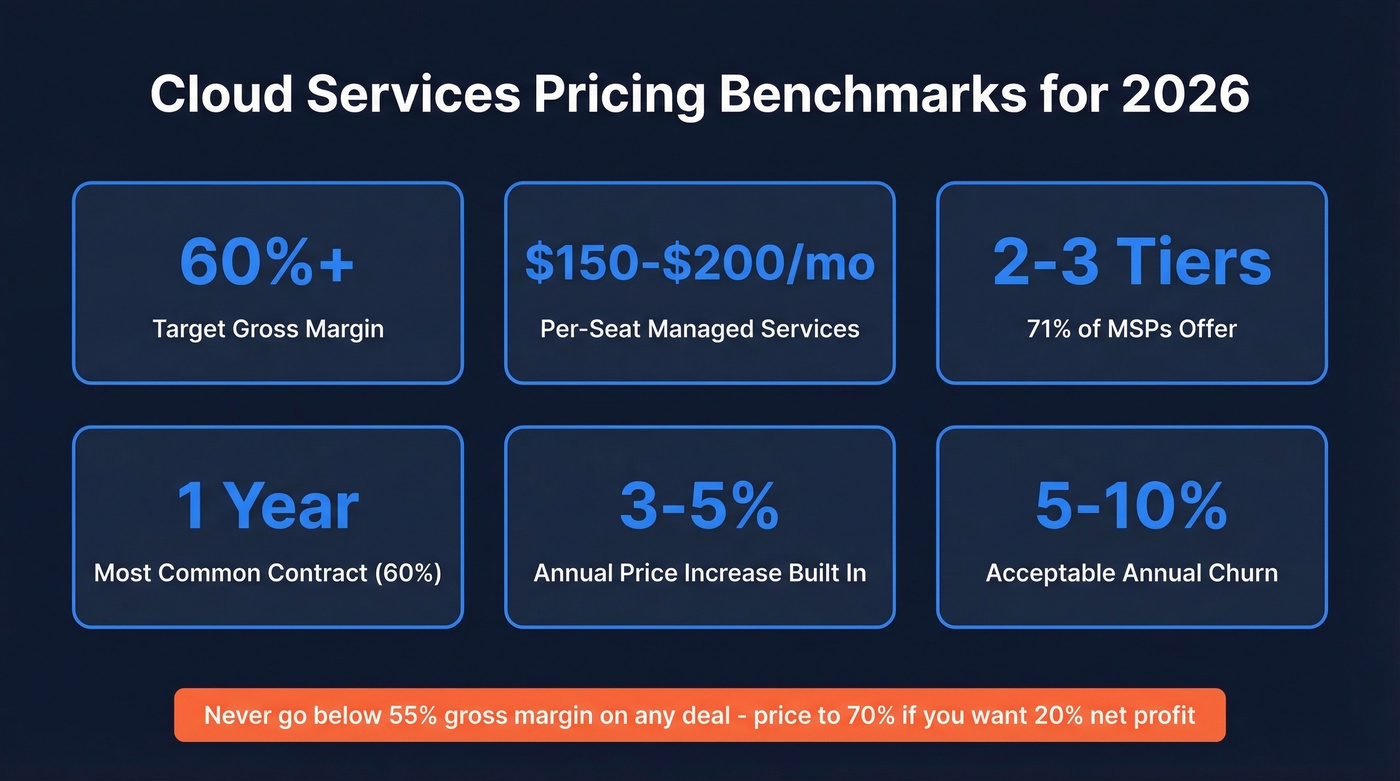
MSPs moving clients to cloud often lose the hardware refresh revenue they depended on every 5-8 years. The management layer is how you replace it.
| Metric | Benchmark |
|---|---|
| Target gross margin | 60%+ (top third) |
| Per-seat managed services | $150-$200/mo |
| Pricing tiers offered | 2-3 (71% of MSPs) |
| Most common contract term | 1 year (60%) |
| Annual price increase | 3-5% |
| Acceptable churn rate | 5-10% annually |
Most MSPs blend value-based and cost-plus pricing rather than picking one model - 54% use a combination approach. Your margin lives in the management layer: monitoring, security, optimization, compliance. A $6-to-$8 markup on a Microsoft seat isn't a business model. A $150-$200/seat managed services package targeting 60-65% gross margin is.
Don't go below 55% on any deal. Price to 70% gross margin if you want to land around 20% net profit after overhead. Build in 3-5% annual increases from day one - it's far easier to include them in the contract than to negotiate them later. And here's a stat that should bother you: top-performing MSPs invest 14%+ of gross margin dollars in marketing, yet 42% of MSPs spend under $10K a year. You can't grow what you won't promote. (If you're tightening your process, use a simple sales process optimization checklist.)
The Cloud Sales Conversation
We've seen the reps who close mid-market cloud deals fastest share one habit: they map every stakeholder before the second call. That single discipline predicts deal velocity more than any other factor we've tracked.
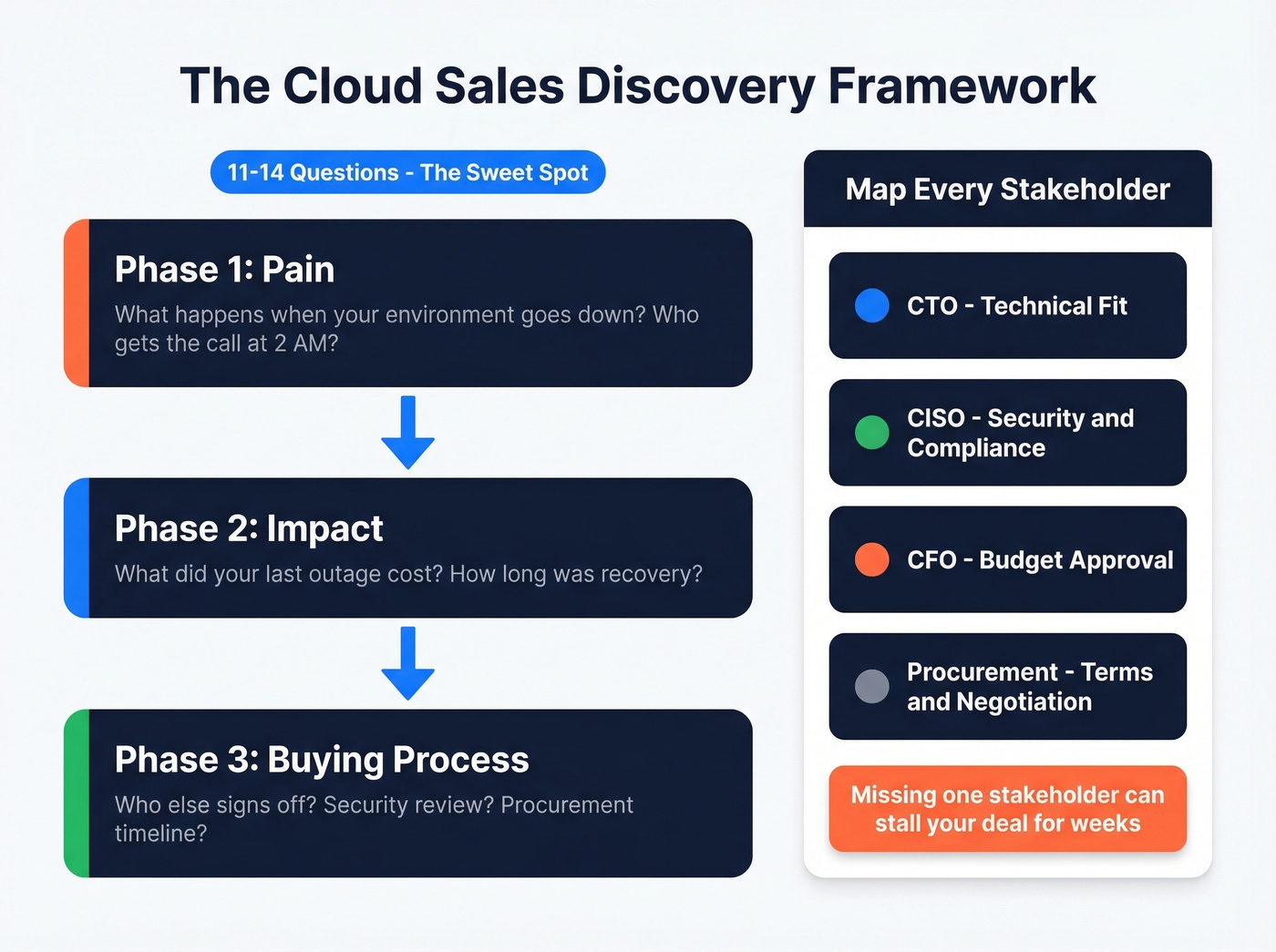
Successful cloud discovery calls run 11-14 questions - the range that correlates with higher close rates. Fewer questions means you're pitching, not diagnosing. More than that and you're interrogating. The most common mistake? Talking more than listening. If you're pitching features before question 8, you've already lost.
Structure your discovery in three phases. Start with pain: "What happens when your current environment goes down? Who gets the call at 2 AM?" Move to impact: "What did your last outage cost in lost productivity? How long was recovery?" Then map the buying process: "Who else needs to sign off? Is there a security review? What's the procurement timeline?"
Document every person who can say no. In a mid-market cloud deal, you're typically navigating the CTO evaluating technical fit, the CISO reviewing security and compliance, the CFO approving budget, and procurement negotiating terms. Missing any one of them creates a stall you won't see coming. We had a deal stall for six weeks last year because nobody flagged the compliance officer who had informal veto power - lesson learned. (This is classic team selling in practice.)
Your ROI messaging needs to be specific and provable. Don't talk about "digital transformation." Talk about discovery time, recovery time, cost per incident, and security risk level. Equip your internal champion with these numbers so they can sell for you when you're not in the room. If you need a tighter narrative, borrow a few talk track examples.

You just read that mapping every stakeholder before the second call is the #1 predictor of deal velocity in cloud sales. Prospeo gives you the CTO, CISO, CFO, and procurement contacts in one search - with 98% email accuracy and 125M+ verified mobile numbers. Stop losing six weeks to a compliance officer you didn't know existed.
Map the entire buying committee before your next discovery call.
Handle the Three Biggest Objections
"We don't want to switch providers." Don't fight this head-on. Reframe around consolidation and risk: "I'm not asking you to fire anyone. Let's look at where your current setup has gaps - compliance coverage, after-hours response, security monitoring. We can complement what's already working and close the gaps that keep you exposed."
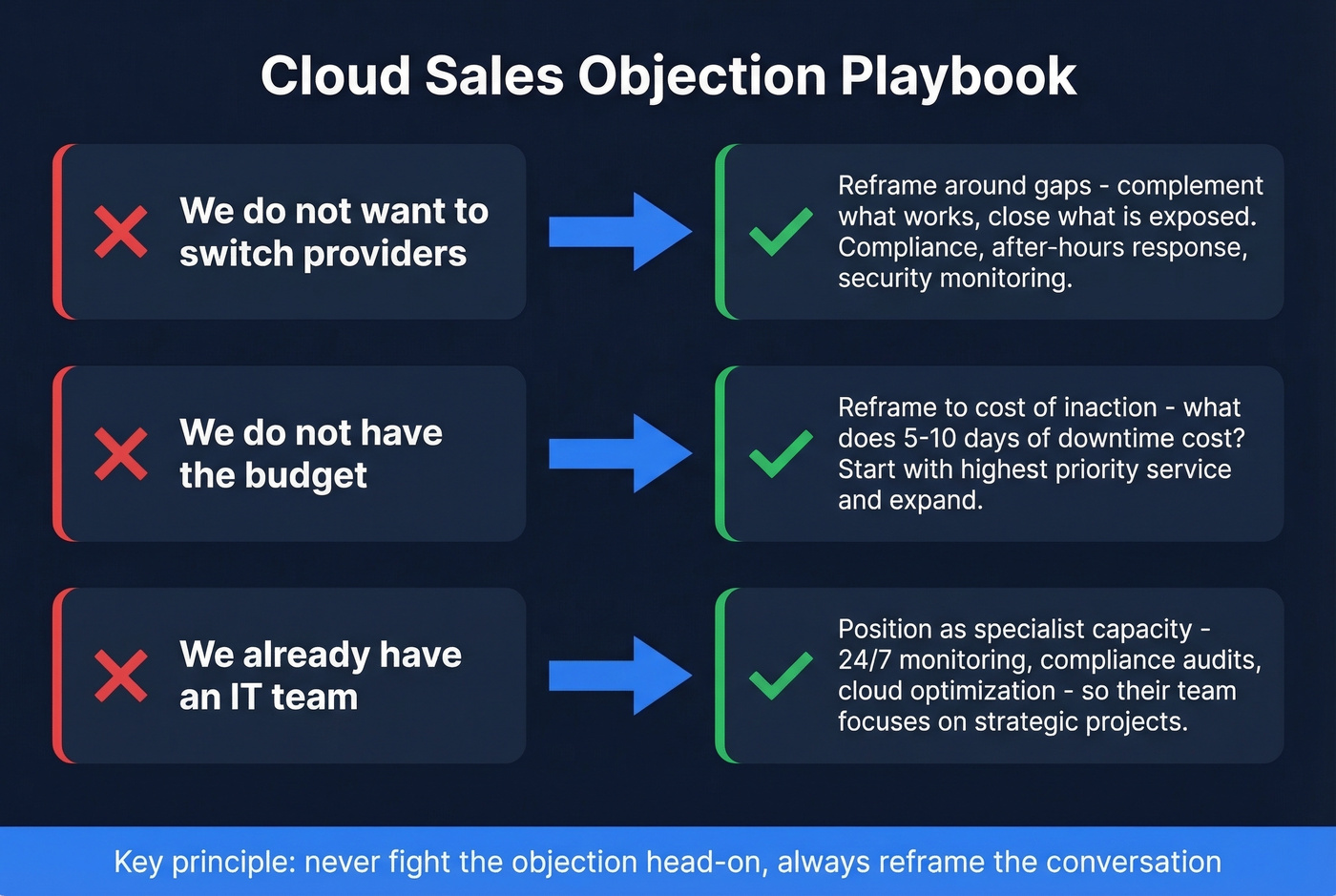
"We don't have the budget." Reframe to cost of inaction: "What would it mean if operations halted for five or ten days? What's the cost of a single data breach versus the cost of preventing one?" Start with the highest-priority service - security or backup - and expand from there. All U.S. states have data privacy laws now, and the penalties aren't theoretical. (If objections are a recurring issue, see reduce sales objection rate.)
"We already have an IT team." Position as complementary specialist capacity, not a replacement: "Your IT team is great at keeping the lights on. We handle the specialized work - 24/7 monitoring, compliance audits, cloud optimization - so they can focus on strategic projects instead of firefighting." This one lands especially well with CFOs who know their IT team is stretched thin but don't want to hire three more people.
The AI/GPU Opportunity
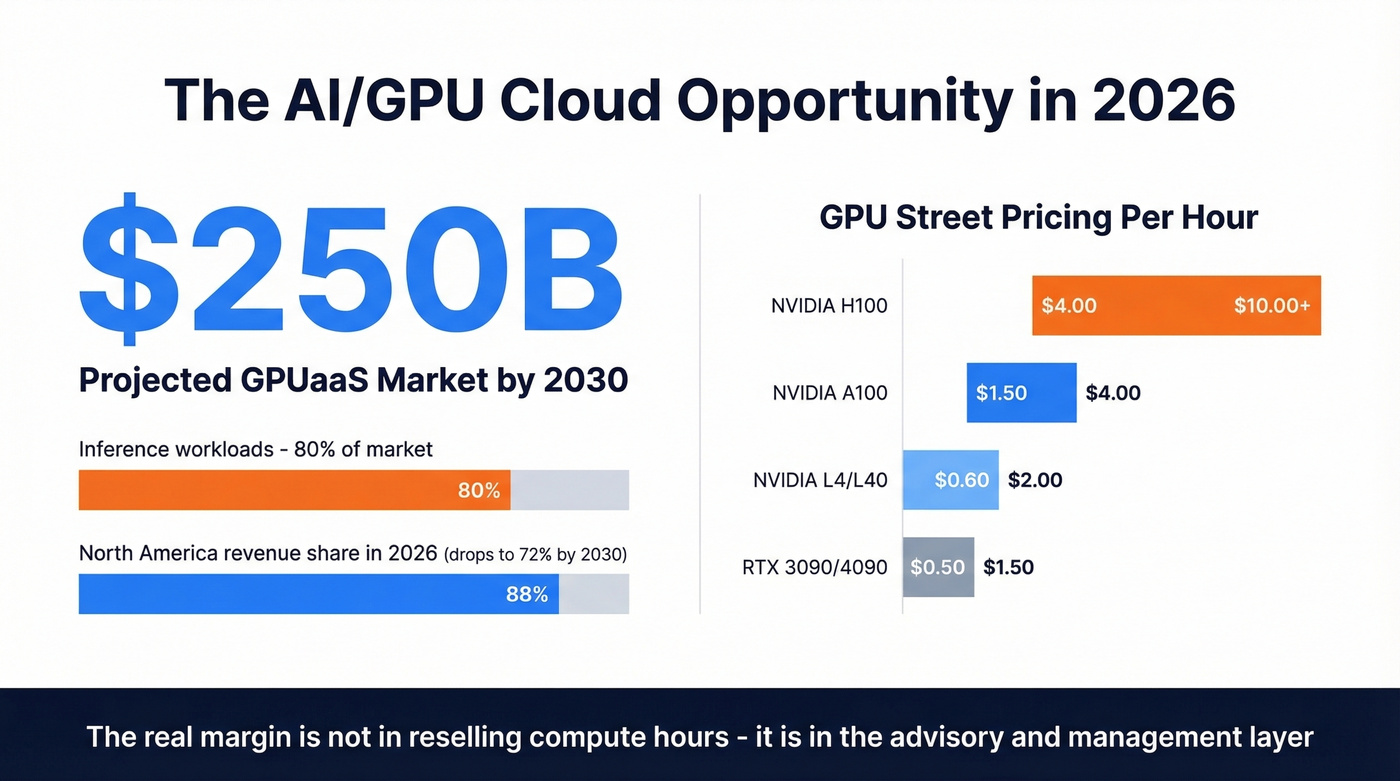
ABI Research projects the neocloud GPUaaS market will hit $250B by 2030. Inference workloads - not training - will represent 80% of that market. North America captures 88% of neocloud revenue in 2026, but that share drops to 72% by 2030 as sovereign AI initiatives ramp globally.
Here's the thing: if your average deal size is under $50K, you probably don't need to build a GPU practice from scratch. But you absolutely need to know enough to advise customers who are already experimenting with ML workloads - because if you can't have that conversation, someone else will, and they'll take the rest of the account with them.
Street pricing right now:
| GPU | Hourly Rate |
|---|---|
| NVIDIA H100 | $4.00-$10.00+ |
| NVIDIA A100 | $1.50-$4.00 |
| NVIDIA L4/L40 | $0.60-$2.00 |
| RTX 3090/4090 | $0.50-$1.50 |
The margin opportunity isn't in reselling compute hours. It's in the advisory and management layer - helping customers right-size GPU instances, avoid leaving expensive instances running idle, and architect inference pipelines that don't blow their budget in week one. Skip this if you're purely an SMB MSP with no customers above 200 employees; the GPU conversation won't come up often enough to justify the investment in training your team. (For a broader view of where AI is changing outbound, see generative AI lead generation.)
Find the Right Buyers
You've got the strategy, the pricing math, and the objection scripts. None of it matters if you're emailing info@ addresses and hoping someone forwards your message to the CTO.
Mid-market cloud sales live and die on reaching the actual decision-maker. Prospeo makes that step simple: search by job title, company size, and industry using 30+ filters - including technographics and buyer intent signals powered by Bombora - then export verified contacts directly into your sequencer. With 98% email accuracy and a 7-day data refresh cycle, you're not working off stale lists. Need direct dials? The database includes 125M+ verified mobile numbers with a 30% pickup rate, which matters when CTOs and IT directors ignore cold emails but answer their phones. (If you're building a repeatable outbound motion, start with these sales prospecting techniques.)
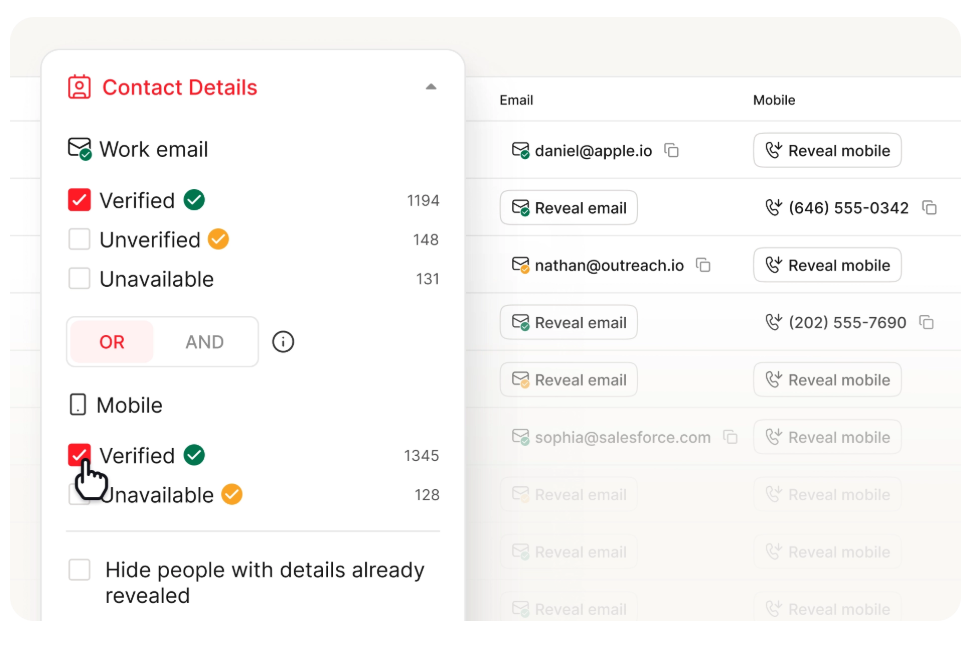
Cloud deals stall when you can't reach the right people. Prospeo's 30+ filters let you target by technographics, department headcount, and buyer intent across 15,000 topics - so you find companies actively evaluating AWS, Azure, or GCP migrations. At $0.01 per verified email, it costs less than a single wasted hour chasing bad contacts.
Find companies with active cloud buying intent for a penny per lead.
FAQ
What gross margin should I target when selling cloud services?
Top-performing MSPs hit 60%+ gross service margin on managed cloud packages. Never accept below 55% on any deal. Your margin lives in the management layer - monitoring, security, optimization - not in license resale, where pricing is publicly visible and markups are minimal.
How do hyperscaler co-sell programs work?
Register in the partner network (AWS APN, Azure Partner Center, GCP Partner Advantage), list a transactable marketplace offer, and co-sell alongside hyperscaler reps. AWS co-sell partners see 65% higher close rates. Microsoft requires $100K in marketplace billed sales to qualify for Azure IP co-sell status. Let's be honest - the onboarding process is slow and bureaucratic, but the pipeline impact makes it worth the pain.
How do I find IT decision-makers at target accounts?
Use a B2B data platform with strong technographic filters to search by job title, company size, and tech stack. Verified emails and direct dials are non-negotiable - the consensus on r/sales is that generic contact databases waste more time than they save. Look for platforms with weekly data refresh cycles so you're not reaching people who changed roles three months ago.