

How to Sell to Healthcare Providers Without Wasting a Year
You've been working a hospital deal for four months. Your clinical champion loves the product. Then IT security sends a 47-page vendor assessment questionnaire and the deal goes dark for eight weeks. That's selling to healthcare providers - where enthusiasm doesn't equal authority, and the buying process is designed to slow you down.
Why Healthcare Sales Cycles Are So Brutal
Healthcare deals average 14.7 months from initial contact to signature, with an average of 22 decision-makers involved. When those stakeholders fall out of alignment, deals stall - 68% of the time.
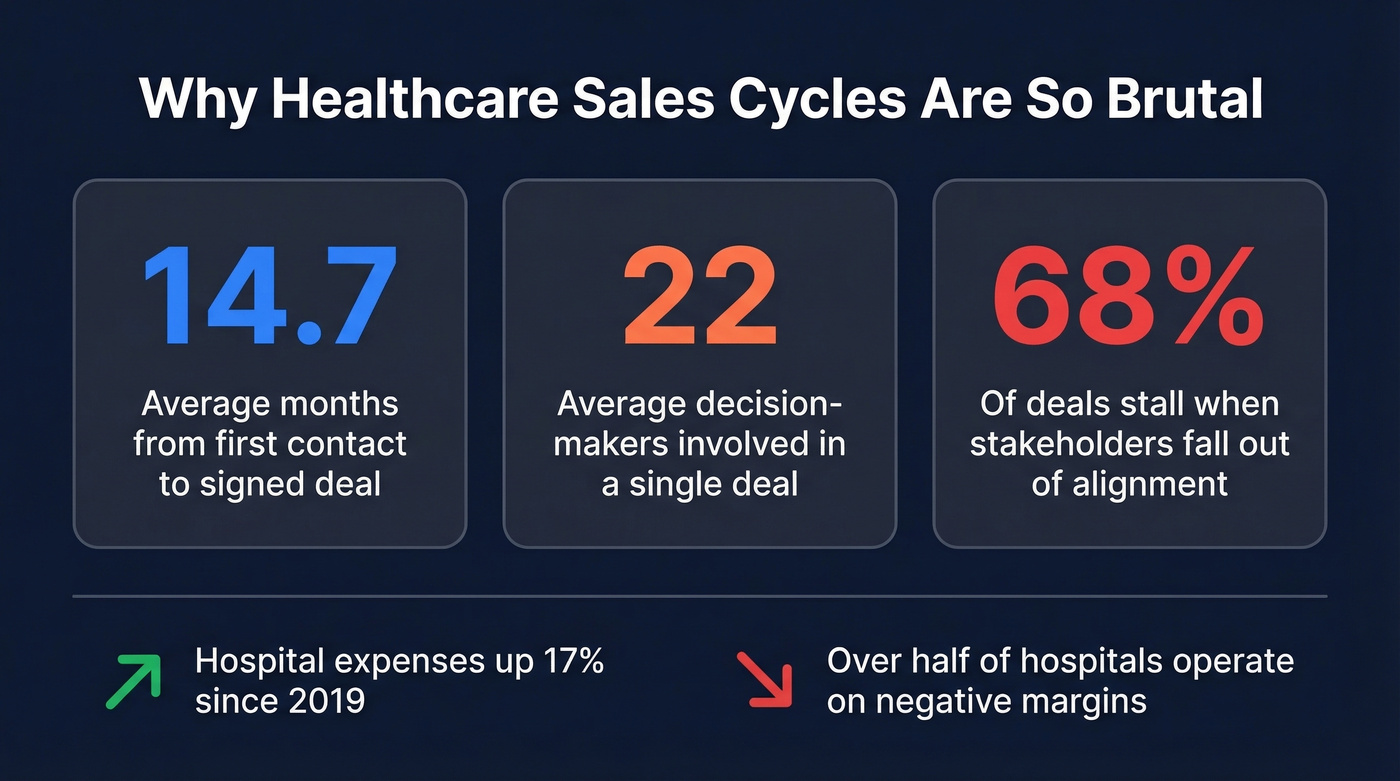
The financial backdrop makes everything harder. U.S. healthcare spending exceeded $4.8 trillion as of 2023 and keeps climbing. Hospital expenses are up 17% since 2019, and over half of hospitals operate on negative margins. Every dollar your prospect spends on your product is a dollar they're weighing against patient care, staffing, and regulatory compliance. Health tech deals routinely extend beyond 24 months. If you're selling into this space, you need a fundamentally different approach than standard enterprise B2B.
The Short Version
- Segment by care setting. Private practice, mid-sized group, and hospital system are completely different sales motions. Don't run the same playbook for all three.
- Map stakeholders early. Your clinical champion can't sign a PO. Find the person who can - and the five to twenty other people who can say no.
- Use verified contact data. When deals take 14+ months, bad emails and dead phone numbers cost you quarters, not days. (If you need a process, start with data enrichment.)
How Hospitals Actually Buy
Let's be honest: hospital buyers don't want a relationship with your sales rep. They want evidence that your product reduces risk, saves money, or improves outcomes. That's the entire game.
Only 34% of hospital executives prefer to receive product information directly from a sales rep. The other two-thirds want peer evidence, published research, and self-serve content before they'll take a meeting. Rep-led selling alone is an outdated strategy in this market.
Healthcare organizations are structurally conservative. Decisions affect patient safety, quality scores, regulatory exposure, and financial performance all at once, which means compliance, security, and legal aren't end-of-cycle hurdles - they're baked into the buying process from the start. A common thread on r/sales and healthcare sales communities captures this perfectly: reps spend months building a clinical champion only to discover that person has zero purchasing authority. If you aren't engaging procurement and compliance stakeholders early, you'll be blindsided by them later.
Here's the thing: most teams that fail at healthcare sales aren't bad at selling. They're running a SaaS playbook in a procurement environment. The reps who close are the ones who treat every deal like a regulatory filing - methodical, evidence-heavy, and multi-threaded from day one. (If you want a modern outbound baseline, see these sales prospecting techniques.)
Segment by Care Setting
Private practices are the closest thing to a normal B2B sale. The doctor is a small business owner, and the office manager often holds real decision-making power. Cycles are shorter, budgets are smaller, and you can close in weeks.
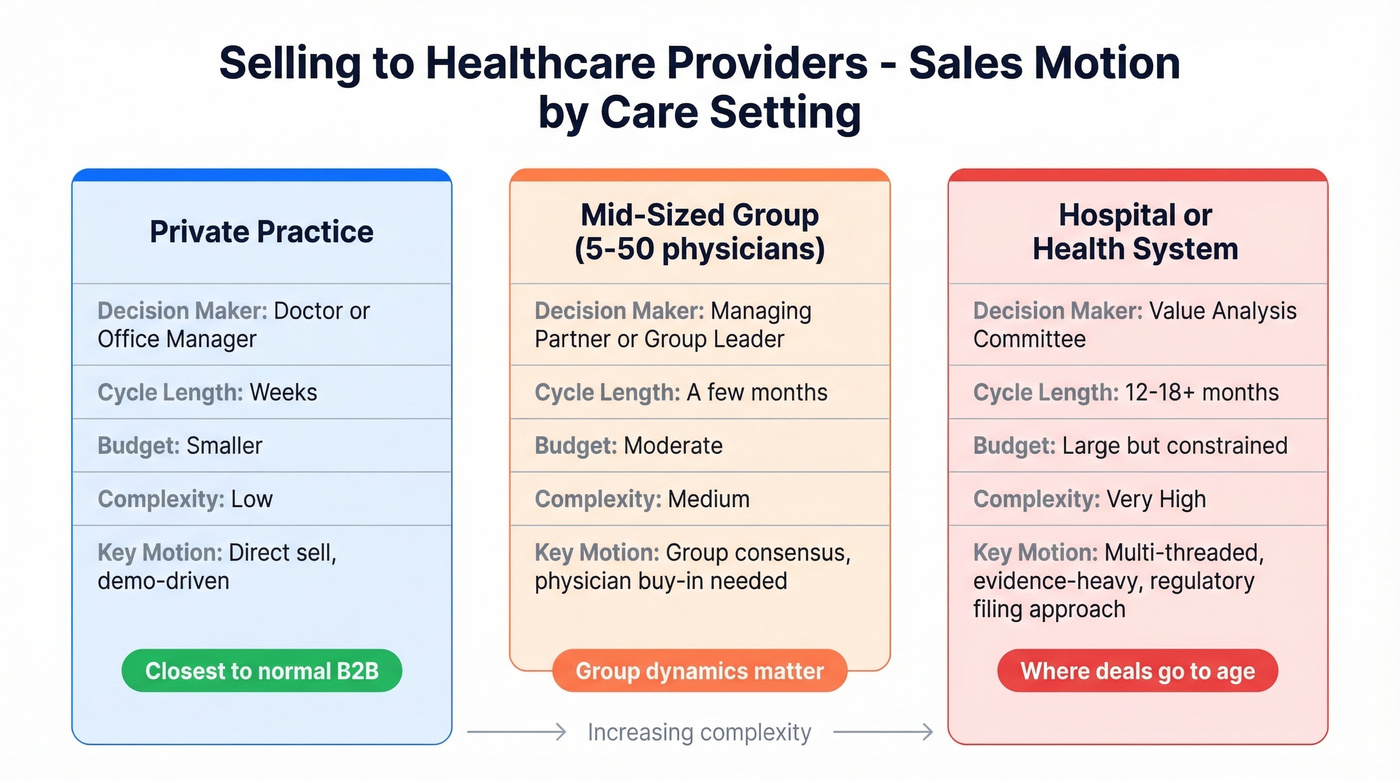
Mid-sized groups (5-50 physicians) introduce group dynamics. Decision authority sits with a group leader or managing partner, but you'll still need buy-in from the physicians who'll actually use your product. Expect a few months, not a few weeks.
Hospitals and health systems are where deals go to age. Value Analysis Committees control procurement. Capital planning cycles dictate timing. For capital or transformation initiatives, 12-18+ month sales cycles are standard, and the deal will move sideways, stall, and restart as late-entry stakeholders from IT or compliance send things backward. If you're selling software to hospitals, expect additional layers of security review, interoperability testing, and EHR integration validation that simply don't exist in other care settings.
Your selling motion also shifts by product category. Software, medical devices, capital equipment, and supplies each involve different buying dynamics, different committees, and different regulatory requirements. A SaaS platform selling into clinical workflows faces a fundamentally different process than a medical device company navigating FDA clearance documentation and clinical evaluation committees. Know which lane you're in before you build your playbook. (This is where account-based selling tends to outperform spray-and-pray.)

When healthcare deals average 14.7 months and 22 stakeholders, one dead email can stall your pipeline for an entire quarter. Prospeo gives you 98% verified emails and 125M+ direct dials across 300M+ profiles - with 30+ filters to target by department, title, and facility size. Multi-thread every hospital deal from day one.
Stop losing healthcare deals to outdated contact data.
Map the Buying Committee
60-70% of healthcare organizations report five or more people involved in purchasing decisions, with over 25% saying ten or more. Each stakeholder evaluates your product through a completely different lens.
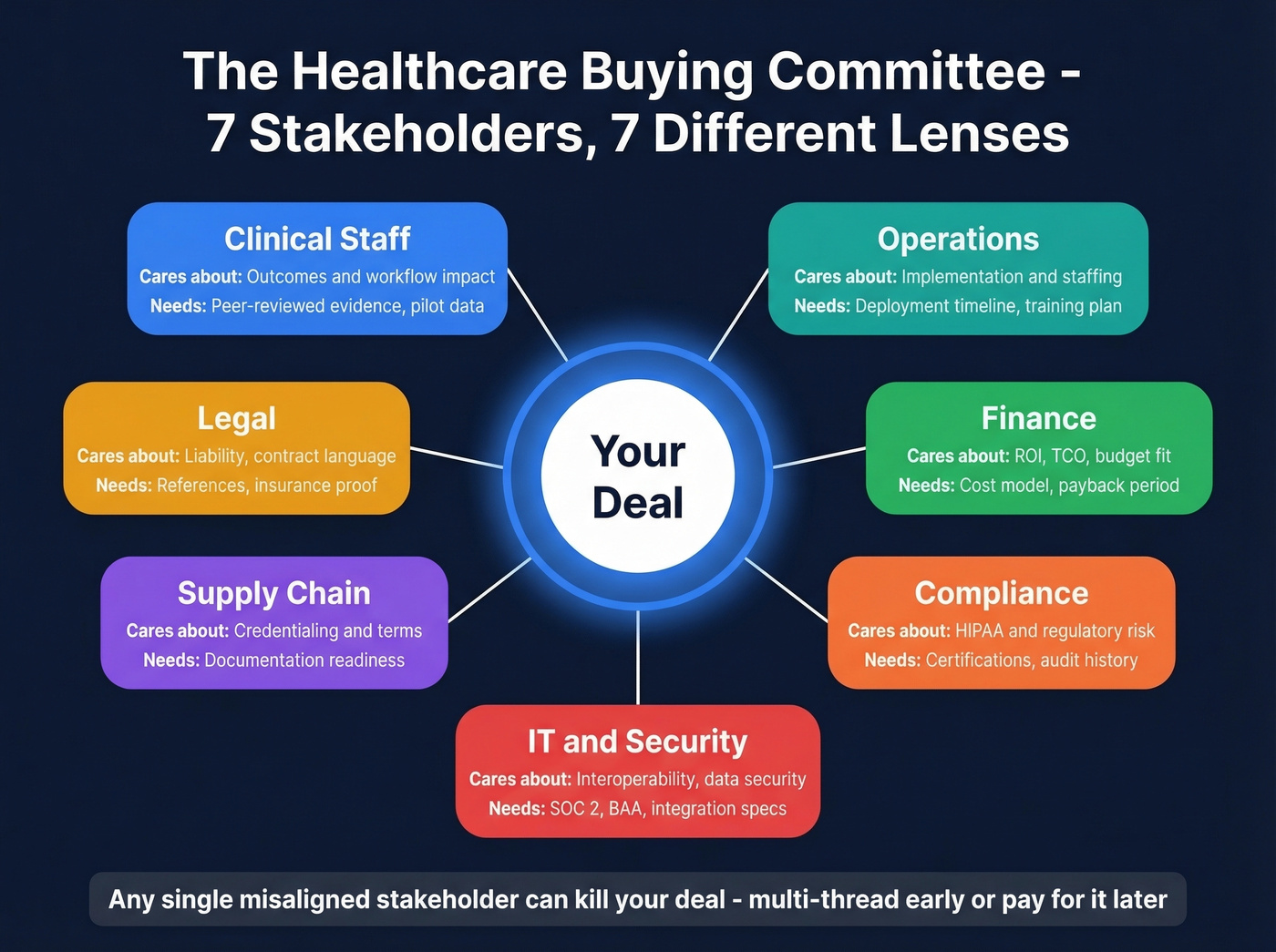
| Stakeholder | What They Evaluate | Your Proof Point |
|---|---|---|
| Clinical staff | Outcomes, workflow impact | Peer-reviewed evidence, pilots |
| Operations | Implementation, staffing | Deployment timeline, training |
| Finance | ROI, TCO, budget fit | Cost model, payback period |
| Compliance | HIPAA, regulatory risk | Certifications, audit history |
| IT / Security | Interoperability, data security | SOC 2, BAA, integration specs |
| Supply chain | Credentialing, terms | Documentation readiness |
| Legal | Liability, contract language | References, insurance proof |
Progress in a healthcare deal isn't measured by meetings booked. It's measured by alignment across these layers. We've watched teams lose six-figure deals because one misaligned stakeholder - usually someone in IT security or legal who was never briefed - torpedoed the deal in the final weeks. Multi-thread early or pay for it later. This is especially true in enterprise healthcare sales, where the number of veto-holders scales with the size of the system. (If you need a qualification framework for multi-stakeholder deals, use MEDDPICC.)
Build Your Target List
Account-level targeting in healthcare starts with public data. Claims data and Medicare Cost Reports help you identify facilities by procedure volume and financial health. HCAHPS scores reveal quality priorities. Payer mix - the ratio of Medicare, Medicaid, and commercial insurance patients - signals a facility's revenue stability and willingness to invest. CBSA demographics show population density and growth trends that drive demand.
But account-level data only gets you to the building. You still need to reach the right people inside it.
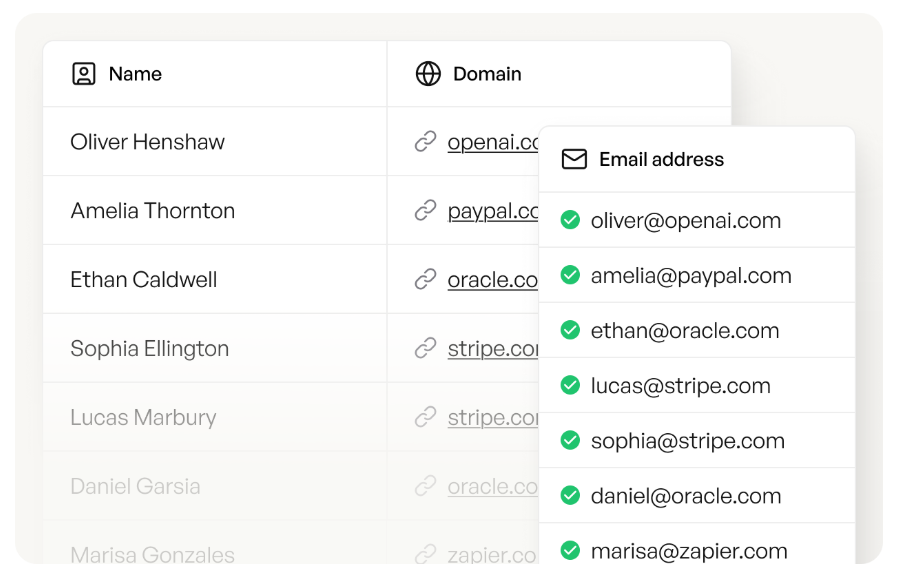
When your average deal takes 14 months, you can't afford to waste the first two on bad contact data. Prospeo's 30+ search filters let you target healthcare decision-makers by department, title, facility type, and headcount across 300M+ professional profiles. The 98% email accuracy and 7-day data refresh cycle matter here because personnel changes at hospitals are constant - a bounced email to the wrong VP means weeks of lost momentum. (If you're building lists at scale, this is the same workflow as lead enrichment.)
Outreach That Gets Responses
Over 70% of healthcare professionals check email on mobile. If your outreach isn't scannable in a phone preview, it's getting deleted. Keep subject lines short, lead with relevance, and put your ask above the fold. (If you need options, pull from these email subject line examples.)
Segmentation is the single most effective email strategy - 78% of marketers rank it first, and 94% say personalization directly boosts sales. A generic "healthcare" email sent to both a CISO and a CMO is two wasted sends. Segment by role, by care setting, and by the specific problem each stakeholder cares about. Stay compliant too - CAN-SPAM opt-out requirements apply to every send, and if your outreach touches patient-related contacts, HIPAA considerations come into play fast. (For sequencing and timing, use these sales follow-up templates.)
Don't rely on cold email alone. Content marketing, industry events, peer referrals, and published case studies all feed the pipeline. Two-thirds of hospital execs don't want to hear from your rep first - give them a reason to come to you.
Vendor Credentialing Checklist
Before you can walk into a hospital, you need to be credentialed. This isn't optional - it's a first test of whether you're serious enough to work with. Hospitals align their credentialing requirements to Joint Commission standards and HIPAA/HITECH frameworks, so the bar is high and fairly standardized.
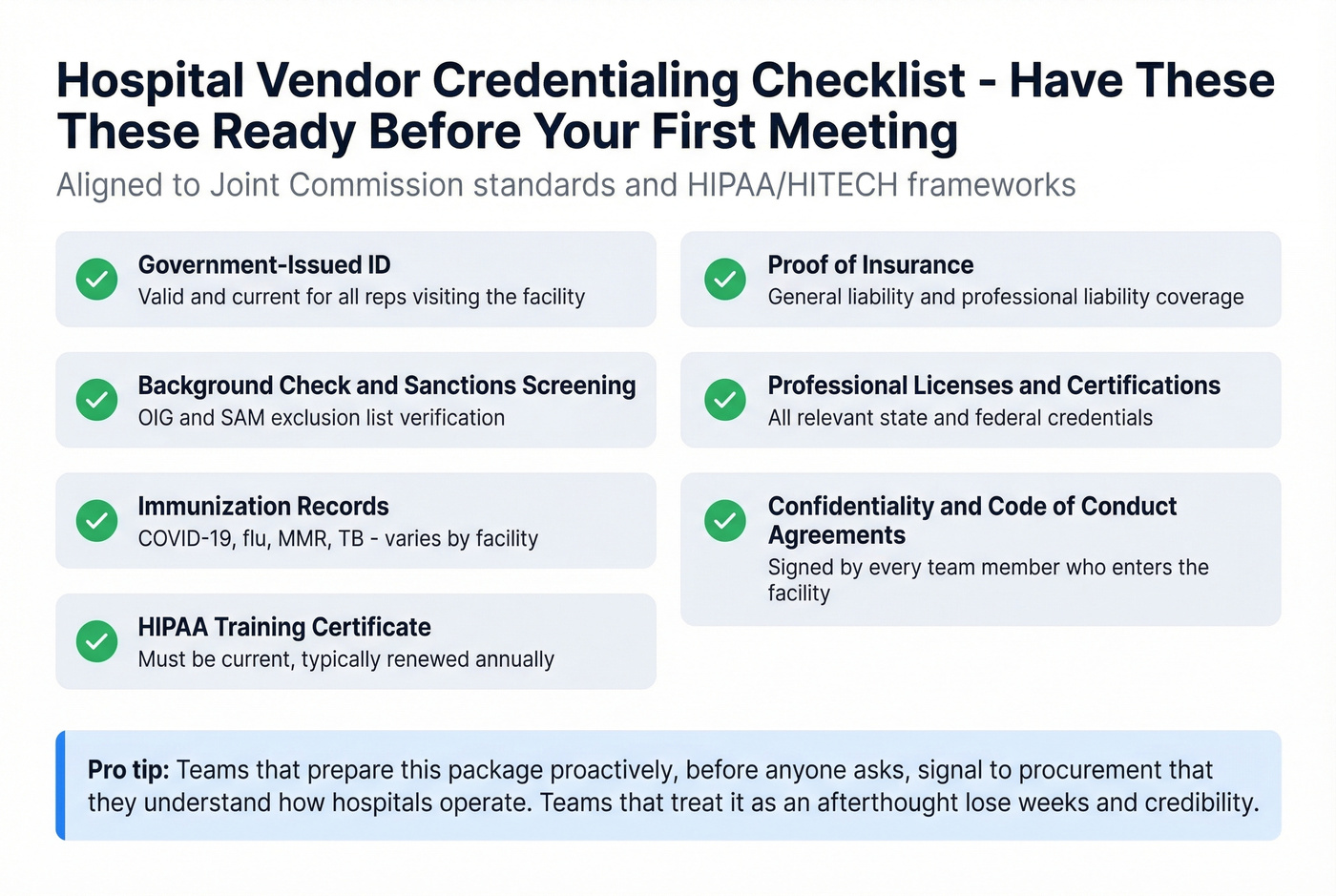
Have these documents ready before your first meeting:
- Government-issued ID
- Background check and sanctions screening results
- Immunization records (COVID-19, flu, MMR, TB)
- HIPAA training certificate
- Proof of insurance
- Professional licenses and certifications
- Signed confidentiality and code-of-conduct agreements
In our experience, teams that prepare their documentation package proactively - before anyone asks - signal to procurement that they understand how hospitals operate. Teams that treat credentialing as an afterthought lose weeks and credibility. For teams navigating GPO selling, credentialing requirements are even more rigorous - group purchasing organizations often layer their own compliance standards on top of the hospital's.
Mistakes That Kill Healthcare Deals
Ignoring financial pressure. Over half of hospitals run negative margins. If you can't articulate how your product saves money or generates revenue, you're dead on arrival. (If you need a structure for value messaging, use this guide on how to add value in sales.)
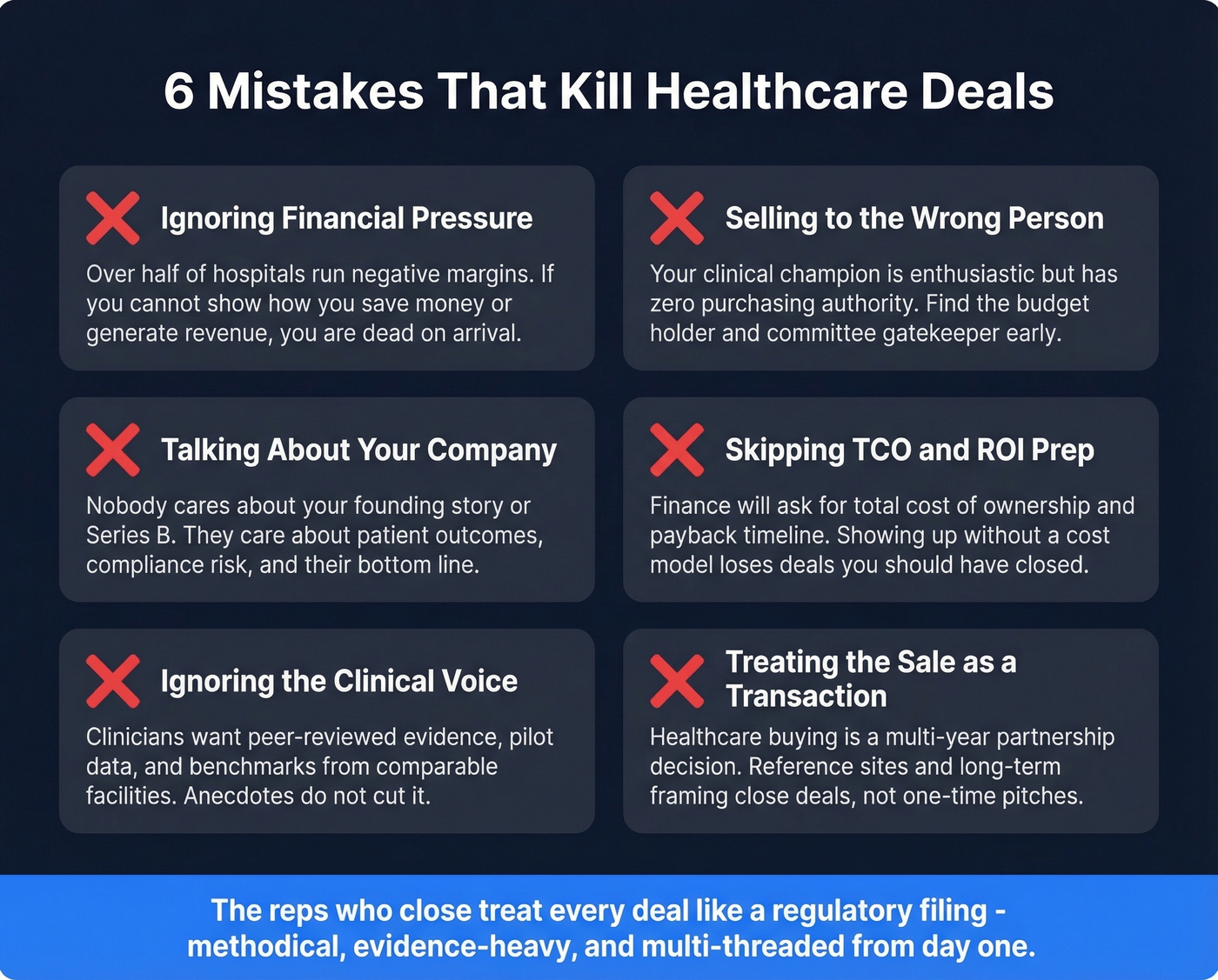
Selling to the wrong person. Your clinical champion's enthusiasm doesn't equal purchasing authority. Find the budget holder and the committee gatekeeper early.
Talking about your company. Hospital buyers don't care about your founding story or your Series B. They care about their patient outcomes, their compliance risk, and their bottom line.
Skipping TCO and ROI prep. Finance will ask for total cost of ownership, integration costs, and a payback timeline. We've seen teams lose deals they should have closed because they showed up to a finance review without a cost model. Don't be that team.
Ignoring the clinical voice. Clinicians want peer-reviewed evidence, pilot data, and benchmarks from comparable facilities. Anecdotes don't cut it.
Treating the sale as a transaction. Healthcare buying is a multi-year partnership decision. Reference sites, advocacy programs, and long-term partnership framing close deals. One-and-done selling doesn't work here. Skip this mindset entirely if you want to build a real book of business in healthcare - the organizations that buy from you once and see results become your best channel for the next deal.
Healthcare personnel changes constantly - your contact data shouldn't be 6 weeks stale. Prospeo refreshes every 7 days, so the VP of Clinical Operations you mapped last month still has a valid email today. At $0.01 per email, reaching every stakeholder on the buying committee costs less than a cup of coffee.
Reach every stakeholder on the Value Analysis Committee before your competitor does.
FAQ
How long does selling to healthcare providers typically take?
Enterprise healthcare deals average 14.7 months from initial contact to signature. Health tech deals selling into large hospital systems often extend beyond 24 months when IT security reviews and Value Analysis Committees are involved. Private practice sales can close in weeks.
Who makes buying decisions at hospitals?
Buying committees averaging 22 stakeholders span clinical staff, operations, finance, compliance, IT/security, supply chain, and legal. Value Analysis Committees often serve as the formal procurement gatekeeper. No single champion can push a deal through alone.
Do I need vendor credentialing to sell to hospitals?
Yes. Most hospitals require registration, background checks, immunization records, HIPAA training certification, and proof of insurance before granting any facility access. Prepare your documentation package proactively - showing up unprepared signals you don't understand the environment.
What's the best way to find verified contacts at healthcare organizations?
Prospeo lets you filter 300M+ professional profiles by department, title, facility type, and headcount - with 98% email accuracy on a 7-day refresh cycle. For healthcare prospecting specifically, fresh data matters because hospital staff turnover is high and stale contacts waste months of pipeline time.