

The Territory Planning Template Most Guides Forget to Actually Give You
Your VP wants territory plans by Friday. You've opened fifteen articles about territory planning templates, and every single one explains why territory planning matters, walks you through conceptual steps, then links to a gated PDF that's just a blank spreadsheet with column headers. No filled-in example. No realistic numbers. Nothing you can actually present.
58% of B2B sales orgs say their territory plans are ineffective. Most of that failure traces back to plans built once, never updated, and based on gut feel instead of data. Below you'll get a copyable template, a filled-in example with real numbers, and the playbook to make it defensible.
What You Need (Quick Version)
- Copy the template in Section 4 - every field is defined, ready for Google Sheets or Excel.
- Use the filled-in example as your reference for what "good" looks like. It's a mid-market SaaS scenario with realistic quotas, tiers, and KPIs.
- Review quarterly, not annually. Set your pipeline target at 3x-5x quota, tier your accounts, and revisit every quarter.
Why Territory Planning Matters
Field reps spend 35-39% of their time actually selling. The rest evaporates into route planning, admin, ownership confusion, and chasing accounts that should've been deprioritized months ago. A structured territory plan is how you reclaim that time.
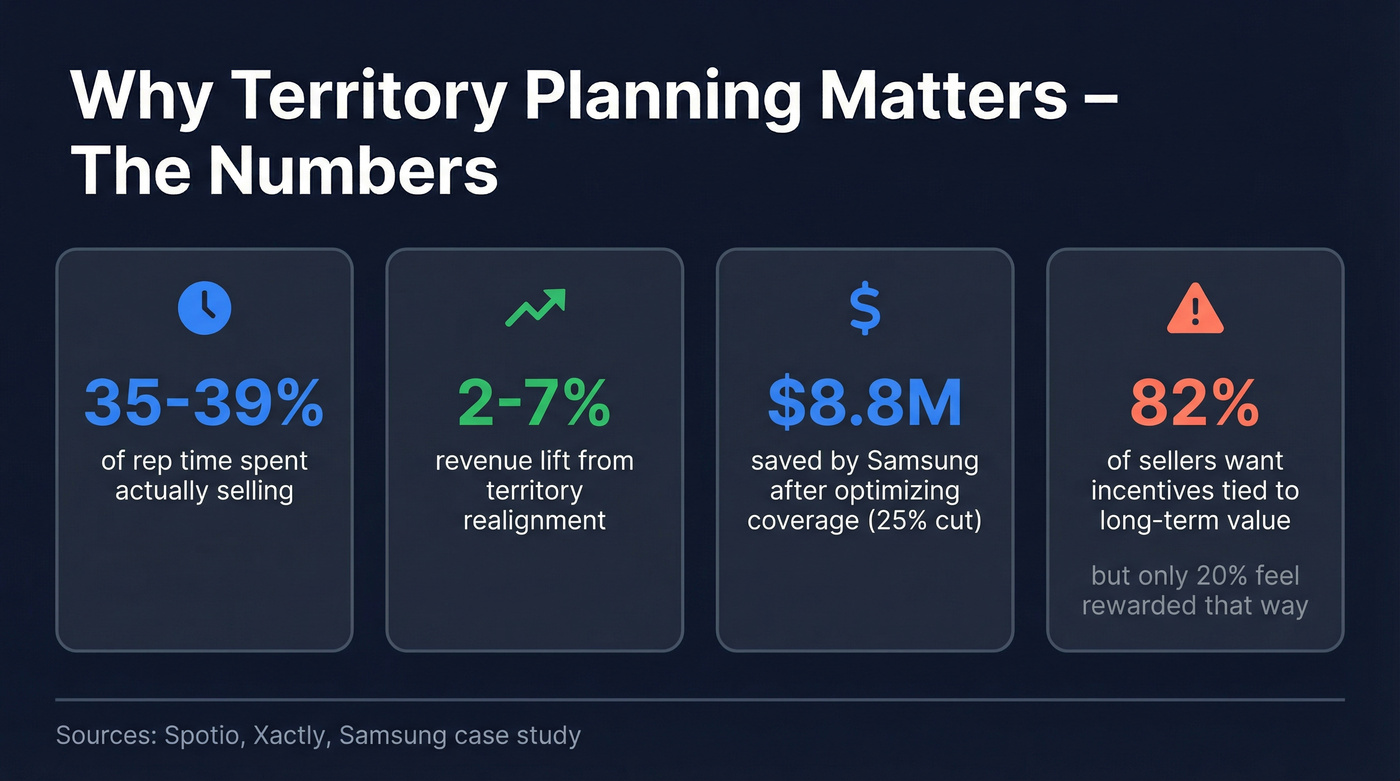
Companies that realign territories see a 2-7% revenue lift without adding headcount. Optimized plans drive 10-20% higher productivity and create 20% more revenue growth opportunities. The retention angle matters too - 82% of sellers want incentives tied to long-term value creation, but only 20% feel their plans actually reward that behavior. Nothing tanks comp faster than an unbalanced territory where half the team can't hit quota.
Samsung cut territory costs by $8.8M (25%) and increased customer visits by 50% after optimizing coverage. Lobel Financial quadrupled sales volume in eight months by redesigning territories from scratch. These aren't flukes - they're what happens when you stop guessing.
The Sales Territory Plan Template
Copy this into Google Sheets or Excel. Every field is here for a reason - skip one and you'll feel it at QBR time.
| Section | Field | What Goes Here |
|---|---|---|
| Territory Overview | Territory Name | Region or vertical label |
| Assigned Rep | Full name + role | |
| Region/Geo | State, metro, or named area | |
| Annual Quota | Dollar target for the period | |
| Account Tiering | Tier 1 (High) | Revenue x conversion score |
| Tier 2 (Medium) | Moderate potential, longer cycle | |
| Tier 3 (Low) | Smaller deals, nurture-stage | |
| Visit/Touch Cadence | Tier 1 Cadence | Weekly or biweekly |
| Tier 2 Cadence | Monthly | |
| Tier 3 Cadence | Quarterly | |
| Pipeline Targets | Pipeline Goal | 3x-5x annual quota |
| Whitespace Target | Net-new accounts per quarter | |
| Expansion Target | Upsell/cross-sell revenue goal | |
| KPIs | QoQ Sales Growth | % growth quarter over quarter |
| Close Rate | Visit/call to closed deal % | |
| Avg Deal Size | Dollar value per closed deal | |
| New Customer Acq Rate | New logos per quarter | |
| Pipeline Coverage Ratio | Active pipeline / quota | |
| Review Schedule | Quarterly Review | Dates locked in advance |
| Semi-Annual Structural | Rep reassignments, new regions | |
| Data Sources | Tools Used | CRM, enrichment, mapping tools |
| Data Refresh Cadence | Verification frequency |
Territory Overview is your header - who owns what, where, and for how much. One row per territory.
Account Tiering is where most plans fail. Don't tier by account count alone. Tier by revenue potential multiplied by effort-to-convert. A $200K opportunity that needs six months of multi-threading is a completely different play than twenty $10K deals you can close in two calls.
Visit/Touch Cadence maps directly to your tiers. Tier 1 accounts get weekly or biweekly touches, Tier 2 monthly, Tier 3 quarterly. This prevents your best accounts from going cold while keeping lower-priority accounts in the pipeline.
Pipeline Targets need the 3x-5x multiplier baked in. If your quota is $750K, you need $2.25M-$3.75M in pipeline to hit it reliably. Whitespace targets force reps to prospect, not just farm existing accounts.
KPIs and Review Schedule close the loop. Without them, the plan is a wish list. With them, it's a management tool.
Filled-In Example: Mid-Market SaaS Rep
Here's the thing - sales communities on Reddit and elsewhere consistently ask for filled-in examples, not blank column headers. So here's what the template looks like when a mid-market SaaS rep actually completes it. Fictional but realistic, the kind of plan you could present at a QBR without getting laughed out of the room.
| Field | Value |
|---|---|
| Territory Name | Northeast Enterprise |
| Assigned Rep | Sarah Chen, AE |
| Region | NY, NJ, CT, MA |
| Annual Quota | $750,000 |
| Tier 1 Accounts | 8 (biweekly cadence) |
| Tier 2 Accounts | 17 (monthly cadence) |
| Tier 3 Accounts | 20 (quarterly cadence) |
| Total Accounts | 45 |
| Pipeline Target | $2,500,000 (3.3x quota) |
| Whitespace Target | 5 net-new accounts/quarter |
| Expansion Target | $150,000 from existing |
| QoQ Growth Target | 12% |
| Close Rate Target | 22% |
| Avg Deal Size Target | $38,000 |
| New Logo Target | 5/quarter |
| Q1 Review Date | March 28, 2026 |
| Q2 Review Date | June 27, 2026 |
| Q3 Review Date | Sept 26, 2026 |
| Q4 Review Date | Dec 19, 2026 |
Sarah's eight Tier 1 accounts are her $50K+ opportunities - companies with active buying signals, existing relationships, or expansion potential. She's touching them biweekly minimum. Her 17 Tier 2 accounts need monthly nurturing. The 20 Tier 3 accounts get quarterly check-ins to keep the door open without eating her calendar.
The pipeline target of $2.5M at 3.3x gives her enough cushion to absorb deal slippage. Five net-new accounts per quarter prevent the territory from going stale. And the locked review dates mean she isn't waiting until December to realize Q2's plan stopped working in April.

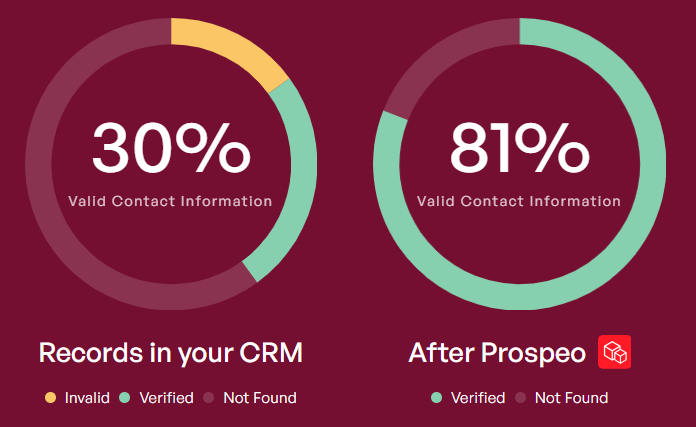
A territory plan with stale contacts is just a spreadsheet. Prospeo verifies emails every 7 days - not every 6 weeks - so your Tier 1 cadence actually reaches decision-makers. 98% email accuracy, 125M+ verified mobiles, and 30+ filters to tier accounts by intent, headcount growth, and technographics.
Fill your territory plan with contacts that actually connect.
How to Build Your Territory Sales Plan
Step 1: Gather and verify your data. Export your CRM accounts, historical win/loss data, and firmographic enrichment. Before you tier a single account, verify your contact data - a plan built on dead phone numbers fails at execution. We've found that running your account list through Prospeo to pull verified contacts with 98% email accuracy and a 7-day refresh cycle saves a painful amount of rework later. (If you want the deeper ops playbook, start with CRM hygiene.)

Step 2: Segment and tier accounts. Multiply revenue potential by conversion likelihood, then factor in effort-to-convert. Modern buying groups include 11-15 stakeholders - an account that looks like a quick close might need six months of multi-threading across a dozen decision-makers.
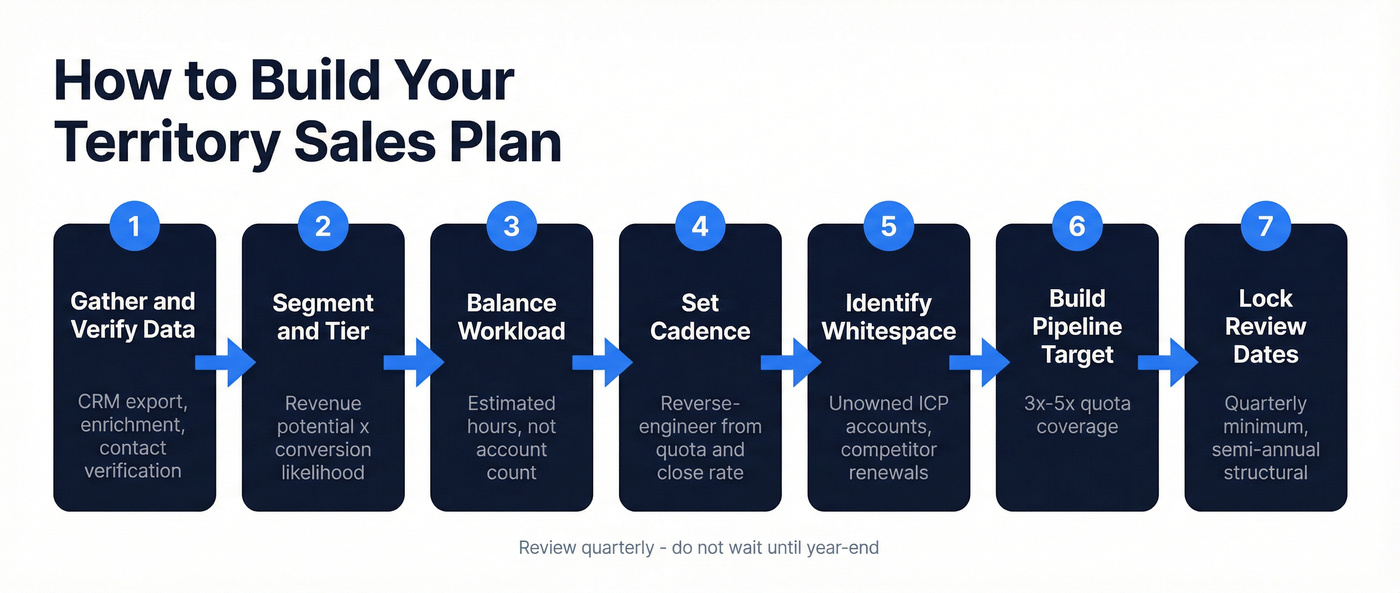
Step 3: Balance workload, not account count. Giving every rep 50 accounts sounds fair until one rep has 50 enterprise accounts requiring weekly executive touches and another has 50 SMBs that close in two calls. Balance by estimated hours-to-work.
Step 4: Set cadence and activity targets. Reverse-engineer from quota. If your close rate is 20% and average deal size is $35K, you need roughly 43 opportunities per year to hit $300K. For context, outside reps average 5.1 client visits per day - top-decile performers hit 13.9. That gap tells you whether your territory is sized correctly or setting reps up to fail. (If you need copy-paste sequences to match your cadence, use a sales cadence example.)
Step 5: Identify whitespace. Look for ICP accounts nobody owns, verticals adjacent to your wins, and companies using a competitor's product whose contract renews this quarter. Whitespace is where growth lives. This is also where intent signals and buyer intent can keep prospecting focused.
Step 6: Build your pipeline target. Set it at 3x-5x quota. Below 3x, you're one lost deal away from missing the number. Above 5x, your data is probably inflated. If you want to pressure-test the number, use a pipeline predictability cadence.
Step 7: Set your review cadence. Quarterly at minimum. Lock structural changes - rep reassignments, new regions - semi-annually. Put the dates in the calendar now. A well-built plan is useless if nobody revisits it after kickoff.
Five Mistakes That Kill Territory Revenue
Mistake 1: The annual-only model. You build the plan in January, present it at SKO, and never touch it again. By March, two reps have left, a key account churned, and a competitor entered your strongest market. We've reviewed hundreds of territory plans, and this is the single most common failure pattern. Review quarterly. Period.
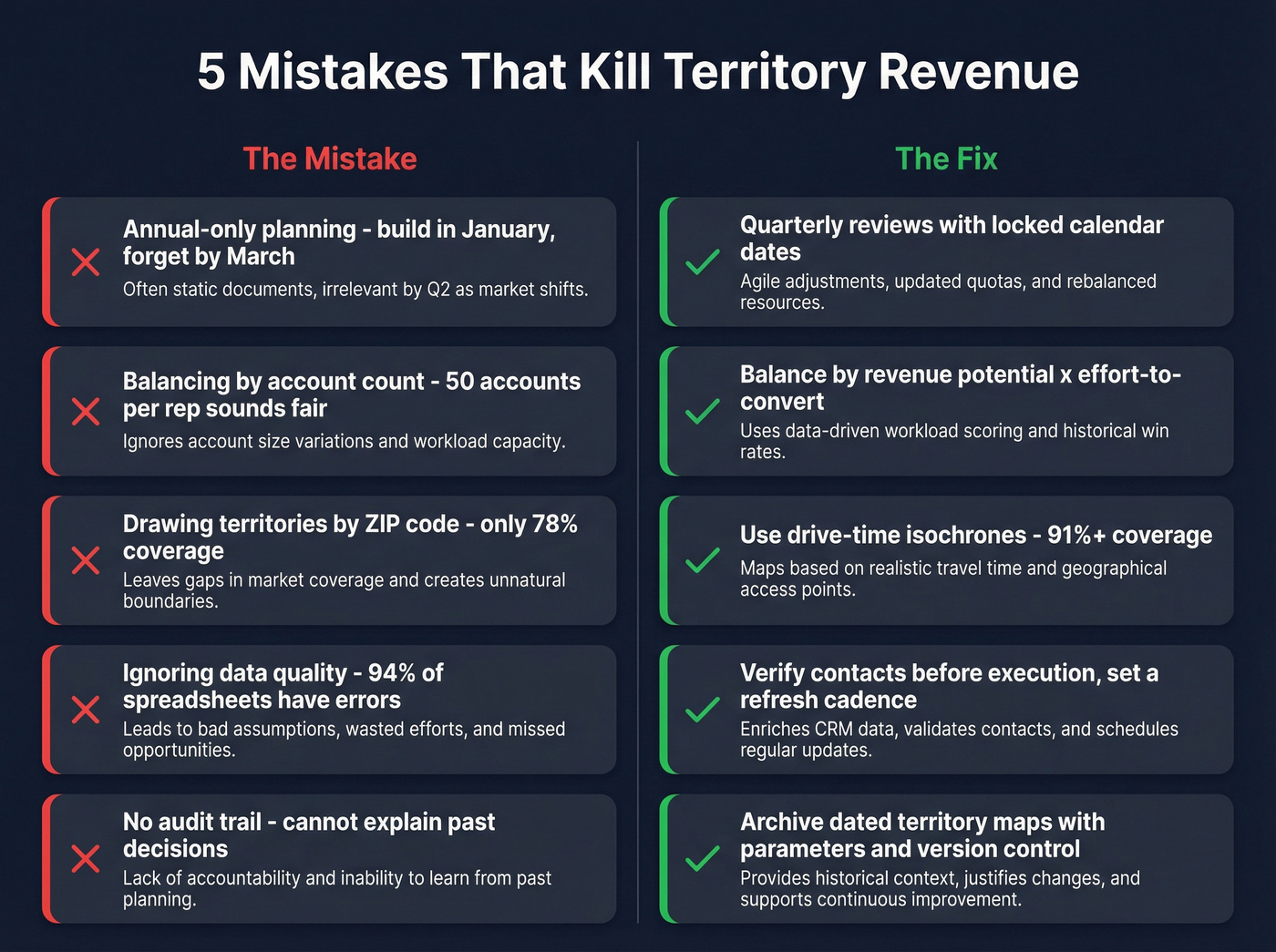
Mistake 2: Balancing by account count. Fifty accounts per rep sounds equitable on a slide. It isn't equitable in practice when account complexity varies by 10x. Balance by revenue potential multiplied by effort-to-convert. Workload-based allocation beats headcount-based every time.
Mistake 3: Drawing territories by ZIP code. ZIP codes aren't stable geographic units, and circles on a map ignore actual drive time. Manual territory planning achieves only 78.2% coverage, while graph-based approaches hit 91.4%. Use drive-time isochrones - 15-30 minute polygons under typical conditions - instead of arbitrary boundaries.
Mistake 4: Ignoring data quality. Research shows 94% of spreadsheets contain errors. If your plan is built on a CRM export that hasn't been enriched in six months, your reps are calling dead numbers and emailing bounced addresses. Verify contact data before execution, and set a refresh cadence - not after your first sequence bounces 25%. (Related: B2B contact data decay.)
Mistake 5: No audit trail. When leadership asks why you moved accounts between reps last quarter, "I don't remember" isn't an answer. Archive dated territory maps with parameters - PDF exports plus the underlying data file. Version control isn't just for engineers.
Territory Plan Maturity Levels
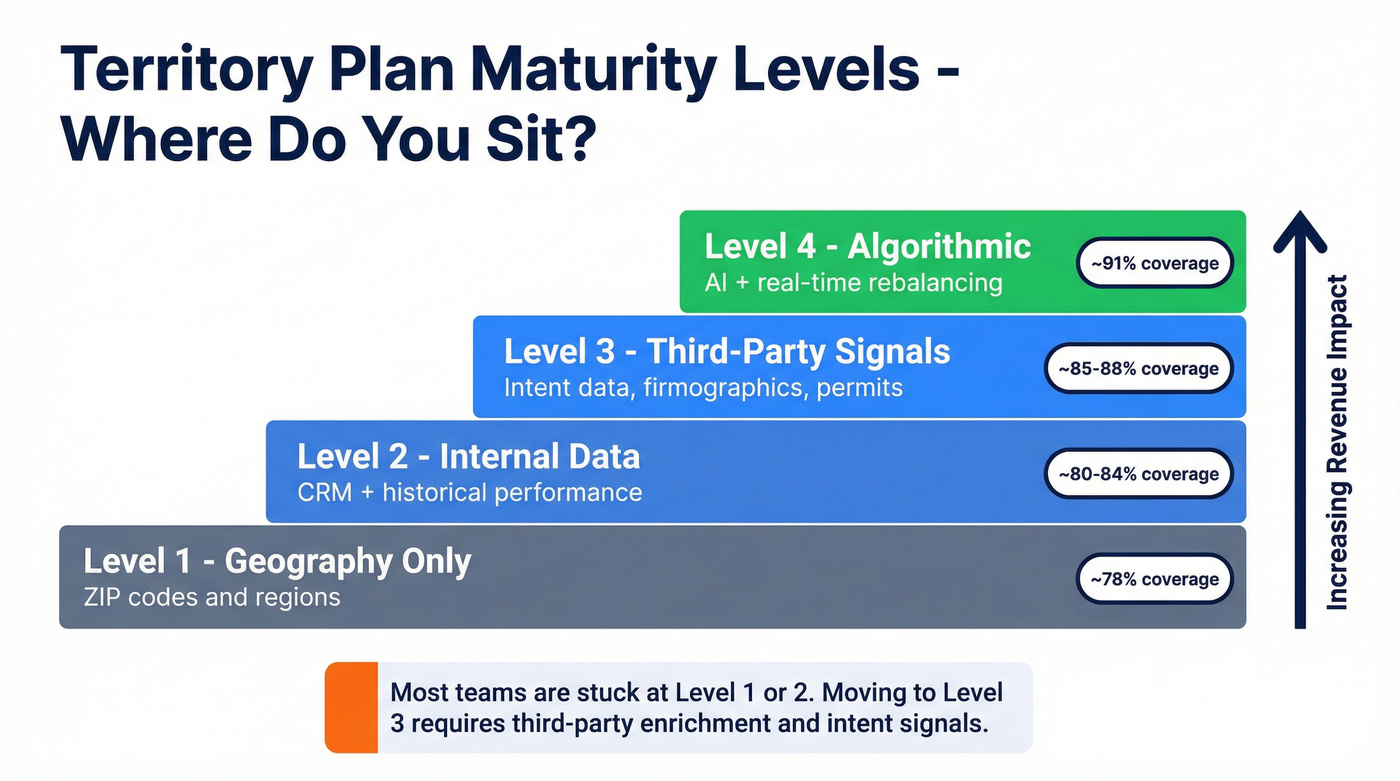
Most teams are stuck at Level 1 or 2. Let's break down where you probably sit and where you should aim.
| Level | Approach | Data Used | Typical Coverage |
|---|---|---|---|
| Level 1 | Geography-only | ZIP codes, regions | ~78% |
| Level 2 | Internal data | CRM + historical perf | ~80-84% |
| Level 3 | Third-party signals | Intent, firmographics, permits, construction activity | ~85-88% |
| Level 4 | Algorithmic | AI + real-time rebalancing | ~91% |
Level 1 teams draw lines on a map and call it done. Level 2 teams layer in CRM data and historical performance - a meaningful upgrade, but still reactive.
Level 3 is where things get interesting. These teams add third-party signals like buyer intent data, new business permits, articles of incorporation filings, and construction activity to spot opportunities before competitors do. In our experience, the jump from Level 2 to Level 3 delivers the biggest ROI per dollar of effort.
Level 4 teams use algorithmic optimization with continuous rebalancing. The progression is measurable: clustering-based approaches achieve 83.6% coverage with 18.6% travel reduction, while graph-based methods push to 91.4% coverage and cut travel distance by 40.8%.
Hot take: Most teams should aim for Level 3, not Level 4. Algorithmic rebalancing sounds impressive in a vendor demo, but if your CRM data is messy and your reps don't trust the model, you'll spend six figures on software that nobody uses. Get Level 3 right first.
We've seen the anti-pattern Xactly describes play out repeatedly: round-robin assignment plus a "free-for-all pool" of unassigned accounts. It creates account stealing, whitespace gaps, and rep frustration. If that sounds familiar, you're at Level 1 regardless of what your CRM dashboard says.
When to Move from Templates to Software
A Google Sheets template works until it doesn't. The breaking point is usually around 20+ reps, multiple regions, or field sales teams that need route optimization. And remember - 94% of spreadsheets contain errors, so the larger your team, the more those errors compound.
| Tool | Category | Price |
|---|---|---|
| Google Sheets/Excel | Template (free) | $0 |
| RepMove | Field sales routing | Varies by plan |
| Smartsheet | Project/template mgmt | Free plan available; paid ~$25/user/mo |
| eSpatial | Territory mapping | $1,295/user/yr (Pro) |
| Maptitude | Desktop GIS | $695 one-time |
| Cube | Sales planning | $1,250/mo |
| Salesforce Maps | CRM-native mapping | ~$50-100/user/mo |
| Xactly | Enterprise territory + comp | ~$30K-$100K+/yr |
| Varicent | Enterprise planning | ~$50K-$150K+/yr |
| Anaplan | Enterprise planning | ~$50K-$200K+/yr |
The ROI math at enterprise scale is compelling. A 1,000-seller org with $1.5M average quota that improves attainment by just 10% yields roughly $150M in additional booked revenue. At that scale, even a $150K software investment is a rounding error.
For teams under 20 reps, skip the enterprise tools. The template above plus quarterly review discipline gets you 80% of the way there. Don't buy enterprise software to solve a process problem.
Make Sure You Can Reach Your Accounts
Territories are only as good as the contact data behind them. You can build the most elegant territory plan in the world - perfectly tiered accounts, balanced workload, quarterly reviews locked in - and it all falls apart if your reps can't reach the people they need to talk to.
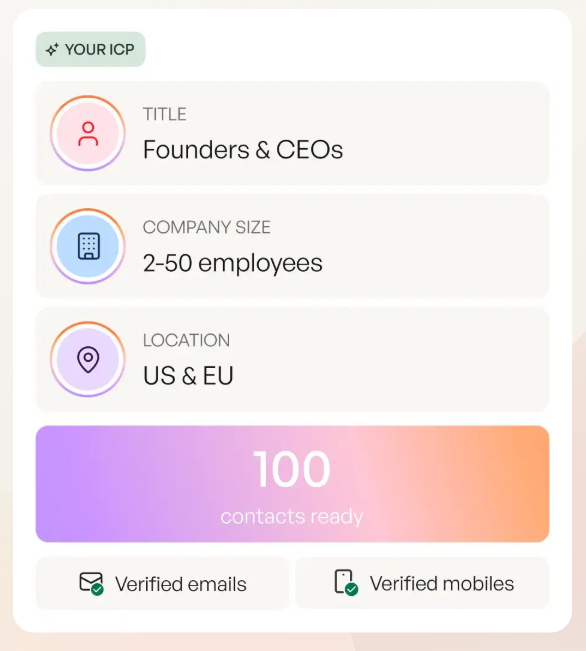
Once your accounts are tiered, run every one through Prospeo's database to pull verified contacts. You get 98% email accuracy and 125M+ verified mobile numbers with a 30% pickup rate, all on a 7-day data refresh cycle. The 30+ search filters - buyer intent, technographics, job changes, headcount growth - let you find the right stakeholders, not just any contact at the company. (If you're auditing accuracy across your stack, see data quality and prospect data accuracy.)
Step 1 of every territory plan is data you can trust. Prospeo's B2B database covers 300M+ profiles with a 92% enrichment match rate - so when you export your account list, you get verified emails and direct dials back, not bounces. At $0.01 per email, verifying 45 accounts costs less than a coffee.
Stop building territory plans on dead data.
FAQ
How often should I update my territory plan?
Quarterly at minimum - lock structural changes like rep reassignments semi-annually. A plan that's twelve months old is twelve months wrong. Market shifts, rep turnover, and account churn make annual-only reviews a guaranteed revenue leak.
What's the difference between a territory plan and an account plan?
A territory plan covers all accounts assigned to a rep or region - segmentation, cadence, quotas, and pipeline targets. An account plan zooms into one specific account's stakeholder map and deal progression. Think forest vs. trees.
What's a good pipeline-to-quota ratio?
3x-5x is the standard benchmark. Below 3x, one slipped deal puts you at risk of missing the number. Above 5x, you're likely inflating pipeline with low-quality opportunities that won't close.
Do I need dedicated software or can I use a spreadsheet?
For teams under 20 reps, a Google Sheets or Excel template handles territory management well. Once you cross 20+ reps with multiple overlapping regions or need real-time route optimization, dedicated software starts paying for itself.
How do I keep my territory data accurate?
Verify contact data before execution - not after your first sequence bounces 25%. A 7-day refresh cycle keeps records current compared to the 6-week industry average, so reps aren't emailing people who changed jobs two months ago.