

The Data City vs Wiza: Two Different Tools for Two Different Jobs
Comparing The Data City to Wiza is like comparing a telescope to a fishing rod. One maps economic sectors; the other pulls contact details out of professional profiles. They don't compete, they don't overlap, and if you're trying to choose between them, you're probably asking the wrong question.
Let's sort out which one you actually need.
30-Second Verdict
- Choose The Data City if you need UK sector classification, emerging-industry mapping, or economic intelligence that goes beyond outdated SIC codes.
- Choose Wiza if you need contact emails and phone numbers from professional profiles for outbound sales prospecting (see sales prospecting techniques).
Head-to-Head Comparison
| Dimension | The Data City | Wiza |
|---|---|---|
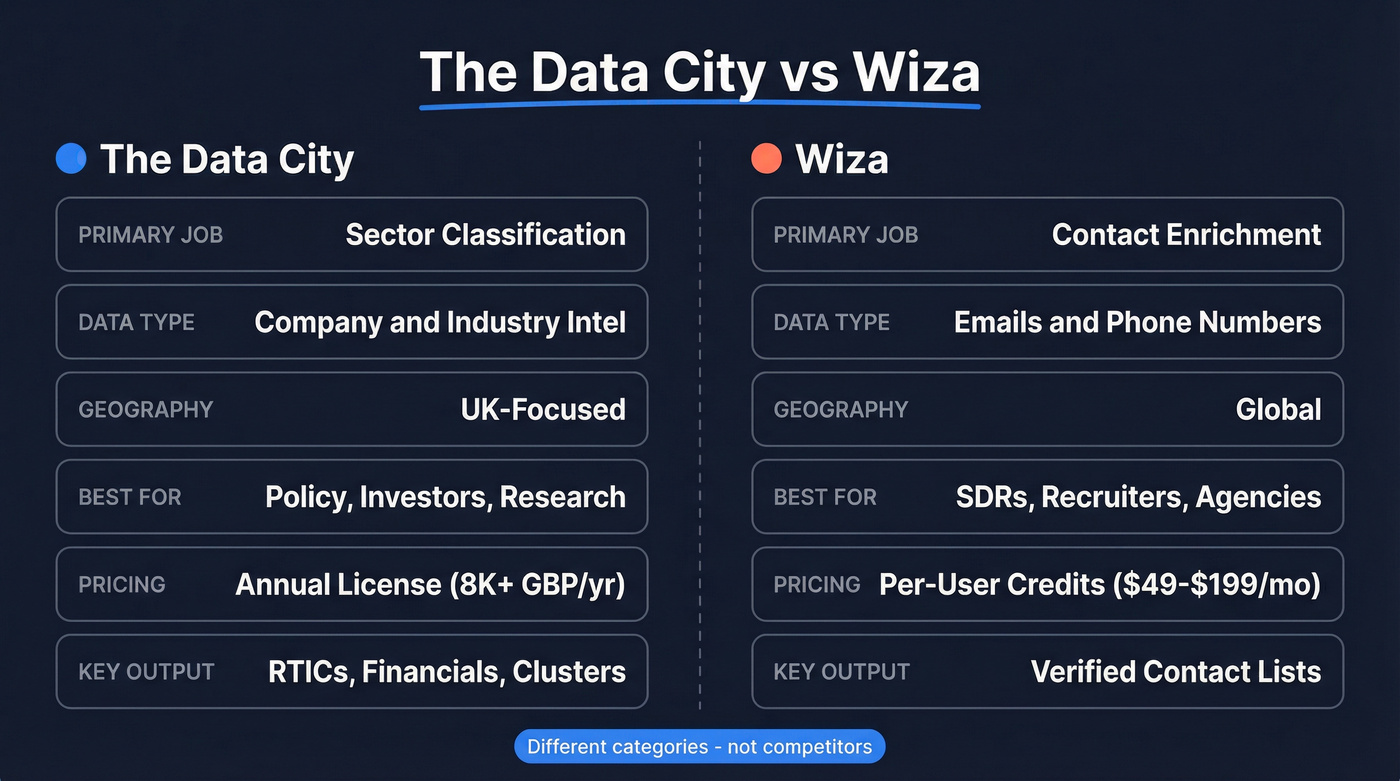
| Primary job | Sector classification | Contact enrichment |
| Data type | Company/industry intel | Emails + phone numbers |
| Geography | UK-focused | Global |
| Key output | RTICs/RSICs, financials, cluster analysis | Verified contact lists |
| Update cadence | Bi-monthly | Live SMTP verification on request |
| Integrations | API access, bespoke pricing | CRMs, Chrome extension |
| Pricing model | Annual license (PS8K+/yr) | Per-user credits ($49-$199/mo) |
| Best for | Policy, investors, research | SDRs, recruiters, agencies |
What The Data City Actually Does
The Data City isn't a sales tool. It's an economic intelligence platform built to replace the UK's creaky SIC code system with something that reflects the modern economy. Their Real-Time Industrial Classifications (RTICs) cover 400+ emerging sectors - cleantech, insuretech, space tech - categories that SIC codes from 2007 simply can't capture.

The platform covers 9M UK companies with 90+ datapoints each. You can run semantic Smart Search, use the ML List Builder to train a custom classifier from seed companies, or explore 1.5M+ URL-matched Similar Companies with similarity scores. The partner data stack is serious: Companies House, Creditsafe, Dealroom, Lightcast, Innovate UK, and 360Giving. Clients include NatWest, Cabinet Office, and Lloyds.
Oxford Economics invested PS2M at a PS19M valuation to fuel international expansion and a planned US joint venture. PitchBook lists competitors including Beauhurst and Bloomberg - not Wiza, not Apollo, not any sales tool. A 7-day free trial is available.

The Data City maps sectors. Wiza pulls contacts. But neither solves both problems affordably. Prospeo's 300M+ profiles with 30+ filters - including technographics, intent data, and headcount growth - let you target emerging industries and get verified contact data in one platform. At $0.01/email with 98% accuracy, you skip the stacked subscriptions entirely.
Stop paying for two tools when one covers accounts and contacts.
What Wiza Actually Does
Use Wiza if you're an SDR or recruiter who lives in a Chrome browser and needs verified emails and phone numbers from professional profiles. The extension is genuinely slick - 4.5/5 on G2 from 1,143 reviews, with ease of use racking up 427 mentions and accuracy getting 161 positive callouts. If you're evaluating your stack, it also helps to compare other SDR tools.
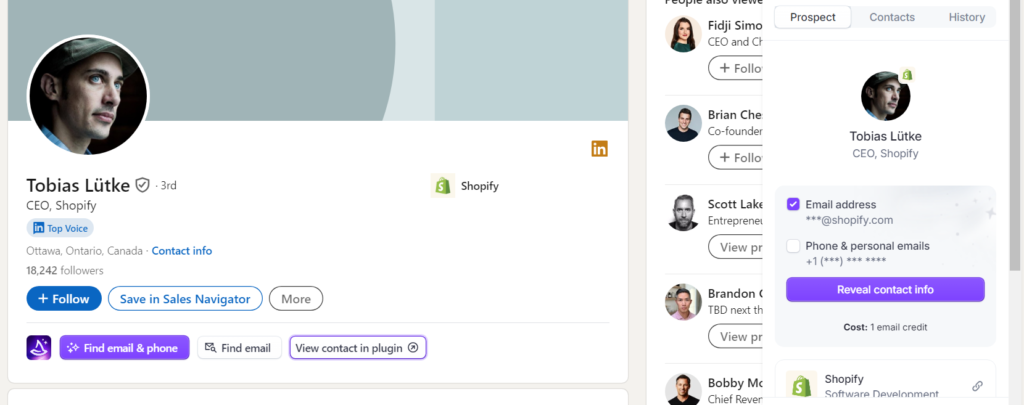
Skip Wiza if you're doing high-volume prospecting and budget matters. The #1 G2 complaint is cost (157 mentions), followed by limited credits (127 mentions) and inaccurate data (57 mentions). We've found that the teams getting the most from Wiza use it surgically - specific targeted lists, not bulk prospecting. The consensus on r/coldemail echoes this: Wiza is decent but "way too expensive" for high-volume use cases. Credits don't roll over, which stings if your prospecting volume fluctuates month to month. If you're running outbound at scale, you may also want a dedicated email deliverability guide to protect sender reputation.
Pricing Breakdown
Wiza Costs
Wiza's pricing page lists four monthly tiers: Free ($0, 20 emails/5 phones), Starter ($49/user/mo, 100/100), Email ($99/user/mo, 500 emails), and Email+Phone ($199/user/mo, 500/500). Annual "unlimited" plans run $990/yr or $1,990/yr. Overages hit at $0.15/email and $0.35/phone.
If you're comparing vendors in this category, see our roundup of data enrichment services.
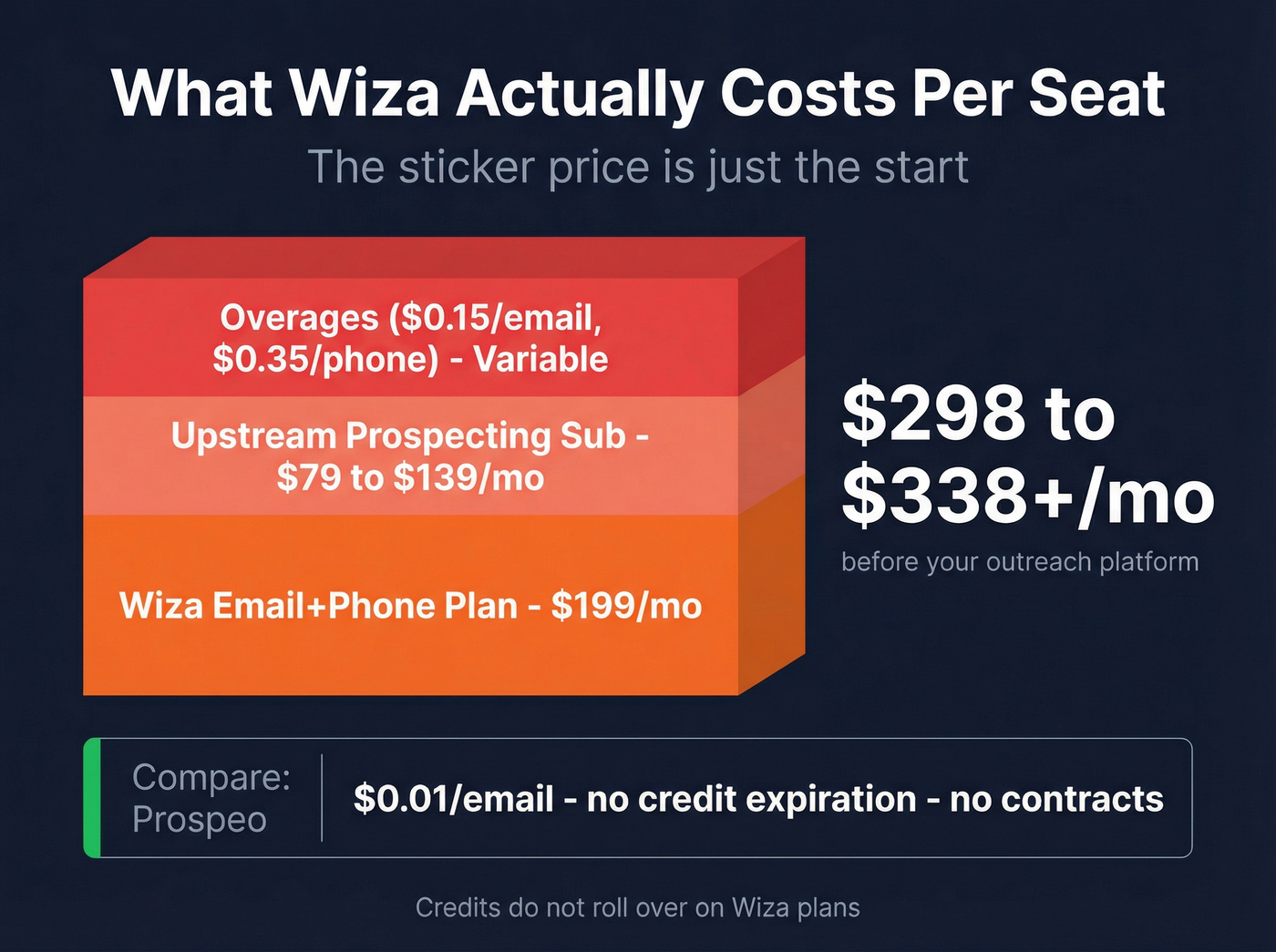
Here's what catches people off guard: Wiza's Chrome extension pulls from professional profiles, meaning you likely need an upstream prospecting subscription running $79-$139/mo. A single user on Email+Phone realistically spends $298-$338/mo before touching an outreach tool. That adds up fast across a team of five. If you're trying to reduce bounces, it’s worth understanding email bounce rate benchmarks and causes.
The Data City Costs
The Data City runs on enterprise annual licensing: Solo (1 seat) at PS8,000/yr, Team (5 seats) at PS18,000/yr, Department (15 seats) at PS30,000/yr. Add-ons for Jobs & Skills and RSICs run PS2,000-PS8,000/yr. Cluster projects start from PS20,000. API access is bespoke.
Completely different budget conversation. This is a line item for economic development teams and research departments, not a per-seat sales tool.
When to Use Both
Here's a realistic scenario: you're building a target account list in an emerging sector - say, UK-based carbon capture companies - and SIC codes are useless because the category barely existed five years ago. Use The Data City to map the sector via RTICs, identify the companies that actually operate in that space, and export the account list. (If you're formalizing this, an ideal customer profile helps keep targeting consistent.)
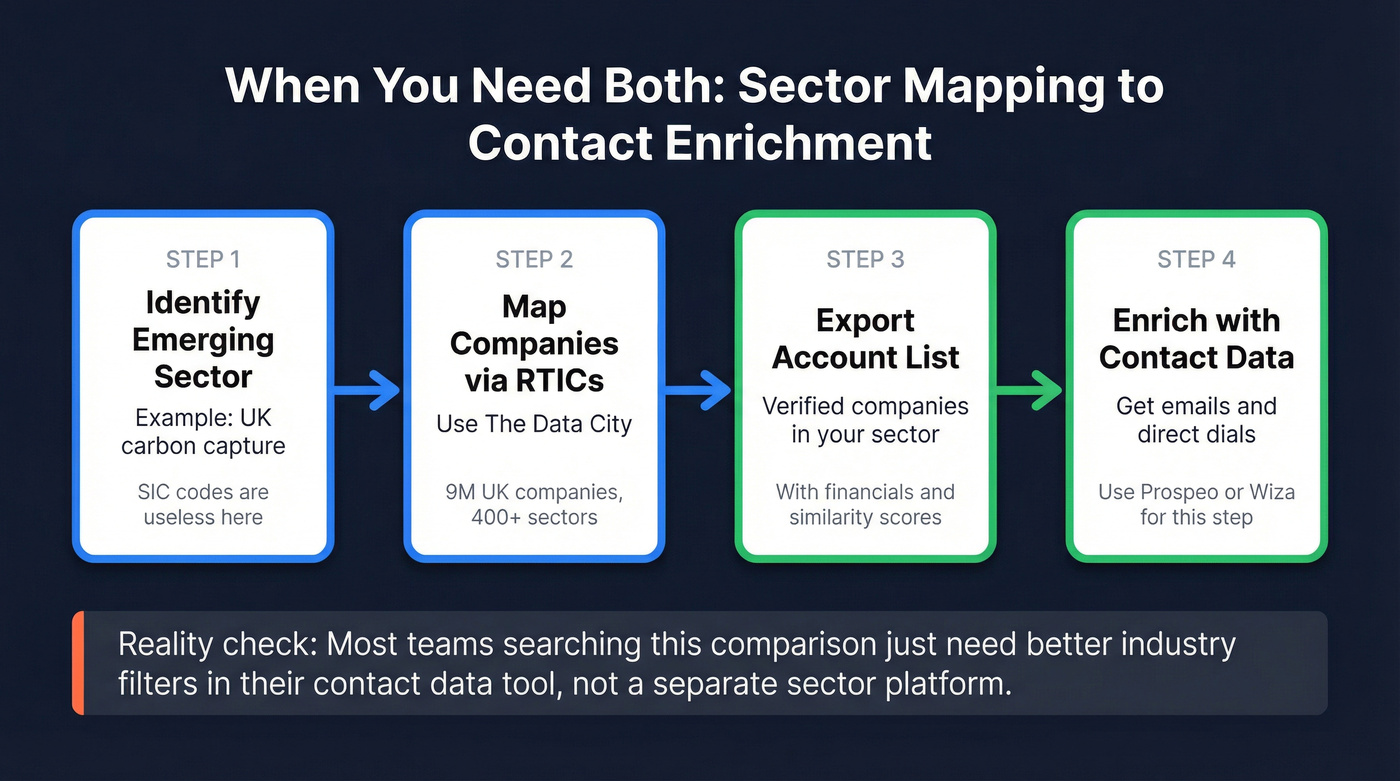
Then you need a contact data layer. You've got the right companies; now you need deliverable emails and direct dials for the decision-makers. That's where a self-serve enrichment tool fits - and for that step, accuracy and freshness matter above everything else. If you're building lists across sources, this lead generation workflow is a useful reference.
Look, most teams searching for this comparison don't actually need The Data City. They need better company-level filtering in their contact data tool. If you aren't doing genuine economic research or policy work, a B2B database with strong industry filters will get you 90% of the way there at a fraction of the cost. For more options, compare sales prospecting databases.
Verified Contacts Without Credit Limits
If your bottleneck is getting accurate emails and working phone numbers for outbound, Prospeo covers 300M+ profiles with 98% email accuracy and 125M+ verified mobiles, refreshed on a 7-day cycle - compared to the 6-week industry average. At roughly $0.01/email with no contracts, the economics are straightforward. The free tier gives you 75 emails and 100 Chrome extension credits per month to test it yourself. If you want to sanity-check accuracy before sending, use an AI email checker.

We've seen teams pair Prospeo with account-level targeting tools and cut their bounce rates from 30%+ down to under 4%. When your domain reputation is on the line, data freshness isn't a nice-to-have - it's the whole game.
Wiza users spend $298+/mo per seat and still hit credit walls. Prospeo delivers 98% email accuracy and 125M+ verified mobiles on a 7-day refresh cycle - no annual contracts, no credit expiration. Teams switching from Wiza cut bounce rates from 30%+ to under 4% while prospecting at higher volume.
Get unlimited-feel prospecting at $0.01 per verified email.
FAQ
Is The Data City a Wiza alternative?
No - they're in completely different categories. The Data City provides sector classification and economic intelligence for UK companies using AI-powered RTICs. Wiza is a contact enrichment tool that pulls emails and phone numbers from professional profiles. They don't overlap in functionality, pricing, or target users.
What's the real monthly cost of Wiza?
Higher than the sticker price. A single user on Email+Phone pays $199/mo, plus an upstream prospecting subscription at $79-$139/mo, plus overages at $0.15/email and $0.35/phone - totaling $298-$338/mo before your outreach platform. For high-volume teams, Prospeo's $0.01/email with no credit expiration is significantly cheaper.
Do I need contact data or sector data?
If your goal is sending emails and booking meetings, you need contact data from a tool like Wiza or Prospeo. If your goal is mapping emerging industries, replacing SIC codes, or analyzing economic clusters, you need sector data from The Data City. Some teams need both, layered sequentially - sector mapping first, then contact enrichment.