

Third-Party Intent Data: What It Costs, Why It Fails, and How to Fix It in 2026
Your VP of Marketing signed a $40k intent data contract six months ago. Three months in, SDRs had muted the Slack alerts. Pipeline hadn't moved. The CFO started asking questions nobody could answer.
This isn't rare - 50% of companies using third-party intent data report too many false positives, per Forrester. On Reddit, practitioners are even blunter. One thread calls intent data "80% smoke and mirrors." In others, the core complaint is consistent: it turns into another alert feed everyone ignores, full of signals that don't convert. The technology isn't broken. The way most teams buy and deploy it is.
The Short Version
If you haven't maximized first-party signals and your CRM data is a mess, skip the $25k+ intent platform. Fix the foundation first.
If you're buying, pair intent with verified contact data. Intent tells you which accounts are surging - you still need accurate emails and direct dials to act on it. And if you're evaluating vendors, read the pricing table and mistakes section below before signing anything. Credits expire, contracts auto-renew, and total cost of ownership is always higher than the quote.
What Is Third-Party Intent Data?
First-party intent comes from your own properties - pricing page visits, whitepaper downloads, webinar signups. You own it, it's high-signal, and it's free. Second-party intent is someone else's first-party data shared with you directly, like a review site revealing which companies viewed your profile.
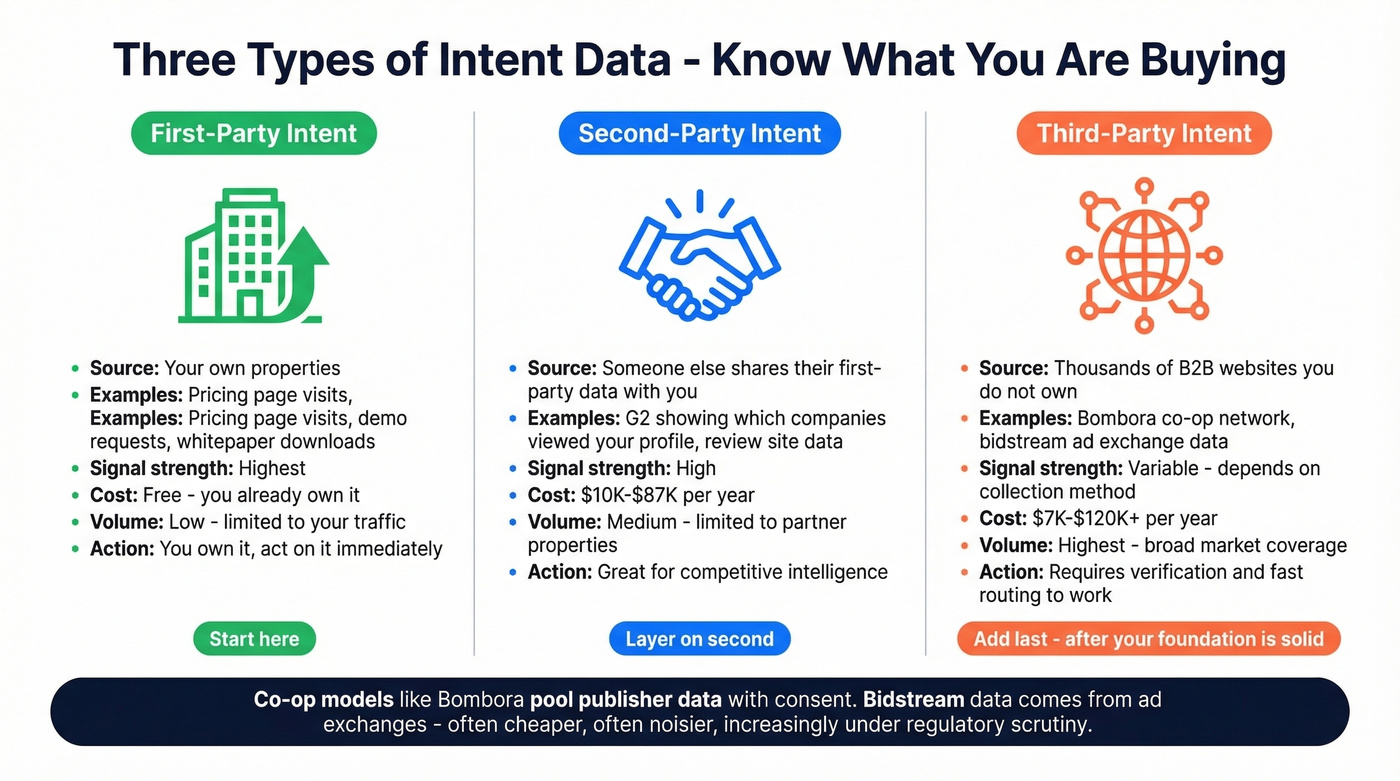
Third-party intent data tracks research behavior across thousands of B2B websites you don't own, then aggregates those signals at the account level. The two main collection methods matter more than most buyers realize:
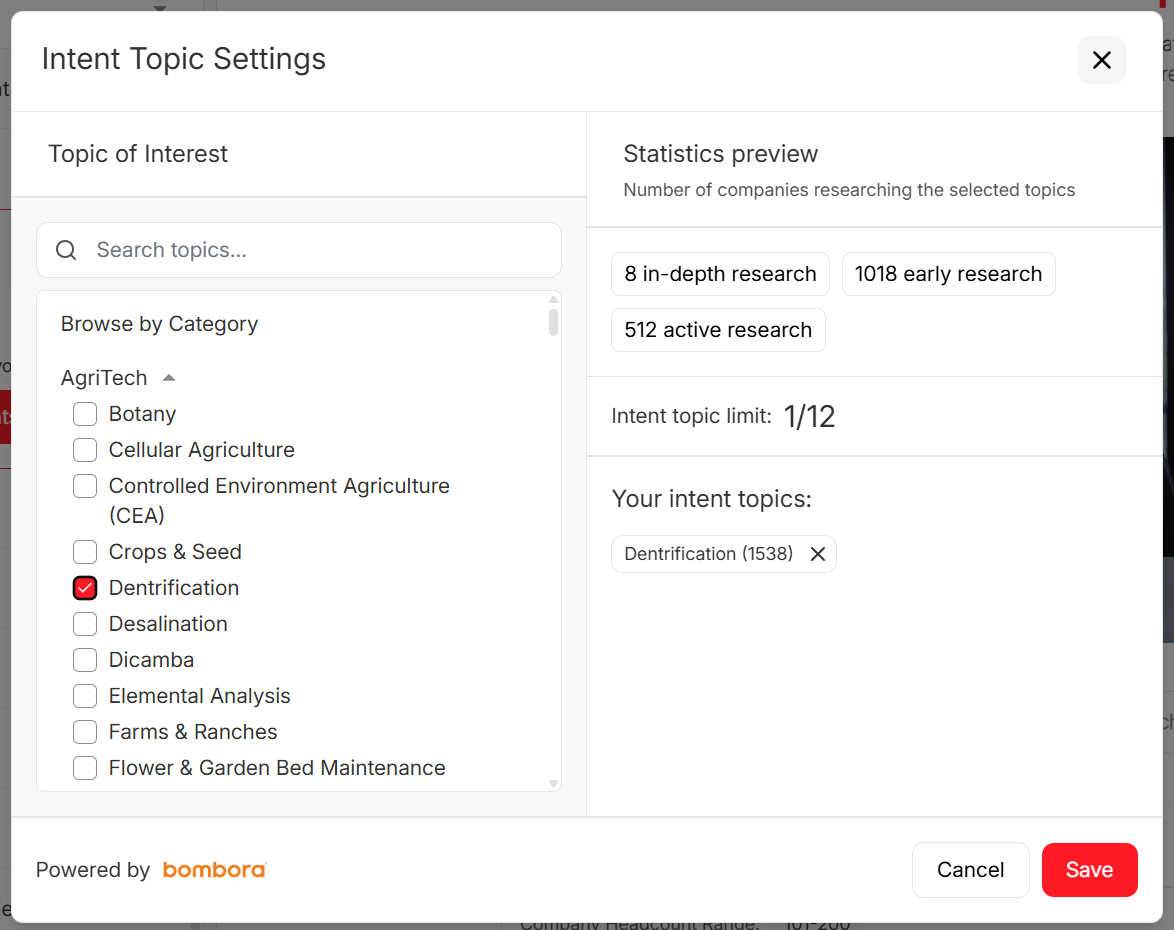
Co-op models like Bombora pool data from participating publishers inside consent-based frameworks. They're typically more transparent about where signals originate. Bidstream data gets pulled from real-time ad exchanges - often cheaper, often noisier, and increasingly under regulatory scrutiny as regulators focus on profiling and automated decision-making.
Here's the thing: if your vendor can't tell you which model they use, walk away.
What It Actually Costs
These are real pricing ranges based on what companies actually pay - not what vendor pages show you.
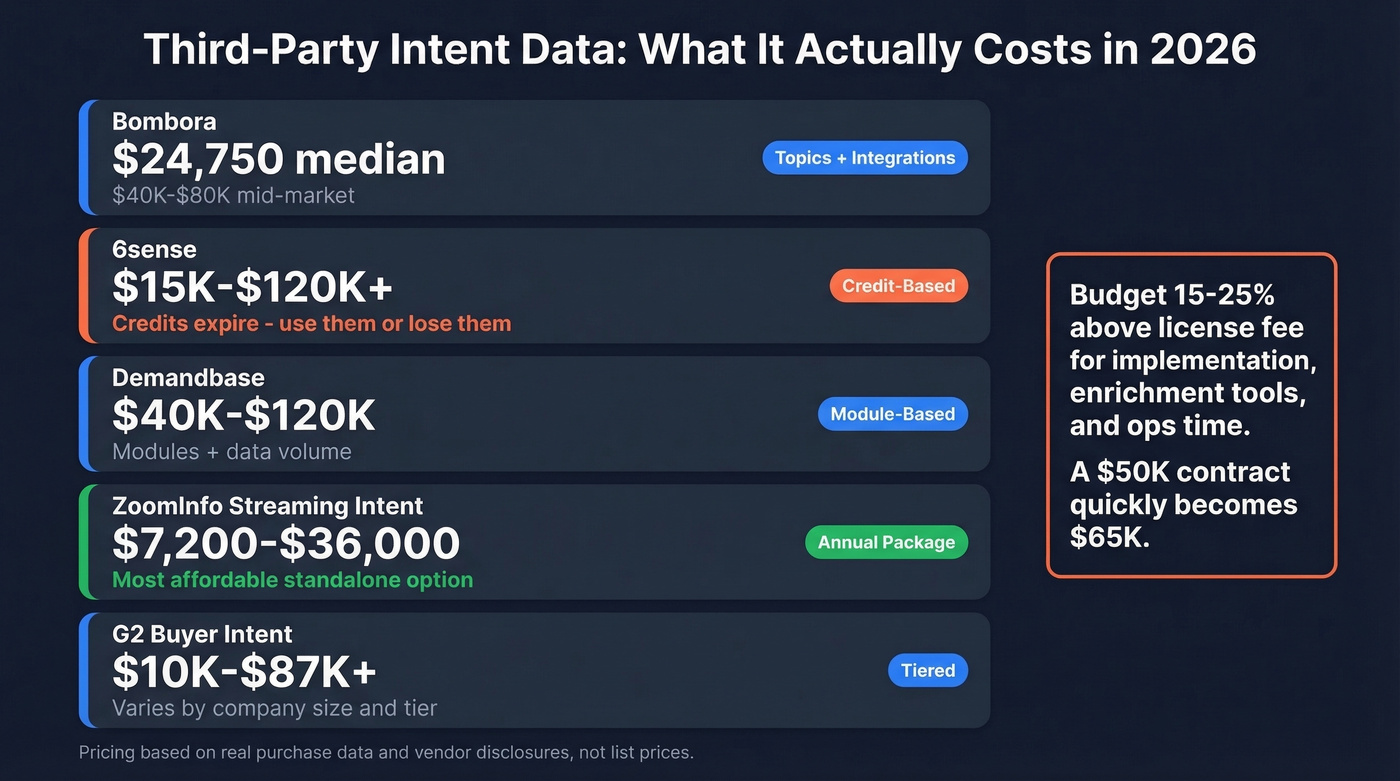
| Provider | Typical Annual Cost | Pricing Model |
|---|---|---|
| Bombora | $24,750 median; $40k-$80k mid-market | Topics + integrations |
| 6sense | $15k-$100k+/year (some deals reach ~$120k+) | Credits (they expire) |
| Demandbase | $40k-$120k | Modules + data volume |
| ZoomInfo Streaming Intent | $7,200-$36,000 | Annual range varies by package |
| G2 Buyer Intent | $10k-$87k+ | Company size + tier |
That Bombora median comes from Vendr's data across 34 purchases. Enterprise deployments exceed $200k.
6sense deserves a special warning: credits don't roll over. We've seen teams buy a Growth tier at $40k, underutilize it for two quarters, and effectively pay double per activated signal. Some buyers also run into first-year commitments around $120k with a two-year term, depending on package and scope.
If your average deal size is under $15k, you almost certainly don't need a standalone intent platform. Layer Bombora signals through a tool that bundles intent with contact data and skip the six-figure ABM suite.
Budget 15-25% above the license fee for implementation, enrichment tools, and ops time. A $50k Bombora contract quickly becomes $65k when you add the stack around it.

Most teams pay $40K+ for intent signals they can't activate because the contact data at the end of the workflow bounces. Prospeo layers 15,000 Bombora intent topics directly on top of 143M+ verified emails and 125M+ mobile numbers - refreshed every 7 days, not every 6 weeks. No annual contract. ~$0.01 per email.
Stop paying for intent signals you can't reach anyone with.
Why Most Intent Programs Fail
In our experience, five mistakes kill most intent programs. Every one is fixable.
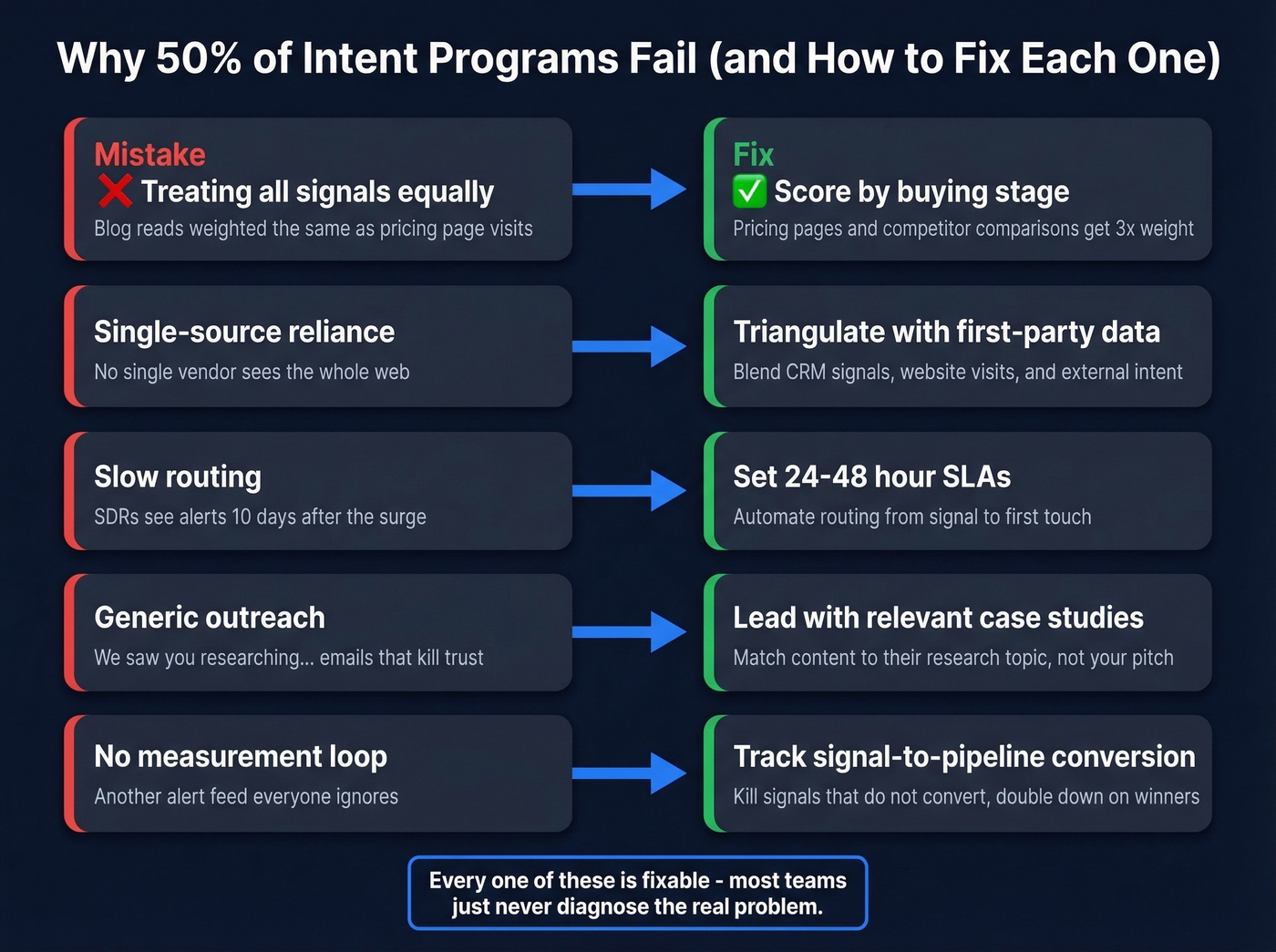
1. Treating all signals equally. A prospect researching "CRM pricing comparison" is further along than someone who read a blog about sales trends. Weight pricing pages, competitor comparisons, and product-category searches higher than generic content consumption. Not all intent is created equal, and your lead scoring should reflect that.
2. Single-source reliance. No single provider sees the whole web. Blend first-party signals with external intent data. Forrester explicitly recommends multi-source triangulation to validate buying stage - match intent surges against your ICP filters and technographic data before routing to sales.
3. Slow routing. Intent has a shelf life. If your SDRs see an alert 10 days after the surge, the prospect has already talked to three competitors. Forrester warns that storing signals without decay makes "every company" look in-market, which is exactly how alert fatigue starts. Set routing SLAs: 24-48 hours max from signal to first touch.
4. Generic outreach. Nothing kills trust faster than "we saw you researching..." emails. Use intent to guide messaging and timing without revealing your surveillance. Lead with a relevant case study that matches their research topic. If you need a starting point, keep a few sales follow-up templates ready for intent-triggered sequences.
5. No measurement loop. The consensus on r/sales is that intent tools become "another alert feed everyone ignores" when nobody tracks which signals convert. Build a feedback loop: which intent-sourced accounts became opportunities? Which topics predicted pipeline? Kill the signals that don't convert and double down on the ones that do.
Making Buyer Intent Signals Actionable
The real gap isn't signal quality - it's activation. Threads on r/gtmengineering consistently flag the same problem: tools are strong at signals but weak at identity, context, and activation. You know an account is surging on "data enrichment tools." But who do you call? What's their verified email?
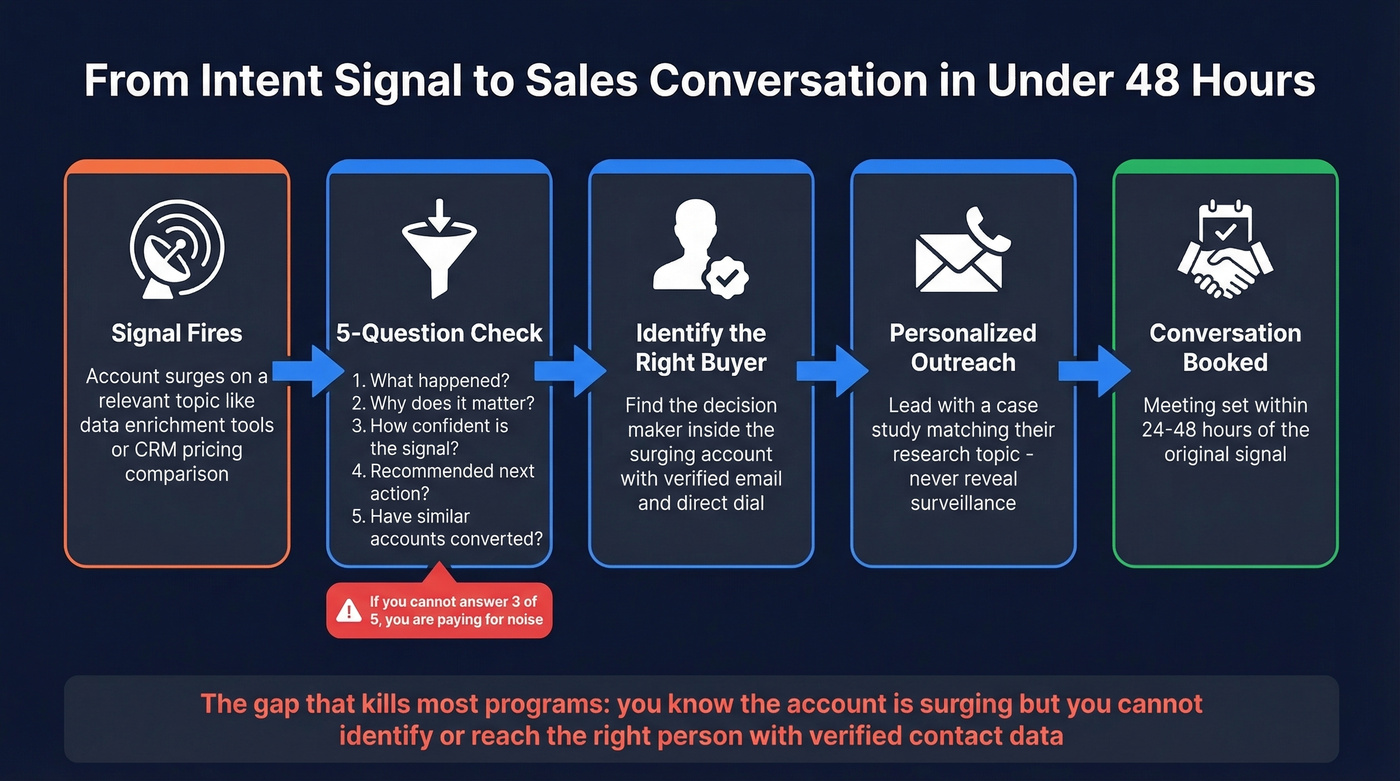
Every intent alert your team acts on should answer five questions: What happened? Why does it matter? How confident is the signal? What's the recommended next action? Have similar accounts converted before? If your platform can't answer at least three of those, you're paying for noise.
This is where most $40k intent contracts fall apart. The signal fires, but you can't reliably identify the right people or reach them with verified contact data. You've paid for intelligence you can't activate.
Prospeo closes that gap by layering 15,000 Bombora-powered intent topics on top of 143M+ verified emails and 125M+ verified mobile numbers, all refreshed every 7 days. At ~$0.01 per email with no annual contract, it's a fraction of what standalone intent platforms charge before you even get to the contact data.
For teams that want more control, a DIY stack - Clay + Apollo + Instantly + Zapier - is a legitimate alternative. But you'll spend ops cycles stitching it together, and you're still dependent on the accuracy of whatever contact data sits at the end of the workflow. Let's be honest: if your emails bounce at 30%+, the fanciest intent signal in the world won't save you. (If you're seeing that, start with email bounce rate fundamentals and an email deliverability guide.)
Your intent platform says an account is surging. Now what? Without verified direct dials and emails, that signal dies in a Slack channel. Prospeo gives you the contact layer most intent tools lack - 98% email accuracy, 30% mobile pickup rate, and 30+ filters to pinpoint the right buyer inside the surging account.
Turn every intent surge into a conversation within 24 hours.
Privacy and Compliance in 2026
Chrome didn't fully kill third-party cookies - it moved to a user-choice model. But Safari and Firefox block cross-site tracking by default, and 67% of Consent Mode v2 setups fail to meet compliance standards, losing 40-60% of measurement data.
Regulators now focus on profiling and automated decision-making, which is exactly what intent data does. You can't outsource compliance to your vendor. If your intent provider collected data compliantly but you use it to profile and target without lawful basis, that's your problem. Understand the collection methodology behind every signal you act on - whether you work with one provider or five.
FAQ
Is third-party intent data worth the cost?
For teams with clean CRM data, routing SLAs under 48 hours, and a measurement loop - yes. Expect 15-30% lift in opportunity creation rates when intent is properly activated. Run a 90-day pilot before committing $25k+ annually. If your CRM hygiene is poor, maximize first-party signals first.
What's the difference between first-party and third-party intent?
First-party intent comes from your own properties: website visits, content downloads, demo requests. Third-party intent comes from external publisher networks tracking research behavior across thousands of B2B sites you don't own. First-party is higher signal but lower volume; third-party gives broader market coverage at the cost of precision.
Can you get buyer intent signals without a six-figure contract?
Yes. ZoomInfo Streaming Intent starts around $7,200/year. Prospeo bundles Bombora-powered intent across 15,000 topics with verified contact data at ~$0.01 per email, no annual contract required. The six-figure price tags come from bundled ABM platforms like 6sense and Demandbase that layer intent with orchestration and advertising.