

What Is a Good Response Rate for Email Marketing?
You sent 500 cold emails and got 8 replies. Is that good? You sent a newsletter to 10,000 subscribers and 300 clicked through. Is that good? Here's the thing: it depends entirely on what kind of email you're talking about, and most benchmarks online don't bother making that distinction. Some are literally about direct mail postcards.
| Email Type | "Good" Response Rate | Metric Used |
|---|---|---|
| Opt-in newsletters/promos | 2-3% CTR / 8-12% CTOR | Click-through rate |
| Cold outreach | 5-10% reply rate | Reply rate |
| Automated flows (welcome, cart) | ~5.6% click rate | Click rate |
If someone gives you a single number without asking what kind of email you're sending, ignore them.
What "Response Rate" Actually Means
ESPs like Mailchimp and ActiveCampaign don't track "replies" for opt-in email. When marketers say "response rate" for newsletters, they mean click-through rate (CTR) or click-to-open rate (CTOR). If you need the exact math, see our click-through rate (CTR) breakdown.
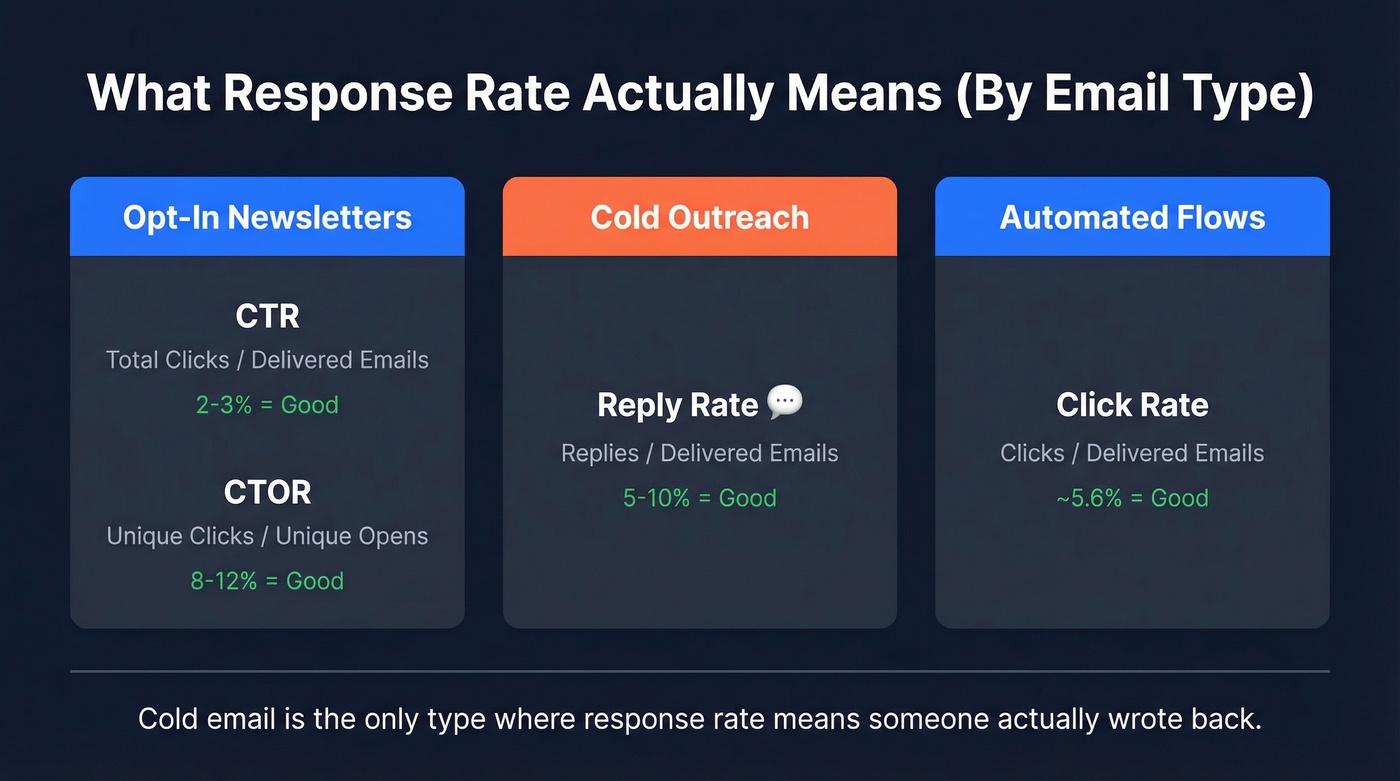
CTR = total clicks / delivered emails. CTOR = unique clicks / unique opens. Reply rate (cold email only) = replies / delivered emails.
Cold email is the only context where response rate literally means someone wrote back. For everything else, you're measuring clicks.
Opt-In Email Benchmarks in 2026
Benchmarks by ESP
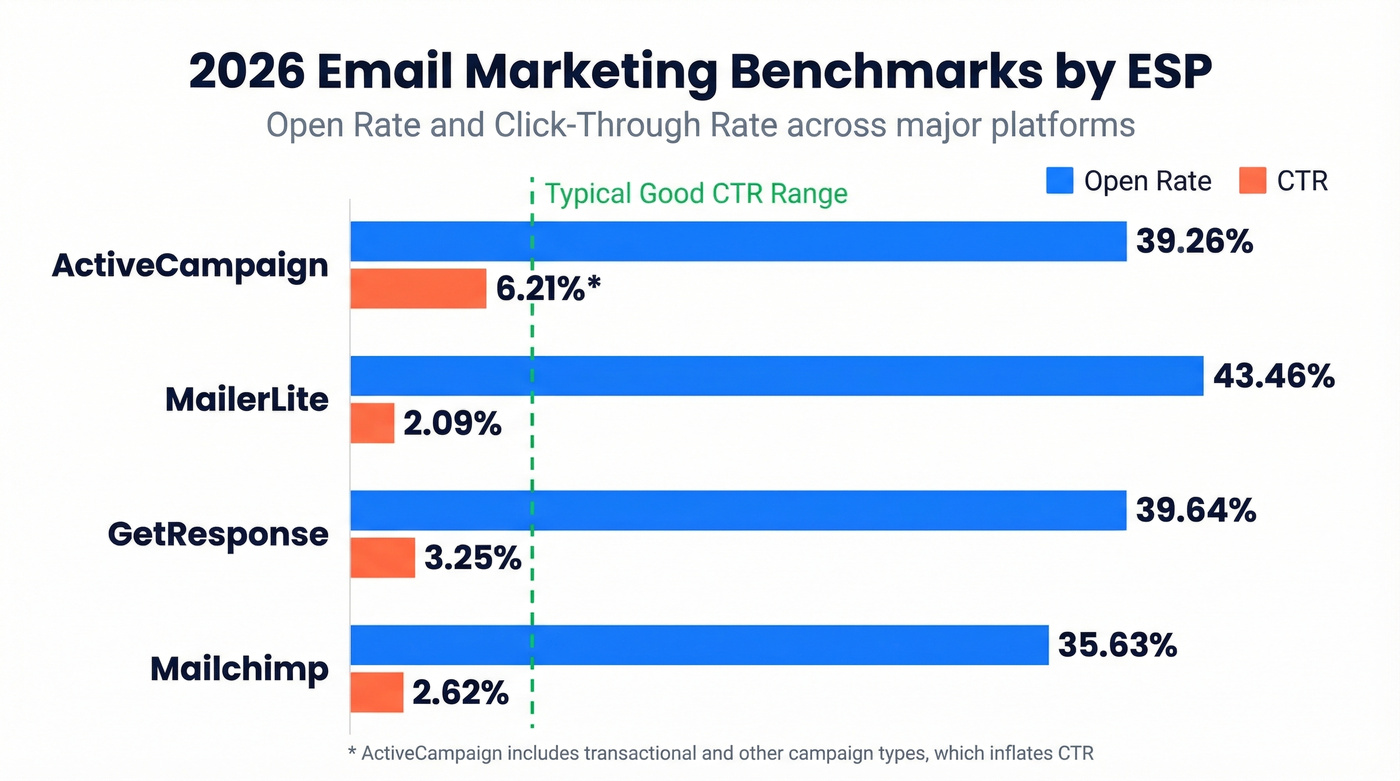
Four major platforms publish benchmark data. The numbers vary because each user base skews differently, but the ranges hold up.
| Source | Open Rate | CTR | CTOR | Unsub |
|---|---|---|---|---|
| ActiveCampaign | 39.26% | 6.21% | - | - |
| MailerLite | 43.46% | 2.09% | 6.81% | 0.22% |
| GetResponse | 39.64% | 3.25% | 8.62% | 0.15% |
| Mailchimp | 35.63% | 2.62% | - | 0.22% |
ActiveCampaign's 6.21% click rate looks like an outlier - and it is. They include transactional, marketing, and other campaign types, which inflates clicks versus newsletter-only sends. Across MailerLite and Mailchimp, a 2-3% CTR is more typical for opt-in newsletters and promos.
Why Open Rates Are Misleading
Apple Mail Privacy Protection auto-loads tracking pixels for every email, whether the recipient reads it or not. That's why open rates have crept up across every ESP since 2021. MailerLite's jumped from 42.35% to 43.46% year-over-year - but that doesn't mean more people are reading.
The metric that actually matters is CTOR, because it isolates content quality from deliverability and subject-line performance. A CTOR of 8-12% means your content's doing its job. Below 6%, your copy or offer needs work.
MailerLite's unsubscribe rate nearly tripled (0.08% to 0.22%) in 2025, largely because Gmail made unsubscribing easier via UI changes. That's actually healthy - it purges unengaged subscribers and lifts real engagement over time.
Cold Email Reply Rate Benchmarks
Cold outreach is a completely different game. You're emailing people who didn't opt in, so the bar is lower - but the measurement is more honest, because you're counting actual human replies. If you're building sequences, start with a proven B2B cold email sequence structure.
| Performance Tier | Reply Rate |
|---|---|
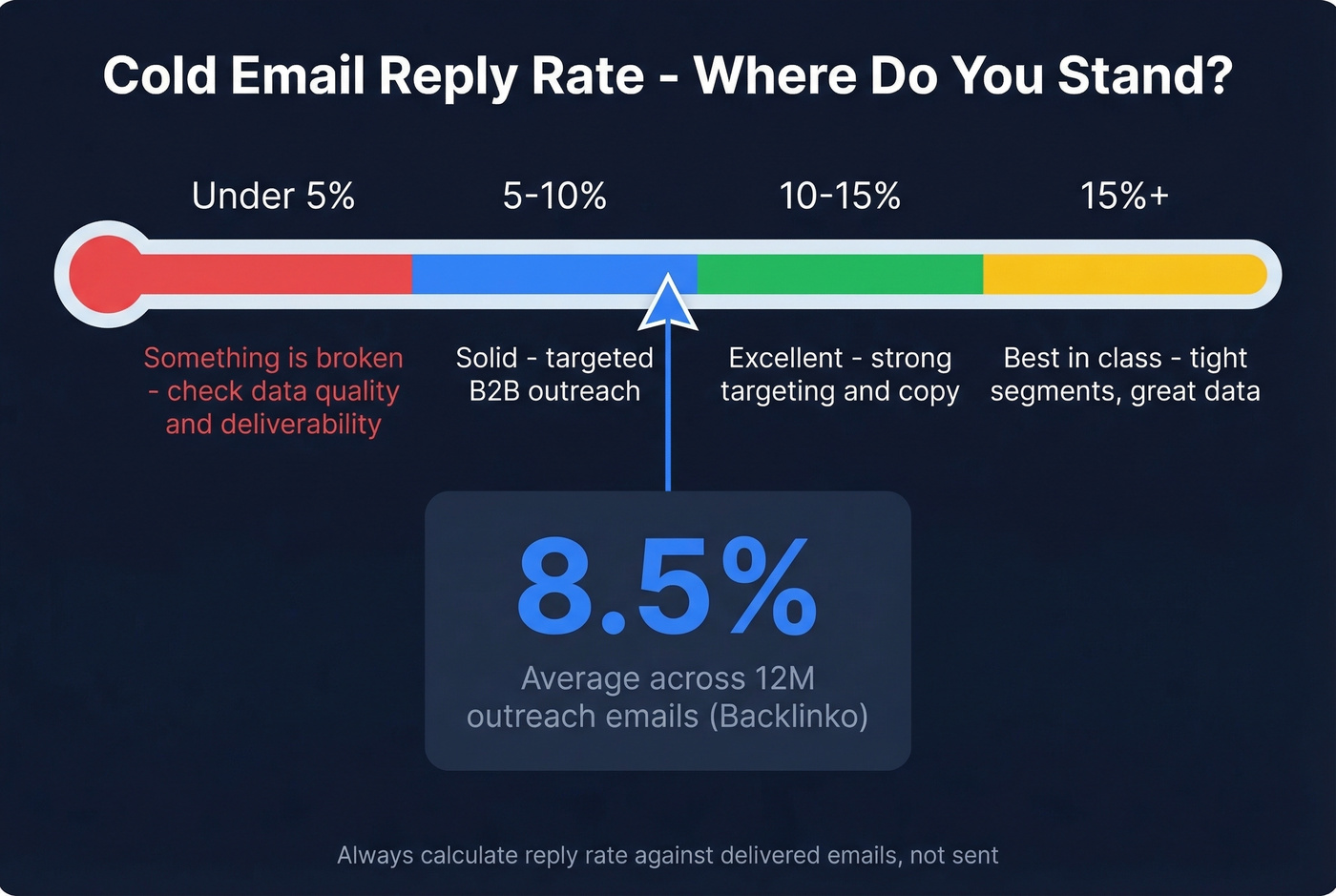
| Average | 1-5% |
| Solid (targeted B2B) | 5-10% |
| Excellent | 10-15% |
| Best-in-class (tight segments) | 15%+ |
| Outreach average (12M emails) | 8.5% |
That Backlinko number - 8.5% across 12 million outreach emails - is the most cited benchmark in the space. Roughly 1 in 12 cold emails gets a reply. Above that, you're doing well. Below 5%, something's broken in your targeting, copy, or deliverability. Wednesday outperforms Sunday by 22.1% for response rates, though day-of-week differences are modest overall.
Let's be honest: if your reply rate is under 5%, rewriting your subject line won't save you. We've seen this over and over - the problem is almost always data quality or deliverability, not copywriting. Fix the infrastructure first. (If you want a deeper checklist, use this email deliverability guide.)
One more thing: always calculate reply rate against delivered emails, not sent. Including bounces in the denominator understates your actual performance. If you're not sure what's normal, compare against email bounce rate benchmarks.

A 5% reply rate with bad data is a 10%+ reply rate waiting to happen. Prospeo's 5-step verification delivers 98% email accuracy - customers like Snyk dropped bounce rates from 35% to under 5% and saw AE-sourced pipeline jump 180%.
Stop optimizing subject lines on top of broken data.
Automated Emails Crush Broadcasts
If you're only sending batch campaigns, you're missing the highest-engagement channel in your stack. Klaviyo's latest benchmarks make this clear: automated flows generate 41% of total email revenue from just 5.3% of sends. Flow click rates hit 5.58% versus 1.69% for campaigns.
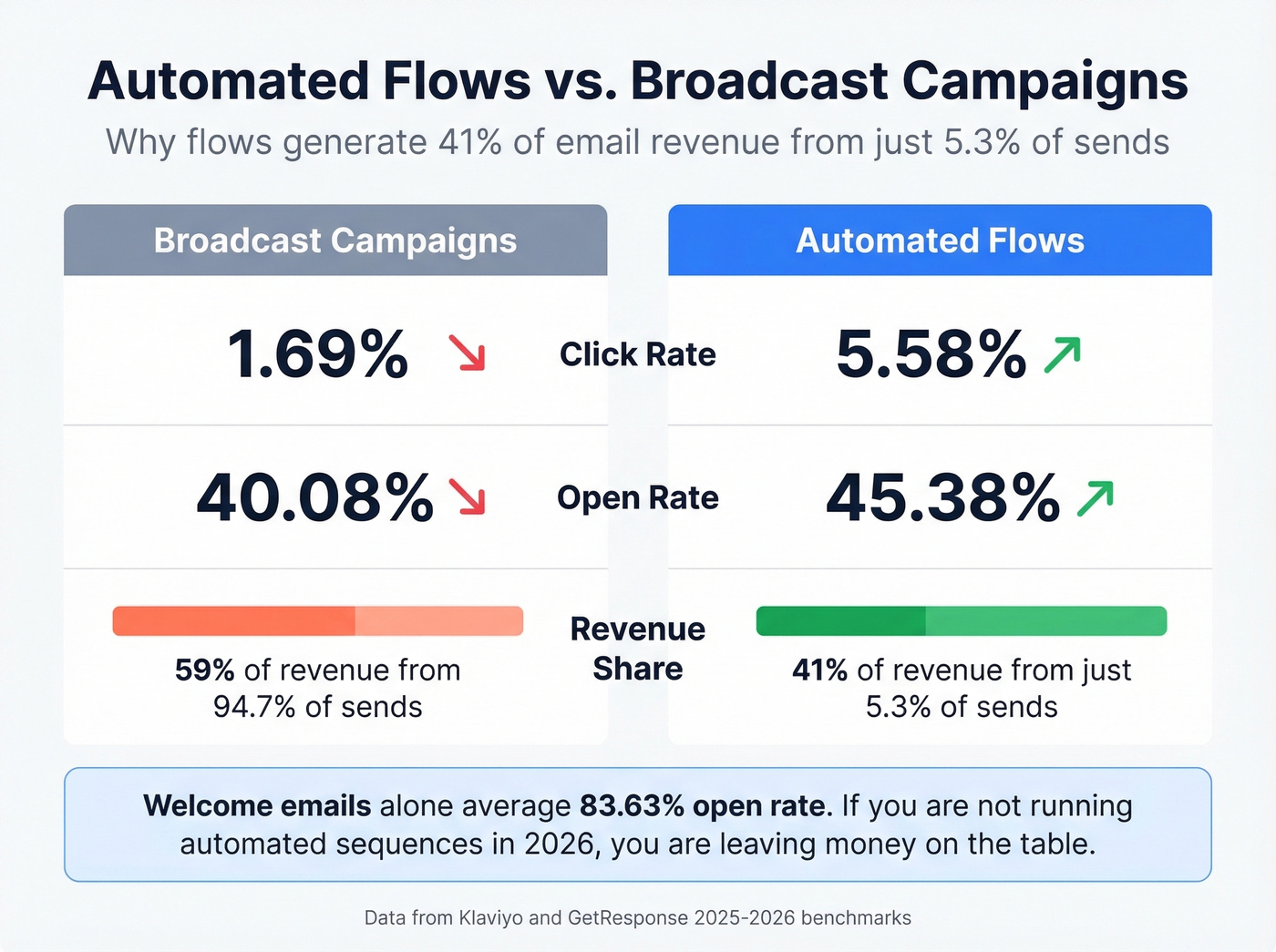
GetResponse tells a similar story - triggered emails pull a 45.38% open rate and 5.02% CTR versus 40.08% and 3.84% for newsletters. Welcome emails alone average an 83.63% open rate. If you aren't running automated sequences in 2026, you're leaving money on the table.
How to Improve Your Response Rate
Five things that move the needle, in order of impact.
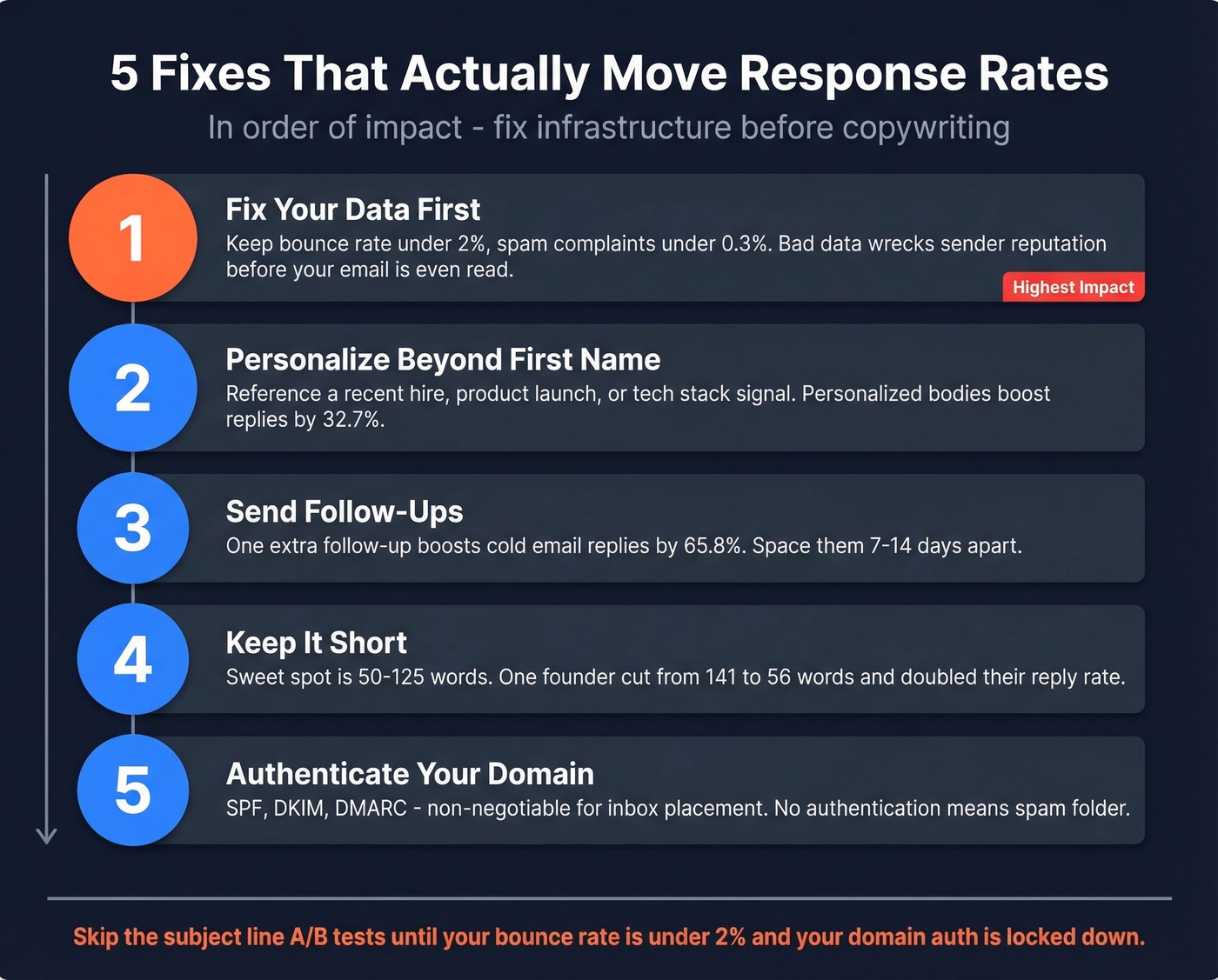
1. Fix your data first. Bad emails lead to bounces, which wreck your sender reputation, which lands you in spam, which means zero responses. Keep bounce rate under 2% and spam complaints under 0.3%. Prospeo's 5-step verification catches invalid addresses, catch-all domains, spam traps, and honeypots in real time at 98% accuracy - and we've watched customers like Snyk drop bounce rates from 35-40% to under 5% after switching. If you're evaluating vendors, compare data enrichment services and email list providers before you scale.

2. Personalize beyond first name. Backlinko found personalized subject lines boost replies by 30.5%, and personalized bodies add another 32.7%. Reference a recent hire, product launch, or tech stack signal - something that proves you did 30 seconds of homework. For frameworks and examples, see personalized outreach.
3. Send follow-ups. One additional follow-up boosts cold email replies by 65.8%. Space them over 7-14 days. For opt-in, triggered sequences outperform one-off blasts every time. If you need copy you can ship today, use these cold email follow-up templates.
4. Keep it short. A practitioner on Reddit cut emails from 141 words to 56 and doubled their reply rate. The sweet spot for cold email is 50-125 words. Nobody wants to read your novel. If you're stuck, pull from these email subject line examples.
5. Authenticate your domain. SPF, DKIM, DMARC. Non-negotiable for inbox placement. If you haven't set these up, your emails are landing in spam and no amount of copywriting genius will fix that. For the technical side, start with DMARC alignment.
One Founder's Cold Email Rebuild
A founder on r/Entrepreneur documented their rebuild in detail: reply rate went from 3% to 6% after expanding from 3 to 7 sending domains, capping volume at 26 emails per day per domain, dropping bounce rate from 11% to under 2%, and shortening emails to under 56 words. Their "Quick question" subject line pulled 39% opens. Total stack cost: $420/month for 16 qualified leads.
We've seen this pattern repeatedly. Infrastructure and data quality matter more than clever copywriting. Skip the subject line A/B tests until your bounce rate is under 2% and your domain authentication is locked down - otherwise you're optimizing the wrong thing.
Email Marketing Response Rates FAQ
What's the difference between CTR and CTOR?
CTR measures clicks against all delivered emails. CTOR measures clicks against opened emails only, isolating content performance from subject lines and deliverability. A good CTOR is 8-12%; a good CTR is 2-3%.
Why is my cold email reply rate dropping?
Inbox providers are getting stricter. Audit your bounce rate first - if it's above 2%, your sender reputation is taking hits. Then check domain authentication (SPF, DKIM, DMARC) before rewriting any copy.
How do response rates compare across industries?
B2B SaaS cold outreach typically sees 5-8% reply rates, while e-commerce opt-in campaigns hover around 2-3% CTR. The type of email matters far more than the industry vertical - a well-targeted cold sequence will outperform a generic newsletter blast regardless of sector.
How do I verify my email list before sending?
Run your list through a verification tool that checks for invalid addresses, catch-all domains, and spam traps. Prospeo's free tier lets you verify 75 emails per month - enough to audit a segment and measure the impact on your bounce rate before scaling up.
That founder who rebuilt their cold email stack and doubled reply rates? The #1 fix was data quality. Prospeo refreshes 300M+ profiles every 7 days, catches spam traps and honeypots, and costs roughly $0.01 per verified email. No contracts.
Clean data is the fastest path from 3% to 10% reply rates.