

Xverum vs Apollo.io: Different Tools, Different Jobs
Comparing Xverum vs Apollo.io is like comparing a lumber yard to a furniture store. One sells raw materials in bulk; the other sells finished products you can use today. If both names landed on your shortlist, you're probably confused - and rightfully so, because these tools serve fundamentally different buyers with fundamentally different workflows.
30-Second Verdict
- Pick Xverum if you're a data engineering team building an internal contact database and need raw datasets delivered via API.
- Pick Apollo if you're an SDR team that needs a searchable database with built-in sequencing and a dialer (see our broader breakdown of SDR team stacks).
- Skip both if you want verified contact data you can act on immediately without a dataset contract or a credit maze.
Quick Comparison Table
| Dimension | Xverum | Apollo.io |
|---|---|---|
| Product type | Dataset/API provider | Sales engagement SaaS |
| Scale (headline) | 750M+ people profiles | 275M+ contacts |
| Delivery | API in JSON and Parquet | In-app search + export |
| Accuracy | 97-98% across all fields (vendor-claimed) | ~75-85% valid emails depending on segment |
| Integrations | API-first delivery | Salesforce, HubSpot, and other GTM tools |
| Pricing model | $2.50/1K calls-$100K/yr | $0-$149/user/mo |
| Best for | Data infrastructure teams | Outbound sales reps |
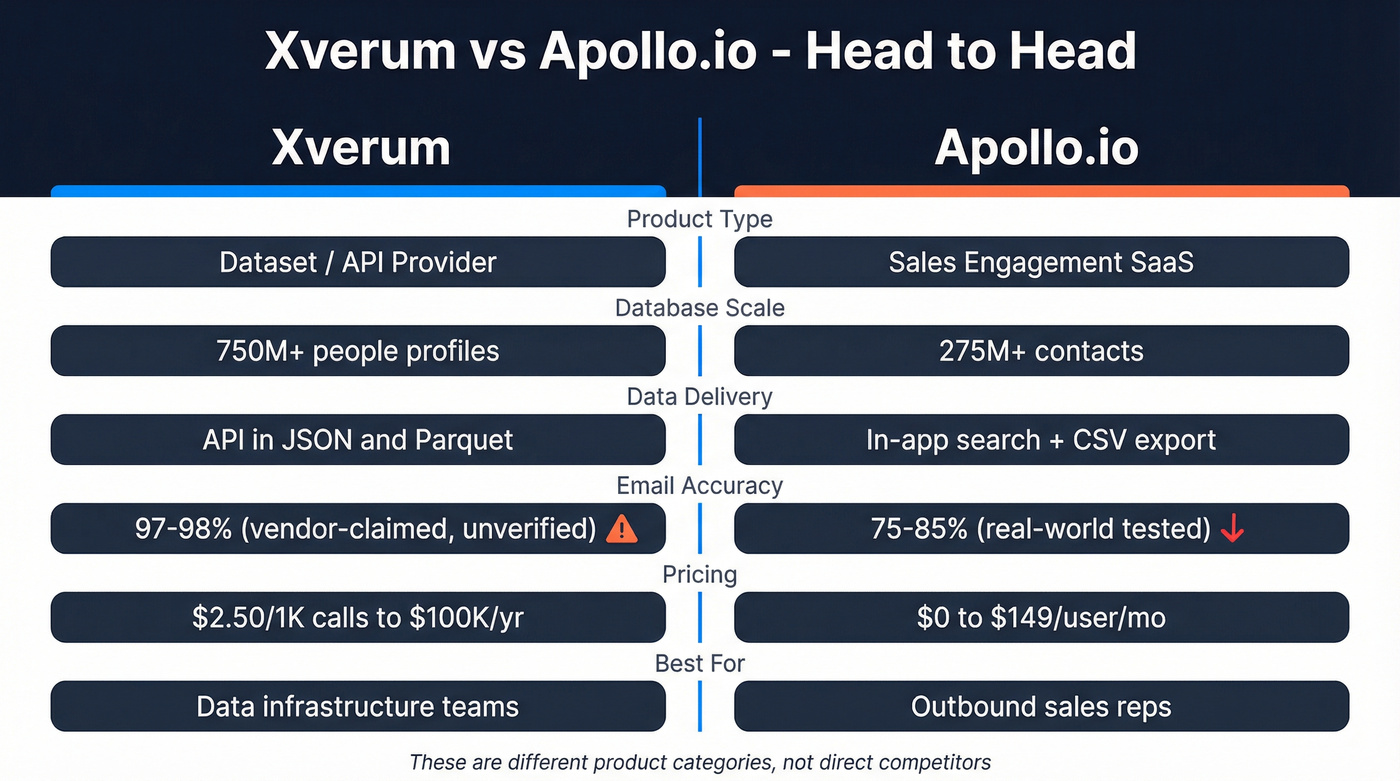
These aren't competitors. They're different product categories that happen to touch B2B contact data (more context: data enrichment vs engagement platforms).
Xverum - A Dataset Provider, Not a Sales Tool
Xverum sells bulk data through API access and platforms like Datarade. Founded in 2020 in Hollywood, Florida, with a team of 11-50 employees, it's infrastructure for teams building their own contact databases or enrichment pipelines (similar to how many B2B company data providers position themselves).
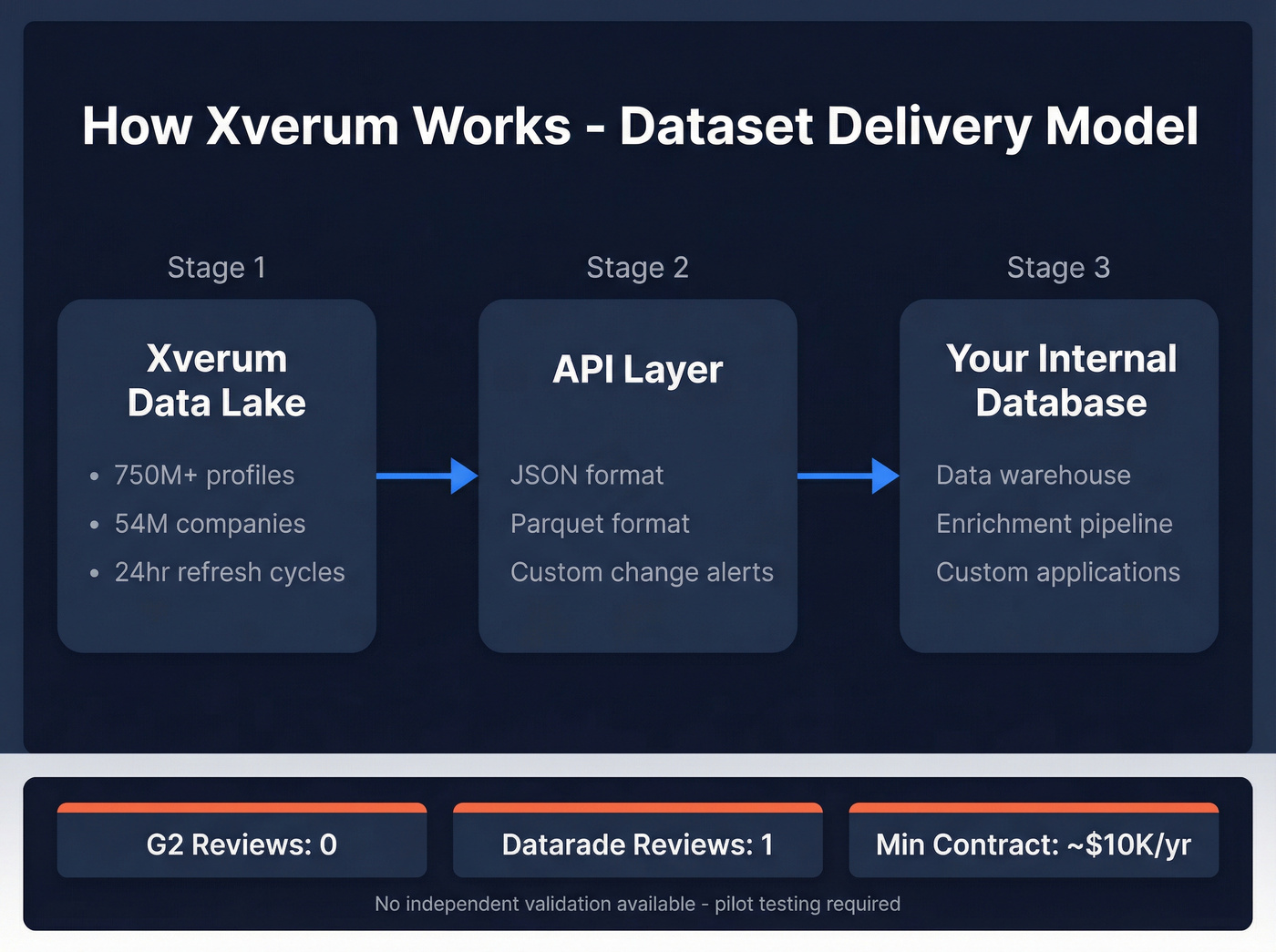
The numbers look strong on paper: 750M+ professional profiles, 54M company profiles, refresh cycles as fast as 24 hours, and a claimed 97-98% accuracy across all fields. Delivery comes in JSON and Parquet formats with custom alerts when profiles change.
Pricing ranges from $2.50 per 1,000 API calls for intent signals up to $100K/year for enterprise access. Firmographic datasets start at $1,000, with about $900/month shown on Datarade. Most teams end up on annual contracts with low five-figure minimums for production access.
Here's the thing: Xverum has zero G2 reviews and a single 5-star review on Datarade. We couldn't find any meaningful Reddit or community discussion either - another signal that this is a niche infrastructure product, not a mainstream sales tool. If you're evaluating Xverum, you're trusting vendor claims until you run a paid pilot yourself.

Xverum asks you to trust vendor claims with zero independent reviews. Apollo users report 32-38% bounce rates in the wild. Prospeo delivers 98% email accuracy through 5-step verification, a 7-day data refresh cycle, and proprietary infrastructure - all independently validated by 15,000+ companies.
Stop choosing between unproven claims and proven decay. Test 75 emails free.
Apollo.io - Powerful Platform, Declining Data
Forget the feature list for a second. The first thing you need to know about Apollo in 2026 is that its data quality is slipping - and the people using it daily are saying so loudly (if you're seeing bounces, start with email bounce rate fundamentals).
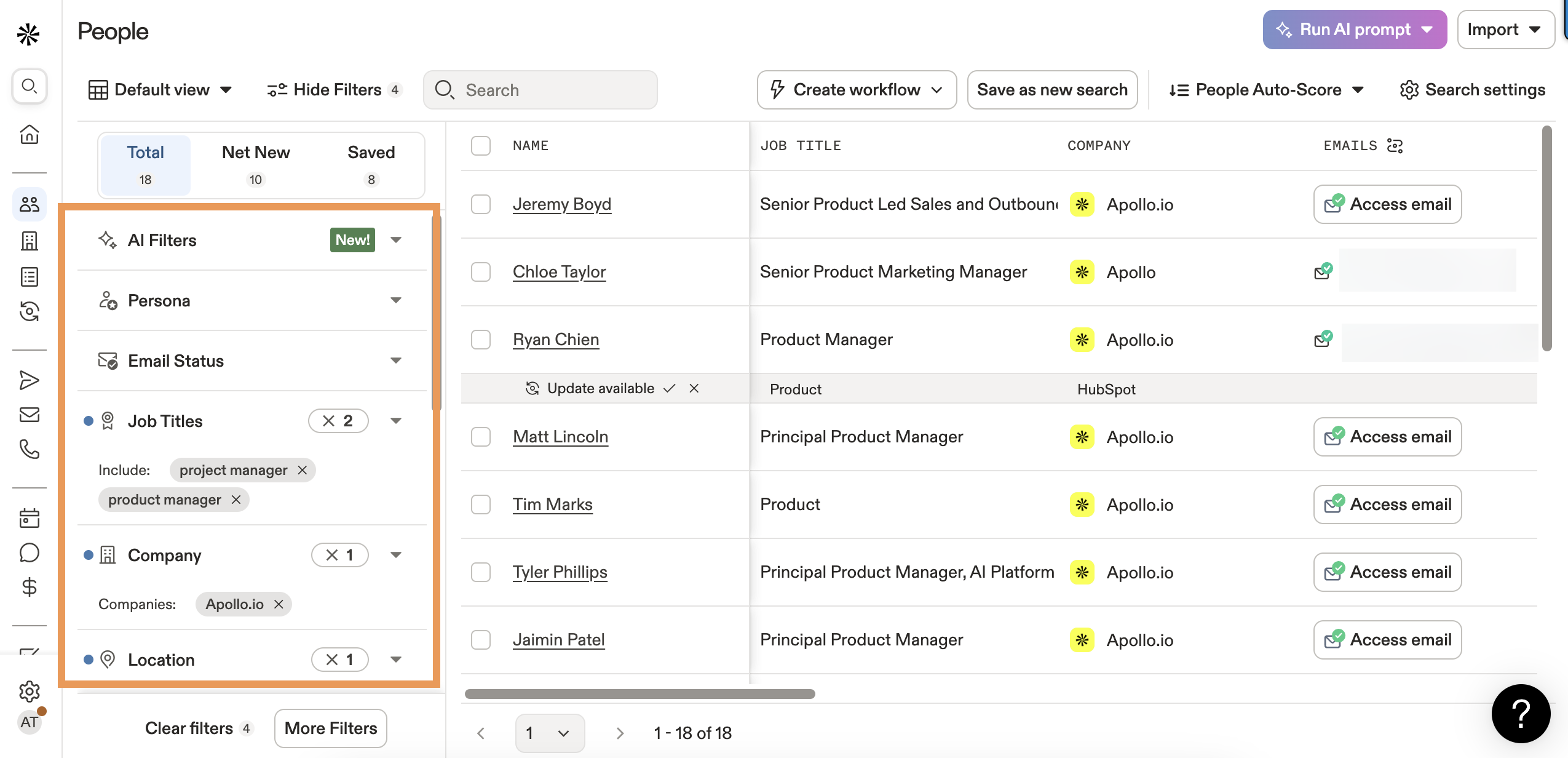
One Reddit user tested Apollo exports against NeverBounce and reported 32-38% bounce rates. Another flagged outdated titles and ghost profiles - people who left companies months ago still showing as current. Across reviews and practitioner write-ups, Apollo's email validity typically lands around 75-85% depending on segment, while broader record accuracy gets cited closer to 65-73%.
The platform itself remains solid: 275M+ contacts, a capable sequencer, a built-in dialer, and paid plans from $49-$149/user/month. But the credit system punishes you. Mobile numbers cost 5 credits each, you can't reduce seats until the payment term ends, and the Organization tier requires three users minimum at $119/user/month - $4,284/year for the minimum Organization subscription.
We still think Apollo is the best all-in-one outbound platform for teams that need sequencing baked in. But if your primary need is accurate contact data, the platform is coasting on reputation while the underlying data erodes (see our guide to sales prospecting databases if you're comparing options).
The Data Quality Gap
This is where the comparison gets uncomfortable.
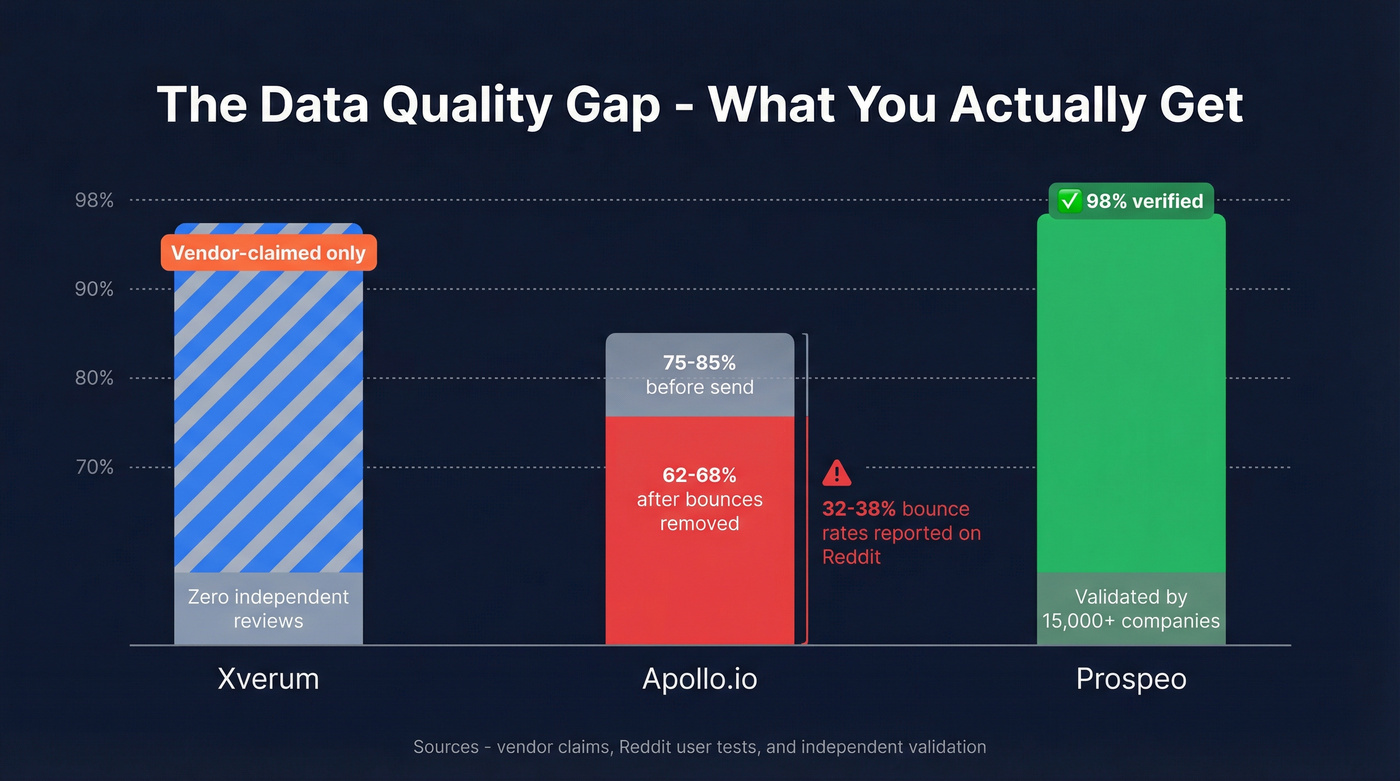
Xverum claims 97-98% accuracy with 300M+ records updated monthly. Apollo's real-world results often land much lower, with bounce rates that r/coldemail users flag at 30%+ in recent tests. But Xverum's accuracy claims have zero independent validation - no third-party benchmarks, no user bake-offs, no G2 reviews corroborating the numbers. Apollo's quality problems are well-documented precisely because lots of people use it daily and talk about it publicly.
You're choosing between proven declining quality and unproven quality claims. In our experience, the only way to resolve that tension is to test both against your own ICP - or pick a tool where accuracy is independently verifiable before you pay (especially if you're running cold email marketing at scale).
If Neither Tool Fits

Let's be honest: most sales teams comparing Xverum vs Apollo.io don't actually need raw dataset infrastructure or a full engagement suite. They need accurate emails and direct dials that don't bounce. That's it (and if you're building lists, this lead generation workflow helps keep the process clean).
Who Should Pick What
Data engineering teams building internal databases should evaluate Xverum, but run a paid pilot first. The thin review footprint means you're trusting vendor claims until you verify them yourself (if you're enriching records internally, see lead enrichment).
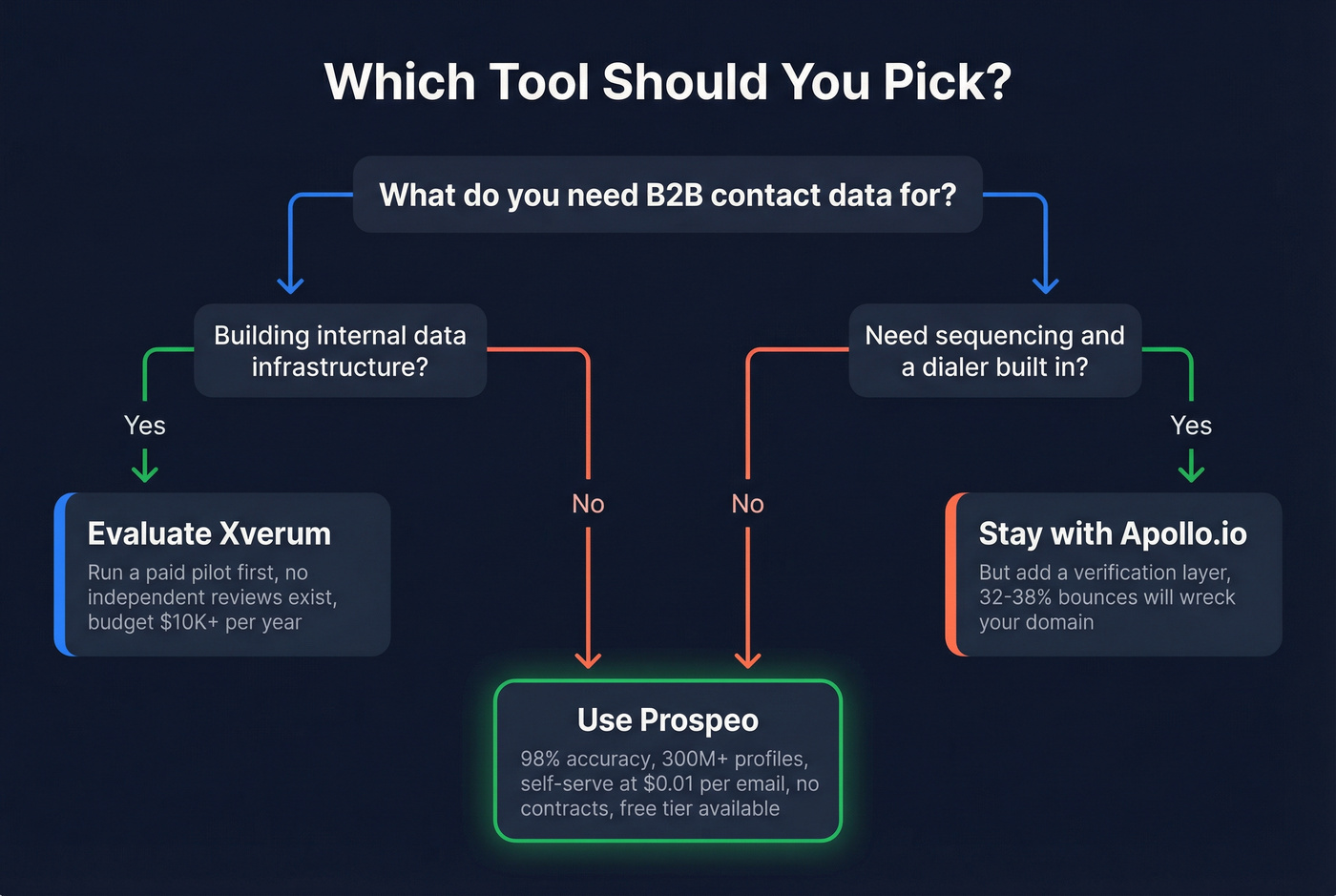
Sales teams already deep in Apollo's sequencer should probably stay, but layer in a verification tool. Those 32-38% bounce rates will tank your domain reputation fast if you're sending at any real volume (use an email deliverability guide to diagnose the downstream impact).
You don't need a $100K dataset contract or Apollo's credit maze to get verified contact data. Prospeo gives you 300M+ profiles, 125M+ verified mobiles, and 30+ search filters - self-serve at $0.01 per email. No annual lock-in. No sales call required.
Get the data both tools promise but neither consistently delivers.
FAQ
Is Xverum a direct competitor to Apollo.io?
No. Xverum sells raw datasets via API for data teams building internal systems. Apollo is a sales engagement platform with a built-in database and sequencer. They serve completely different buyers - comparing them only makes sense when you need B2B contact data but haven't decided on a delivery model yet.
Why does Xverum have no G2 reviews?
Xverum gets purchased as data infrastructure, often through marketplaces like Datarade, rather than as a mainstream SaaS tool. That procurement model generates fewer public reviews. Its single Datarade review and zero G2 presence mean you'll need a direct pilot to validate quality claims.
What's a good alternative if neither Xverum nor Apollo fits?
Prospeo offers 98% email accuracy, 125M+ verified mobiles, and a 7-day refresh cycle - all self-serve with a free tier of 75 emails/month. It's built for sales teams who need accurate, verified data without bulk dataset contracts or Apollo's credit complexity.