

ABM ROI: What It Actually Costs, What You Should Expect, and How to Prove It
You're six months into an ABM program. Engagement dashboards look great - repeat visits, content downloads, positive sales feedback. Then your VP of Finance asks one question: "How much revenue did this generate?" And you don't have an answer.
The average ABM program returns 137% ROI across a survey of 771 marketers. But most teams can't prove ABM value because they're measuring at the lead level, not the account level, and their contact data is too dirty to attribute anything accurately. Here's the real cost model, the ABM formula, and three fixes that actually move the number.
2026 Account-Based Marketing ROI Benchmarks
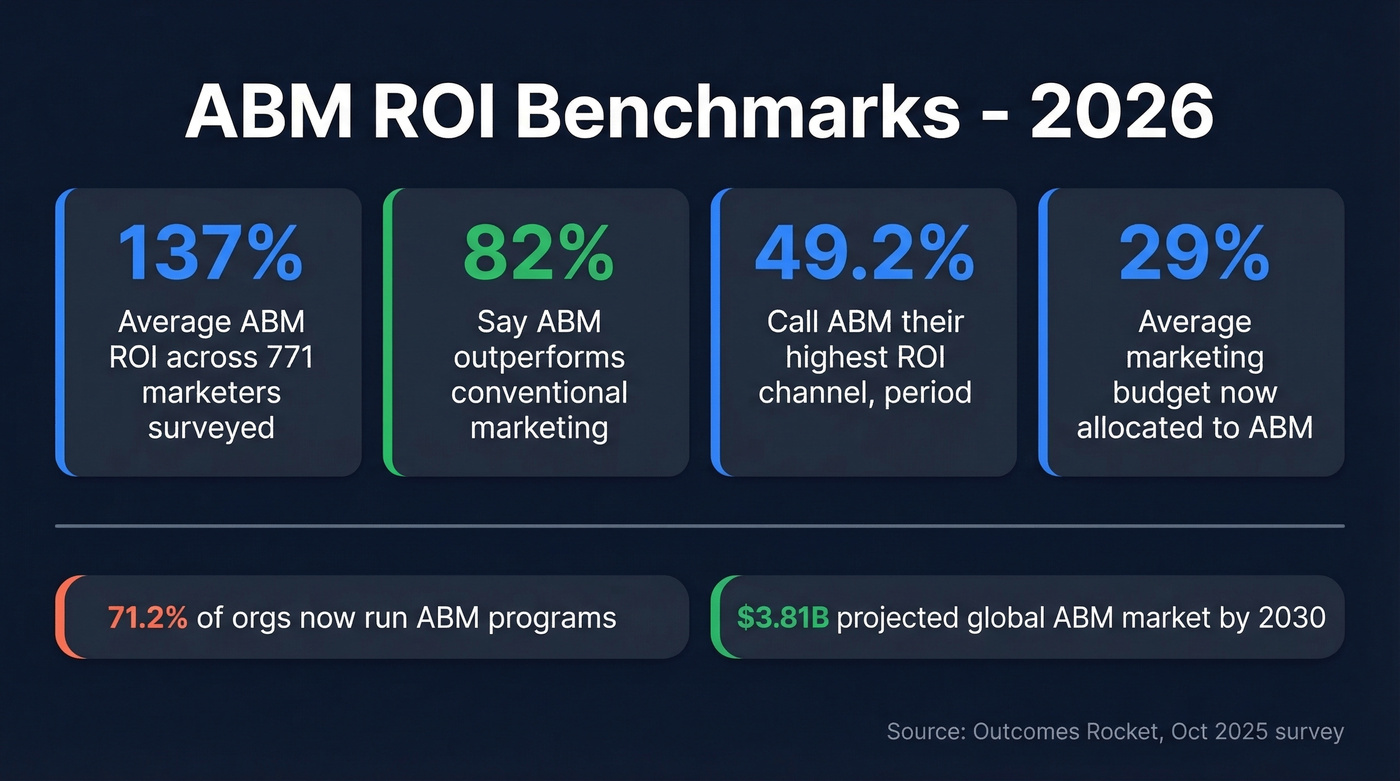
That 137% average comes from an October 2025 survey of 771 marketers - a solid sample. Beyond the average, 82% say ABM outperforms conventional marketing, and 49.2% call it their highest ROI source, period. Companies now allocate 29% of marketing budgets to ABM, and the global ABM market is projected to reach $3.81B by 2030. With 71.2% of organizations now running ABM programs, the question isn't whether to do ABM - it's whether you can prove it's working.
But averages hide the range. Here's what named programs have actually delivered:
| Company | Key Result | Supporting Metric |
|---|---|---|
| CipherHealth | $122.70 revenue per $1 spent | 83% pipeline lift |
| BioCatch | 6x more accounts in pipeline | 41% faster deal velocity |
| Bonterra | 2x win rate | 2.5x deal value |
| Quantexa | 5.2x pipeline boost | 4.53x conversion rate |
| Mfg. (Fortune 500) | 300% ROI in 12 months | Cycle cut 14→10 months |
CipherHealth's $122.70 per dollar spent is the outlier, but even the manufacturing case - a non-SaaS company running digital-first ABM after ditching trade shows - hit 300% ABM program ROI within a year. The point isn't that every program hits these numbers. It's that the ceiling is high when targeting, data, and sales alignment are dialed in.
What ABM Actually Costs
Most major ABM platforms charge five figures annually but don't publish pricing. That makes cost modeling frustrating. Based on publicly discussed ranges and what we've seen in practice, here's a realistic line-item breakdown:
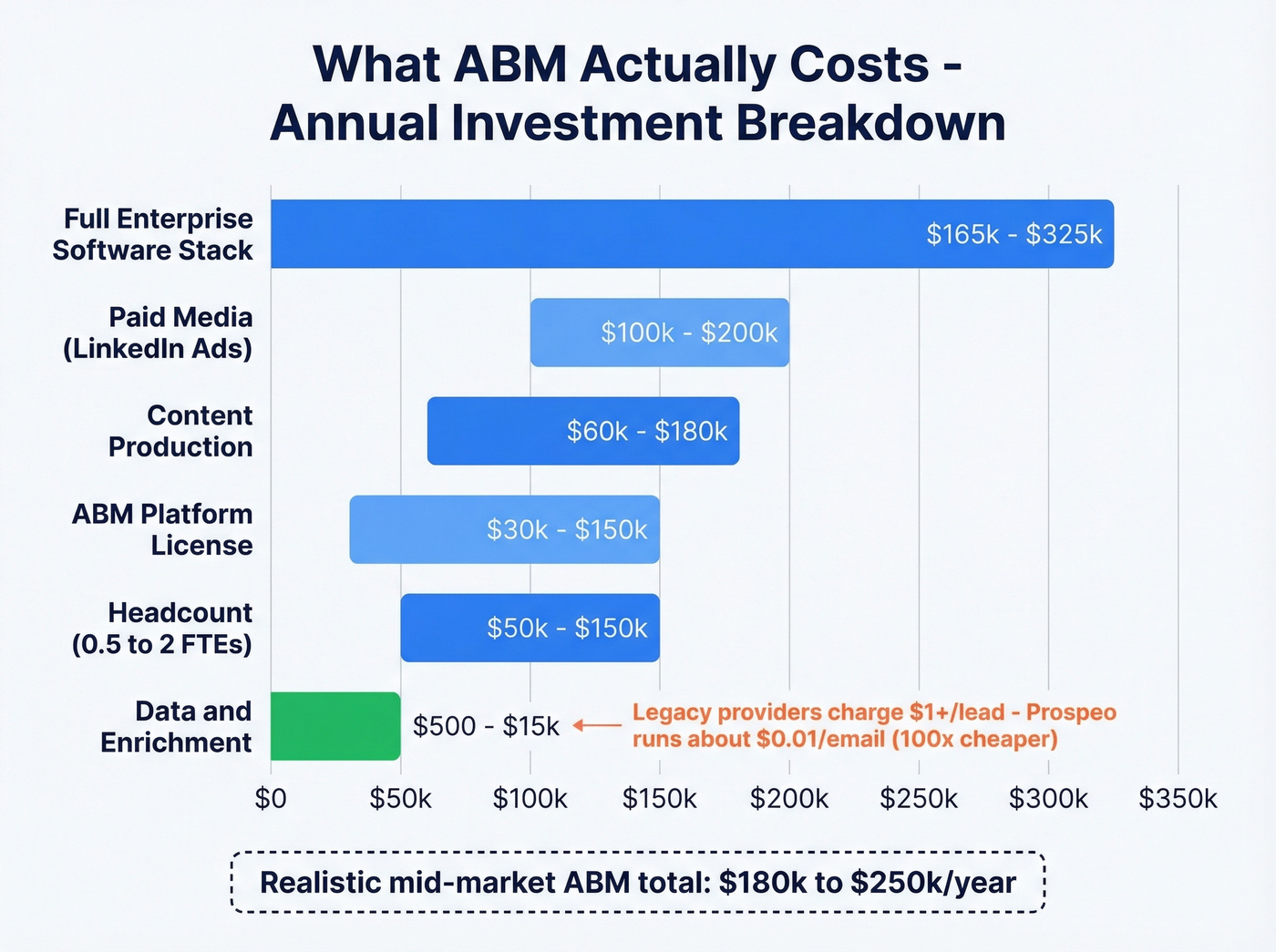
| Cost Category | Annual Range | Notes |
|---|---|---|
| ABM platform license | $30k-$150k+/yr | 6sense, Demandbase, etc. |
| Full enterprise software/licenses stack | $165k-$325k/yr | Full-stack ABM software licensing (commonly cited range) |
| Paid media (LinkedIn) | $100k-$200k/yr | ~$12k/mo at ~$18 CPC is typical |
| Content production | $60k-$180k/yr | $5k-$15k/mo |
| Data & enrichment | $500-$15k/yr | Legacy providers charge $1+/lead |
| Headcount | $50k-$150k/yr | 0.5-2 FTEs, loaded |
That data/enrichment line deserves attention. Legacy providers charge $1/lead or more. Prospeo runs about $0.01/email with 98% accuracy - a 100x cost difference that compounds fast when you're building contact lists across 200+ target accounts. Understanding the true value of account based marketing starts with getting these cost inputs right (and choosing the right data enrichment workflow).
A realistic mid-market ABM investment - one platform, LinkedIn ads, a half-time ABM manager, and content - runs $180k-$250k/year. That's the denominator in your ROI formula.

You just saw it: legacy data providers charge $1+/lead. Prospeo delivers 98% accurate emails at $0.01 each - a 100x cost reduction on the data line of your ABM budget. Across 200 target accounts with 10 contacts each, that's $20 vs $2,000. Lower your ABM denominator, raise your ROI.
Cut your ABM data costs by 100x without sacrificing accuracy.
The ABM Formula for Calculating ROI
The math itself is simple. The hard part is getting clean inputs.
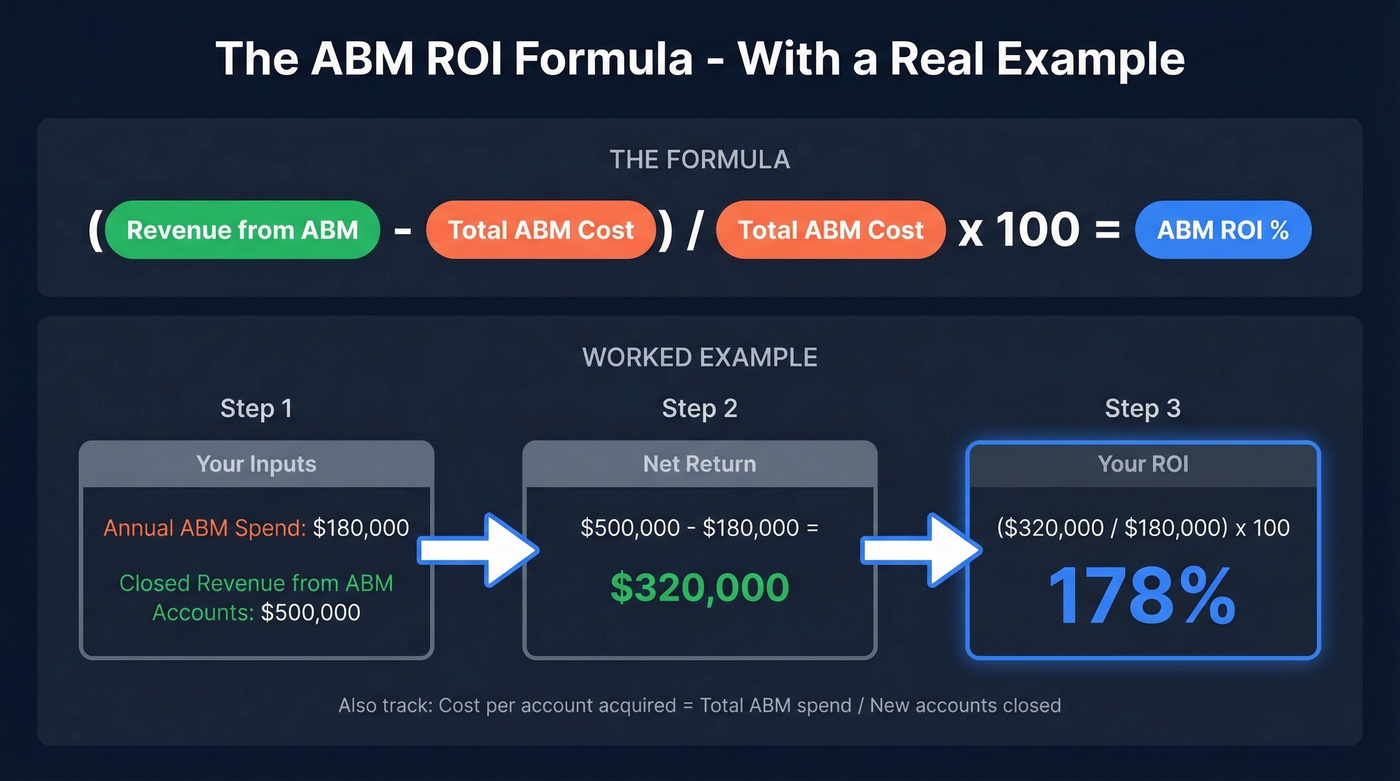
ABM ROI (%) = (Revenue Attributed to ABM − Total ABM Cost) / Total ABM Cost × 100
Say your annual ABM spend is $180k (platform, ads, content, data, partial headcount). Over 12 months, your ABM-influenced pipeline closes $500k in revenue.
- Net return: $500,000 − $180,000 = $320,000
- ROI: ($320,000 / $180,000) × 100 = 178%
That's the closed-revenue version. Many teams also track a pipeline-influenced version - total pipeline generated by ABM-touched accounts, regardless of close status. Both matter. The closed-revenue number is what your CFO cares about. The pipeline-influenced number tells you whether the program is working before deals close.
Also track cost-per-account-acquired: total ABM spend ÷ new accounts closed. If it's lower than your non-ABM CPA, you have a second proof point for your CFO (and a clean way to compare against your broader cost to acquire customer). In Excel: Net profit = Revenue − Cost (=B2-A2), ROI = (Net Profit / Cost) × 100 (=(C2/A2)*100). Three cells, done.
Why ABM ROI Is Hard to Prove
Most attribution systems assign credit at the lead level. That breaks immediately in ABM, where buying committees run 5-13 people deep and sales cycles stretch 6-18 months. Proving ABM value to CEO and CFO stakeholders requires account-level attribution that maps revenue back to specific programs - and most teams simply aren't set up for that (especially without tight RevOps ownership).
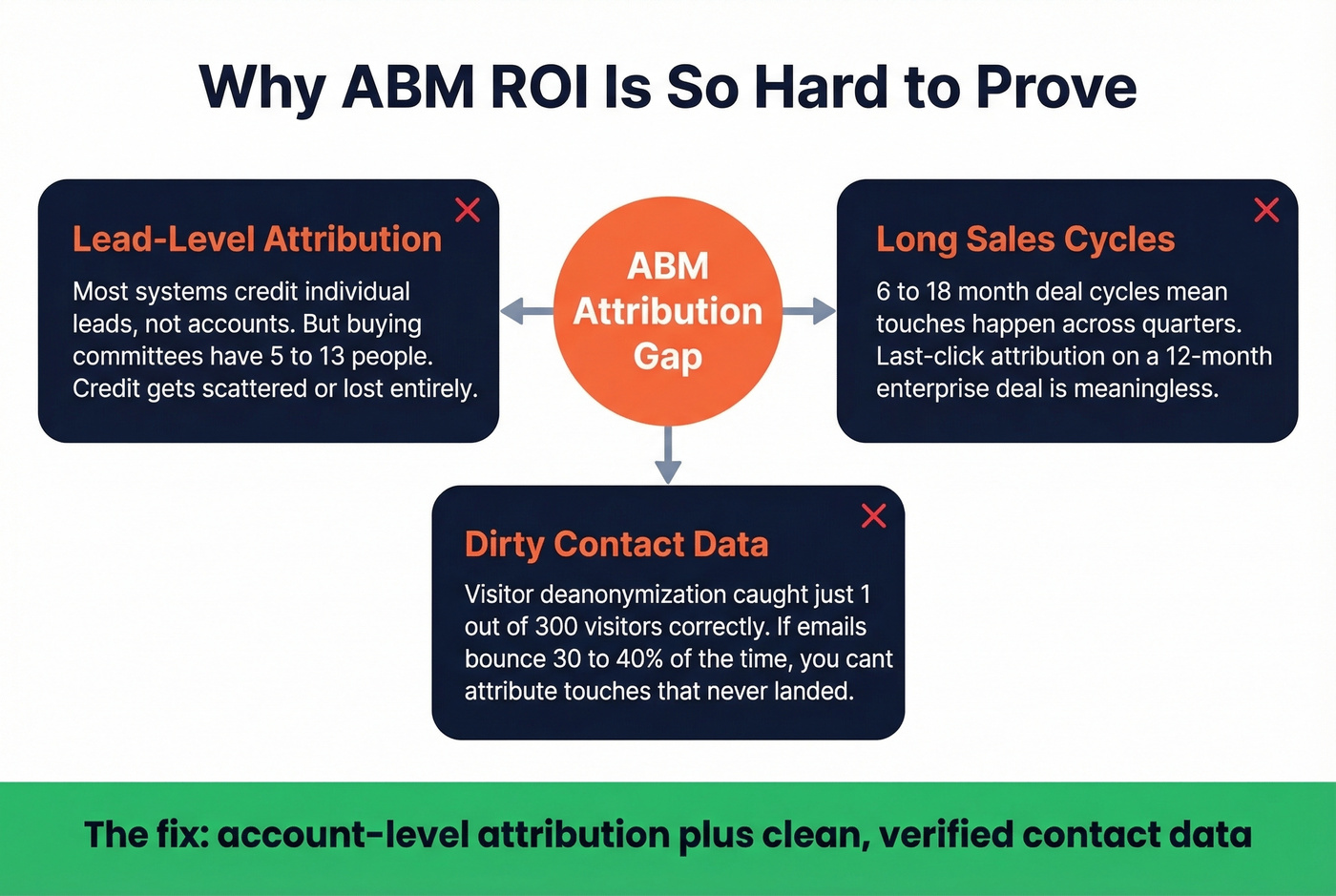
One practitioner on r/LinkedinAds put it bluntly after analyzing $900K+ in ABM pipeline: website visitor deanonymization identified just 1 out of 300 landing page visitors correctly. If you're measuring only form fills, you're missing 80% of the buyer journey.
The r/SaaSMarketing thread captures the frustration perfectly - a team six months into ABM with 200 target accounts, seeing real engagement signals, but unable to isolate ABM's revenue contribution because multiple stakeholders touch multiple channels over months. Your engagement dashboards look great, but your VP of Finance wants a dollar figure. If you're wondering how to prove the value of your ABM efforts, you're not alone - it's the most common challenge ABM practitioners face.
How to Fix Your ABM Metrics and ROI
Here's the contrarian take: everyone obsesses over attribution models. The real problem is your data is too dirty to attribute anything accurately. Fix the inputs before you fix the math.
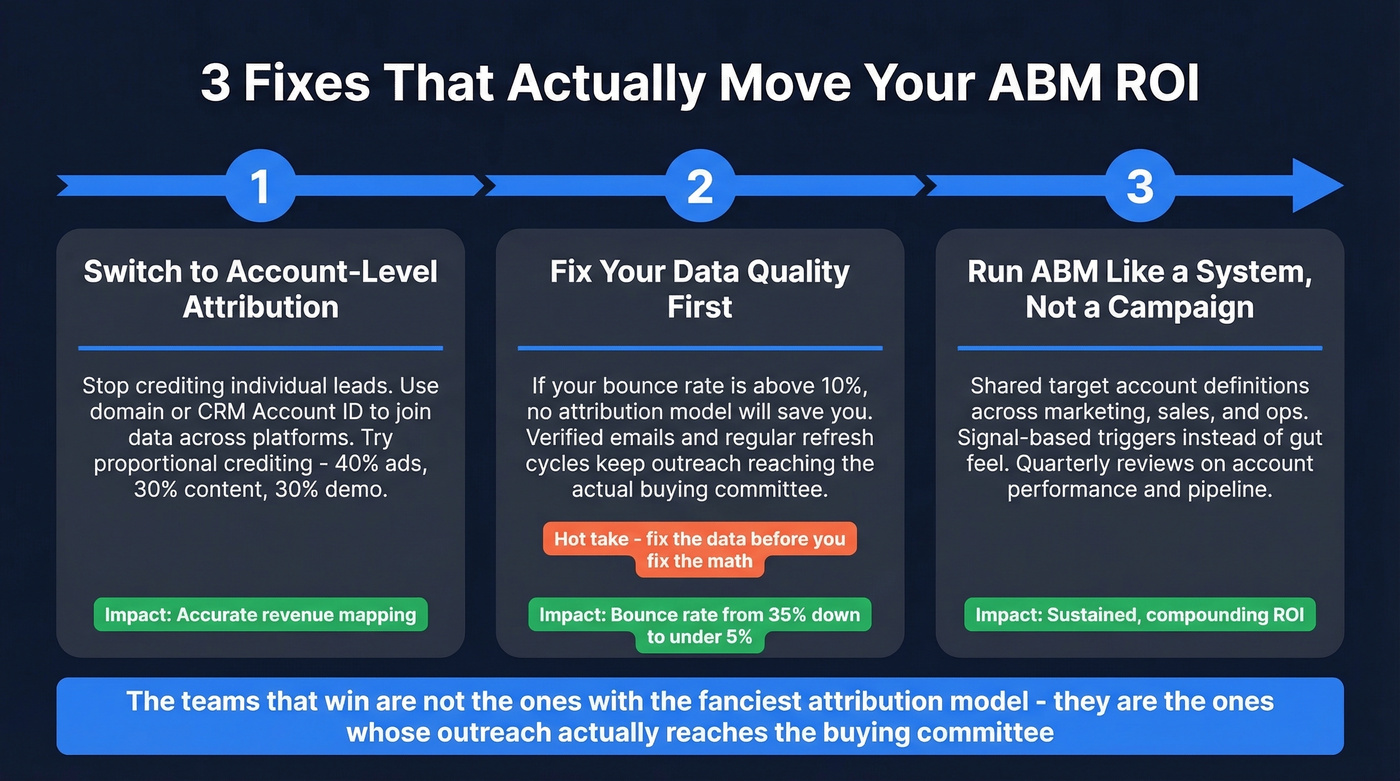
Hot take: If your email bounce rate is above 10%, no attribution model will save you. You're optimizing the dashboard while the engine is misfiring. Fix the data first, and half your attribution problems disappear because outreach actually reaches the buying committee (see email bounce rate benchmarks and fixes).
Switch to Account-Level Attribution
Stop crediting individual leads. Track account engagement scores, pipeline velocity, and influenced pipeline value at the account level. This means consistent account identifiers - domain or CRM Account ID - joining data across every platform. HockeyStack's framework lays out proportional crediting (40% to ads, 30% to content, 30% to demo), which is imperfect but infinitely better than last-click attribution on a 12-month enterprise deal.
Fix Your Data Quality
This is the silent ROI killer. When contact-level ABM lifts meetings by up to 74% and pipeline conversion by up to 118%, dirty data doesn't just waste money - it collapses the entire model. And 31% of marketers say they lack resources to personalize outreach at scale - but personalization is pointless if your contact data bounces a third of the time (your email deliverability is only as good as your list).
We've seen this pattern repeatedly: teams invest $150k+ in ABM platforms, then feed them contact lists that bounce a third of the time. Snyk's results tell the story - bounce rate dropped from 35-40% to under 5%, and AE-sourced pipeline jumped 180% with 200+ new opportunities per month. That's not just a data vendor swap - it's a direct ABM investment ROI lever (and a reason to standardize lead enrichment across your stack).
Run ABM Like a System
Stop running ABM like a campaign. That means shared definitions of "target account" across marketing, sales, and ops. Signal-based engagement triggers instead of gut feel. And a quarterly review cadence where you walk through account performance, planned vs. actual pipeline, and adjust targeting together (a lightweight QBR structure helps). 78.7% of ABM teams already incorporate AI for targeting and personalization - 86.2% expect it to boost ROI over the next year. The teams that win aren't the ones with the fanciest attribution model. They're the ones whose outreach actually reaches the buying committee with the right message at the right time (often by tightening intent based segmentation and list hygiene).
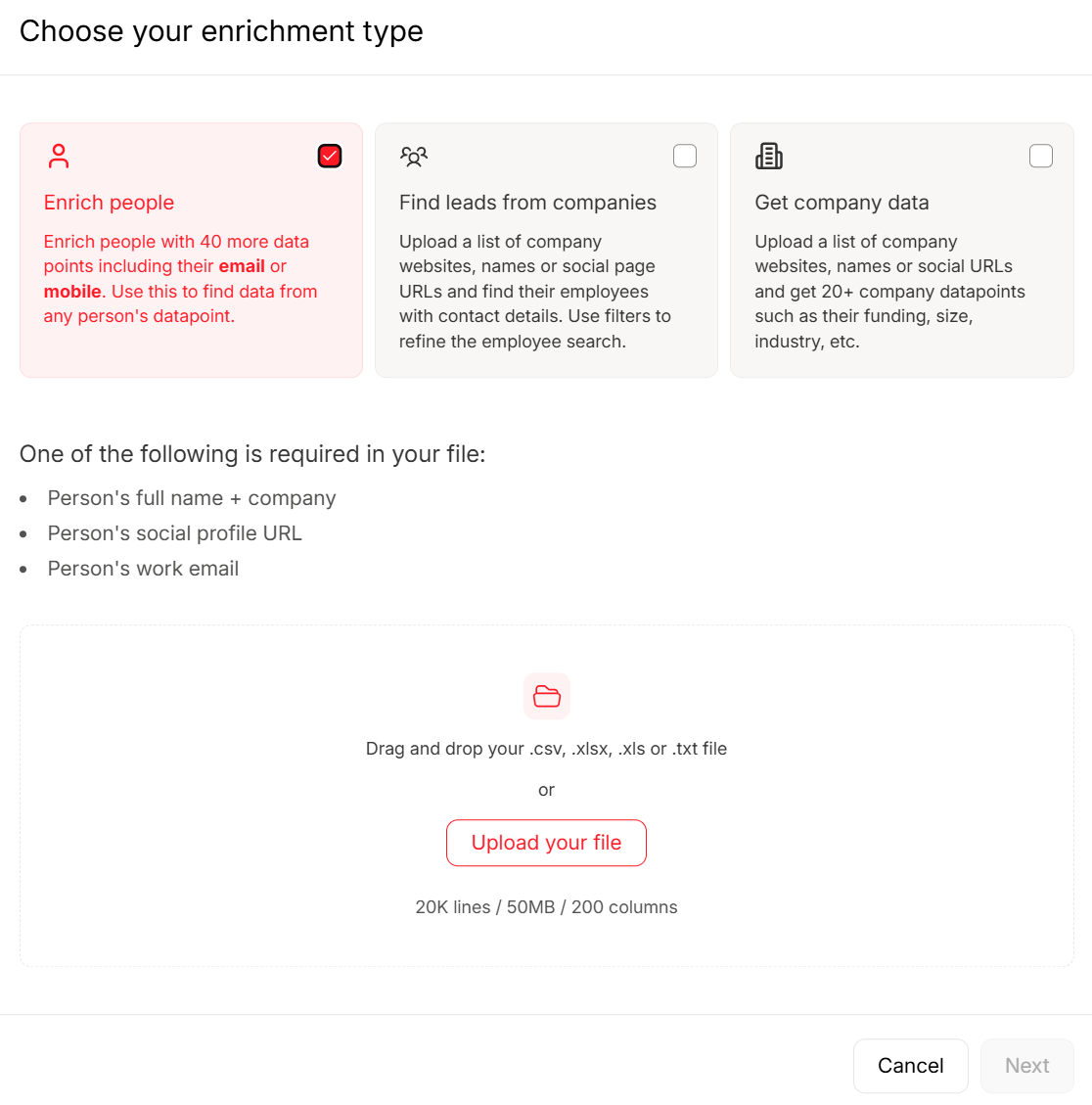
Dirty data collapses ABM attribution. If emails bounce, your outreach never reaches the buying committee - and you can't prove ROI on touches that never landed. Prospeo's 5-step verification and 7-day refresh cycle keep bounce rates under 4%, so every ABM touchpoint actually counts.
Stop optimizing dashboards while your contact data misfires.
FAQ
What is a good ABM ROI?
The average across 771 marketers surveyed is 137%. Top programs like CipherHealth hit $122.70 in revenue per $1 spent. Anything above 100% means your program is profitable - above 200% and you're outperforming most B2B marketing channels. When evaluating account-based marketing ROI, compare your results against both industry benchmarks and your own non-ABM channels.
How long before ABM shows ROI?
Most teams need 6-12 months to see measurable pipeline impact. Enterprise deals with 12+ person buying committees and 6-12 month sales cycles take longer to attribute. Set expectations with leadership early - quarterly reporting on ABM revenue is often premature.
Does data quality affect ABM ROI?
Significantly. A 30-40% email bounce rate inflates your cost-per-opportunity and corrupts attribution data. Keeping contact lists clean with verified emails and a regular refresh cycle ensures outreach actually reaches decision-makers instead of bouncing into the void.
How do I prove ABM value to my CEO or CFO?
Start with the closed-revenue ABM formula: revenue attributed to ABM-touched accounts minus total program cost, divided by total cost. Pair that with supporting metrics - pipeline velocity, win rate lift, and deal size increase compared to non-ABM accounts. Executive stakeholders care less about engagement scores and more about dollars in versus dollars out. Present a quarterly business review with these numbers, and you'll have a clear story for proving ABM value to CEO and CFO stakeholders.