

The ABM Strategy Template That Includes the Numbers Everyone Else Leaves Out
You've seen the VP walk into the all-hands and announce "we're doing ABM this quarter" with nothing behind it but a target account list pulled from a CRM report and a vague plan to "personalize outreach." That's not ABM. That's outbound with a rebrand.
The r/b2bmarketing crowd calls this out constantly - practitioners want operational frameworks with real numbers, not slide decks full of theory. So here's the ABM strategy template with the scoring model, budget math, and decay rules built in.
What Your Template Actually Needs
Your account-based marketing template needs five things. Missing any of them? It's a to-do list, not a strategy.
- Revenue-tied goals with pipeline-per-dollar math
- A scored and tiered account list built on verified data
- Buying committee maps with real contact info for every account
- Budget allocation by tier - not a single line item called "ABM"
- A governance cadence that keeps sales and marketing aligned weekly
Let's build each one.

Your ABM scoring model is worthless without verified contact data behind it. Prospeo gives you 30+ filters - buyer intent across 15,000 Bombora topics, technographics, headcount growth, and funding signals - with data refreshed every 7 days. Build a tiered account list with 98% email accuracy at $0.01 per lead.
Stop building ABM templates on stale data. Start with contacts that actually connect.
Building Your Template Step by Step
Goals & KPIs Tied to Revenue
Start with a dollar target, not a lead target. The benchmark: $10 in pipeline for every $1 in ABM spend - that's the ratio Userpilot hit with a $350K annual budget generating $3.5M in pipeline. PayScale ran a focused program and saw a 500% increase in target account traffic with 6x ROI in seven months.
Contact-level ABM drives 74% more booked meetings and up to 118% more pipeline conversion than account-level-only approaches. Companies that align ABM with account-based analytics see 60% higher win rates. Those numbers justify the investment, but only if you're measuring the right things. Track account engagement score, pipeline velocity, average deal size, and win rate vs. non-ABM deals. If "MQLs generated" is still your primary KPI, you're measuring the wrong funnel.
If you need a clean way to define what “good” looks like across stages, use a funnel metrics framework so your ABM KPIs don’t drift into vanity numbers.
ICP Definition & Account Selection
This is where most templates fall apart. 42% of ABM teams say they can't identify the right buyers, and poor data integration causes 30-40% lower account match rates. Your ICP definition needs three layers: firmographics like industry, revenue, and headcount; technographics covering what they're already running; and intent signals showing what they're actively researching.
If you want a plug-and-play structure for this section, start from an Ideal Customer Profile Template and then layer in intent.
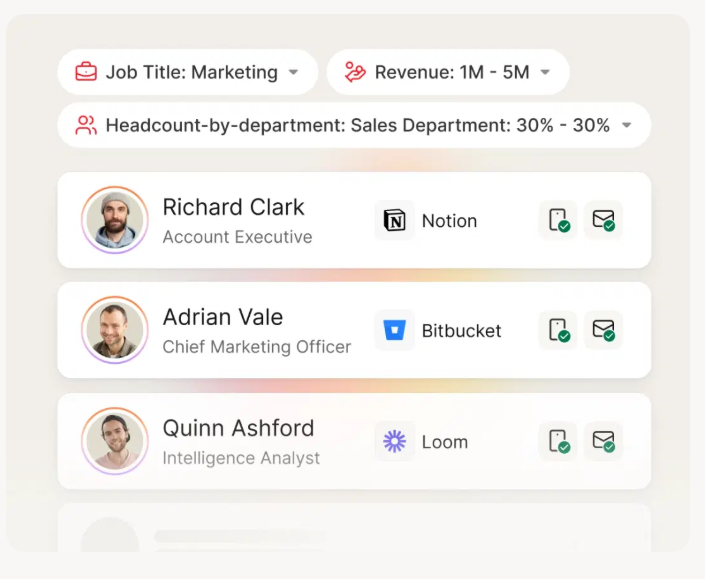
Your data provider matters here more than your platform choice. Prospeo covers 300M+ professional profiles with 30+ search filters - buyer intent powered by 15,000 Bombora topics, technographics, headcount growth, and funding signals. Data refreshes every 7 days, so you're building a target list on current records, not stale ones. Start with filters, export verified contacts, and you've got an ICP-matched account list with 98% email accuracy before you've touched a spreadsheet.
Account Scoring & Tiering
Use a three-pillar scoring model. This framework comes from Single Grain's ABM scoring guide, and it's the most practical model we've tested:
If you want to pressure-test your scoring logic, borrow a few principles from modern lead scoring and adapt them to account-level weighting.
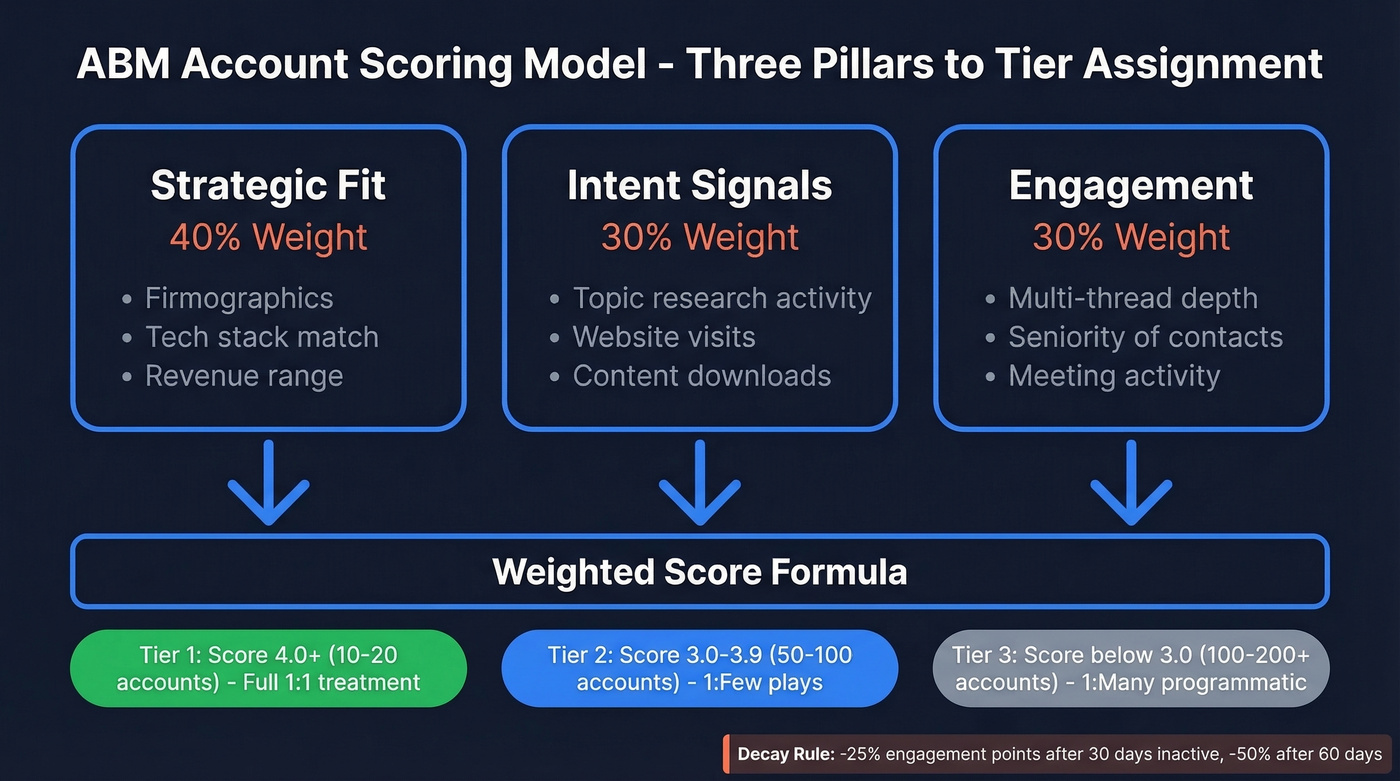
| Pillar | Weight | What It Measures |
|---|---|---|
| Strategic Fit | 40% | Firmographics, tech stack |
| Intent Signals | 30% | Topic research, site visits |
| Engagement | 30% | Multi-thread depth, seniority |
Here's how the math works. An account with Strategic Fit 4.5, Intent 3.8, and Engagement 4.2 scores (4.5 x 0.4) + (3.8 x 0.3) + (4.2 x 0.3) = 4.17 - Tier 1. An account at 3.2, 2.5, 2.0 scores 2.62 - Tier 3. Accounts above 4.0 go into Tier 1 for full 1:1 treatment across your top 10-20 accounts. Tier 2 covers 50-100 accounts with 1:few plays. Tier 3 is 100-200+ accounts running programmatic, 1:many campaigns.
LiveRamp focused on just 15 top-tier accounts and hit a 33% conversion rate in 4 weeks. Proof that a tight, well-scored list beats a bloated one every time.
The rule most templates skip entirely: score decay. Subtract 25% of engagement points after 30 days of inactivity and 50% after 60 days. Without decay, your "hot" account list quietly fills up with accounts that stopped caring two months ago. Build the decay rule into your scoring model from day one, and copy this scoring table into your CRM or spreadsheet to make it operational.
Buying Committee Mapping
Enterprise deals involve 6-10 decision-makers. If you're only emailing one person per account, that's outbound with a company filter - not ABM.
Map every account with these fields: name, role (decision-maker, influencer, end-user, blocker), priority level, engagement status, and contact data source. We've found that teams who map at least four contacts per Tier 1 account before launching any outreach see dramatically better response rates than those who start with one champion and hope for internal referrals.
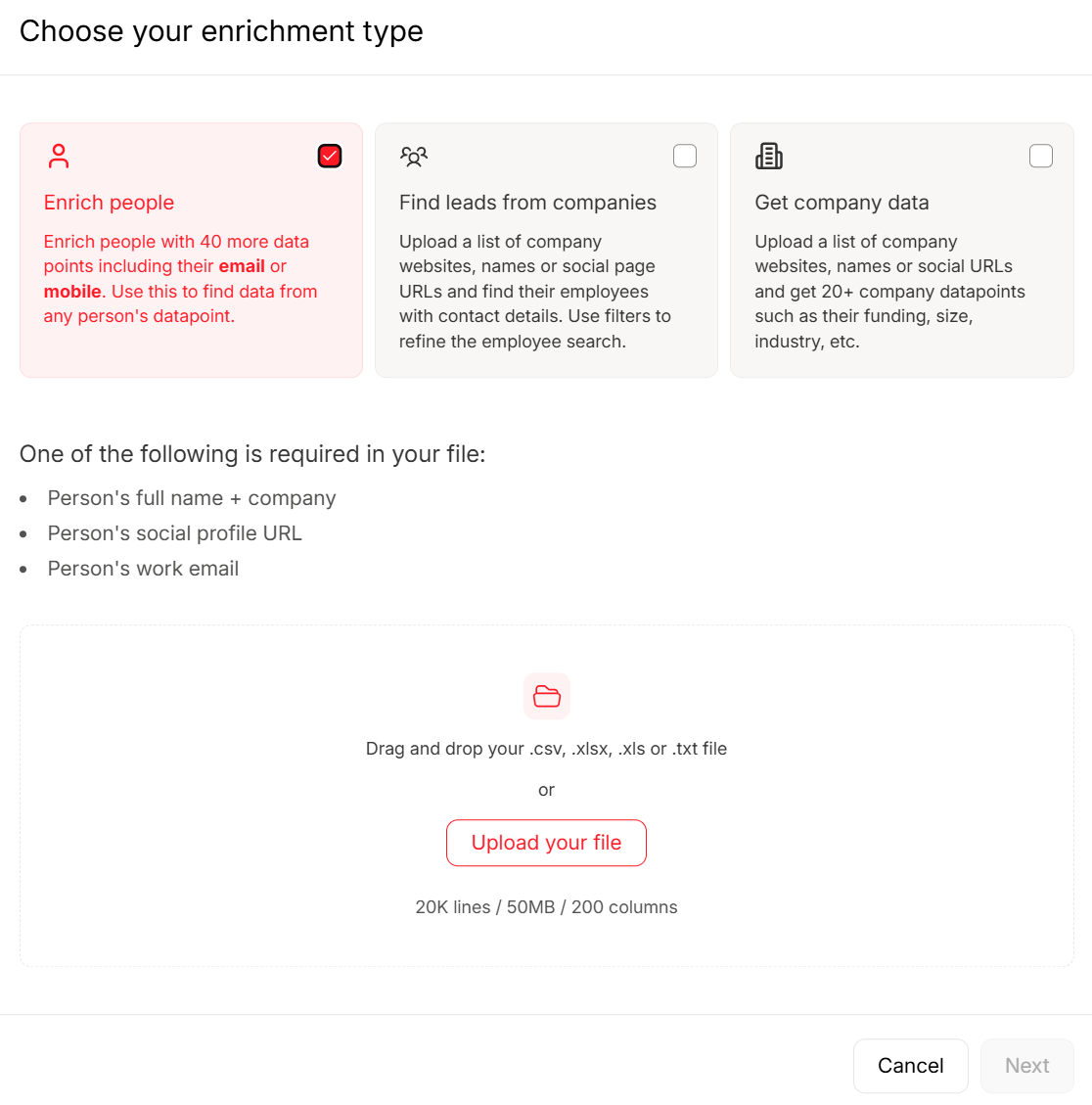
For the contact data layer, upload your account list as a CSV to Prospeo and get back 50+ data points per contact at an 83% match rate - verified emails, direct dials, job titles, seniority. The entire workflow takes minutes, not days of manual research.
If you’re missing fields like direct dials and verified emails, a dedicated lead enrichment workflow is usually faster than manual research.
Channel Orchestration by Tier
ABM isn't "run ads and send emails." It's stage-based orchestration across email, paid ads, direct mail, events, and sales outreach - triggered by where the account sits in your scoring model.
If your sequences are messy across reps and tools, tighten it up with a simple sequence management standard before you scale.
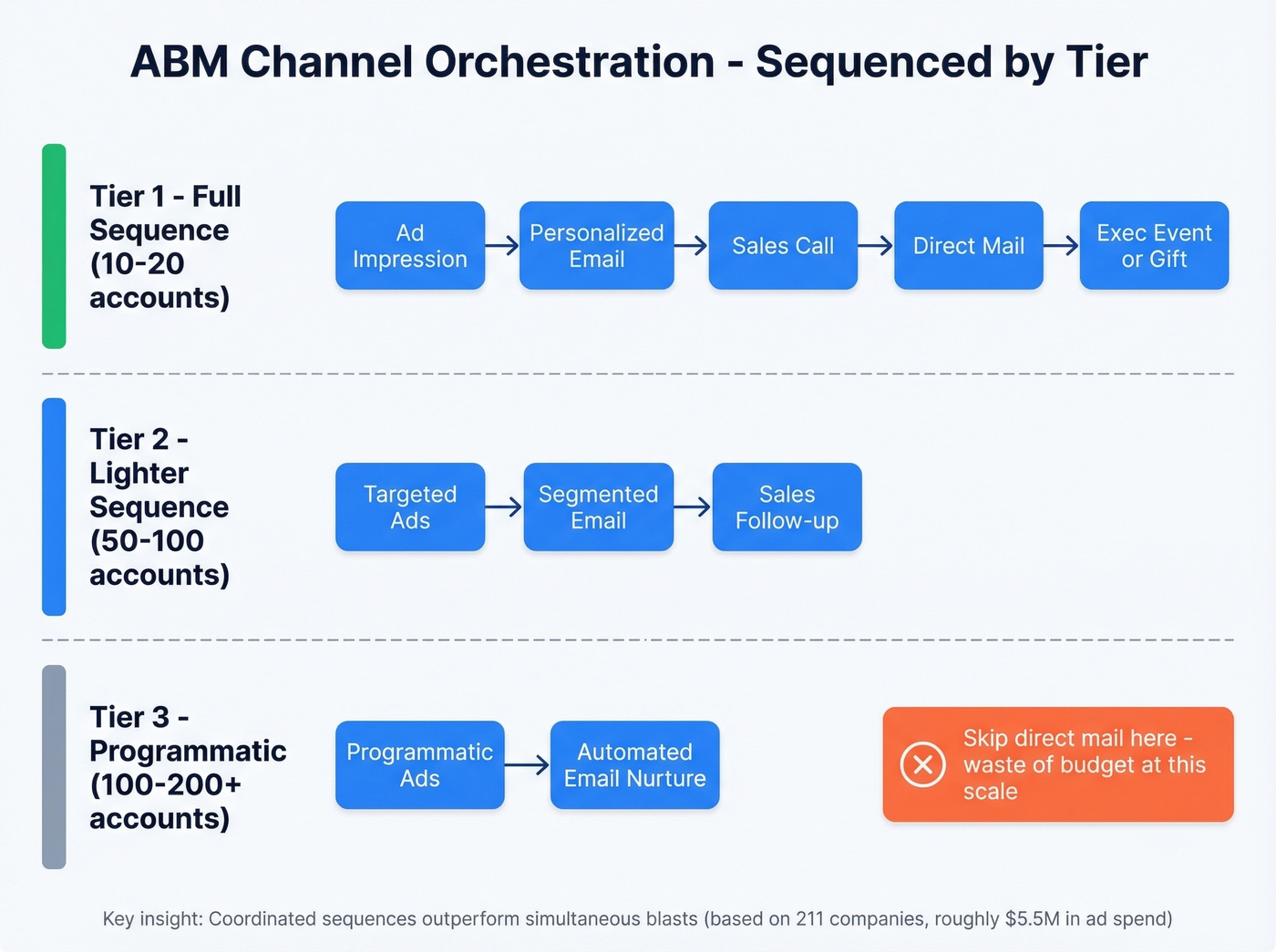
Here's the thing: sequencing matters more than channel selection. ZenABM's benchmark dataset analyzed performance data across 211 companies and about $5.5M in ad spend, and the pattern was clear - coordinated sequences outperform simultaneous blasts. Tier 1 accounts get a coordinated sequence: ad impression, then personalized email, then sales call, then direct mail. Tier 2 gets a lighter version with ads plus email plus sales follow-up. Tier 3 runs programmatic ads and automated email nurture.
Skip the direct mail for Tier 3. It's a waste of budget at that scale. (If you’re still testing it, use a tight direct mail for lead generation playbook and measure lift by tier.)
Budget Allocation by Tier
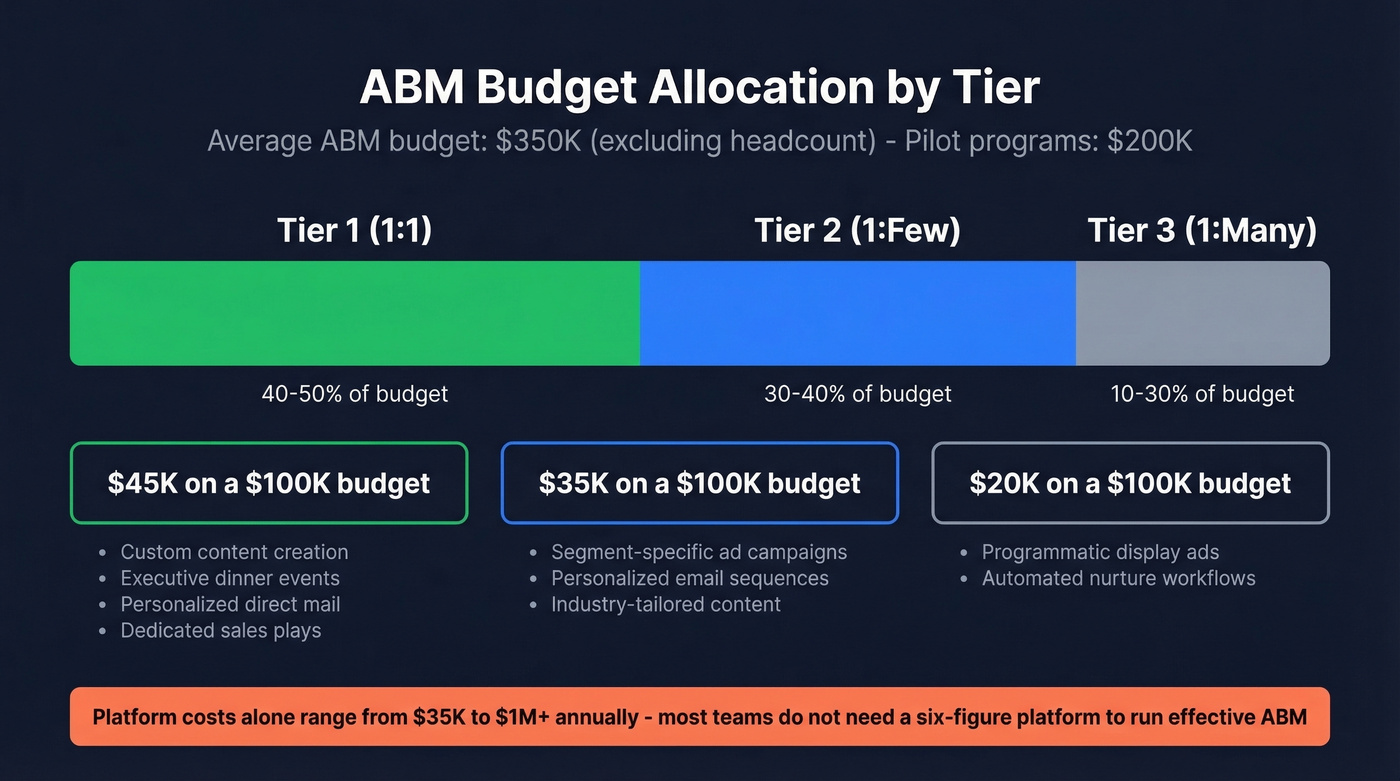
The average ABM budget runs $350K excluding headcount, with pilot programs averaging $200K. Here's how to split it:
| Tier | % of Budget | $100K Example | What This Buys |
|---|---|---|---|
| Tier 1 (1:1) | 40-50% | $45K | Custom content, exec events, direct mail |
| Tier 2 (1:few) | 30-40% | $35K | Segment-specific ads, personalized email |
| Tier 3 (1:many) | 10-30% | $20K | Programmatic ads, automated nurture |
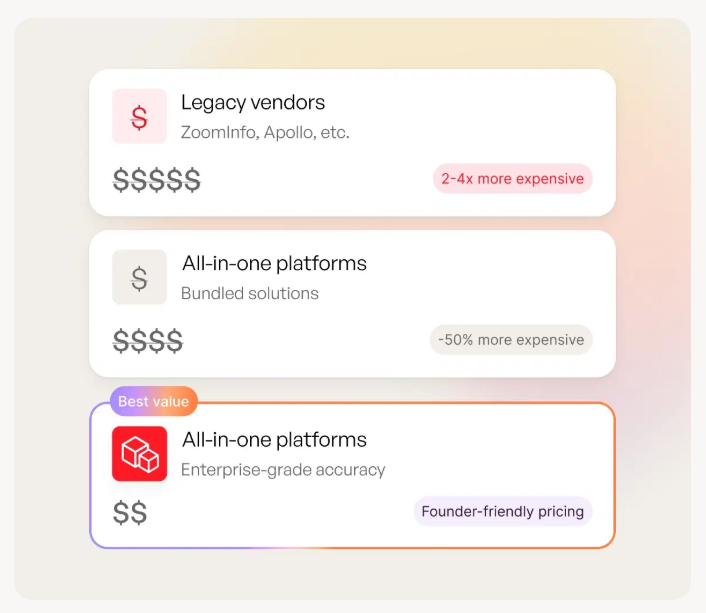
Full-stack ABM platforms like Demandbase, 6sense, and Terminus range from $35K to over $1M annually. Choosing the wrong one wastes 6-12 months of implementation time.
Let's be honest: most teams don't need a six-figure platform to run effective ABM. A CRM, a solid data provider, and this template get you further than a $100K platform with no strategy behind it. The platform doesn't create the strategy - the strategy makes the platform useful.
If you’re evaluating what “CRM” even means in your stack, compare a few examples of a CRM before you commit to a rebuild.
Measurement & Governance
Shift from lead attribution to account-level metrics. Buyers initiate 79% of engagements - your measurement framework needs to capture influence across the entire buying committee, not just who clicked an email first. Track pipeline velocity improvement as a leading indicator; teams running focused ABM programs have seen 20% reductions in sales cycle length.
To keep reporting consistent, anchor your dashboard on a few pipeline health metrics that sales actually trusts.
Build this governance cadence into your template:
- Weekly: Sales-marketing sync on Tier 1 account activity
- Monthly: Full account review - score changes, tier movements, pipeline progression
- Quarterly: Strategy refresh - ICP criteria, scoring weights, channel mix
Expect early engagement indicators within 90 days. Meaningful pipeline impact takes 6-9 months. The governance cadence is what separates the teams that iterate from the teams that declare ABM "didn't work" after one quarter and go back to spray-and-pray outbound.
Why Your ABM Program Fails
We've seen the same five failure modes kill account-based programs over and over.
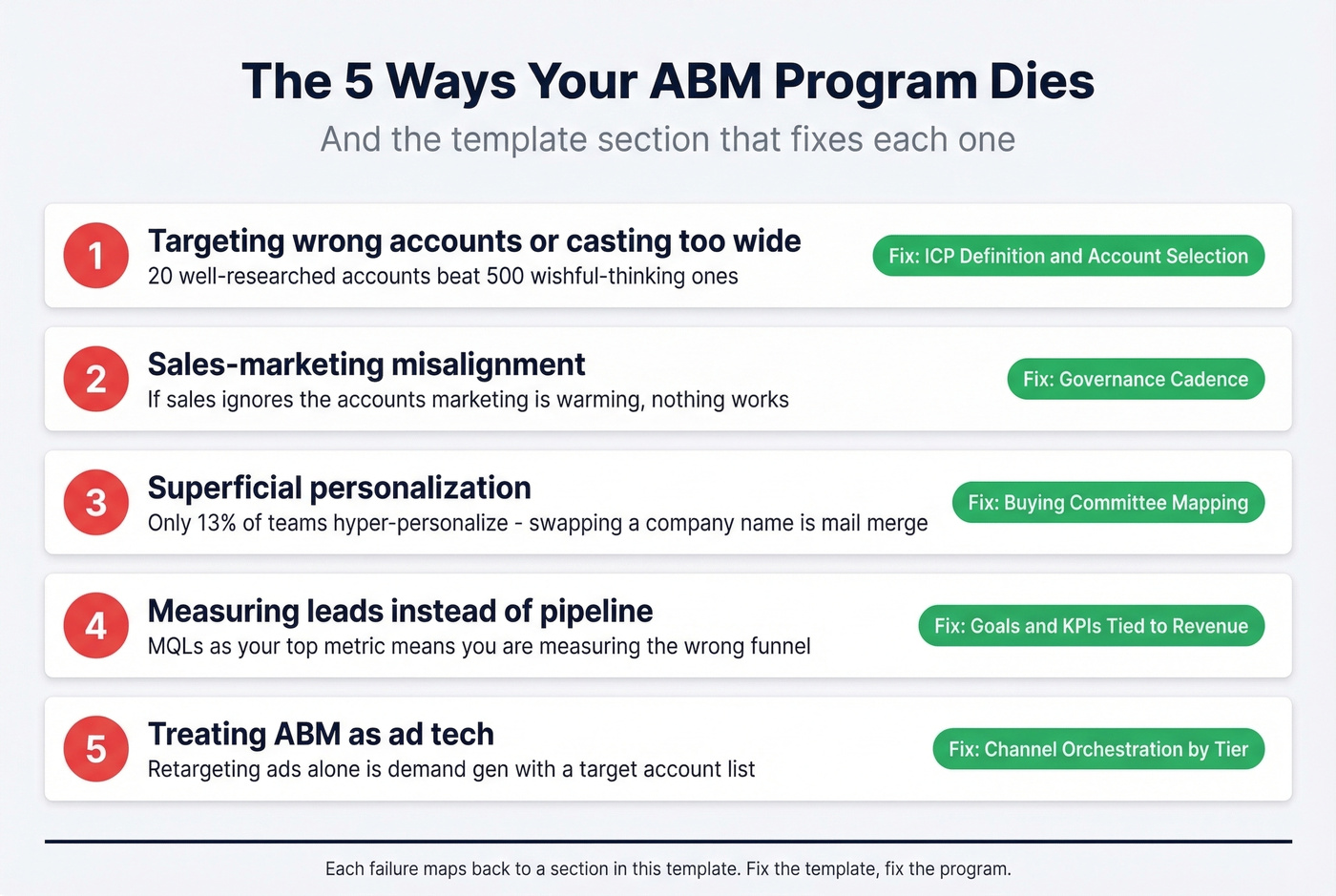
Targeting wrong accounts or casting too wide. A smaller, well-researched list of 20 accounts outperforms a wishful-thinking list of 500. Every time. As one r/b2bmarketing poster put it, most "ABM programs" are just outbound with a company filter.
Sales-marketing misalignment. If sales doesn't know the play, they'll ignore the accounts marketing is warming. Weekly syncs aren't optional - they're the minimum viable governance.
Superficial personalization. Only 13% of teams hyper-personalize. Swapping a company name into a template isn't personalization. It's mail merge. If you need a baseline, start with a personalized outreach checklist and enforce it by tier.
Measuring leads instead of pipeline. If your ABM dashboard shows MQLs as the top metric, you're measuring the wrong thing. Track meetings, pipeline created, and deal velocity.
Treating ABM as ad tech. ABM is orchestration across channels and stakeholders. If your entire "ABM program" is retargeting ads, that's demand gen with a target account list. Each failure maps back to a section in this template. Fix the template, fix the program.
Mapping 6-10 decision-makers per account manually takes days. Upload your ABM account list as a CSV to Prospeo and get back verified emails, direct dials, job titles, and seniority across your entire buying committee - 50+ data points per contact at an 83% match rate.
Map every buying committee in minutes, not weeks.
FAQ
What should an ABM strategy template include?
Five components: revenue-tied goals with pipeline-per-dollar math, a scored and tiered account list, buying committee maps with verified contact data, budget allocation by tier, and a weekly governance cadence. Missing any one of these turns your template into a to-do list.
How many accounts should an ABM program target?
Tier 1: 10-20 accounts with full 1:1 treatment. Tier 2: 50-100 accounts. Tier 3: 100-200+ programmatic. LiveRamp focused on 15 accounts and hit a 33% conversion rate - start tight and expand after proving pipeline impact.
What's a realistic first-year ABM budget?
Pilot programs average $200K excluding headcount. You can start much smaller with a CRM, a data provider, and a structured template. Six-figure platforms aren't a prerequisite for pipeline results.
How long before ABM shows pipeline results?
Early engagement indicators within 90 days. Meaningful pipeline impact takes 6-9 months. The variance comes down to deal cycle length and governance discipline - teams with weekly sales-marketing syncs see results faster.
What's the difference between ABM and outbound?
ABM orchestrates multi-channel, multi-stakeholder engagement across an entire buying committee of 6-10 decision-makers. Outbound is one-to-one sequences to a single contact. If you're only emailing one person per account, that's outbound - not account-based marketing.