

Account Based Marketing for Small Business: The No-BS Playbook
A marketer on r/b2bmarketing recently described their "ABM program": 500 companies lumped into three campaigns, generic nurture workflows, and sales getting "little engagement" on follow-up. That's not ABM. That's batch-and-blast with a fancier label.
Meanwhile, another ABM manager on Reddit already had HubSpot, Salesforce, Cognism, and Amplemarket - and still wasn't sure what adding Demandbase would actually do. If that sounds familiar, you probably don't need another platform. You need a tighter process.
Most ABM advice is written for 50-person marketing teams with six-figure budgets. This is the playbook for what actually works when you're running account based marketing for small business teams - one or two marketers and a CRM you're still figuring out.
Why ABM Works Better for SMBs
Here's the counterintuitive part: smaller companies already lean harder into ABM than big ones. Companies under $100M ARR allocate 32% of their marketing budget to ABM, compared to just 21% for companies over $1B ARR. Focus is your advantage - you can't afford to spray and pray, so you don't.
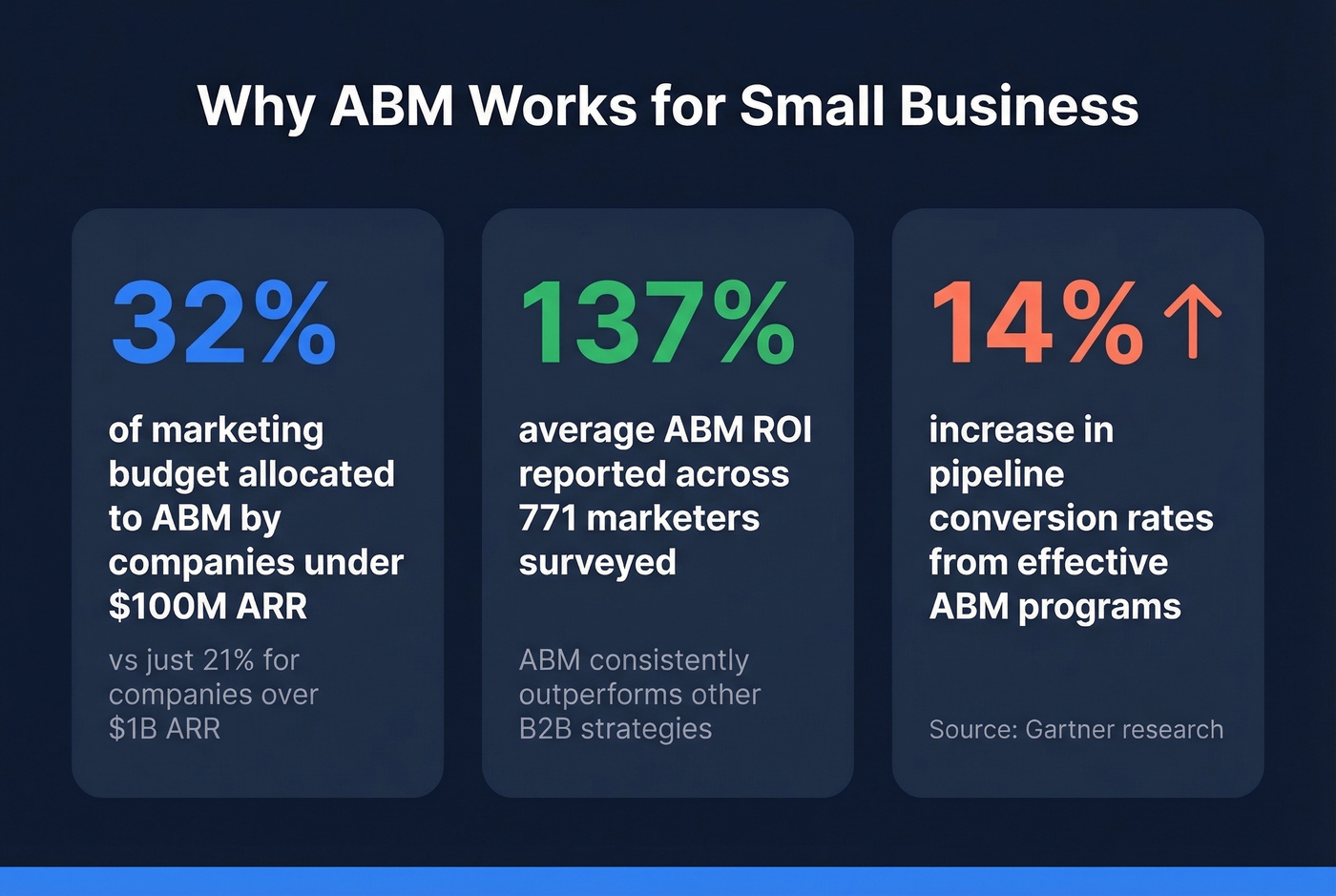
The ROI backs this up. A survey of 771 marketers found an estimated average ABM ROI of 137%, and Gartner's research showed effective ABM increases pipeline conversion rates by up to 14%. If you've ever sat through an SMB budgeting meeting, you've heard the same complaint: "we spend over half our budget on trade shows and can't prove what we got back." ABM redirects that spend toward accounts you've already qualified, with results you can actually trace back to specific outreach.
Here's the thing: if your average deal is under $5K, skip ABM entirely. But if you're selling $15K+ contracts to buying committees, this motion will outperform every other strategy you're running - even with a two-person team.
The 5-Step ABM Framework for SMBs
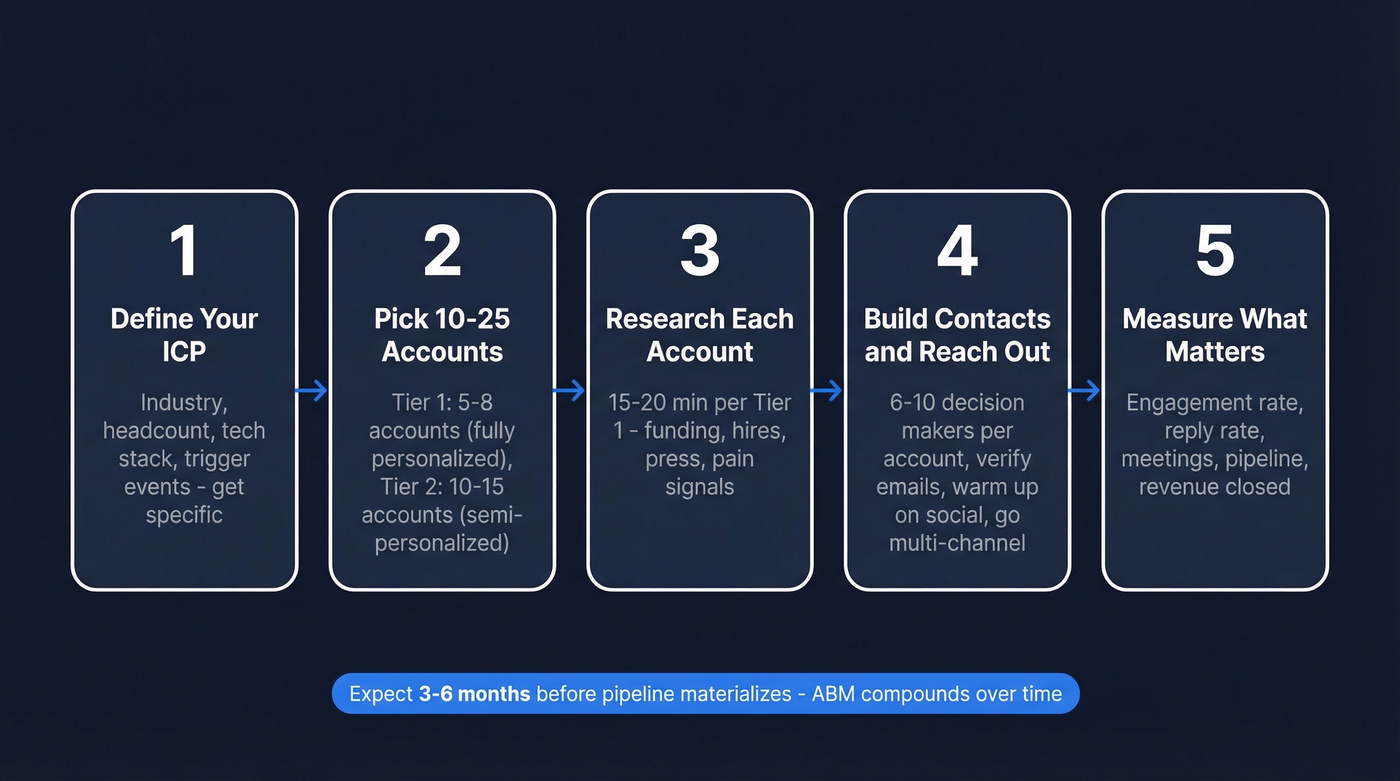
Step 1: Define Your ICP Tightly
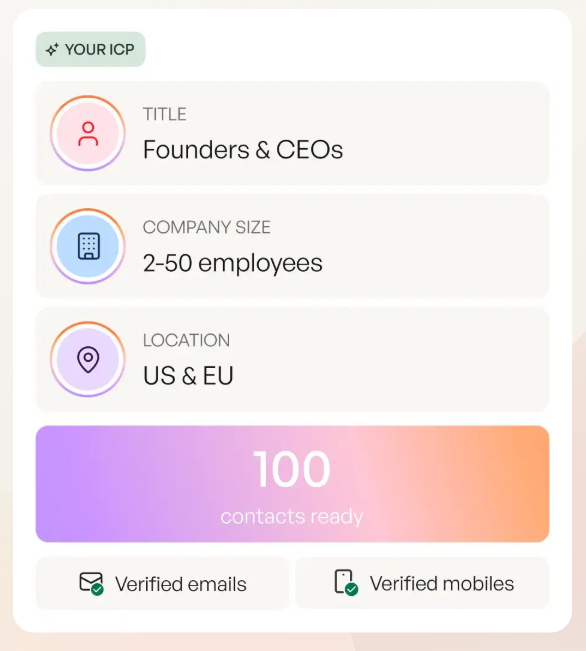
"Companies that could buy our product" isn't an ICP. Get specific: industry, headcount range, tech stack, geography, and the trigger event that makes them a buyer right now. The tighter your ICP, the fewer accounts you need - and the better your messaging gets.
If you need a starting point, use an ICP template and score accounts before you build your list.
Step 2: Pick 10-25 Accounts
Not 500. Start with 10-25.
Tier 1 covers 5-8 accounts with fully personalized outreach. Tier 2 handles 10-15 accounts with semi-personalized messaging. Everything else gets a lighter touch.
We've seen teams burn their first 90 days chasing 200+ accounts instead of 20. Most of your list should sit in Tier 2 - expand only after you've proven the motion works. This constraint is what makes SMB-level ABM so effective: fewer accounts means deeper research per account, which means higher reply rates and better conversations when you do get through.
Step 3: Research Each Account
Spend 15-20 minutes per Tier 1 account. Look at funding rounds, leadership changes, job postings that signal pain points, and press releases. For Tier 2, batch your research and look for common themes. The goal is a specific reason to reach out, not just "they fit the ICP."
If you want to systematize this, build a lightweight process for tracking sales triggers so reps aren’t guessing what changed.
Step 4: Build Verified Contacts and Reach Out
B2B buying committees typically include 6-10 decision-makers. For each target account, you need contacts across at least two or three of those roles - not just the VP you found on a company page. Verify every contact before it enters your sequence. A bounced email after 20 minutes of personalization is pure waste.
Before you send anything to Tier 1 accounts, warm them up. Engage with their content on social, comment on their posts, reference something specific they've published. Then go multi-channel: email as the backbone, social touches for visibility, and even a $15 handwritten note to a CFO. Personalized video via Loom works surprisingly well here - Intercom used Loom prospecting videos and increased cold email reply rates by 19%, and it works even better when you're sending five videos, not five hundred.
To tighten the email side, use a proven B2B cold email sequence and keep an eye on email bounce rate as a leading indicator of list quality.

Step 5: Measure What Matters
Track five KPIs: account engagement rate, reply rate, meetings booked, pipeline generated, and revenue closed. That's it.
If you need a simple way to define “good,” borrow a few funnel metrics and keep reporting consistent across marketing and sales.
Here's what good looks like: one documented campaign targeting 30 accounts generated $300K in revenue with a 37% reply rate - 12 of 30 accounts replied over four months. ABM for SMBs isn't a quick win. It's a compounding one.

Your 25-account ABM pilot needs verified contacts across every buying committee role. Prospeo's 30+ filters - including buyer intent, technographics, and headcount growth - let you build precise contact lists for each target account. 98% email accuracy means your 20 minutes of personalization won't end in a bounce.
Stop wasting personalized outreach on bad data. Start your ABM pilot with contacts that connect.
What ABM Costs for Small Business
Let's kill the myth that this requires enterprise budgets. The math actually favors lean teams.
| Tool | Starting Price | What It Does | SMB Fit |
|---|---|---|---|
| Prospeo | Free / ~$0.01/email | Verified contacts, 98% email accuracy, intent data | Yes |
| Apollo | $49/mo | Database + sequences | Yes |
| Leadfeeder | $99/mo | Website visitor ID | Yes |
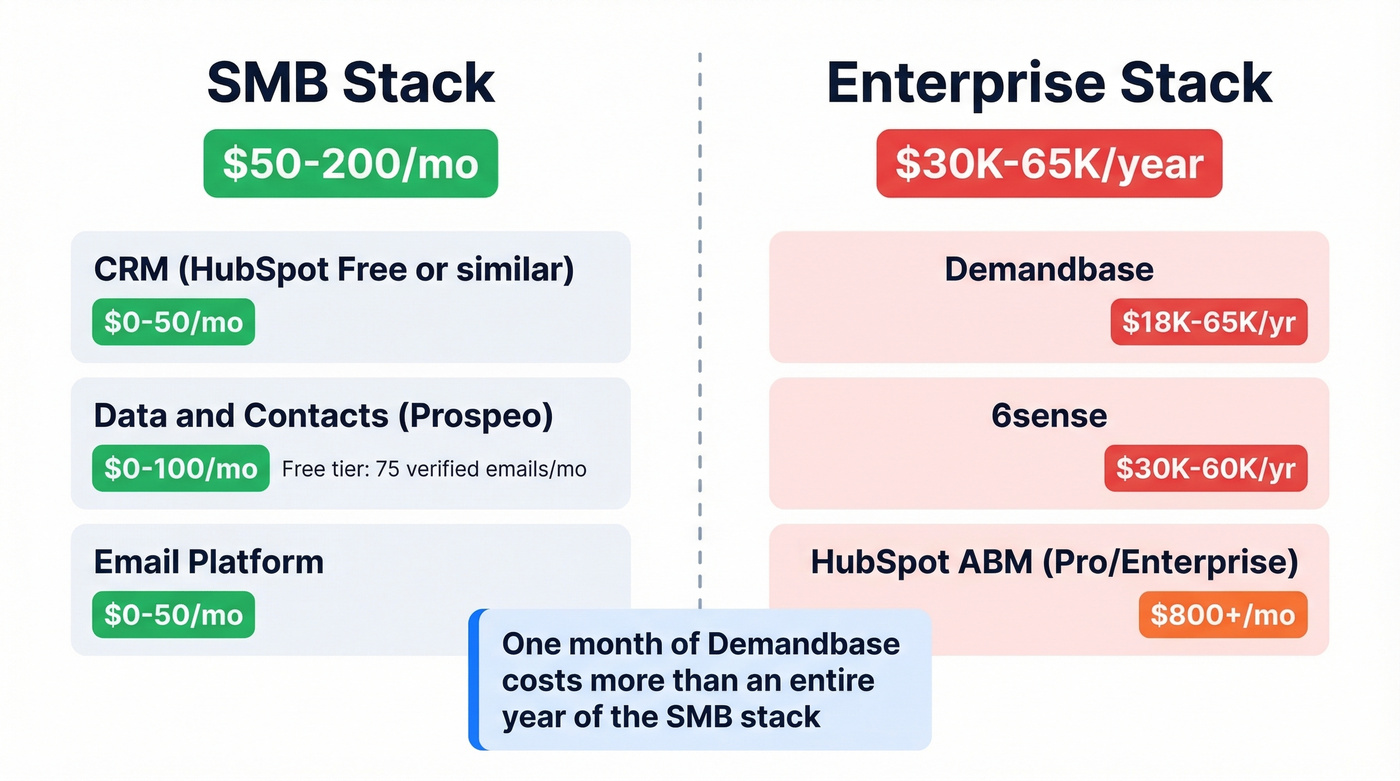
| HubSpot ABM | ~$800/mo+ (Pro/Enterprise) | CRM-native ABM tools | No |
| Demandbase | ~$18K-$65K/yr | Full ABM platform | No |
| 6sense | ~$30K-$60K/yr | Intent + orchestration | No |
One gotcha that catches people off guard: HubSpot's ABM tools aren't available on Free or Starter. You need Professional or Enterprise hubs, and once you're in that tier, the cost stops looking like an SMB tool.
The realistic SMB stack: CRM (free-$50/mo) + data tool for verified contacts ($0-100/mo) + email platform ($0-50/mo) = $50-200/mo total. That's less than one month of Demandbase's cheapest tier.
Prospeo fits this stack well because its free tier gives you 75 verified emails per month - enough to cover a 25-account pilot with multiple contacts per account. Its 30+ search filters, including buyer intent powered by Bombora, technographics, and headcount growth, let you build precisely targeted contact lists without paying for a separate intent data platform. Data refreshes every 7 days, so you're not emailing contacts who changed roles six weeks ago.
If you’re comparing vendors, start with a shortlist of B2B company data providers and validate whether you need enrichment or just verification.
Most ABM tools price out small teams before they even launch. Prospeo's free tier covers a full 25-account pilot - 75 verified emails/month, intent data from 15,000 Bombora topics, and a 7-day data refresh so you're never emailing someone who left six weeks ago. All for $0 to start.
Enterprise ABM data at SMB pricing. Actually, at no pricing to start.
5 ABM Mistakes That Kill Campaigns
Sales never touches the accounts. After one ABM launch, sales only worked half the target accounts - 50% of the budget, wasted. Share the account list with sales before you launch. Weekly syncs, shared ownership.
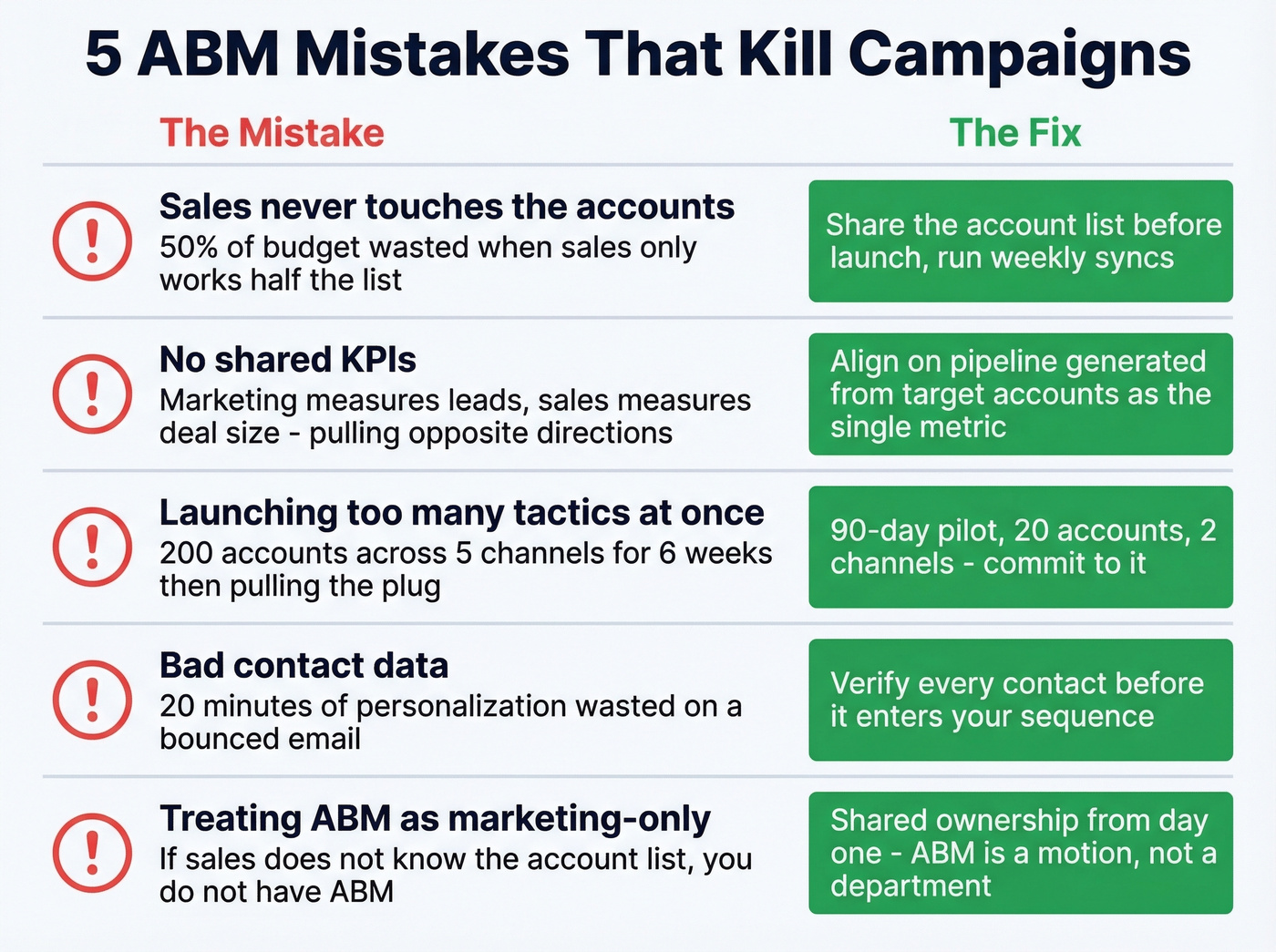
No shared KPIs. If marketing measures lead volume and sales measures deal size, you're pulling in opposite directions. Align on pipeline generated from target accounts as the single metric, whether you're running ABM at a 10-person startup or a Fortune 500.
Launching too many tactics at once. The real problem with most ABM failures isn't strategy - it's patience. Teams blast 200 accounts across five channels, then pull the plug after six weeks when pipeline hasn't materialized. The $300K case study above took four months. In our experience, committing to a 90-day minimum pilot with 20 accounts and two channels beats a 30-day blitz across 200 accounts every single time.
If your sequences are getting messy, tighten sequence management before you add more channels.
Bad contact data. You spent 20 minutes personalizing an email to a CTO. It bounced. Verify every contact before it enters your sequence - this is the easiest mistake to prevent and the most common one we see.
If you’re troubleshooting deliverability, start with an email deliverability guide and fix the basics before you scale volume.
Treating ABM as a marketing-only program. Let's be honest: if your sales team doesn't know which accounts are in the program, you don't have ABM. You have a marketing campaign with a fancy name. The consensus on r/sales is pretty clear on this - alignment isn't optional, it's the whole point.
FAQ
How long before ABM shows results?
Expect three to six months before pipeline materializes. One documented campaign took four months to produce $300K from 30 accounts with a 37% reply rate. Don't pull the plug at six weeks - ABM compounds over time.
What's the smallest team that can run ABM?
One marketer and one salesperson sharing a target account list with weekly syncs. ABM is a motion, not a department - you need alignment between the two roles, not headcount.
When is ABM the wrong choice?
If your average deal is under $5K, your sales cycle is under two weeks, or you're selling to individual consumers. Account based marketing for small business works best when you're selling into buying committees with $15K+ deal sizes and longer sales cycles.