

9 Best AI Lead Generation Tools for 2026 - With Real Pricing
Buyers complete 69% of their purchase journey anonymously before ever talking to a sales rep. Meanwhile, reps spend more than half their working hours hunting for leads, and only 28% of those prospects convert. Contact a prospect within one hour and you're roughly 7x more likely to qualify them. Wait 24 hours and that likelihood drops by 98%.
An AI leads generator closes that gap by automating the sourcing, enrichment, and verification work that eats up rep hours. But the market's flooded with 50+ tools, and most are either repackaged databases with a ChatGPT wrapper or outreach platforms that bolted on a lead finder as an afterthought. We've tested the major players and narrowed it to nine tools actually worth evaluating in 2026, with real pricing so you can compare without sitting through a sales demo.
Our Picks at a Glance
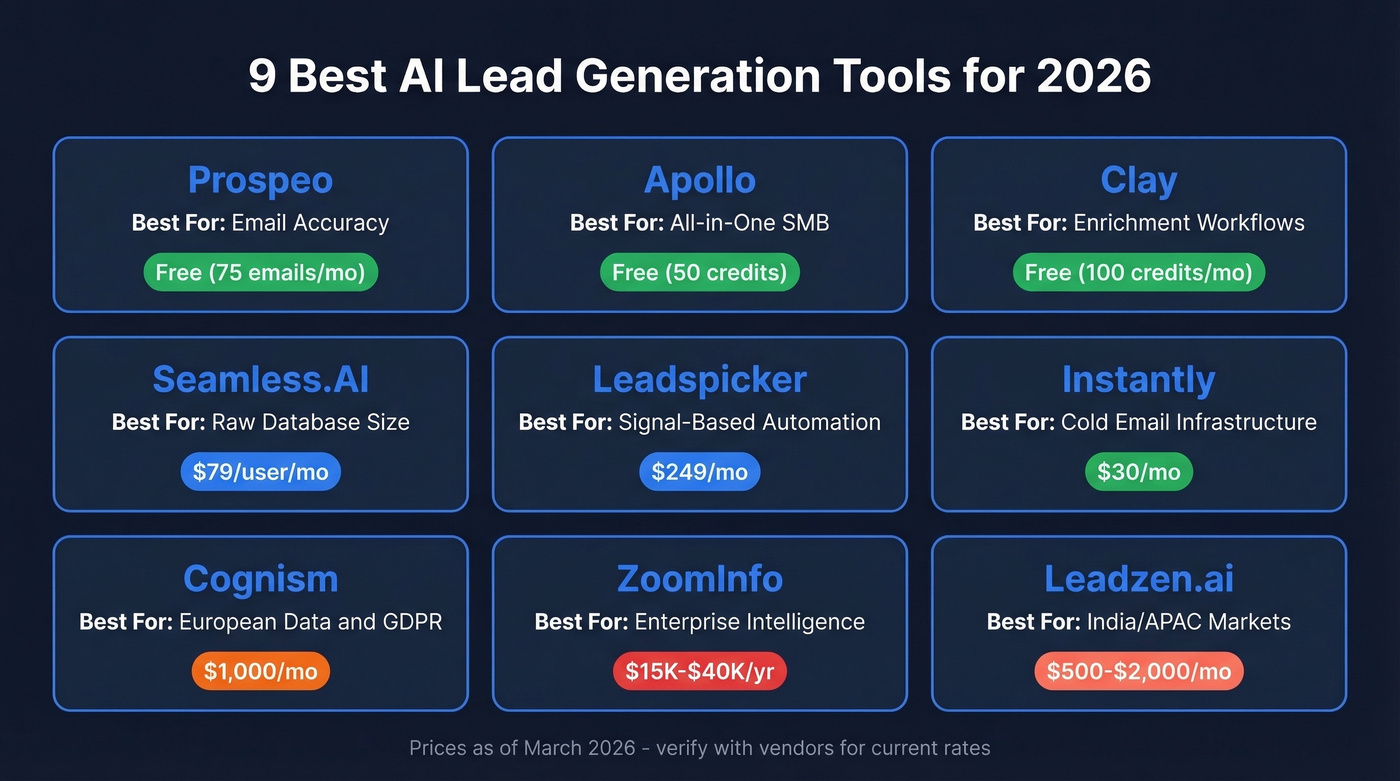
| Tool | Best For | Starting Price |
|---|---|---|
| Prospeo | Email accuracy & data freshness | Free (75 emails/mo) |
| Apollo | All-in-one SMB prospecting | Free (50 credits) |
| Clay | Enrichment workflows | Free (100 credits/mo) |
| Seamless.AI | Raw database size | ~$79/user/mo |
| Leadspicker | Signal-based automation | $249/mo |
| Instantly | Cold email infrastructure | ~$30/mo |
| Cognism | European data & GDPR | ~$1,000/mo |
| ZoomInfo | Enterprise intelligence | ~$15K-$40K/yr |
| Leadzen.ai | India/APAC markets | ~$500-$2,000/mo |
How to Choose an AI Lead Generator
Five criteria separate tools that generate pipeline from tools that generate busywork.
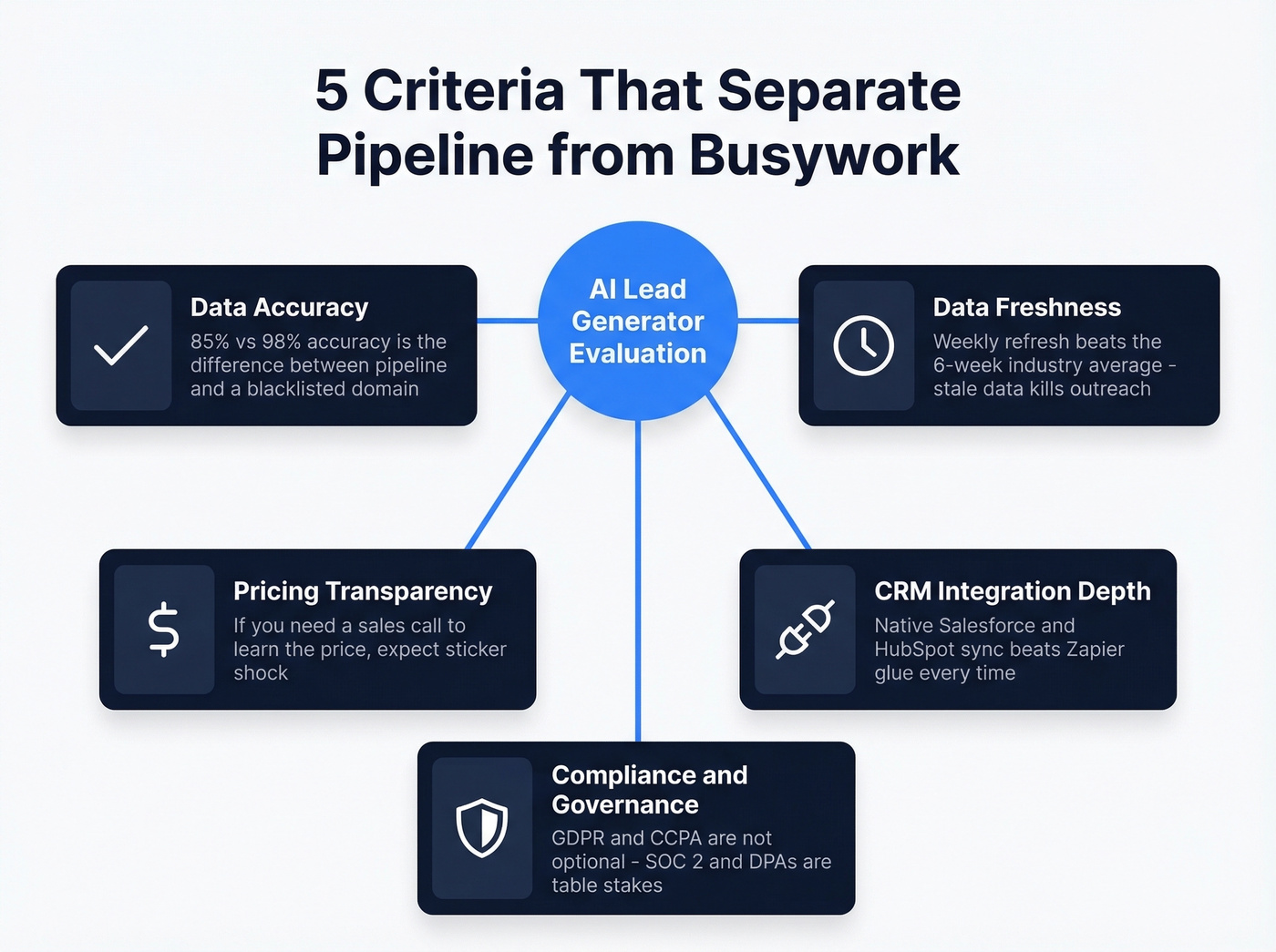
Data accuracy and verification methodology. This is the single most important factor, and the one most buyers underweight. A database with 500M contacts means nothing if 20% of the emails bounce. Ask how the tool verifies data - real-time verification, periodic batch checks, or just scraping and hoping? The difference between 85% and 98% email accuracy is the difference between a healthy sender reputation and a blacklisted domain. AI-powered lead scoring alone reduces qualification time by up to 30% - but only when the underlying data is clean.

Data freshness and refresh cycles. Data decay starts immediately. If your tool refreshes contacts every six weeks - the industry average - you're working with stale data for most of that window. Weekly refresh cycles exist, and they matter more than database size.
Pricing transparency. Credit-based models can be elegant or predatory. The key question: do you know what you'll pay before you talk to sales? Tools that hide pricing behind "Contact Us" gates are usually hiding sticker shock. B2B cost per lead ranges from $100 to $700+ depending on channel and industry, so the tool you choose has a direct impact on unit economics.
CRM and stack integration depth. A tool with great data but no native CRM sync creates manual export-import cycles that kill adoption. Native integrations with Salesforce, HubSpot, and your sequencer save hours per week. Zapier and Make work as glue, but native beats middleware every time. (If you're evaluating workflow options, compare CRM automation tools too.)
Compliance and AI governance. GDPR and CCPA aren't optional. If you're selling into Europe, your data provider needs to demonstrate compliance - SOC 2, published DPAs, opt-out enforcement. As AI handles more of the lead qualification pipeline, human oversight of scoring models and data sourcing becomes a governance requirement, not a nice-to-have. For a deeper checklist, use a GDPR compliant database standard.
9 Best AI Lead Generation Tools for 2026
Prospeo - Best for Email Accuracy
Most AI lead generation tools compete on database size. Prospeo competes on whether the data actually works when you hit send.
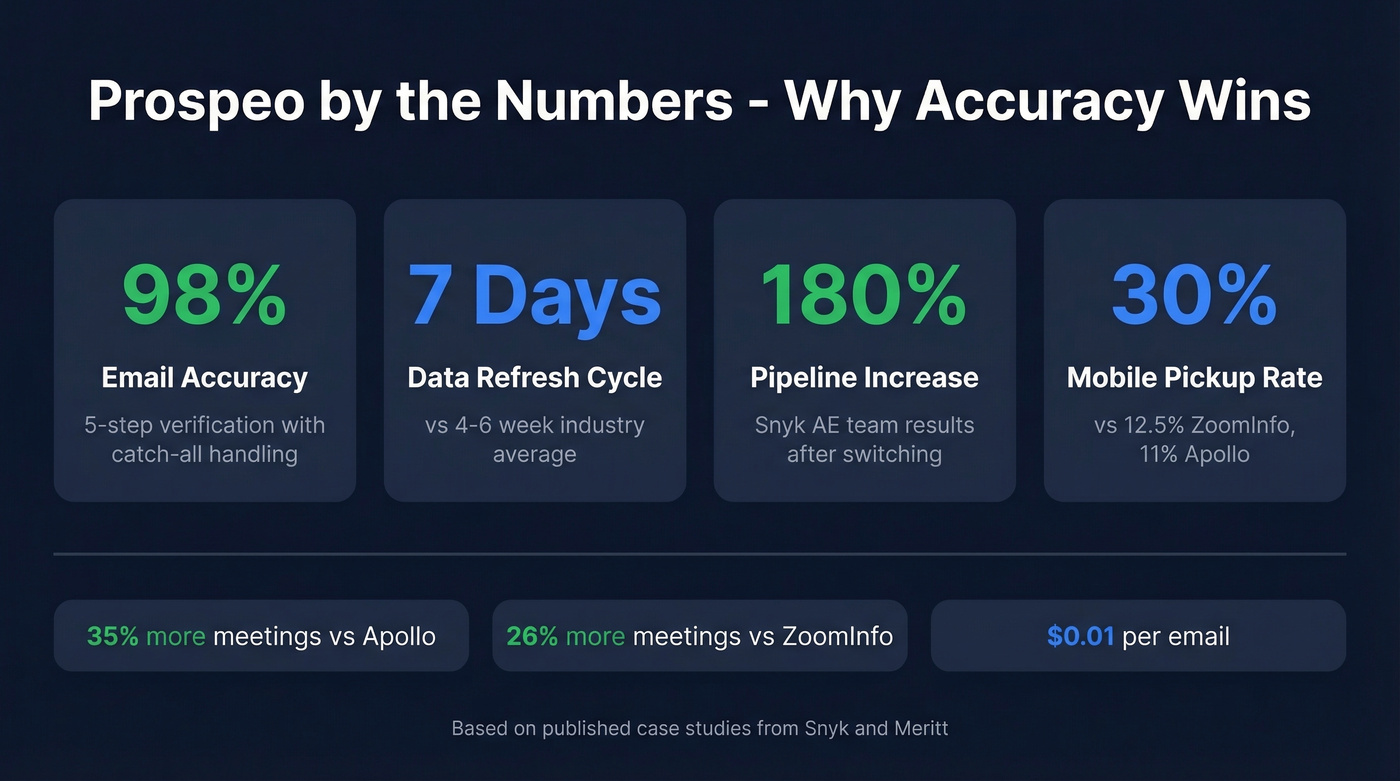
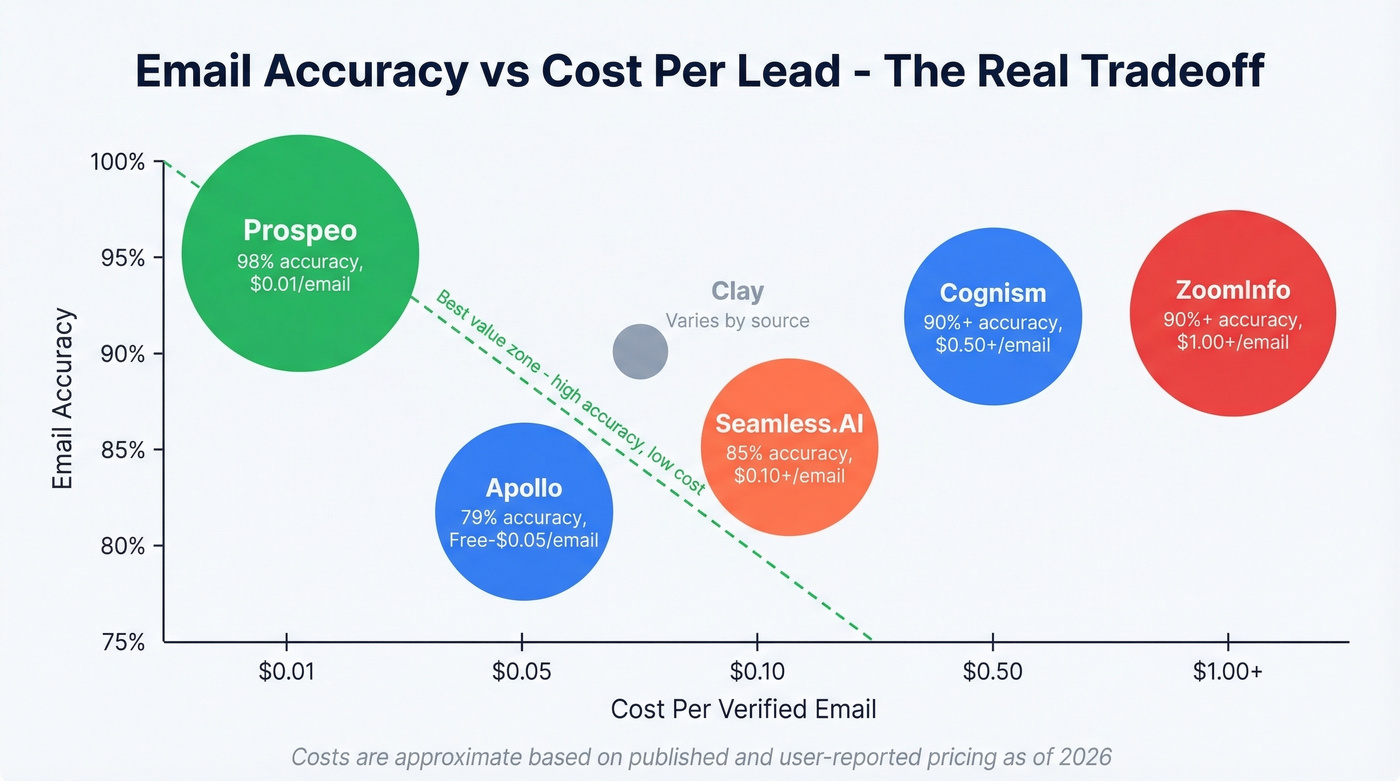
The platform covers 300M+ professional profiles with 143M+ verified emails and 125M+ verified mobile numbers. The headline stat: 98% email accuracy from a proprietary 5-step verification process with catch-all handling, spam-trap removal, and honeypot filtering. But the 7-day data refresh cycle is the real differentiator - most competitors refresh every four to six weeks, which means you're working with stale contacts for the majority of that window.
Search uses 30+ filters including buyer intent via Bombora across 15,000 topics, technographics, job changes, headcount growth, and funding signals. The Chrome extension has 40,000+ users and works across company websites and CRMs. Native integrations cover Salesforce, HubSpot, Smartlead, Instantly, Lemlist, Clay, Zapier, and Make.
Here's what sold us on the accuracy claims: Snyk's 50-person AE team - each prospecting 4-6 hours per week - cut bounce rates from 35-40% to under 5% and saw AE-sourced pipeline jump 180%. Meritt tripled weekly pipeline from $100K to $300K. Teams using Prospeo book 26% more meetings than ZoomInfo users and 35% more than Apollo users. Mobile numbers connect at a 30% pickup rate, compared to 12.5% for ZoomInfo and 11% for Apollo. At $0.01 per email with a free tier of 75 verified emails per month, the economics are hard to argue with.

This article exists because most AI lead generation tools prioritize database size over data quality. Prospeo's 5-step verification delivers 98% email accuracy on a 7-day refresh cycle - so every lead your AI workflows surface is actually reachable. Teams using Prospeo book 35% more meetings than Apollo users.
Stop feeding your AI leads generator stale data. Start with 75 free verified emails.
Apollo - Best All-in-One for SMBs
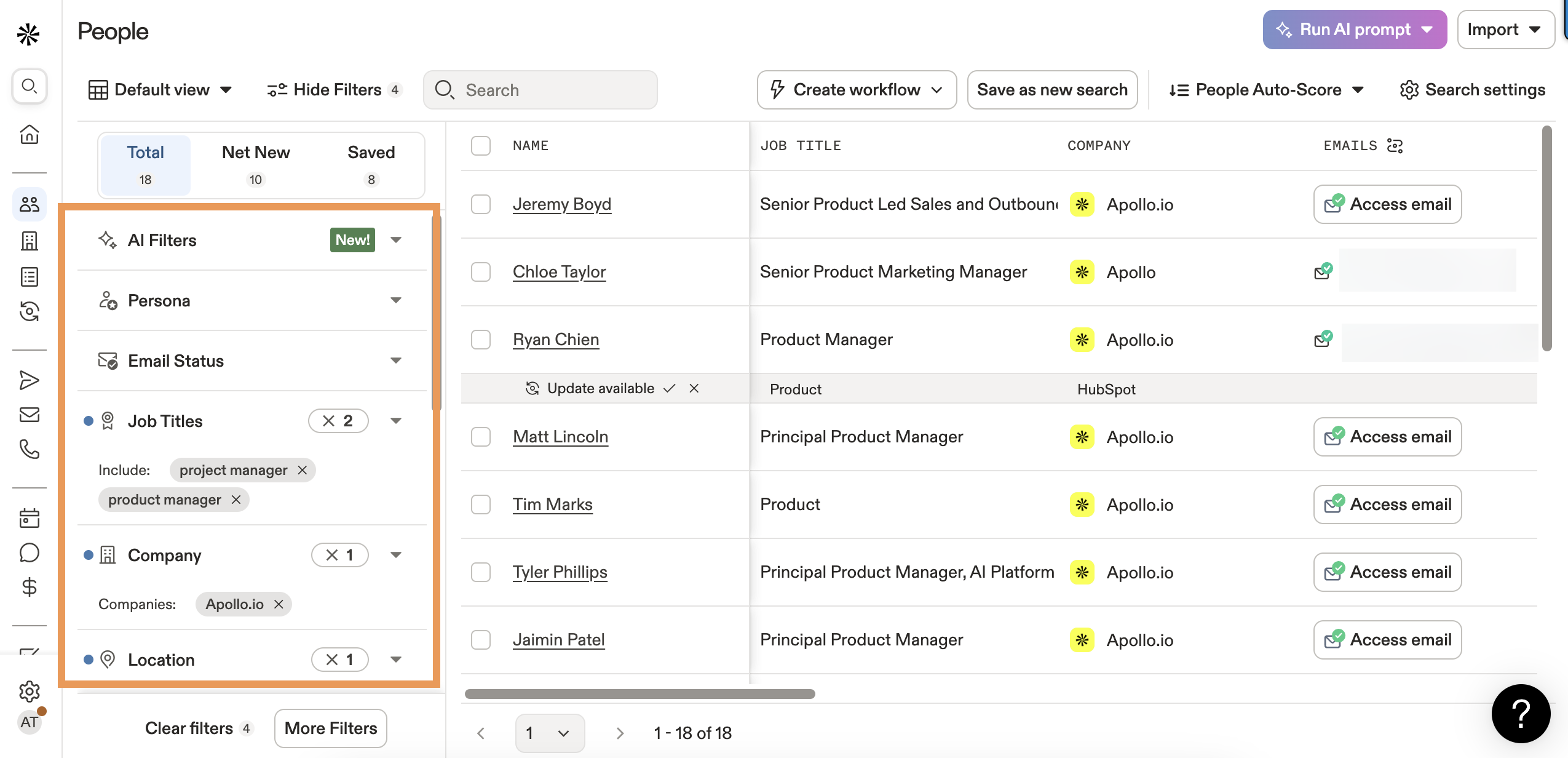
Apollo is the obvious starting point for most SMB sales teams. It packs a 275M+ contact database, 65+ search filters, email sequences, a built-in dialer, and meeting scheduling into a single platform.
Use this if: You're a startup or SMB that needs prospecting, sequencing, and calling in one tool without stitching together a Frankenstein stack. The free plan with 50 credits and 2 sequences is genuinely useful for testing.
Skip this if: Email accuracy is your top priority. Apollo's email accuracy runs around 79% - workable, but noticeably below tools that specialize in verification. Credits don't roll over either.
Pricing scales from free to $49/user/mo (Basic, 1,000 email credits) to $79/user/mo (Professional, adds A/B testing and dialer) to $119/user/mo (Organization, 3-seat minimum). The consensus on r/sales is that Apollo is the most transparent alternative to Seamless.AI, and that reputation is earned.
Clay - Best for Enrichment Workflows
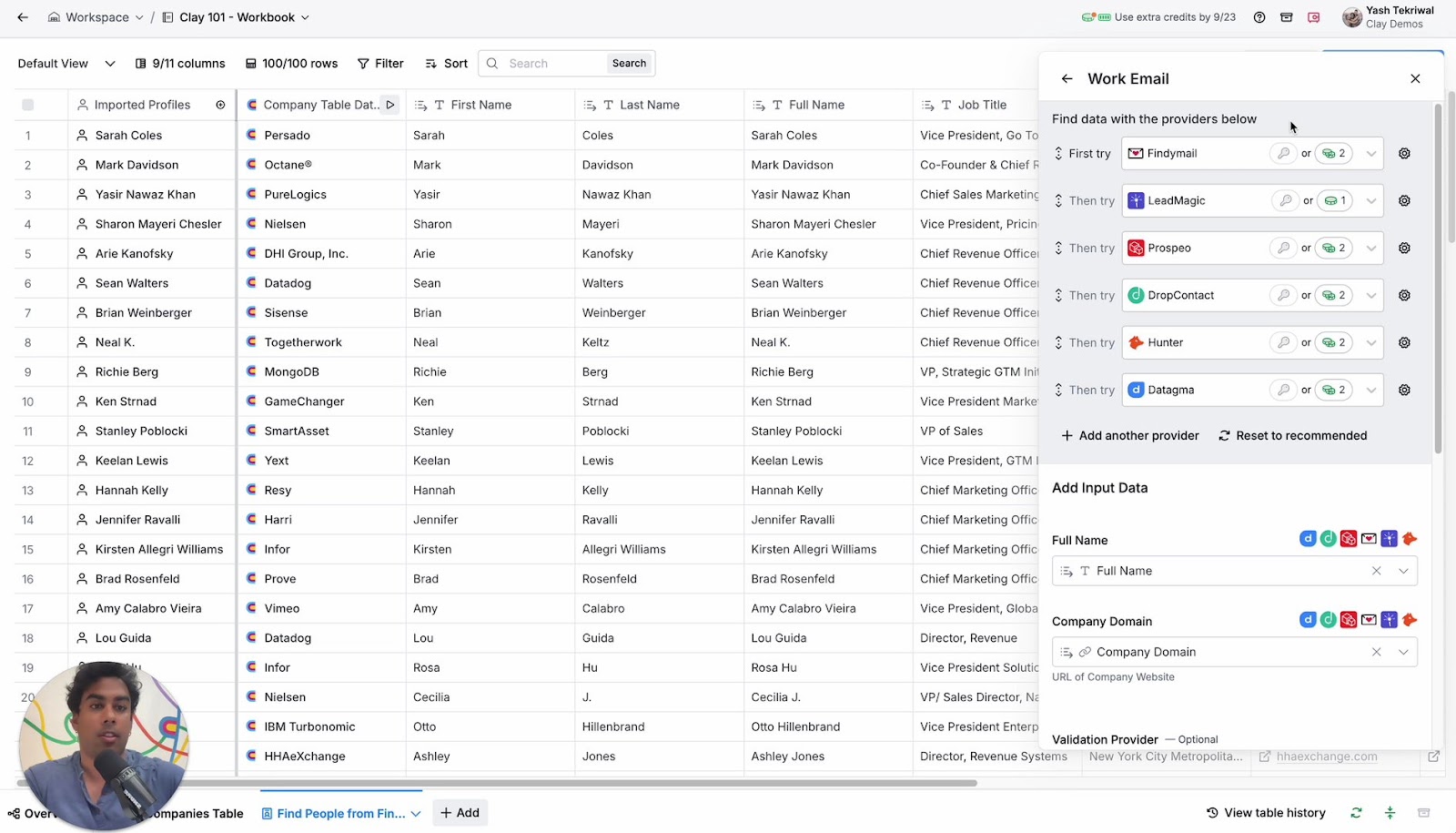
Clay isn't really a database. It's a workflow platform that connects to 150+ data sources and lets you build enrichment pipelines that would otherwise require a developer. If you're doing this at scale, follow a dedicated data enrichment playbook.
Pricing runs on credits: free (100 credits/mo) to $149/mo (2,000 credits) to $349/mo (10,000 credits) to $800/mo (50,000 credits). Enterprise is custom. Clay holds SOC 2 Type II, GDPR, CCPA, and ISO 27001 certifications.
Seamless.AI - Largest Database, Trickiest Pricing
Let's be honest: Seamless.AI has a massive database and genuinely useful real-time search. But the pricing model is designed to confuse, and the Reddit threads about it are brutal.
The free tier gives you 50 credits. From there, user-reported pricing puts Pro at ~$79/user/mo with 1,000 credits, Basic at ~$147/mo billed annually with 250 monthly credits, and Enterprise at $149/user/mo with a 5-user minimum - $745/mo before you've revealed a single contact. Extra credits run $49 per 500. None of this is published on their website.
Data quality is mixed: ~85% email accuracy, which is decent, and ~60% phone accuracy, which isn't. Credits burn faster than expected because each contact lookup costs one credit with no way to preview quality before spending. Where ZoomInfo at least gives you deep company intelligence to justify the spend, Seamless.AI is primarily a contact search tool at enterprise-adjacent pricing.
Leadspicker - Signal-Based Automation
Leadspicker takes a different approach entirely. Instead of giving you a search bar, it deploys AI "robots" that autonomously hunt for leads based on signals - job postings, buying intent, and profile activity. Set up automated scouts that bring leads to you. (If you're building around intent, start with buyer intent signals.)
The automation layer is genuinely hands-off once configured. Robots handle research across web sources and job portals on Leadspicker's own infrastructure, reducing the risk of account restrictions. Solo starts at $249/mo with 20K people searches and 2K email credits, Growth at $599/mo with 80K searches, and Scale at $1,999/mo with 500K searches.
Instantly - Cold Email Infrastructure
Instantly is an outreach tool first and a data provider second. Its core strength is sending infrastructure - email warmup, deliverability optimization, and multi-inbox rotation. The lead database is a separate add-on, not the main product. If you're comparing sequencers, see the best outbound email automation options.
Plans start around $30-$97/mo for the sending side, with a free trial available. If you already have a verified data source, Instantly is a strong sequencer to pair with it. Don't expect it to replace your prospecting database.
Cognism - European Data Compliance
If you're selling into EMEA, Cognism is the tool that takes GDPR seriously enough to build the entire product around it. Their Diamond Data program phone-verifies mobile numbers, and European coverage is genuinely stronger than most US-centric competitors. If you're deciding between the two, use a Cognism vs Prospeo comparison.
Where Cognism wins over ZoomInfo: EMEA compliance and mobile verification quality. Where ZoomInfo still wins: US database depth and workflow breadth. Custom pricing typically lands at ~$1,000-$3,000/mo for small teams and $30K-$60K+/yr for enterprise.
ZoomInfo - Enterprise Benchmark
Here's the thing: ZoomInfo is still the most complete all-in-one platform. But most teams don't need all-in-one - they need accurate data and a good sequencer. If you're shopping broadly, start with the best B2B database shortlist.
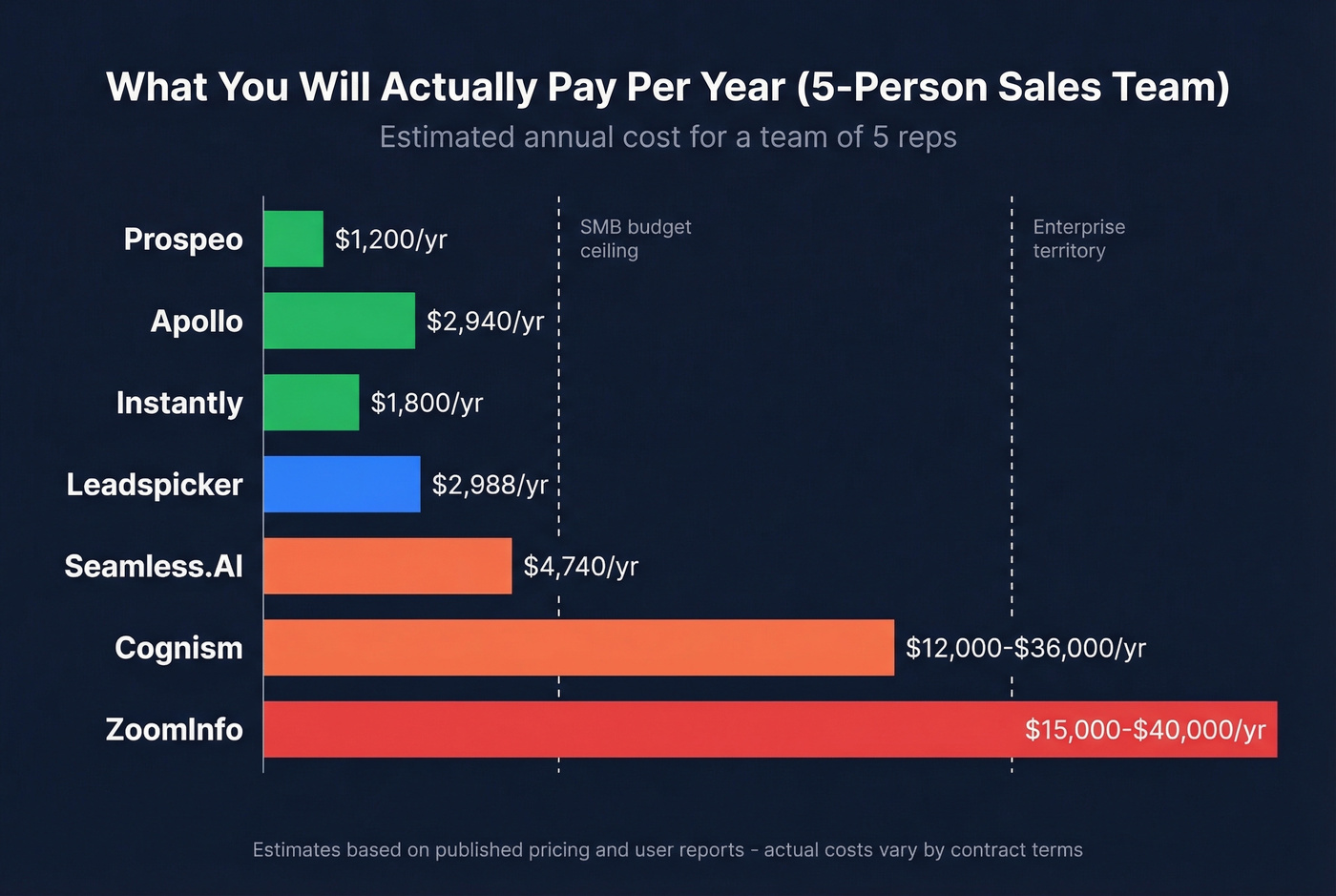
ZoomInfo runs $15K-$40K/yr for typical contracts, with enterprise deployments hitting $50K-$100K+. For most teams under 50 reps, you're paying 5-10x what you need. The database is deep, but the pricing assumes you'll use every module, and most teams don't. At around $1 per lead versus $0.01 at the low end of the market, the math only works if you're extracting value from intent data, workflow automation, and company intelligence simultaneously.
Leadzen.ai - India/APAC Markets
Leadzen.ai targets India and APAC markets with multi-channel outreach capabilities. No public pricing - expect $500-$2,000/mo depending on team size and credit volume based on comparable APAC-focused tools. If your ICP is heavily India-focused, it's worth a conversation. For global prospecting, the other tools on this list offer broader coverage.
The best AI leads generator means nothing if 20% of your emails bounce. Snyk's 50-AE team cut bounce rates from 40% to under 5% with Prospeo and grew AE-sourced pipeline 180%. At ~$0.01/email with no contracts, you get enterprise-grade accuracy without enterprise pricing.
Run your next lead list through Prospeo and see the accuracy difference yourself.
Pricing Comparison
Here's every tool side by side. The "Contact Sales" entries should make you skeptical.
| Tool | Free Tier | Starter | Enterprise |
|---|---|---|---|
| Apollo | 50 credits | $49/user/mo | $119/user/mo |
| Clay | 100 credits/mo | $149/mo | Custom |
| Seamless.AI | 50 credits | ~$79/user/mo | $149/user/mo |
| Leadspicker | None | $249/mo | Custom |
| Instantly | Trial | ~$30/mo | ~$97/mo |
| Cognism | None | ~$1K/mo | $30K-$60K/yr |
| ZoomInfo | None | ~$15K/yr | $50K-$100K+/yr |
| Leadzen.ai | None | ~$500/mo (est.) | ~$2,000/mo (est.) |
| Tool | Credit Model | Data Refresh | Accuracy |
|---|---|---|---|
| Apollo | Expire monthly | ~30 days | ~79% |
| Clay | Per enrichment | Varies by source | 80-90% (combined) |
| Seamless.AI | Per lookup | Not public | ~85% email |
| Leadspicker | Included in plan | Real-time signals | Not public |
| Instantly | Per email sent | N/A (outreach tool) | N/A |
| Cognism | Custom | Periodic | High (phone-verified) |
| ZoomInfo | Per seat | Periodic | ~87% email |
| Leadzen.ai | Not public | Not public | Not public |
36% of the average B2B marketing budget goes to lead generation. With CPLs ranging from $100 to $700+ depending on channel, the tool you choose directly impacts whether that spend generates pipeline or waste.
How to Build Your AI Lead Gen Stack
You don't need nine tools. You need two or three that work together.
Solo founder or early-stage team - budget: $0. Start with a free data tier for verified emails, Apollo's free plan for sequencing with 50 credits, and ChatGPT for email personalization. Add Leadfeeder's free plan for website visitor identification if you have inbound traffic. Total cost: zero. This won't scale past 20-30 prospects per week, but it validates your ideal customer profile before you spend anything.
SMB with 5-20 reps - budget: under $300/mo. A verified data layer for emails and mobiles, Apollo or Instantly for sequencing, and Clay for enrichment when you need to go deeper on specific accounts. Zapier or Make connects the pieces. This stack gives you verified emails, automated sequences, and enriched account data for less than the cost of a single ZoomInfo seat. In our experience, teams that generate leads with AI at this level typically see 3-5x the output of fully manual prospecting.
The pattern: get your data quality layer right first, then build outreach on top of it.
Mistakes That Kill AI Lead Gen ROI
75% of B2B marketing leaders now integrate generative AI into their workflows. But adoption doesn't equal ROI. AI-optimized campaigns improve roughly 23% quarter over quarter - but only when teams avoid these mistakes.
Using low-quality or outdated data
Garbage in, garbage out isn't a cliche - it's a deliverability crisis. One bad list can tank your domain reputation for months. If your bounce rate exceeds 5%, your data source is the problem. Fix it before you optimize anything else. (If you need a diagnostic, start with check bounce.)
Over-automating outreach
AI-driven hyper-personalized campaigns can hit 15-25% reply rates. Generic AI-blasted sequences get 1-2%. The difference isn't the tool - it's whether you're using AI to personalize or just to send faster. Prospects receive an average of 36+ touches within two weeks of showing intent. More volume with bad messaging is just spam at scale. Use proven AI email personalization patterns to avoid that.
Ignoring credit burn and hidden costs
Credit-based pricing models punish exploration. If every search costs a credit and credits don't roll over, reps stop experimenting with new ICPs. Track your effective cost per verified contact, not just your monthly subscription.
Not customizing AI to your ICP
Out-of-the-box AI scoring treats every lead the same. Define your ideal customer profile in the tool - industry, company size, tech stack, buying signals. A 10-20% lift in sales ROI from AI investment only materializes when the AI knows what "good" looks like for your business.
MQL/SQL misalignment
AI can score and prioritize leads all day, but if sales and marketing disagree on what qualifies, you're just automating the argument. Align definitions before you automate handoffs.
FAQ
What's an AI leads generator?
Software that uses artificial intelligence to find, score, and enrich B2B prospect data - automating manual sourcing, contact verification, and lead prioritization. Instead of hours of research, an automated workflow surfaces ready-to-contact prospects with verified emails and phone numbers.
How much do AI lead generation tools cost?
Pricing ranges from free tiers to $100,000+/year for enterprise platforms like ZoomInfo. Most SMB teams spend $50-$300/month. Prospeo starts at $0.01/email with a free tier; Apollo starts at $49/user/mo. Platform costs vary based on database access, credit volume, and integrations.
What's the best free option for generating leads with AI?
Prospeo's free tier (75 verified emails/month) paired with Apollo's free plan (50 credits) covers basic prospecting at zero cost. Add ChatGPT for email personalization and Leadfeeder for website visitor identification - that's a functional outbound stack without spending a dollar.
How accurate are AI-generated leads?
Accuracy varies widely - from 79% to 98% on emails depending on the tool. Prospeo delivers 98% email accuracy via 5-step verification; Apollo sits around 79%; ZoomInfo around 87%. Phone accuracy is even more variable, ranging from 60% to phone-verified. Always verify before sending - one bad batch can damage sender reputation for months.
Can AI lead generation replace my SDR team?
No. AI handles sourcing, enrichment, and initial prioritization well, but humans handle relationship-building, complex qualification, and deal strategy. The best teams use AI to make SDRs 3-5x more productive - not to eliminate them. Teams report SDRs spending 60-70% of their time on conversations instead of research when the data layer is solid.