

Apollo.io Email Finder & Open Tracker Review (2026)
If you've seen 30%+ bounces on an Apollo "verified" list, you're not alone.
30-Second Verdict
Apollo's Chrome extension is a genuinely useful prospecting tool. The filters are solid, sequence building is fast, and CRM sync works well. But the Apollo.io email finder and open tracker doesn't deliver the accuracy its marketing suggests - users consistently report 32-38% bounce rates on exported lists. The open tracker? Fundamentally broken for a large chunk of your recipients thanks to Apple Mail proxies, bot scanners, and dual-tracker conflicts.
If you need emails that actually land, verify externally. If you're making decisions based on Apollo open rates, stop - track clicks and replies instead.
How the Email Finder Works
Apollo's database covers 270M+ contacts, and the Chrome extension lets you pull emails while browsing company websites or professional profiles. Search by title, company size, industry, or location, select contacts, and export or push directly into a sequence. The platform tries to handle both prospecting and engagement monitoring in one place.
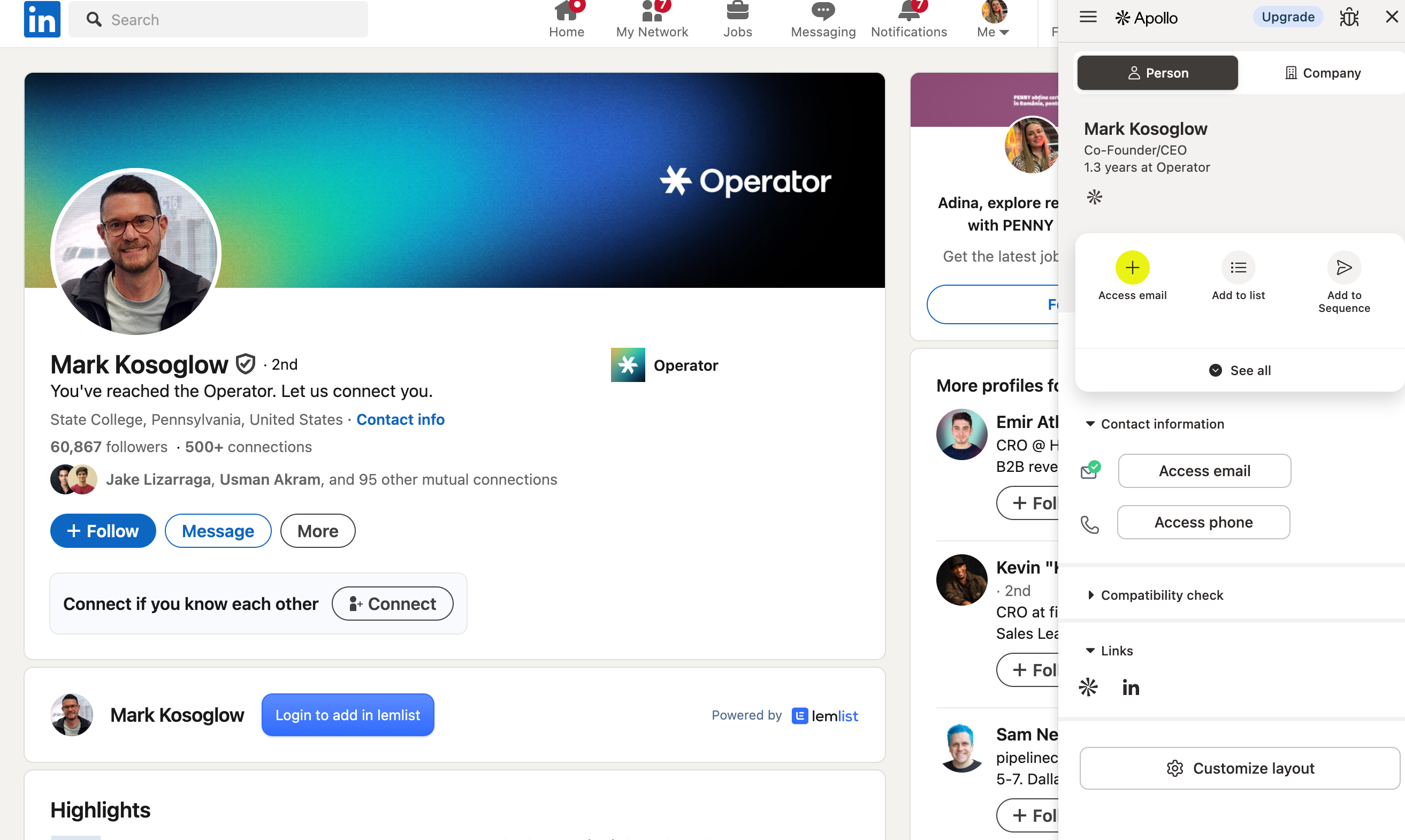
Apollo describes a 7-step verification process and labels emails with confidence indicators like "verified" vs "unverified." The distinction that matters: a "verified" label is a point-in-time deliverability check, not a guarantee. It doesn't mean the person still works there, the inbox is monitored, or the address won't bounce tomorrow.
Real-World Email Accuracy
Apollo markets high email accuracy. Users see something different.
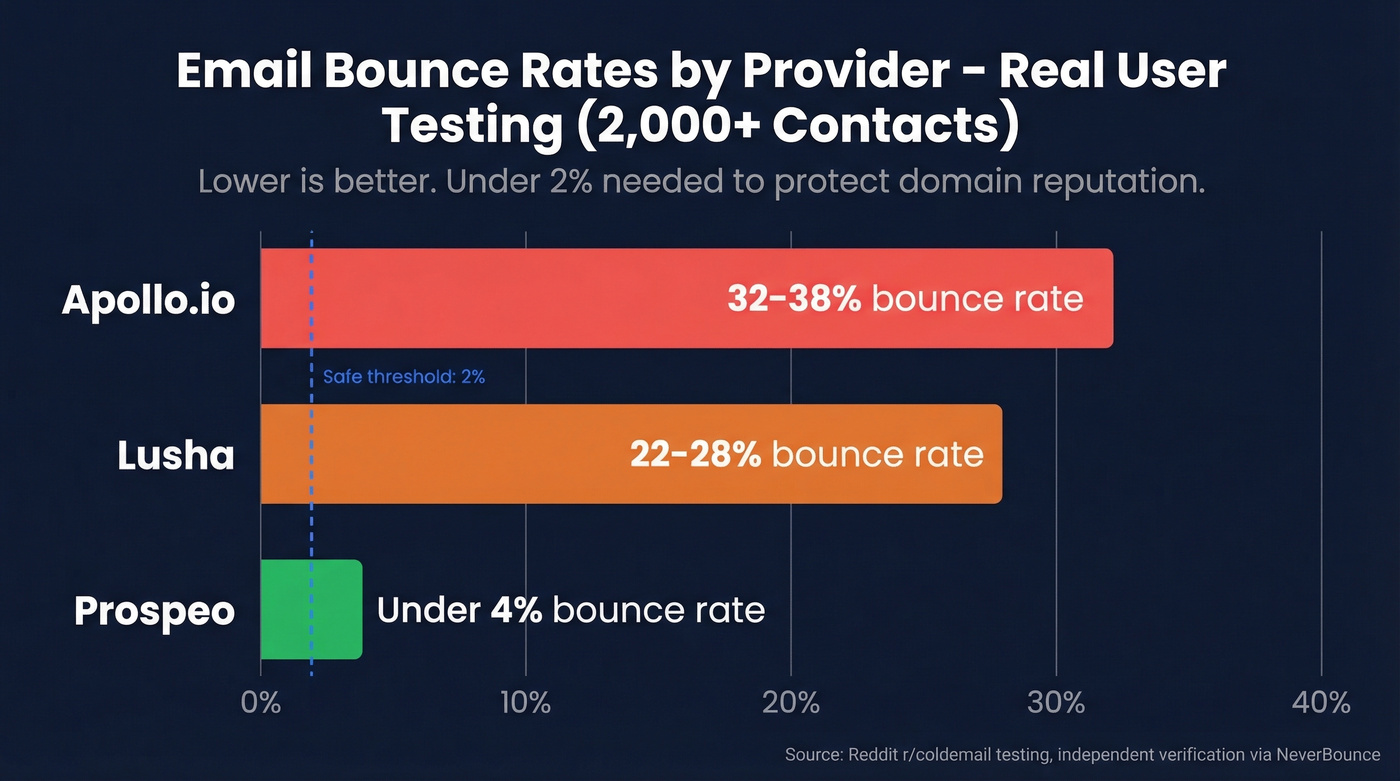
One detailed test on r/coldemail - 500-1,000 leads exported, verified through NeverBounce, then sent - showed bounce rates of 32-38%. We've seen similar patterns across multiple teams running Apollo lists through independent verifiers. In a separate comparison across 2,000+ contacts, Hunter produced a 14-18% higher valid-email rate than Apollo on average, and Lusha came in around 22-28% bounce in the same testing.
B2B contact data decays 22.5-30% per year. Apollo's database is wide, but accuracy on any given export is unreliable unless you verify externally (see email bounce rate benchmarks and what they do to deliverability).
Here's the thing: for cold outreach, you need bounce rates under 2% to protect deliverability. Apollo's "verified" label gives teams false confidence. They skip verification, send at scale, and torch their domain reputation in a week (especially if they ignore the basics of sender reputation).
Apollo is still one of the best prospecting workflow tools on the market. But "best workflow" and "best data" are two different things, and most teams conflate them until their sender reputation is already damaged.

Teams using Apollo's email finder report 32-38% bounce rates on "verified" lists. Prospeo's proprietary 5-step verification delivers 98% email accuracy across 300M+ profiles - refreshed every 7 days, not every 6 weeks. Meritt dropped from 35% bounces to under 4% and tripled their pipeline.
Stop torching your domain reputation on unverified data.
A More Accurate Alternative
If you're pulling contacts from Apollo, run them through Prospeo's email finder before sending. Prospeo delivers 98% email accuracy with a proprietary 5-step verification process - catch-all handling, spam-trap removal, honeypot filtering - across 300M+ profiles refreshed every 7 days. One customer, Meritt, dropped bounce rates from 35% to under 4% and tripled their pipeline after switching. The free tier gives you 75 verified emails per month, and paid plans run about $0.01 per email.

Apollo's open tracker is broken by Apple Mail proxies and bot scanners, inflating rates by 40-60%. You need emails that actually reach real inboxes - not vanity metrics. Prospeo gives you 98% accurate emails at $0.01 each with catch-all handling, spam-trap removal, and honeypot filtering built in.
Fix your data before you fix your tracking.
How the Open Tracker Works
Apollo tracks opens by inserting a 1-pixel tracking image into outbound emails. When a recipient's email client loads that image, Apollo logs an open event. The pixel is hosted on Heroku, which means it shows up as a Heroku URL if someone inspects the email HTML.
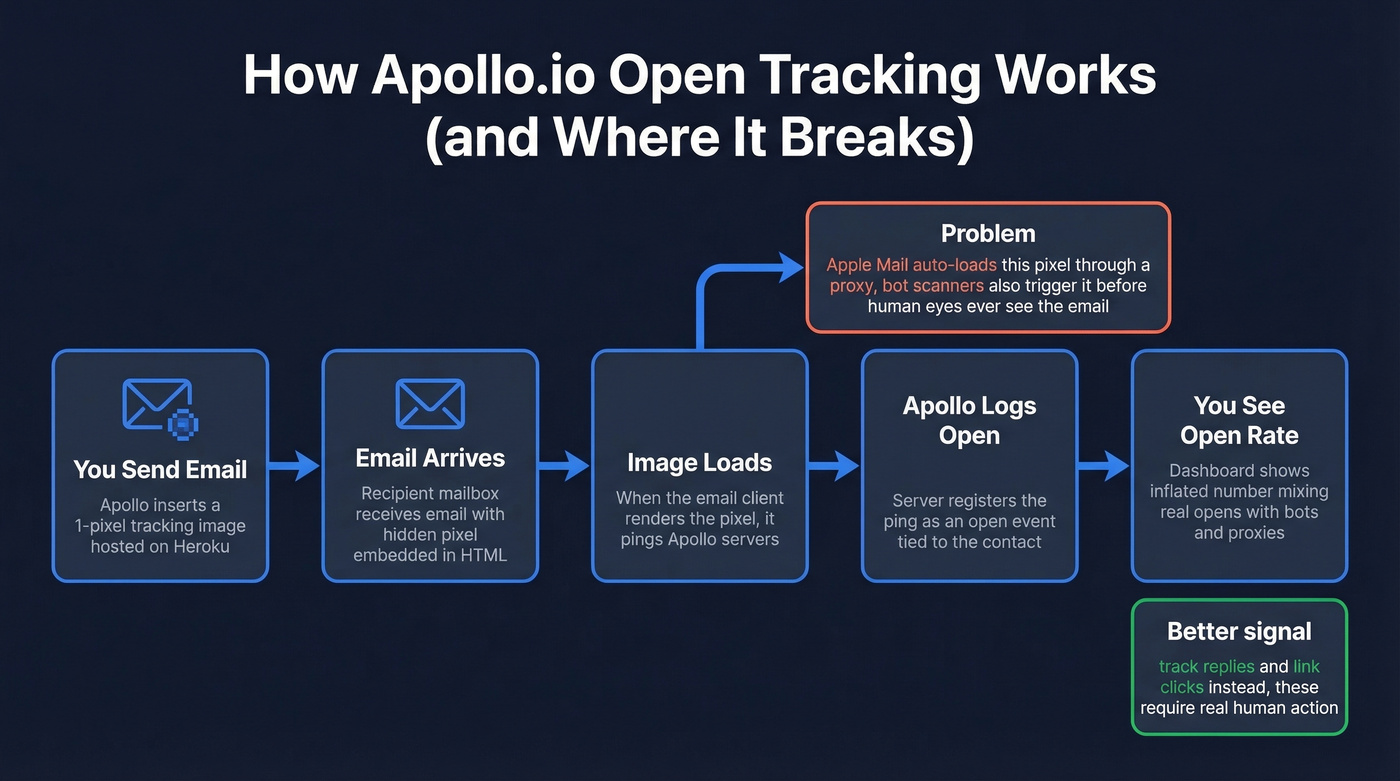
Open tracking isn't on by default - each user must enable it in their Apollo settings. In Gmail, you'll see a "Track" toggle in the compose window when the extension is active. Apollo strongly recommends setting up a custom tracking subdomain; without one, they suggest turning off open and click tracking entirely to protect your domain reputation. Click tracking wraps your links with redirect URLs routed through Apollo's servers before forwarding to the final destination. Reply tracking uses mailbox integration and thread matching - the most reliable of the three signals by far. (If you want the mechanics and setup details, see tracking domain best practices.)
Some teams try SMTP middleware to bypass Apollo's sending limits, but this can break tracking signals and make bounce visibility unreliable. Skip that approach.
Why Open Rates Are Wrong
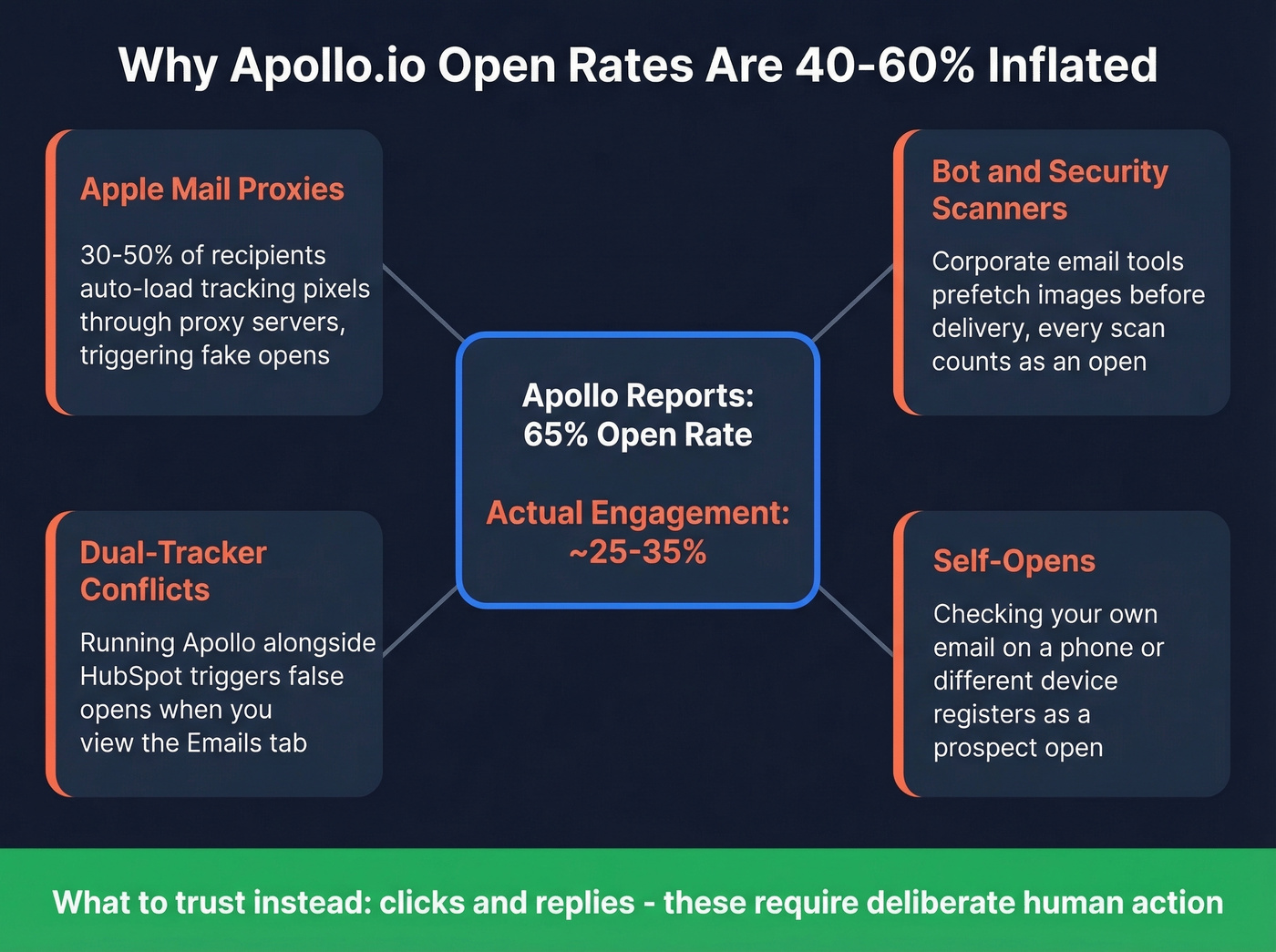
Apollo open rates are directionally interesting but fundamentally unreliable. In our testing, Apollo open rates ran 40-60% higher than actual engagement when measured against click and reply data (more context: standard email open rate benchmarks and why they’re often misleading).
Apple Mail Privacy Protection
Roughly 30-50% of your recipients use Apple Mail or iOS Mail, which prefetches all images through a proxy server. Apollo acknowledges this directly - every Apple Mail recipient triggers a bot open event regardless of whether they actually read your email. That's a huge chunk of your list generating phantom engagement.
Bot and Security Scanners
Corporate email security tools prefetch links and load images before the email ever reaches the inbox. Apollo offers a toggle to include or exclude bot events, but it's a floor-vs-ceiling game: excluding bots gives you the minimum possible engagement, including them gives you the maximum. The real number is somewhere in between, and you can't know where.
Dual-Tracker Conflicts
If you're running Apollo alongside HubSpot Sales, you've got a problem. A HubSpot community thread documents how opening Apollo's Emails tab can trigger false open events in HubSpot for visible contacts. The fix is simple but annoying: pick one tracker and disable the other.
Self-Opens
Apollo tries to filter these via IP matching, but opening a tracked email on your phone or a different device counts as a prospect open.
Let's be honest - open rates in 2026 are a vanity metric for most outbound teams. Trust clicks and replies instead (and if you need help improving replies, start with emails that get responses and sales follow-up templates). Those require deliberate action and can't be faked by a proxy server.
Pricing and Free Plan Limits
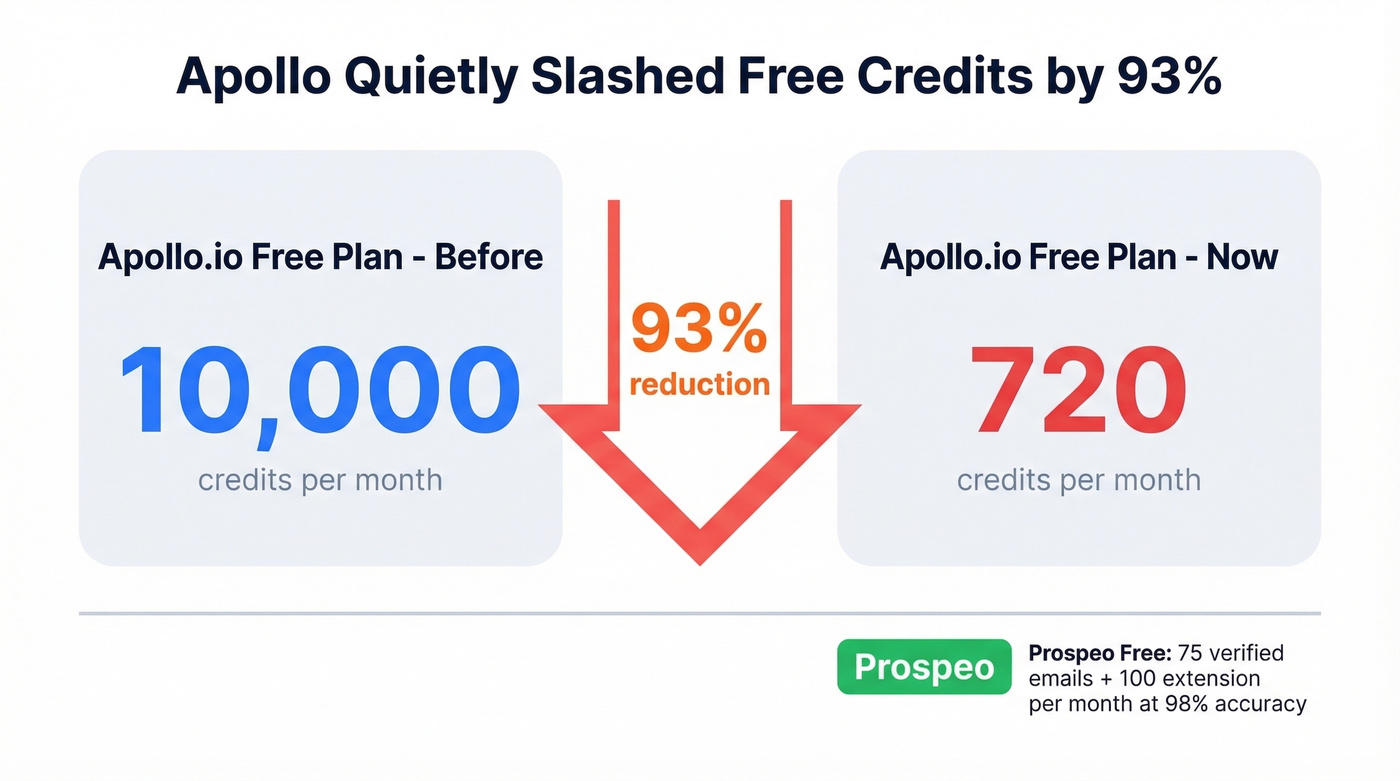
Apollo's free plan used to offer 10,000 credits per month. That's now 720 credits - a 93% reduction that caught a lot of users off guard. Reddit threads about the change are full of teams scrambling for alternatives. Paid plans run from ~$49 to ~$149/user/month depending on the tier.
| Apollo Free | Apollo Paid | Prospeo | |
|---|---|---|---|
| Credits/month | 720 | Varies by tier | 75 emails + 100 ext. credits |
| Cost | $0 | ~$49-$149/user/mo | ~$0.01/email (paid) |
| Email accuracy | 62-68% (verify externally) | Same database | 98% verified |
| Best for | Light prospecting | Sequence workflows | Email accuracy |
For workflow automation and sequence building, Apollo wins. For email accuracy, it's not close - verify externally or pay the price in bounced domains (use an AI email checker or a dedicated verifier).
FAQ
Does Apollo track email opens in Gmail?
Yes, via a 1-pixel tracking image inserted by the Chrome extension. Each user must enable tracking manually. Apple Mail proxies and corporate bot scanners inflate these numbers by 40-60%, so treat open data as directional only.
Is Apollo's open tracking accurate?
No. It's inflated by 40-60% in most cases. Apple Mail triggers proxy opens for 30-50% of recipients, and bot scanners prefetch images before delivery. Use reply rates as your primary engagement signal instead.
How can I reduce bounce rates on Apollo lists?
Run every export through an independent verifier before sending. Teams that add this step typically drop bounce rates from 35%+ to under 4% - a fraction of the cost of rebuilding a damaged domain reputation.
What's a good alternative to Apollo for email finding?
For teams that need Apollo's sequencing but better data, the best setup is Apollo for workflows plus a dedicated verification tool for email accuracy. Prospeo covers 300M+ profiles with 98% verified accuracy and a 7-day data refresh cycle, and the free tier includes 75 verified emails per month.