

How to Build B2B Lists That Don't Waste Your Team's Time
Your SDR sent 500 emails last Tuesday. 80 bounced. Another 120 went to people who changed jobs six months ago. That's 40% of the batch wasted before a single real buyer even had a chance to care.
B2B list building is the foundation of outbound, and most teams get it catastrophically wrong. Reps already spend 68% of their time on non-selling activities. A bad list makes that number worse. Here's the thing: the fix isn't buying a bigger database. It's building a tighter process.
What You Need (Quick Version)
- Define your ICP with 3-5 firmographic filters before you touch any tool.
- Verify every email before sending. One bad batch can tank your domain reputation for weeks.
What Belongs in a B2B Lead List
Most teams stop at name, email, and phone. That's a contact sheet, not a prospecting list. The fields below are what separate a list that books meetings from one that collects dust.
| Field Category | Examples | Why It Matters |
|---|---|---|
| Firmographics | Industry, headcount, revenue, HQ location | Defines your ICP |
| Contact Info | Verified email, direct dial, mobile | Reachability |
| Technographics | CRM, marketing stack, dev tools | Relevance signals |
| Intent Signals | Topic research, content consumption | Timing |
| Job Change Data | New role date, promotion | Trigger events |
| Growth Signals | Headcount growth %, funding round | Budget indicators |
| Interaction History | Past opens, replies, meeting notes | Personalization |
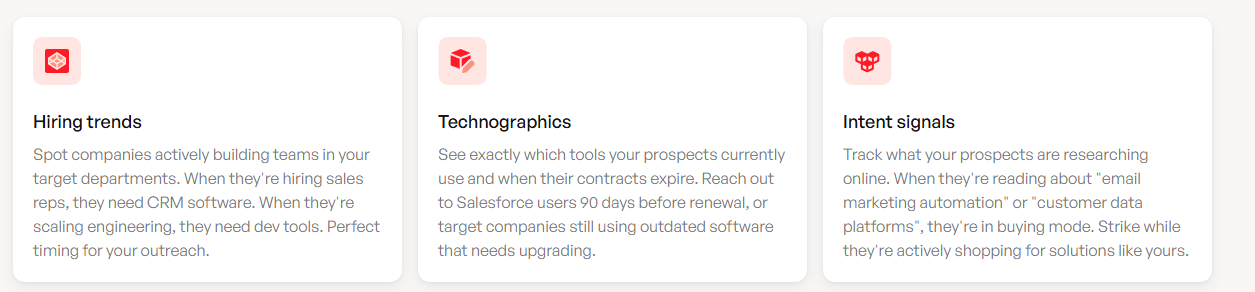
Firmographics tell you who to target. Technographics tell you why your pitch is relevant - if they're running a competitor's tool or missing a category you fill, that's your angle. Intent signals tell you when to reach out, which is the most underrated filter of all.
In the classic buyers-pyramid framing, only about 3% of your market is actively buying right now. Narrow targeting with intent data puts you in front of that 3% instead of spraying the other 97%.
The 5-Step Workflow
1. Define Your ICP
Start narrow. Pull your best 10 closed-won deals from the last two quarters and find the patterns. What industry? What headcount range? What titles signed the contract?
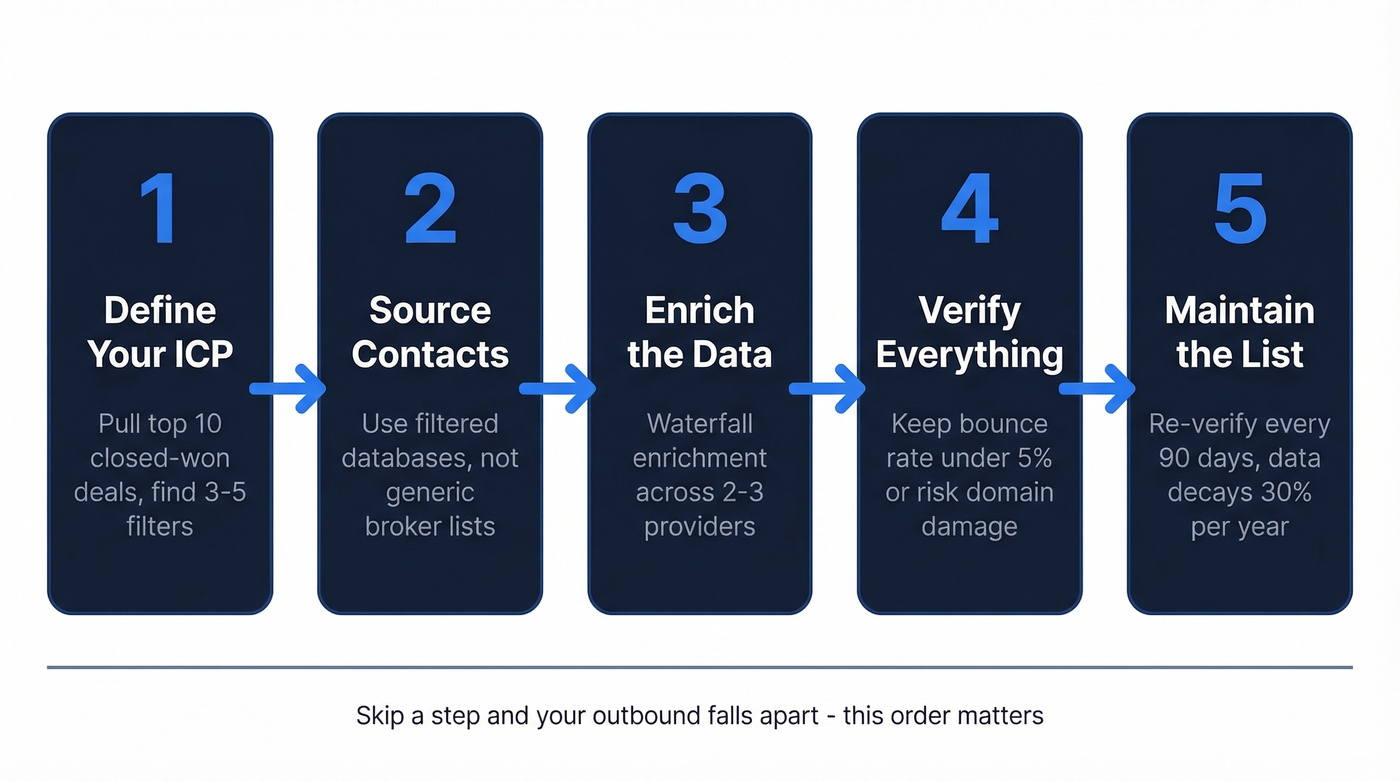
Three to five filters is enough. If you can't describe your ICP in one sentence, it's too broad.
2. Source Contacts
Pull from a database with filters that match your ICP criteria. Apollo's 275M+ contacts and 65+ search filters work for broad sourcing, though the platform has had data breaches in 2018 and 2021 - worth knowing if your security team cares.
The key is sourcing from verified databases, not buying generic lists from brokers. Prospeo's 300M+ profiles with 30+ search filters - including buyer intent, technographics, job changes, and headcount growth - let you build hyper-targeted segments without the data-quality tradeoffs that come with cheaper sources. Custom filtered searches will always outperform pre-packaged lists.
3. Enrich the Data
No single provider has perfect coverage. Run your list through a primary source, then fill gaps with a second or third - that's waterfall enrichment. Tools like Clay orchestrate this across 130+ data sources, but you can do it manually with two providers and a spreadsheet if your list is under 1,000 contacts.
If you're doing this at scale, data enrichment services can help standardize fields and reduce manual cleanup.
4. Verify Everything
Don't skip this. Bounce rates above 5% damage your sender reputation, and recovery takes weeks. Run every email through verification before it touches a sequence, even if the source database says it's "verified." We've learned not to trust that label.
We've seen teams transform their results with this single step. Meritt went from 35% bounce rates to under 4% by switching to verified-first sourcing - and tripled pipeline from $100K to $300K per week.
If you want a deeper breakdown of bounce codes and benchmarks, see email bounce rate.
5. Maintain the List
B2B data decays 30% per year. People change jobs, companies get acquired, domains go dark. Re-verify quarterly at minimum.
New mailboxes should stay around 30 emails/day, ramping to 50-100/day once warmed over 2-4 weeks. Blasting a stale list from a fresh domain is the fastest way to land in spam.
For sending limits and safe ramp schedules, use this email velocity guide.

You just read how a 500-person list at 98% accuracy beats a 5,000-person list at 70%. Prospeo gives you exactly that - 300M+ profiles with 30+ filters including buyer intent, technographics, and job changes, all on a 7-day refresh cycle. Meritt tripled pipeline to $300K/week after switching.
Build your first verified list in under five minutes - for free.
B2B List Building Tools Compared
| Tool | Starting Price | Email Accuracy | Data Refresh | Best For |
|---|---|---|---|---|
| Prospeo | Free / ~$0.01/lead | 98% | 7 days | Accuracy-first teams |
| Apollo | Free / $49/mo | ~65-70% (user-reported) | 4-6 weeks | Free-tier volume |
| ZoomInfo | ~$15,000/yr | 87% | 4-6 weeks | Enterprise teams |
| Lusha | Free / $36/mo | ~60-65% | Varies | Quick Chrome lookups |
| Clay | Free / $149/mo | N/A (orchestrator) | Depends on sources | Waterfall enrichment |
| Cognism | ~$1,000/user/yr | ~80-85% | Varies | EU-focused teams |
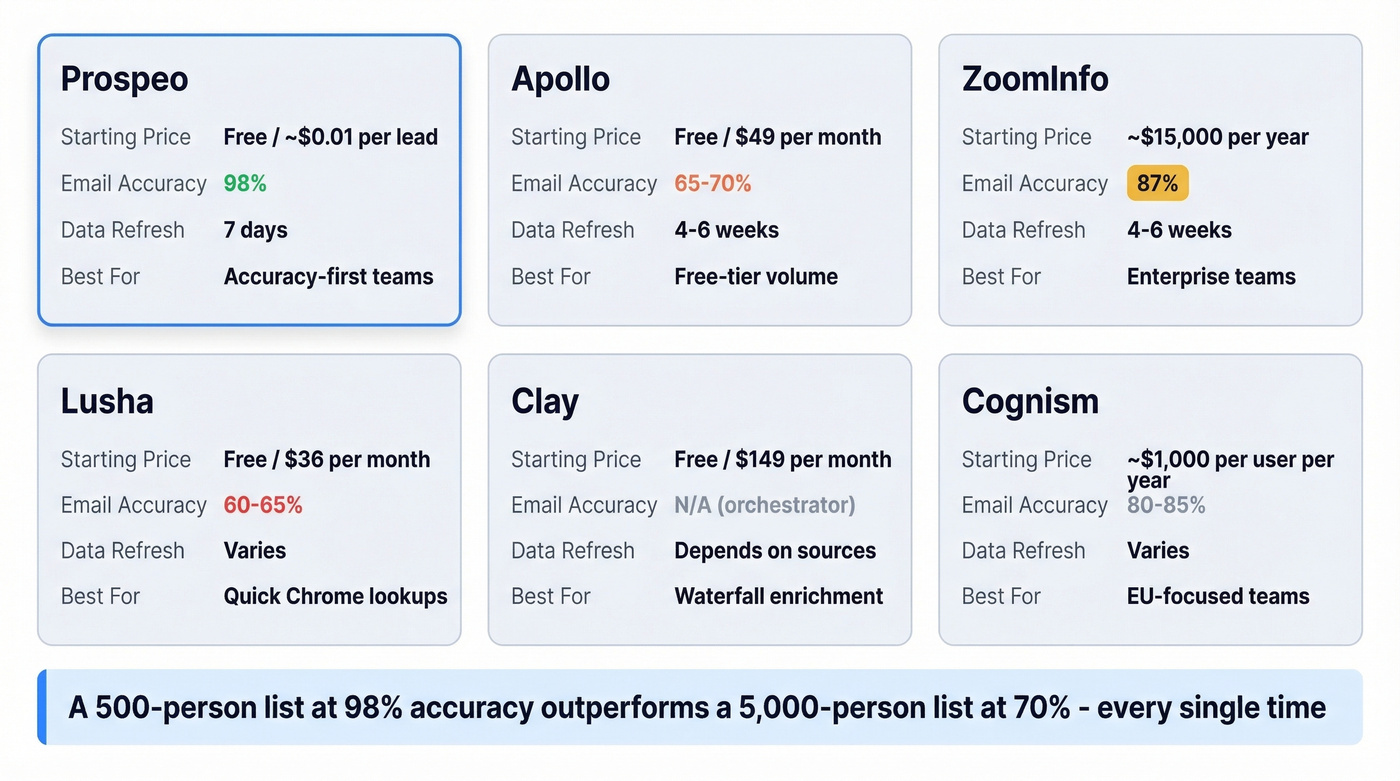
Apollo's free tier (60 credits/month) is generous for getting started, but the r/revops consensus is that the data is "too noisy" and creates manual cleanup work. ZoomInfo runs $15K+ annually, which is absurd for small teams. Clay isn't a database - it's an orchestration layer. Great for complex workflows, overkill if you just need a clean list.
If you're evaluating vendors, this roundup of best sales prospecting databases can help you shortlist options by use case.
Let's be honest: if your average deal size is under $15K, you almost certainly don't need ZoomInfo-level spend. A 500-person list at 98% accuracy outperforms a 5,000-person list at 70% every single time - more replies, fewer bounces, zero domain damage.

What Bad Data Actually Costs
Phone data accuracy ranges from 63% to 91% across providers, with coverage varying even more wildly at 26%-92%. If 25% of your phone data is wrong and an SDR makes 300 dials a day, that's 75 wasted calls daily - roughly $7,500 per rep per year in burned time.
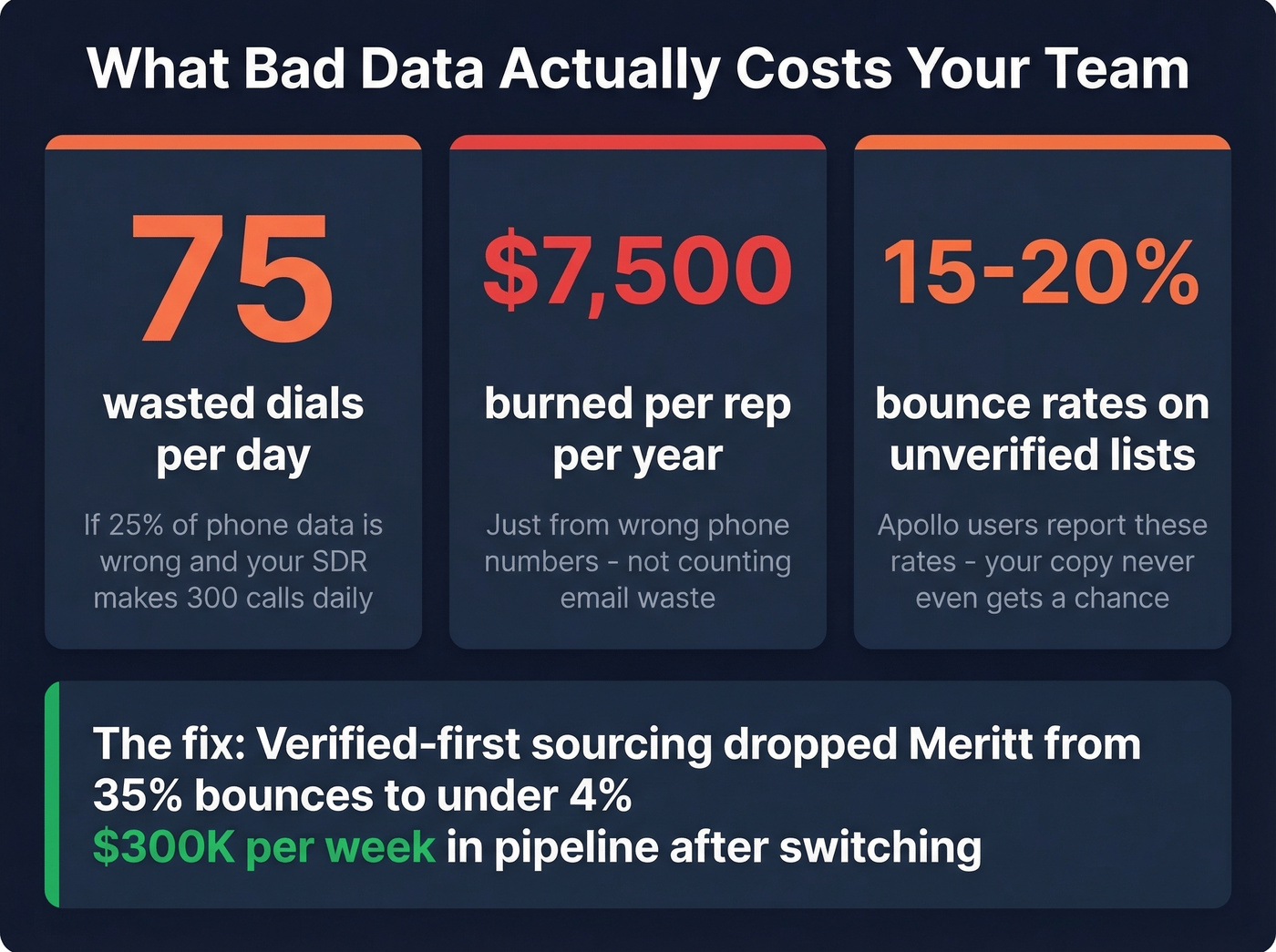
Email tells the same story. Cold email benchmarks sit around 27-35% open rates and 5-6% reply rates, but only if your emails land in the inbox. Apollo users report 15-20% bounce rates, which means you're starting in a hole before your copy even matters.
If you're troubleshooting inboxing, start with an email deliverability guide and then tighten your sender reputation process.
Strategies That Actually Scale
The workflow above gets you a clean initial list. The real challenge is doing it repeatedly without quality dropping off.
The best scaling strategies combine three things: tight ICP filters, waterfall enrichment, and automated re-verification on a schedule. Once that system is in place, you can grow your sales lead list from hundreds to thousands of contacts per month without sacrificing deliverability. Skip this if you're still sending fewer than 200 emails a week - nail your ICP and messaging first, then worry about volume.
A few tactical notes:
Segment before you expand. Add one new ICP segment at a time - different industry, different title tier - and test reply rates before going wider. We've found that teams who expand too fast end up with blended metrics that hide which segments are actually working.
Automate re-verification triggers. Set a 90-day flag on every contact so stale records get re-checked before they re-enter a sequence. This one habit alone prevents the slow deliverability decay that kills outbound programs over six months.
Track list-level metrics. Bounce rate, reply rate, and meeting-booked rate per list batch tell you whether your process is improving or degrading. If you aren't tracking per-batch, you're flying blind.
Compliance Checklist
- CAN-SPAM (US): Penalties up to $53,088 per non-compliant email. Include a physical address, honest subject lines, and a working opt-out.
- GDPR (EU/UK): Business emails tied to identifiable individuals count as personal data. Document a Legitimate Interest Assessment before sending.
- CASL (Canada): Consent-first. Honor opt-outs within 10 business days. Maintain records for 3+ years.
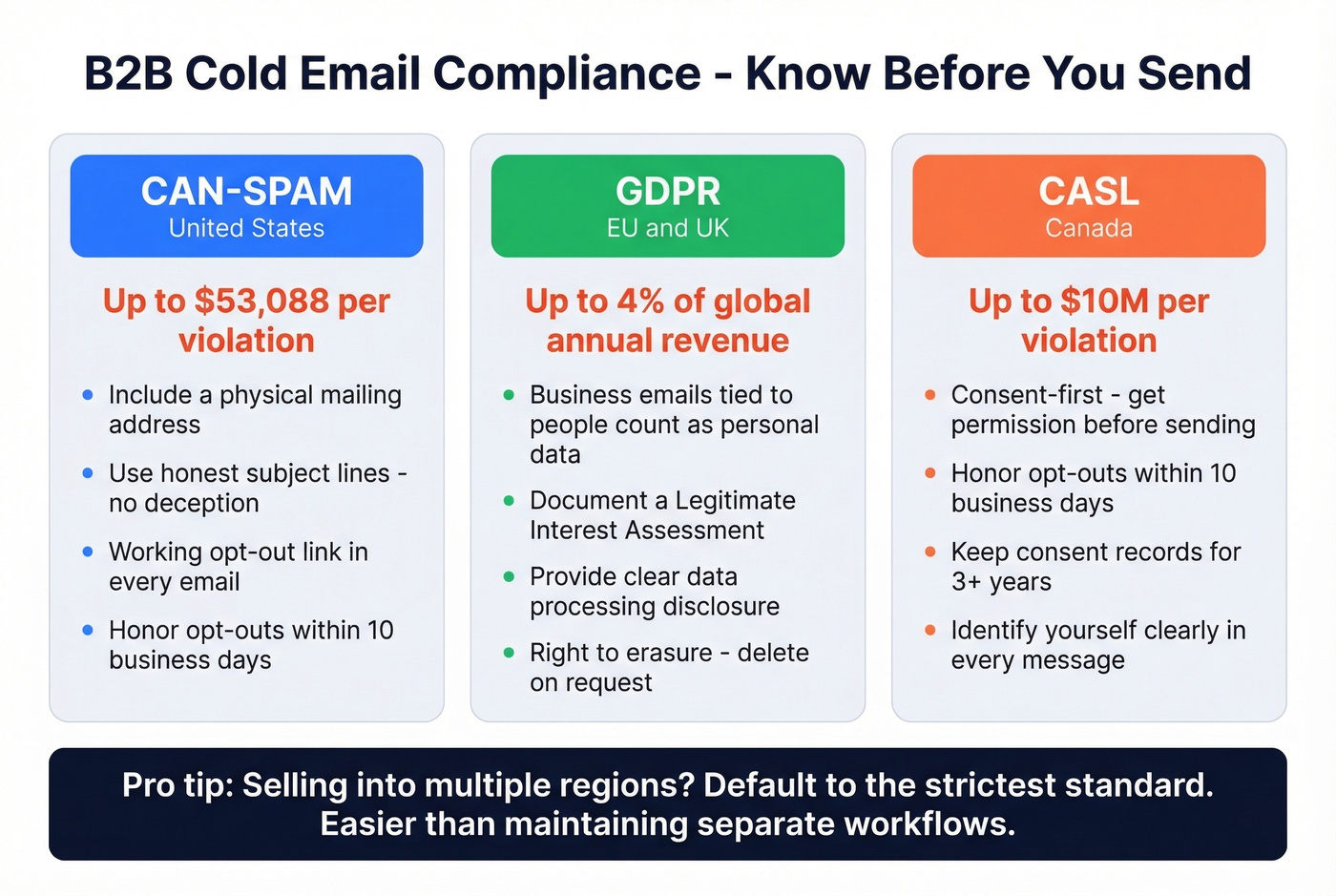
Selling into multiple regions? Default to the strictest standard. It's easier than maintaining separate compliance workflows.
If you're unsure about list sourcing rules, read Is It Illegal to Buy Email Lists? before you scale outbound.
Bad data costs $7,500 per rep per year in wasted dials alone. Prospeo's 5-step verification delivers 98% email accuracy and 30% mobile pickup rates - at roughly $0.01 per email. No contracts, no sales calls, no domain damage.
Replace your decaying lists with data that actually connects to real buyers.
FAQ
How many contacts should a B2B list have?
Start with 200-500 verified contacts per ICP segment - enough to test messaging and iterate. Scale after you've proven reply rates above 5%. A bloated list with bad data hurts your domain more than a small, accurate one limits your pipeline.
How often should I refresh my contact list?
Quarterly at minimum. B2B data decays roughly 30% per year, so a January list is about 15% stale by July. If your provider doesn't refresh automatically, build manual re-verification into your workflow every 90 days.
Is it legal to cold email B2B contacts?
Yes, in most jurisdictions - with conditions. CAN-SPAM requires opt-out links and a physical address. GDPR requires documented legitimate interest. CASL requires prior consent. Verify requirements for your target market before launching.
What's the best free tool for building B2B lists?
Prospeo's free tier includes 75 verified emails and 100 Chrome extension credits per month with full enrichment - no credit card required. Apollo offers 60 free credits monthly but with lower accuracy (65-70% vs. 98%), which means more bounces and cleanup work downstream.