

How to Build a Client Profile That Actually Gets Used
A client profile that lives in a Google Doc nobody opens isn't a profile. It's a creative writing exercise. The difference between teams that grow efficiently and teams that spray outbound into the void almost always comes down to whether they've done the profiling work - and whether that work actually connects to how they sell, market, and prioritize.
Here's what you'll walk away with: a framework built from real data, filled-in templates for B2B and B2C, a 100-point scoring rubric, and the bridge from "finished profile" to "exported prospect list." If you already know the basics, skip to the scoring section or the mistakes section - that's where most teams fall apart.
What Is a Client Profile?
A client profile is a detailed description of the company or individual that gets the most value from your product or service - and delivers the most value back to you. It captures firmographic data like industry, headcount, and revenue. It maps behavioral patterns: how they buy, what triggers a purchase. And it includes psychographic traits - what they care about, what keeps them up at night.
Most guides use "customer profile" and "client profile" interchangeably. The concept is identical. The latter skews toward service businesses, agencies, and consultancies, but the underlying framework applies everywhere.
Two quick distinctions worth making early: a profile isn't the same as an ideal customer profile (ICP), and it's not a buyer persona. They're related but serve different purposes.
Profile vs. ICP vs. Buyer Persona
These three terms get swapped in meetings constantly, and it causes real confusion.
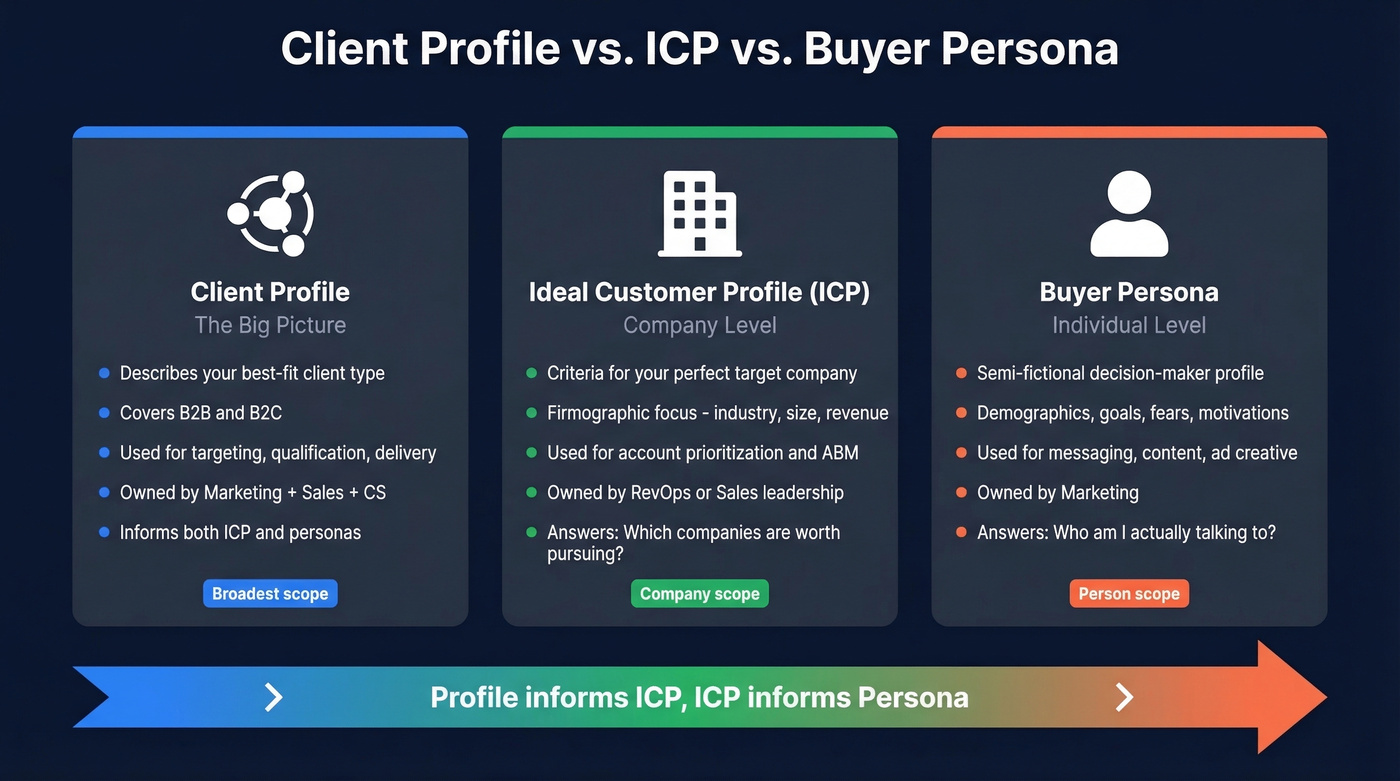
| Dimension | Client Profile | Ideal Customer Profile (ICP) | Buyer Persona |
|---|---|---|---|
| Definition | Description of your best-fit client type | Criteria defining your perfect target company | Semi-fictional individual decision-maker |
| Scope | Broad - B2B or B2C | Company-level (B2B) | Individual-level |
| When to use | Targeting, qualification, delivery | Account prioritization, ABM | Messaging, content, ad creative |
| Who owns it | Marketing + Sales + CS | RevOps or Sales leadership | Marketing |
HubSpot frames it well: "Personas tell you who you're speaking to. ICPs tell you which companies are worth speaking to." A client profile sits above both - it's the composite picture that informs your ICP criteria and your persona development.
One more distinction that trips people up: profiling and segmentation aren't the same thing. Profiling defines your best-fit client. Segmentation groups existing clients by shared traits for campaigns like upsell or retention. You profile first, then segment.
Why Profiling Matters
Companies aligned around a well-defined customer ICP grow revenue up to 2.5x faster than peers, according to Bain research as summarized by M1-Project. That's not a marginal improvement - it's the difference between a Series A company that hits plan and one that doesn't.
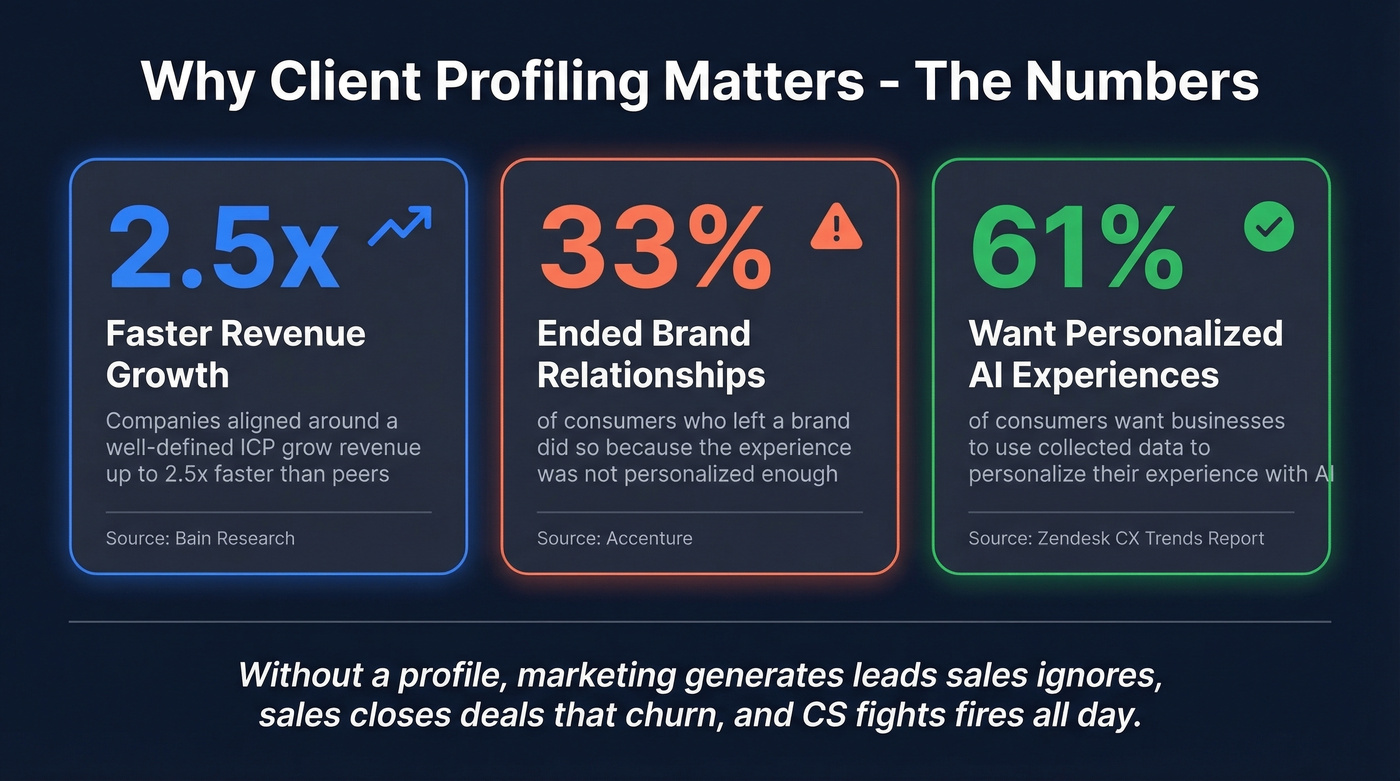
The impact shows up on the customer side too. Accenture found that 33% of consumers who ended a brand relationship did so because the experience wasn't personalized enough. And Zendesk's Customer Experience Trends Report found that 61% of consumers want businesses to use collected data to personalize their experience with AI. They're not asking for creepy surveillance. They're asking you to remember what they told you.
Internally, a solid profile aligns sales, marketing, and customer success around the same definition of "good fit." Without it, marketing generates leads that sales ignores, sales closes deals that churn in six months, and CS spends all their time firefighting accounts that should never have been signed. The profile is the shared language that prevents this.
Types of Data in a Profile
Five categories of data make up a complete client profile. The mix shifts depending on whether you're B2B or B2C.
| Data Category | B2B Relevance | B2C Relevance |
|---|---|---|
| Demographic | Decision-maker title, seniority | Age, gender, income, education |
| Firmographic | Industry, headcount, revenue, funding | N/A (or employer type) |
| Psychographic | Buyer values, risk tolerance | Lifestyle, interests, beliefs |
| Behavioral | Tech adoption, content consumed | Purchase frequency, channel preference |
| Technographic | CRM, marketing stack, infrastructure | Devices, platforms, apps used |
B2B profiles built on demographics alone fail. The consensus on r/b2bmarketing is blunt about this - too many teams copy B2C demographic thinking into B2B contexts and wonder why their targeting doesn't work. A VP of Marketing at a 200-person SaaS company and a VP of Marketing at a 200-person manufacturing firm have almost nothing in common. Firmographics, technographics, and buying committee structure matter far more than age or gender.
For B2B, you also need to map the roles in the buying process. The decider chooses, the payer signs the check, and the user actually logs in - and these are often three different people. Miss any one of them and your deal stalls.
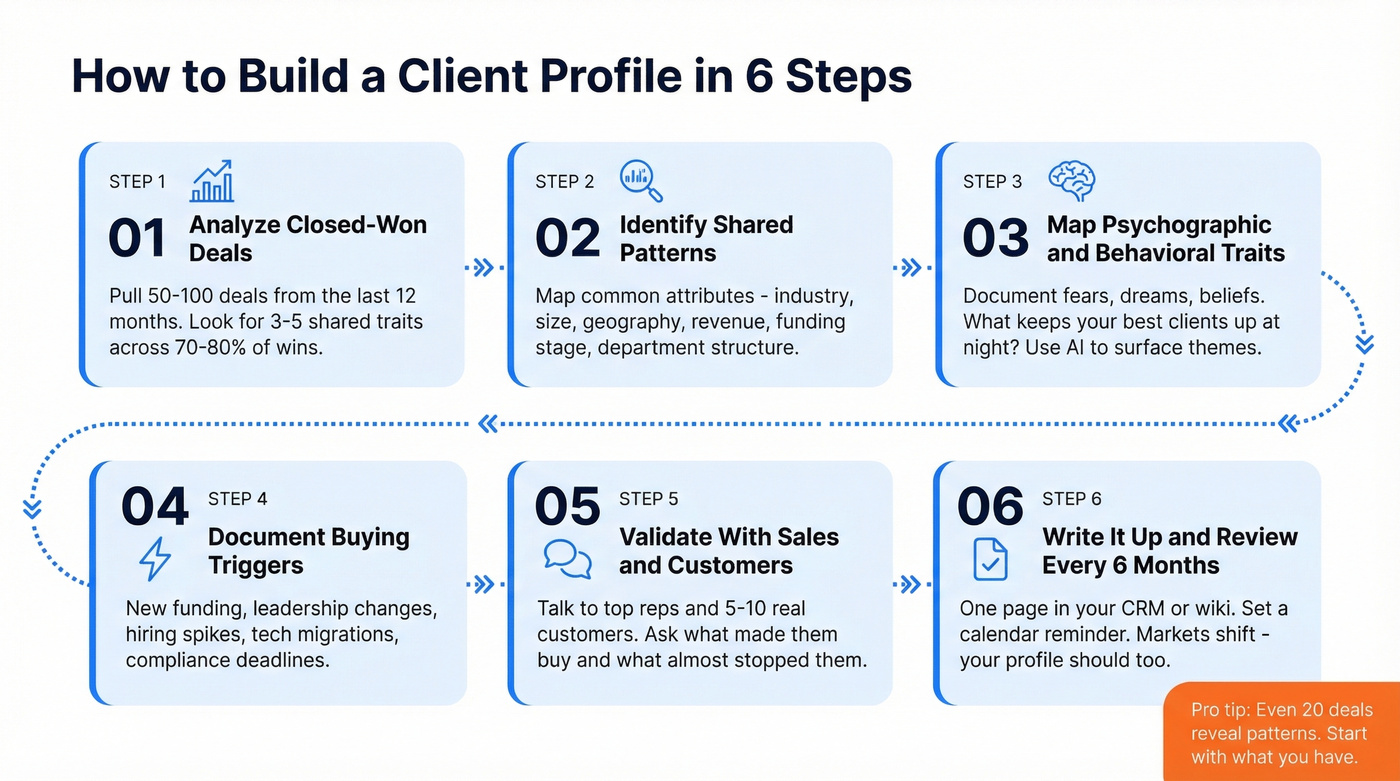
How to Build One in 6 Steps
Let's walk through this with an illustrative fictional company: NovaCRM, a 120-person SaaS startup selling CRM add-ons to mid-market sales teams.
Step 1: Analyze Closed-Won Deals
Pull 50-100 closed-won deals from the last 12 months. If you have fewer, start with what you've got - even 20 deals reveal patterns.
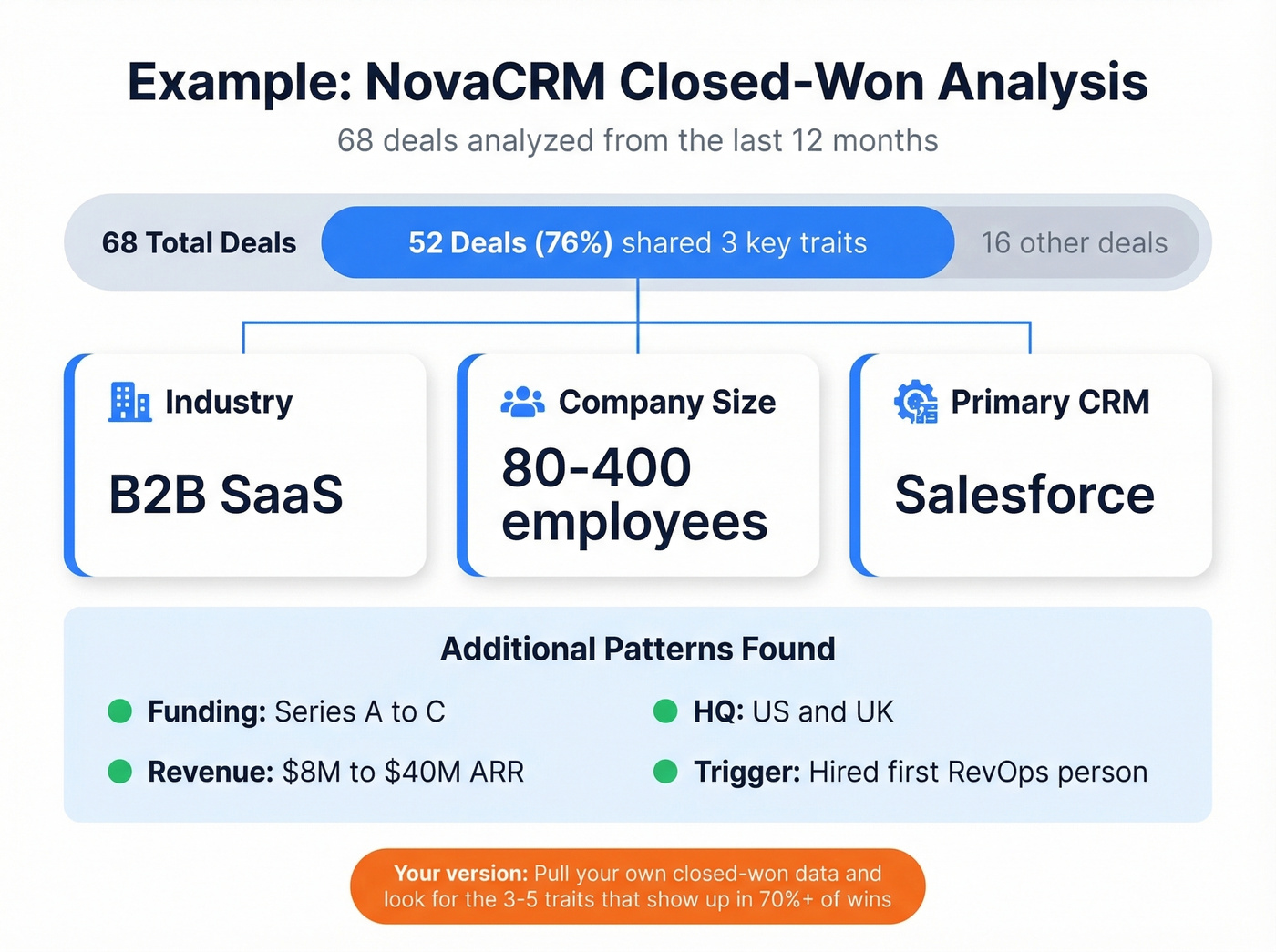
In our example, NovaCRM pulled 68 deals and found that 52 shared three traits: B2B SaaS industry, 80-400 employees, and Salesforce as the primary CRM. In our experience, 70-80% of wins typically share 3-5 traits like this. Those clusters are your profile's foundation.
Step 2: Identify Shared Patterns
Map the common attributes across your best deals. Industry, company size, geography, revenue range, funding stage, department structure.
NovaCRM's wins concentrated in Series A-C companies headquartered in the US and UK, with annual revenue between $8M and $40M. For B2C businesses, this step focuses on demographics - age, income, location, household composition. Don't overthink it yet. You're looking for the obvious patterns first.
Step 3: Map Psychographic and Behavioral Traits
This is where most profiles go from generic to useful. A practitioner on r/SaaS put it well: "Your avatar isn't a 'CFO at a 500 company'... it's John, 54, who's been burned by two failed implementations and is terrified of looking foolish in front of the board."
Document fears, dreams, beliefs, and what keeps your best clients up at night. NovaCRM's best buyers shared a specific anxiety: they'd been burned by "data quality" promises from previous vendors and were skeptical of any tool claiming high accuracy. That psychographic insight reshaped their entire sales deck.
You can accelerate this step with AI. Feed your CRM notes and customer interview transcripts into a tool like ChatGPT or Claude and ask it to identify recurring themes across your top 20 accounts. It won't replace the human judgment, but it surfaces patterns you'd miss scanning notes manually.
Step 4: Document Buying Triggers
What happened right before your best clients started evaluating solutions? Common B2B triggers include new funding rounds, leadership changes, hiring spikes in specific departments, technology migrations, and compliance deadlines.
NovaCRM found that 60% of closed-won deals started within 90 days of the prospect hiring their first dedicated RevOps person.
These triggers turn a "good fit" company into an "active buyer" company. Without them, your profile describes who to target but not when. Set up alerts in your CRM or data tool to flag when target accounts hit these triggers - a new funding round, a batch of SDR job postings, a leadership change. Automating trigger detection is the difference between reactive and proactive pipeline.
Step 5: Validate With Sales and Customers
Profiles built in a marketing bubble collect dust. Sit down with your top reps and ask: "Which deals closed fastest? Which ones had the highest LTV? Which ones were a nightmare?" Then talk to 5-10 actual customers. Ask what made them buy, what almost stopped them, and what they wish they'd known earlier. We've seen teams completely rewrite their profiles after these conversations.
Step 6: Write It Up and Set a Review Cadence
Document the profile in a format your team will actually reference - not a 40-page PDF. One page, shared in your CRM or wiki, with the key criteria, triggers, and scoring weights. Copy the templates below directly into your system and fill in your own data.
Set a calendar reminder to review it every six months. Markets shift, products evolve, and a profile that was accurate in January can be fiction by July. Modern CDPs and CRM platforms increasingly support AI-powered dynamic profiles that update automatically as new deal data flows in - if your stack supports this, use it. But even a manually reviewed profile beats one that's never revisited.
B2B and B2C Templates
These aren't blank worksheets. They're filled-in examples you can adapt.
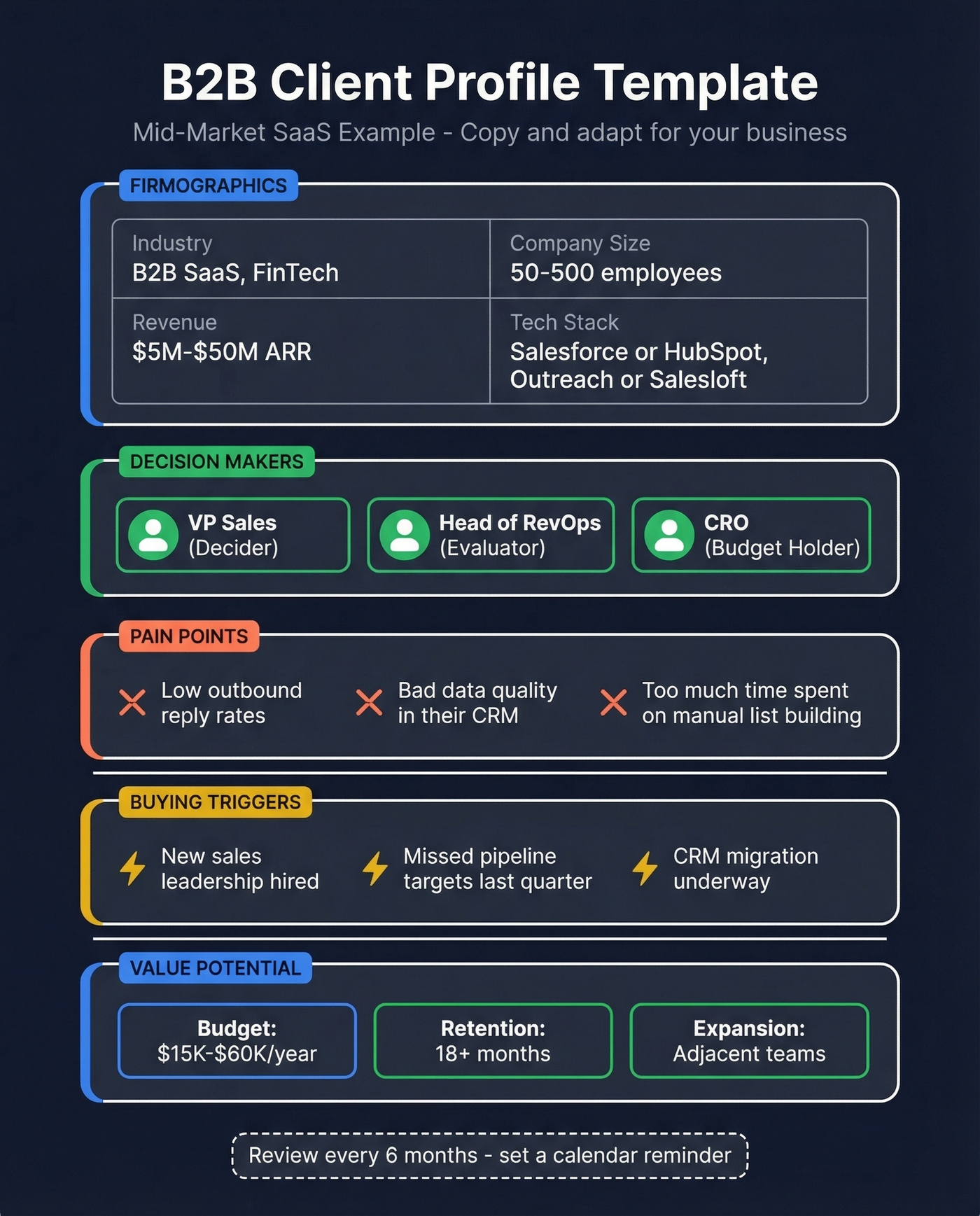
B2B Example: Mid-Market SaaS
| Field | Example Entry |
|---|---|
| Industry | B2B SaaS, FinTech |
| Company size | 50-500 employees |
| Revenue | $5M-$50M ARR |
| Tech stack | Salesforce or HubSpot CRM, Outreach or Salesloft |
| Decision-makers | VP Sales, Head of RevOps, CRO |
| Pain points | Low outbound reply rates, bad data quality, manual list building |
| Buying triggers | New sales leadership, missed pipeline targets, CRM migration |
| Budget range | $15K-$60K/year for data tools |
| Value potential | High LTV, 18+ month retention, expansion into adjacent teams |
B2C Example: DTC Ecommerce
| Field | Example Entry |
|---|---|
| Demographics | Women 28-42, household income $75K+ |
| Lifestyle | Health-conscious, active on Instagram/TikTok, values sustainability |
| Geography | Urban/suburban US, top 25 metros |
| Pain points | Overwhelmed by options, skeptical of greenwashing claims |
| Purchase behavior | Researches 2-3 weeks before buying, reads reviews, subscribes to newsletters |
| Preferred channels | Instagram, email, influencer recommendations |
| Price sensitivity | Moderate - willing to pay premium for quality/sustainability proof |
| Triggers | Seasonal transitions, life events (new baby, fitness goals) |
These examples are starting points. Your version should reflect your actual closed-won data, not aspirational guesses.

Your client profile defines the target. Prospeo's 30+ search filters - industry, headcount, revenue, funding stage, technographics, and buyer intent - turn that profile into an exported prospect list in minutes. 300M+ profiles, 98% email accuracy, $0.01 per lead.
Stop profiling into a vacuum. Start pulling verified contacts that match.
How to Score and Tier Profiles
Building a profile is step one. Scoring it turns a qualitative document into a prioritization engine. Without scoring, every "good fit" account gets equal attention, and your reps waste time on Tier C accounts that look like Tier A on the surface.
Use this 100-point rubric:
| Category | Weight | Example Criteria |
|---|---|---|
| Firmographics | 30 pts | Industry match (10), headcount 50-500 (10), revenue $5M+ (10) |
| Technographics | 20 pts | Uses Salesforce (10), runs Outreach/Salesloft (10) |
| Behavioral signals | 25 pts | Visited pricing page (10), downloaded content (8), attended webinar (7) |
| Trigger events | 25 pts | New funding (10), hiring SDRs (8), leadership change (7) |
Tier A (80-100 points): Priority accounts. Route them to your best reps for account-based outreach, personalize everything, and move fast. Tier A accounts typically convert at 1.5-2x the rate of Tier B with 15-20% shorter sales cycles.
Tier B (50-79 points): Good fit, but missing a trigger or a key firmographic signal. Nurture these - they often move to Tier A when circumstances change.
Tier C (0-49 points): Low priority. Automate outreach or skip entirely. Your team's time is better spent elsewhere.
One critical distinction: ICP scoring measures account fit - is this the right company? Lead scoring measures individual engagement - is this person showing buying intent? You need both, but don't conflate them. A perfect profile match with zero engagement signals isn't ready to buy. A highly engaged contact at a terrible-fit company isn't worth closing.
Here's a layer most guides skip: profitability validation. Not all responsive clients are profitable. Check LTV, CAC, and repeat purchase rates against your tiers. We've seen teams discover that their most enthusiastic segment was actually their least profitable because of high support costs and low expansion revenue.
And a hot take: if your average deal size is under $10K/year, you probably don't need a 100-point scoring model. A simple three-question checklist - right industry? right size? active trigger? - will get you 80% of the way there. Overengineering your scoring model before you have 100 closed-won deals is premature optimization.
From Profile to Prospect List
Most profiling frameworks stop at "now you have a profile." That's like giving someone a recipe and no ingredients. You've defined your ideal target. Now you need to find the companies and people who match it.
The bridge is translating your profile criteria into search filters in a B2B data tool. Industry, headcount range, tech stack, funding stage, intent signals - these aren't just profile fields, they're search parameters.
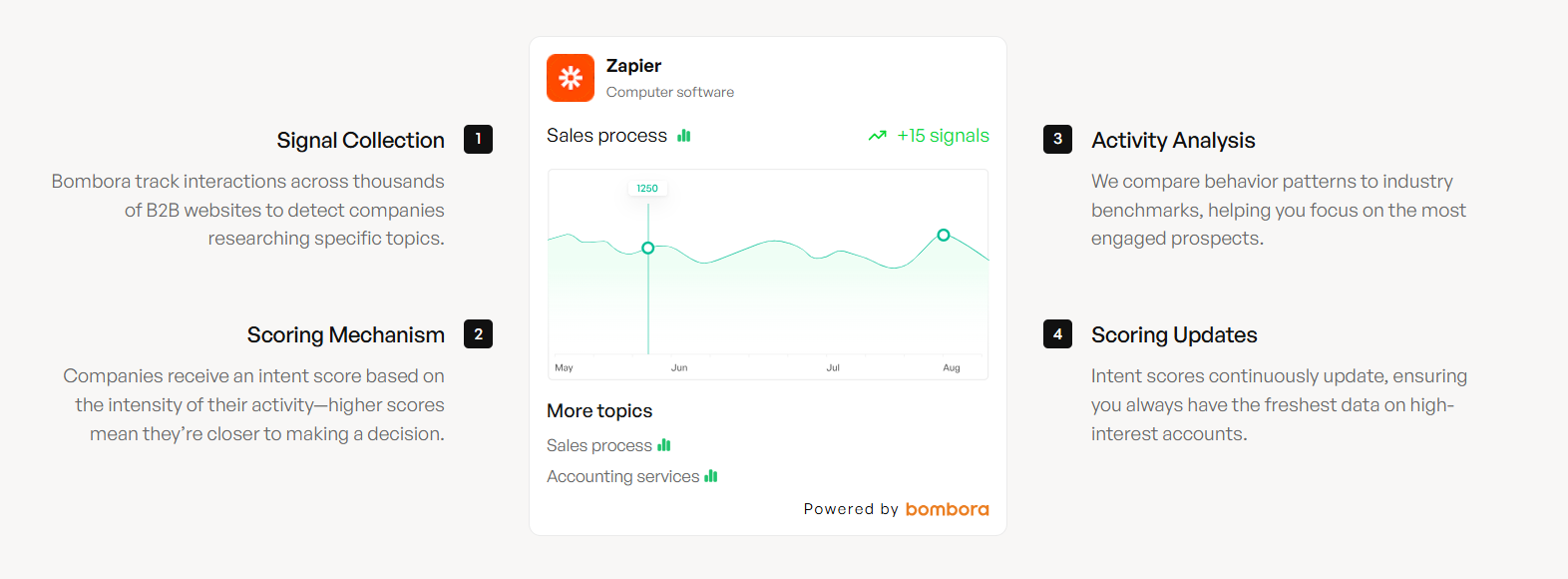
Prospeo's leads database covers 300M+ professional profiles with 30+ search filters including buyer intent powered by Bombora across 15,000 topics, job changes, headcount growth, funding signals, and revenue ranges. Email accuracy runs at 98% with a 7-day refresh cycle, so the data you pull today is still good next week. Pricing is credit-based starting at roughly $0.01/email, with a free tier of 75 emails/month and no contracts - so you can go from finished profile to exported prospect list in the same afternoon.
If you want a more hands-on workflow for turning criteria into lists, see list building and how to automate target account lists.

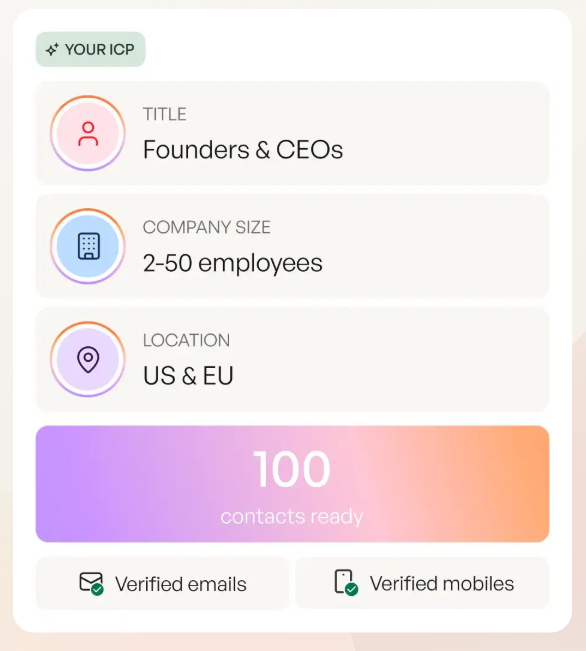
NovaCRM filtered by SaaS, 80-400 employees, and Salesforce users. You can do exactly that in Prospeo - filter by company size, industry, tech stack, and even intent signals across 15,000 topics. Every email is verified on a 7-day refresh cycle.
Go from client profile to scored prospect list without switching tabs.
Profiles for Freelancers and Agencies
Most guides assume you have a RevOps team and a six-figure tool budget. But the concept of a client profile actually skews heavily toward service businesses - freelancers, agencies, and consultancies who need to define their criteria before they start prospecting.
The approach is different. You're not doing market research from scratch. You're building from clients you've already served. Look at your last 10-15 projects and ask: which clients paid on time, respected scope, gave useful feedback, and referred others? Those are your Tier A clients. Document what they have in common.
For freelancers, the profile should include payment reliability, scope alignment, communication style, referral likelihood, and project type. A web designer whose best clients are funded B2B startups needing brand redesigns has a very different ideal target than one whose best clients are local restaurants needing simple sites.
Send a short feedback survey after each project to build data over time. Three questions are enough: what went well, what could improve, and would you refer me? Over six months, patterns emerge that no amount of upfront research could reveal.
7 Mistakes That Kill Your Pipeline
1. Treating your profile as a wishlist. Your profile should reflect your best current clients, not the Fortune 500 logos you dream about. If your biggest wins are 200-person SaaS companies, don't build a profile around enterprise banks.
2. Waiting for "enough data" before starting. This is one of the most common excuses for never building a profile. Start with 20 closed-won deals and iterate. Perfection is the enemy of a functional profile.
3. Copying B2C demographic thinking into B2B. Age and gender don't predict B2B buying behavior. Firmographics, buying committee structure, and tech stack do. Reddit practitioners are vocal about this - it's the single most common profiling mistake in B2B.
4. Building in a marketing bubble. If your sales team and customer success team didn't contribute to the profile, it's incomplete. Marketing sees the top of funnel. Sales sees what actually closes. CS sees what retains.
5. Never updating it. Markets shift. Your product evolves. Competitors enter and exit. A profile that's more than six months old without a review is probably wrong in at least one critical dimension.
6. Creating the profile and never operationalizing it. A profile that doesn't connect to your lead scoring, territory assignments, and outreach sequences is just documentation. It needs to live in your CRM, not a slide deck.
7. Building "fairytale personas" without talking to customers. This one comes straight from practitioner complaints on Reddit. If nobody on your team has interviewed an actual customer in the last quarter, your profile is fiction. And ignoring profitability makes it worse - high-touch, low-ACV accounts that churn at 12 months look great in your pipeline but destroy your unit economics. Validate profiles against LTV and CAC, always.
Data Privacy and Compliance
Client profiling involves collecting and storing personal data. Get this wrong and the consequences are real - not just reputational, but financial.
A practical compliance checklist:
- Consent requirements: Under GDPR, consent must be freely given, specific, informed, and unambiguous. Pre-checked boxes and bundled consent violate the regulation. Vague purposes like "improving user experience" don't meet the standard.
- Purpose limitation: Collect data for a stated purpose and don't repurpose it without fresh consent. If you collected an email for a newsletter, you can't silently add it to a cold outreach sequence.
- Data minimization: Only collect what you actually need for profiling. More data isn't always better if you can't justify holding it.
- GPC signal honoring: Under CCPA/CPRA, you're expected to honor Global Privacy Control signals from browsers. If a user's browser says "don't sell my data," respect it.
- Penalties are real: GDPR fines reach EUR20M or 4% of global turnover. CCPA penalties run $7,500 per intentional violation and $2,500 per unintentional one.
A Cisco survey found that 81% of consumers believe how an organization treats personal data reflects how it respects customers. Good data hygiene isn't just legal protection - it's a trust signal. This isn't legal advice, but it's a starting point for any team building profiles.
Tools for Building Profiles
A quick primer on tool types: a CRM like Salesforce or HubSpot stores contact and deal records. A CDP unifies behavioral and transactional data into persistent profiles with identity resolution. A DMP handles anonymous, cookie-based audiences for advertising. Most teams doing customer profiling need a CRM. Some need a CDP. Very few need a DMP.
The CDP market is projected to reach $37.11B by 2030, which tells you how much money is flowing into this space.
Pricing varies widely by edition and modules. Salesforce starts around $25/user/month and scales into the hundreds for advanced editions and add-ons. HubSpot has a free CRM tier, with paid plans starting around $20-$50/user/month depending on the hub. Segment offers a free developer tier, with paid plans starting in the low hundreds per month.
If you're evaluating options, it helps to compare examples of a CRM and broader contact management software before you commit.
Many of these platforms now offer AI-assisted profiling - automatically clustering your closed-won accounts, flagging profile drift, and suggesting updates when new deal data contradicts your existing criteria. If your CRM supports it, turn it on.
Look, you don't need a CDP to build your first client profile. You need 50 closed-won deals and an honest conversation with your sales team. The tooling comes after the thinking, not before it.
FAQ
How often should I update my client profile?
Every six months minimum, quarterly if your market or product shifts fast. Set a calendar reminder - profiles that aren't reviewed become fiction. The biggest risk isn't having a wrong profile; it's having one that drifted 18 months ago and nobody noticed.
What's the difference between a client profile and a buyer persona?
A client profile defines the ideal company or client type based on firmographics, needs, and value potential. A buyer persona describes the individual decision-maker - their goals, fears, and behaviors. In B2B, you need both: the profile tells you which accounts to target, the persona tells you how to talk to the humans inside them.
How many closed-won deals do I need to start?
Twenty deals from the last 12 months is enough to surface initial patterns. Aim for 50-100 for statistical confidence. Waiting for perfect data is the most common excuse for never building a profile at all.
How do I turn my profile into a prospect list?
Map your criteria - industry, headcount, tech stack, intent signals - to search filters in a B2B data tool. Prospeo lets you search 300M+ profiles with 30+ filters and returns verified contact data at 98% email accuracy, so you go from profile to actionable list in minutes.
Is the profiling process different for B2B vs. B2C?
The core process is the same: analyze your best customers, identify shared traits, and document the patterns. The data categories shift - B2B leans on firmographics and technographics while B2C emphasizes demographics and lifestyle. But in both cases, the goal is to define criteria that separate high-value accounts from everyone else.