

Cold Calling Leads: How to Source, Qualify, and Dial a List That Converts
Your SDR spent three hours dialing yesterday and booked zero meetings. Not because they're bad at selling - because 40% of the numbers were disconnected, another 20% went to people who left that company six months ago, and the rest hit voicemail. Cold calling is a data problem before it's a skills problem. 92% of B2B buyers say they're open to relevant cold outreach when it actually reaches them. The gap between "open to it" and "never picks up" is your cold calling leads list.
The Short Version
Teams using verified, ICP-targeted data hit 11.3% success rates versus the 2.7% industry average. Below, we cover where to get leads for cold calling, how to verify them, how to prioritize your list, and what compliance rules matter in 2026.
Quick tool picks:
- Prospeo - best accuracy-to-price ratio, 98% verified emails, 125M+ verified mobiles, 7-day data refresh
- Apollo - best free tier for bootstrapped teams
- Cognism - best for EMEA compliance and phone-verified mobiles
Why Cold Calling Still Works
Stop obsessing over your script. Start obsessing over your list.
Cold calls had a 4.82% success rate in 2024 - defined as conversations that resulted in a meeting booked, per Cognism's WHAM dataset. By 2025, that number dropped to roughly 2.3-2.5%. Sounds terrible until you realize that's the average across every team dialing garbage data with no targeting. Top-performing teams convert at 5-8%+, and the common thread is cleaner data and tighter targeting.
The difference isn't talent. It's the list.
A rep dialing 200 verified, ICP-matched numbers will outperform a rep dialing 500 scraped contacts every single time - the math isn't close. Cold calling also sharpens every other sales skill: objection handling, discovery, tonality. The best closers almost always started on the phones. If you're only running email sequences, you're leaving reps underdeveloped and pipeline on the table.
2026 Benchmarks
| Metric | Number | Source |
|---|---|---|
| Success rate (2024) | 4.82% | WHAM dataset |
| Success rate (2025 avg) | ~2.3-2.5% | SalesHive benchmarks |
| Connect rate | 3-10% | Varies by list quality |
| Voicemail rate | 80% | RAIN Group |
| Dials per appointment | 209 | Bridge Group avg |
| Optimal attempts | 3 (93% of convos) | WHAM dataset |
| Avg call duration | 93 sec | Up from 83 sec YoY |
| Best day | Tuesday | Highest bookings |
| Best timing | 5 min before hour or half-hour | Between-meetings window |
| Unanswered (unknown #) | 79% | Hiya |
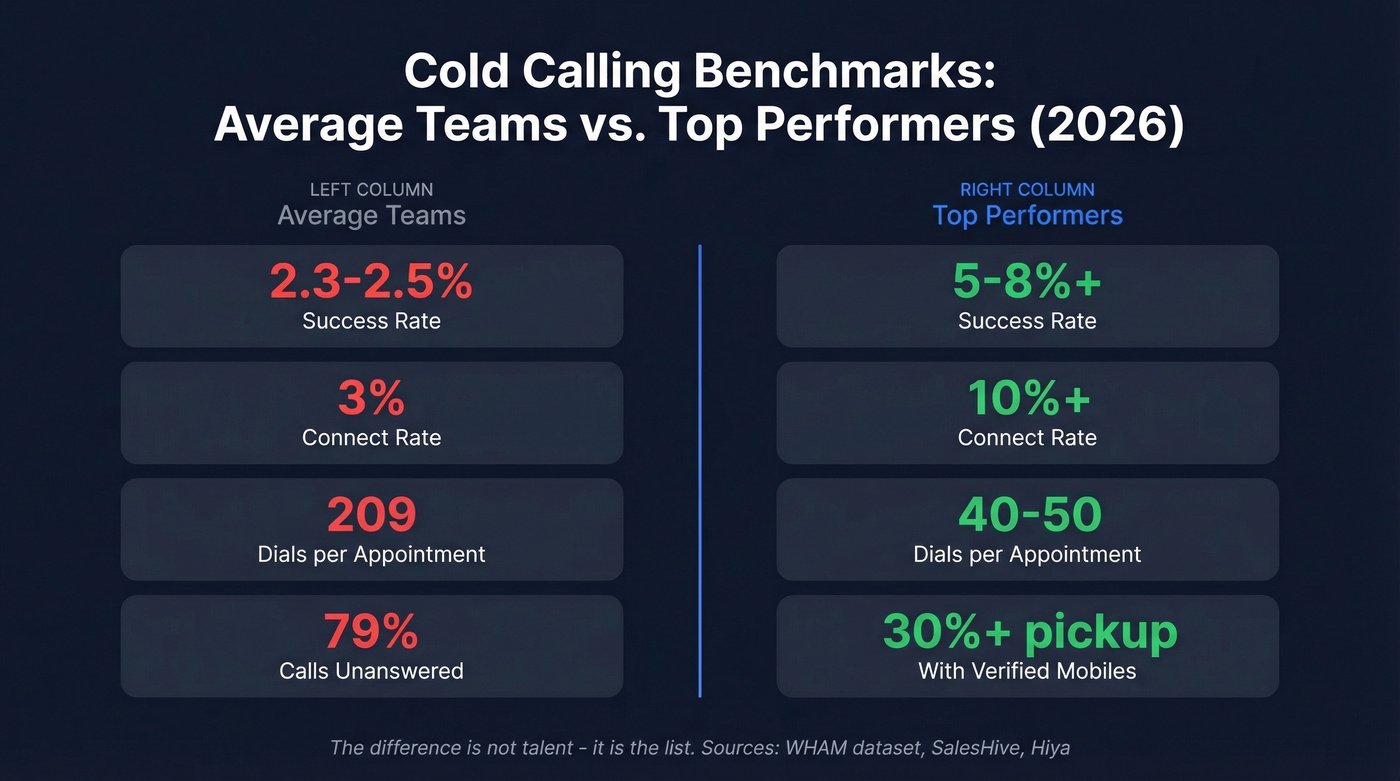
That 209-dials-per-appointment figure is misleading. It includes teams dialing unverified lists full of disconnected numbers and wrong contacts. We've seen teams with clean, verified data cut that ratio to 40-50 dials per meeting. The teams that obsess over list quality before hiring more SDRs always outperform - in our experience, it's not even a debate.
The 79% unanswered rate for unidentified callers should scare you most. If your caller ID shows up as unknown or spam-flagged, nearly four out of five prospects won't even pick up.
Here's the thing: if your dashboard tracks raw dial volume, you're incentivizing speed over quality. Measure SDRs on qualified conversations and opportunities created. A rep who dials 80 verified numbers and books 3 meetings is worth five reps hammering 300 random contacts each.
How to Build a Cold Calling List
Get this right and everything downstream - the script, the cadence, the objection handling - gets easier.
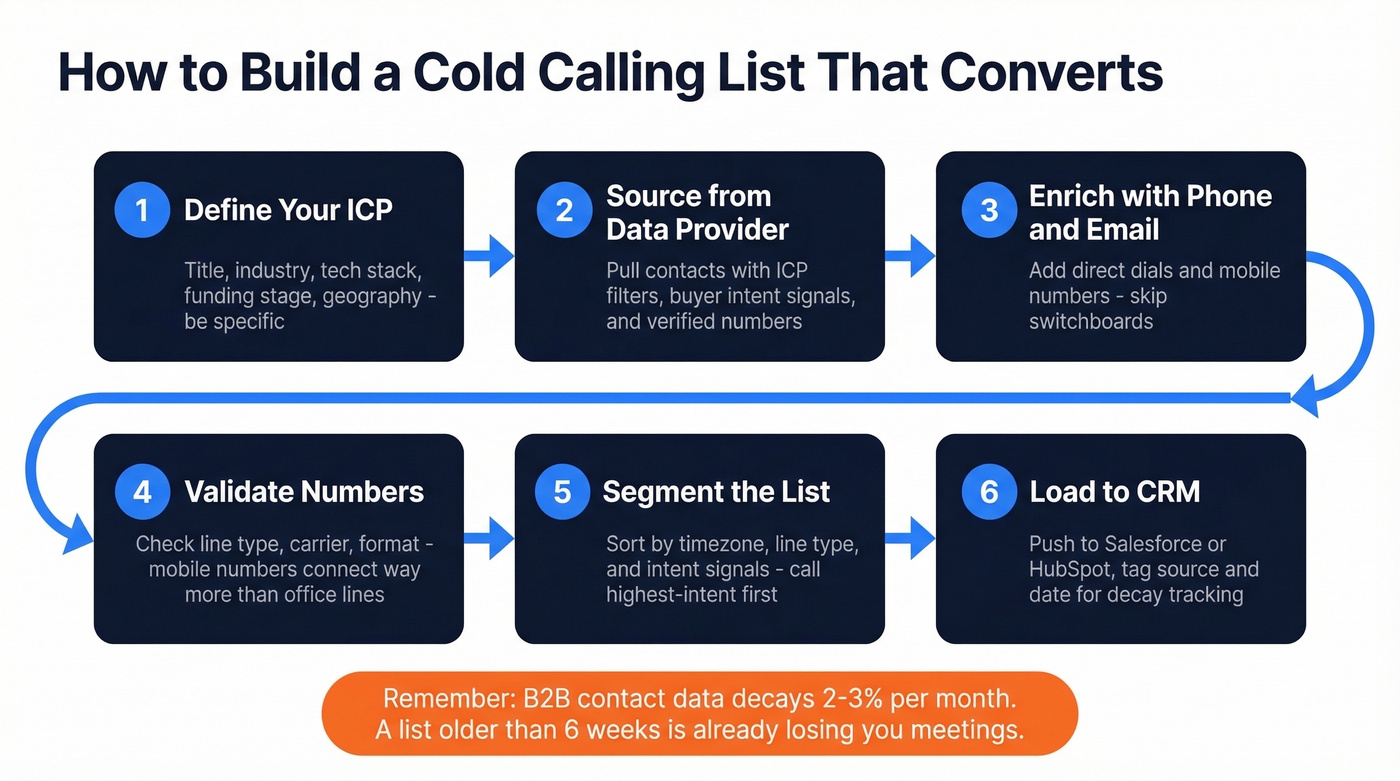
Step 1: Define your ICP. Not "companies with 50-500 employees." Specific. Title, department, industry vertical, tech stack, funding stage, geography. The tighter your ICP, the fewer dials you waste. (If you need a scoring rubric, start with an Ideal Customer Profile template.)
Step 2: Source contacts from a data provider. This is where most teams either overpay or underinvest. Use a database with ICP filters - buyer intent, technographics, job changes - and pull a list with verified emails and mobile numbers. Data freshness matters because B2B contact data decays 2-3% per month, meaning roughly 22.5% of your list goes stale annually. (More options: best sales prospecting databases.)
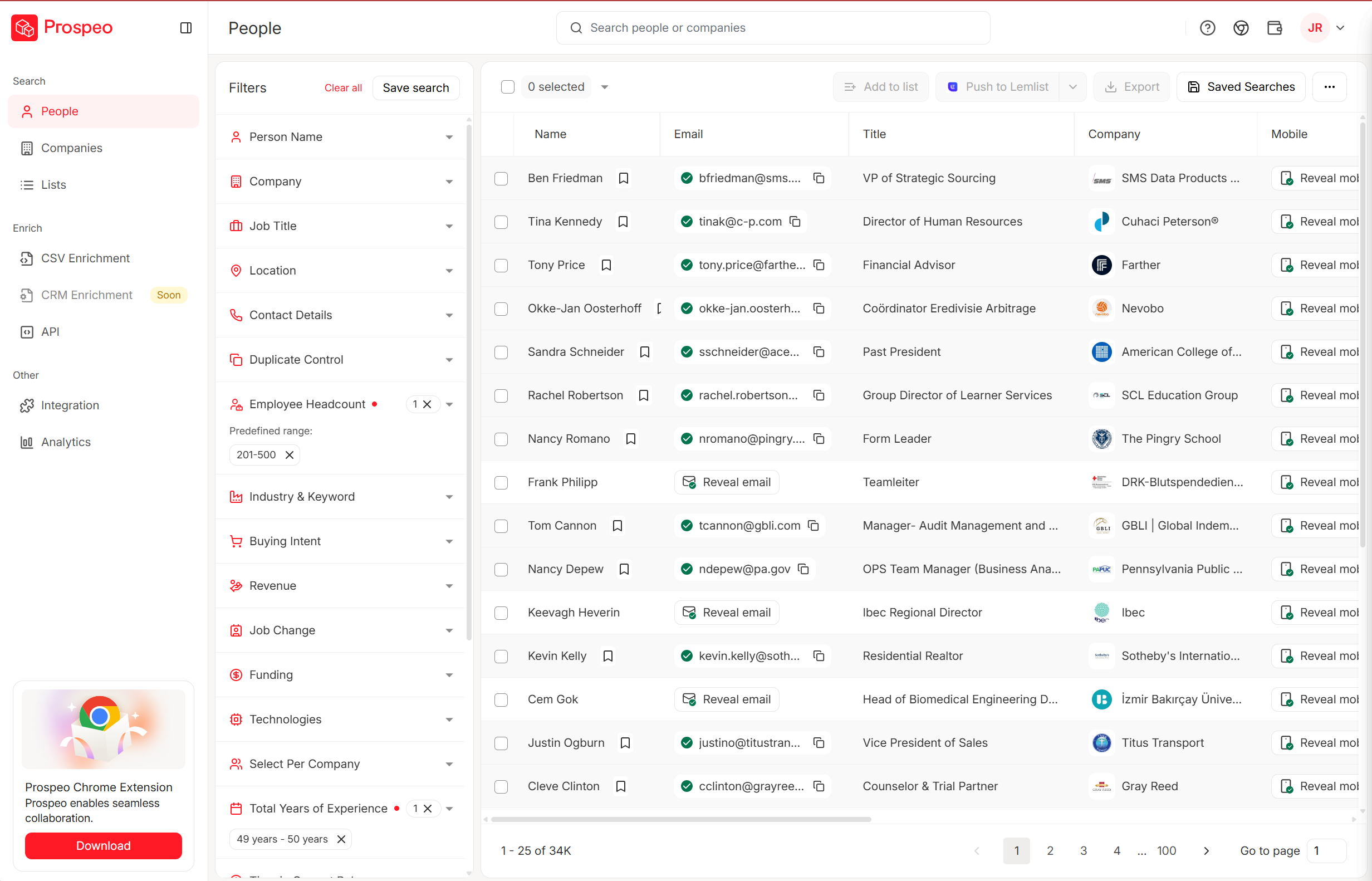
Step 3: Enrich with phone and email. If your source doesn't include direct dials, run the list through an enrichment tool. You want mobile numbers, not switchboards. (See: data enrichment services.)
Step 4: Validate numbers. Check line type, carrier, and format. Mobile numbers connect at dramatically higher rates than office lines. VoIP numbers often route to a receptionist. (Related: lead enrichment.)
Step 5: Segment by timezone, line type, and intent. Call West Coast prospects in the afternoon. Prioritize mobile numbers. Stack intent-signaling accounts at the top - these are prospects actively researching solutions like yours. (If you want a tighter model, use a lead scoring framework.)
Step 6: Load to CRM. Push your segmented list into Salesforce, HubSpot, or your sequencer. Tag the source and date added so you can measure which lists convert. (If you're building the rest of the stack, see our SDR tools roundup.)
Here's the field schema every list needs:
| Field | Why It Matters |
|---|---|
| Name + Title | Personalization + gatekeeper nav |
| Company + Size | ICP fit confirmation |
| Industry | Vertical-specific messaging |
| Phone (mobile preferred) | The whole point |
| Multi-channel follow-up | |
| Location + Timezone | Call window scheduling |
| Source + Date Added | Decay tracking + ROI |

You just read the field schema every cold calling list needs. Prospeo fills every column - 125M+ verified mobile numbers, 98% email accuracy, and 30+ ICP filters including buyer intent and job changes. Data refreshes every 7 days, not 6 weeks, so your reps stop dialing people who left the company last quarter.
Cut your dials-per-meeting ratio in half. Start with data that connects.
Data Providers Compared
| Provider | Starting Price | Database | Key Strength | Best For |
|---|---|---|---|---|
| ZoomInfo | $15K-$45K+/yr | 260M+ profiles | Deepest US dataset | Enterprise RevOps |
| Apollo | Free / $49 / $79 / $119 per user/mo | 270M+ contacts | Best free tier | Bootstrapped teams |
| Cognism | ~$15K-$25K platform fee + per-user/yr | 10M+ phone-verified | GDPR compliance | EMEA-focused teams |
| Lusha | Free-$52.45/mo/user | Browser extension | Quick lookups | Individual reps |
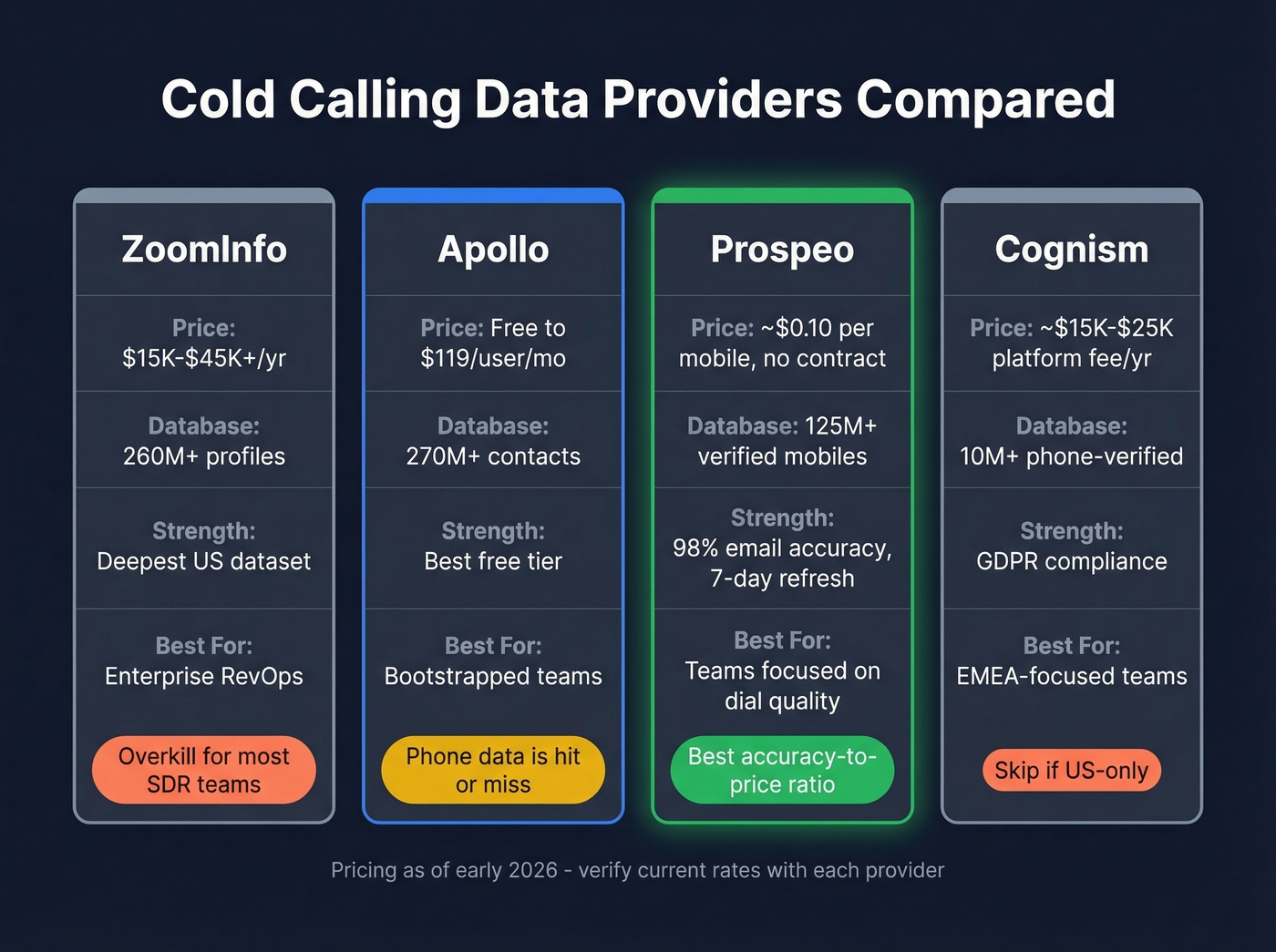
ZoomInfo is overkill for most cold calling teams. At $15-45K/year, it's built for enterprise RevOps running intent, ABM, and enrichment from one platform. If you're an SDR team that needs 500 verified numbers a week, you don't need that.
Apollo is the right call if you're bootstrapped and need to start prospecting today. The free tier is genuinely useful - but email accuracy drops off compared to dedicated verification tools, and the consensus on r/sales is that Apollo's phone data is hit-or-miss.
Prospeo sits in the sweet spot for teams focused on dial quality: 98% email accuracy, a 30% mobile pickup rate, and a 7-day data refresh cycle versus the 4-6 week industry average. Self-serve pricing means no annual contracts or sales calls.
Skip Cognism if you're US-only. Their phone-verified mobile dataset is strongest in EMEA, and the platform fee doesn't make sense unless you need that geographic coverage.
Bad phone data costs you 3 hours of wasted dials and zero meetings. Prospeo's 125M+ verified mobiles deliver a 30% pickup rate - nearly 3x the industry average. At roughly $0.10 per mobile number with no annual contract, you get enterprise-grade dial lists without the enterprise price tag.
Stop paying for disconnected numbers. Start booking meetings.
Where to Find Phone Numbers
Not every prospect's number lives in a database. Nine methods, ranked by yield:
- B2B prospecting tool - highest volume, lowest effort. Pull verified mobiles directly from your data provider.
- Professional profiles - browse profiles on professional networking sites and use a Chrome extension to reveal contact details.
- Network referrals - ask existing contacts for warm introductions. The number you get this way almost always picks up.
- Company switchboard - call the main line and ask for the person by name. Old school, but it works for executives with gatekeepers.
- Bulk phone finder - upload a CSV of names and companies, get numbers back in minutes. (If you're doing this at scale, consider a lead builder workflow.)
- Online directories - Crunchbase, company websites, and industry directories sometimes list direct contacts for leadership.
- Google search operators - try
"VP Sales" "company name" "phone". You'd be surprised what's indexed. (If you're tempted to scrape, read our web scraping lead generation guide first.) - Personal sites and resumes - founders and consultants often list mobile numbers on personal websites.
- Direct ask - send an email asking for a quick call and request their preferred number. Simple, underused.
Methods 1, 2, and 5 are where you'll get 80% of your numbers. The rest are fallback tactics for hard-to-reach prospects.
How to Prioritize and Dial
Not all leads deserve a call. Stack-rank your list using two layers: pre-call intelligence and on-call qualification.
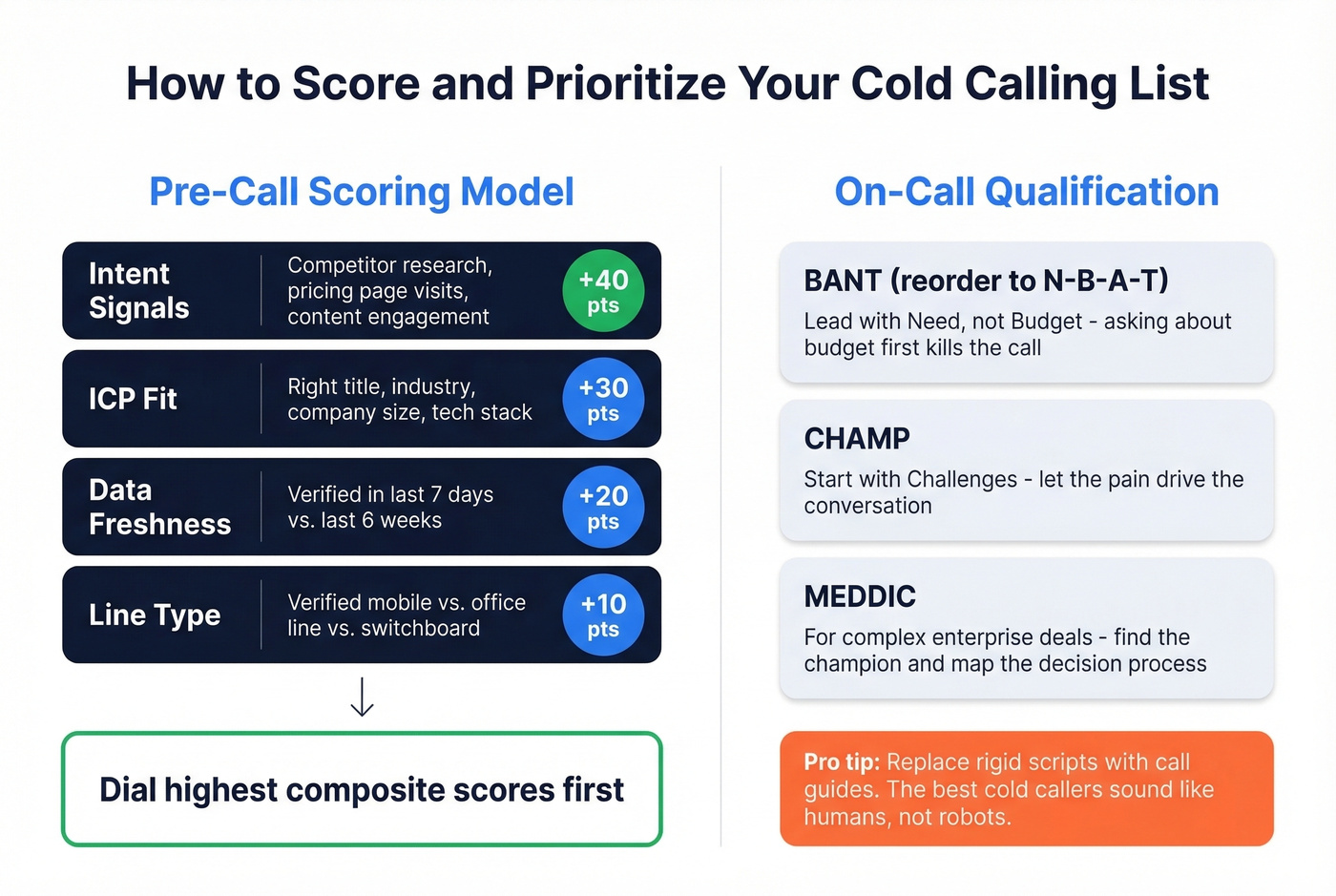
Pre-call signals that indicate buying intent include competitor research activity, pricing page visits, content engagement spikes, recent funding rounds, and leadership changes. If a prospect's company is actively evaluating solutions in your category, they go to the top of the list. A simple scoring model works well here: assign points for intent signals, ICP fit, data freshness, and line type, then dial highest composite scores first. (More on this: identifying buying signals.)
On-call qualification frameworks:
| Framework | Focus | Best For |
|---|---|---|
| BANT | Budget, Authority, Need, Timeline | Transactional sales |
| CHAMP | Challenges first, then Authority, Money, Priority | Pain-led discovery |
| MEDDIC | Metrics, Economic Buyer, Decision Criteria, Process, Pain, Champion | Complex enterprise |
Let's be honest about BANT for a second. Leading with "Do you have budget for this?" is the fastest way to kill a cold call. Use N-B-A-T ordering instead - uncover the pain first, confirm authority and budget through research tools before you ever pick up the phone, and save timeline for the close of the conversation. Replace rigid scripts with call guides that give reps a framework but let them adapt. The best cold callers sound like humans, not robots reading a teleprompter. (If your team needs a full operating model, build a cold calling system.)
Compliance Rules for 2026
Compliance isn't optional, and the penalties are steep enough to sink a small company.
- TCPA penalties: $500 per violation, up to $1,500 per willful violation
- DNC penalties: up to $43,792 per infraction
- Calling hours: 8am-9pm local time only
- Caller ID spoofing: prohibited - your number must be real and callable
- DNC scrubbing: check both the National DNC Registry and state-level lists before every campaign
2025 TCPA Update (Still in Effect): As of April 2025, consumers can revoke consent by "any reasonable means" - text, email, voicemail, verbal request, even social media. You have 10 business days to honor the opt-out, down from the old 30-day window. One confirmation message is allowed after SMS opt-out, must be sent within 5 minutes, and can't contain any marketing.
B2B live-agent calls to established business numbers are generally less restricted. But mobile numbers - even when they belong to a business contact - are treated as consumer lines under TCPA. If you're dialing mobiles for better connect rates, the full TCPA rules apply. No exceptions.
FAQ
How many dials to book a meeting?
The industry average is roughly 209 dials. Top teams with verified data cut that to 40-50 by eliminating disconnected numbers and wrong contacts. The gap is almost entirely a data quality problem, not a skills gap.
What's the best time to cold call?
Five minutes before the hour or half-hour catches prospects between meetings. Peak windows are 8-9 AM and 4-5 PM local time. Tuesday converts highest across most B2B benchmarks; Friday afternoons are dead.
Is cold calling legal in 2026?
Yes, with restrictions. Scrub against the National DNC Registry, honor state lists, call only 8am-9pm local, display accurate caller ID, and comply with the 2025 TCPA consent revocation rules. B2B calls to business lines have fewer restrictions, but mobile numbers follow consumer rules regardless of ownership.
What's a good free tool for building a call list?
Prospeo's free tier includes 75 verified emails and 100 Chrome extension credits per month - enough to test list quality before committing budget. Apollo also offers a generous free plan, though email accuracy is lower. Both beat manually scraping contacts from directories.