

How Demand Generation Leads Actually Build Pipeline (And Why Most Teams Get It Wrong)
"A lot of clicks and no leads." That's how one practitioner on r/PPC summed up their demand gen campaign results. They're not alone - 79% of marketing leads never convert to sales due to poor nurturing and qualification. The problem isn't demand generation leads as a concept. It's how most teams execute the process from awareness to pipeline.
We're going to cover three things: a lead scoring model with actual point values, a channel-by-channel cost breakdown for 2026 planning, and the tool stack that closes the gap between "interested" and "in pipeline."
What Are Demand Generation Leads?
Lead gen captures contact information from people who already want something - a demo, a whitepaper, a free trial. Demand gen creates the want in the first place.
Forrester data shows 92% of buyers start their search with at least one vendor already in mind. Someone put that vendor on their mental shortlist before a single form was filled out. And here's the stat that should reshape your strategy: 6sense found the winning vendor is on the buyer's Day One shortlist 95% of the time. If you're not on that list, your lead gen campaigns are fighting for the 5%.
A demand generation lead isn't someone who downloaded your ebook. It's someone who already associates your brand with the solution to their problem - and raises their hand because you've earned their attention over weeks or months.
Why Demand-Driven Leads Beat Direct Capture
The average B2B buying cycle runs 10.1 months. First contact with a vendor doesn't happen until 61% of the journey is complete, and buyers complete up to 69% of that journey anonymously - no form fills, no CRM records.
This is the dark funnel. Peer conversations in Slack communities, private threads, internal meetings, and word-of-mouth recommendations where buying decisions form but no attribution tool can track. HockeyStack analyzed 1.5M+ contacts across 50+ B2B SaaS companies and found it takes 222+ touchpoints on average to close a complex deal. Most of those touchpoints happen in dark social channels you'll never instrument.
Cognism's own data showed a 0.2% close rate on gated content leads versus 20% on direct inbound. That's a 100x difference.
Let's be honest: teams that invest in brand awareness and category education for 6-12 months before ramping outbound consistently crush the ones that skip straight to "book a demo" ads. The leads that come in because someone already trusts your brand don't need convincing - they need a conversation.
The 3 Stages of Buyer Demand
The FullFunnel framework breaks buyer demand into three stages, each with different timelines and intent levels:
Content demand (6-8 months out). The buyer doesn't know they have a problem yet. They're consuming educational content, listening to podcasts, reading industry takes. Your job here is to be useful and visible - not to sell.
Solution demand (3-6 months out). The buyer knows they need a solution and is comparing approaches - build vs. buy, platform vs. point solution. This is where thought leadership and comparison content earn their ROI.
Vendor demand (1-3 months out). The buyer is shortlisting vendors. 86% of enterprise buyers shortlist vendors they'd already heard of before starting formal research. If you didn't show up in the first two stages, you probably won't make the cut here.
Buyers do a lot of work without you. Salesforce research found that 81% of sales reps say buyers research brands on their own before connecting with sales. And demand gen doesn't stop at closed-won - the same awareness motions that create pipeline also drive expansion revenue through upsells, cross-sells, and renewals from existing customers who see you as a category leader.
Channel Benchmarks for 2026
One of the biggest gaps in demand gen planning is knowing what each channel actually costs. Here's a benchmark comparison from FirstPageSage that we've found directionally accurate in our own campaigns:
| Channel | Avg CAC | Time to Results | ROI |
|---|---|---|---|
| Thought Leadership SEO | $647 | 4-6 months | 748% |
| Webinars | $603 | 2-4 months | 430% |
| $510 | 3-6 months | 312% | |
| Podcasts | $1,472 | 12-18 months | 307% |
| LinkedIn Organic | $658 | 6-8 months | 229% |
| ABM | $4,664 | 4-8 months | 240% |
| LinkedIn Ads | $983 | 3-4 months | 192% |
| PPC/SEM | $802 | 1 month | 36% |
For reference, average CPL runs lower than full CAC: roughly $31 for SEO, $53 for email, and $72 for webinars - but CPL doesn't account for the full customer acquisition cost.
PPC is the most overfunded channel in B2B marketing. Teams over-index on paid search because it "works fast," then end up with an $800+ CAC and no compounding asset. SEO content takes 4-6 months to ramp but delivers nearly 750% ROI because the asset keeps producing long after you stop paying.
A reasonable starting allocation for a mid-market B2B team: 40% SEO/content, 25% webinars, 20% email, 15% paid social. Adjust based on your sales cycle length and where your buyers actually spend time.

You're investing months in demand gen to land on buyer shortlists. Don't waste that pipeline on bad contact data. Prospeo delivers 98% email accuracy and 125M+ verified mobile numbers - refreshed every 7 days - so when demand-driven leads finally raise their hand, you actually reach them.
Stop losing warm pipeline to bounced emails and dead phone numbers.
Build a Lead Scoring Model
Explicit + Implicit Scoring
Most scoring models fail because they over-weight engagement and under-weight fit. Someone who downloads three whitepapers but works at a 5-person agency isn't a better lead than a VP of Engineering at a 2,000-person SaaS company who visited your pricing page once.
Here's a scoring template with actual point values:
| Signal | Type | Points |
|---|---|---|
| C-level title | Explicit | +50 |
| Company 1,001+ employees | Explicit | +50 |
| Tech/Finance industry | Explicit | +30 |
| Company 1-50 employees | Explicit | +10 |
| Pricing page visit | Implicit | +50 |
| Demo request | Implicit | +35 |
| Case study view | Implicit | +25 |
| Whitepaper download | Implicit | +20 |
| Blog visit | Implicit | +10 |
Set your MQL threshold around 60 points and SQL at 80. A C-level exec at a large tech company who visits your pricing page hits SQL immediately: 50 + 50 + 30 + 50 = 180. A small-company lead who reads a blog post and downloads a whitepaper barely registers at 40. The model reflects buying power and intent, not just activity.
If you want a deeper framework (and common pitfalls), see our guide to lead scoring.
Predictive Scoring
Manual scoring works until you have enough data to go predictive. The path: integrate your data sources into one layer, define your ICP from closed-won customers rather than assumptions, build and validate the model on historical conversion data, then automate routing by threshold.
Tools like HubSpot, Salesforce Einstein Lead Scoring, and MadKudu handle the ML layer. Layer in intent data to weight in-market signals alongside firmographic and behavioral criteria - a company that matches your ICP and is actively researching your category is worth far more than one that just matches on firmographics.
AI's Impact on Scoring
One shift you can't ignore: nearly 90% of buyers now use generative AI during their purchasing research, and 75% of B2B marketing leaders have integrated AI into their workflows. The practical payoff is in personalization - AI-personalized outbound campaigns achieve 15-25% reply rates versus 1-5% for generic sequences. If you're still sending the same nurture email to every MQL, you're leaving pipeline on the table.
Conversational AI tools like chatbots can also qualify and route leads in real time, compressing the gap between intent signal and sales conversation. Even with a solid scoring model, though, teams sabotage their demand gen in predictable ways.
Mistakes That Kill Lead Quality
Optimizing for MQLs over revenue. Chasing form fills inflates your funnel and deflates your pipeline. Tie marketing metrics to closed-won revenue, not lead volume.
Static ICP definitions. Firmographics alone miss behavioral and in-market signals. Add intent data and product usage signals to your ICP criteria.
Launching ads without buyer research. Generic copy that doesn't match buyer language wastes budget. Interview 10 recent customers before writing a single ad. We've seen teams cut CPL by 30-40% just by using customer language instead of internal jargon.
No unified strategy. Random campaigns across channels with no connecting narrative. Map every campaign to a funnel stage and a specific buyer persona.
Over-reliance on paid ads. Paid gets you traffic today but builds no compounding asset. Allocate at least 40% of budget to organic content.
Content that talks about your brand, not buyer problems. Nobody cares about your product until they care about their problem. Lead with the pain, not the feature.
Weak lead nurturing in long cycles. Leads go cold in 10-month buying cycles without consistent, relevant touchpoints. Build behavior-triggered nurture sequences that adapt to engagement signals - this is where demand gen and lead gen overlap, because the same nurture motions that build awareness also move qualified contacts toward a buying decision.
The Data Quality Multiplier
Here's the thing most demand gen articles skip entirely: none of your investment matters if your SDRs can't reach the people showing intent.
If 35% of your emails bounce, your demand gen investment dies at the handoff. You've spent months building awareness, running webinars, publishing thought leadership - and then your outbound team sends sequences to invalid addresses. Snyk's sales team lived this exact scenario. Their bounce rate sat at 35-40% before they switched data providers and dropped it under 5%. AE-sourced pipeline jumped 180%, generating 200+ new opportunities per month.
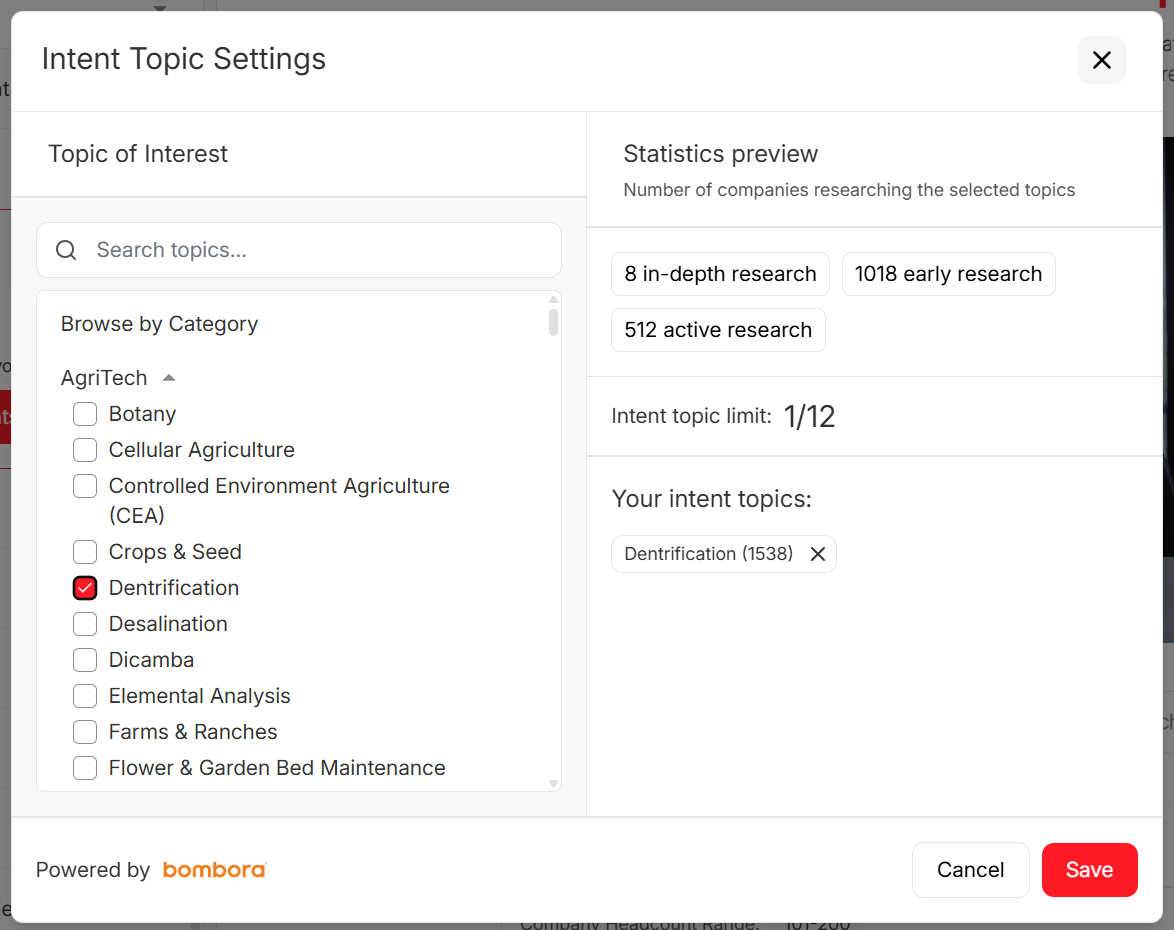
Once your intent data or scoring model identifies in-market accounts, you need verified contact data to convert interest into conversations. Prospeo covers 300M+ professional profiles with 98% email accuracy and a 7-day refresh cycle, compared to the 6-week industry average. The 30+ search filters include buyer intent across 15,000 Bombora topics, technographics, job changes, and headcount growth - so you're finding the right contacts at companies actively researching your category.
Meritt's team saw what happens when data quality compounds with demand gen. After switching to verified contact data, their pipeline tripled from $100K to $300K per week. Bounce rates dropped from 35% to under 4%. That's not a marginal improvement - it's the difference between a program that produces pipeline and one that produces reports.
If you're troubleshooting bounces specifically, use our email bounce rate benchmarks and fixes to diagnose the root cause.
Your scoring model says a C-level at a 2,000-person SaaS company hit your pricing page. Now what? Prospeo enriches that signal with 50+ data points - verified email, direct dial, tech stack, intent topics - so sales connects in hours, not days. 92% match rate on enrichment. $0.01 per email.
Turn every high-intent signal into a real conversation today.
How to Measure Demand Gen ROI
The formula is simple:
ROI = (Revenue Attributed to Marketing - Marketing Investment) / Marketing Investment x 100
The hard part is attribution. Distinguish between marketing-sourced pipeline and marketing-influenced pipeline. Both matter, but they tell different stories.
Track these KPIs as a set, not in isolation:
- MQL-to-SQL conversion rate - benchmark: 13-27% depending on channel and ICP tightness
- Opportunity-to-close ratio
- Cost per lead and cost per opportunity
- Average deal size - is demand gen attracting bigger or smaller deals?
- Sales cycle length - is it shortening over time?
- Multi-touch attribution to clarify which channels contribute at which stages
For more benchmarks to sanity-check your funnel, compare against the average B2B lead conversion rate.
Cohere Health ran a demand gen optimization that doubled qualified lead volume while cutting CPL by 5x over nine months, delivering 66% of high-quality leads for just 20% of total demand spend. That's the efficiency gain that comes from measuring the right things and cutting what doesn't work.
If your MQL-to-SQL rate is below 10%, your scoring model is broken. It's over-weighting engagement signals and under-weighting fit. Go back to the scoring section and rebuild.
Demand Gen Tool Stack
You don't need ten tools. You need the right five or six, connected properly.
| Tool | What It Does | Starting Price | Best For |
|---|---|---|---|
| Prospeo | Contact data + verification + intent | Free (75/mo), ~$0.01/email | Verified emails for in-market accounts |
| HubSpot Marketing Hub | CRM + marketing automation | Free; Pro $890/mo | All-in-one marketing ops |
| 6sense | Intent data + ABM | ~$60K-$150K+/yr | Enterprise intent-driven ABM |
| Clay | Data enrichment + workflows | Free; paid from $149/mo | Automated enrichment sequences |
| Leadfeeder | Website visitor ID | Free; paid from $99/mo | Identifying anonymous visitors |
| Bombora | Intent data | ~$25K-$50K+/yr | Standalone intent signal layer |
| Hotjar | Behavioral analytics | Free; paid from $39/mo | Understanding on-site behavior |
Skip 6sense and Bombora if you're pre-Series B. They're powerful but expensive, and a $60K+ intent platform doesn't make sense when you're still figuring out your ICP. Prospeo's built-in intent data covers the same 15,000 Bombora topics at a fraction of the cost, bundled with the contact data you actually need to act on those signals. For teams already running HubSpot, the native integration means verified contacts flow straight into your nurture sequences without manual imports.
If you're evaluating vendors beyond a single tool, start with our roundup of data enrichment services and the broader landscape of outbound lead generation tools.
FAQ
What's the difference between demand gen and lead gen?
Demand gen creates awareness and preference so buyers put you on their shortlist before evaluating vendors. Lead gen captures contact info from people already interested. 6sense data shows the winning vendor is on the buyer's Day One list 95% of the time - teams that skip demand gen compete on price for the remaining 5%.
How long does demand gen take to produce pipeline?
Expect 3-6 months for measurable pipeline impact from demand generation leads. PPC delivers fastest at 1 month but returns only 36% ROI. SEO takes 4-6 months but returns 748% ROI. Commit to a 6-month runway before judging results.
What's a good MQL-to-SQL conversion rate?
Benchmarks range from 13% to 27% depending on channel and ICP tightness. Below 10% means your scoring model over-weights engagement and under-weights fit signals like title, company size, and intent. Rebuild using the explicit + implicit framework above.
How do I verify contact data before outreach?
Use a verification tool before sending - not after bounces damage your sender reputation. Prospeo's 5-step verification process delivers 98% email accuracy with catch-all handling and spam-trap removal. Upload a CSV for bulk verification or use 30+ search filters to find pre-verified contacts at in-market accounts. Bad data is the fastest way to waste a demand gen investment.