

Go-to-Market Strategy for Professional Services: A 7-Step Framework for 2026
You're a practice leader staring at a pipeline spreadsheet with six names on it. Two anchor clients didn't renew. The referral network that fed you for five years has gone quiet. And every go-to-market strategy for professional services you find reads like it was written for a Series B SaaS company with a 12-person marketing team and a product demo that sells itself.
Professional services don't work that way. Your product is invisible expertise, your sales team is also your delivery team, and your "free trial" is a $15,000 engagement. Let's build a GTM strategy that actually fits.
The Quick Version
A durable services GTM strategy produces four outputs: a validated ICP reviewed monthly, differentiated positioning, a route-to-market aligned to your economics, and an operating cadence with shared KPIs across sales, marketing, and delivery. This isn't a launch plan you execute once and shelve - it's an operating system that compounds over quarters. And the highest-leverage GTM activity in services? Proposals. We'll get to that in Step 6.
Why Services GTM Differs from Product GTM
Most GTM frameworks assume you can demo the product, offer a free trial, and measure activation in a dashboard. Professional services firms sell intangible expertise to buyers who can't evaluate quality until after delivery. That changes everything.
The seller-doer constraint is the big one. Your best technical people are also your best salespeople - and two-thirds of firms using seller-doers provide no sales training whatsoever. Meanwhile, referral dependency is a ticking time bomb. One poster on r/agency described how their firm nearly died from referral dependency before building a repeatable client acquisition system.
Stop thinking of GTM as a relay race where marketing hands to sales, sales hands to delivery. Think of it as a gravitational field - positioning, packaging, outbound, proposals, and delivery all reinforcing each other simultaneously.

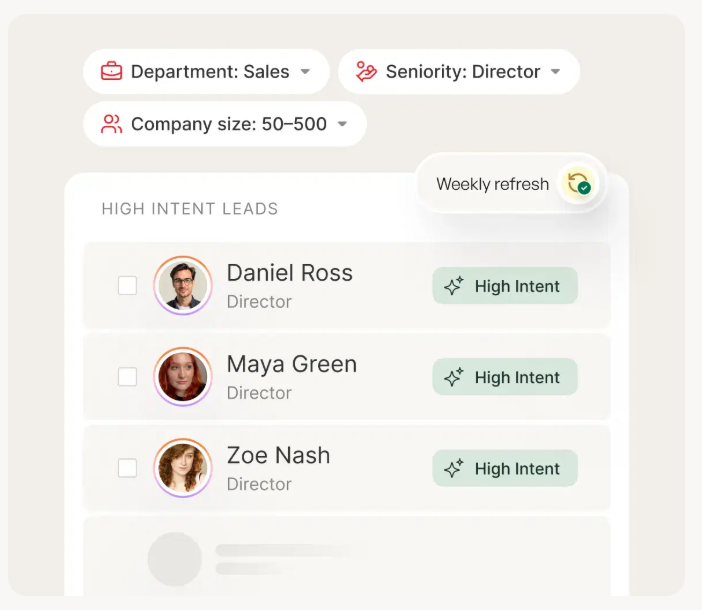
Step 1 says diagnose your ICP with technographics, intent signals, and trigger events. Prospeo's database gives you exactly that - 30+ filters including buyer intent across 15,000 topics, technographics, job changes, funding rounds, and headcount growth. Build a scorable ICP from 300M+ profiles, not guesswork.
Stop chasing every RFP. Start targeting buyers who are actually in-market.
What's Shifting in 2026
Three shifts matter right now.
GenAI adoption exploded. In professional services, it jumped from 33% to 71% in a single year, and AI consulting is projected to hit 40% of revenue by 2026. Most firms capture only 10-20% of their potential pipeline today. AI-enabled delivery and prospecting tools are pushing that toward 70-90%.
PE money flooded in. More than half of the largest 30 US accounting firms took private equity investment by end of 2025 - up from zero in 2020. That capital fuels acquisitions and aggressive growth mandates that make "grow organically through referrals" a losing strategy for everyone else.
The billable hour is dying. Value-based pricing, productized services, and subscription models are replacing time-and-materials. This is a structural shift that changes how you package, sell, and deliver - and it shows up in Step 4 below.
The 7-Step Framework
Step 1 - Diagnose Your ICP
Build a scorable ICP using technographics, intent signals, and trigger events - not just firmographics. The firm that nearly collapsed from referral dependency found that narrowing to the segment representing roughly 70% of existing wins immediately improved lead quality.
Use this if: You're chasing every RFP that lands in your inbox and winning less than 30%. A tight ICP gives you permission to say no.
Skip this if: You're a solo consultant with three clients and a full book. You don't need an ICP - you need capacity.
Build a living model of your best-fit buyers, reviewed monthly, not annually. The monthly cadence matters because trigger events - leadership changes, funding rounds, regulatory shifts - move fast, and a quarterly review means you're always three months behind reality.
Step 2 - Choose Your Coverage Model
| Model | Best for | Risk |
|---|---|---|
| Pure seller-doer | Technical SME sales | Burnout, no scale |
| Dedicated BD | Gov't/institutional | Loses technical trust |
| Hybrid | Most mid-size firms | Role confusion |
SMPS Foundation research reveals a nuance most advisory firms miss: government buyers often prefer nontechnical business developers, while corporate buyers want technical SMEs in the room early.
Here's the thing: whichever model you pick, protect 20-40% of senior seller-doer time for business development. We've seen firms where partners spend less than 10% of their week on BD and then wonder why pipeline dried up. One consultant on r/consulting described managing six concurrent projects while writing proposals at night and chasing invoices. That's not a GTM strategy - that's a burnout countdown.
Step 3 - Position: Why Change, Why Now, Why You
Every positioning statement should answer three questions. "Why change" addresses the status quo. "Why now" creates urgency. "Why you" differentiates.
Most services GTM guides underweight "why now." That's the question that separates a pipeline conversation from a "let's circle back next quarter" brush-off. If your prospect doesn't feel urgency, no amount of clever positioning saves the deal.
Competing on price in professional services is a death spiral. You attract cost-sensitive clients who churn and leave bad reviews. Differentiate through thought leadership and original research instead - publishing proprietary data or frameworks is one of the strongest moats you can build, and hourly-rate discounts never will be. (If you want a tighter narrative, borrow from B2B brand positioning.)
Step 4 - Package and Price
The most effective pattern we've seen: a fixed-scope starter offer (an audit, assessment, or diagnostic) that leads into tiered retainer options. That starter offer is the closest thing you'll get to a product demo in services.
One agency owner on Reddit documented their pricing evolution over five years: $250/mo bundles in year two, scaling to $1,000/mo full bundles in year five - growing from roughly $10k/mo to $60k/mo in revenue and hiring seven full-time employees along the way. Standardized packages made that growth possible. Custom scoping for every client would've broken them.
The takeaway isn't the specific numbers. It's that productized pricing removes the biggest friction point in services sales: the "we'll scope it after a few discovery calls" dance that burns weeks and kills momentum.
Step 5 - Build Your Channel Mix
The average B2B company runs 10.5 GTM initiatives simultaneously. That's not a strategy - it's a panic attack.
Limit yourself to 4-6 active channels with clear entry and exit criteria. For firms under 50 people, start with three: thought leadership content, a productized starter offer, and targeted outbound. On outbound specifically, timeline-based hooks pull a 10.01% reply rate versus 4.39% for generic problem hooks - so the framing of your outreach matters as much as who you're reaching. (If you need a menu of options, see these sales prospecting techniques.)
ABM works even with tiny teams. BlueBotics generated £4M+ in opportunities with a marketing team of one. Acxiom built £1.5M in pipeline in 120 days entering a new vertical. Partner ecosystems are one of the fastest-growing motions in modern GTM - the consensus on r/sales is that warm intros through partners close at 2-3x the rate of cold outbound.
Most services firms stall between knowing who to target and actually reaching decision-makers with verified contact data. Prospeo closes that gap with 300M+ profiles, 98% email accuracy, and intent data tracking 15,000 topics - so you're reaching the right people when they're actively looking for what you sell.
Step 6 - Fix Your Proposal Process
Proposals are the highest-leverage GTM activity in professional services. The numbers are damning.
54% of time in proposal processes goes to locating, organizing, and updating content - not writing or strategizing. Professional services firms lag in proposal software adoption at 69% versus 80% across industries. And here's the stat that should make you angry: 100% of high-win teams (51%+ win rate) have at least one dedicated bid manager, compared to just 44% of low-win teams.
The specific levers that move win rates:
| Lever | Impact |
|---|---|
| Defined win themes | +8 points to win rate |
| Formal governance | +7 points to win rate |
| Go/No-Go qualification | Used by 71% of high-win teams |
Only 2% of firms report win rates above 80%. The lever isn't writing better proposals - it's qualifying better, governing the process, and building a reusable content library. In our experience, these changes can lift win rates within a quarter or two because they reduce wasted bids and make your best answers reusable across opportunities. (For a qualification framework, adapt MEDDIC sales qualification.)
Step 7 - Run 90-Day Sprints
Stop building annual GTM plans that gather dust by March.
Run 90-day sprints with shared KPIs across sales, marketing, and delivery. Monthly ICP reviews. Quarterly channel audits. Gartner projects that by 2026, 75% of highest-growth B2B companies will run a formalized RevOps model - and services firms that don't adopt this cadence will keep lurching between feast and famine.
Look, most services firms track bookings, backlog, and utilization - but have zero visibility into activity metrics, pipeline velocity, or win rates by segment. That's the real problem. You don't need a better strategy deck. You need an operating system that self-corrects every 90 days based on what's actually working. Misaligned incentives and poor sales visibility kill more go-to-market strategies for professional services than bad positioning ever will. (To pick the right numbers, start with funnel metrics and pipeline health.)
Your seller-doers are burning 20-40% of their week on BD. Don't waste that time on bounced emails and wrong numbers. Prospeo delivers 98% email accuracy and 125M+ verified mobile numbers with a 30% pickup rate - so every outreach hour counts. Timeline-based hooks only work when they reach real inboxes.
Give your seller-doers data that connects, not data that bounces.
Benchmarks Worth Tracking
| Metric | Low performers | High performers |
|---|---|---|
| Proposal win rate | 4% of firms below 10% | 2% of firms above 80% |
| BD time (senior) | <10% of week | 20-40% of week |
| Active channels | 10+ (unfocused) | 4-6 (with exit criteria) |
| Go/No-Go usage | Rare | 71% of high-win teams |
| Cold email reply rate | ~4.39% (problem hooks) | ~10.01% (timeline hooks) |
The biggest gap we see isn't in any single metric - it's that low-performing firms don't track these numbers at all, so they can't diagnose what's broken. Start measuring before you start optimizing. (If you're struggling to operationalize this, use a sales operations metrics scorecard.)
FAQ
What's the difference between a services GTM and a SaaS GTM?
Services GTM sells intangible expertise through relationship-driven sales cycles with no product demo, no free trial, and a seller-doer constraint that forces your delivery team to double as your sales team. Productized starter offers fill the "try before you buy" gap that SaaS handles with freemium. Cycles run longer and trust matters more - which is why [positioning and packaging](#step-3 - position-why-change-why-now-why-you) carry more weight than they do in product-led growth.
How long until a new GTM strategy produces pipeline?
Expect initial signals within a single 90-day sprint - qualified conversations, proposal volume, and pipeline movement. Consistent, predictable pipeline typically takes 6-12 months. Acxiom built £1.5M in pipeline in 120 days using focused ABM, but that's the fast end of the spectrum. Most firms should plan for two full sprint cycles before drawing conclusions.
How do I find verified contacts for target accounts?
Build a prospect list using a B2B data platform with search filters for buyer intent, technographics, and job changes. Prospeo is a strong option - 300M+ profiles, 98% email accuracy, and a free tier to start with no contracts or enterprise sales process required.
Do small firms really need a formal go-to-market strategy?
Yes - arguably more than large firms. A 15-person consultancy can't absorb a bad quarter the way a Big Four practice can. A documented ICP, 4-6 active channels, and a 90-day review cadence prevent the feast-or-famine cycle that kills small firms. The framework scales down. The discipline doesn't.