

Go-to-Market Strategy PPT: Free Download + Slide Guide (2026)
Product launches carry a 40-80% risk of failure without a solid go-to-market strategy behind them. That's not a scare stat - it's the reality most teams ignore until they're three months post-launch with no pipeline.
If you've been hunting for a go-to-market strategy PPT free download, you've probably hit the same wall we have: watermarked templates, paywalled "free" decks, or slides with zero guidance on what actually belongs on them. This guide fixes both problems - verified free templates plus a complete slide-by-slide breakdown of what goes where and why.
The Quick Version
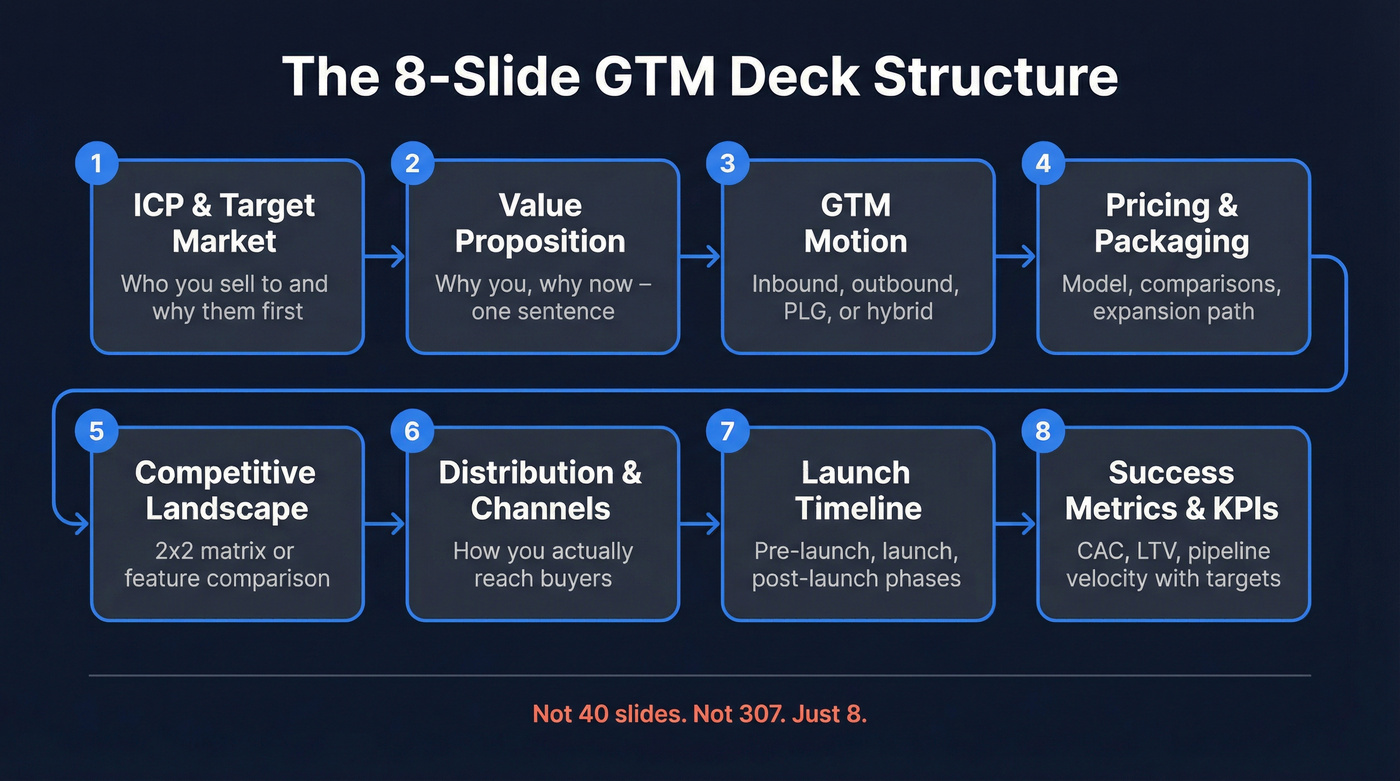
Eight slides. That's the full GTM strategy deck. Not 40. Not the 307-slide consulting monstrosity someone forwarded you last quarter.
Best truly free template: Smartsheet - includes a GTM presentation template in PowerPoint and Google Slides, no paywall.
The execution gap nobody talks about: Once the deck's approved, you need verified contacts to actually run the play. We'll cover that at the end.
8 Slides Every GTM Deck Needs
These eight slides map to the six non-negotiable GTM components - ICP, value prop, sales/marketing motion, pricing, distribution, and success metrics - plus two execution slides (competitive landscape and launch timeline) that stakeholders always ask for. Whether you're building a startup launch deck or an enterprise GTM presentation, this structure scales.
Slide 1: ICP & Target Market
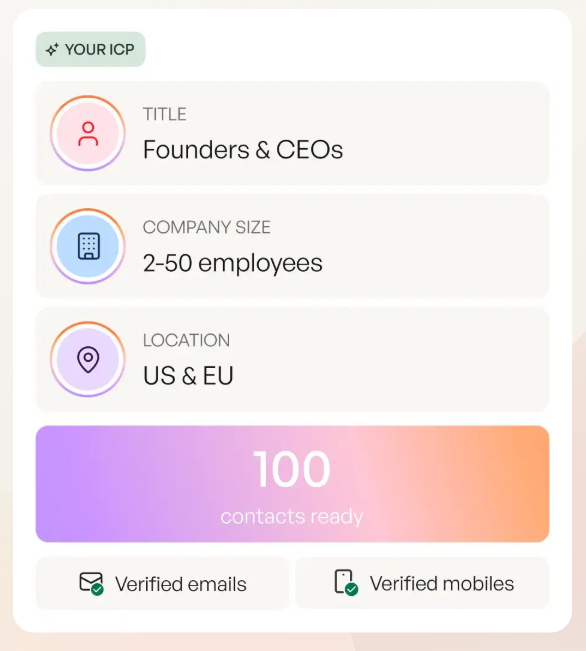
This slide answers "who are we selling to and why them first?" Define your ideal customer profile with firmographics, technographics, and intent signals. Use a tiering framework: Tier 1 (priority accounts), Tier 2 (strong fit, lower urgency), Tier 3 (nurture for later).
Include a TAM/SAM/SOM visualization here - total addressable market narrowing to serviceable addressable market narrowing to serviceable obtainable market. This forces you to quantify the opportunity and proves to investors you've sized the market, not just described it. A strong GTM slide always pairs the ICP definition with a clear market-sizing visual, because without that pairing, the audience doesn't know whether you're chasing a $50M niche or a $5B category.
Slide 2: Value Proposition
One sentence that answers "why us, why now?" If you can't fit it in one sentence, it's not sharp enough. Show the specific problem you solve better or faster than alternatives - not a feature list.
Slide 3: GTM Motion
Spell out whether you're running inbound, outbound, PLG, ABM, or a hybrid. Show ownership and handoffs: who owns MQLs, when do they become SQLs, what are the SLAs between marketing and sales?
In our experience, this is where most decks get vague and where stakeholders lose confidence. If you're building a sales-focused GTM presentation, this slide needs to show the full revenue handoff chain from first touch to closed deal. No ambiguity.
Slide 4: Pricing & Packaging
Show your pricing model, how it compares to alternatives, and your expansion path. "We'll figure out pricing later" tells investors you haven't done the work. Even a directional framework beats a blank slide.
Slide 5: Competitive Landscape
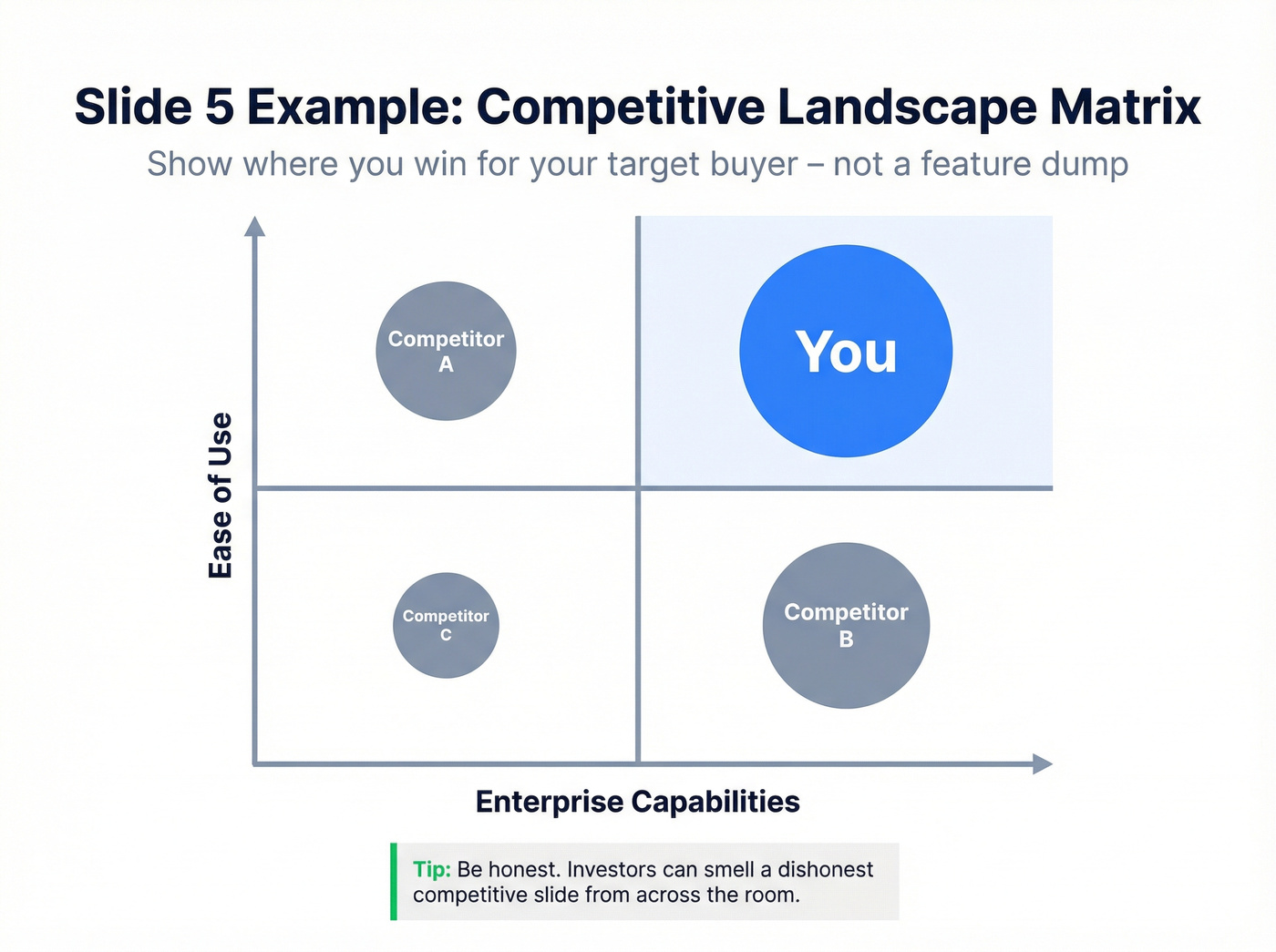
A simple 2x2 matrix or feature comparison table works. Don't trash competitors - show where you win for your target buyer. Investors specifically look for this slide, and they can smell a dishonest one from across the room. If you need a repeatable way to do this, build a lightweight competitive insights process before launch.
Slide 6: Distribution & Channels
Answer "how do we actually reach these people?" Back your channel choices with data or early signals. Per OpenVC's investor-deck guidance, a generic channel list with no rationale is one of the most common GTM slide mistakes.
Slide 7: Launch Timeline
A phased timeline showing pre-launch, launch, and post-launch milestones with dependencies. This slide keeps everyone honest about what needs to happen and when. Skip it and you'll spend the next six weeks in alignment meetings instead of executing.
Slide 8: Success Metrics & KPIs
CAC, LTV, pipeline velocity, win rate, and ramp time belong here. Don't just list metrics - include targets.
Let's be honest: a metrics slide without targets is decoration. "We'll track CAC" means nothing. "CAC target: $180, current: $240, plan to close gap by Q2" means everything.
Consider adding a single summary slide that visualizes your entire GTM on one page using a framework like InfoDiagram's one-slide GTM layout. It's the fastest way to align a room.
GTM Slide Examples Worth Stealing
Oatly skipped traditional advertising for their US launch and went straight to coffee shops, getting baristas to use and recommend the product. Revenue grew ten-fold between 2017 and 2018. The lesson for your distribution slide: your channel doesn't have to be obvious. Channel creativity beats channel volume.
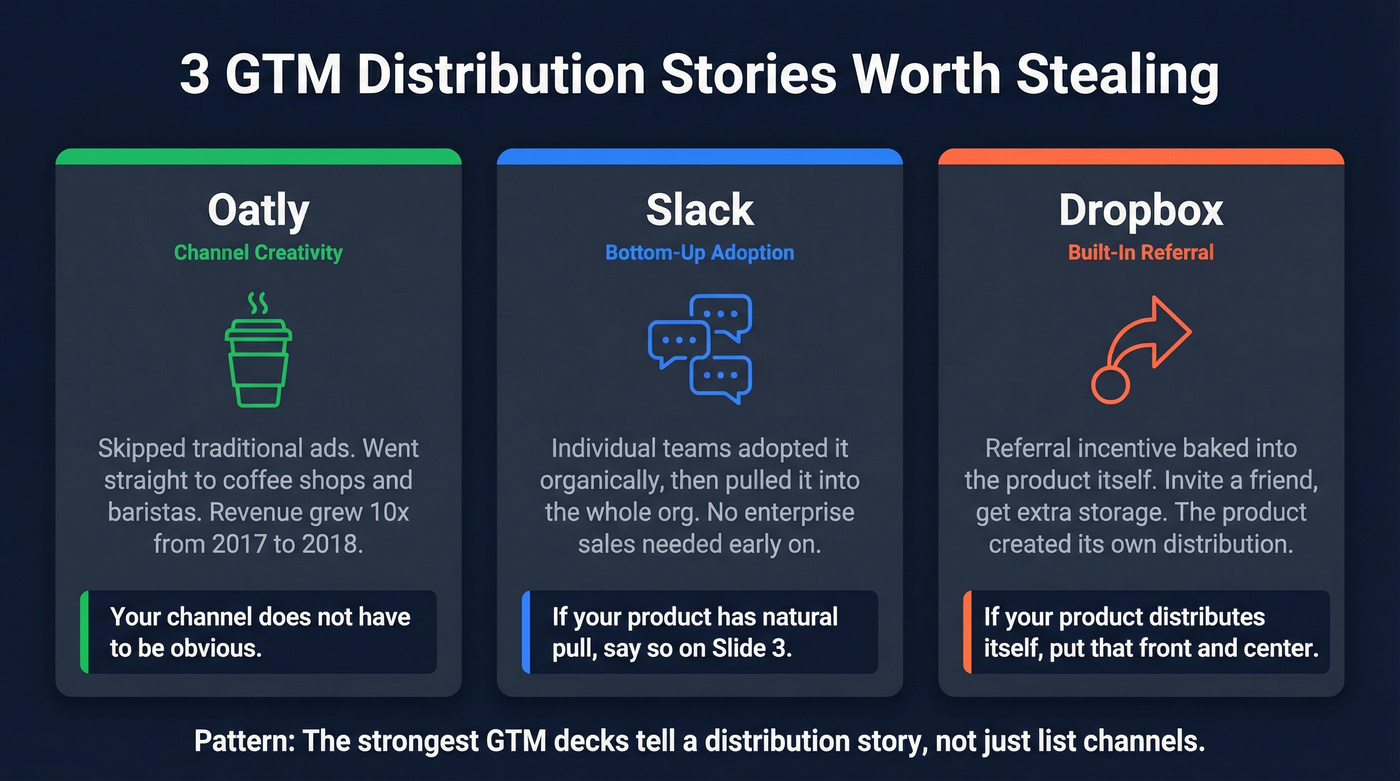
Slack grew bottom-up through organic adoption. Individual teams started using it, loved it, and pulled it into the org. No enterprise sales motion needed early on - the product was the GTM engine. If your product has that kind of pull, your GTM motion slide should say so explicitly rather than defaulting to a traditional sales funnel.
Dropbox built the referral incentive directly into the product - invite a friend, get extra storage. If your product can create its own distribution, put that front and center on the GTM motion slide.
Here's a pattern across all three: the strongest GTM decks tell a distribution story, not just list channels. Your slides should do the same.
Hot take: If your deal sizes are under $10k, you probably don't need a consulting-grade deck. You need 8 tight slides and the discipline to start selling within a week of approval.

Your GTM deck defines the ICP. Prospeo finds them. Search 300M+ profiles with 30+ filters - buyer intent, technographics, headcount growth, funding - and export verified emails at 98% accuracy for $0.01 each. No annual contracts, no sales calls.
Stop presenting the strategy. Start executing it with real contact data.
Mistakes That Kill GTM Decks
Confusing GTM with a marketing plan. GTM is a launch-specific sprint. Your marketing plan is the ongoing marathon. Different documents, different audiences, different timelines. If you want a deeper breakdown of the launch side, use a SaaS go-to-market strategy template as your operating doc.
Targeting too broadly. No beachhead market means no focus. Pick a wedge. Win it. Expand. If you're struggling to define the wedge, start with customer profiling and tighten your segments from there.
Skipping pricing strategy. Even a directional model beats nothing. Stakeholders notice the gap every single time.
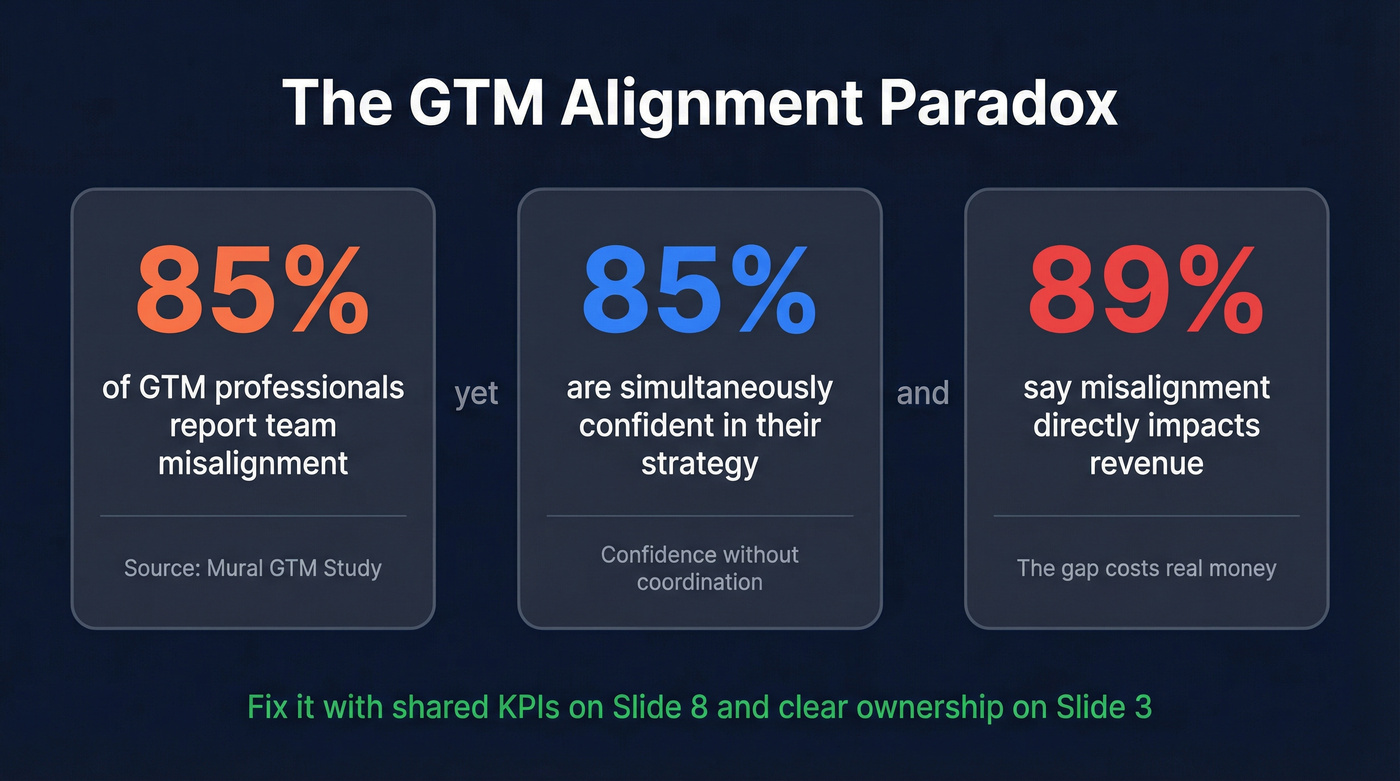
Ignoring the alignment gap. Mural's GTM Alignment Gap study found 85% of professionals report misalignment within GTM teams - yet 85% are simultaneously confident in their strategy. Even worse, 89% say that misalignment directly impacts revenue. Your deck needs shared KPIs and clear ownership to bridge that disconnect, which is exactly why Slide 3 (GTM Motion) and Slide 8 (Metrics) exist.
Free GTM Strategy PPT Downloads
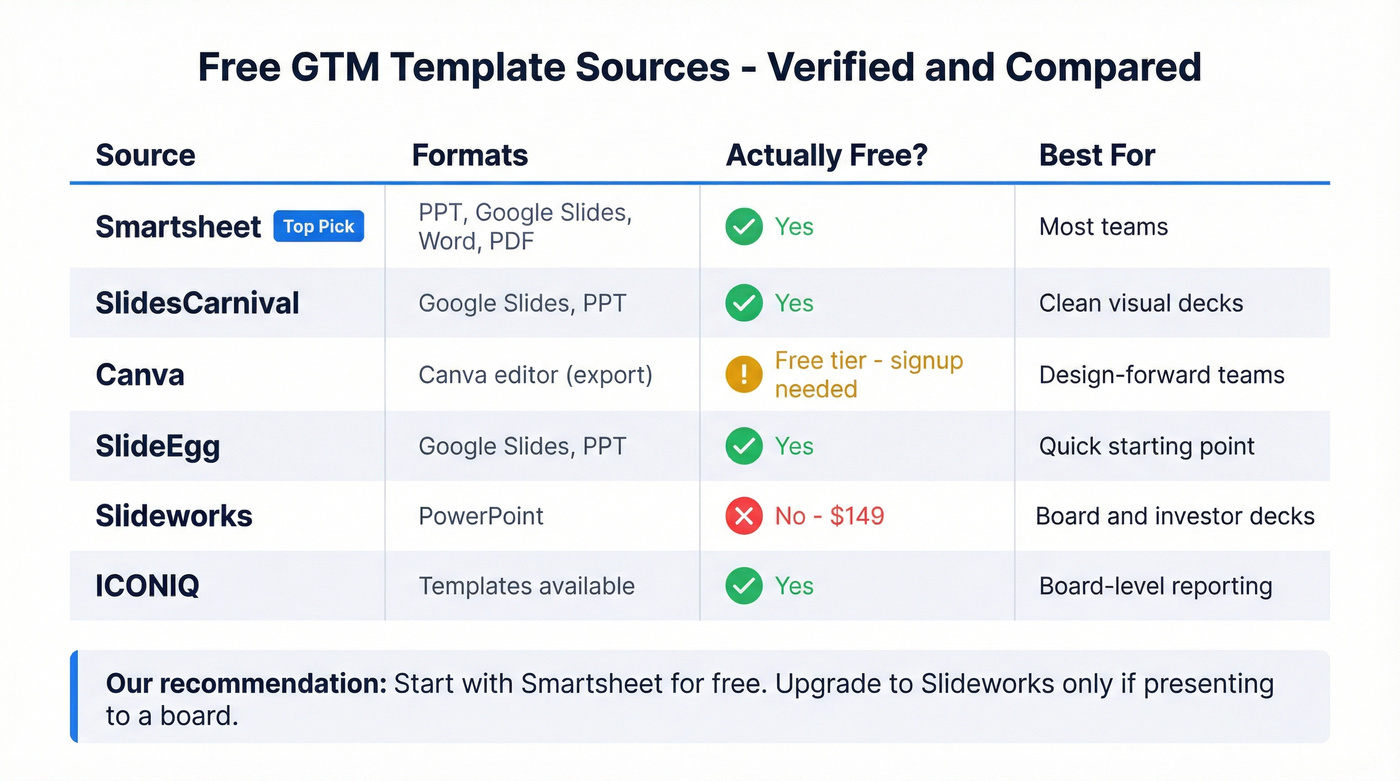
Look, most "free template" pages are SEO bait for paid products. We verified which ones are actually free, no surprises.
| Template Source | Format | Truly Free? | Best For |
|---|---|---|---|
| Smartsheet | PPT, Google Slides, Word, PDF | Yes | Most teams |
| SlidesCarnival | Google Slides, PPT | Yes | Clean, visual decks |
| Canva | Canva editor (export) | Free tier - signup needed | Design-forward teams |
| SlideEgg | Google Slides, PPT | Yes | Quick starting point |
| Slideworks | PowerPoint | No - $149 one-time | Board/investor decks |
| ICONIQ | Templates available | Yes | Board-level reporting |
Smartsheet is the clear winner for most teams: clean structure, multiple formats, and genuinely free without hidden paywalls. If your team runs on Google Workspace, both Smartsheet and SlidesCarnival offer Google Slides versions. If you're presenting to a board and want consulting-grade polish, Slideworks at $149 is worth the spend - but you still only need 8 of those slides.
Picking the Right Template
Not every GTM strategy deck serves the same purpose. A pitch deck slide aimed at VCs needs to emphasize market size and competitive moat, while a B2B GTM template built for internal alignment should focus on sales handoffs and channel ownership.
For B2B teams specifically, look for templates that include account-based targeting frameworks and multi-stakeholder buying journey maps - SlidesCarnival and Smartsheet both handle this well. If you're building a single GTM slide for a pitch deck, keep it to one page that summarizes your distribution strategy, early traction, and first-year revenue targets. Investors scan pitch decks fast, so density and clarity matter more than thoroughness.
Skip SlideEgg if you need anything beyond a basic starting point - the designs are functional but thin on strategic structure.
From Deck to Pipeline
A go-to-market strategy presentation that sits in Google Drive doesn't generate revenue. The gap between "approved strategy" and "first meeting booked" is where most launches stall, and we've watched it happen to teams that spent months perfecting their slides only to fumble the execution handoff.
Take the ICP you defined on slide one and turn it into a live prospect list. Prospeo's 30+ search filters - buyer intent, technographics, job change signals, headcount growth - let you export verified contacts in minutes instead of weeks. The platform runs 98% email accuracy on a 7-day refresh cycle, which matters when you're launching and can't afford bounced emails torching your domain reputation. (If you're scaling outbound, read up on B2B contact data decay and how to prevent it.) The free tier gives you 75 emails and 100 Chrome extension credits per month, enough to test your first outbound motion before you spend a dollar.
If you're planning to run outbound from this deck, pair your list build with an outbound email campaign plan and a deliverability checklist like SPF, DKIM, DMARC so your first sends actually land.
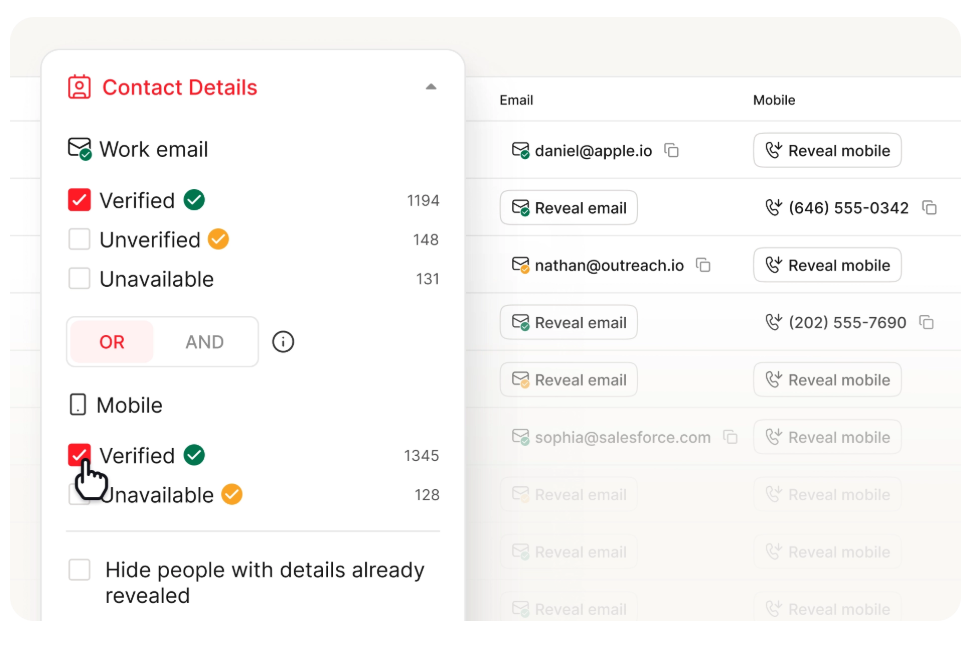
Slide 6 says how you'll reach buyers. Prospeo is how you actually do it. 143M+ verified emails, 125M+ direct dials, and intent data tracking 15,000 topics so you contact prospects already in-market. Teams using Prospeo book 35% more meetings than Apollo users.
Turn your distribution slide from theory into pipeline this week.
FAQ
What should a go-to-market strategy PPT include?
Eight slides: ICP/target market, value proposition, GTM motion, pricing, competitive landscape, distribution channels, launch timeline, and success metrics with KPIs. The strongest decks also include a single summary slide that visualizes the entire plan on one page for quick stakeholder alignment.
Is there a truly free GTM PowerPoint template?
Yes. Smartsheet offers a go-to-market strategy PPT download in both PowerPoint and Google Slides formats at no cost. SlidesCarnival and SlideEgg are also genuinely free - no paywalls, no watermarks.
How do I turn a GTM deck into actual outreach?
Define your ICP on the target-market slide, then use a B2B data platform to find verified emails and direct dials for those accounts. The key is moving from "approved deck" to "first emails sent" within days, not weeks.
How is a pitch deck GTM slide different from a full GTM deck?
A pitch deck GTM slide condenses your entire plan into one or two slides - distribution channel, early traction, and first-year revenue targets. A full GTM strategy deck expands that into eight slides with detailed execution plans, timelines, and KPIs for internal teams to act on.