

High-Intent Accounts: How to Find & Activate Them in 2026
Your intent data platform just flagged 47 accounts surging on topics that map perfectly to your product. You pull the list, cross-reference your CRM, and realize 30 of those accounts have zero contacts attached. No verified emails, no direct dials, no buying committee mapped. The signal dies in a spreadsheet.
That scenario plays out constantly at companies spending $50K+ on intent platforms. Only about 5% of B2B buyers are in-market at any given time, and the teams that actually convert high-intent accounts aren't the ones with the fanciest dashboards. They're the ones who go from "this account is surging" to "here's the VP's verified email" in under an hour.
What Are High-Intent Accounts?
"High-intent" gets conflated with two other labels constantly, so let's get this straight.
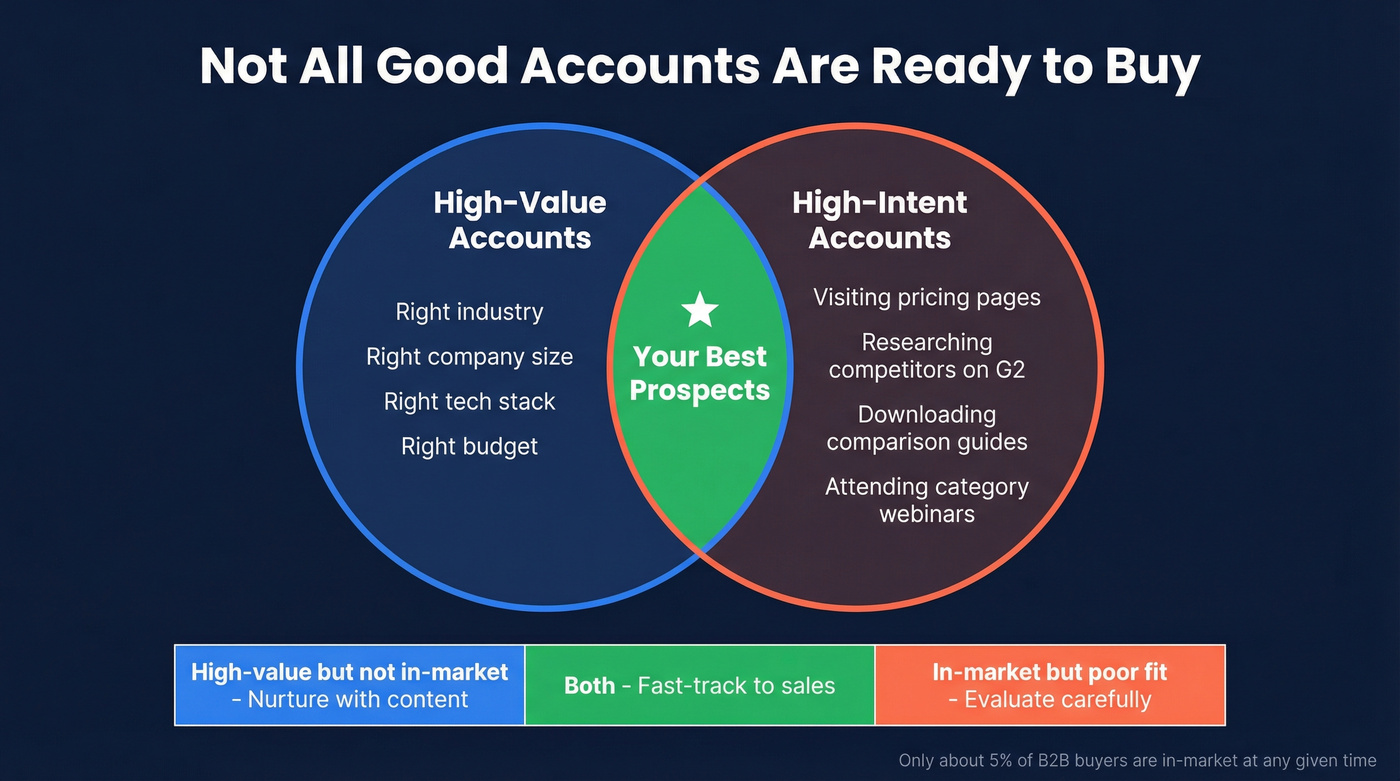
A high-value account fits your ICP - right industry, right company size, right tech stack, right budget. A high-intent account is actively showing buying signals right now: visiting pricing pages, researching competitors on G2, downloading comparison guides, attending webinars in your category. The best prospects are both. But they're not the same thing, and plenty of high-value accounts aren't in-market while plenty of in-market accounts don't fit your ICP at all.
The intent data market is projected to exceed $4B by 2027, and for good reason. But the math is still sobering. Buyers typically bring a consideration set averaging about 5 vendors when they enter a buying cycle. If you're not already in that set, a surge alert won't save you. Intent signals tell you when an account is active - they don't guarantee you're on the shortlist.
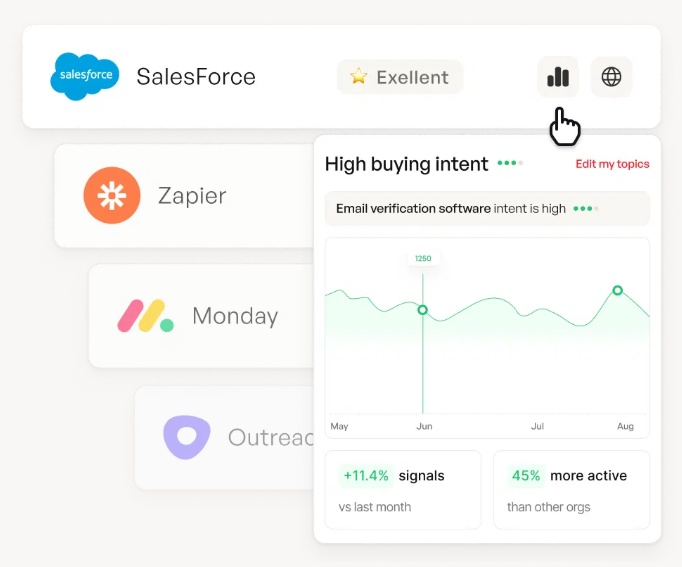
That distinction shapes how you respond. An in-market account that already knows your brand gets a direct outreach sequence. One that's never heard of you needs a different play - one that leads with value, not a demo push.
Signals That Reveal In-Market Accounts
Not all intent signals carry equal weight. A single blog visit is noise. A pricing page visit followed by a competitor comparison followed by a return visit within a week? That's a pattern worth acting on.
First-Party Signals
These are the highest-quality signals you'll get, and they're free. Pricing page visits, demo requests, multi-page sessions, return visits within a short window, and product usage spikes for PLG companies all indicate genuine interest. They're also the most actionable because you already know the account and often the individual.
The limitation is reach. First-party signals only capture accounts that have already found you. For the rest of your TAM, you need third-party data.
Third-Party Signals
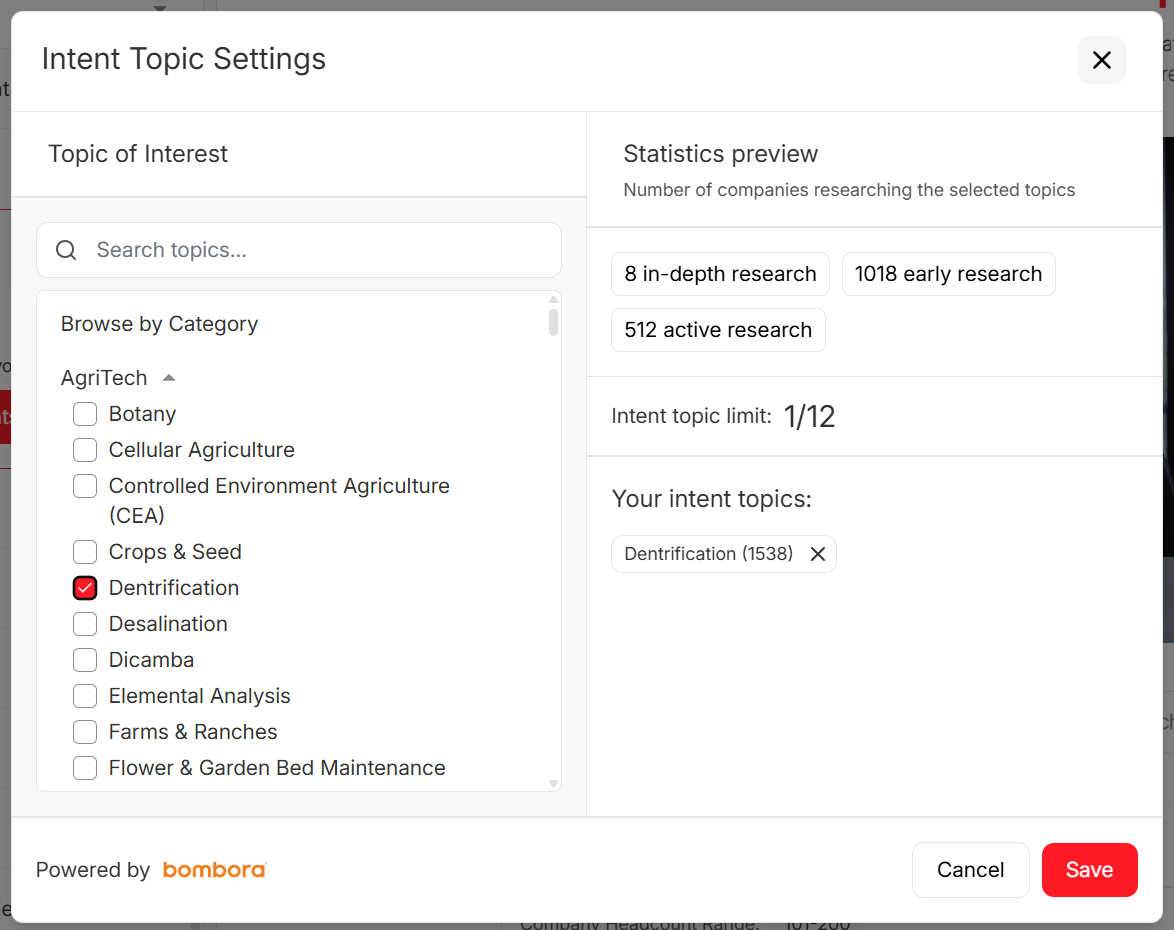
Third-party intent data comes from publisher co-ops and review platforms. Bombora operates the largest co-op - 5,000+ B2B publisher sites tracking a taxonomy of 12,000+ topic categories. When accounts consume content about topics relevant to your category across those publishers, Bombora flags the surge based on account-level research behavior.
The problem? Third-party data resolves to the account level, not the individual. "Someone at Acme Corp is researching sales engagement platforms" is useful but incomplete. Andy Mowat, a GTM advisor, put it bluntly: "Virtually every GTM leader I've spoken with struggles to get value out of third-party intent data." The consensus in RevOps communities and on r/sales echoes this - the most common complaint isn't accuracy, it's operationalization. Teams buy the platform, get the signals, and then can't act on them fast enough.
Review site activity on G2 and TrustRadius is a special case. It's higher-quality "downstream" intent because someone actively comparing vendors is further along in the buying process than someone reading a blog post.
Combining Signal Types
Platforms like 6sense and Demandbase aggregate signals from multiple sources and run AI models to predict buying stage. The trade-off is coverage versus transparency. AI-aggregated predictions cast a wider net, but the scoring becomes a black box. We've seen teams struggle to explain why 6sense rated an account as "Decision" stage when no one at that company had visited their website.
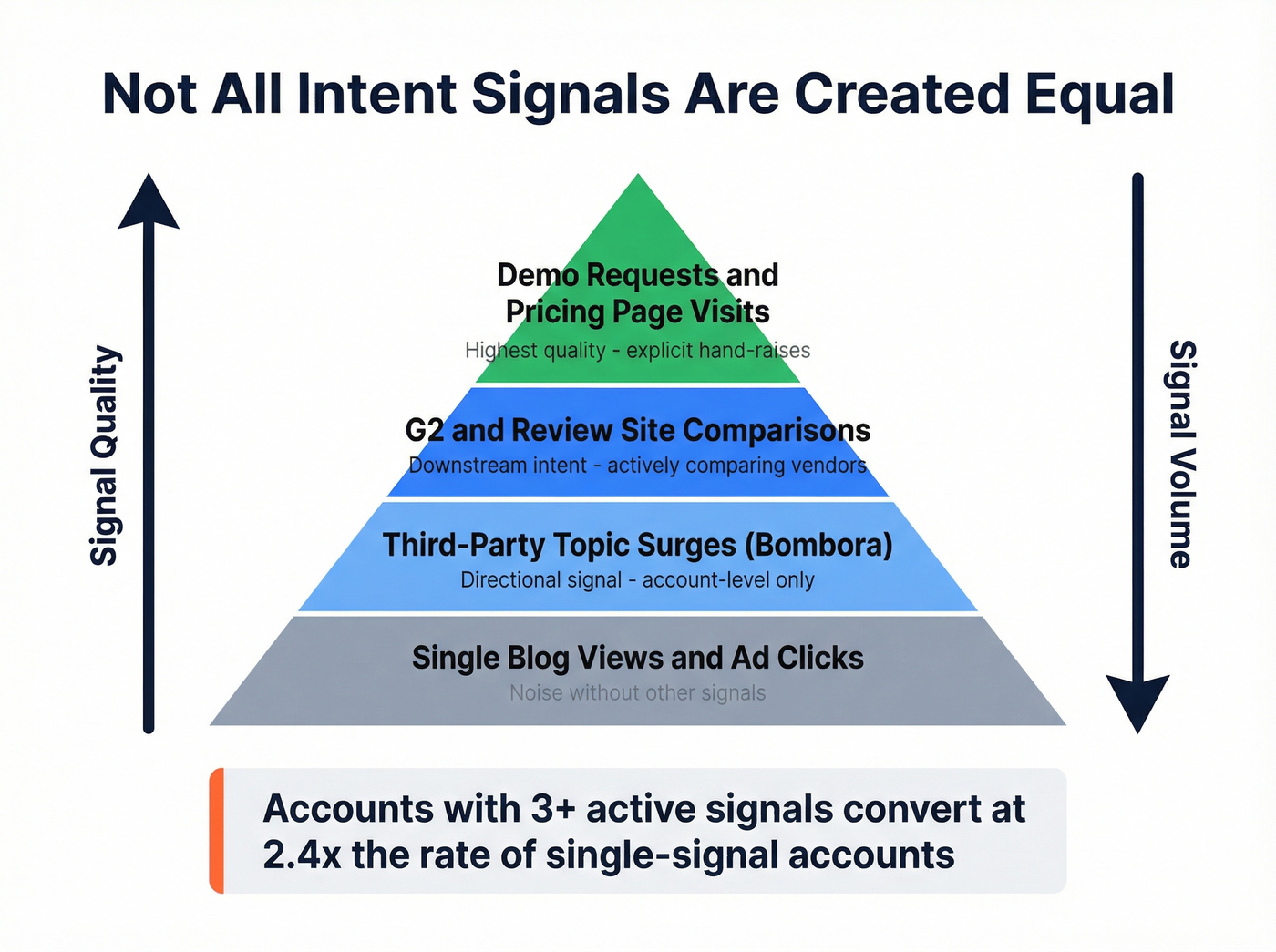
The best approach is intersecting multiple signal types. Accounts with 3+ active signals convert at 2.4x the rate of single-signal accounts. One data source is a hypothesis. Three is a pattern.
How to Score High-Intent Accounts
A Scoring Model You Can Use This Week
Most scoring guides stay conceptual. Here's a model with actual point values you can plug into HubSpot, Salesforce, or a spreadsheet today.
| Signal | Points | Rationale |
|---|---|---|
| Pricing page visit | +15 | Strongest buying signal |
| Demo request | +10 | Explicit hand-raise |
| G2/review site activity | +10 | Downstream comparison |
| Return visit (within 7 days) | +8 | Pattern recognition |
| Third-party topic surge | +5 | Directional, not definitive |
| Webinar attendance | +5 | Active engagement |
| Blog view (single) | +2 | Low intent, high volume |
Normalize for company size. This is the piece most scoring models miss. A 50-person company with 5 people researching your category is a far stronger signal than a 10,000-person company with the same raw number. Weight your third-party surge scores relative to employee count.
Apply decay rules or your list fills up with ghosts. Subtract 10 points after 30 days without engagement. An account that was hot in January and silent since isn't worth chasing in March.
Negative scoring prevents false positives. Competitors researching you, job seekers browsing your careers page, and accounts outside your territory should get -50 points. We've wasted weeks chasing "surging" accounts that turned out to be competitors running competitive intel - don't repeat that mistake.
Set clear thresholds: MQL at 25 points, SAL at 40, SQL at 60. Then define an SLA where sales responds to an MQL within 4 hours. Intent signals decay fast.
The ICP Fit x Intent Matrix
Scoring gets sharper when you overlay intent with ICP fit in a simple 2x2 matrix:
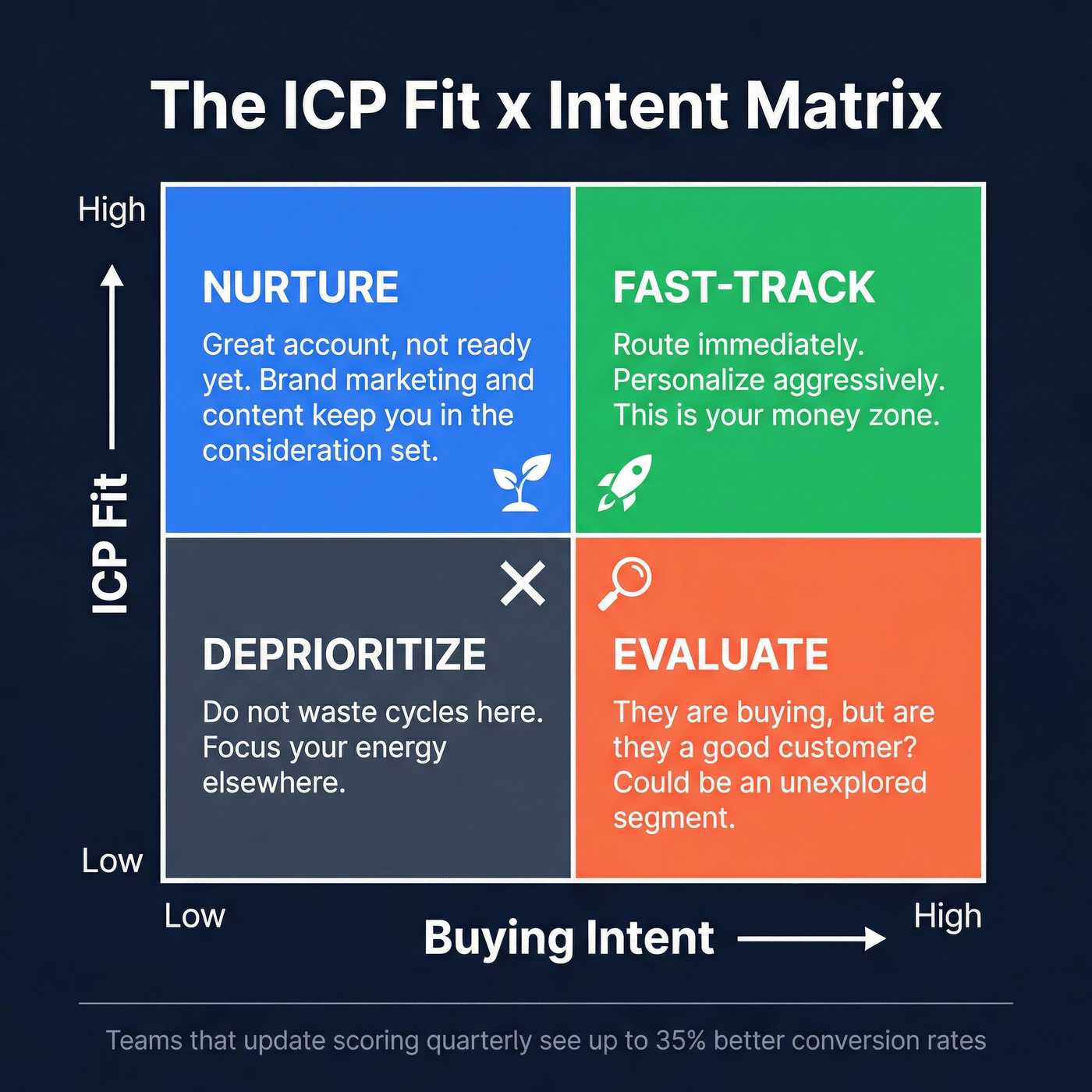
- High fit + high intent - Fast-track. This is your money zone. Route immediately, personalize aggressively.
- High fit + low intent - Nurture. Great account, not ready yet. Brand marketing and content keep you in the consideration set.
- Low fit + high intent - Evaluate. They're buying, but are they a good customer? Sometimes it's a segment you haven't explored yet.
- Low fit + low intent - Deprioritize. Don't waste cycles here.
Companies that update their scoring quarterly can see a 35% boost in conversion rates. Markets shift, buying patterns change, and a static model degrades fast.

Intent signals die without verified contact data. Prospeo tracks 15,000 intent topics via Bombora and pairs them with 143M+ verified emails and 125M+ mobile numbers - so you go from surge alert to personalized outreach in minutes, not weeks.
Stop letting high-intent accounts decay in a spreadsheet.
Activation Playbook
Route the Signal Fast
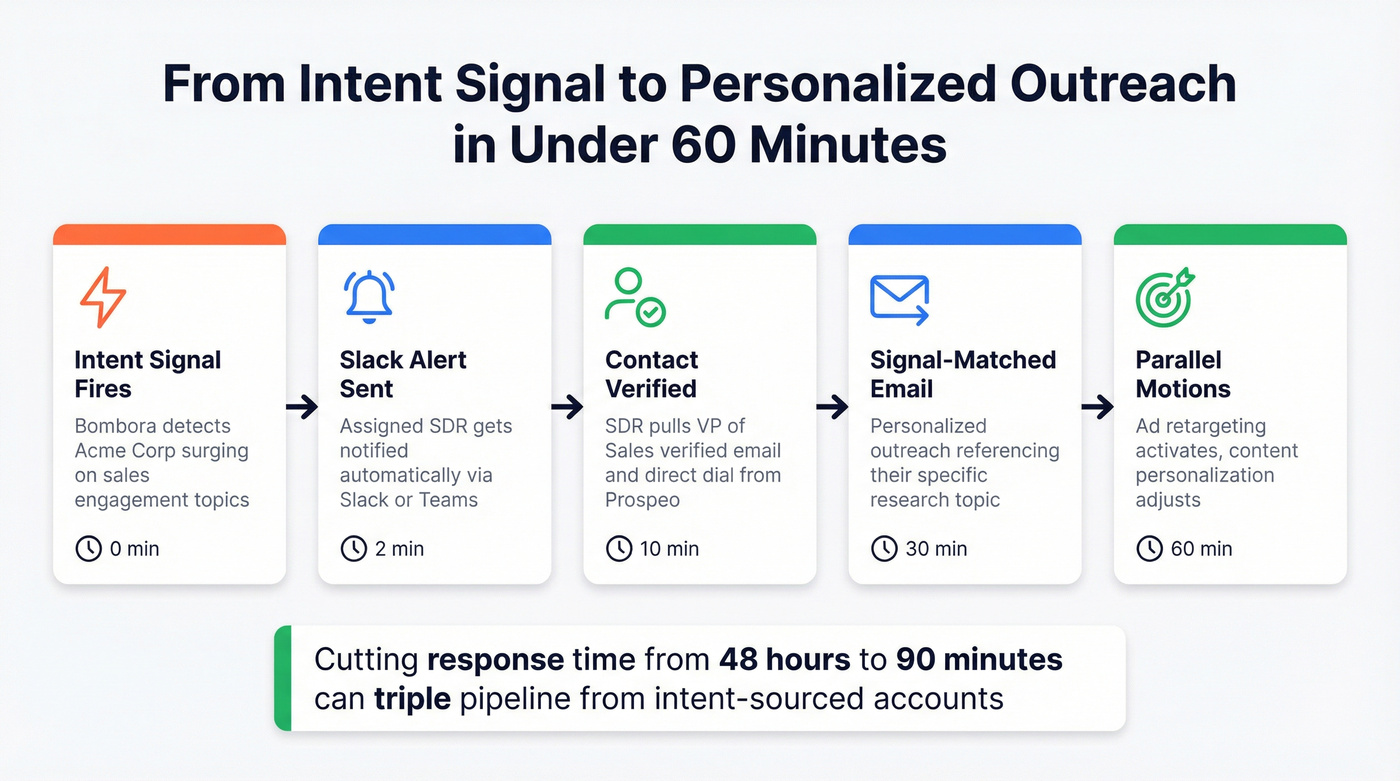
Speed-to-lead is the single biggest lever in intent-based selling. When an account lights up, the workflow should be automatic: a Slack or Teams alert fires, the assigned SDR gets notified within minutes, and parallel motions kick off - ad retargeting activates, content personalization adjusts to match the research topic. According to Forrester, companies that operationalize intent data effectively see up to a 70% increase in qualified pipeline.
The N.Rich "State of Intent Data" study found that 69% of teams use intent data primarily for prioritizing accounts, but only 48% use it to improve outreach efficiency. That gap is where deals die.
Bridge the Gap From Account to Contact
Look, here's where most intent investments actually fail. Intent tools tell you which company is researching. They don't tell you who to call. SDRs get a list of surging accounts, Google for email addresses, find generic role-based inboxes, and send templated outreach that lands in spam.
Let's walk through what the workflow should look like. Your intent platform flags Acme Corp surging on "sales engagement." Within 15 minutes, your SDR pulls the VP of Sales' verified email from Prospeo, sends a signal-matched email referencing their research, and the account enters a retargeting sequence. Signal to personalized outreach in under an hour. In our experience working with mid-market SaaS teams, cutting average response time from 48 hours to 90 minutes can triple pipeline from intent-sourced accounts within a quarter.
Outreach That Matches the Signal
Generic "saw you might be interested" emails don't work. The outreach needs to match what the account is actually researching. If they're consuming content about sales engagement platforms, your email should lead with a specific insight about sales engagement - not a generic demo offer.
Signal-personalized outreach achieves 15-25% reply rates versus 3-5% for standard cold email. The downstream numbers are even more compelling: signal-qualified leads show 47% better conversion rates, 43% larger deal sizes, and 38% more closed deals per quarter compared to traditional lead scoring. Skip the "just checking in" template. Reference the specific topic they've been researching and lead with a relevant insight.
Tools for Identifying High-Intent Accounts
Top enterprise platforms like 6sense and Demandbase often run $50K-$150K/year. That's justified for large ABM teams running multi-channel orchestration. For everyone else, the options have expanded significantly.
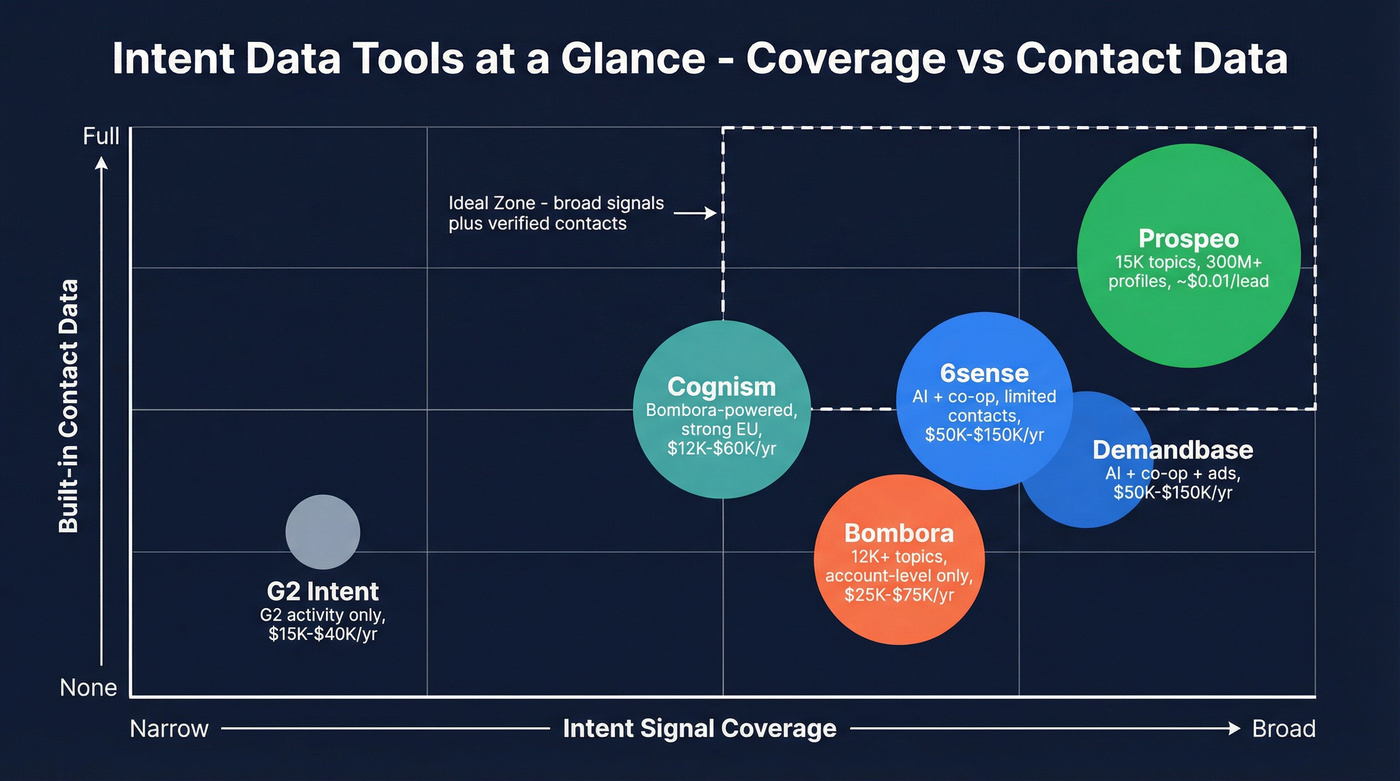
| Tool | Best For | Intent Coverage | Contact Data? | Pricing |
|---|---|---|---|---|
| Prospeo | SMB/mid-market wanting intent + contacts | 15K Bombora topics | 300M+ profiles, 98% accuracy | Free tier; ~$0.01/lead |
| 6sense | Enterprise ABM with RevOps | AI + co-op | Limited | $50K-$150K/yr |
| Bombora | Raw intent data licensing | 12K+ topic categories | No (account only) | $25K-$75K+/yr |
| Demandbase | Enterprise ABM + display ads | AI + co-op | Limited | $50K-$150K/yr |
| Cognism | Mid-market, strong EU data | Bombora-powered | Yes | $12K-$60K/yr |
| G2 Intent | Downstream vendor comparison | G2 activity only | No | $15K-$40K/yr |
Prospeo
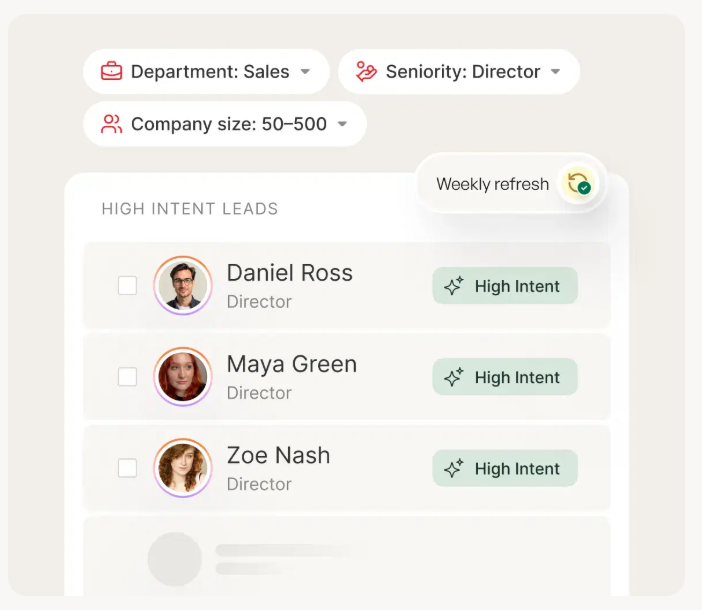
The only platform in this space that combines Bombora-powered intent data with a full contact database - 300M+ professional profiles, 143M+ verified emails, 125M+ verified mobile numbers. Bombora's taxonomy covers 12,000+ topic categories, and Prospeo tracks 15,000 intent topics including sub-topics and extended taxonomy. The 7-day data refresh cycle means you're not reaching out to someone who changed jobs a month ago.
Thirty-plus search filters let you layer buyer intent with technographics, job changes, headcount growth, funding signals, and department-level headcount. Native integrations include Salesforce, HubSpot, Smartlead, Instantly, Lemlist, Clay, Zapier, and Make. No six-figure contract, no 3-month implementation, no "talk to sales" gate. The Chrome extension (40K+ users) lets SDRs pull verified contacts from any website or CRM with real-time email and mobile verification.
6sense
The enterprise standard for predictive ABM. 6sense aggregates signals from multiple sources and uses AI to predict buying stage across the funnel. The orchestration capabilities are genuinely powerful: automated ad activation, personalized web experiences, and deep CRM integration.
The trade-offs are real, though. Implementation typically takes 3-6 months, the predictive scoring is a black box that's hard to audit, and pricing commonly lands in the $50K-$150K/year range. Best for large enterprise teams with dedicated RevOps to operationalize the platform. If you don't have someone whose full-time job is managing 6sense, skip it.

Bombora
Bombora is the backbone of the intent data ecosystem. Its co-op network of 5,000+ B2B publisher sites generates the third-party intent data that many other platforms - including Prospeo and Cognism - license and layer into their own products. Expect $25K-$75K+ per year depending on volume and integrations. Account-level only, anonymous, and meaningful false positives come with the territory.
Other Options
Demandbase is a full ABM suite combining advertising, intent, and orchestration at $50K-$150K/year. Strong if you need display ad activation tied directly to intent signals. Cognism is more accessible for mid-market teams, combining Bombora intent with its own contact database and particular strength in European data and GDPR compliance, running $12K-$60K/year. G2 Buyer Intent offers high-quality downstream signals - someone actively comparing vendors on G2 is further along than someone reading a blog post - but it's limited to G2 platform activity at $15K-$40K/year.
Accounts with 3+ active signals convert at 2.4x the rate - but only if you reach the right person. Prospeo layers intent data with 30+ filters like job change, headcount growth, and technographics, then delivers 98% accurate emails at $0.01 each. No dead signals, no bounced outreach.
Turn every surge alert into a booked meeting.
Mistakes That Kill Intent-Driven Strategies
Relying on a single signal source. Layer first-party and third-party signals together. First-party signals are your highest-quality input; third-party adds breadth, not precision. Accounts with 3+ active signals convert at 2.4x the rate of single-signal accounts. One data source is a guess. Three is a pattern.
Chasing surges without brand presence. If you're not in the buyer's consideration set of roughly 5 vendors when they come in-market, intent data won't save you. Intent data is a prioritization tool, not a demand generation strategy.
Ignoring the 95% not in-market. Here's my frustration with how most teams run intent programs: they over-invest in the 5% showing intent and completely ignore the 95% who'll be in-market next quarter. Brand awareness and content marketing for that 95% is what puts you in the consideration set before the surge happens. Intent data without brand investment is like having a fishing rod but no bait.
Letting scores go stale. Without decay rules, your prioritized list fills up with accounts that surged six months ago. Apply decay aggressively and refresh your scoring model quarterly.
Stopping at the account level. Knowing Company X is researching your category is worthless if your SDRs are Googling for email addresses and finding generic inboxes. Bridge from account identification to contact activation - pair your intent signals with verified contact data so the signal actually reaches a decision-maker. Tracking buyer research activity without a path to the individual is the most expensive way to accomplish nothing.
FAQ
What makes an account "high-intent" vs just "high-value"?
High-value means the account fits your ICP - right size, industry, and tech stack. High-intent means the account is actively showing buying signals right now, like pricing page visits, competitor research on G2, or review site activity. The best prospects are both, but an account can be one without the other.
How many intent signals should trigger outreach?
Accounts with 3+ active signals convert at 2.4x the rate of single-signal accounts. A pricing page visit plus a competitor comparison plus a return visit within a week is a pattern worth routing to sales immediately. One blog view alone is noise.
Is third-party intent data worth the cost?
Alone, rarely. Layer it with first-party website and product signals, then pair it with verified contact data so you can reach the right person at the surging account. Prospeo bundles Bombora intent with 300M+ contacts starting free - far cheaper than licensing raw Bombora data at $25K+/year and buying a separate contact database on top.
How fast should sales follow up on an intent signal?
Within 4 hours. Intent signals decay fast - a buyer researching today may shortlist vendors by tomorrow. Speed-to-lead is the single biggest lever in converting surging accounts to pipeline.
Why do most intent data implementations fail?
The breakdown is almost always operationalization, not data quality. Teams buy the platform, get the signals, and lack the workflow to act fast enough. Automate routing so SDRs get notified in minutes, make sure you have verified contacts at surging accounts (not just company names), and build outreach templates matched to specific research topics.