

How to Create an Ideal Client Profile That Actually Drives Pipeline
Your SDR team is prospecting every mid-market SaaS company they can find. Reply rates are 0.8%. The sequences are fine, the copy is fine - the targeting is wrong.
That's what happens when you skip the ideal client profile. And honestly, most teams don't skip it on purpose. They just build one that's so broad it might as well not exist.
If you're wondering how to create an ideal client profile that actually works, the answer is simpler than most guides make it: start from your best customers, not your assumptions. Your ICP should fit in one sentence. The real test is whether you can plug it directly into a prospecting tool and build a list from it. If you can't, it's too vague.
What Is an Ideal Client Profile?
An ideal client profile is a company-level description of the organizations most likely to become high-value customers. It defines the firmographic, technographic, and behavioral attributes that make a prospect worth pursuing.
Don't confuse it with a buyer persona. Your ICP describes the company - industry, size, revenue, tech stack. A buyer persona describes the person inside that company, like the VP of Sales who signs the contract. You need both, but the ICP comes first.
Why Your ICP Determines Everything Downstream
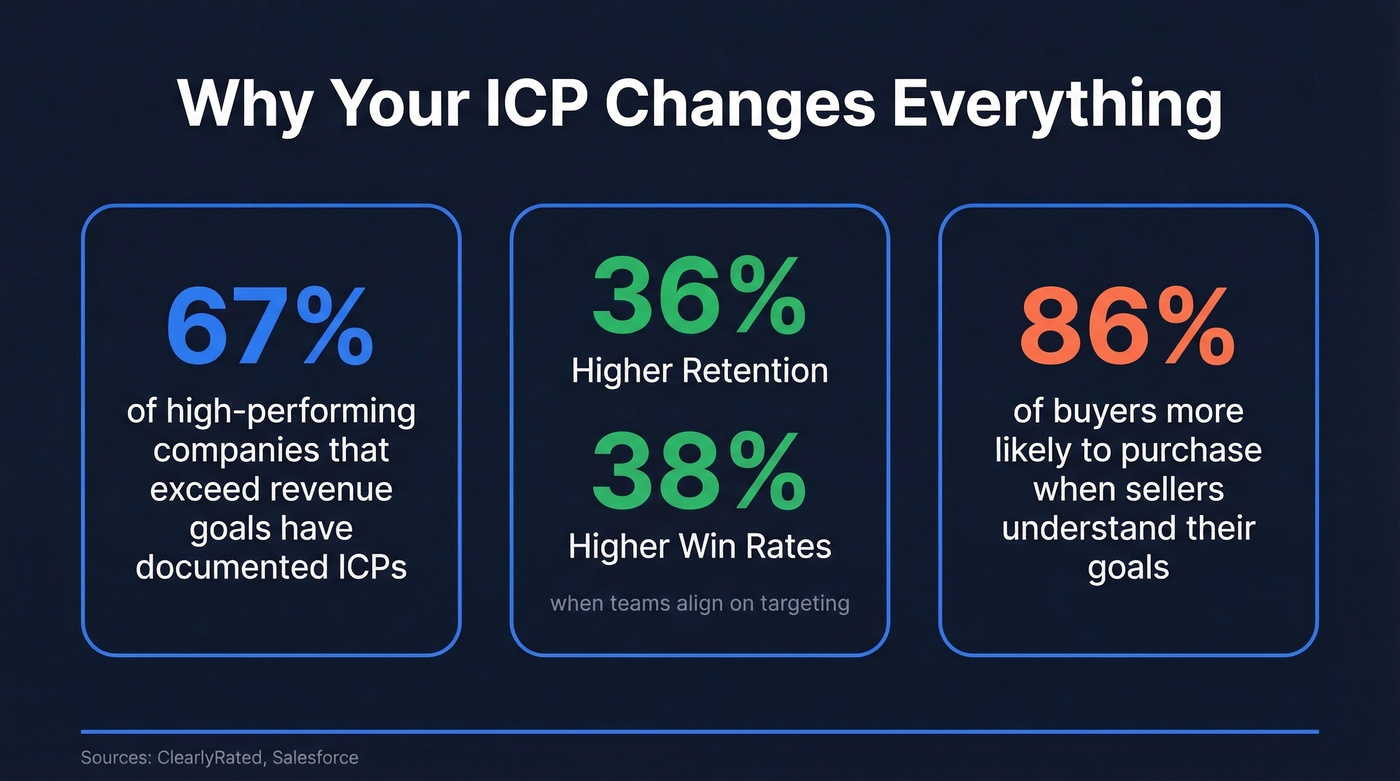
67% of high-performing companies that exceed revenue goals have documented ICPs. Teams aligned on targeting see 36% higher retention and 38% higher win rates. And 86% of buyers are more likely to purchase when the seller understands their goals - that understanding starts with knowing which companies to talk to in the first place.
Here's the thing: most ICP templates online are useless because they stop at firmographics. We've seen teams with beautifully designed ICP slides that couldn't translate a single criterion into a prospecting filter. Skip this step and you burn budget on prospects who were never going to buy.
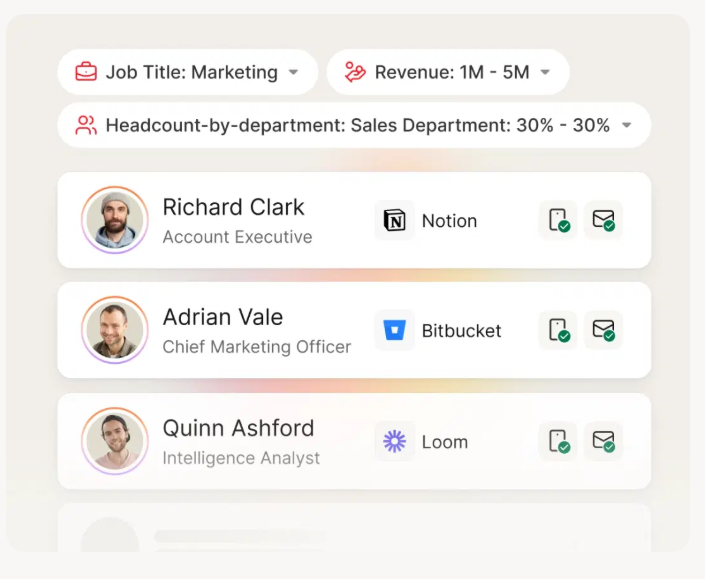

Your ICP is only as good as the data behind it. Prospeo's 30+ search filters - industry, headcount, tech stack, intent signals, funding, and more - map directly to every ICP dimension you just defined. With 98% email accuracy and a 7-day data refresh cycle, your outbound hits real inboxes, not dead ends.
Stop letting great ICPs die in Google Docs. Turn yours into pipeline.
Build Your ICP in 5 Steps
1. Analyze Your Best and Worst Customers
Pull your top 10 customers by lifetime value, NPS, and deal velocity - the accounts that closed fast, expanded, and never threatened to churn. Look for what they share.
Then identify your worst-fit customers: the ones who churned in 90 days, drained support, or negotiated endlessly for a deal that wasn't worth it. Your anti-ICP is just as valuable as your ICP. B2B founders on Reddit stress adding qualification gates - budget authority, urgency, willingness to change - before a prospect even enters your profile. It's a smart filter most templates skip.
If you have fewer than 10 customers, use market research and competitor customer analysis to build your hypothesis.
2. Extract the Patterns
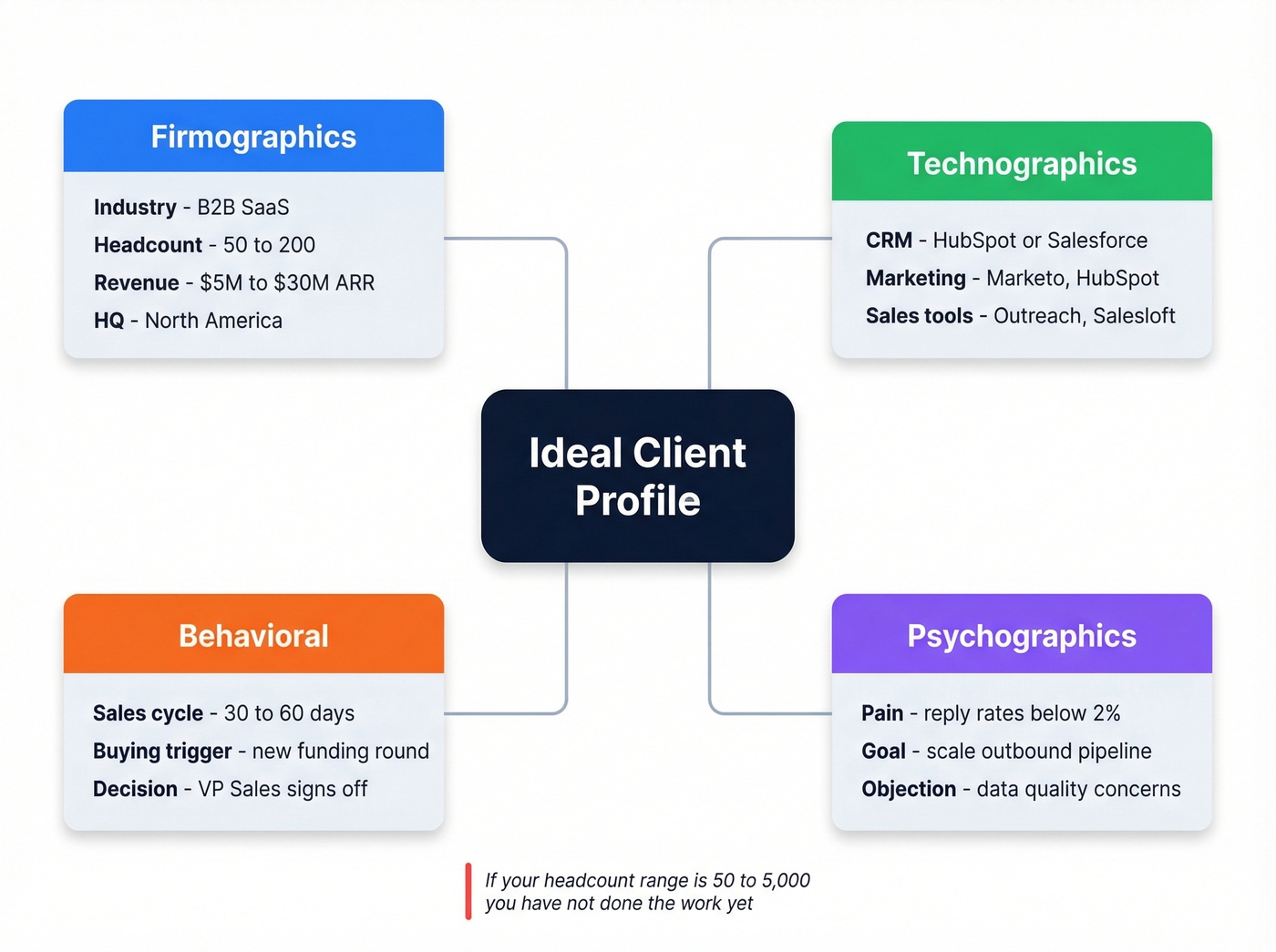
Map your best customers across these dimensions:
| Dimension | What to Capture |
|---|---|
| Firmographics | Industry, headcount, revenue, HQ location |
| Technographics | CRM, marketing stack, key tools |
| Behavioral | Buying triggers, sales cycle length, decision structure |
| Psychographics | Core pain points, goals, common objections |
If your headcount range is "50-5,000 employees," you haven't done the work. That's not a profile - it's a wish list. Narrow it until it feels uncomfortable.
3. Add Intent and Trigger Signals
Static firmographics tell you who could buy. Intent signals tell you who's ready to buy right now. If you want a tighter scoring model, pair this with identifying buying signals before you build lists.
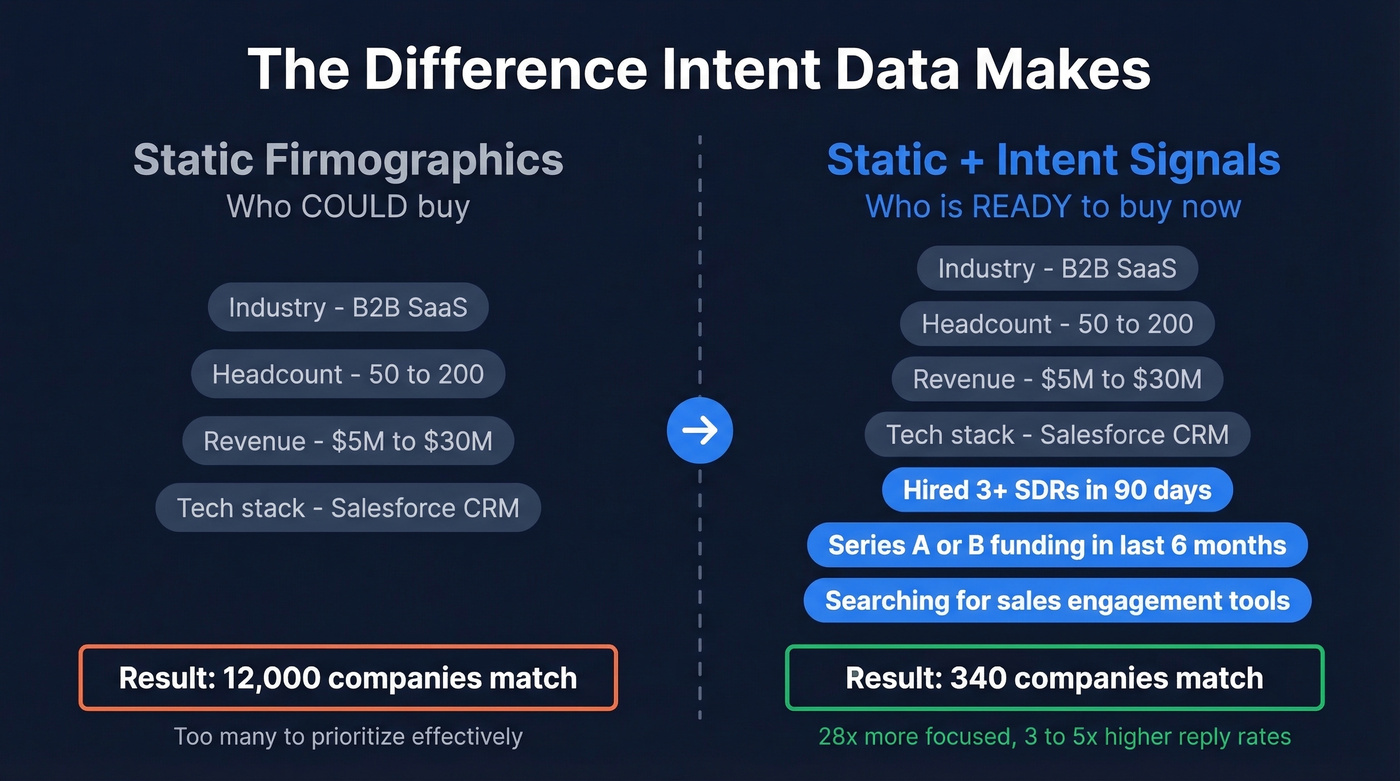
Intent data is one of the highest-ROI additions to any customer profile. If you're only adding one modern layer, make it this one. High-signal triggers include hiring for a specific role (3+ SDRs in 90 days), expanding into new markets, or closing a recent funding round. Bombora tracks 15,000+ intent topics - layer even two or three onto your firmographic criteria and your ICP goes from static to actionable.
4. Write It Down
Here's a specific, actionable ICP for a B2B SaaS company selling sales engagement software:
| ICP Dimension | Example |
|---|---|
| Company stage | Series A-B SaaS |
| Headcount | 50-200 employees |
| Revenue | $5M-$30M ARR |
| Tech stack | HubSpot or Salesforce CRM |
| Decision-maker | VP Sales or CRO |
| Pain point | Outbound reply rates below 2% |
| Trigger signal | Hired 3+ SDRs in past 90 days |
If your ICP can't fill every row with real numbers, keep refining. A half-filled template is a half-baked strategy. If you need a starting point, use an ICP template and tighten it from real wins/losses.
5. Validate Through Outbound Testing
Your ICP is a hypothesis until you test it. Run a small outbound campaign - 100 to 200 prospects - against your criteria. Measure reply rate, meeting rate, and deal velocity. If you're missing replies, fix the sales prospecting techniques before you scale volume.
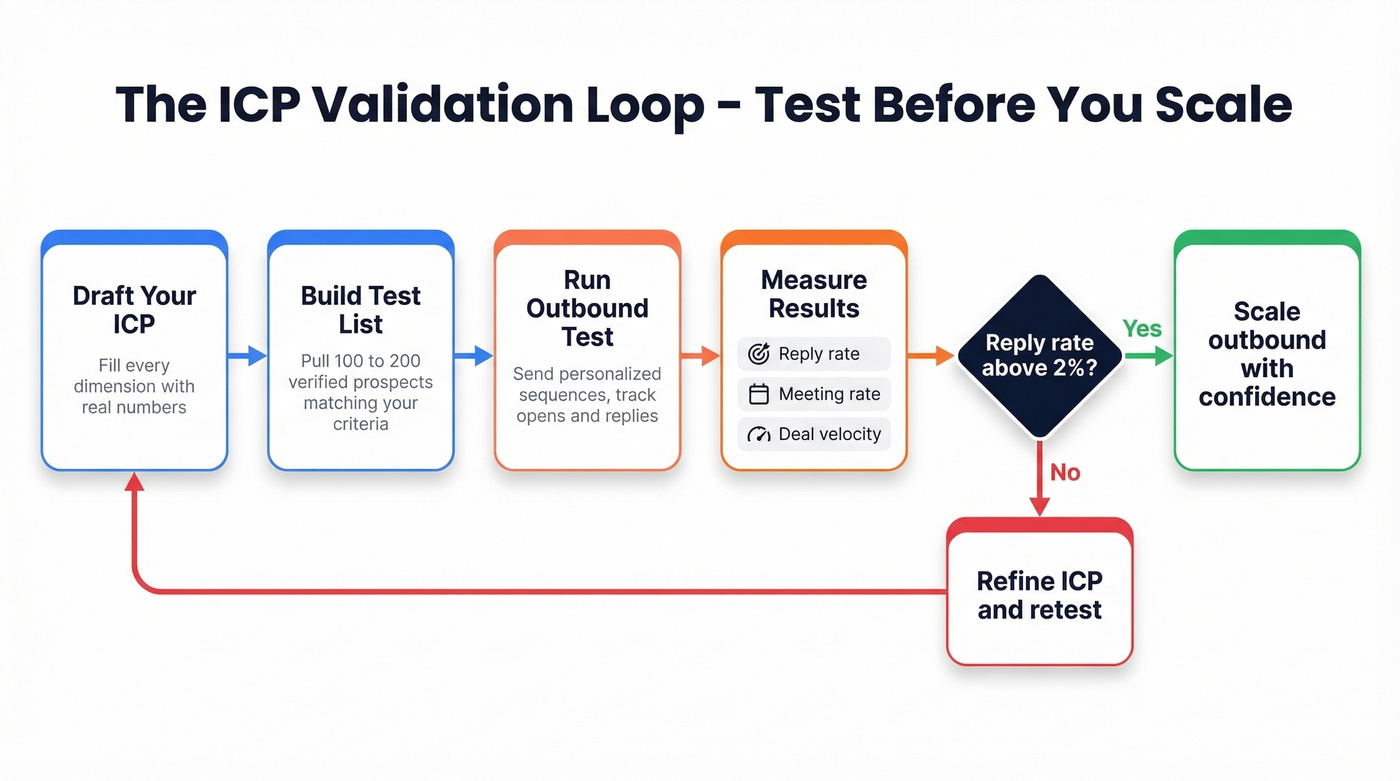
In our experience, teams that skip validation waste two to three months scaling bad targeting. If reply rates sit below 2%, refine the profile before you scale. Snyk saw bounce rates drop from 35-40% to under 5% after switching to verified contact data - the ICP was right; the contact data had been wrong.

Turn Your ICP Into a Prospect List
This is where most profiles go to die. The ICP sits in a Google Doc, the team nods along, and reps go back to prospecting the same way they always have.
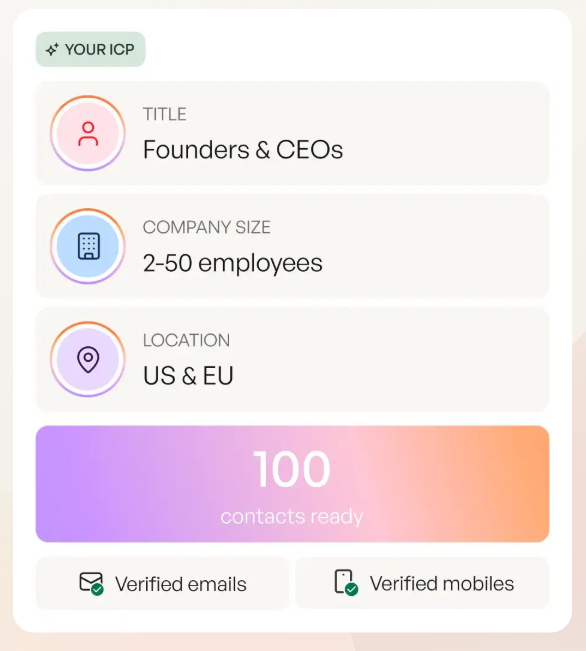
Each ICP dimension maps directly to a database filter - industry, headcount, tech stack, intent signals all have corresponding search fields in tools like Prospeo. When you map these one-to-one, your profile becomes a prospecting workflow, not a strategy doc. If you're comparing options, start with a sales prospecting database and validate list quality before you commit. For teams with average deal sizes under $15k, you probably don't need enterprise-grade data platforms. A self-serve tool with a free tier is enough to validate your targeting before committing budget.
Let's be real about what "validated" means here. Meritt tripled pipeline from $100K to $300K/week after mapping their ICP directly to database filters and running verified outbound. The difference wasn't a better ICP document - it was the translation from document to action. If your sequences still underperform, swap in proven sales follow-up templates and retest.
Meritt tripled pipeline from $100K to $300K/week by mapping ICP criteria directly to verified prospect lists. Snyk cut bounce rates from 35% to under 5% across 50 AEs. The difference wasn't a better ICP document - it was pairing sharp targeting with 98%-accurate contact data at $0.01 per email.
Validate your ICP with real outbound - 75 free emails, no contract required.
Common ICP Mistakes to Avoid
Too broad. "50-5,000 employees" isn't an ICP. We've seen profiles that match 500,000 companies - that's not a profile, that's a TAM slide. If your criteria don't force you to say no to someone, start over. (If you need to sanity-check scope, review addressable market basics.)
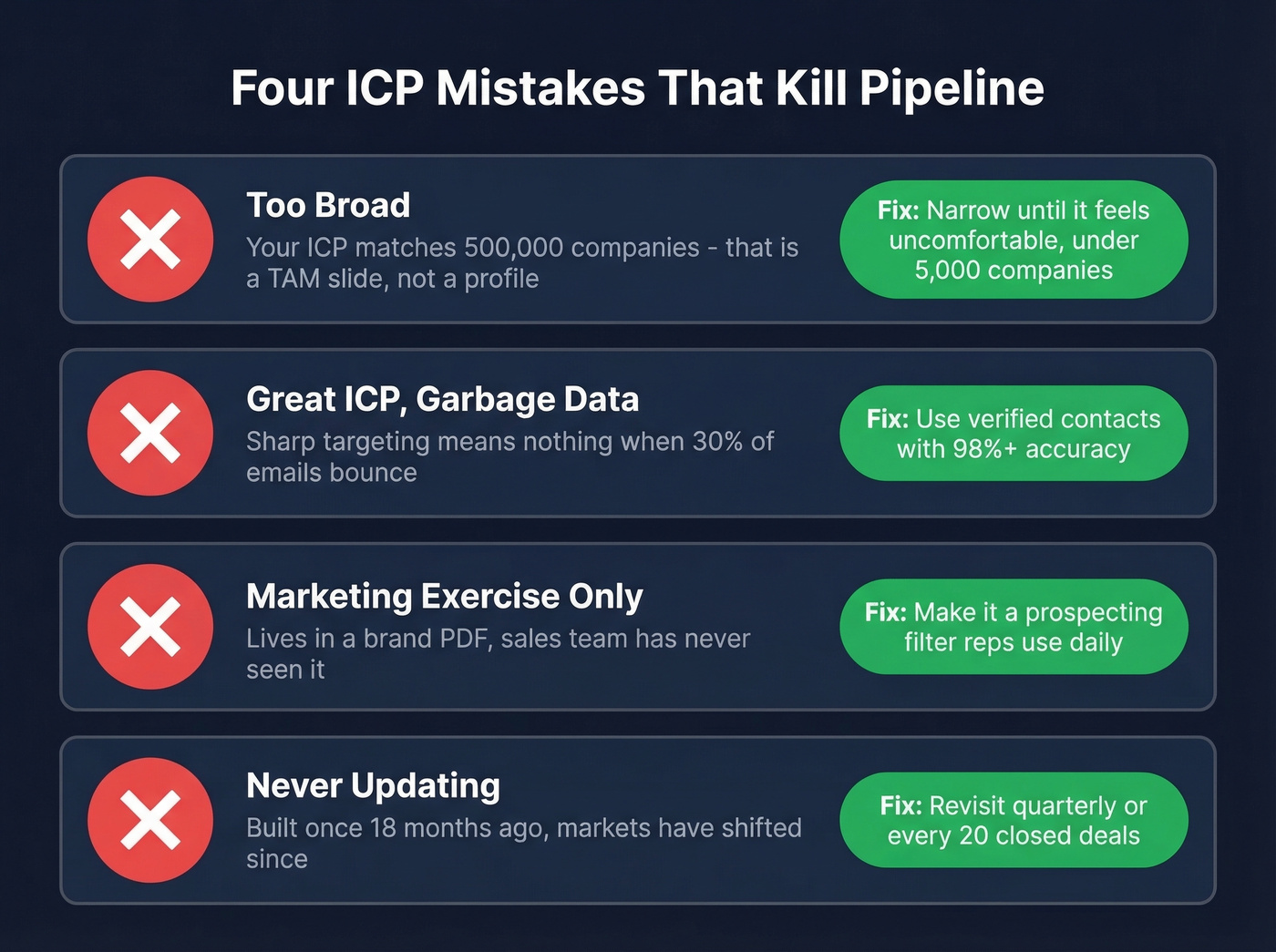
Great ICP, garbage data. The sharpest profile in the world won't help if your emails bounce at 30%. Verified contact data is the bridge between a smart ICP and actual pipeline. If you're diagnosing deliverability, start with email bounce rate benchmarks and fixes.
Treating it as a marketing exercise. If your ICP lives in a brand guidelines PDF and nobody on the sales team has seen it, it's decoration. It needs to be a prospecting filter, not a positioning statement.
Never updating. Revisit your ICP quarterly, after every 20 closed deals, or any major product shift. Markets move. Your profile should too.
FAQ
What's the difference between an ICP and a buyer persona?
An ICP defines company-level fit - industry, headcount, revenue, tech stack. A buyer persona describes the individual decision-maker inside that company, including their role, goals, and objections. Build the ICP first, then layer personas for each buying committee member.
How often should I update my ideal client profile?
Revisit quarterly at minimum, or after every 20 closed-won deals. Major product launches, new market entry, or a shift in average deal size all warrant an immediate refresh. Stale profiles lead to stale pipeline.
How do I build a prospect list from my ICP?
Map each ICP criterion - industry, headcount, tech stack, intent - to corresponding database filters, then export verified contacts. Free tiers (Prospeo offers 75 credits/month) let you validate before scaling spend.
Can I create an ideal client profile with fewer than 10 customers?
Yes. Use competitor customer analysis, review mining, and market research to build a hypothesis ICP. Interview 5-8 prospects in your target segment about their pain points, then validate with a 100-prospect outbound test measuring reply and meeting rates.
What's the biggest mistake teams make with ICPs?
Defining criteria too broadly. If your ICP matches more than 5,000 companies, it's a total addressable market estimate, not a targeting profile. The best ICPs feel uncomfortably narrow - and that's exactly why they convert at 3-5x the rate of broad targeting.