

How to Write a Follow-Up Email After an Event That Actually Gets a Reply
A recruiter at a BigLaw firm once told us their team sent a blast by 10:30 AM the morning after a networking dinner asking attorneys which attendees stood out. The event had ended at 8 PM. If candidates hadn't followed up by then, strong impressions faded because hosts literally forgot names by the end of the night. That's how fast the window closes - and it's not just recruiting. 42% of replies come from follow-ups, not the initial email. Knowing how to write a follow-up email after an event is the difference between a new relationship and a missed one.
Here's the short version: send within 24 hours, keep it to 50-125 words, reference something specific from your conversation, and include one clear ask. Speed beats polish every time.
When to Send Your Post-Event Follow-Up
Intent decays in hours, not days. HBR's research on lead response times shows that responding fast dramatically improves outcomes compared to waiting even 24 hours. Treat follow-up timing as an SLA, not a suggestion.
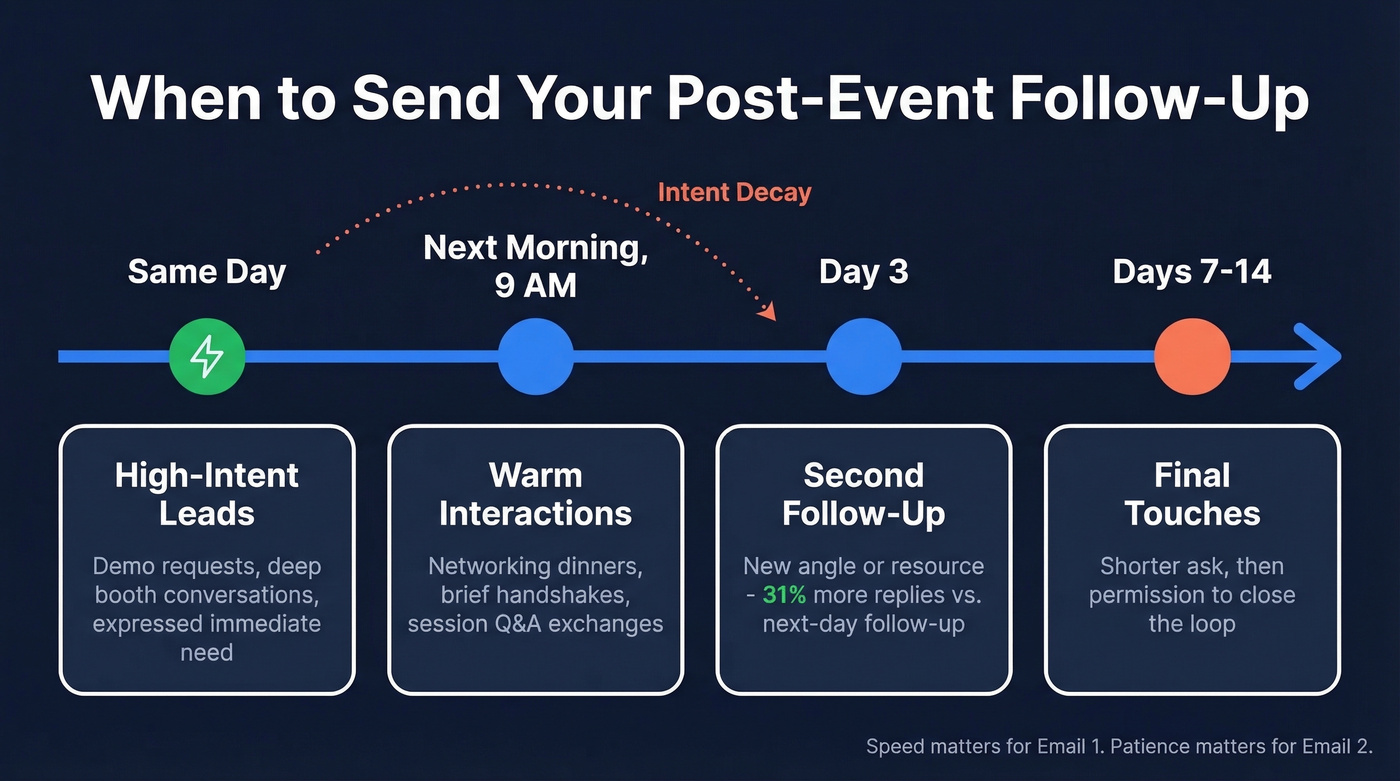
Same-day for high-intent signals - someone asked for a demo, expressed an immediate need, or you had a substantive booth conversation. Next-business-day for warm interactions like general attendees, brief handshakes, or session Q&A exchanges. Days 3-14 for colder contacts who don't respond to your first touch.
One counterintuitive finding: next-day follow-ups reduce replies by 11%, while waiting three days before a second follow-up increases replies by 31%. Speed matters for the first email. Patience matters for the second.
| Event Type | First Follow-Up | No Response |
|---|---|---|
| Conference / trade show | Within 24 hrs | 1-2 weeks later |
| Webinar | Within 24 hrs | 1-2 weeks later |
| Networking dinner | Next morning, 9 AM | 1-2 weeks later |
Subject Lines That Get Opened
Keep subject lines between 30-50 characters. Anything longer gets truncated on mobile, and cognitive load kills open rates. Personalized subject lines lift opens by roughly 26%, but measure on reply rate, not opens. A clickbait subject line that gets opened but not answered is worthless. If you want more options, pull from a swipe file of subject lines and adapt them to the event context.
Examples that work:
- "Great chatting at [Event Name]" - simple, personal, clear
- "The [topic] resource I mentioned" - delivers on a promise
- "Quick follow-up - [specific detail]" - signals brevity
Skip anything cute or mysterious. "You won't believe what happened after the keynote" belongs in a spam folder.
Email Structure + Templates
Every effective post-event message follows the same skeleton: context from your conversation, one piece of value, one CTA. Aim for 50-125 words - this range consistently gets the highest reply rates. If your email scrolls on mobile, cut it in half. For more plug-and-play options, keep a set of follow-up templates handy.
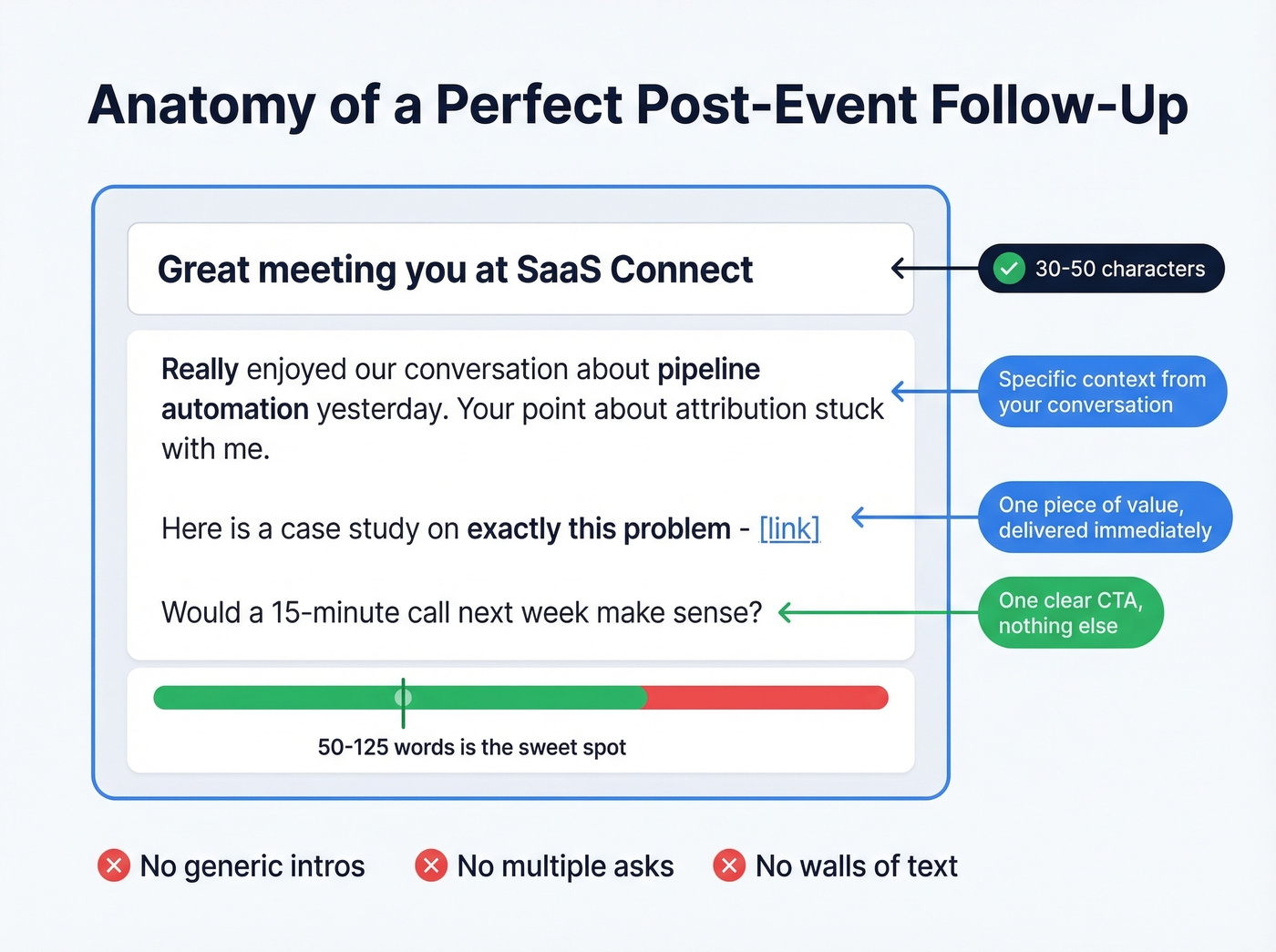
One CTA per email. Always. Multiple asks create decision friction, and decision friction kills replies. If you struggle with the ask, use a simple email call to action framework.
What NOT to Send
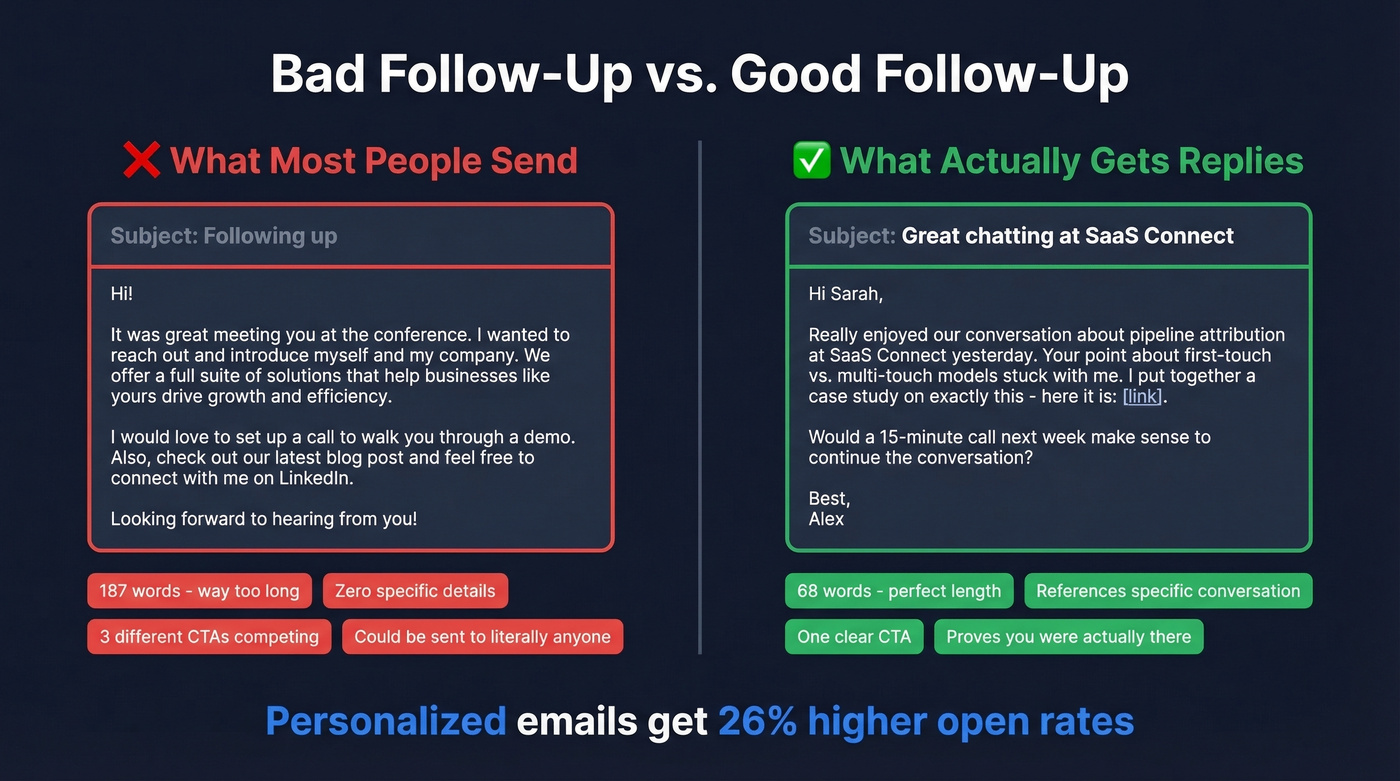
Hi! It was great meeting you at the conference. I wanted to reach out and introduce myself and my company. We offer a full suite of solutions that help businesses like yours drive growth and efficiency. I'd love to set up a call to walk you through a demo. Also, check out our latest blog post and feel free to connect with me on LinkedIn. Looking forward to hearing from you!
That email says nothing specific, asks for three things, and could've been sent to anyone on the planet. Delete it.
Template - Warm Lead (Strong Conversation)
Subject: Great meeting you at [Event]
Hi [First Name],
Really enjoyed our conversation about [specific topic] at [Event] yesterday. Your point about [detail] stuck with me.
I put together [resource/case study/intro] that's directly relevant to what you're working on - here it is: [link]
Would a 15-minute call next week make sense to continue the conversation?
Best, [Your name]
Template - General Attendee (Brief Interaction)
Subject: From [Event] - thought you'd find this useful
Hi [First Name],
We met briefly at [Event] - I was at the [company/booth/session]. Wanted to share [resource/recap/insight] that ties into what [speaker/panel] covered.
If [specific problem] is on your radar, happy to share how we've approached it.
[Your name]
Template - Speaker or VIP
Subject: Your [Event] talk on [topic]
Hi [First Name],
Your session on [topic] at [Event] was the highlight for me - especially [specific point or quote]. It reframed how I'm thinking about [related challenge].
I've been working on [relevant project/insight] and think there's an interesting overlap. Would you be open to a quick exchange?
[Your name]
Connect on the recipient's professional profile the same day you send the email. Two touchpoints beat one. If you need a clean version for a first-touch connection, use a dedicated connection email.

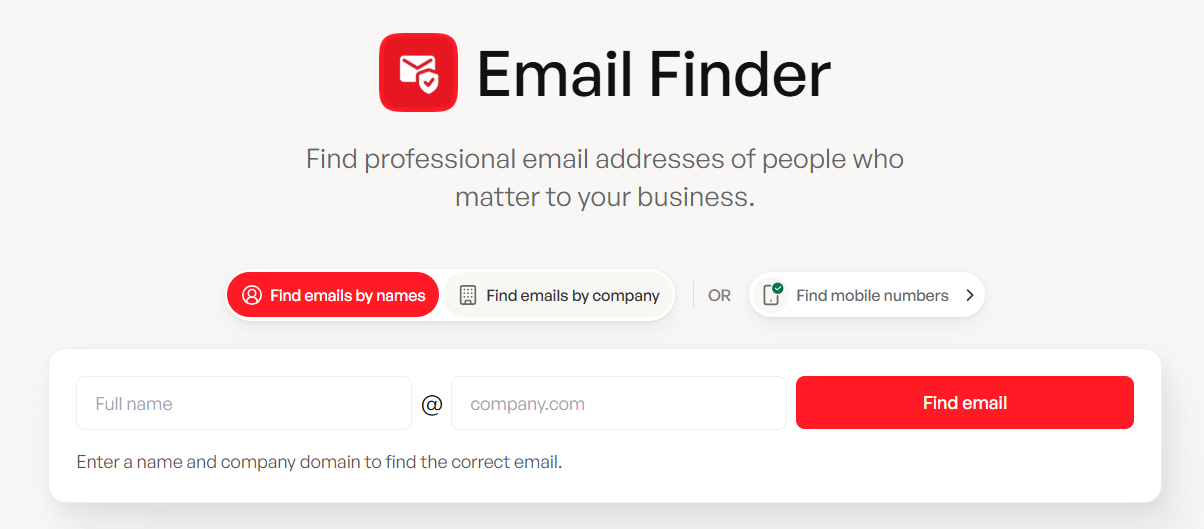
You nailed the conversation at the event. Now you need the right email address to follow up. Prospeo's Email Finder pulls verified emails from 300M+ profiles at 98% accuracy - so your follow-up lands in their inbox, not a bounce report.
Don't let a great conversation die because of a bad email address.
Don't Have Their Email? Find It First
You collected a stack of business cards, scanned some badges, and jotted names in your phone. Now you're back at your desk and half those contacts don't have usable email addresses.
Whatever tool you use, verify before you send. Non-negotiable. If you're doing name-only lookups, a name to email workflow will save hours.
Six Mistakes That Kill Your Follow-Up
- Opening with just their name and a comma. "Hi Sarah," followed by a generic pitch reads like a mass email. Open with a sentence that proves you were actually there - reference a specific moment, question, or detail from your conversation.
- Generic copy-paste messages. If the recipient can tell you sent the same email to 200 people, you've already lost.
- Emails over 125 words. Long emails signal that you value your time more than theirs. Cut ruthlessly.
- Multiple CTAs. "Let's grab coffee, also check out our blog, and here's a webinar link" - that's three asks competing for attention. Pick one.
- Unfulfilled promises. You offered to make an intro or send a resource at the event. If you don't deliver, you've eroded trust before the relationship starts.
- No follow-up at all. The biggest mistake, and shockingly common. Don't be most people.
Building Your Follow-Up Cadence
A 2-email sequence produces a 6.9% response rate - roughly double what a single email gets. But there's a ceiling: sending 4+ emails more than triples unsubscribes and spam complaint rates, which tanks your deliverability for everyone else on your list. If you're building sequences at scale, follow a simple sequence management process so personalization doesn't break.
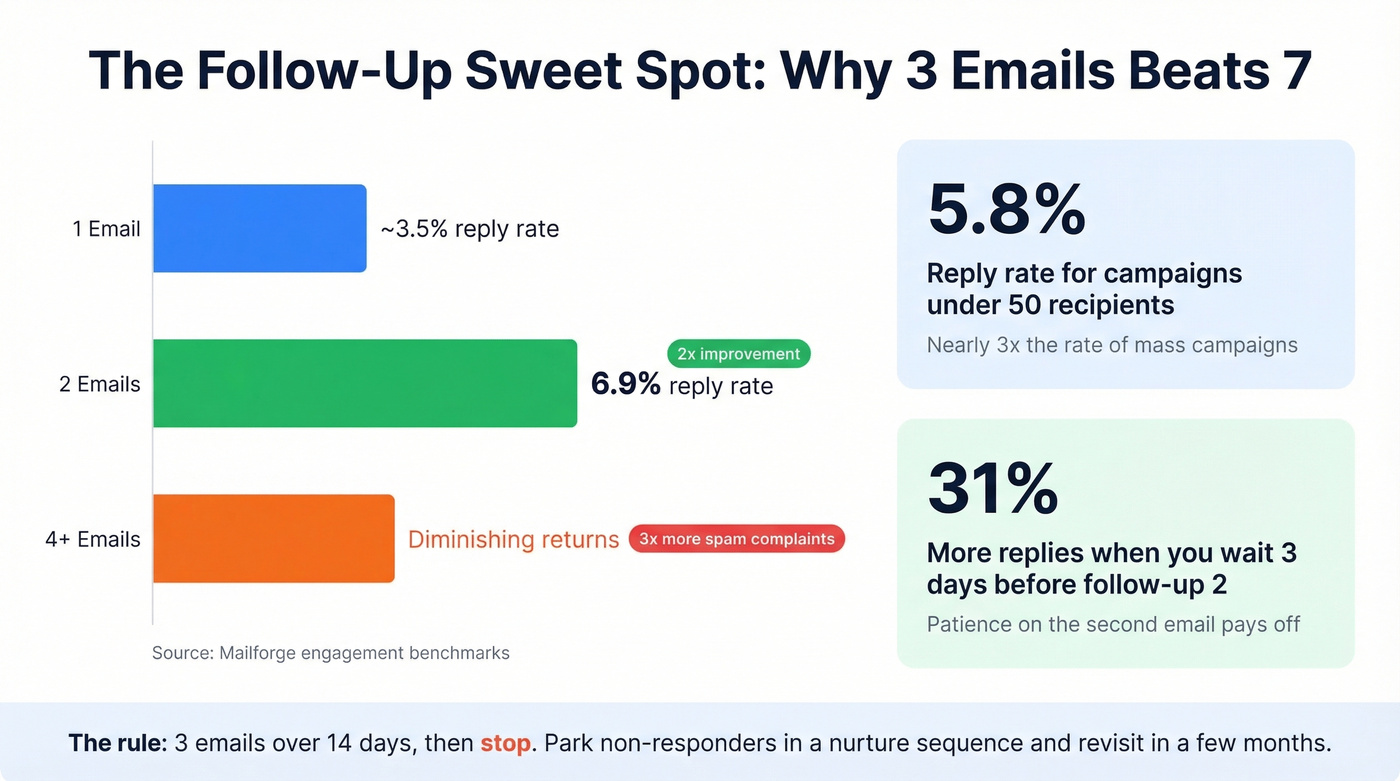
Let's be honest: most advice tells you to follow up five, six, seven times. Don't. Three emails over 14 days, then stop. If someone hasn't replied after three touches, they aren't interested right now. Park them in a nurture sequence and revisit in a few months.
| Touch | Timing | Purpose |
|---|---|---|
| Email 1 | Day 0 (same day) | Personal, specific, one CTA |
| Email 2 | Day 3 | New angle or resource |
| Email 3 | Day 7 | Shorter, simpler ask |
| Final bump | Day 14 | Permission to close the loop |
One more data point worth knowing: campaigns with under 50 recipients hit a 5.8% reply rate - nearly 3x the rate of mass campaigns. Event follow-ups are inherently small-batch. Use that advantage by personalizing every single email instead of blasting a template to your entire badge-scan list. If you want to go deeper on personalization, use a personalized outreach checklist.
For registered no-shows, send the recording or key takeaway within 24 hours. They signed up for a reason.
Half the business cards you collected have outdated emails or no email at all. Prospeo verifies every address through a 5-step process - catch-all handling, spam-trap removal, honeypot filtering - so your post-event follow-ups actually reach real people. Starting at $0.01 per email.
Turn event contacts into verified emails before the intent window closes.
Quick Compliance Note
Not all post-event lists are created equal. Attendee registration lists from event organizers require explicit consent before you add anyone to marketing sequences - importing them straight into your email tool creates compliance risk and deliverability harm. Leads you collected directly at your booth carry implied consent for an initial follow-up, but not for ongoing campaigns.
Always include an unsubscribe link. If you're reaching anyone in the EU or UK, GDPR requires consent that's freely given, specific, informed, and unambiguous - your first email should offer them the option to opt in. If you're unsure where the line is, review the basics of cold email marketing compliance and deliverability.
FAQ
What's the best time to send a follow-up email after an event?
Tuesday through Thursday, 9-11 AM in the recipient's time zone consistently produces the highest open and reply rates. Write your message the night before and schedule delivery for morning so it lands at the top of their inbox.
How long should a post-event follow-up email be?
Aim for 50-125 words. Emails in this range get the highest reply rates across benchmarks. If it scrolls on a mobile screen, cut it in half - brevity signals respect for the recipient's time.
What if my first follow-up gets no response?
Wait three days, then send a shorter email with a different angle - a new resource, a relevant insight, or a simpler ask. Stick to two or three follow-ups over 14 days, then stop. Beyond that, you risk spam complaints that hurt your sender reputation.