

ICP vs Persona: The Real Difference (and How to Use Both)
Marketing delivered 500 MQLs last quarter. Sales says 80% are garbage. The finger-pointing starts, and nobody can agree on who the "right" customer actually is.
This disconnect almost always traces back to the same root cause: the team either mashed their ICP and persona definitions together, or built one without the other. Companies with documented personas are 71% more likely to exceed revenue goals. Yet 79% of marketing leads never convert to sales - usually because they came from companies that were never a good fit in the first place. The ideal customer profile and the buyer persona solve different halves of this problem, and confusing them is one of the most expensive mistakes in B2B.
If you only have time for one, build the ICP. Personas without an ICP just produce well-written emails to companies that'll never buy.
Quick Version
ICP (Ideal Customer Profile): A company-level filter. It defines which organizations are worth pursuing based on firmographics, technographics, growth signals, and buying triggers.
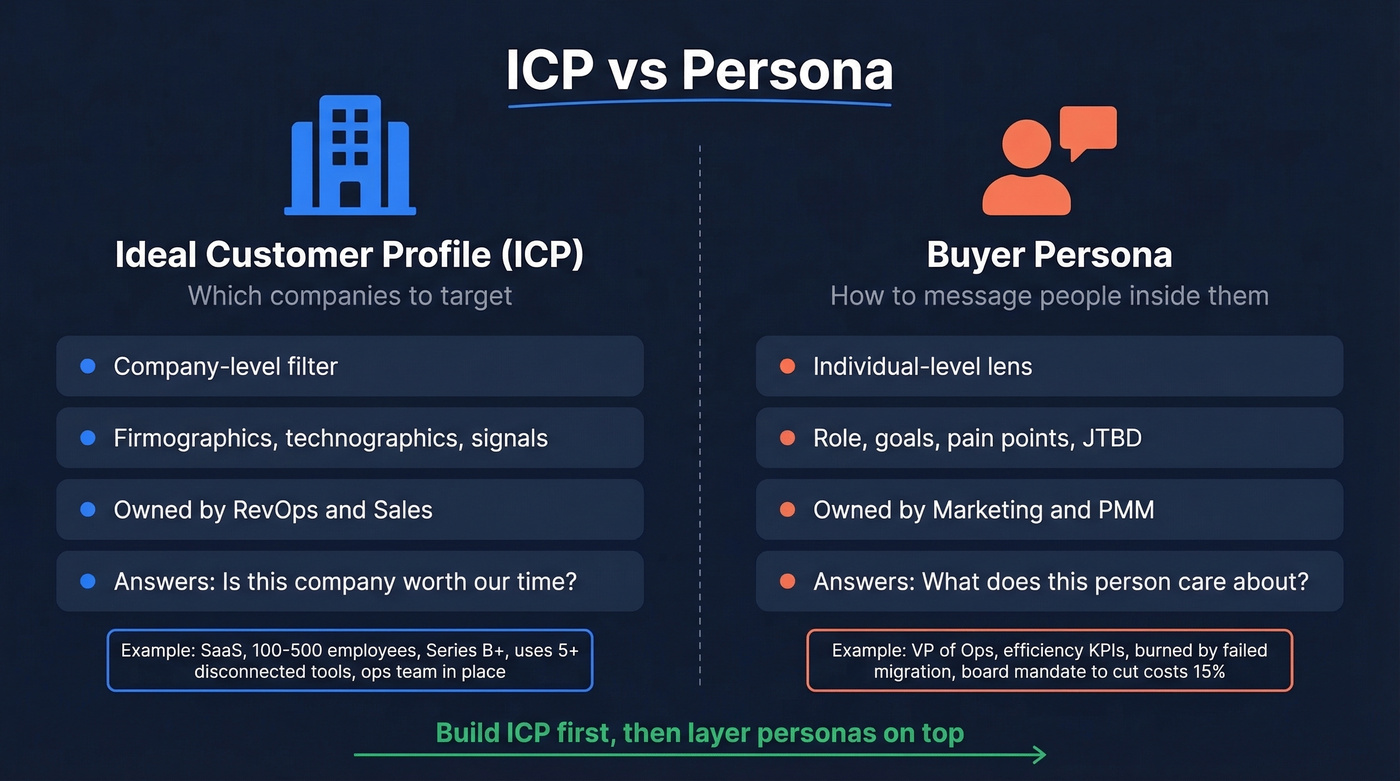
Buyer Persona: An individual-level lens. It defines who you're talking to inside those companies - their role, goals, pain points, and decision-making process.
The order matters. Build the ICP first from your CRM data, then layer personas on top. Never the reverse.
What Is an Ideal Customer Profile?
An ICP isn't a demographic snapshot. It's a qualification framework that tells your team which companies deserve time and budget. The best ICPs combine four categories of criteria: firmographics like industry, headcount, and revenue; technographics covering the tools a company already uses; behavioral signals such as website visits, hiring patterns, and content engagement; and trigger events like new funding, leadership changes, or expansion into new markets.
Here's what separates a useful ICP from a useless one. A strong ICP looks like this: 50-500 employees, uses 5+ disconnected tools, has an ops team, and loses 10+ hours per week to manual data entry. That's specific enough to filter a prospect list. It captures the situation - the context, urgency, and metric pressure that makes a company ready to buy now.
Compare that to "50-200 employees, Series A, North America." That's a census category. It describes a building, not a buying situation. We've seen teams waste entire quarters running outbound against ICPs this vague, burning budget and morale in equal measure.
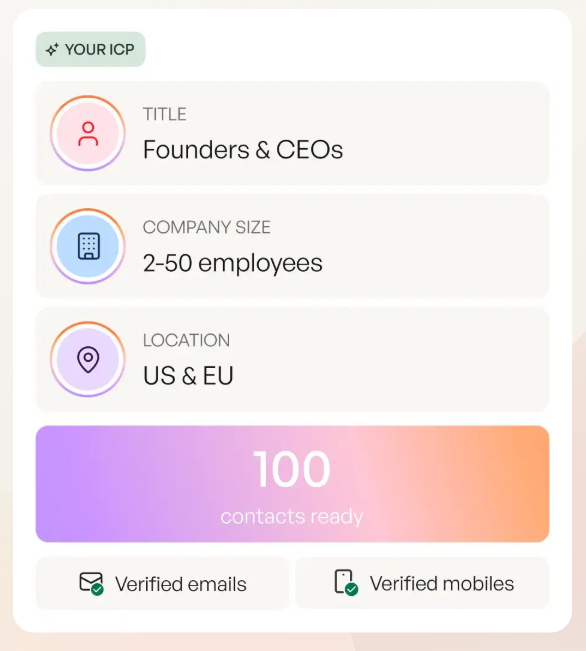
One concept worth borrowing: the Ideal Client Situation. Instead of just listing company attributes, an ICS captures the moment a company becomes a buyer - the specific combination of pain, urgency, and failed alternatives that makes them ready to act. Think of it as your ICP plus a "why now" layer. More than three ICPs usually means you haven't narrowed enough. Two or three, each with a clear ICS, will outperform a dozen vague ones every time.
What Is a Buyer Persona?
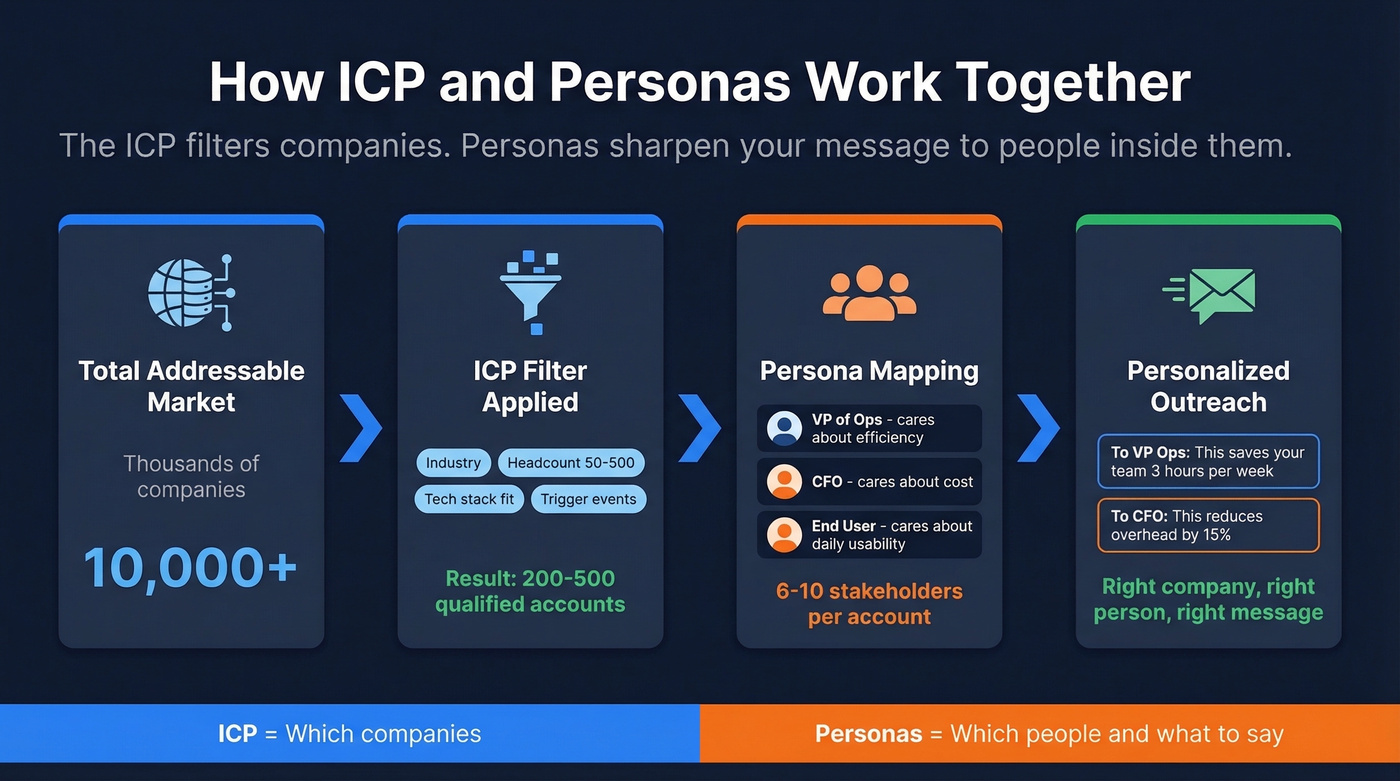
If the ICP tells you which companies to pursue, the persona tells you how to talk to the people inside them.
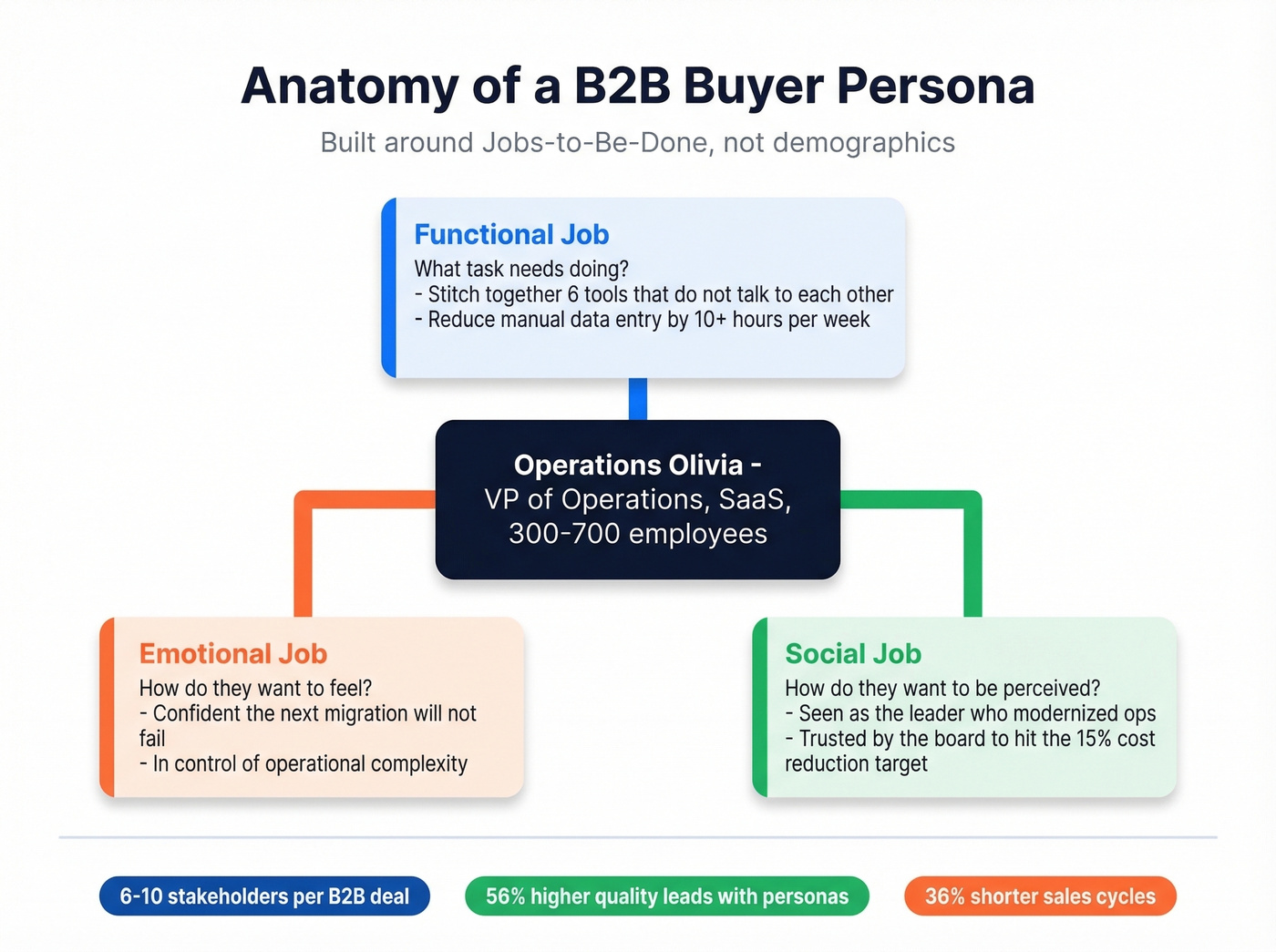
Demographics-first personas are dead in B2B. Start with jobs-to-be-done. Consider "Operations Olivia": VP of Operations at a SaaS company with 300-700 employees. Her KPIs are process efficiency and cost-per-transaction. Her core challenge is stitching together six tools that don't talk to each other. Her buying trigger is a board mandate to cut operational overhead by 15%. Her objection is implementation risk - she's been burned by a failed migration before.
That's a persona you can actually write messaging for. And you'll need more than one. B2B buying committees typically include 6-10 stakeholders, each with different priorities. The VP of Ops cares about efficiency. The CFO cares about cost. The end-user cares about whether the tool is annoying to use daily. Companies that build personas around these roles see 56% higher quality leads and 36% shorter sales cycles.
Structure each persona around three JTBD dimensions: the functional job (what task they need done), the emotional job (how they want to feel), and the social job (how they want to be perceived by their team and leadership). Demographics tell you who. JTBD tells you why they buy.
Side-by-Side Comparison
| Dimension | ICP | Buyer Persona |
|---|---|---|
| Focus | Company fit | Individual motivations |
| Level | Account / org | Person / role |
| Data sources | CRM, firmographic DBs | Interviews, sales calls |
| Primary use | Qualification & targeting | Messaging & content |
| Owner | RevOps / Sales | Marketing / PMM |
| Update cadence | Quarterly review | Semi-annual review |
| Example output | "SaaS, 100-500, Series B+" | "VP Ops, efficiency KPIs" |
The ICP is the filter. The persona is the lens. One narrows the universe of companies; the other sharpens how you communicate with the humans inside them. Understanding this distinction is what separates teams that generate pipeline from teams that generate noise.

You've defined your ICP and mapped your personas. Now you need the actual contact data to reach those 6-10 stakeholders. Prospeo's 30+ search filters - including buyer intent, technographics, headcount growth, and funding - let you operationalize your ICP instantly. Then pull verified emails (98% accuracy) and direct dials (125M+ mobiles) for every persona on the buying committee.
Turn your ICP framework into a pipeline in minutes, not weeks.
How They Work Together
Your ICP filters the universe of companies down to the ones worth pursuing. Your personas guide how you message the individuals within those companies. Without the ICP, you're writing great emails to people at companies that'll never buy. Without personas, you're sending the same generic pitch to the CFO and the junior analyst.
Let's be honest - we've watched this play out dozens of times. A team nails their ICP, identifies a perfect-fit account, then sends the same "save time and money" email to every contact. The junior associate who uses the product daily needs a "this saves me 3 hours a week" message. The managing partner who controls the budget needs "this reduces overhead by 15%." Same company, completely different conversations across those 6-10 stakeholders.
How to Build Each One
Build Your ICP
Start with your CRM - not your imagination. Pull 50-100 closed-won deals from the last 12 months and find patterns. 70-80% of your wins will share 3-5 common traits: industry, headcount range, tech stack, growth stage, or a specific trigger event.
Score them using a 100-point rubric across firmographics, technographics, behavioral signals, and trigger events. Then tier your accounts: Tier A (80-100 points), Tier B (50-79), Tier C (0-49). In our experience, this rubric cuts qualification debates in half. Teams that implement tiering consistently see Tier A win rates 1.5-2x higher than Tier B, with 15-20% shorter sales cycles.
Validate quarterly. If Tier B starts outperforming Tier A, your ICP has drifted and needs recalibration.
Build Your Buyer Personas
The single most important input is customer interviews. 82.4% of organizations exceeding revenue goals conducted qualitative buyer interviews as part of their persona research. If you're building personas from assumptions and job descriptions alone, you're writing fiction.
Combine interview insights with sales team input - your reps hear objections and buying triggers every day that never make it into a strategy doc. Document each persona on a single page. If it takes longer than two minutes to read, nobody on your team will use it.
Mistakes That Make Both Useless
Fairytale personas built without interviews. If nobody on your team has talked to an actual customer in the last quarter, your personas are fiction that produces fictional pipeline. The consensus on r/sales is brutal about this: teams that skip interviews end up rewriting their personas six months later anyway.
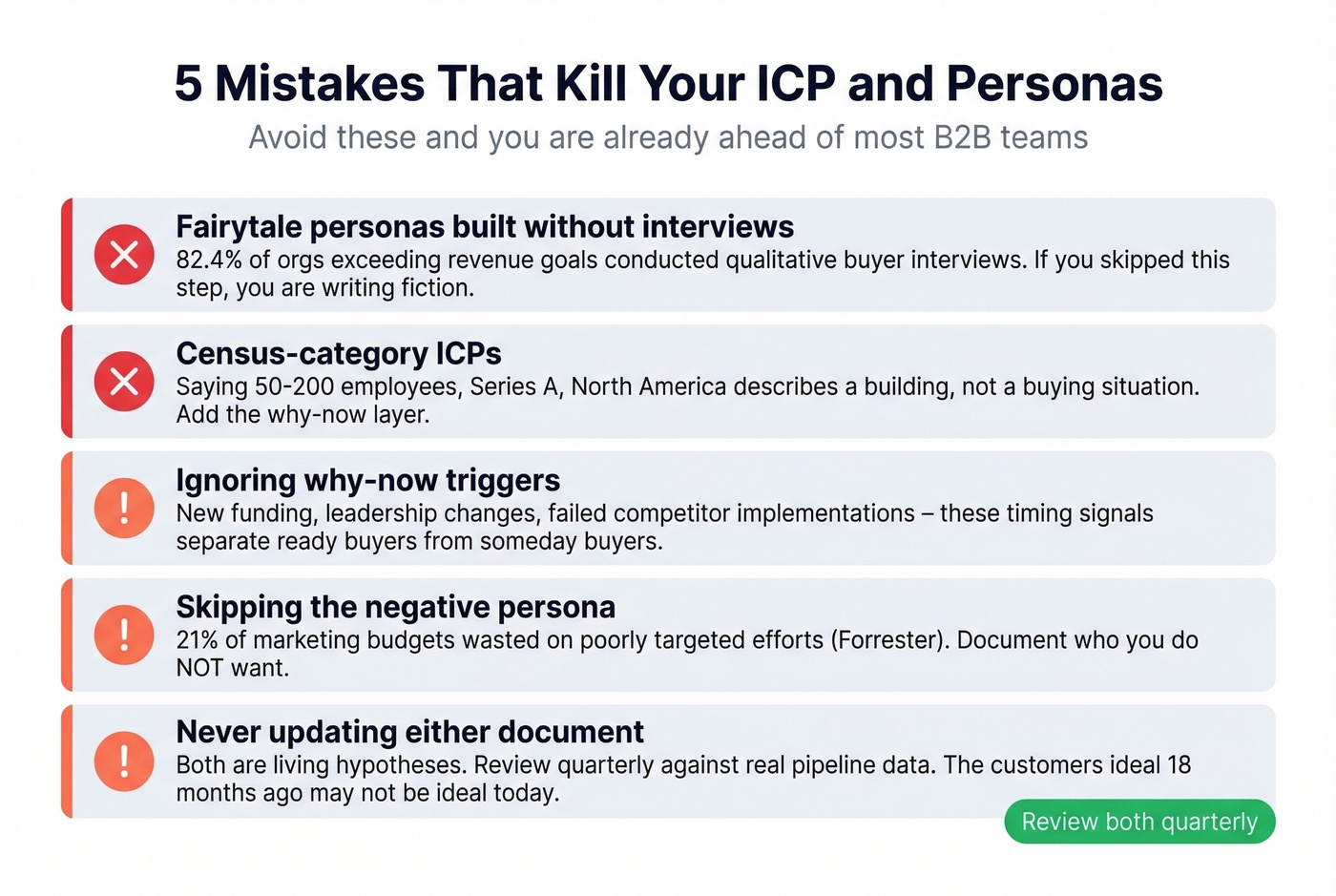
Census-category ICPs. "50-200 employees, Series A, North America" describes a building, not a buying situation. You need the situation, not just the demographics.
Ignoring "why now" triggers. An ICP that captures company attributes but misses timing signals - new funding, leadership change, failed competitor implementation - generates leads that aren't ready to buy. Skip this if your sales cycle is purely inbound and self-serve; for outbound, timing signals are non-negotiable. (If you want a system for this, see buying signals and sales triggers.)
Skipping the negative persona. This is the mistake almost nobody talks about. A negative persona defines who you don't want - the tire-kickers, the wrong-size companies, the industries where you consistently lose. Forrester found that companies waste roughly 21% of their marketing budget on poorly targeted efforts. A documented negative persona is the fastest way to stop that bleed.
Never updating. Both documents are living hypotheses. Markets shift, your product evolves, and the customers who were ideal 18 months ago aren't ideal today. Review quarterly against real pipeline data.
Turn Your ICP Into a Prospect List
Here's the thing most teams get stuck on: they build a solid ICP document and then have no idea how to operationalize it. The ICP lives in a Google Doc. The prospect list lives in a spreadsheet someone manually assembled. The gap between the two is where pipeline dies.
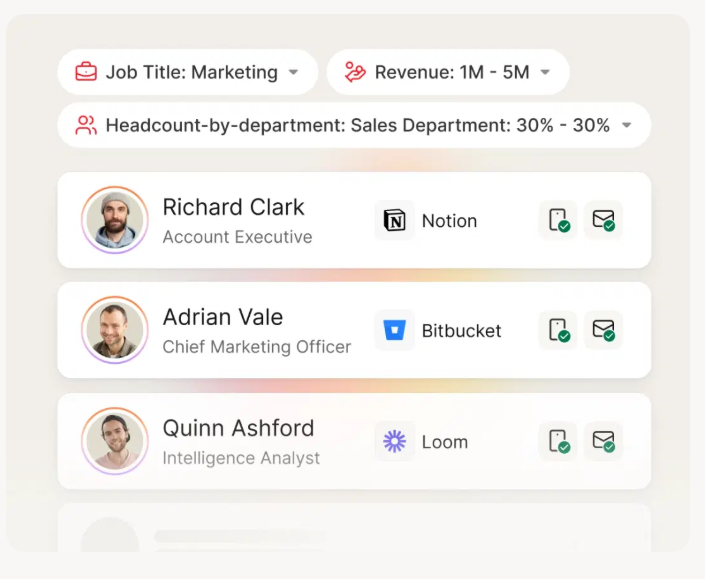
Prospeo's B2B database closes that gap directly - translate your ICP criteria into 30+ search filters covering firmographics, firmographic and technographic data, buyer intent, and signals like job change, headcount growth, department headcount, funding, and revenue across 300M+ profiles. Emails come back with 98% verified accuracy, so you're not burning your domain on stale data.
If you're building lists from multiple sources, pair this with a lead enrichment workflow and the right data enrichment services to keep records current.

Sending the same pitch to the VP of Ops and the CFO wastes your ICP work. Prospeo returns 50+ data points per contact - job title, department, seniority, tech stack - so you can segment by persona and personalize at scale. With a 7-day data refresh cycle, you're always messaging the right person at the right company with current information.
Stop sending generic emails to accounts that match but people who don't.
FAQ
Can you have multiple ICPs?
Yes - most B2B companies maintain 2-3 ICPs representing distinct segments. Score and tier each one separately using the 100-point rubric. Prioritize the ICP with the highest win rate and shortest sales cycle, and allocate outbound resources accordingly.
How often should you update your ICP and personas?
Review both quarterly against win/loss data and pipeline metrics. Do a full rebuild annually, or sooner after major product launches, pricing changes, or market shifts. Treat them as living hypotheses you're constantly testing.
What's the difference between ICP and persona in practice?
Your ICP gates which accounts enter your pipeline - it's a yes/no qualification decision at the company level. The persona shapes every touchpoint after that gate: email copy, ad creative, call scripts, and content topics. RevOps typically owns the ICP while marketing owns the persona, but both teams need visibility into each other's work.
Do you need personas if you already have an ICP?
Yes. Your ICP tells you which companies to target, but personas tell you how to message those 6-10 stakeholders inside each company. Without personas, every outbound email sounds the same regardless of whether you're writing to a VP of Finance or a junior operations analyst.
Is this framework only for enterprise sales?
No. Even early-stage startups benefit from documenting both. The ICP keeps founders from chasing every inbound lead, and even a lightweight persona ensures your first sales hire isn't improvising messaging from scratch. The framework scales - what changes is the depth and number of documents, not whether you need them.