

Inbound Sales Rep: Everything You Need to Know in 2026
You just got handed 200 leads from yesterday's webinar. Half the phone numbers are disconnected, a quarter of the emails bounce, and your manager wants a pipeline update by Friday. Welcome to life as an inbound sales rep - the best entry point in sales, and the most dependent on things outside your control.
The Short Version
An inbound sales representative handles warm leads generated by marketing, qualifies them, and guides them toward a purchase. Average US base pay sits around $52,620/year, with typical inside-sales commission in the $2k-$30k range on top. It's the fastest on-ramp into a sales career - you can be productive in weeks, a top performer in 6-12 months. The biggest performance killer isn't your pitch. It's bad lead data.
What Does an Inbound Sales Rep Actually Do?
Here's the core distinction: inbound reps work leads that come to them. A prospect downloads an ebook, signs up for a webinar, requests a demo, or fills out a contact form - and the rep takes it from there. Outbound reps hunt. Inbound reps harvest.
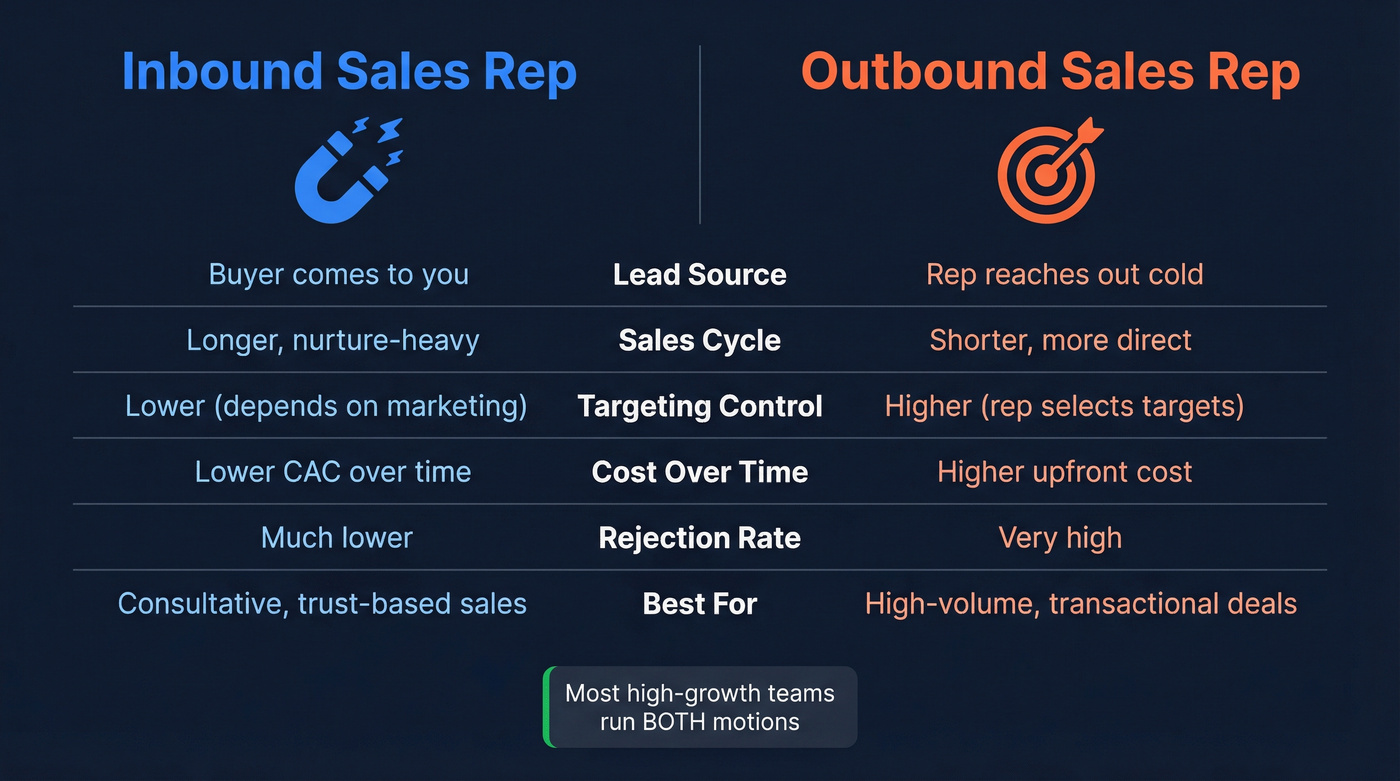
That doesn't mean the job is passive. 96% of prospects research companies extensively before ever talking to a rep. By the time someone raises their hand, they've already formed opinions. Your job is to meet them where they are, not start from scratch.
| Dimension | Inbound Sales | Outbound Sales |
|---|---|---|
| Lead source | Buyer-initiated (content, SEO, ads) | Rep-initiated (cold outreach, paid lists) |
| Sales cycle | Longer, nurture-heavy | Shorter, direct |
| Targeting control | Lower (marketing-dependent) | Higher (rep selects) |
| Attribution | Harder to track | Easier to track |
| Cost trajectory | Lower CAC over time | Higher upfront cost |
| Best for | Consultative, trust-based | High-volume, transactional |
Most high-growth teams run both motions. But for someone starting their career, inbound inside sales is where you learn to sell without the brutal rejection rate of cold outreach.
A Typical Day
Monday morning, marketing dumps 200 leads from a Friday webinar into your CRM. Half the contact records are incomplete - missing phone numbers, outdated emails, job titles that say "Student" or "Retired." Your first hour isn't selling. It's triage.
That's the reality nobody warns you about.
A Salesforce study found that 78% of buyers prefer different channels depending on context, and 71% used multiple channels to start and complete a single transaction. On any given day, you'll handle inbound calls, respond to live chat inquiries, follow up on demo requests via email, and engage prospects through social messaging - sometimes all before lunch. The reps who thrive aren't the ones with the best pitch. They're the ones who can context-switch fast and keep their CRM updated in real time.
Salary and Compensation
Some sites quote $50k-$300k ranges for inbound sales representatives, which is useless. Here's what the data actually shows.
Base salary distribution (US, 2026):
| Percentile | Annual Salary |
|---|---|
| 10th | $40,665 |
| 25th | $46,362 |
| Average | $52,620 |
| 75th | $59,325 |
| 90th | $65,431 |
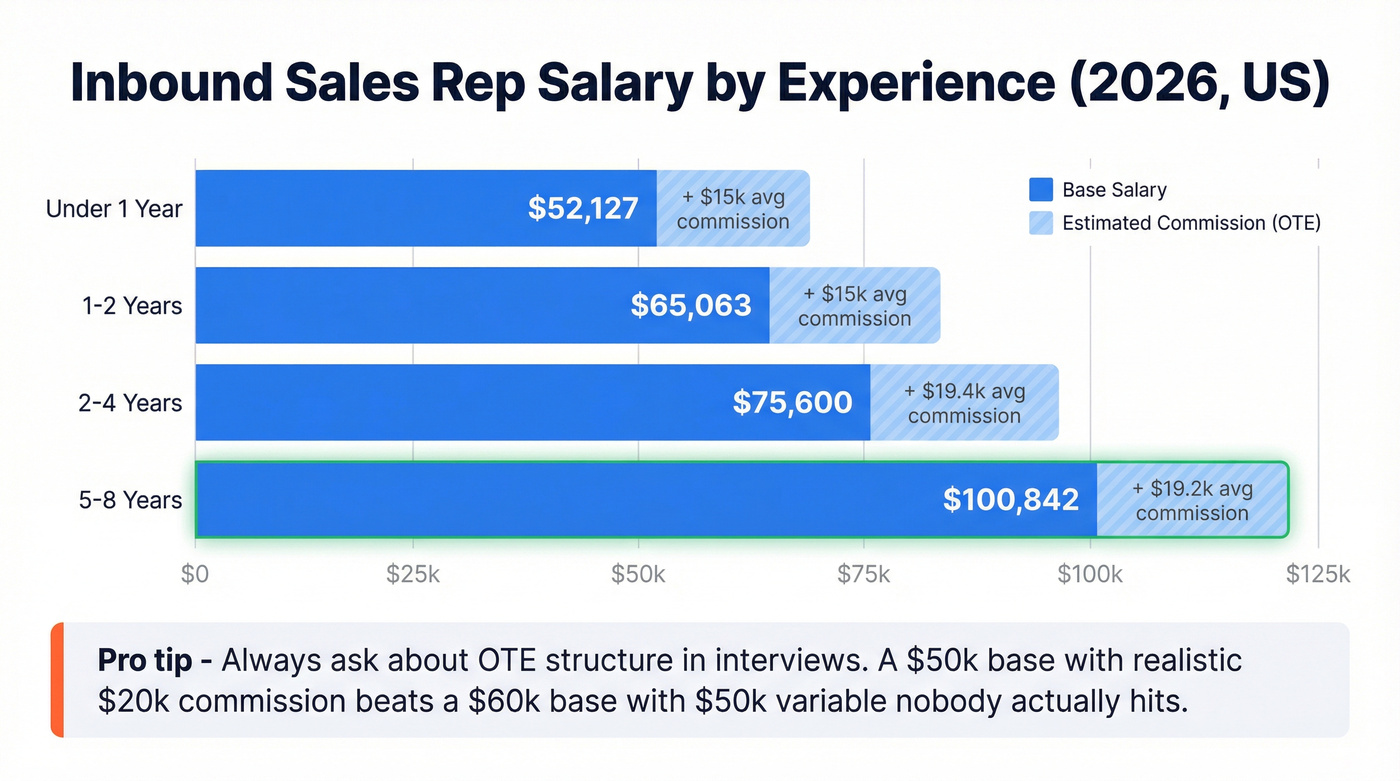
Indeed reports an average of $17.97/hour with roughly $15,000/year in commission, based on 666 salary reports. Entry-level reps with less than a year of experience start around $52,127. At 1-2 years, that climbs to $65,063. Hit the 2-4 year mark and you're at $75,600. By 5-8 years, expect $100,842. The real money comes from moving into senior roles or account executive positions - inbound is the launchpad, not the ceiling.
Top-paying cities:
| City | Avg. Annual |
|---|---|
| San Jose, CA | $66,369 |
| San Francisco, CA | $65,717 |
| New York, NY | $60,981 |
| Oakland, CA | $64,259 |
Outside major metros, cities like Akron, OH ($23.29/hr) and Tempe, AZ ($20.06/hr) also pay above average. At the top end, companies like PayPal ($179,700) and Taxrise ($170,000) pay well above market for specialized inbound roles - though these are outliers, not the norm.
Commission structures vary wildly. Ask about OTE structure in every interview. A $50k base with a realistic $20k commission path beats a $60k base with a theoretical $50k variable that nobody actually hits. In one recent r/sales thread, an inbound offer was discussed at around 70-75k base and 100-110k OTE (CAD), which gives you a sense of what's out there in competitive markets.
How Inbound Reps Close Deals
The cleanest framework maps four rep actions to three buyer stages.
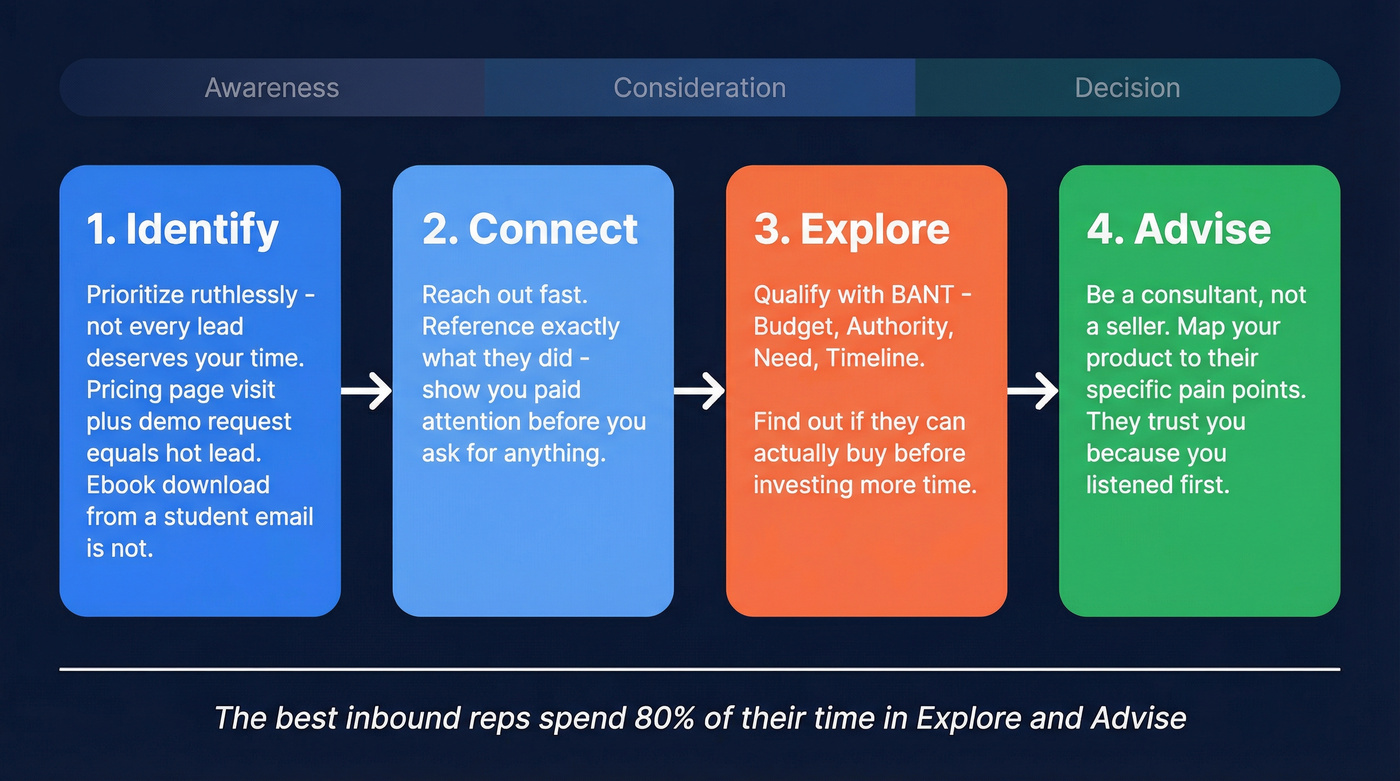
Identify (Awareness stage): Not every lead deserves your time. A pricing-page visit plus a demo request is a hot lead. An ebook download from a student's .edu email isn't. Prioritize ruthlessly.
Connect (Awareness to Consideration): Reach out fast. Your first touch should reference exactly what they did - "I saw you checked out our enterprise pricing page" hits differently than a generic "Thanks for your interest."
Explore (Consideration stage): This is where qualification happens. Use BANT (Budget, Authority, Need, Timeline) to figure out if this prospect can actually buy. We've all had that call where the "prospect" turns out to be a college student researching a term paper. Qualifying early saves everyone's time.
Advise (Decision stage): Now you're a consultant, not a seller. Map your product's capabilities to their specific pain points. The prospect already trusts you because you listened first.

You just read it: the biggest inbound sales killer isn't your pitch - it's bad lead data. Prospeo enriches your CRM records with 98% accurate emails and 125M+ verified mobile numbers, so you stop wasting your first hour on triage and start selling. 83% of leads come back with contact data, and every record refreshes every 7 days.
Turn your next webinar dump into a qualified pipeline in minutes.
KPIs and Benchmarks
Track these numbers and you'll know exactly where you stand. Set personal targets: aim for the baseline in your first quarter, then push 10-15% higher by month six.
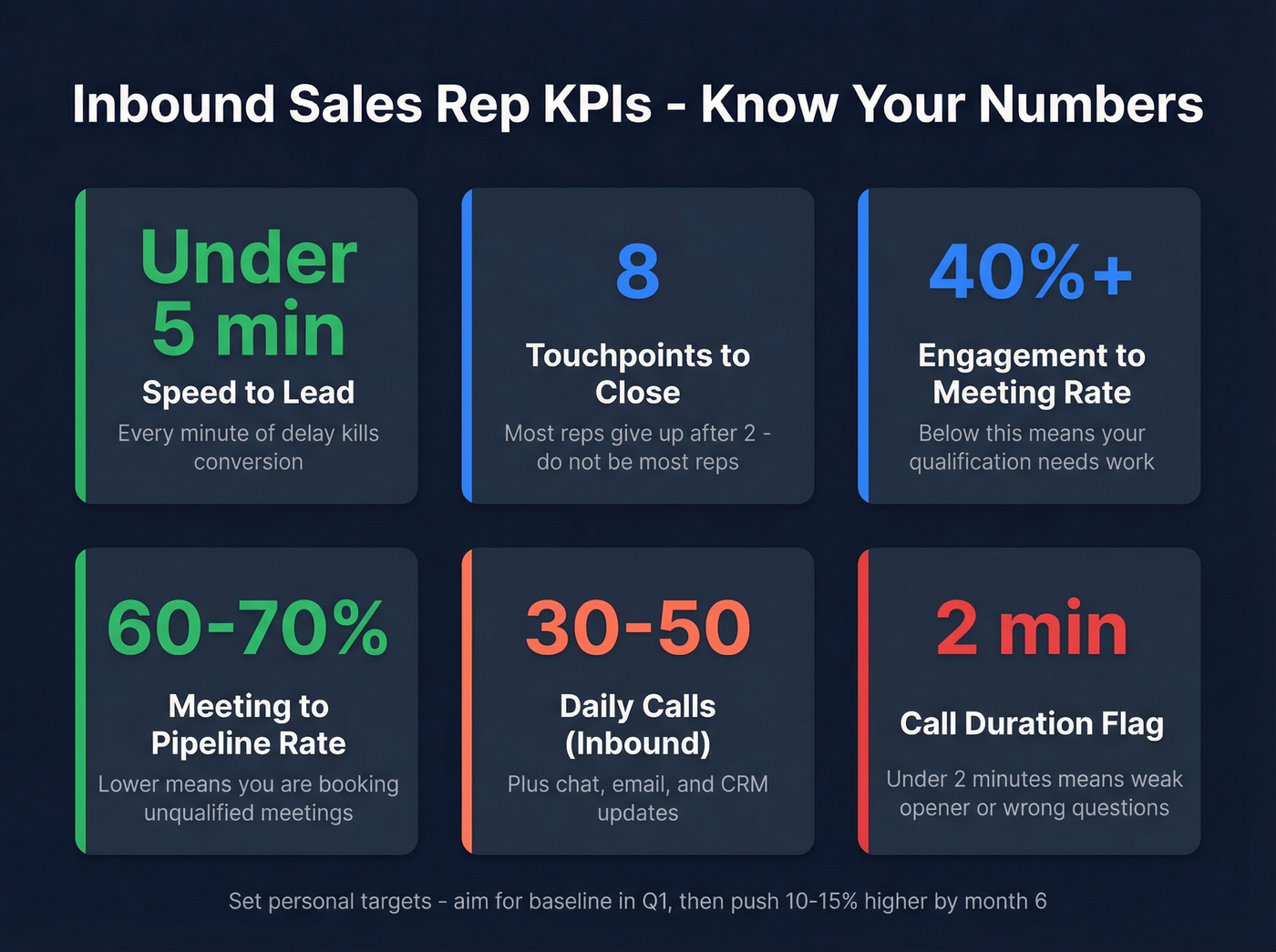
Speed-to-lead: Respond quickly. Every minute of delay chips away at your conversion rate.
Touchpoints to close: Expect roughly 8 touchpoints before a deal closes. Don't give up after two follow-ups - most reps do, and that's why most reps miss quota. (If you need a starting point, steal a few follow-up templates.)
Engagement-to-meeting conversion: 40%+ of engaged prospects should convert to a demo or consultation. Below that, your qualification or pitch needs work.
Meeting-to-pipeline rate: 60-70% of scheduled meetings should advance to the next stage. Lower than that means you're booking unqualified meetings.
Daily call volume: Industry benchmarks sit around 50 dials/day for outbound. For inbound, 30-50 calls is more realistic since you're also handling chat, email, and CRM updates.
Call duration threshold: If you can't keep a prospect on the phone for longer than two minutes, that's a coaching flag. Either your opener is weak or you're not asking the right questions.
Essential Tools
CRM
Your CRM is home base. HubSpot CRM offers a genuinely useful free tier, with paid plans starting around $20-$30/user/mo when you need automation. Salesforce starts around $25/user/mo for entry tiers and scales up from there. Pipedrive is the lean option at $14/user/mo - fast setup, clean pipeline views, no bloat. Attio, from $29/user/mo, is gaining traction with startups that want a modern interface without Salesforce overhead.
Communication and Scheduling
RingCentral handles inbound call routing and VoIP from around $20-$30/user/mo. Intercom covers live chat and messaging from around $39-$100+/seat/mo - essential if your company generates leads through website chat. For scheduling, Calendly's free tier handles basic booking, with paid plans starting around $10-$15/user/mo for round-robin routing. TidyCal at $29 lifetime is a budget alternative if you just need a booking page.
Data Enrichment and Verification
Here's the thing: this is where most reps don't realize they have a problem until it's too late. Marketing hands you a list of webinar attendees, and a chunk of the emails are outdated, plenty of phone numbers are missing, and a handful are personal Gmail addresses that'll never convert. I've seen reps waste entire weeks calling disconnected numbers because nobody bothered to verify the list first.
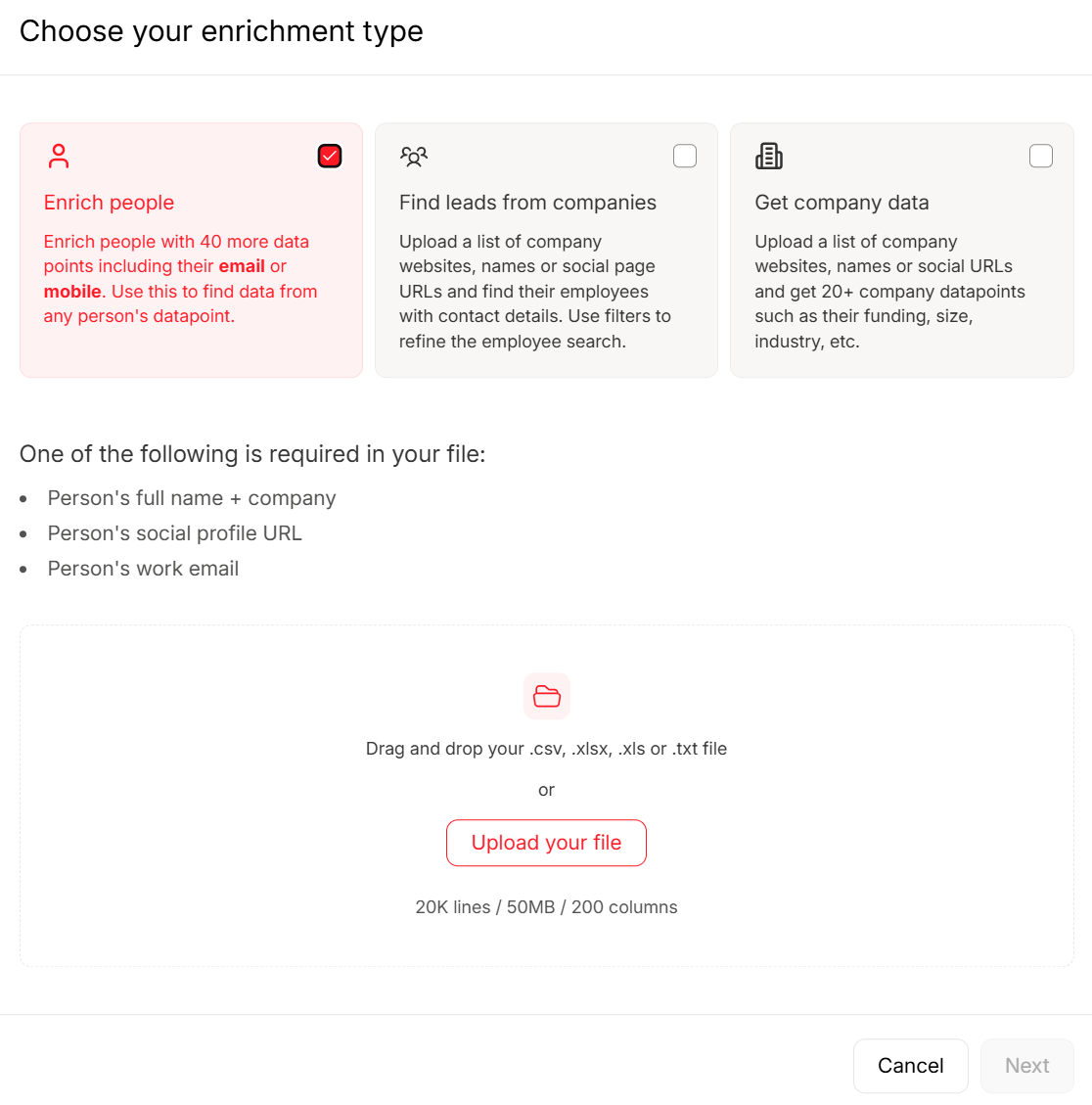
Prospeo solves this before you pick up the phone. Upload your lead list, and it enriches and verifies contacts against 300M+ professional profiles with 98% email accuracy and 125M+ verified mobile numbers. Data refreshes every 7 days, while competitors average 6 weeks, so you're not calling someone who changed jobs last month. The free tier gives you 75 email verifications per month - enough to test the workflow. Paid plans start at ~$39/mo with no contracts.
If you're comparing vendors, start with a shortlist of data enrichment services and make sure you understand the basics of lead enrichment before you buy.
The difference between calling a verified direct dial and calling a disconnected number isn't just efficiency. It's the difference between hitting your targets and explaining to your manager why your deal flow is thin.
Mistakes That Kill Your Numbers
The biggest traps for inbound reps are predictable, which means they're avoidable.
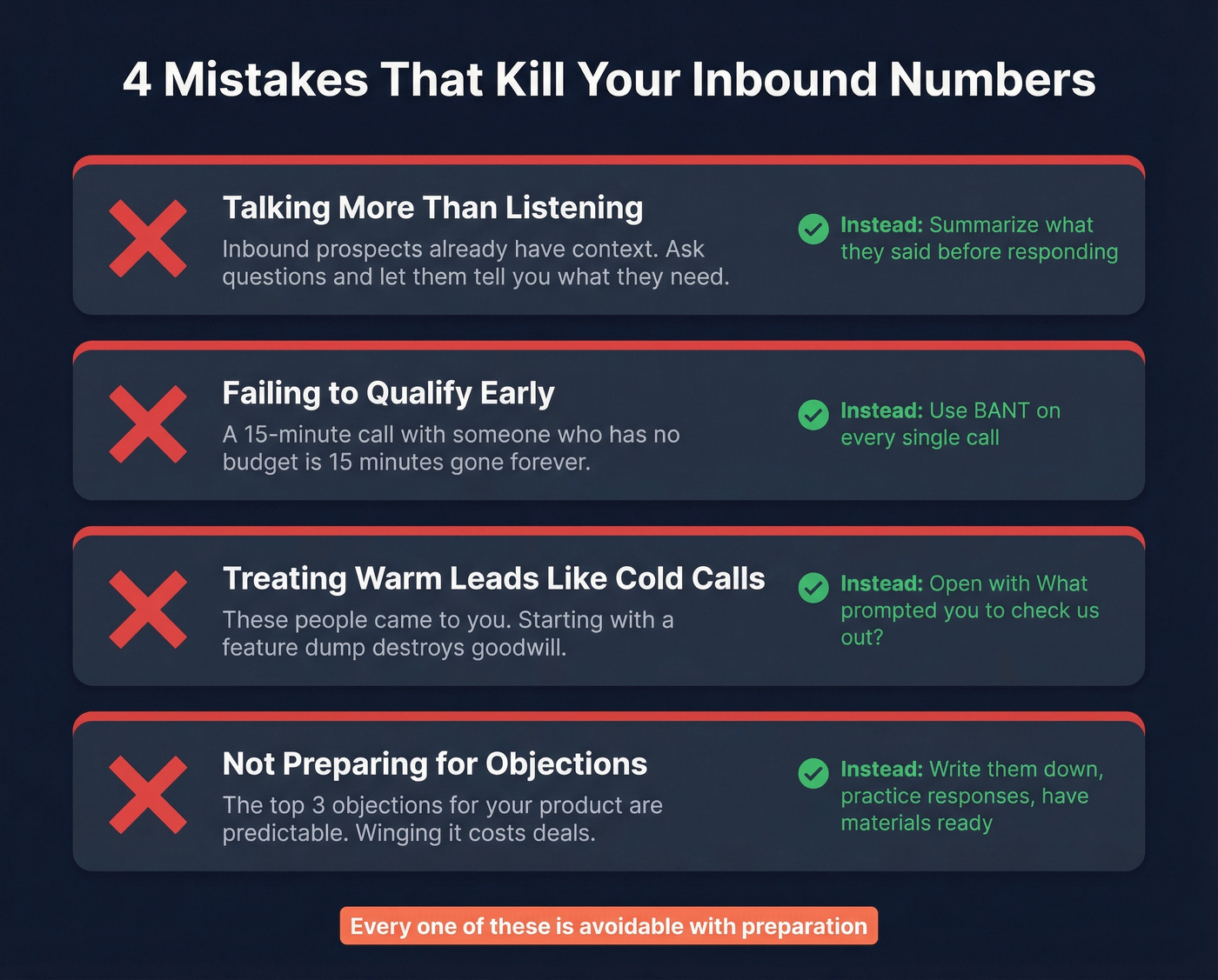
Talking more than listening is the most common mistake new reps make. Inbound prospects already have context - they don't need your full product walkthrough. Ask questions, listen for pain points, and let prospects tell you what they need.
Failing to qualify is the most expensive mistake. Not every hand-raiser is a buyer. A 15-minute conversation with someone who has no budget and no authority is 15 minutes you'll never get back. Use BANT on every call.
Treating warm leads like cold calls destroys goodwill fast. These people came to you. Start with "What prompted you to check us out?" not "Let me tell you about our features."
Not preparing for objections is the laziest mistake. The top three objections for your product are predictable. Write them down, practice your responses, and have supporting materials ready. Winging it costs deals.
Skills That Get You Promoted
The reps who advance fastest develop five skills deliberately, not accidentally.
Active listening separates closers from order-takers. Practice summarizing what the prospect said before responding - "So your main concern is implementation timeline, not price?" This one skill will improve your close rate more than any script.
CRM discipline is unglamorous but non-negotiable. Reps with clean CRM data get better leads routed to them, earn trust from managers, and build a track record that's visible at promotion time. In our experience, the reps who complain about lead quality are often the same ones with half-empty CRM records.
Objection handling improves with repetition. Record your calls (with permission), review the moments where deals stalled, and build a personal playbook. After six months, you should handle the top five objections without thinking.
Product knowledge goes deeper than features. Understand your customer's workflow, their alternatives, and the cost of doing nothing. This is what turns you from a rep into an advisor.
Data literacy is the underrated skill. Reps who can read their own dashboards - conversion rates, pipeline velocity, average deal size - coach themselves. They don't wait for a manager to tell them what's broken. (If you want to go deeper, learn data-driven selling basics.)
Career Path
The inbound sales rep role is designed to be a stepping stone, and a fast one. Most reps can be productive in weeks with the right training. Becoming a top performer typically takes 6-12 months of consistent effort.
The standard ladder: Inbound Rep, then Senior Rep or Specialist, then Team Lead, then Sales Manager or Account Executive. Each step can significantly increase your earning potential. Specializations open up as you gain experience - Product Specialists go deep on technical knowledge, Account-Based reps focus on multi-threading into target accounts, and Customer Success-focused reps bridge the gap between sales and retention.
Let's be honest: inbound isn't automatically "easier" than outbound. When deal sizes are smaller, inside sales roles demand higher volume, faster qualification, and tighter process to hit the same numbers. The skill floor is lower, but the skill ceiling is just as high.
In interviews, ask about OTE structure, speed-to-lead expectations, and what percentage of leads come from marketing versus self-sourced. These questions signal you understand the role and help you avoid companies where "inbound" really means "cold-call from a purchased list." (If you want a ramp plan, build a simple 30-60-90 day plan.)
Remote and hybrid work is standard for inbound roles in 2026. Most companies only require reliable internet and a quiet workspace. Some positions - especially in contact center environments - involve shift work, including evenings and weekends. Ask about scheduling expectations before you accept an offer.
The reps who advance fastest aren't just good on the phone. They master their tools, keep their CRM pristine, and build a reputation for converting leads that other reps would've given up on. That's what gets you promoted.
Speed-to-lead matters, but you can't call a disconnected number or email a bounced address. Prospeo's CRM enrichment fills in missing phones, verifies emails, and adds 50+ data points per contact - at $0.01 per email. Snyk's 50 AEs cut their bounce rate from 35% to under 5% and added 200+ new opportunities per month.
Stop triaging dead data and start hitting your 8-touchpoint close rate.
FAQ
What's the difference between an inbound sales rep and an SDR?
SDRs focus on outbound prospecting - cold calls and cold emails to people who haven't expressed interest. Inbound reps handle warm leads from marketing channels like webinars, demo requests, and content downloads. The core distinction is who initiates contact: the buyer (inbound) or the seller (outbound).
Can you work remotely as an inbound sales rep?
Yes - remote and hybrid arrangements are standard in 2026. Most companies require reliable internet and availability during business hours. Some contact-center positions involve evening or weekend shifts, so confirm scheduling expectations during the interview.
Do inbound sales reps need a degree?
No. Most employers prioritize communication skills, coachability, and product knowledge over formal education. Demonstrating you can learn quickly and hit ramp targets matters more than a diploma.
What's a realistic first-year OTE?
Expect $47k-$60k total compensation in your first year. High-cost metros like San Francisco or New York push that to $60k-$75k, and specialized roles at companies like PayPal can exceed $100k OTE even for newer reps.
How do top reps handle bad lead data?
They verify and enrich leads before follow-up. Treating data hygiene as a daily habit - not an afterthought - prevents wasted outreach and keeps pipeline numbers honest. Tools like Prospeo return 98% accurate emails and verified direct dials from 300M+ profiles, which means you're spending time on conversations instead of chasing dead numbers.