

Inside Sales SDR: What the Role Really Looks Like in 2026
You're scrolling job boards and see three postings at the same company: "Inside Sales Representative," "Sales Development Representative," and "Business Development Representative." Different titles, overlapping descriptions, zero clarity.
Let's fix that.
An inside sales SDR is a specialized role focused on prospecting and qualifying leads - not closing deals. An inside sales rep may close. That single distinction matters more than most job descriptions let on, and it shapes everything from your daily workflow to your comp structure to where you'll be in 18 months.
| Role | Focus | Primary Metric | Closes Deals? |
|---|---|---|---|
| SDR | Qualify inbound | Meetings booked | No |
| BDR | Outbound prospect | Pipeline created | No |
| Inside Sales Rep | Full cycle | Revenue closed | Yes |
| AE | Close deals | Closed-won ARR | Yes |
SDR vs Inside Sales Rep vs BDR
The title confusion isn't your fault. Only about 25% of companies split sales development into dedicated inbound vs. outbound roles. Everyone else runs blended teams and calls them whatever sounds good on a posting.
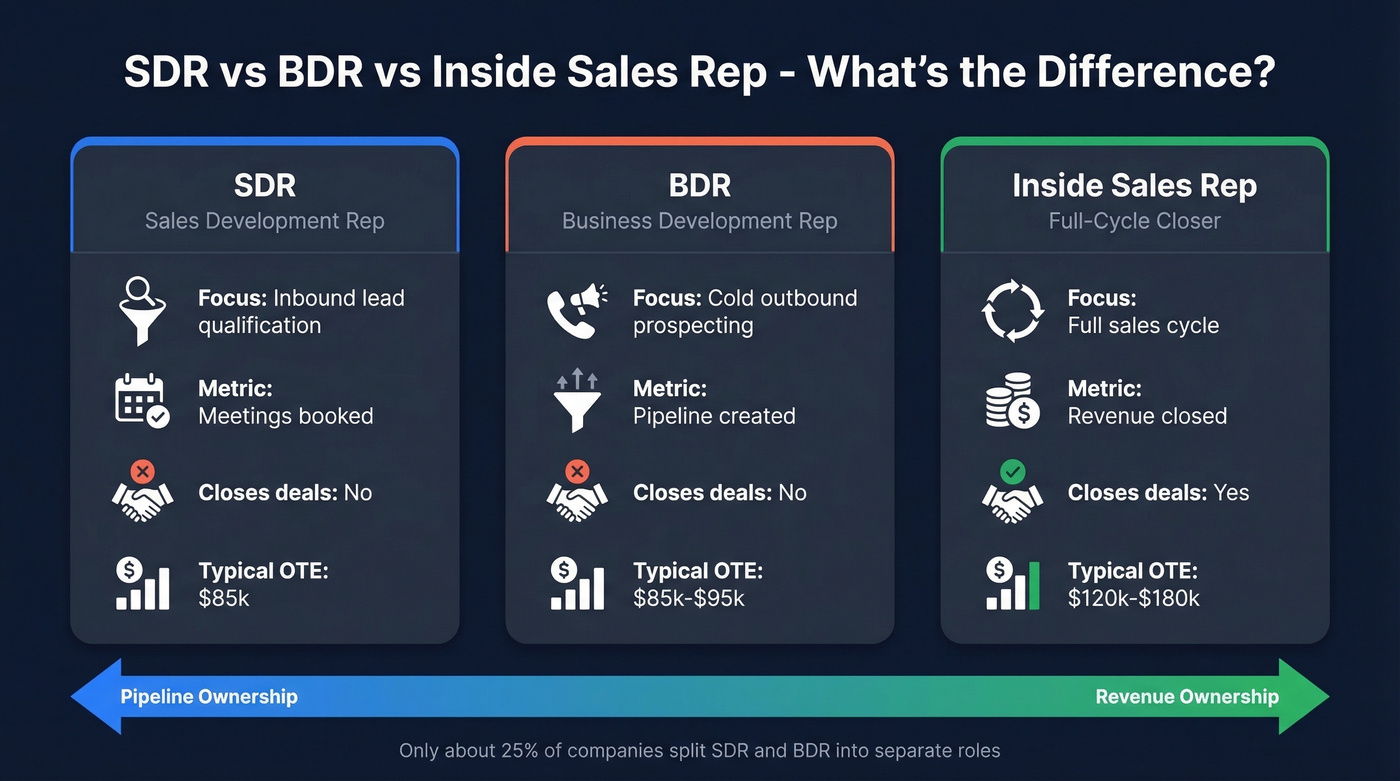
SDRs handle inbound lead qualification - marketing sends warm leads, they qualify and book meetings for AEs. BDRs do cold outbound, building pipeline from scratch. Inside sales reps sit higher because they carry deals from first touch to close, especially in SMB and mid-market segments. One reason companies keep expanding inside sales teams: it costs 40-90% less per acquisition than field sales.
The lines blur constantly. A "BDR" at one company does exactly what an "SDR" does at another. If you're evaluating offers, ignore the title and ask one question: do I own revenue, or do I own pipeline? That tells you everything.
What a Sales Development Rep Does All Day
Your first week looks something like this: 500 leads in a spreadsheet, and with CRM data decaying at roughly 30% per year, a chunk of those contacts are already outdated - job changes, dead inboxes, wrong numbers. Meanwhile your manager wants 15 meetings by month's end.
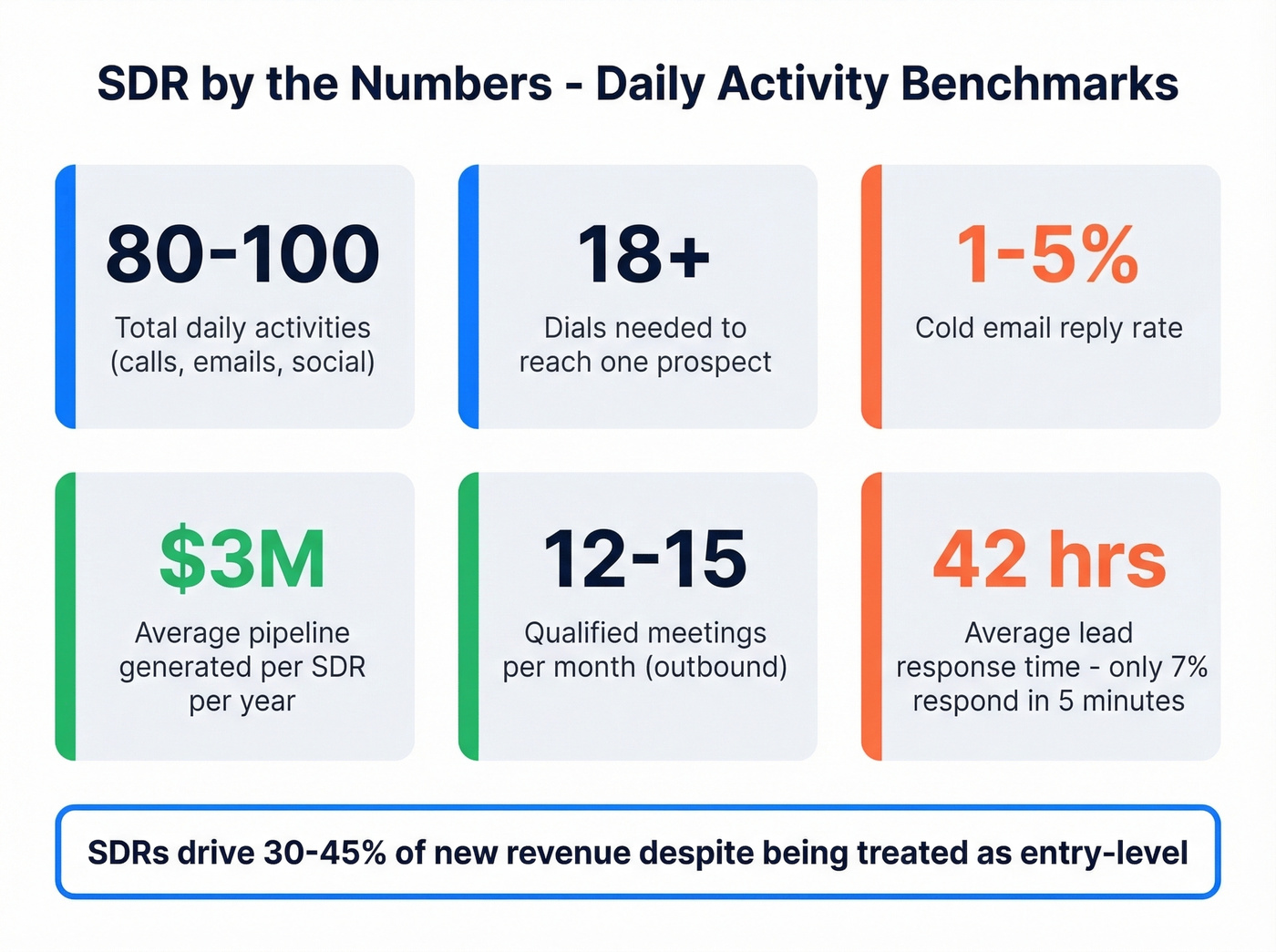
Outbound SDRs run 40-50 calls per day and 10-40 emails per day, with 80-100 total activities across calls, emails, and social touches. It takes 18+ dials to reach a single prospect, and cold email reply rates sit at 1-5%. Inbound SDRs process roughly 15 leads per day with conversion rates ranging from 5-10% on low-intent content downloads to 75-80% on demo requests. Meeting targets break down to 12-15 qualified meetings per month for outbound, 20-25 for inbound, with show rates at 75-85%.
Here's where it gets interesting. A single SaaS SDR generates roughly $3M per year in pipeline, and SDRs collectively drive 30-45% of new revenue. The average SDR-to-AE ratio is about 1:2.6, with a lead-to-opportunity conversion rate around 12%. That's real organizational leverage from a role most companies still treat as entry-level.
Speed matters disproportionately. Only 7% of companies respond to leads within 5 minutes - the average response time is 42 hours. SDRs who close that gap book far more meetings. But speed means nothing if you're dialing dead numbers. Verifying emails and direct dials before launching a sequence is the difference between productive outreach and domain reputation damage.

Inside Sales SDR Pay in 2026
| Metric | Benchmark |
|---|---|
| Median base | $60,000 |
| Median OTE | $85,000 |
| Comp split | 60/40 (base/variable) |
| Quota attainment | 55-63% of reps hit |
| Geo outlier | Seattle: $160k OTE |
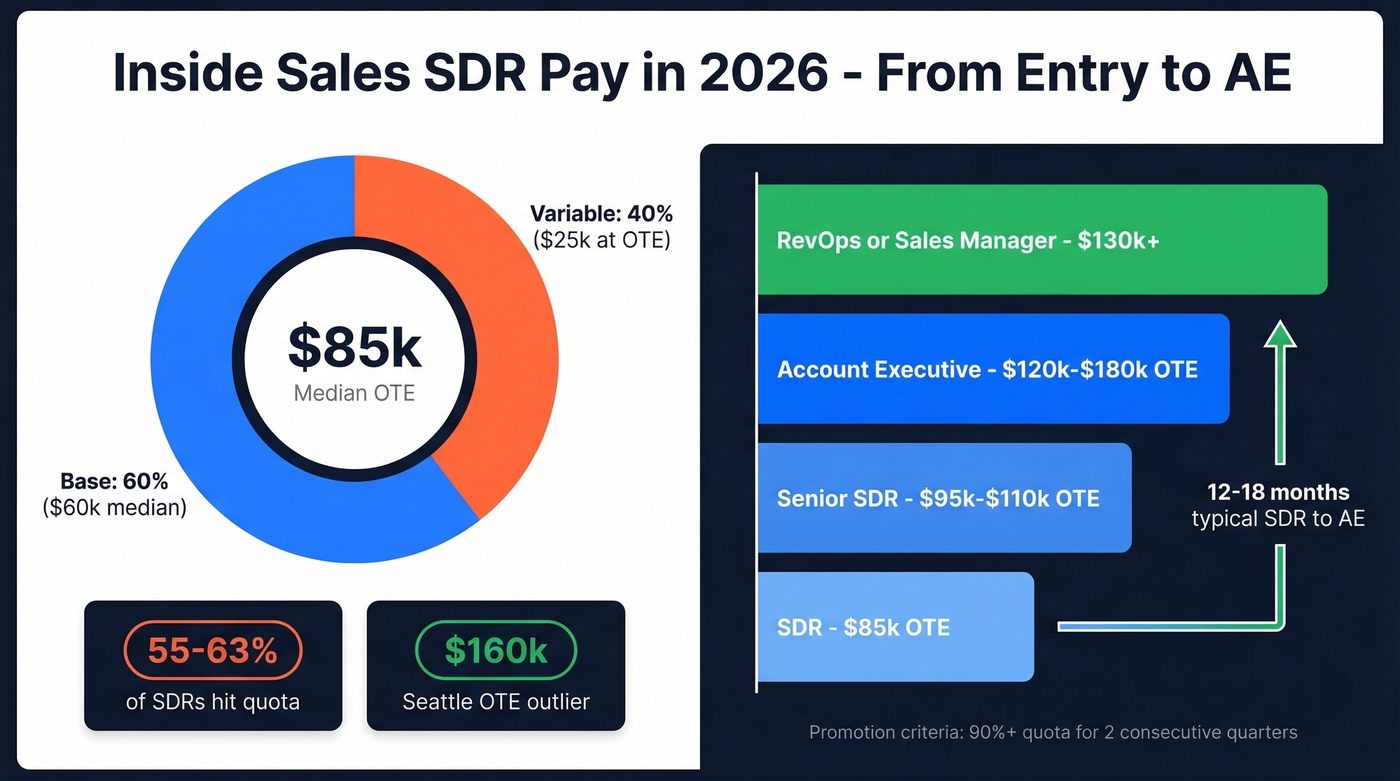
The 60/40 base-to-variable split is standard, though early-stage startups often run 70/30 to reduce risk for new hires. The uncomfortable truth: roughly 55-63% of SDRs hit quota depending on the benchmark. That means a third or more of the team is leaving money on the table - partly a hiring problem, partly a tooling problem, partly unrealistic quota-setting.
If your average deal size is under $10k and your reps are missing quota, the problem probably isn't your people. It's that you're running an enterprise playbook on an SMB deal size. Fix the math before you fix the team.
AE OTE runs $120k-$180k, which is why the SDR-to-AE promotion is the most common career move in B2B sales. The pay jump is real, and it's the primary reason most people take the SDR role in the first place.

With CRM data decaying 30% per year, your SDRs are dialing dead numbers and bouncing emails - burning domain reputation and missing quota. Prospeo refreshes every 7 days with 98% email accuracy and 125M+ verified mobiles, so every dial and send counts.
Stop feeding your SDR team stale data. Give them contacts that connect.
The SDR Tech Stack
Most sales development teams are over-tooled and under-trained. The average SDR team member uses 12-15 tools, and the all-in stack estimate lands around $2,000-$5,000 per SDR per month. That's hard to justify for a role with a median base of $60k.
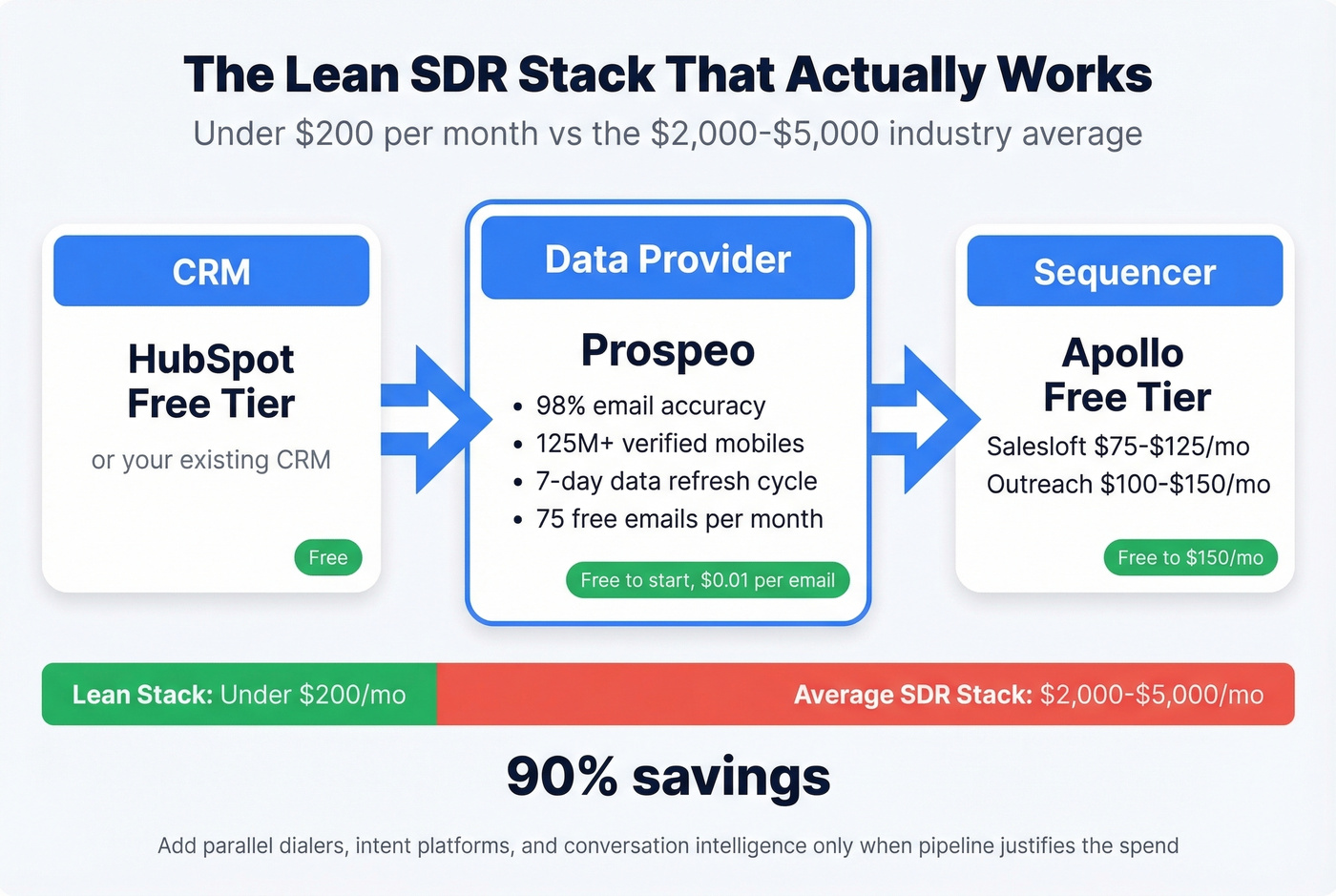
We've tested dozens of tool combinations across outbound campaigns, and the lean stack that actually works comes down to three things:
CRM: HubSpot free tier or your company's existing CRM. Don't overthink this. (If you're still comparing options, see examples of a CRM.)
Data: This is where most SDR stacks break. Bad data means bounced emails, burned domains, and wasted dials. Prospeo runs a 7-day data refresh cycle with 98% email accuracy and 125M+ verified mobiles - which matters because stale data is the silent killer of SDR productivity. Free tier gives you 75 emails per month plus 100 Chrome extension credits. If you're evaluating vendors, start with data enrichment services and a dedicated email deliverability guide.
Sequencer: Apollo free tier for light use, Salesloft ($75-$125/user/month), or Outreach ($100-$150/user/month). If you're building outbound from scratch, pair this with proven sales prospecting techniques.
Total for a lightweight setup: under $200 per month. You don't need a $250/month parallel dialer, a $150/month conversation intelligence tool, and a $500/month intent platform on day one. Add those when your pipeline justifies the spend.
SDR Career Path
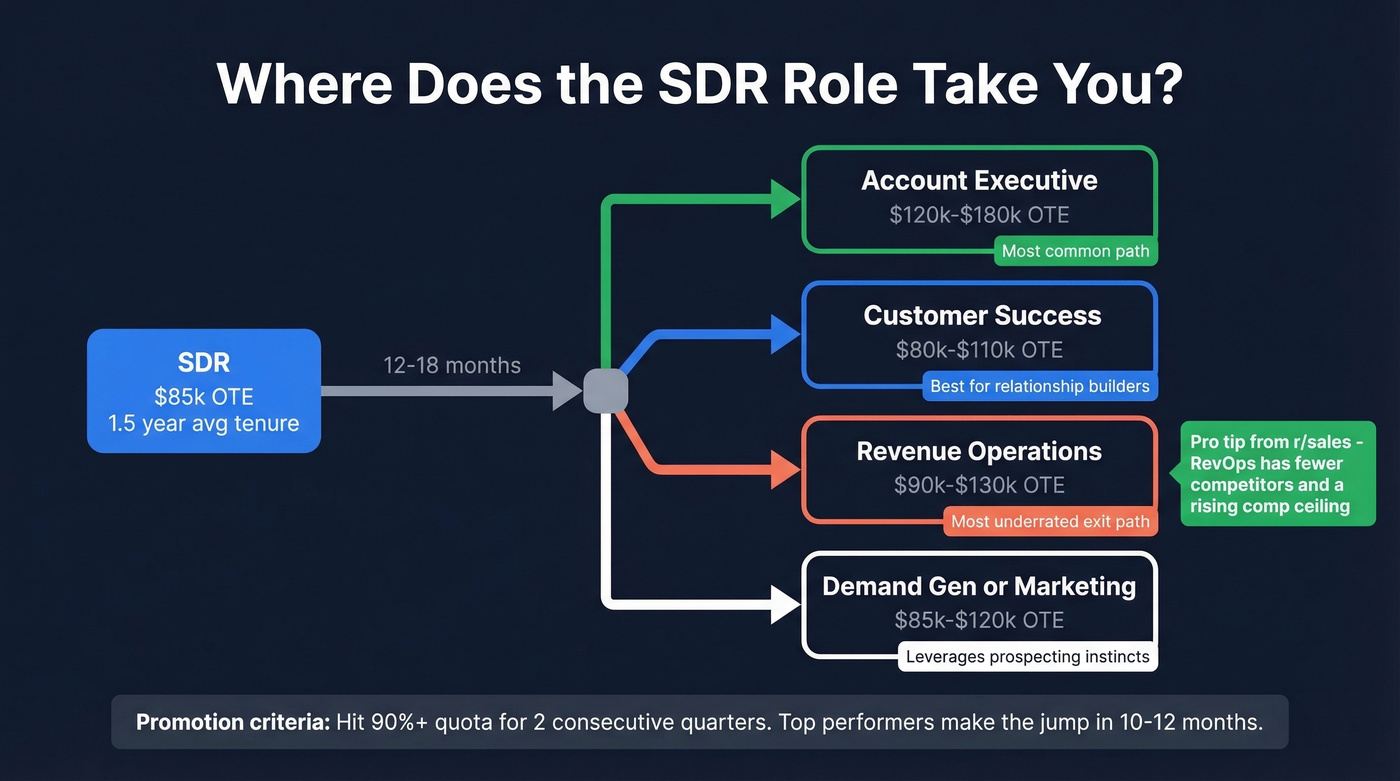
The SDR role is the single best entry point into B2B sales. Promotion to AE typically happens in 12-18 months, with top performers making the jump in 10-12. The criteria are straightforward: hit 90%+ quota for two straight quarters and you've built your case. Average SDR tenure runs about 1.5 years, with ramp periods over 3 months. A structured 30-60-90 day plan helps you ramp faster and document wins.
The traits that accelerate promotion - coachability, resilience, genuine curiosity about the product - are the same ones hiring managers screen for on the way in. If you're interviewing for SDR roles right now, lead with those. Skip the "I'm a hard worker" pitch. (If you need a tighter intro, borrow from these sample elevator pitches.)
Beyond AE, the paths are broader than most people realize. Customer Success ($80k-$110k) suits relationship-oriented reps. RevOps ($90k-$130k) is ideal if you'd rather build the machine than run it. And demand gen roles reward the prospecting instinct that most marketers never develop. The consensus on r/sales is that RevOps is the most underrated exit path - fewer people competing for those seats, and the comp ceiling keeps climbing. If you're exploring that route, start with what a RevOps Manager actually does day-to-day.
How AI Is Changing the Role
The SDRs who thrive in 2026 won't be the ones who dial the most. They'll be the ones who know which 20 accounts to focus on.
AI SDR tools now handle 3-5x the conversation volume of a human rep and answer technical questions correctly 87% of the time versus 15% for entry-level humans. That sounds threatening until you realize what AI still can't do: read a room, build genuine rapport with a skeptical VP, or make a judgment call about whether a prospect's "maybe next quarter" is real or polite rejection.
We've watched AI SDR tools evolve rapidly over the past year, and the pattern is clear - the role is shifting from activity machine to orchestrator. Success will be measured by insights delivered and multi-stakeholder engagement, not dials logged. The reps who learn to use BANT or MEDDIC frameworks to qualify AI-surfaced leads will outperform those who just chase activity numbers. If you're an SDR who treats AI as a threat rather than a multiplier, you're already behind. For practical workflows, see generative AI sales tools and a hands-on guide to AI cold email outreach.
The average SDR stack costs $2,000-$5,000/month per rep. Prospeo starts free - 75 verified emails and 100 Chrome extension credits per month - with emails at $0.01 each when you scale. Enterprise-grade data without the enterprise invoice.
Cut your SDR stack cost by 90% without cutting data quality.
FAQ
Is an inside sales SDR the same as an inside sales rep?
No. SDRs prospect and qualify leads exclusively - they hand off to AEs who negotiate and close. Inside sales reps manage the full sales cycle, from first touch to signed contract, and carry a revenue quota rather than a meetings-booked quota.
How many meetings should an SDR book per month?
Outbound SDRs book 12-15 qualified meetings monthly; inbound SDRs hit 20-25. Top performers push 18-20 outbound. Expect 75-85% show rates on properly qualified meetings.
What tools do SDRs need to get started?
A CRM (HubSpot free tier works), a verified data provider like Prospeo for accurate emails and direct dials, and a sequencer like Apollo or Salesloft. You can run a complete lightweight stack for under $200 per month.
How long does it take to get promoted from SDR to AE?
Most SDRs promote to Account Executive in 12-18 months. Top performers who hit 90%+ quota for two consecutive quarters often make the jump in 10-12 months, with an OTE increase from roughly $85k to $120k-$180k.