

Intent-Based Sales: What Works, What Doesn't, and How to Actually Convert
Your SDR just called 50 "high-intent" accounts. Thirty went to voicemail. Twelve had no idea what you sell. Five were already deep in a competitor's POC. One was a student writing a research paper.
That's intent-based sales when it's implemented poorly - and it's implemented poorly more often than anyone wants to admit. The problem isn't intent data itself. It's how teams buy it, score it, and act on it. Start with first-party data, a self-serve tool for buyer intent signals plus verified contacts, and a sequencing tool. That kind of starter stack runs a couple hundred dollars per month, versus $35K+ for enterprise ABM suites that take months to deploy and even longer to show results.
What Intent-Based Selling Actually Means
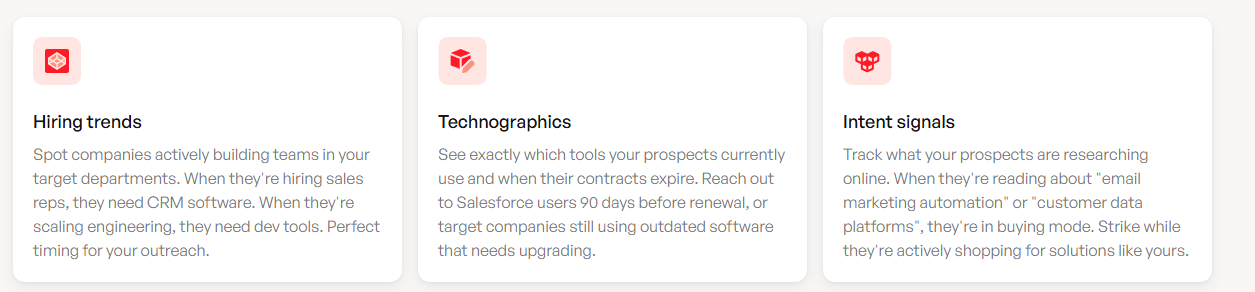
Intent-based selling uses behavioral signals - content consumption, search activity, technology adoption, hiring patterns - to identify accounts actively researching a solution you sell. The whole point is timing: reaching out when a prospect is most likely to engage, not when your calendar says it's time to dial.
The intent data market hit $4.49B in 2026, projected to reach $20.89B by 2035. 91% of B2B marketers use intent data to prioritize accounts. But only 24% report exceptional ROI. That gap between adoption and results? That's where most teams live, spending money on signals they don't know how to act on.
Intent Signals That Matter
Not all signals are created equal. Here's the trust hierarchy, from strongest to weakest:
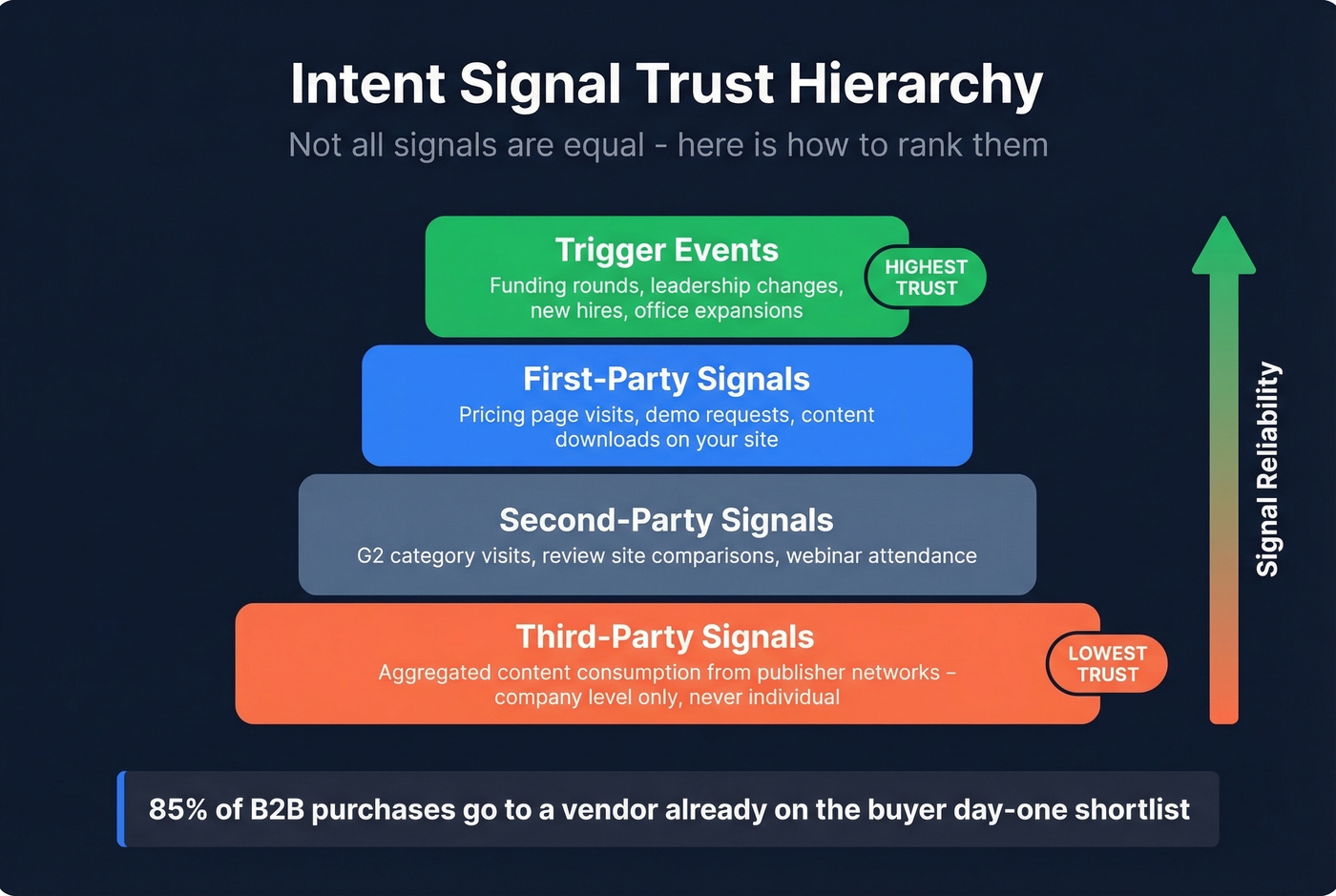
- Trigger events (highest trust): Funding rounds, leadership changes, new hires in your buyer persona, office expansions. Observable, verifiable, time-bound.
- First-party signals: Pricing page visits, demo requests, content downloads on your site. Unambiguous.
- Second-party signals: G2 category page visits, review site comparisons, webinar attendance.
- Third-party signals (lowest trust): Aggregated content consumption from publisher networks. Useful in volume, noisy alone - and IP-based targeting only resolves to the company level, never the individual buyer.
One stat worth internalizing: 85% of B2B purchases go to a vendor already on the buyer's day-one shortlist. If you're not in the conversation early, intent data won't save you.
The Stacked Signals Framework
A single intent signal is almost worthless. "Company X is researching CRM software" could mean an intern is writing a blog post. Stack that with a VP of Sales job posting, a pricing page visit on your site, and a recent Series B, and now you have something real.
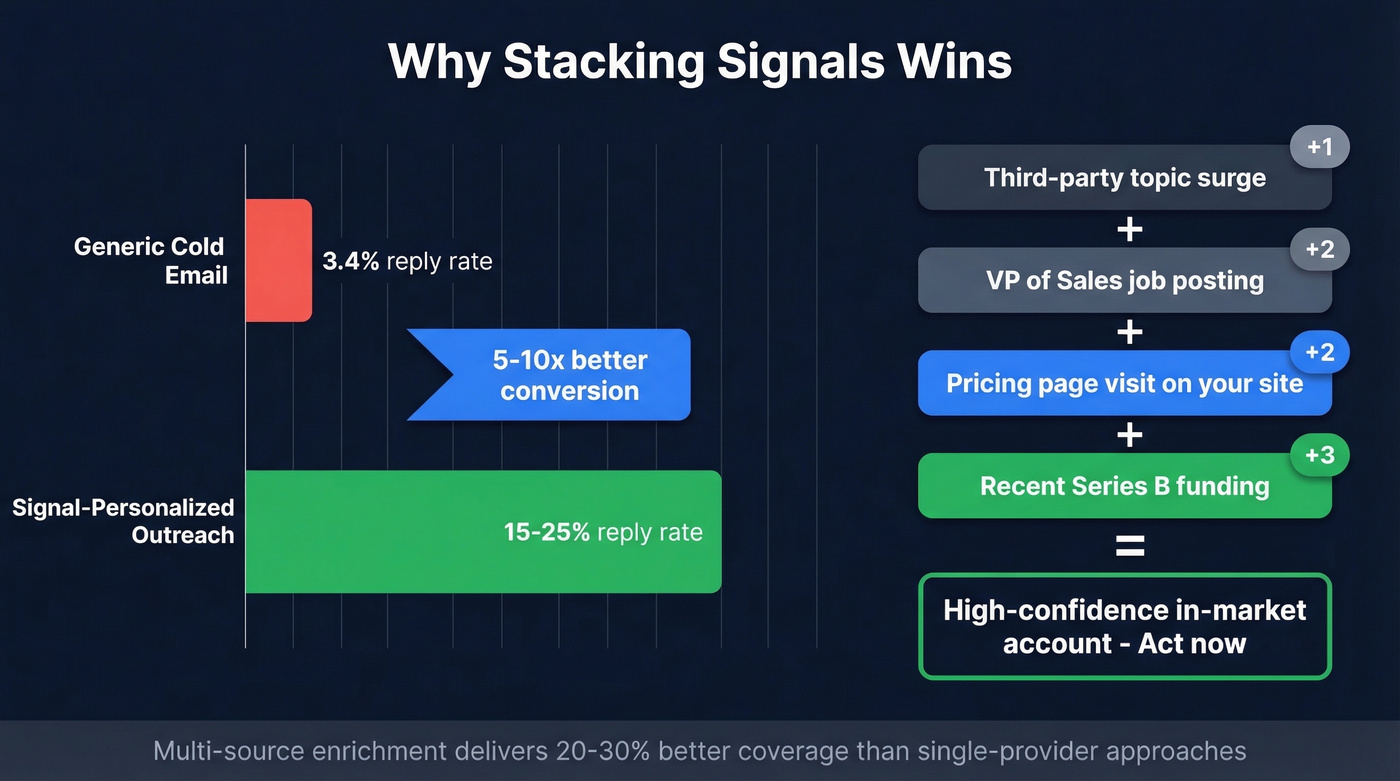
Stacked signals convert 5-10x better than cold outreach. Generic cold emails average a 3.43% reply rate, while signal-personalized outreach hits 15-25%. Multi-source enrichment delivers 20-30% better coverage than single-provider approaches, which is why the best teams layer data from multiple sources rather than trusting one vendor's black box.
Let's put it in pipeline terms. If your SDR makes 50 calls a day, stacking signals to move from "cold" to "in-market" can turn the same activity into dramatically more real conversations - without adding headcount or burning out your team.
Operationalizing Intent-Driven Outreach
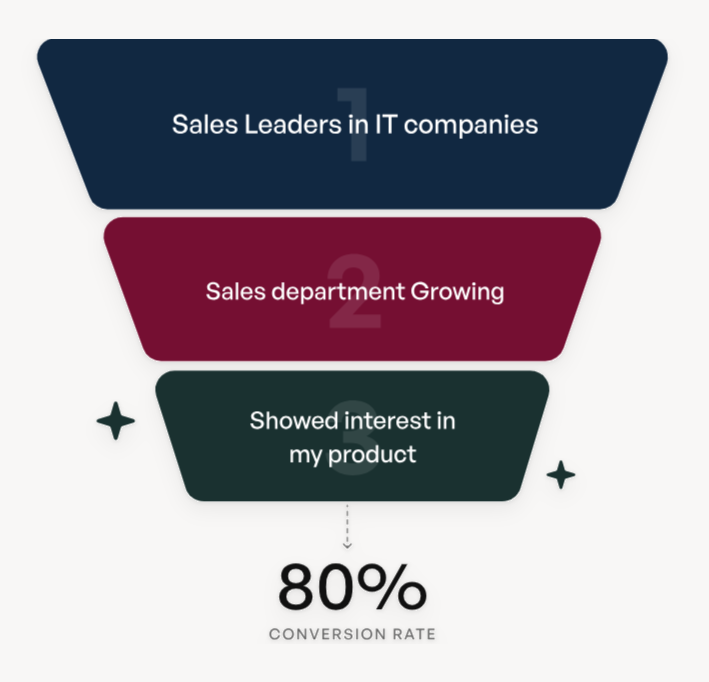
Knowing who's in-market means nothing if your reps can't act fast. We've watched teams build gorgeous scoring models and then let accounts sit in a queue for two weeks. The operational playbook boils down to four moves.
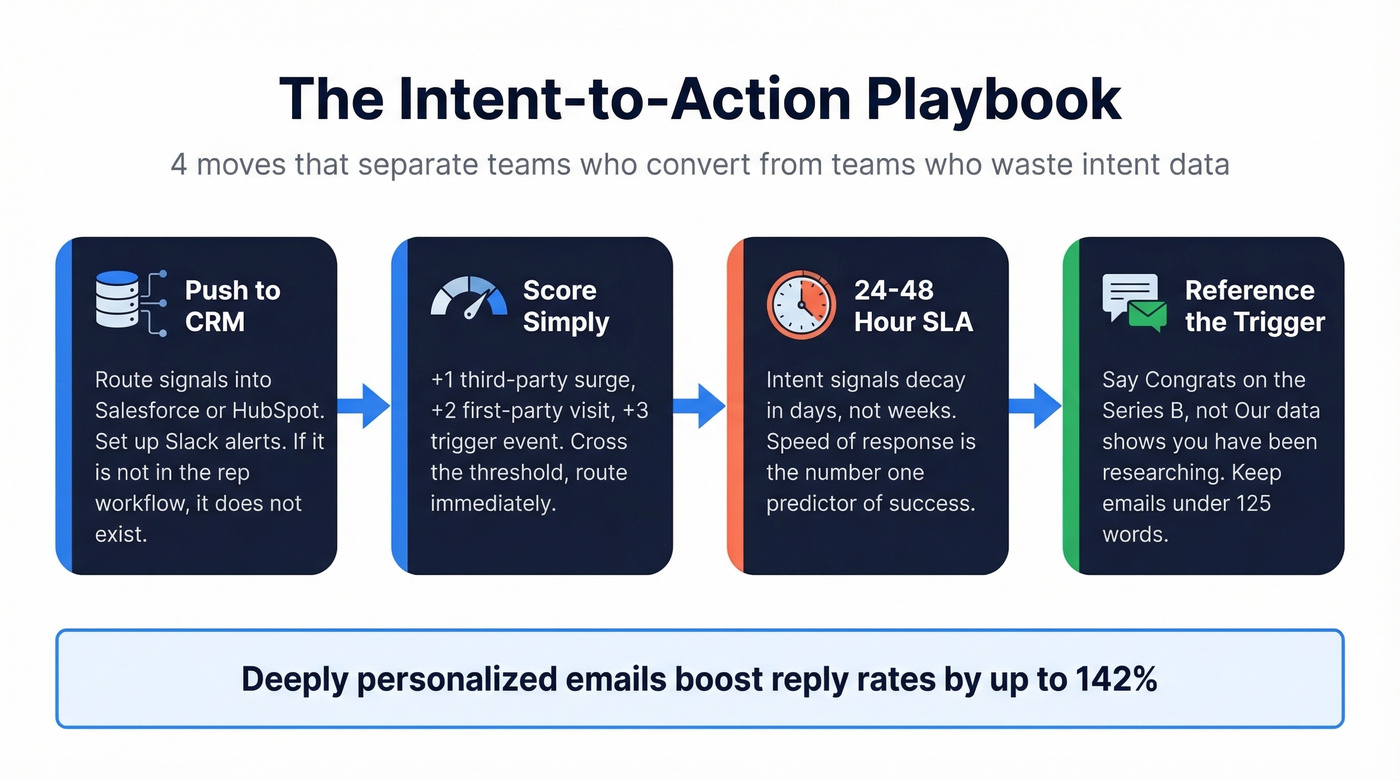
Push signals into your CRM. Intent data that lives in a separate dashboard doesn't get checked. Route it into Salesforce or HubSpot account records and set up Slack alerts for high-scoring accounts. If it's not in the rep's workflow, it doesn't exist. (If you're tightening workflows, CRM automation is the fastest lever.)
Score simply. Don't over-engineer this. +1 for a third-party topic surge, +2 for a first-party page visit, +3 for a trigger event. Accounts that cross a threshold get routed immediately. You can always add complexity later - most teams never need to. (If you want to go deeper on modeling, intent prediction is the next step.)
Enforce a 24-48 hour response SLA. Intent signals decay in days, not weeks. In our experience, the single biggest predictor of intent-based sales success isn't the quality of the data - it's the speed of the response. (This pairs well with a clear sales outreach strategy.)
Reference the trigger, not the surveillance. Mention the observable event - "Congrats on the Series B" or "Saw you're scaling the SDR team" - never "Our data shows you've been researching sales tools." Keep emails under 125 words. Deeply personalized emails boost reply rates by up to 142%. For a tighter process, use AI email personalization and a proven reach out email structure.

Intent signals without verified contact data are just expensive noise. Prospeo layers Bombora-powered intent data across 15,000 topics with 300M+ profiles, 98% accurate emails, and 125M+ verified mobiles - so your reps reach the right person at the right account within that 24-48 hour window.
Stop stacking signals you can't act on. Start reaching in-market buyers today.
Why Intent Data Fails
Here's the thing: the Reddit consensus on intent data is brutal. Practitioners call it "smoke and mirrors" and describe chasing ghosts who deny ever researching anything. The failure modes are predictable, and we've seen every one of them play out with teams we've talked to.
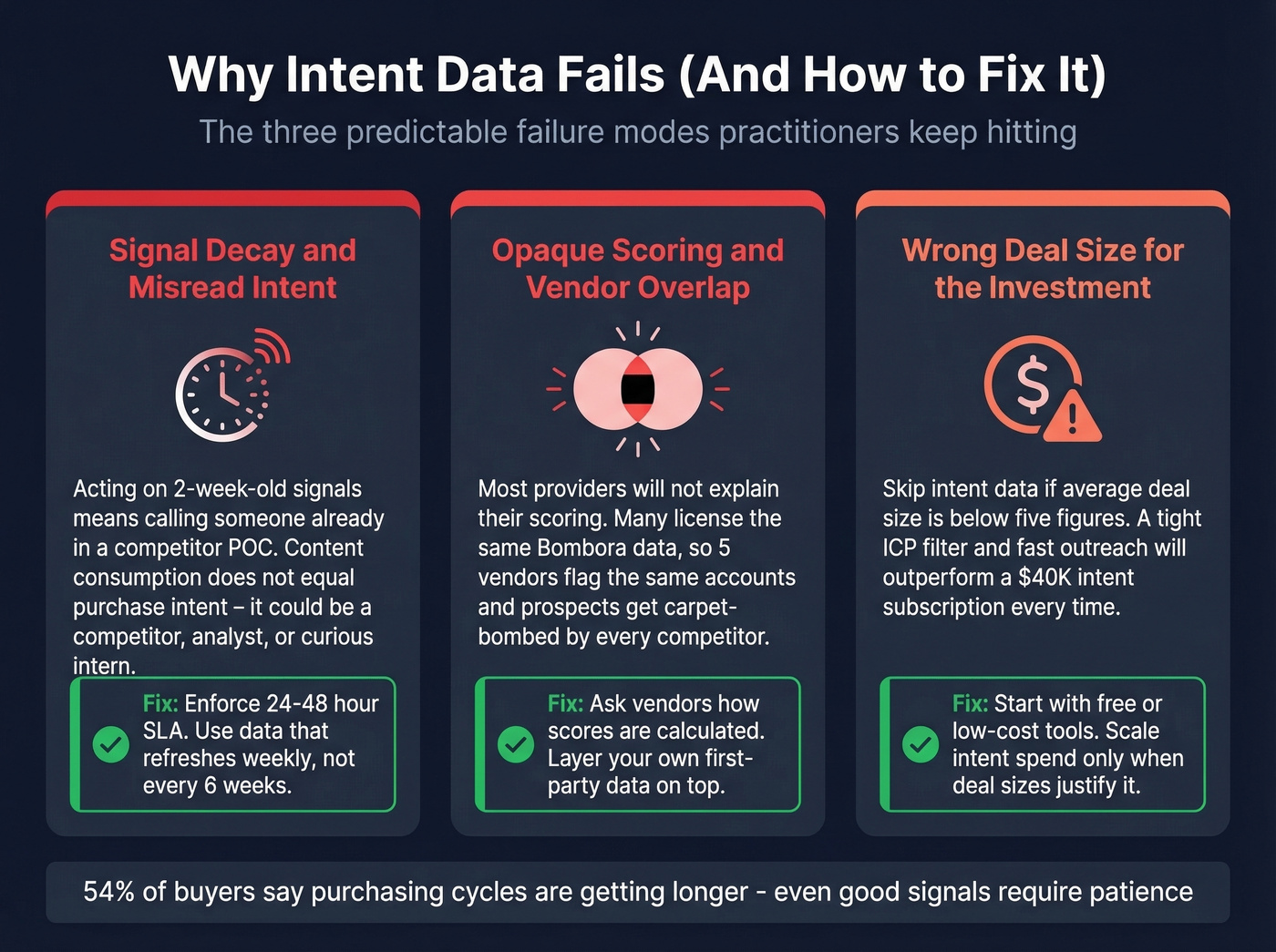
Signal decay and misread intent are the top killers. Act on a two-week-old signal and you're calling someone who's already deep into evaluation with a competitor. Worse, a company consuming content about your category might be a competitor doing market research, an analyst writing a report, or a junior employee browsing out of curiosity. Misinterpreting research as purchase intent is the #1 false positive, and it wastes enormous amounts of rep time. (A tight ideal customer profile reduces false positives fast.)
Opaque scoring and vendor overlap compound the problem. Most providers won't explain how they calculate intent scores - you're trusting a black box. And many platforms license the same underlying Bombora data, so when five vendors flag the same accounts, those prospects get carpet-bombed by every competitor simultaneously. Response rates tank for everyone. If you're evaluating vendors, start with contact-level intent data and compare options like Coldly.ai alternatives.
Skip intent data entirely if your average deal size sits below five figures. A tight ICP filter and fast outreach will outperform a $40K intent subscription every time. Intent data earns its keep when deal sizes justify the investment in signal infrastructure.
54% of buyers say purchasing cycles are getting longer, which means even good signals require patience and multi-threading, not just speed.
Tools and Pricing for 2026
The market ranges from self-serve tools under $50/month to enterprise ABM suites north of $300K/year. The right choice depends on your deal size, team size, and how much implementation pain you can absorb.
Prospeo combines intent signals with verified contact data - 300M+ professional profiles, 98% email accuracy, 125M+ verified mobile numbers, tracking 15,000 Bombora topics. You go from "this account is surging" to "here's the VP's verified email and mobile" in one search. Data refreshes every 7 days versus the 6-week industry average, so you're acting on current signals. Starts free, scales at roughly $0.01 per email, no contracts. (If you're benchmarking providers, see the best B2B database and verified contact databases roundups.)
Bombora is one of the dominant third-party intent data providers - many platforms license its topic data. Standalone access runs $12K-$40K/year, but you're getting raw data feeds without contacts or activation tools. Great if you have the engineering resources to pipe it into your own systems, overkill if you don't.
6sense is the full enterprise ABM platform, starting around $35K/year and scaling past $300K. Implementation takes 3-6 months. One r/sales thread literally said "Please don't suggest 6Sense." That should tell you something about the mid-market experience.
ZoomInfo bundles intent with its contact database at $15K-$40K/year. Broad data, but email accuracy sits around 87% and refresh cycles lag behind newer platforms.
Demandbase is another enterprise ABM suite at $30K-$100K+/year with a 2-6 month implementation window.
| Tool | Annual Cost | Intent Data | Verified Contacts | Setup Time |
|---|---|---|---|---|
| Prospeo | Free-~$0.01/email | 15,000 topics (Bombora) | 300M+, 98% accuracy | Same day |
| Bombora | $12K-$40K | 15,000 topics | No (data feed only) | 2-4 weeks |
| ZoomInfo | $15K-$40K | Yes | Yes (87% accuracy) | 1-2 weeks |
| 6sense | $35K-$300K+ | Yes | Limited | 3-6 months |
| Demandbase | $30K-$100K+ | Yes | Limited | 2-6 months |
The article's math is simple: stacked signals convert 5-10x better than cold outreach, but only if you act fast with accurate data. Prospeo refreshes every 7 days - not 6 weeks - so you're never calling on stale intent. At $0.01 per email, your intent-based sales motion costs a fraction of enterprise ABM suites.
Fresh intent data, verified contacts, one platform. No $40K contracts required.
Compliance in 30 Seconds
GDPR treats names, direct emails, and job titles as personal data - even in B2B. 88% of advertisers say privacy regulations impact their targeting. Vet your provider's consent mechanisms, segment your CRM by consent status, run suppression syncs regularly, and document lawful basis for outreach. Don't hoard stale data. If you can't explain why you have someone's information, you shouldn't have it. (For a deeper checklist, use our B2B compliance guide.)
The Bottom Line
Intent data isn't a strategy - it's a filter. It tells you when to reach out, not how to sell. The teams that win with intent-based sales stack multiple signals, act within 48 hours, and pair buyer intent with verified contact data so reps aren't wasting time hunting for the right person's email after they've already identified the right account.
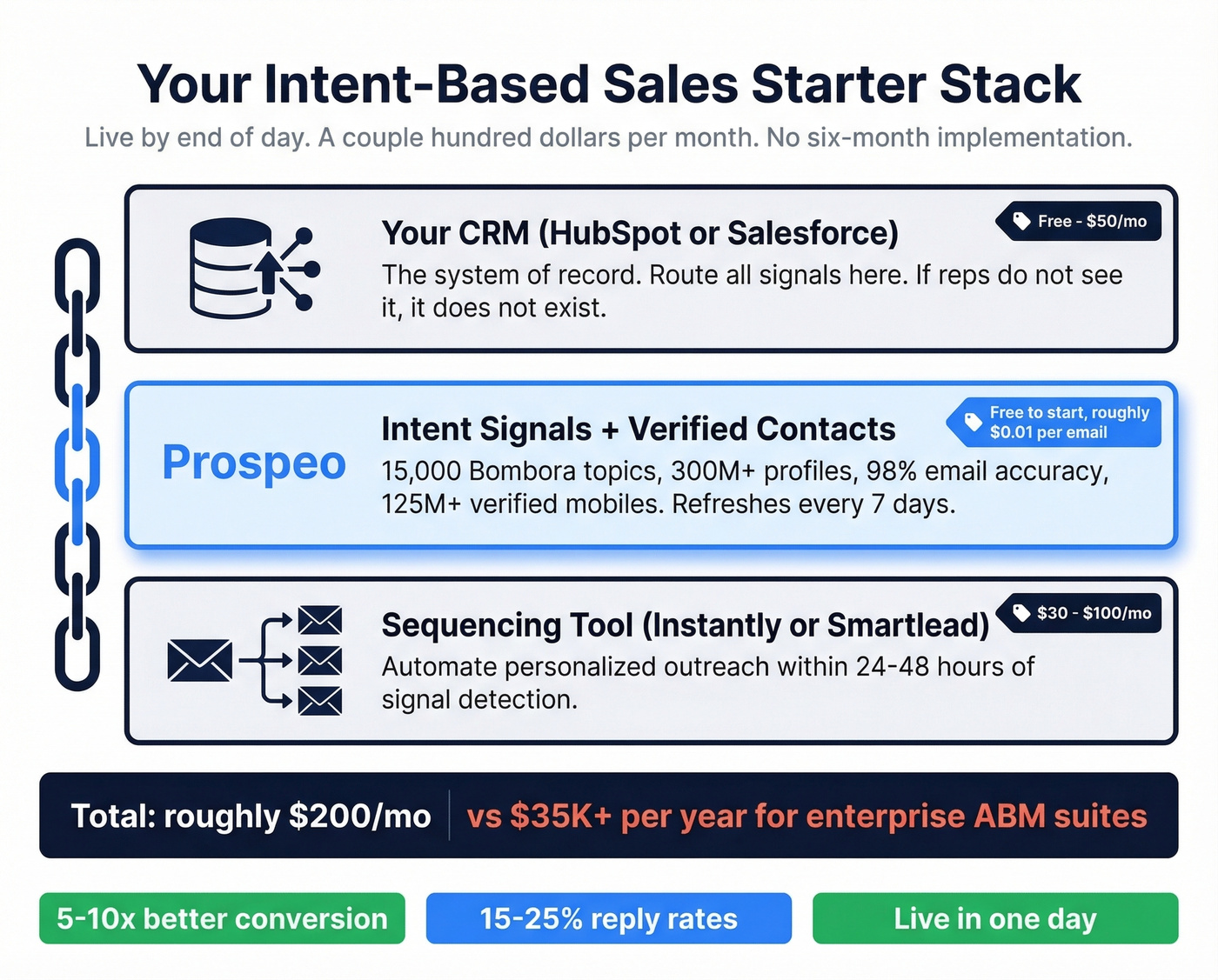
Recommended starter stack: your CRM, Prospeo for intent signals and verified contacts, and a sequencing tool like Instantly or Smartlead. A couple hundred dollars per month, live by end of day. That's it.