

Lead Acquisition Specialist: What It Is, What You Do, and How to Succeed
Finding someone's work email used to mean guessing formats and hoping you got lucky. Now the hard part isn't "finding leads"--it's building a repeatable system that turns raw names into booked meetings without wrecking deliverability. That's the real job of a lead acquisition specialist.
And yes, the title's confusing on purpose. Companies use it as a catch-all when they don't want to admit they need better ops.
What you need (quick version)
Use this as your "am I doing the job?" checklist. This role usually falls into one of two tracks - and mixing them up is how people get hired into chaos.
Pick your track (it changes everything):
- Outbound engine track: you build lists, run cold outreach, manage deliverability, and book meetings.
- Growth/subscription track: you drive installs/subscribers via ASO, paid, paywall tests, lifecycle, and retention.
Your weekly operating system:
- A tight ICP (who you target + who you exclude)
- A reliable data source (contacts + companies)
- A verification step before you send (don't "hope" emails are valid)
- Use a verifier (e.g., Prospeo) so bounce stays under 2%.
- A sequencing + routing workflow that doesn't break when volume spikes
- A handoff definition (what counts as qualified, and where it goes)
The 3 numbers to manage every week:
- Bounce rate (keep it under 2%)
- Reply rate by segment (not just overall)
- Meetings booked vs attended (attendance is the truth)
Non-negotiables that make you look senior fast:
- Diagnose a segment in 10 minutes.
- Ship a dashboard weekly.
- Treat data hygiene like revenue infrastructure.
I've watched a lot of teams do this badly. If you can keep bounce under 2% and consistently explain why one segment beats another, you'll outperform "better copywriters" every time.
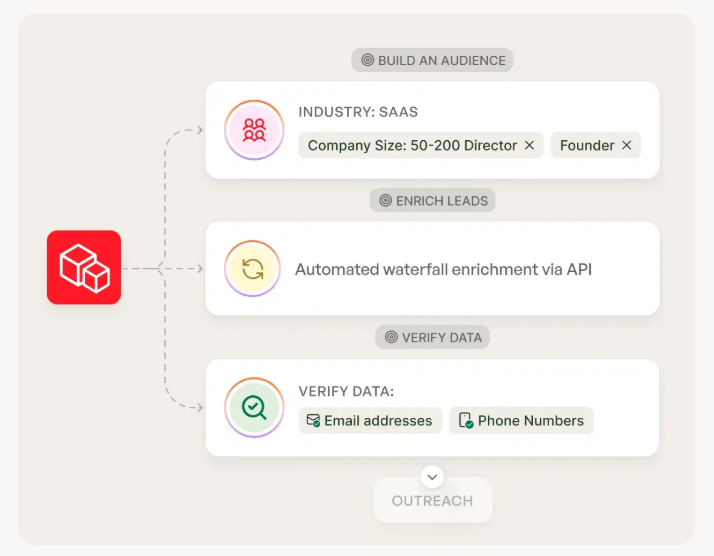
Lead acquisition specialist meaning (and why the title is confusing)
"Lead acquisition specialist" sounds straightforward until you read job posts.
In many marketing frameworks, lead acquisition is broader than lead generation: it covers identifying and targeting potential customers, then building a relationship that guides them toward becoming a client. That includes segmentation, nurturing, and moving leads through funnel stages - not just collecting emails. Stape's lead acquisition guide is a solid baseline if you want the marketing-side definition: https://stape.io/blog/lead-acquisition
Definition (practical): This role owns the system that turns a target audience into qualified conversations - including targeting, data capture, segmentation, nurturing/outreach, and handoff to sales.
Here's why the title trips people up: a lot of search results flatten it into "lead gen specialist." Older job-board content blends acquisition with generic lead gen tactics and treats the titles as interchangeable. Modern teams don't run that way.
In 2026, this title is usually one of two things:
- An outbound operator (list building + deliverability + sequencing + booking)
- A growth acquisition marketer (subscriber/app acquisition, paywalls, lifecycle)
Same title. Totally different job.
If you don't clarify which one you're in, you'll chase the wrong KPIs, buy the wrong tools, and get blamed for outcomes you can't control.
Lead acquisition vs lead generation vs SDR/BDR vs demand gen (clear comparison)
Titles are messy because orgs are messy. Martal notes most companies blend inbound SDR vs outbound BDR responsibilities instead of splitting them cleanly: https://martal.ca/sdr-vs-bdr/

Instead of arguing semantics, map the work to outcomes.
| Role/title | Primary goal | Typical ownership | Core outputs |
|---|---|---|---|
| Lead acquisition specialist | Turn targets into qualified conversations | The handoff zone (Marketing ↔ Sales) | Segments, verified lead lists, nurture/outreach, routing rules, meetings/SALs |
| Lead gen specialist | Capture interest and create leads | Marketing | MQLs, form fills, webinar signups, lead magnets, list growth |
| SDR/BDR | Create sales conversations | Sales | Meetings booked, show rate, next steps, pipeline influenced |
| Demand gen | Create demand and intent | Marketing | Traffic, awareness, engagement, intent lift, pipeline creation (in mature teams) |
| RevOps | Make the system measurable and reliable | Ops layer across teams | Definitions, routing, CRM hygiene, attribution, dashboards |
A clean way to think about it: demand gen creates awareness/interest, lead gen captures, and lead acquisition bridges captured interest into real conversations through segmentation, speed, routing, and outreach/nurture.
Where teams get into trouble is unclear ownership:
- Marketing optimizes MQL volume.
- Sales optimizes win rate (and complains about "lead quality").
- Nobody owns the bridge metrics: speed-to-lead, verification/bounce, show rate, SAL→next step.
That "bridge" is exactly where this role earns its keep.
If you're measured on X, you're effectively Y:
- Measured on blog traffic / CTR / followers → you're doing demand gen.
- Measured on MQLs / form fills / webinar signups → you're doing lead gen.
- Measured on meetings booked + attended + SALs → you're SDR/BDR-adjacent.
- Measured on bounce rate, routing SLA, show rate, segment performance → you're doing acquisition (the system).
Here's the thing: most companies don't need a "full-stack" acquisition unicorn. They need one person to own definitions + routing + data hygiene, because those three fixes make average outreach look like magic.
Mini-table: KPIs each role is judged on
| Role | KPIs they're judged on (most common) |
|---|---|
| Lead acquisition specialist | Bounce rate, reply rate by segment, speed-to-lead, meetings booked/attended, SAL rate, SAL→next step |
| Lead gen specialist | MQL volume, CPL, conversion rate (visitor→lead), lead-to-MQL rate |
| SDR/BDR | Meetings booked, show rate, next steps set, pipeline created/influenced |
| Demand gen | Pipeline created, CAC payback (mature teams), traffic/engagement (immature teams) |
| RevOps | SLA compliance, routing accuracy, CRM data quality, reporting consistency |

The two real meanings of "lead acquisition specialist" (pick your track)
Most people interviewing for this title don't realize they're applying to two different careers. Use this "use this / skip this" filter to figure out what you're walking into.

Use this role if you want to own an outbound engine (sales-adjacent). You own the outbound engine--ICP definition → data acquisition → cold email delivery → reply handling → booked calls. Deliverability is in scope (SPF/DKIM/DMARC, warm-up, reputation). It's basically "SDR + list builder + deliverability operator" in one seat.
Skip this role if you hate operational detail. Outbound acquisition is a lot of plumbing: domains, inbox rotation, list hygiene, segmentation, routing rules, and constant iteration. If you want creative campaign work more than systems work, you'll burn out.
Use this role if you're actually applying to growth/subscription acquisition (marketing-adjacent).
This is a different universe: ASO/GSO, integrated campaigns, app journeys, paywall testing, retention, churn, and analytics tools. Same title, but your "leads" are subscribers and installs, not booked demos.
Skip this role if you're expecting a quota-carrying SDR job. Growth acquisition roles want deep experimentation skills and expect you to run tests, not sequences.
How to tell which track it is in 60 seconds:
- If the post mentions SPF/DKIM/DMARC, inboxes, warm-up, sequences → outbound engine track.
- If it mentions ASO, paywalls, retention, churn, LTV → growth/subscription track.
- If it mentions MQLs and nurture but no deliverability or experimentation → it's probably a generic lead gen role wearing a fancier title.

You read it above: bounce rate under 2% is the non-negotiable that separates senior acquisition specialists from everyone else. Prospeo's 5-step email verification and 7-day data refresh cycle make that target automatic - not aspirational. 143M+ verified emails at $0.01 each.
Stop guessing email formats. Start booking meetings with verified contacts.
Where the role sits in the org (marketing, sales, RevOps - and handoffs)
This role lives at the seam between teams, which is why it's powerful - and why it gets messy fast.
Optimizely's overview of marketing vs sales responsibilities matches what we see in real companies: marketing attracts and nurtures prospects until they're willing to transact, then sales converts. This role often sits right in that handoff zone: late-stage nurture, qualification, routing, and "make sure the lead becomes a conversation." https://www.optimizely.com/optimization-glossary/marketing-vs-sales/
Wrike's marketing role taxonomy also lists "Lead Acquisition Specialist," which matters because it validates the title as a real specialization, not just a job-board invention: https://www.wrike.com/marketing-guide/marketing-roles/
A simple way to map ownership:
- Marketing owns: ICP messaging, channels, content/offers, early-stage nurture
- Acquisition owns: segmentation, qualification rules, outreach/nurture execution, speed-to-lead, meeting creation
- Sales owns: discovery, pipeline progression, close
- RevOps owns: CRM hygiene, routing logic, attribution, reporting standards (often shared)
A concrete handoff example (SAL definition + routing rule + SLA)
Here's a handoff that actually works:

- SAL definition (Sales Accepted Lead): ICP-fit + clear intent signal + reachable contact method + meeting booked or explicit request for follow-up.
- Routing rule:
- Enterprise accounts → named AE
- Mid-market → round-robin AE
- SMB/self-serve → lifecycle nurture + optional SDR assist
- SLA:
- Inbound demo request → first touch within 5 minutes
- High-intent inbound (pricing page + form) → 15 minutes
- Everything else → same business day
One scenario I've seen too many times: marketing hits the MQL goal, sales says "these leads are trash," and the CRM's a graveyard of unworked records because nobody owned routing, speed, or definitions. That's not a people problem. It's a system problem.
Core skills of a lead acquisition specialist (by track)
This role rewards people who like systems. If you're looking for a "creative" job with occasional reporting, you'll hate it. If you like turning messy inputs into predictable output, you'll love it.
Outbound engine track skills (sales-adjacent)
- ICP discipline: tight targeting + a real exclusion list
- List building & segmentation: use case, trigger, persona, tech context
- Deliverability fundamentals: SPF/DKIM/DMARC, warm-up, volume ramp, inbox rotation
- Data hygiene: verification, suppression, dedupe, field standards
- Cold email fundamentals: short first email, clear reason, one CTA
- Reply handling: triage fast; book meetings; suppress complaints immediately
- Basic analytics: reply rate by segment, show rate, SAL→next step
- Stakeholder management: align with AEs on what "qualified" means
Inbound + lifecycle acquisition skills (bridge + ops)
- Speed-to-lead operations: SLAs, alerts, routing, coverage schedules
- Qualification frameworks: fit/intent/urgency/path (self-serve vs sales-led)
- Nurture design: light-touch sequences, retargeting audiences, event invites
- CRM discipline: lifecycle stages that match reality, not wishful thinking
- Funnel reporting: lead→MQL→SAL→SQL→pipeline with clean definitions
Growth/subscription acquisition skills (marketing-adjacent)
- Experimentation: hypothesis → test design → readout → rollout
- Channel management: paid, ASO, landing pages, paywall tests
- Retention thinking: activation, churn reduction, LTV levers
- Measurement: cohort analysis, attribution, incrementality (where possible)
- Cross-functional execution: product, design, analytics, engineering
If you want one career-moat skill that transfers across every track, learn to write definitions (ICP, SAL, SQL) that survive contact with reality, then build dashboards that enforce them across teams, tools, and handoffs without turning into a weekly argument.
Lead acquisition specialist workflow and weekly deliverables (operator-grade)
The job isn't "get more leads." It's running a production line where every step has failure modes. I've seen teams with great copy and great reps still crater performance because they skipped verification, spiked bounce rates, and damaged domains for weeks.
Outbound track workflow (ICP → data → verify → sequence → qualify → handoff)
Step 1: Lock the ICP (and exclusions). You need a target that's narrow enough to learn from. Define firmographics (industry, size, geo), role/function, and the "nope list" (competitors, students, agencies, tiny teams, etc.).
If you can't explain your ICP in one sentence, your segmentation's going to be sloppy.
Step 2: Acquire data (companies first, then contacts). Start with company lists (your TAM slice), then pull decision-makers and influencers. Prioritize roles that can say "yes" and roles that can champion internally.
My strong recommendation: don't let reps freestyle list building. You'll get duplicates, junk titles, and random geos that ruin your read on performance.
Step 3: Clean + enrich + segment. This is where acquisition becomes different from generic lead gen. You're not just collecting - you're preparing leads to convert.
Segmentation that consistently works:
- Segment by use case (why they'd care)
- Segment by trigger (job change, funding, headcount growth)
- Segment by tech context (what they run today)
- Segment by persona (economic buyer vs champion)
Step 4: Verify before you send (deliverability insurance). This is the unsexy step that saves your quarter.
Workflow-wise, pull your list, verify, then only send to "verified/valid" statuses. That's how you keep bounce under 2% without playing whack-a-mole.
Step 5: Set up deliverability (SPF/DKIM/DMARC + warm-up).
This is real work:
- Configure SPF, DKIM, DMARC
- Warm up new domains/inboxes for 4-6 weeks
- Start at 5-10 sends/day, then ramp
Teams that "move fast" here usually spend the next month asking why reply rates fell off a cliff. Deliverability isn't optional if outbound's your channel.
Step 6: Build sequences that match the segment. Don't build one "master sequence." Build 3-6 segment-specific sequences with:
- One clear reason you picked them
- One clear value hypothesis
- One clear CTA (usually a question)
Keep it short. Under 80 words is a great constraint.
Step 7: Reply handling + qualification. Reply handling is part customer service, part triage:
- Positive → qualify and book
- Neutral → clarify and keep thread alive
- Objection → handle quickly, don't argue
- Wrong person → ask for the right owner
- Unsubscribe/complaint → suppress immediately
Qualification should be lightweight. Your goal's a real conversation, not a full discovery call over email.
Step 8: Booked calls → handoff notes.
A good handoff note includes:
- Why they're interested (trigger + pain)
- Who's involved
- What they're using today
- Any constraints (timing, budget, security)
If you do this well, AEs will trust your pipeline. If you don't, you'll get "lead quality" complaints forever.
Operator example: a handoff note template that AEs actually read
Copy/paste this into your CRM note:
- Trigger: (e.g., "hiring 5 SDRs in Q1" / "new VP Sales started last month")
- Pain in their words: (1 sentence from the email thread)
- Current setup: tool/process they use today
- Stakeholders: who's joining + who signs
- Next step: what they agreed to evaluate + timeline
"Good" looks like: specific trigger + one quote + one constraint. "Bad" looks like: "Interested, book demo."
Inbound track workflow (speed-to-lead → qualify → route → nurture)
Inbound "lead acquisition" is mostly about speed, consistency, and routing.
Step 1: Speed-to-lead SLA. InsideSales analyzed 55M activities across 5.7M inbound leads and found conversion is 8x greater in the first five minutes. That's your target: 5 minutes, not "same day." https://www.insidesales.com/insidesales-com-response-time-research/
Step 2: Qualify fast, then route.
You're looking for:
- Fit (ICP match)
- Intent (what they did)
- Urgency (timeline)
- Path (self-serve vs sales-led)
Then route to the right owner with clear definitions (MQL/SQL/SAL) and a documented SLA.
Step 3: Nurture the rest (and don't let them rot). Most inbound leads aren't ready. Keep them warm with:
- Light-touch sequences
- Retargeting audiences
- Webinar/event invites
- "When you're ready" offers
Speed + routing + nurture is the inbound trifecta.
Weekly deliverables (what you ship every Friday)
If you want to look like a pro, ship artifacts. Every week.
- List builds: new leads added, by segment and source
- List hygiene report: bounce rate, suppression list growth, risky domains
- Segments: what's new, what's paused, what's expanded
- Sequences: new tests launched + what changed (subject, offer, CTA)
- Dashboard: bounce, reply rate by segment, meetings booked/attended, CPL (if paid data)
- Handoff notes QC: 10 random meetings reviewed for context completeness
- Next-week plan: 1-2 bets, not 12 random tweaks
Operator example: what your weekly dashboard should show (fields)
Even without fancy BI, your dashboard should include:
- Volume: leads added, emails sent, unique accounts touched
- Deliverability: bounce rate, spam complaints, unsubscribes, inbox health (if available)
- Engagement: reply rate by segment, positive reply rate, replies from email #1
- Conversion: meetings booked, meetings attended (show rate), SALs created
- Quality: SAL→next step rate, pipeline created (if you can attribute)
- Speed (inbound): median first-response time, % within 5 minutes
If you can't answer "which segment produced attended meetings this week?" you don't have a dashboard - you've got a spreadsheet.
Lead acquisition specialist KPIs and benchmarks (what "good" looks like in 2026)
Benchmarks are only useful if they drive decisions. Use these as guardrails, then diagnose by segment.
KPIs by track (quick map)
| Track | Primary KPIs | Secondary KPIs |
|---|---|---|
| Outbound engine | Bounce rate, positive reply rate by segment, meetings attended | Unsubscribes/complaints, SAL rate, SAL→next step |
| Inbound bridge | Speed-to-lead (5-min SLA), meeting show rate, SAL→next step | Lead→SAL rate, routing accuracy, nurture conversion |
| Growth/subscription | CAC, activation, retention/churn, LTV | Experiment velocity, paywall/landing conversion, cohort lift |
Cold email performance benchmarks
Instantly's dataset is one of the better big reference points for 2026: https://instantly.ai/cold-email-benchmark-report-2026
| Metric | Baseline | Strong | Elite |
|---|---|---|---|
| Reply rate | 3.43% | 5.5%+ | 10.7%+ |
| Replies from email #1 | 58% | 60%+ | 65%+ |
| Email length | <80 words | <80 words | <60 words |
| Touchpoints | 4-7 | 4-7 | 4-7 |
One practical detail worth using: send-day effect. In Instantly's dataset, Tue-Wed tends to perform best, with Wednesday the top day.
Real talk: once you scale volume, 1-2% reply rates can still work if targeting's tight and the funnel converts downstream. You'll see that argument constantly in r/coldemail, and they're not wrong: https://www.reddit.com/r/coldemail/
Deliverability baselines (non-negotiable)
- Bounce rate: keep it under 2%
- Warm-up: plan 4-6 weeks for new domains/inboxes
- Ramp: start at 5-10 sends/day, then scale gradually
If bounce is over 2%, stop scaling. Fix data and verification first.
Meeting productivity benchmarks (SDR-adjacent roles)
Crunchbase's SDR KPI guide cites an Operatix study of 150 SDRs and includes a few benchmarks that matter for acquisition work:
- 15 meetings/SALs per month on average
- ~20% drop-out, so about 12 attended
- 1 in 2 SALs lead to a next step
- Inbound conversion: 5-10% for low-intent leads vs 75-80% for high-intent (like demo requests)
https://about.crunchbase.com/blog/sdr-metrics/
That drop-out number's the tell. If you're booking 20 but only 10 attend, you don't have a "lead quality" problem - you've got a confirmation and expectation-setting problem.
Capacity planning (so you don't drown)
Two operational benchmarks from the same Crunchbase/Operatix discussion are useful for staffing:
- An inbound SDR can handle ~15 leads/day (when the process is tight).
- If only 50% of SALs lead to a next step, improve qualification or improve who you route to sales.
This is where acquisition becomes a real discipline: you're not just generating activity; you're designing throughput across people, tools, and time windows, and you're doing it in a way that doesn't collapse the moment volume doubles.
Troubleshooting: what to do if a KPI is low
Bounce rate high (>2%)
- Tighten verification + suppress risky domains
- Remove catch-all-heavy segments
- Slow send ramp and rotate inboxes
- Audit enrichment rules (bad merges create bad emails)
Reply rate low (overall)
- Break it down by segment first
- Fix email #1 before adding more follow-ups (58% of replies come from email #1)
- Tighten targeting; "more leads" is usually the wrong fix
Replies are fine, meetings are low
- Your CTA's too big (asking for 30 minutes too early)
- Qualification's inconsistent across segments
- Calendar friction (no slots, wrong time zones)
Meetings booked are fine, attendance is low
- Add confirmation + reminder sequence
- Set expectations in the booking email (2 bullets on what you'll cover)
- Disqualify tire-kickers faster
Minimum viable tool stack (and what each tool is responsible for)
You don't need 14 tools. You need a stack where each layer has a job, and failures are easy to spot.
CRM (system of record): HubSpot or Salesforce Owns: lifecycle stage, routing, attribution, reporting.
Sequencing (outreach execution): Outreach, Mailshake, lemlist, Instantly, Smartlead Owns: sequences, inbox rotation, reply detection, scheduling.
Automation (glue): Zapier or Make Owns: moving leads between forms, sheets, CRM, sequencer, Slack alerts.
Enrichment/workflow builder: Clay Owns: multi-step enrichment, waterfalling providers, custom logic.
Intent (enterprise layer): 6sense or Bombora Owns: account-level intent signals and prioritization.
Stack cost reality: most teams don't fail because they didn't buy intent data. They fail because they bought expensive platforms before they had a clean ICP, clean routing, and verified contact data.
Salary and compensation models (what you can expect)
Comp varies because the title spans two tracks and multiple seniority levels.
Typical US base salary ranges (2026)
Outbound/SaaS (operator track): $50k-$90k base Often paired with variable comp tied to meetings, pipeline, or partner sign-ups.
Senior growth acquisition (subscription/app track): $85k-$128k base More analytics-heavy, often expects deep experimentation skills.
Concrete anchors from real postings and aggregators:
- Pie Insurance lists $65k-$80k base with ~$30k on-target commission for an acquisition-focused role: https://talent.headline.com/companies/pie-insurance/jobs/44012509-team-lead-acquisition-specialist
- Washington Post compensation range for Lead Acquisition Specialist: $85,100-$127,700: https://www.tealhq.com/job/lead-acquisition-specialist_a86cd460-7622-4b2c-aa12-3e0bdcc3184b
- Teal's role overview is a useful cross-check: https://www.tealhq.com/
Why it varies:
- Quota vs non-quota: meeting/booked-call targets usually increase variable comp.
- Deliverability + data ops skills: if you can keep domains healthy and scale volume, you're rarer than you think.
- Industry: subscription/growth roles pay more when they own LTV levers.
Interview + job post checklist (avoid getting hired into chaos)
A good job is a system with clear ownership. A bad one is "we need more leads" and you're the human band-aid.
The questions you should ask
- What's the definition of MQL, SQL, SAL here?
- What's the routing SLA between marketing → acquisition → sales?
- Who owns deliverability (domains, SPF/DKIM/DMARC, warm-up)?
- Who owns data quality (verification, suppression, enrichment rules)?
- What's the success metric: meetings booked, meetings attended, pipeline created, CAC/CPL?
- What's the current baseline for bounce, reply, and attendance?
Red flags (don't ignore these)
- No written definitions for MQL/SQL/SAL.
- No SLA, or "we try to be fast."
- "Need more leads" with no metric tied to revenue.
- You're expected to run outbound volume but they won't invest in verification/data hygiene.
- Sales complains about lead quality, but nobody can show a funnel report.
Inbound-specific reality check: aim for a 5-minute speed-to-lead SLA. InsideSales found conversion is 8x greater in the first five minutes, and only a tiny fraction of teams operationalize it. If you can, you'll look like a magician.
Closing recommendation (how to start in your first 30 days)
If you're starting fresh, don't "optimize" anything until the basics are stable. Your first month is about building a repeatable machine.
Days 1-7 (setup):
- Clean CRM fields and lifecycle stages (no junk statuses).
- Lock ICP + exclusions with sales and marketing.
- Set up verified data sourcing so bounce stays under 2%.
- Launch one tight 4-7 touch sequence per segment. By day 7 you should have: one ICP, one segment, one sequence, one dashboard draft.
Days 8-21 (iterate):
- Review reply rate by segment weekly and kill weak segments fast.
- Fix email #1 first (it drives most replies).
- Add lightweight qualification + a handoff notes template. By day 21 you should have: one segment that reliably produces positive replies and booked meetings.
Days 22-30 (scale responsibly):
- Expand the winning segment(s) and add one new bet.
- Tighten show-rate with confirmations and expectations.
- Finalize a dashboard that sales and marketing both trust. By day 30 you should have: stable deliverability, stable routing, and predictable weekly output.
Track these three numbers every week: bounce rate, reply rate by segment, meetings attended. They keep you honest, and they force you to fix the system instead of chasing vanity volume.
The bridge between captured interest and real conversations is data quality. Prospeo gives lead acquisition specialists 30+ filters - intent data, job changes, technographics, headcount growth - so every segment you ship has a reason behind it. 98% email accuracy, 92% API match rate.
Own the segment performance story with data you can actually trust.
FAQ
Is a lead acquisition specialist the same as an SDR or BDR?
No - most of the time it's broader than an SDR/BDR because it also owns targeting, list hygiene, outreach/nurture ops, and handoff rules (not just booking calls). In many orgs it's the "bridge" between marketing and sales, so you'll be judged on show rate and routing quality, not only meetings booked.
What KPIs should a lead acquisition specialist own?
The core KPIs are bounce rate (keep it under 2%), reply rate by segment, meetings booked vs attended, and SAL→next step rate (aim for ~50%). If inbound's in scope, set a speed-to-lead SLA of 5 minutes - InsideSales found conversion is 8x higher in the first five minutes.
What's a good cold email reply rate in 2026?
A solid 2026 baseline is 3.43% reply rate, with 5.5%+ considered strong and 10.7%+ elite, based on Instantly's 2026 benchmark dataset. Use "reply rate by segment" as your real north star, because one good segment can outperform your overall average by 2-3x.
How do I keep bounce rate under 2% when building lists?
Verify emails before sending, suppress risky/invalid addresses, and ramp volume slowly on warmed domains; if bounce crosses 2%, pause scaling and fix data first. Tools like Prospeo help by verifying emails (including catch-all handling) and filtering spam traps and honeypots so you protect domain reputation while you scale.