

Lead Generation Software Comparison: 10 Tools That Actually Matter in 2026
There are 50+ lead generation tools fighting for your budget right now. Every "comparison" article lists 20 of them with identical feature bullets and zero opinion. This is a real lead generation software comparison of the 10 worth evaluating - with pricing, accuracy data, and the cost-per-lead math nobody else bothers to do.
Why Most Tool Comparisons Fall Short
The lead generation software market hit $7.4B in 2025 and is tracking toward $16.2B by 2034. That kind of growth means new tools launch monthly, and every one wants a spot on a listicle. The result: articles that compare 25 tools across 8 categories and help you choose exactly none of them.
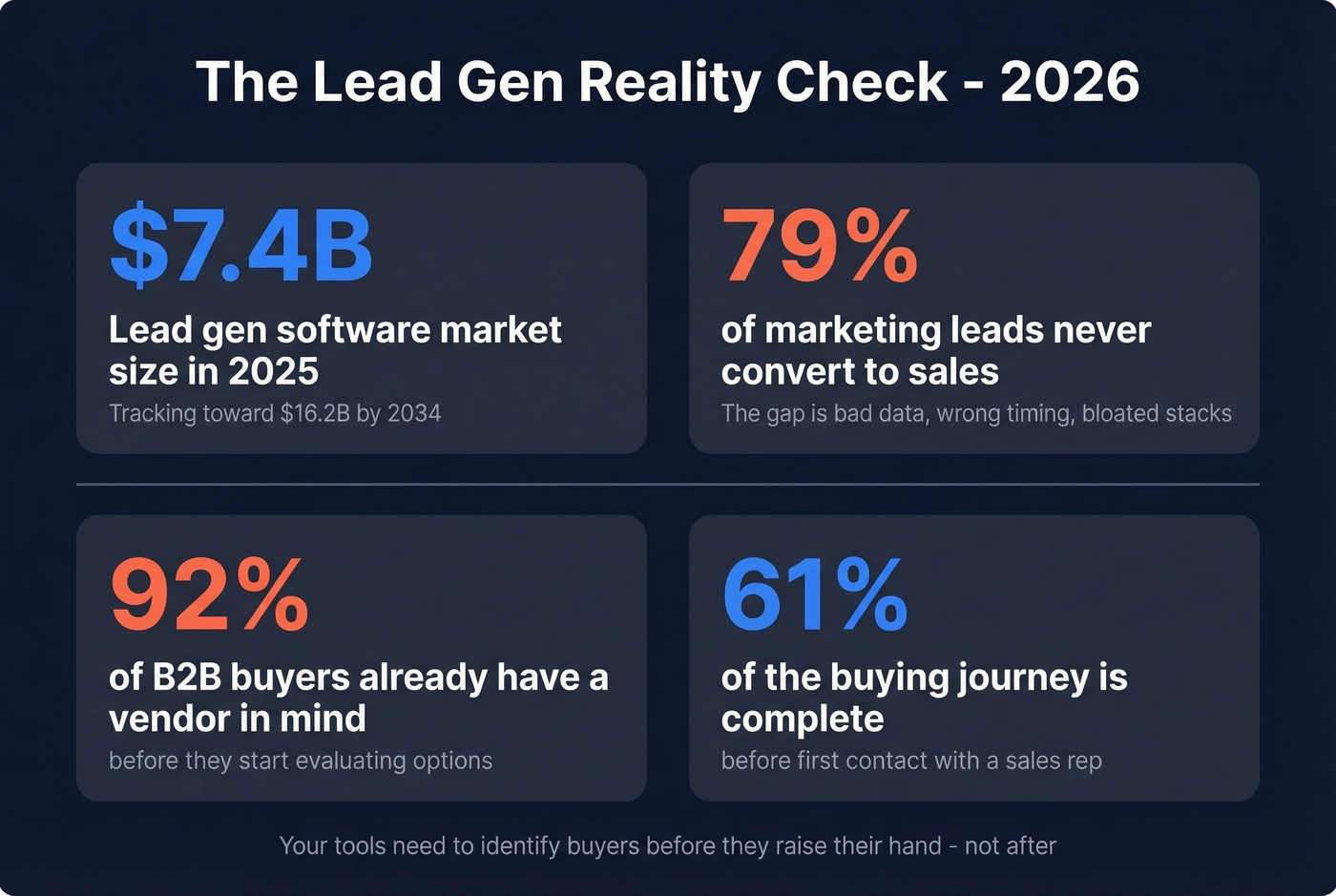
Here's the thing. 79% of marketing leads never convert to sales. The gap isn't "not enough tools" - it's bad data, wrong timing, and bloated stacks where nobody uses half the features they're paying for. So instead of ranking 25 tools alphabetically, we narrowed to 10 across five categories and compared them on the dimensions that predict ROI. The effective cost-per-lead analysis in the second half of this piece is the part no other B2B prospecting tools roundup does, and it's the part that'll actually change how you buy.
Our Picks at a Glance
| Pick | Best For | Starting Price | Key Stat |
|---|---|---|---|
| Prospeo | Email accuracy & data freshness | Free (75 emails/mo) | 98% email accuracy |
| Apollo.io | Free tier & all-in-one | Free / from $49/user/mo | 1,167 G2 reviews |
| HubSpot | CRM + inbound | Free CRM / paid from $18/mo | Inbound + automation ecosystem |
| Clay | Custom enrichment | Free / $149/mo | Practitioner favorite |
| ZoomInfo | Enterprise intelligence | ~$15,000/yr | One of the deepest US-focused databases |
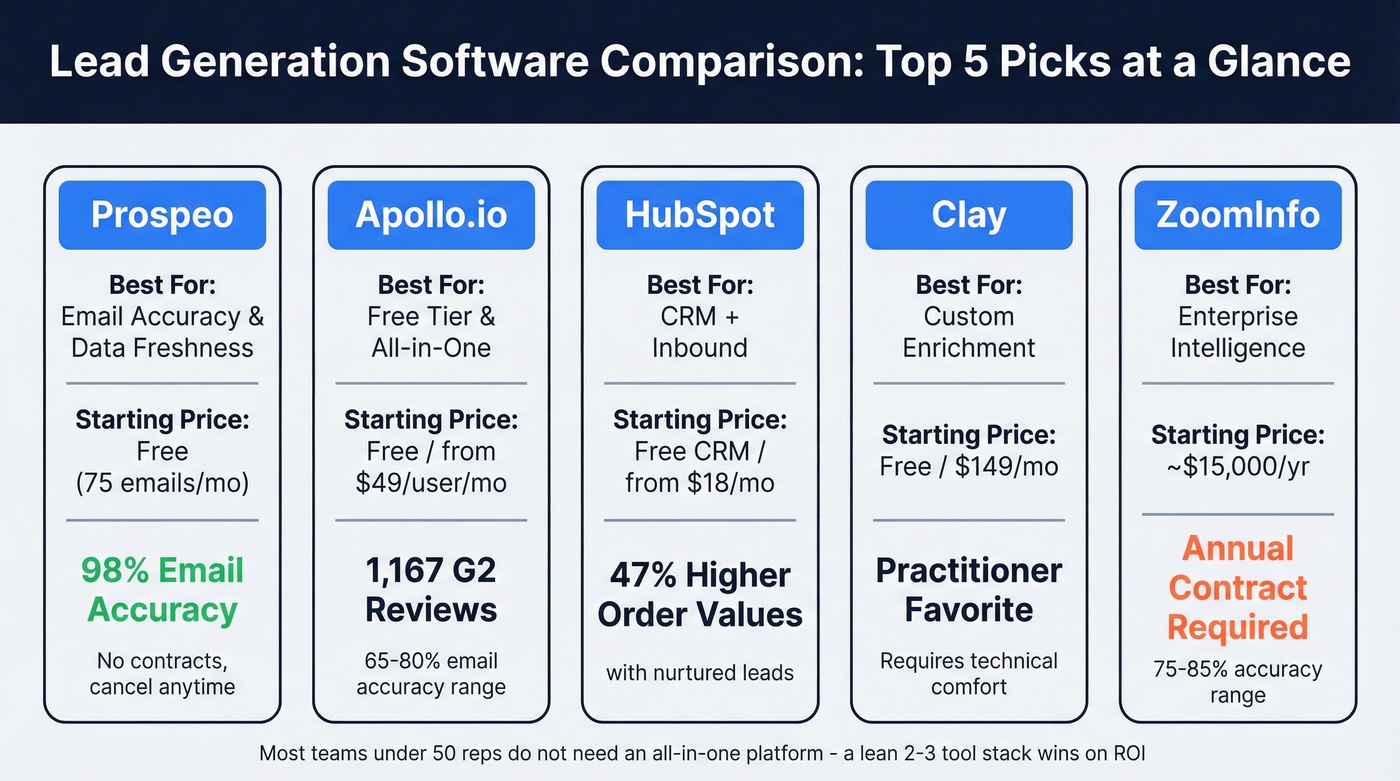
Prospeo wins on data quality. Apollo wins on breadth for the price. HubSpot wins if inbound is your primary motion. Clay wins for technical teams building custom workflows. ZoomInfo wins if you're enterprise and need everything under one roof.
Our hot take: ZoomInfo is still the best all-in-one enterprise platform. But most teams don't need all-in-one - they need accurate data feeding a lean 2-3 tool stack. If your average deal size is under $25K, you're almost certainly overpaying for ZoomInfo-level platform features you'll never touch.
How We Scored Each Tool
We evaluated every tool across five dimensions that predict whether it'll generate pipeline or just generate invoices.
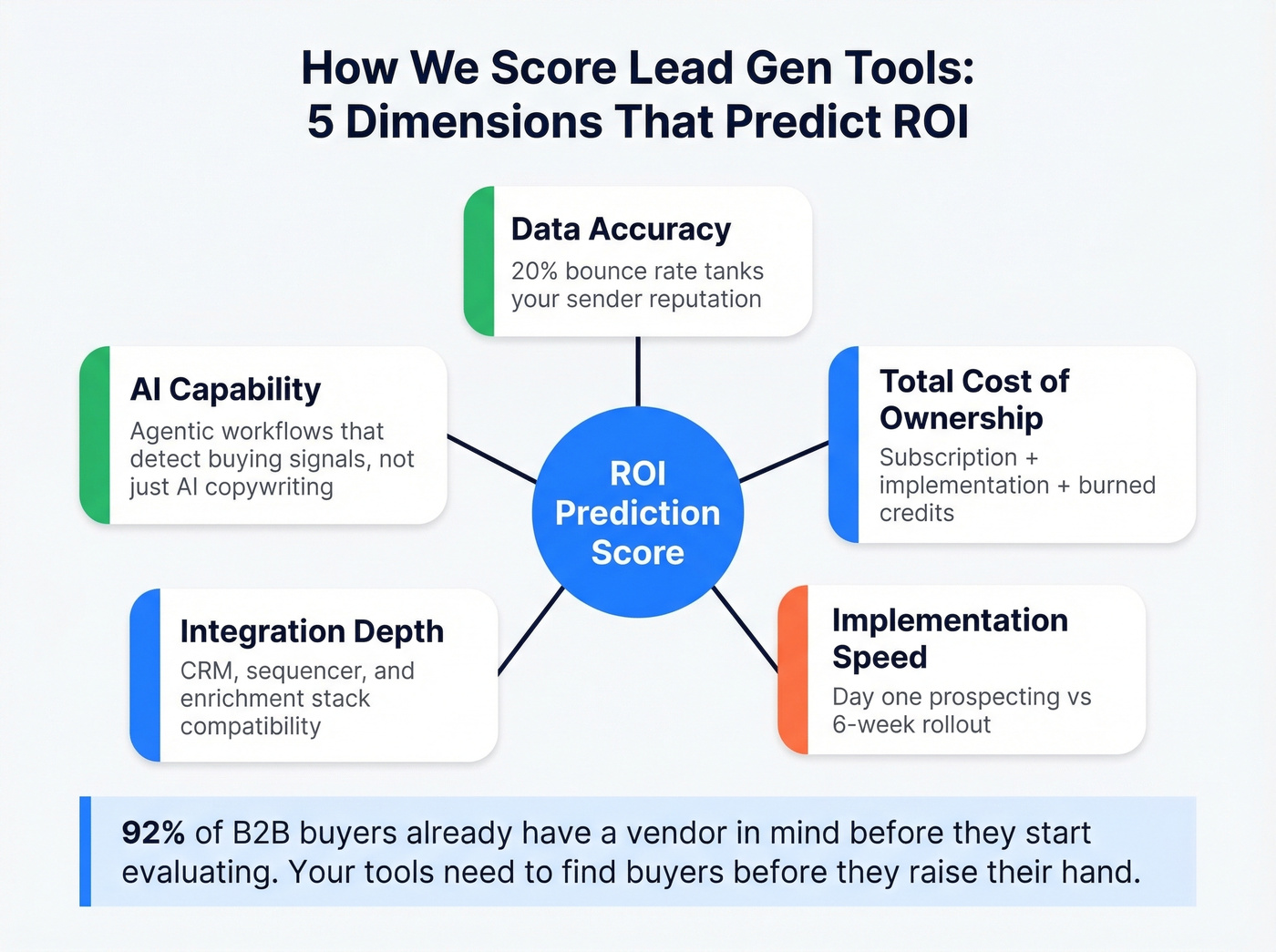
- Data accuracy - What percentage of emails and phones actually work? A 20% bounce rate doesn't just waste credits; it tanks your sender reputation.
- Total cost of ownership - Subscription price is the starting line. Add implementation, training, integration costs, and burned credits.
- Implementation speed - Can reps prospect on day one, or does this take a 6-week rollout with a dedicated admin?
- Integration depth - Does it plug into your CRM, sequencer, and enrichment stack without custom engineering?
- AI capability - In 2026, AI in lead gen isn't about writing emails. It's about detecting buying signals and timing outreach. Tools with agentic workflows - where AI autonomously identifies triggers, enriches records, and routes leads - are pulling ahead of tools that just offer AI copywriting.
One stat worth sitting with: 92% of B2B buyers already have a vendor in mind before they start evaluating. First contact doesn't happen until 61% of the buying journey is complete. Your tools need to identify buyers before they raise their hand - not after.

This comparison exists because most teams pick lead gen tools on features and ignore the metric that actually matters: cost per connected lead. At 98% email accuracy and ~$0.01/email, Prospeo delivers the lowest effective cost-per-lead of any tool on this list.
Stop comparing features. Start comparing what actually connects.
The 10 Tools, Compared
Prospecting & Data Enrichment
Use this if: You need verified emails and direct dials that connect, without signing an annual contract or talking to a sales rep.
The 98% email accuracy comes from a proprietary 5-step verification process with catch-all handling, spam-trap removal, and honeypot filtering. In practice: Snyk's 50-person AE team dropped their bounce rate from 35-40% to under 5% and saw AE-sourced pipeline jump 180%. The Chrome extension (40,000+ users) pulls verified emails and phones from any website or CRM profile in one click. Search filters go 30+ deep - buyer intent powered by Bombora across 15,000 topics, technographics, job changes, headcount growth, and funding signals. The enrichment API returns contact data for 83% of records at a 92% match rate, which makes it a strong fit for RevOps teams running CRM hygiene workflows. Native integrations with Salesforce, HubSpot, Smartlead, Instantly, Lemlist, Clay, Zapier, Make, and more mean you're not building custom connectors. Pricing starts free (75 verified emails/month), with paid plans from ~$39/mo. No contracts, cancel anytime.
Apollo.io
Use this if: You want the widest free tier in the category and don't mind managing a credit system.
Apollo's free plan gives you 60 mobile credits and 120 email credits per month. The Basic plan at $49/user/mo bumps that to 900 mobile and 12,000 email credits. The catch - and it's a real one - is that Apollo's credit system has layers. Credits get consumed differently for exports, AI features, calls, and email sends. The consensus on r/sales is that this gets confusing fast. You think you have 12,000 credits, then realize AI-generated emails eat into the same pool.
Accuracy sits in the 65-80% range, which is decent but not exceptional. With 1,167 G2 reviews in Spring 2026, it's one of the most-reviewed tools in the category. Where Apollo shines over ZoomInfo: month-to-month billing, self-serve onboarding, and a usable product on day one.
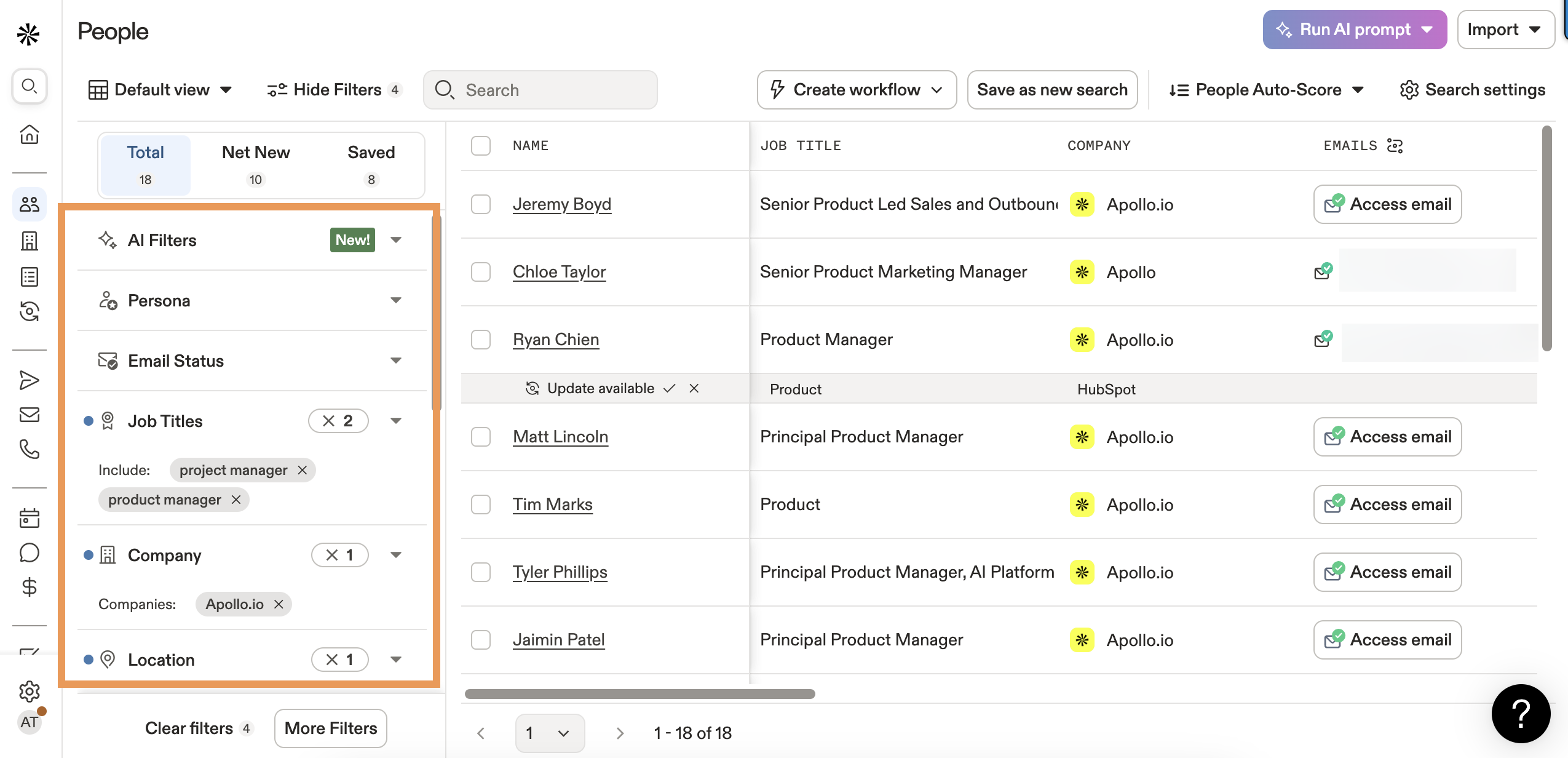
Skip this if: Email deliverability is mission-critical. A 65-80% accuracy range means you could be bouncing 20-35% of your outreach, which will damage your domain over time.
Snyk's 50 AEs dropped their bounce rate from 35-40% to under 5% and grew AE-sourced pipeline 180%. Stack Optimize built a $1M agency with sub-3% bounce rates. The difference wasn't strategy - it was switching to data refreshed every 7 days, not every 6 weeks.
Get 75 verified emails free and see the accuracy gap for yourself.
Enterprise Sales Intelligence
ZoomInfo - The $15K Question
ZoomInfo starts at $14,000-$25,000/year with annual contracts required. Enterprise packages run $30K+. The #1 complaint on Reddit? Auto-renewal clauses and cancellation difficulty. That's the reality you need to weigh before anything else.
The case for it: if you're a 200+ person sales org, the US database depth is hard to beat, and the platform breadth (chat, intent, workflow automation) is useful at scale. Accuracy commonly lands in the 75-85% range - solid, but you're paying a premium for platform features, not data quality. The case against it: for teams under 50 reps, you're buying a Swiss Army knife to open envelopes. Most mid-market teams we've talked to use 30% of ZoomInfo's features and wish they could unbundle.
Cognism
Cognism is the play for EMEA-heavy prospecting. Its packages emphasize GDPR compliance, DNC list cleaning, and phone-verified mobile numbers - what they call "Diamond Data." Pricing runs ~$1,000/user/year, undercutting ZoomInfo significantly. You get 25 free leads to test data quality before committing. The "unrestricted access" framing is subject to fair-use policy, so don't expect to export your entire TAM on day one.
Workflow Orchestration & Outreach
Clay
Clay is a practitioner favorite on Reddit right now, and for good reason. Think of it as the Zapier of prospecting - you build custom enrichment workflows that pull data from dozens of sources, score leads, and push them to your sequencer. Free tier available, paid plans from $149/mo.
The power is real, but so is the learning curve. Clay requires technical comfort; it's not a tool you hand to a new SDR on day one. Trigify is another practitioner favorite for signal-based triggers, often paired with Clay workflows. The best Clay setups we've seen use a verified data source for emails and mobiles, then route enriched leads to a sequencer for outreach.
If you want a more tactical walkthrough, see Clay setups that work in production.
Instantly
Instantly is purpose-built for cold email at scale. The Growth plan runs $37/mo, Hypergrowth is $97/mo, and their Lead Finder add-on starts at $47/mo. The core value is inbox rotation and deliverability optimization - features that matter more than most teams realize.
If your outreach volume exceeds 500 emails/day, Instantly's infrastructure handles warmup and rotation better than most sequencers. It's not a data tool, though. Pair it with a verified data source.
CRM & Inbound
HubSpot
HubSpot is the default CRM for teams that want inbound and pipeline management in one platform. The free CRM is functional - most startups can run on it for 6-12 months before needing paid features. Paid plans start around $18/month, and Sales Hub Starter commonly starts around $49/user/mo.
Nurtured leads produce 47% higher order values than non-nurtured ones, which is exactly why HubSpot's workflow automation earns its price. The integration ecosystem is massive, which matters when you're connecting 5-7 tools. HubSpot isn't a prospecting tool, though - it captures and manages leads, it doesn't find them. Pair it with a data platform for outbound. Salesforce ($25/user/mo and up) is the enterprise alternative with more power and a steeper learning curve.
If you're still deciding, compare examples of a CRM and what each is best at.
Conversational & Visitor ID
| Tool | Best For | Starting Price |
|---|---|---|
| Intercom | Live chat + AI bot | $29/user/mo |
| Tidio | SMB chatbot | Free / from $25/user/mo |
| Leadfeeder | Visitor identification | EUR99/mo (14-day trial) |
Intercom is a strong pick for live chat plus AI-assisted qualification on high-traffic sites. Tidio is the budget-friendly chatbot for SMBs who want automated lead capture without enterprise pricing. Leadfeeder identifies companies visiting your site and feeds them into your CRM - a different motion than outbound, but valuable for intent-based follow-up.
Skip Leadfeeder if your site traffic is under ~5,000 monthly visits. You won't generate enough company-level signals to justify the spend.
Data Accuracy, Side by Side
This is the table that matters most. A tool with 98% accuracy at $39/month beats a tool with 70% accuracy at $99/month - because bounces destroy your domain reputation and every invalid email is a wasted touch. If you read lead gen tool reviews on G2 or Reddit, data accuracy is the single most cited factor in satisfaction or regret.
For deeper benchmarks and fixes, see email bounce rate and what “good” actually looks like in 2026.
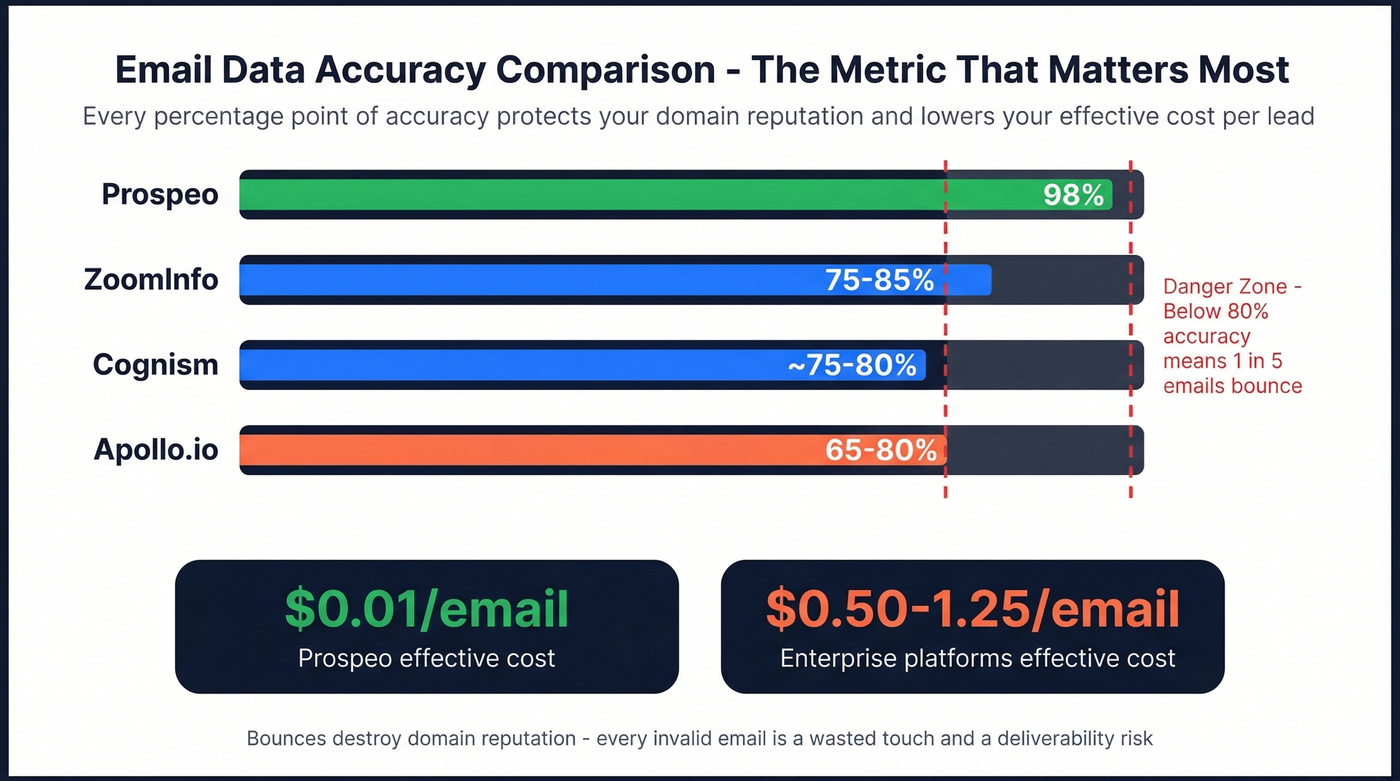
| Email accuracy | 98% | 75-85% | 65-80% | Diamond Data (phone-verified subset) |
| Mobile pickup rate | 30% | 12.5% | 11% | Not published |
| Data refresh cycle | 7 days | ~6 weeks | ~6 weeks | Not published |
| Verification method | 5-step proprietary | Multi-source | Multi-source | Diamond Data |

The refresh cycle is underrated. With the average B2B buying cycle running 10.1 months, a 6-week data refresh means your records go stale 6-7 times per deal cycle. A 7-day refresh catches job changes, new hires, and role shifts weeks before competitors do.
What It Costs Per Lead
Sticker price is misleading. Here's what you're actually paying per usable lead when you factor in accuracy and bounces - the pricing breakdown that matters for any lead generation software comparison.
| Tool | Nominal Cost/Lead | Accuracy | Effective Cost/Lead | Contract |
|---|---|---|---|---|
| Apollo | ~$0.005 | 65-80% | ~$0.01-0.02 | Monthly |
| ZoomInfo | ~$1.00 | 75-85% | ~$1.20-1.35 | Annual |
| Cognism | ~$0.08-0.15 | Not published | ~$0.10-0.18 | Annual |
| 6sense | ~$2.50+ | N/A (intent platform) | ~$3.00+ | Annual ($60K+/yr) |
Look: cheap data that bounces 20-35% isn't cheap when you factor in domain damage. One bad send to a spam trap can land your domain on a blocklist that takes weeks to recover from. The average cost per lead varies wildly by industry, but the cost of a burned domain is universal.
If you want the full deliverability playbook, start with email deliverability and spam trap removal.
How to Build Your Stack
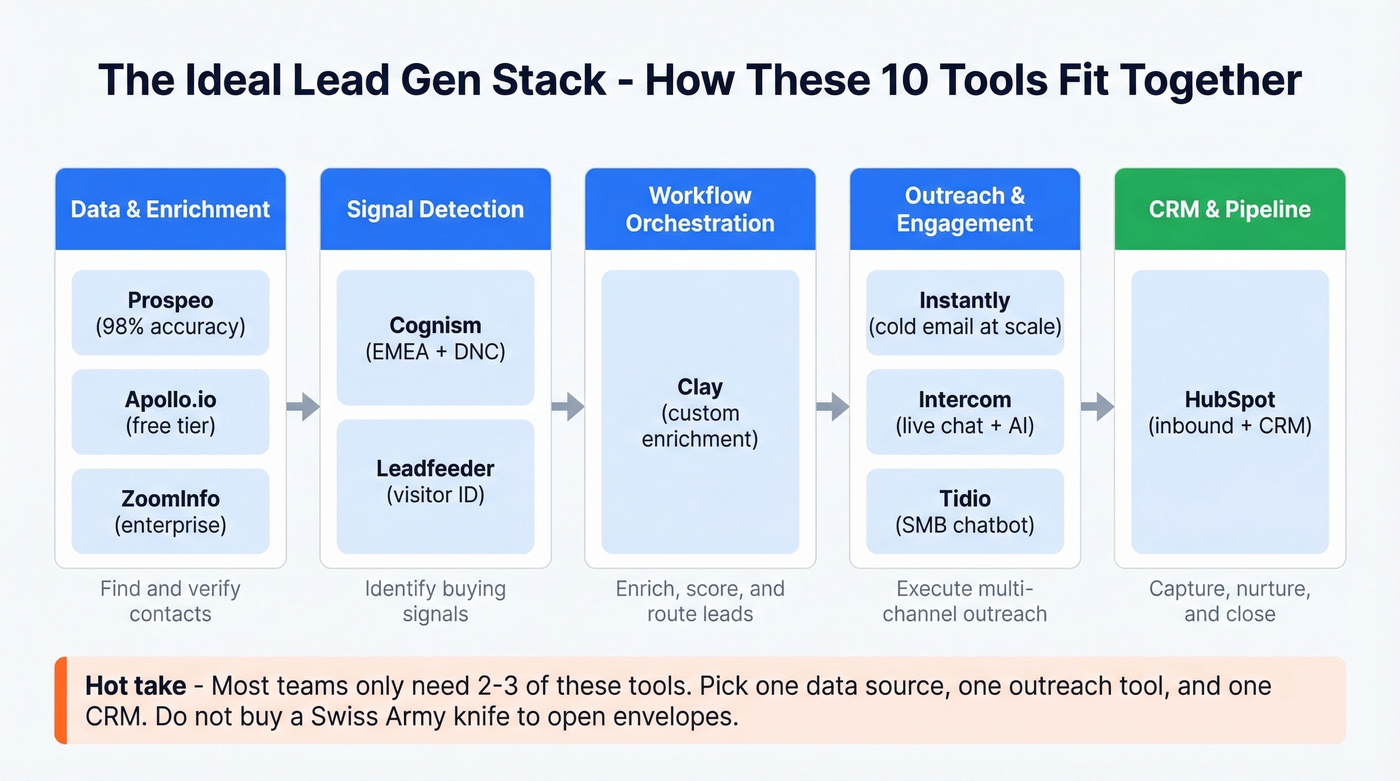
You need 2-3 tools, not 15. Let's break this down by team size.
SMB outbound stack: Prospeo (data + verification) -> Instantly (cold email) -> HubSpot Free (CRM). Total: under $150/mo. You get verified data, deliverability-optimized sending, and a functional pipeline. This is the stack we've seen work best for teams under 10 reps.
Mid-market with enrichment workflows: A verified data source + Clay (enrichment orchestration) -> your sequencer of choice -> Salesforce or HubSpot. Clay pulls from verified databases, enriches with custom signals, and routes leads automatically. Budget: $300-600/mo depending on volume.
Enterprise: ZoomInfo (platform) -> Salesforce (CRM) -> Outreach or Salesloft (sequencing). Budget: $40K+/year. This is the stack for 100+ rep orgs that need everything centralized.
Your first 30 days with any new stack: Week 1, validate data quality - send 200 emails and measure bounce rate. Week 2, launch first sequences with your best-performing segments. Weeks 3-4, iterate on messaging, tighten targeting based on reply rates, and cut any tool that isn't pulling its weight. If bounce rates stay above 5% after week 1, your data source is the problem, not your copy.
The winning vendor lands on the buyer's Day One shortlist 95% of the time. That means your data tool needs to surface buyers before they're in-market - which is why identifying buying signals and intent based segmentation matter more than raw database size.
FAQ
What should I look for in a lead generation software comparison?
Data accuracy, total cost of ownership (not just sticker price), integration depth with your existing stack, and contract flexibility. Effective cost-per-lead matters more than subscription price - any credible comparison will show you that math, not just feature checklists.
How many lead gen tools does a typical B2B team need?
Two to three: a data/prospecting tool, an outreach platform, and a CRM. Trying to consolidate everything into one platform usually means doing nothing well. SMB teams can run a full stack for under $150/mo.
Which tool has the most accurate email data?
Prospeo delivers 98% email accuracy with a 7-day refresh cycle. Apollo sits in the 65-80% range, ZoomInfo 75-85%. Every percentage point of bounce rate erodes your sender reputation - and domain recovery from blocklisting takes weeks.
Is there a free lead generation tool worth using?
Apollo's free tier (60 mobile + 120 email credits/month), Prospeo's free plan (75 verified emails/month), and HubSpot's free CRM are all functional starting points. Validate data quality on free tiers before committing budget to paid plans.