

Marketing and Sales Alignment: The Operational Playbook Nobody Gave You
It's Monday morning. Marketing delivered 200 MQLs last week. Sales worked maybe 30 of them. The other 170 vanished into what practitioners on r/marketing call "the gap between MQL and closed-won where nobody knows what happened."
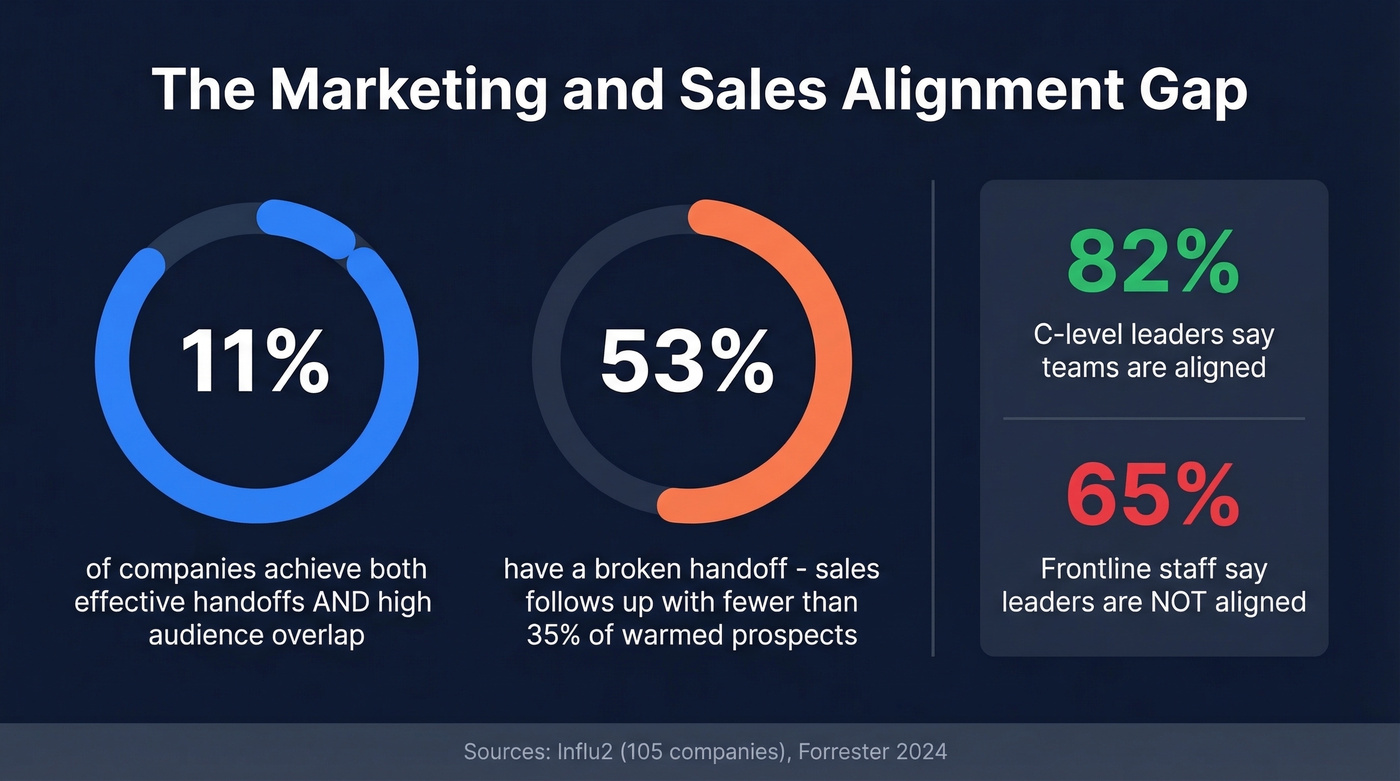
Here's the stat that should worry you: only 11% of companies achieve both effective handoffs and high audience overlap between their revenue teams, according to an Influ2 study of 105 companies. The other 89% are bleeding pipeline. Marketing and sales alignment isn't a culture problem - it's an engineering problem. What follows is the operational playbook that fixes it.
What You Need (Quick Version)
If you're building alignment from scratch, start here:
- Shared MQL/SQL definitions - written together by both teams, reviewed quarterly
- A timed SLA - 8-hour accept/reject window, no exceptions
- One shared dashboard - MQL-to-SQL flow, SLA compliance, pipeline by source
The prerequisite nobody mentions: if your contact data is bad, none of this matters. Sales won't trust leads that bounce 30% of the time, no matter how well you define them. (If you’re diagnosing bounces, see bounce rates and deliverability.)
What Does Alignment Actually Mean?
At its core, aligning marketing and sales means both teams operate against shared definitions, shared data, and shared accountability for revenue outcomes. It's not about friendly lunches or Slack channels. It's about engineering the handoff so that every lead marketing generates is one sales actually wants to work.
Most companies think they're aligned. They're not.
That Influ2 study measured alignment using two concrete metrics: handoff rates (what percentage of marketing-engaged prospects sales actually contacts) and audience overlap (how much of sales' target list marketing also reaches). 53% of companies have a broken handoff - sales follows up with fewer than 35% of the prospects marketing has already warmed up.
The perception gap makes it worse. A Forrester report from late 2024 found that 82% of C-level B2B professionals say their product, sales, and marketing teams are aligned. Meanwhile, 65% of the sales and marketing professionals actually doing the work say there's a lack of alignment between their leaders. Leadership thinks the problem is solved because the org chart looks right. The people in the trenches know better.
Why Alignment Actually Breaks
The blame cycle - "Marketing says we delivered X leads, sales says leads are garbage" - is the symptom everyone sees. The root causes run deeper.
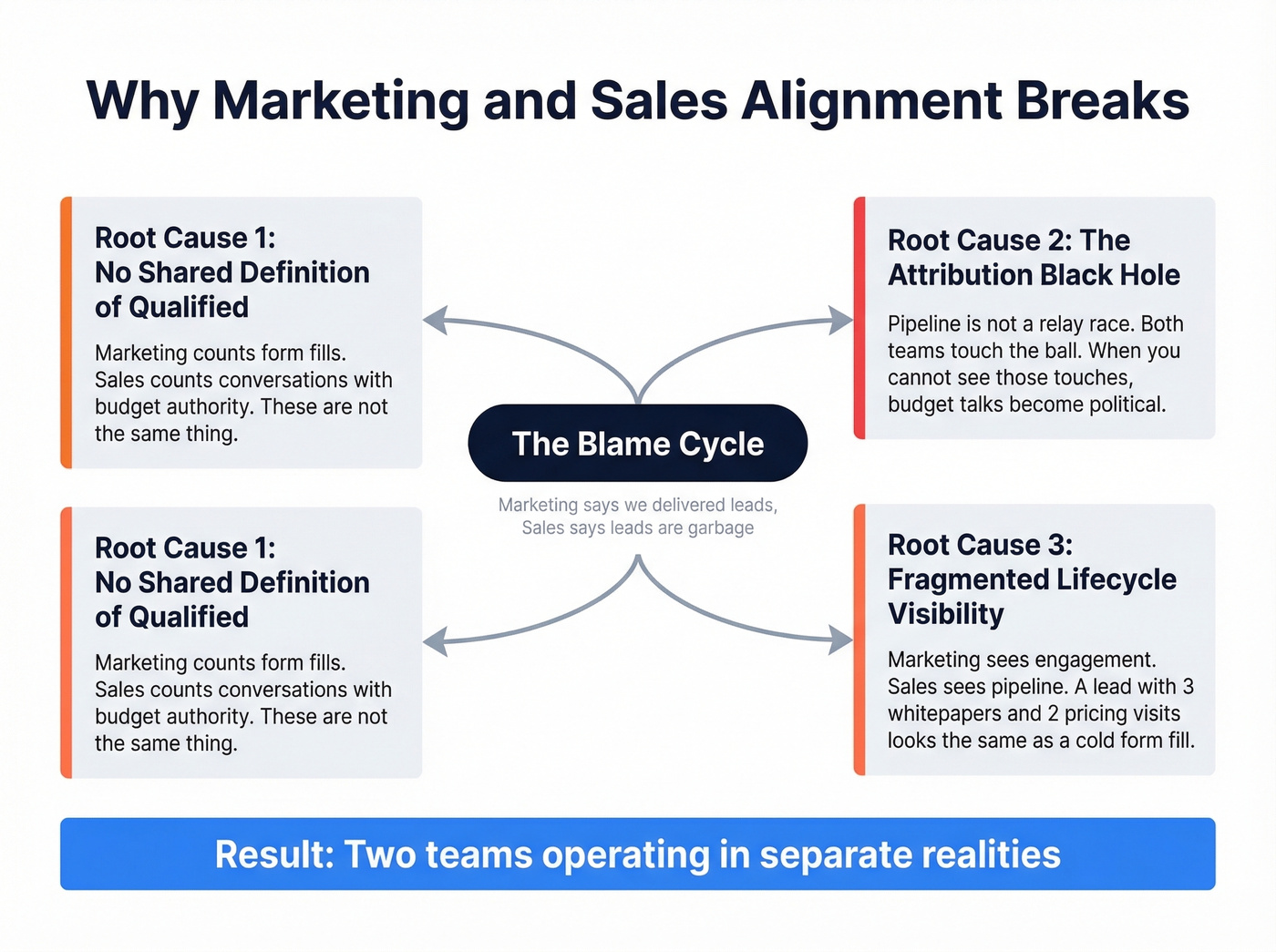
Root cause #1: No shared definition of "qualified." Marketing counts form fills. Sales counts conversations with budget authority. These aren't the same thing, and the gap between them is where trust erodes. Marketing hits their MQL number and celebrates. Sales ignores half those MQLs because they don't meet the bar for a real conversation. (A practical way to formalize this is an ICP template plus a lightweight lead scoring rubric.)
Root cause #2: The attribution black hole. Even with HubSpot and Salesforce in place, most teams can't trace a lead from first touch through closed-won. Demandbase frames this well: stop thinking of pipeline as a relay race where marketing passes the baton to sales. It's a soccer match - both teams touch the ball throughout the game. When you can't see those touches, every budget conversation becomes political negotiation instead of data-driven decision-making. (If you’re rebuilding measurement, start with funnel metrics.)
Root cause #3: Fragmented lifecycle visibility. Marketing sees engagement data. Sales sees pipeline data. A lead that downloaded three whitepapers, attended a webinar, and visited the pricing page twice looks very different from a cold form fill - but if sales can't see that engagement history in the CRM, every lead looks the same. This fragmentation is where the two teams diverge into separate realities, and it's often the hardest gap to close because it requires actual systems integration, not just process changes. (This is also where a clean lead generation workflow helps.)

Your SLA is only as good as your data. When 35% of emails bounce, sales ignores MQLs and alignment collapses. Prospeo delivers 98% verified email accuracy with a 7-day refresh cycle - so every lead marketing hands off is one sales can actually reach.
Stop bleeding pipeline to bad contact data.
Build Your Alignment Playbook
Define MQL, SAL, and SQL - Together
The most important thing about these definitions isn't what they say - it's that both teams wrote them together.
An MQL answers one question: "Should I call this person?" A Sales Accepted Lead (SAL) is the gate where a rep says "yes, I'll work this" or "no, send it back to nurture." An SQL is sales-validated: the rep has confirmed budget, authority, need, or timeline through an actual conversation. Get both teams in a room, write the definitions on a whiteboard, and don't leave until everyone signs off.
Set a Timed SLA
An SLA without timing is a suggestion. Here's a template:
| Stage | Timing | Owner | If Missed |
|---|---|---|---|
| MQL to SAL decision | 8 hours | Assigned rep | Auto-recycle to marketing nurture |
| SAL to SQL qualification | 4 business days | Assigned rep | Return to nurture with context |
| First outreach after accept | 24 hours | Assigned rep | Manager alert + SLA violation flag |
| Stalled lead recycling | Automatic | Marketing ops | Re-enter nurture sequence |
If you don't know your lead-to-revenue conversion rate, start with 1.5% and adjust. That baseline lets you back into the volume math: how many MQLs you need, how many reps must work them, and what SLA compliance rate keeps the pipeline healthy. (Benchmarks help - compare against average B2B lead conversion rate.)
The SLA creates accountability visible to both sides. When marketing sees 40% of MQLs rejected, they tighten targeting. When sales sees rejected leads recycled (not wasted), they give honest feedback instead of silently ignoring leads. This feedback loop is the engine that makes the whole system self-correcting.
Build a Simple Scoring Model
Start simple. A demo request is worth 100 points. A webinar registration is 30. A pricing page visit is 15. The exact values matter less than the rank order: demo > webinar > blog visit.
Set your MQL threshold based on sales capacity, not a formula from a blog post. If your reps can handle 50 leads a week, set the threshold so roughly 50 leads cross it. Adjust monthly based on sales feedback.
One non-negotiable rule: if someone asks to talk to sales - fills out a "contact us" form, requests a demo, starts a trial - skip the score entirely. Send them straight to a rep. No lead scoring model should stand between a buyer raising their hand and a human responding.
Share One Dashboard
One dashboard. Not marketing's dashboard and sales' dashboard. One.
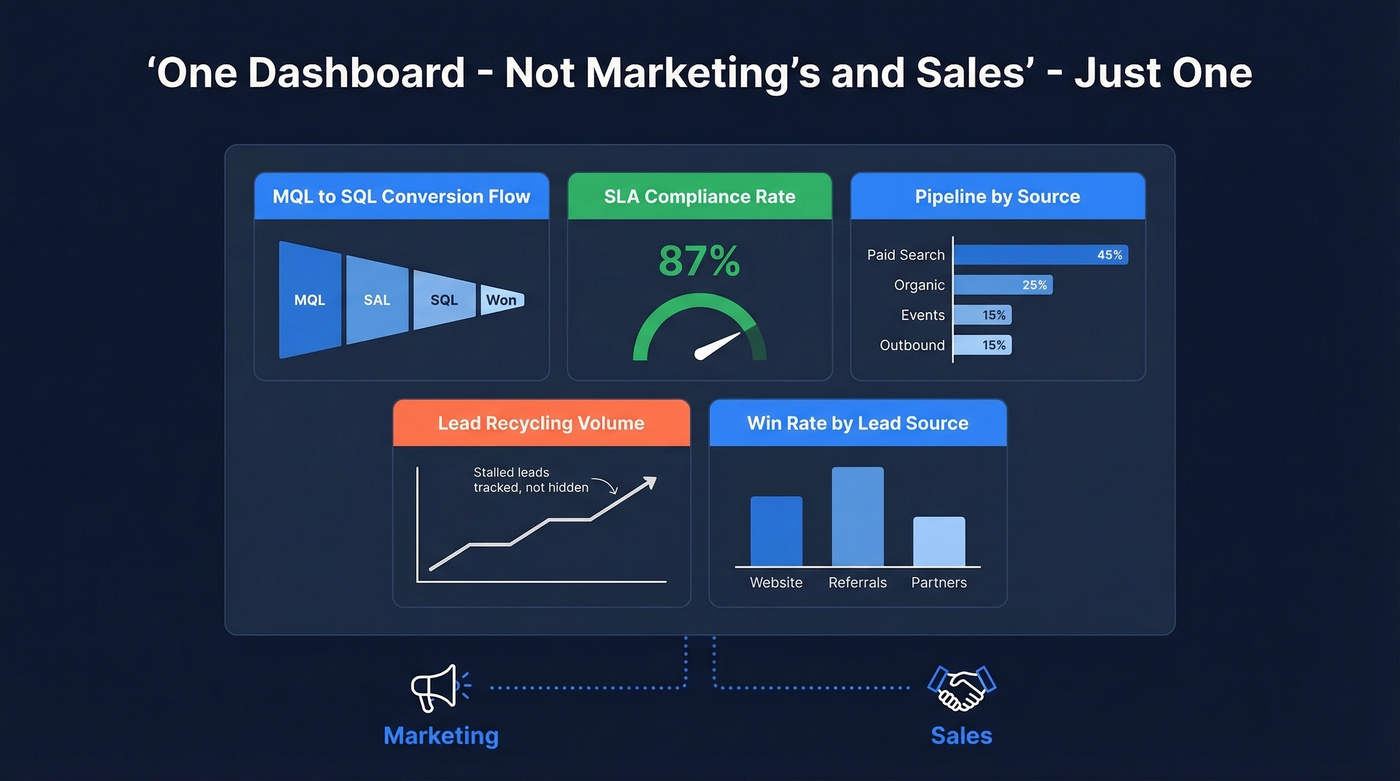
Five views, built in whatever CRM you use:
- MQL-to-SQL conversion flow so both teams see the funnel
- SLA compliance rate so timing commitments are visible
- Pipeline created by source so marketing sees which channels produce revenue
- Lead recycling volume so stalled leads are tracked, not hidden
- Win rate by lead source so both teams optimize toward what closes
In our experience, teams that add AI-driven lead routing on top of this dashboard - automatically assigning leads based on rep capacity, territory, and historical win rates - improve SLA compliance fast because leads stop sitting unassigned. (If you’re standardizing rep workflows, borrow from sales activities examples.)
Six Mistakes That Kill Alignment
| Mistake | What You'll See | The Fix |
|---|---|---|
| Fighting over KPIs | Separate scorecards, blame cycles | One journey-wide scorecard: MQL quality, SQL acceptance, pipeline, win rate |
| No shared lead definition | Marketing celebrates MQL volume, sales ignores half | Joint 2-hour definition workshop, revisited quarterly |
| No sales feedback loop | Marketing creates content in a vacuum | Monthly 45-minute intel briefing: objections, useful assets, content gaps, lost-deal patterns |
| Tech that blocks cooperation | Reps won't open a second tool to understand leads | Map marketing events directly into CRM: lead score, last touch, intent signals |
| Misaligned incentives | Marketing optimizes for volume over quality | Balanced scorecard: demo requests, SQL acceptance rate, influenced pipeline, content utilization |
| Ignoring data quality | 35% bounce rates, sales stops trusting all marketing leads | Verified contact data with regular refresh cycles |
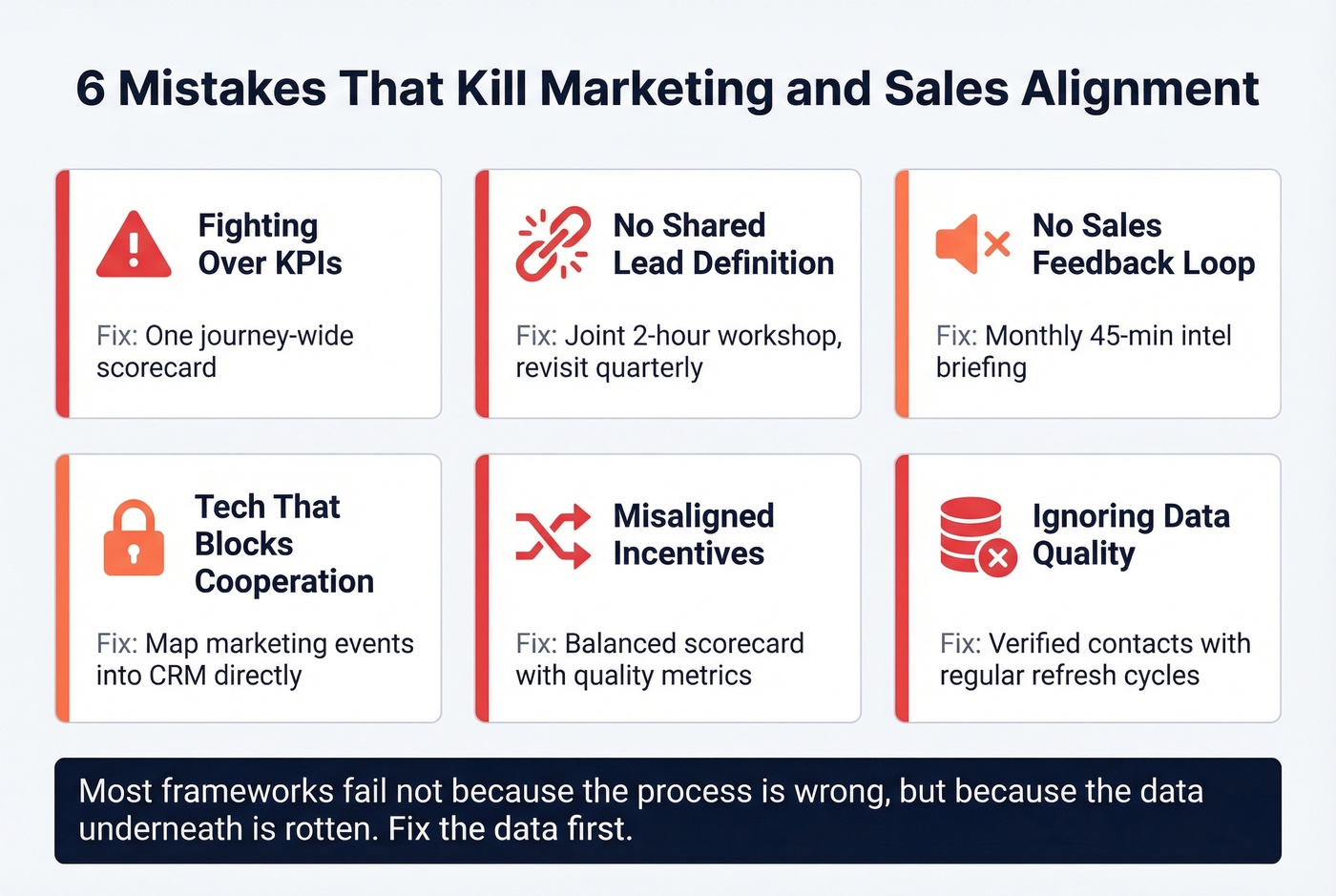
Here's the thing: most alignment frameworks fail not because the process is wrong, but because the data underneath is rotten. We've watched teams spend months perfecting SLAs and scoring models while ignoring the fact that a third of their emails bounce. Fix the data first. Everything else gets easier.
The Data Quality Foundation
When Snyk's 50-person AE team was bouncing 35-40% of their emails, no alignment playbook could save them. After switching to Prospeo for CRM enrichment, bounce rates dropped below 5%, and AE-sourced pipeline jumped 180%. Meritt saw similar results - pipeline tripled from $100K to $300K per week. Clean data doesn't just improve deliverability; it rebuilds the trust between marketing and sales that bad data destroyed. (If you’re evaluating vendors, start with data enrichment services.)
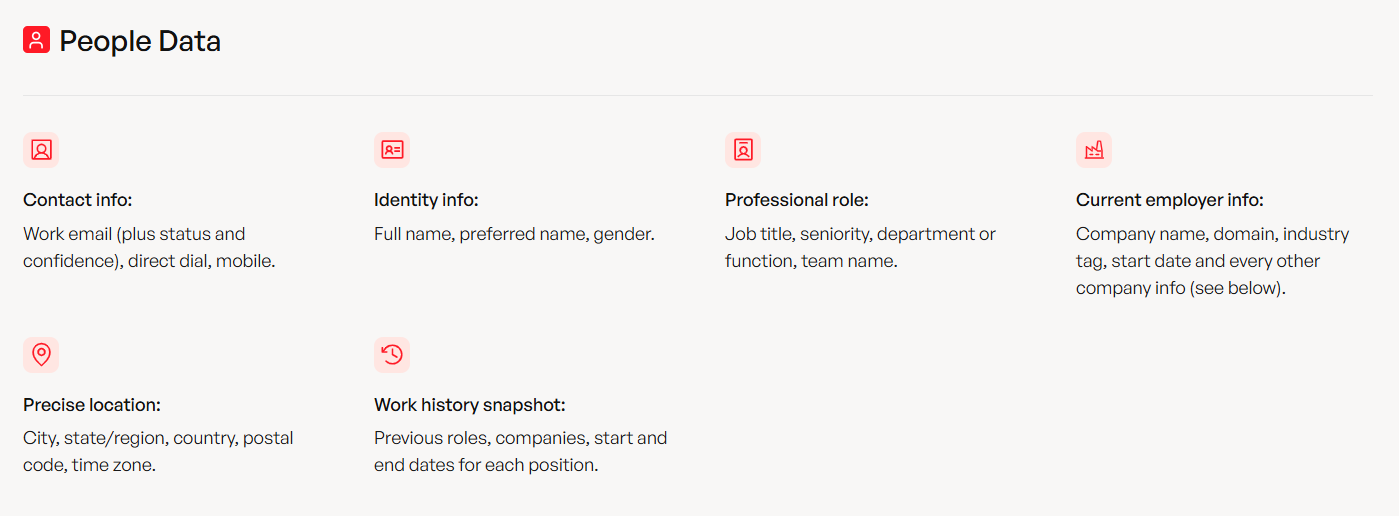
A 98% email accuracy rate and a 7-day refresh cycle mean the contact info that was valid last week is still valid this week - compared to the 6-week industry average that lets data rot between updates. When your data is clean, sales trusts the leads. When sales trusts the leads, they work them. The alignment flywheel actually spins.
Fragmented lifecycle visibility kills alignment. Prospeo enriches every CRM record with 50+ data points - verified emails, direct dials, intent signals, job changes - so sales and marketing finally see the same lead, not two different realities.
Give both teams one source of truth at $0.01 per lead.
The Case for RevOps
If alignment keeps breaking despite good process, the problem is structural. Sales ops, marketing ops, and CS ops in separate reporting lines will always optimize for their own function first. That's not a character flaw - it's an incentive problem. (If you’re hiring for it, see what a RevOps manager actually owns.)
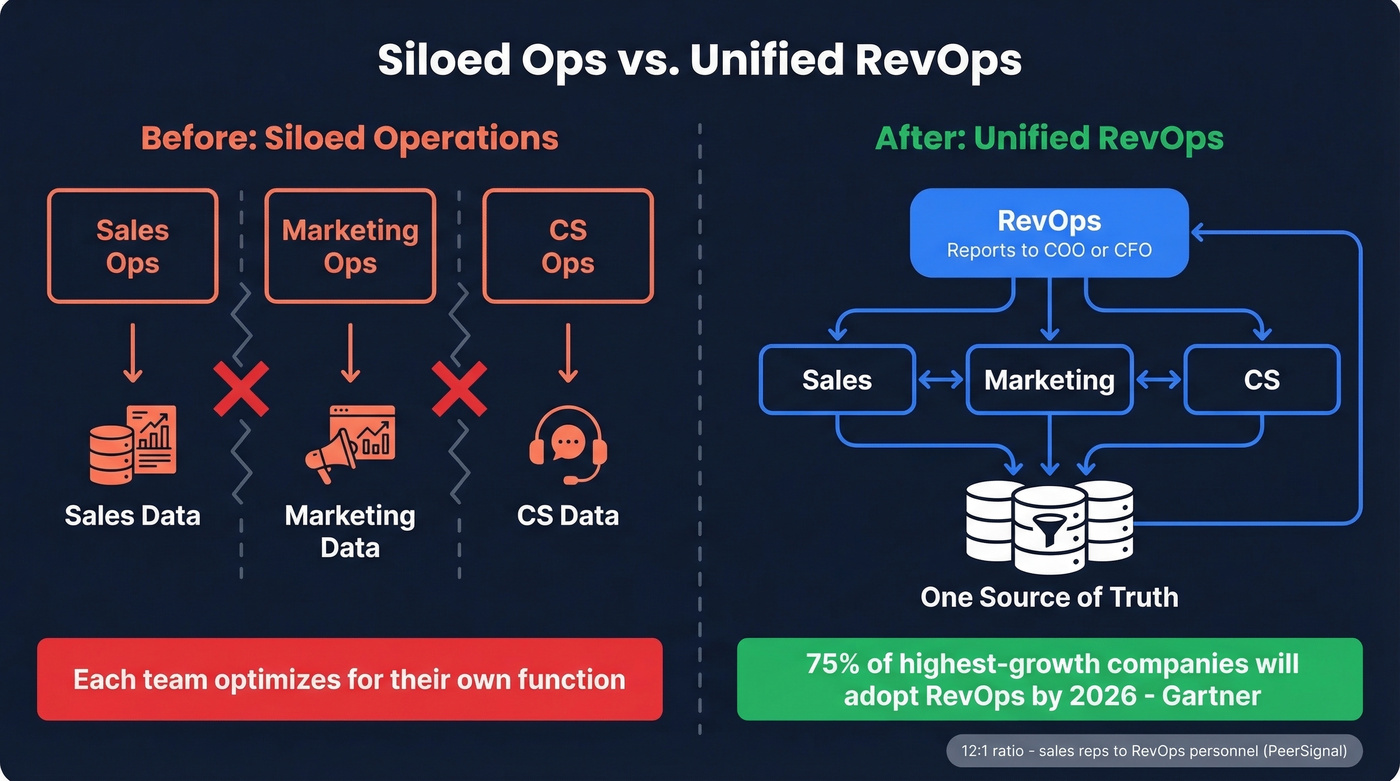
RevOps unifies the operational layer across the entire customer journey. Gartner projects that by 2026, 75% of the highest-growth companies will have adopted a RevOps model. The shift is already visible: 68% of sales ops hours now go to non-sales functions, up from 39% in 2019. They're already doing RevOps work without the title or mandate.
RevOps should report to the COO or CFO, not the VP of Sales. The moment RevOps reports into one function, it becomes that function's ops team with a fancier name. The industry benchmark is roughly 12:1 sales reps to RevOps personnel, per a PeerSignal analysis of 2,500 B2B SaaS companies. And be careful about rebranding Sales Ops as RevOps and forcing Marketing Ops underneath - that's a recipe for disaster if marketing's operational needs become secondary.
FAQ
What's the difference between alignment and RevOps?
Marketing and sales alignment is the goal - shared outcomes, definitions, and accountability. RevOps is one structural approach to achieving it, unifying operations across marketing, sales, and CS under a single reporting line. You can have alignment without RevOps, but RevOps makes it harder to lose.
How long does it take to see results?
Expect 30-90 days to stabilize shared definitions, SLAs, and reporting. Conversion improvements typically show within one to two quarters. The timeline compresses significantly if you start with clean, verified contact data and a functioning CRM - teams that eliminate the bounce-rate trust gap from day one cut that ramp considerably.
What metrics should both teams share?
MQL-to-SQL conversion rate, SLA compliance, pipeline by source, win rate by lead source, and cycle time. These five give both teams full-journey visibility without dashboard overload. Track them weekly and review trends monthly.
Who should own the SLA?
RevOps, if you have it. Otherwise, a jointly appointed ops person who reports compliance to both VPs weekly. The SLA dies the moment one side owns it unilaterally - neutral ownership is non-negotiable.
How does bad contact data affect alignment?
Bad data is the silent alignment killer. When emails bounce at 30%+ rates, sales stops trusting marketing-sourced leads entirely - regardless of qualification. Verified data with a weekly refresh cycle eliminates this friction so the conversation stays focused on lead quality and fit, not data quality.
Let's be honest - the playbook is straightforward: shared definitions, timed SLAs, one dashboard, clean data. Marketing and sales alignment isn't a mystery. The hard part is getting two teams to commit to the same system and hold each other accountable. Start with the SLA table above. Implement it this week. Everything else follows.