

What Is an Open Opportunity? Sales Pipeline Guide 2026
It's the last week of the quarter. Your CRM says $2M in open opportunities. Your gut says $800K will actually close.
That gap between what the pipeline promises and what it delivers is the single most expensive lie in B2B sales - and it starts with how teams define, manage, and generate each open opportunity. We've watched this play out across dozens of sales orgs, and the pattern is always the same: inflated pipeline, panicked forecasts, missed targets. This piece covers what the term actually means, why most deals go stale, and how to fill your pipeline with ones that convert.
The Short Version
An open opportunity is any deal in your CRM that hasn't been marked closed-won or closed-lost. It's still in play. Three things matter:
- Definition: A qualified deal with an estimated value, expected close date, and an assigned pipeline stage.
- The problem: Most active deals go stale because reps don't schedule next steps or engage the right stakeholders.
- The fix: Tighter pipeline hygiene plus better top-of-funnel data so reps spend time selling, not searching.
What "Open Opportunity" Actually Means in Your CRM
In CRM terms - whether you're in Salesforce, HubSpot, or Pipedrive - a deal moves through a series of stages: discovery, qualification, proposal, negotiation. An open opportunity sits in one of those active stages. It hasn't been won. It hasn't been lost. It's somewhere in between, and that ambiguity is where forecasting breaks down.
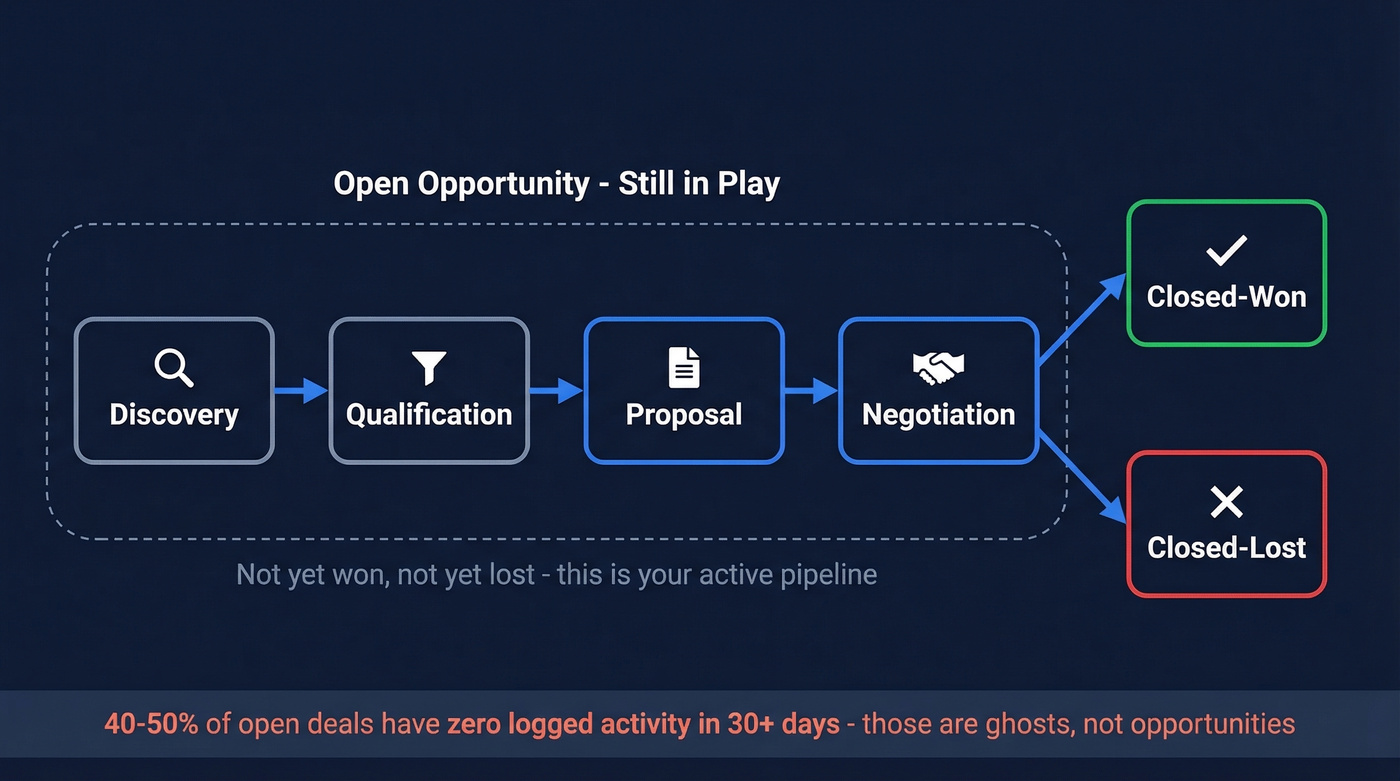
Closed-won deals are revenue. Closed-lost deals are lessons. Open pipeline deals are promises - and promises don't pay salaries. In our experience, 40-50% of "open" deals in a typical CRM haven't had a logged activity in 30+ days. Those aren't opportunities. They're ghosts.

Single-threaded deals die in committee. Prospeo's 300M+ profiles and 30+ search filters let you pull verified emails and direct dials for every stakeholder on the buying committee - champion, CFO, and technical evaluator - in seconds.
Multi-thread every open opportunity with contacts that actually connect.
Why Deals Go Stale
Let's be honest: a huge chunk of open deals in most CRMs are already dead. Reps just haven't admitted it yet. Ask any r/sales regular and they'll tell you the same thing - the pipeline is a graveyard of "maybe next quarter" deals that never come back.
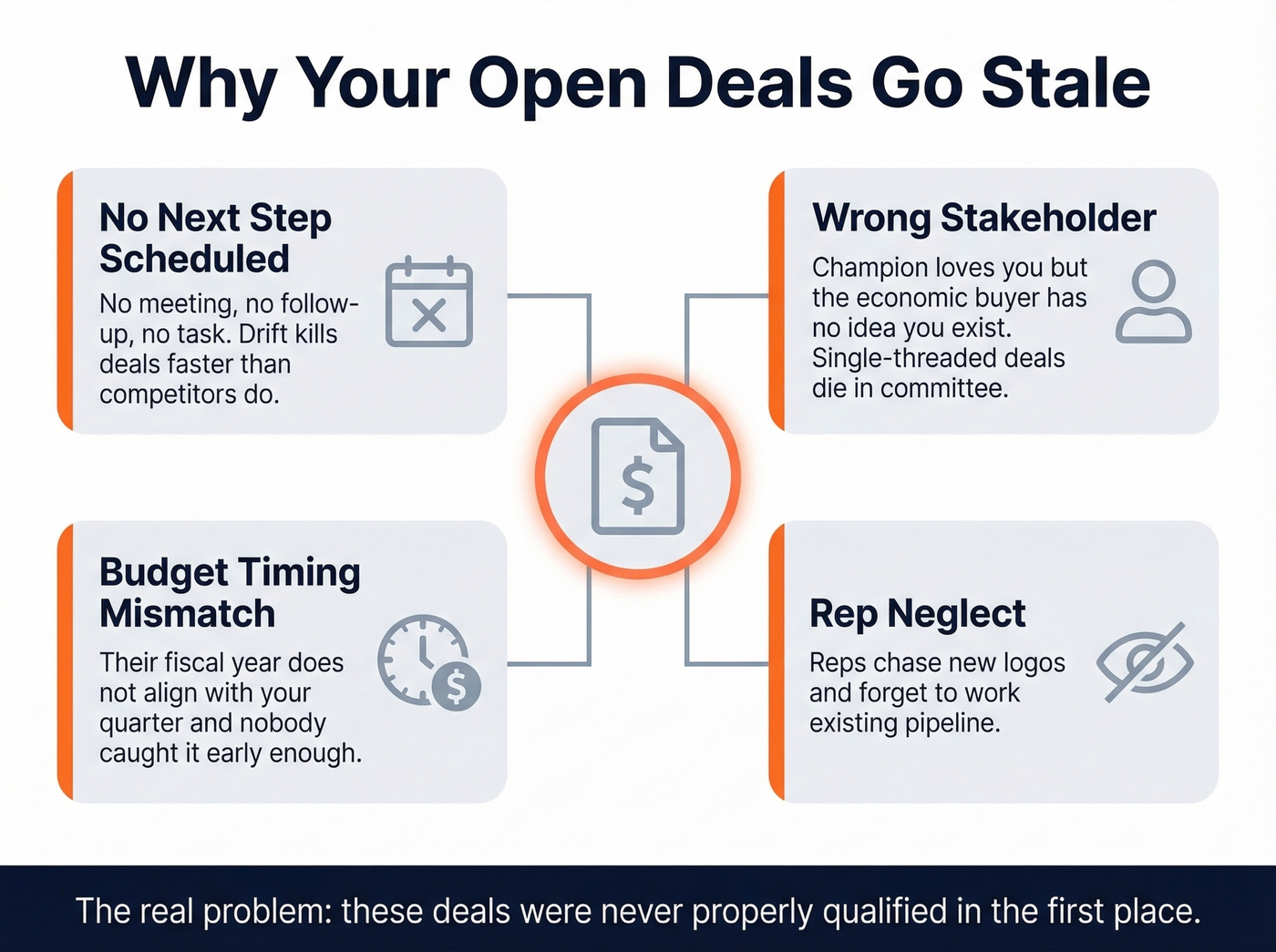
The usual culprits:
- No next step scheduled. No meeting, no follow-up, no task - the deal is drifting. Drift kills deals faster than competitors do. (If you need copy you can reuse, steal these follow-up templates.)
- Wrong stakeholder. The champion loves you, but the economic buyer doesn't know you exist. Single-threaded deals die in committee. (This is exactly why team selling wins in complex deals.)
- Budget timing mismatch. The prospect's fiscal year doesn't align with your quarter, and nobody surfaced that early enough.
- Rep neglect. Reps chase new logos and forget to work existing pipeline.
Here's the thing: the real problem isn't that opportunities go stale. It's that they were never properly qualified in the first place. If your active pipeline is full of deals that shouldn't be there, no amount of pipeline management will save your forecast. (For the common failure modes, see these sales pipeline challenges.)
How to Manage Open Opportunities
Pipeline hygiene isn't glamorous. But it's the difference between a forecast you trust and one you pray over.
Run weekly pipeline reviews. Not monthly. Weekly. Every rep walks through their deals, confirms next steps, and flags anything stuck. Teams that commit to this cadence see a sharp drop in stale deals within a single quarter - we've seen it happen repeatedly. (If you're tightening your process, this sales process optimization guide helps.)
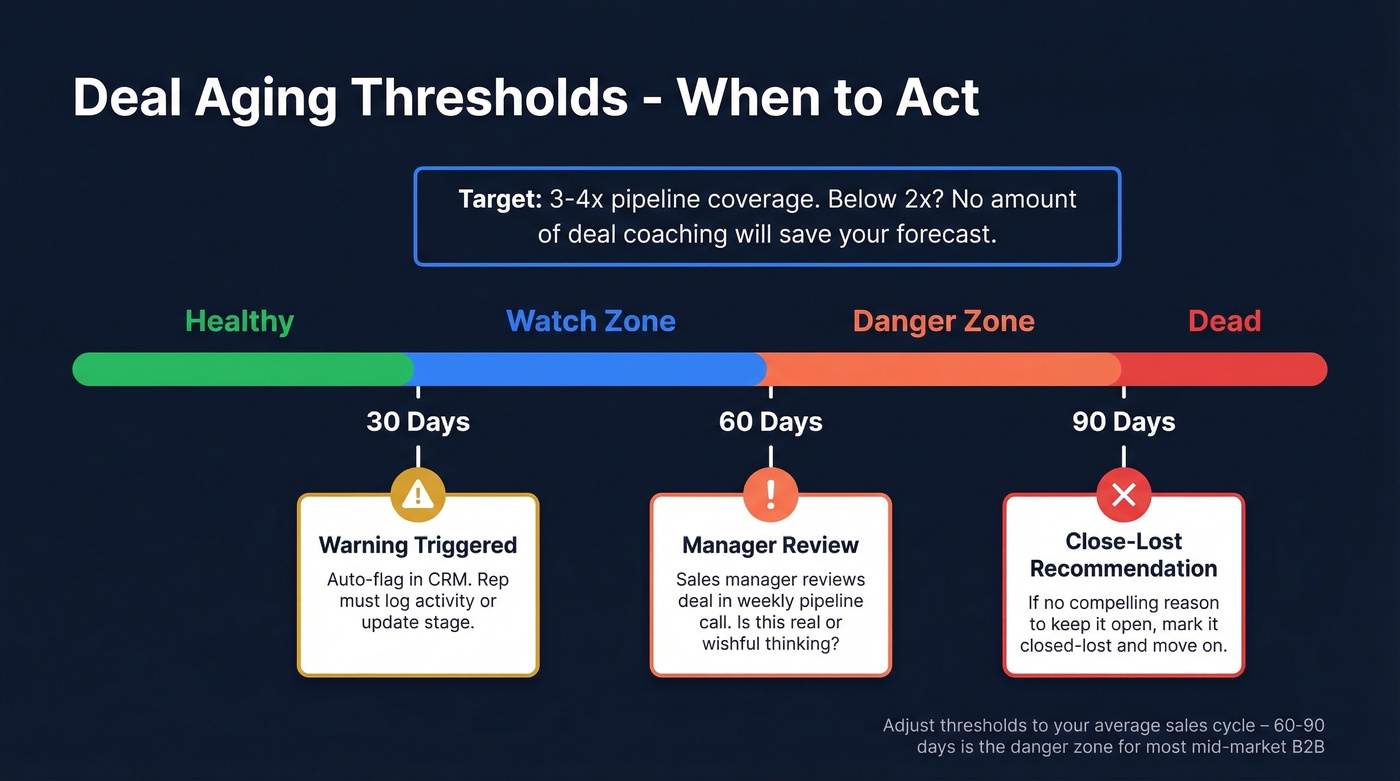
Set aging thresholds. Thirty days without activity triggers a warning. Sixty days triggers a manager review. Ninety days triggers a close-lost recommendation. Your average sales cycle should dictate these numbers, but 60-90 days is the danger zone for most mid-market B2B teams.
Aim for 3-4x pipeline coverage. If you're running at 2x your quota in open pipeline, you've got a coverage problem that no amount of deal coaching will fix. (Benchmark your ratios against these sales pipeline benchmarks.)
How many contacts per deal are you engaging? If the answer is one, that's your issue right there. Multi-threading - reaching the champion, the economic buyer, and at least one technical evaluator - is where most teams fall short. Prospeo's 300M+ profiles with 98% email accuracy and 125M+ verified mobile numbers let reps reach the CFO, not just the champion. Search by job title within a target company, pull verified contacts for three to five stakeholders, and your deal has multiple paths to yes. (If you're formalizing qualification, use a framework like MEDDIC sales qualification.)

How to Generate More Pipeline
Managing what you have matters, but not if the pipeline is thin. What actually moves the needle is top-of-funnel volume and quality working together.
Timing is everything. Reaching a prospect when they're actively researching your category is worth ten cold touches when they're not. Intent data tracking 15,000 topics via Bombora lets you prioritize accounts showing buying signals right now, instead of spraying emails at companies that won't have budget for six months. (To operationalize this, build an intent based segmentation model.)
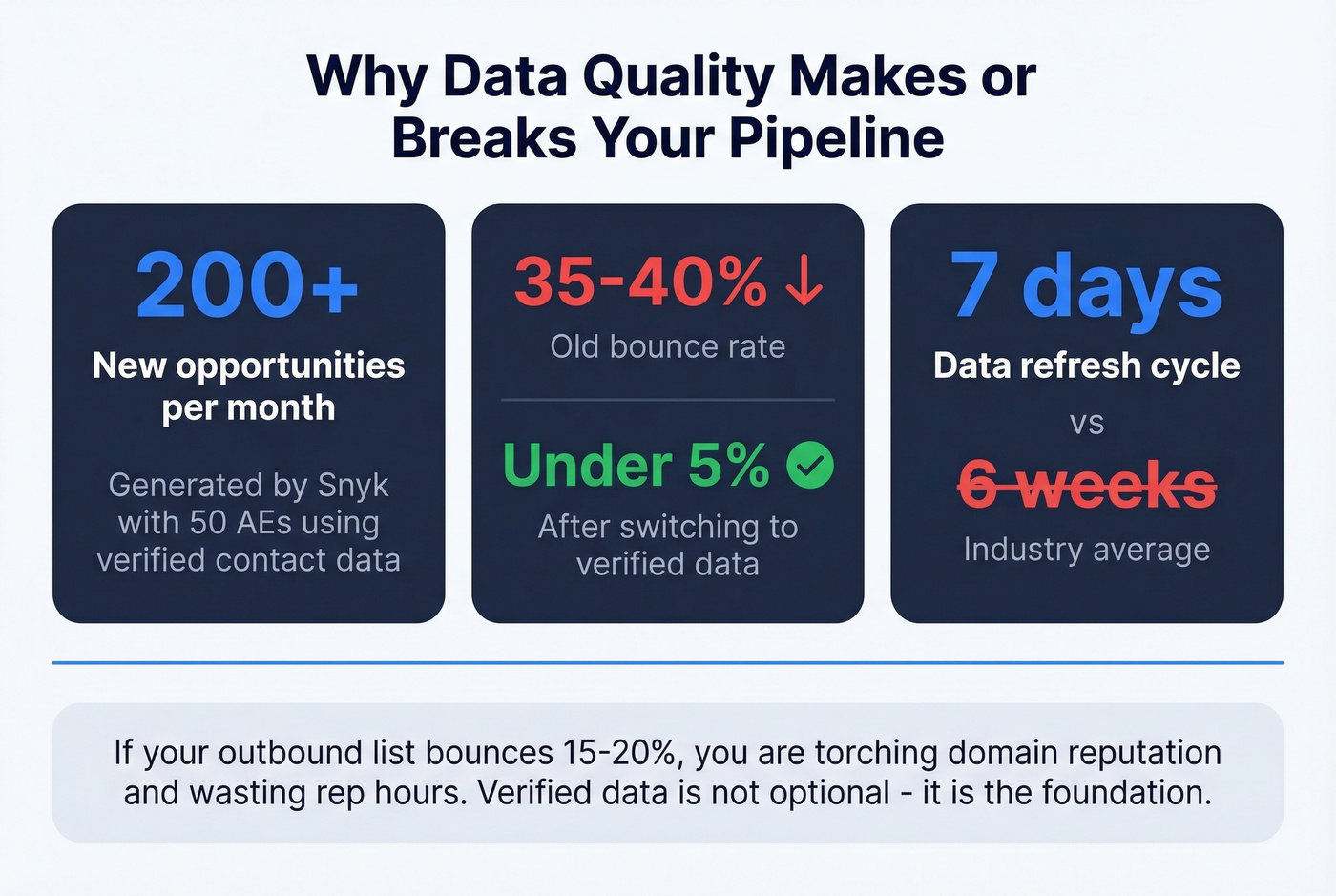
Data quality is the other half. If your outbound list bounces 15-20%, you're torching domain reputation and wasting rep hours. A 7-day data refresh cycle - versus the six-week industry average - means the contacts your reps reach out to are current. Snyk's sales team saw this firsthand: 50 AEs generating 200+ new opportunities per month after switching to verified contact data that actually connected, with bounce rates dropping from 35-40% to under 5%. (If you're diagnosing this, start with email bounce rate.)
Skip the "build a list and blast it" approach entirely if you don't have verified data underneath. I've seen too many teams burn their sending domains in a single quarter because they trusted a cheap data provider with 70% accuracy. The math doesn't work. (If you're scaling outbound, these sales prospecting techniques are the safer playbook.)
Thin pipeline and stale deals share the same root cause: reps chasing unverified contacts instead of selling. Prospeo's intent data tracks 15,000 topics so you target accounts actively buying, and a 7-day data refresh keeps bounce rates under 4% - just like Snyk's 50-AE team generating 200+ new opportunities per month.
Generate pipeline that converts at ~$0.01 per verified email.
FAQ
What is an open opportunity in a CRM?
An open opportunity is a qualified deal sitting in an active pipeline stage - it has an estimated value, an expected close date, and an assigned stage, but hasn't yet been marked closed-won or closed-lost. It's the core unit of pipeline forecasting.
How does an open opportunity differ from a lead?
A lead is an unqualified contact who hasn't been vetted for budget, authority, or need. An open opportunity is a qualified deal with an estimated dollar value, a close date, and an assigned CRM stage - it's already past initial qualification and represents real potential revenue.
How long should a deal stay open?
Flag anything open longer than 1.5x your average sales cycle - typically 60-90 days for mid-market B2B. If a deal has been sitting at twice your normal cycle length with no logged activity, it's almost certainly dead. Close it out and move on.
What's the fastest way to create more open opportunities?
Start with verified decision-maker data and layer in buyer intent signals so reps spend time selling, not searching. Tools like Prospeo surface in-market accounts with verified emails and direct dials, cutting list-building from hours to minutes.