

Sales Bottlenecks: How to Diagnose and Fix What's Stalling Your Pipeline
A SaaS founder posted on r/SaaSSales with a familiar problem: EUR37k MRR, three experienced reps, two newcomers, 400+ customers - and 50% of booked demos never happened. Pipeline looked healthy on paper. Revenue didn't move.
That gap between "pipeline looks fine" and "nothing's closing" is where sales bottlenecks live. Contract delays are one type. Here are five other common ones that stall revenue just as hard.
The Short Version
- Pull stage conversion rates from your CRM. The biggest drop-off between stages is your bottleneck.
- Calculate pipeline velocity (formula below) to put a dollar-per-day figure on the problem.
- Fix the single biggest constraint first. This is the Theory of Constraints applied to revenue - improving anything else yields marginal returns until that constraint is resolved.
Why Pipeline Bottlenecks Are Worse Than Ever
The selling environment has gotten objectively harder. Only 16% of reps hit quota in recent years, buying committees have expanded to 25 stakeholders on average (up from 16 in 2017), and the average B2B sales cycle has stretched to 6.5 months compared to 4.9 months in 2019. That's a lot of compounding friction.
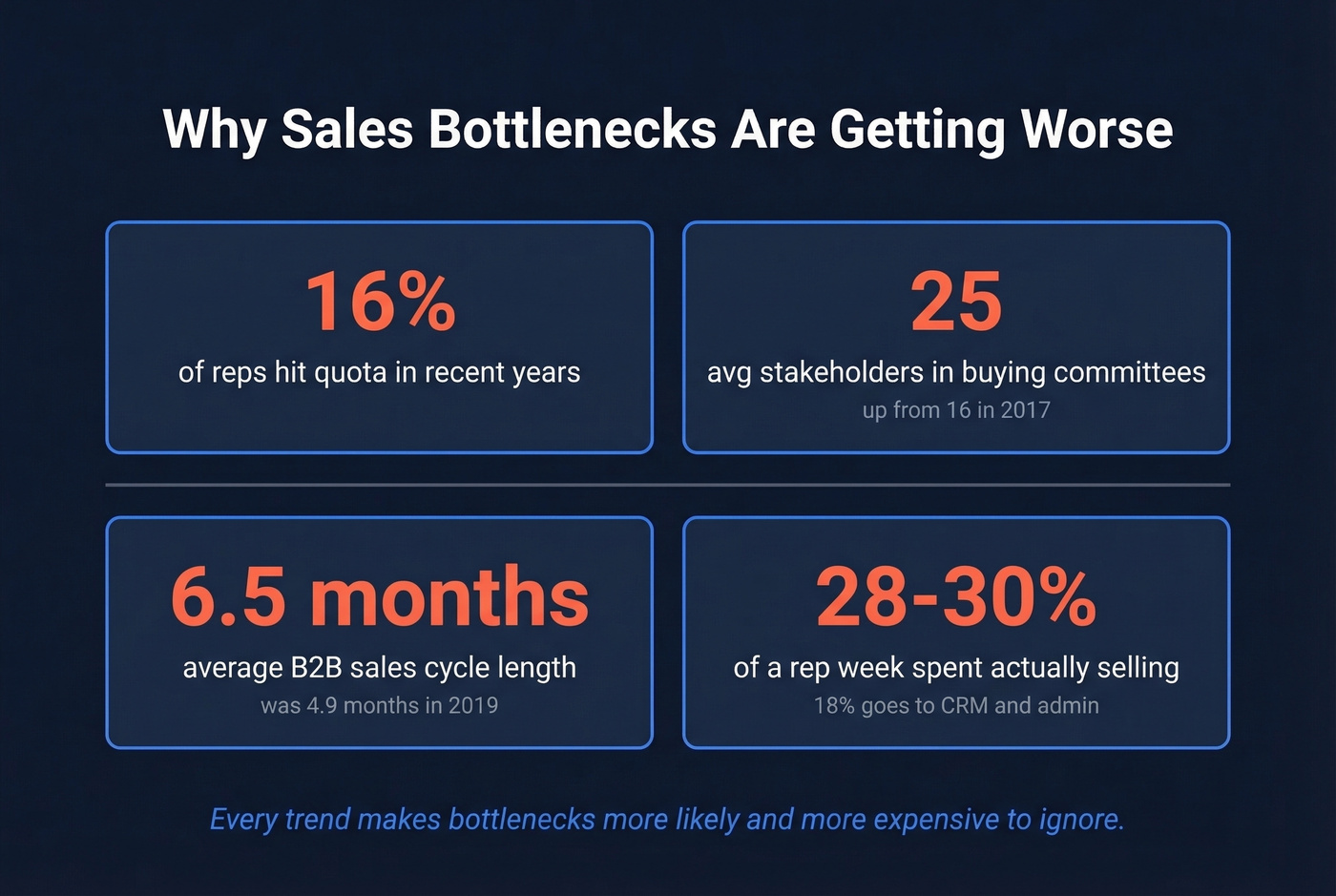
Meanwhile, reps spend only 28-30% of their week actually selling. About 18% goes to CRM updates and admin. Every one of those trends makes bottlenecks more likely and more expensive to ignore.

If 40% of your emails bounce before prospects ever see your demo invite, no amount of sales coaching fixes that bottleneck. Prospeo gives reps 300M+ profiles with 98% verified emails and 125M+ direct dials - refreshed every 7 days, not every 6 weeks.
Stop diagnosing pipeline problems caused by bad contact data.
6 Sales Process Bottlenecks That Actually Stall Revenue
1. Weak Lead Qualification
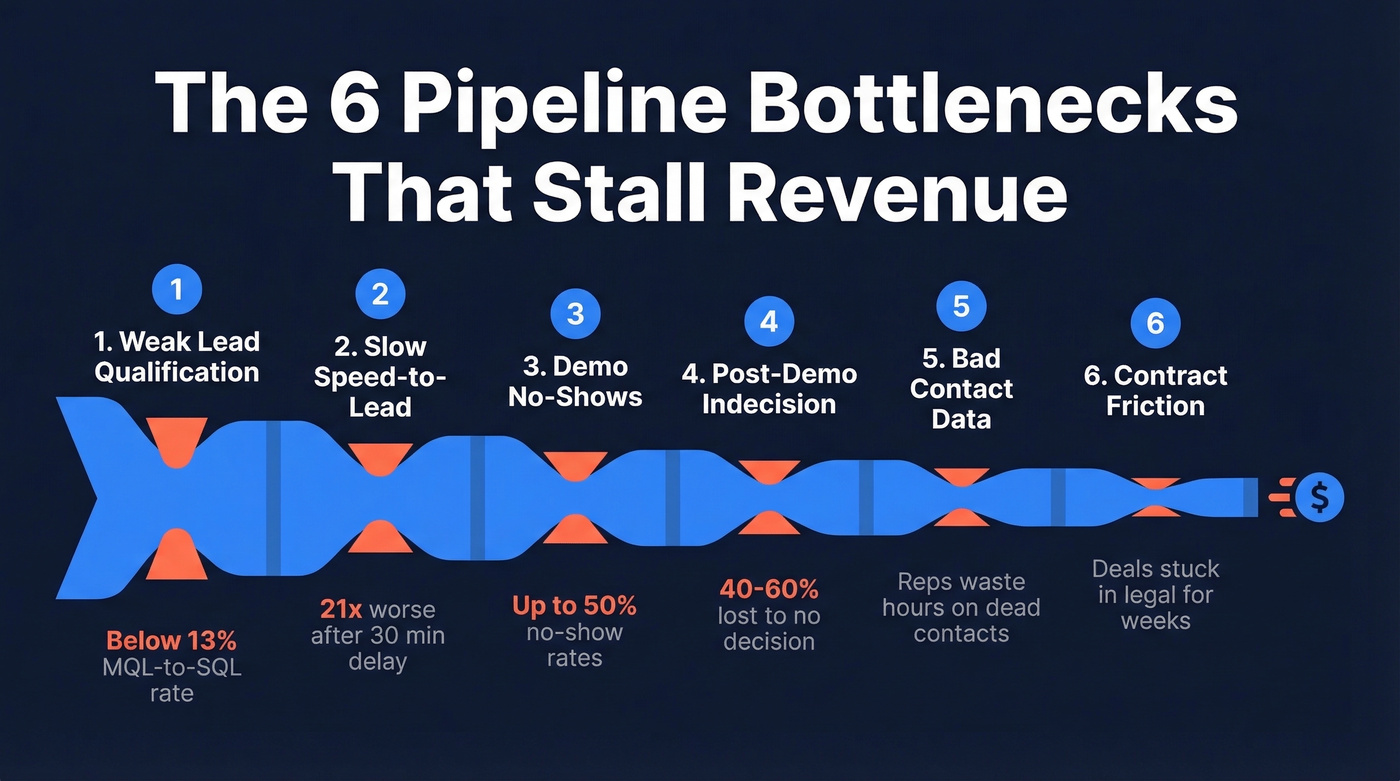
If your MQL-to-SQL rate is below the 13-21% benchmark range, qualification is your bottleneck. Implement BANT for simpler sales or MEDDIC for enterprise. The goal isn't fewer leads - it's fewer wasted hours on leads that won't convert.
If you need a tighter definition of who should enter the funnel, start with an ideal customer profile and score leads against it.
2. Slow Speed-to-Lead
Responding within 5 minutes makes you 21x more likely to qualify a lead versus waiting 30 minutes. Not a marginal improvement - a 21x difference. Automate lead routing, set up instant notifications, and measure time-to-first-touch as a KPI. If you aren't tracking this number today, start tomorrow.
This is also where lead generation workflow issues show up fast: handoffs, routing rules, and SLA gaps.
3. Demo No-Shows
That EUR37k MRR founder wasn't an outlier. 50% no-show rates happen regularly, especially when selling to busy operators. Shorten demos to 20 minutes, schedule within 48 hours of the initial conversation, and send a reminder with a clear agenda the morning of.
If you're still losing half your demos after all that, the problem is lead quality, not scheduling.
To reduce no-shows, tighten your pre-demo process and use a product demo checklist so every meeting has a clear outcome.
4. Post-Demo Indecision
Here's the thing most teams miss: 40-60% of B2B deals are lost to "no decision" - not to a competitor. The buyer couldn't build internal consensus. Your job after the demo is to arm your champion with the business case, ROI calculator, and internal pitch deck they need to sell it upstairs. Multi-thread into the buying committee early, because a single-threaded deal over $25k is a deal waiting to die.
If you want a more structured way to run this stage, map it to clear steps to close a sale and define exit criteria.
5. Bad Contact Data
This one's a silent killer. Reps waste hours hunting for email addresses and dialing disconnected numbers, sequences bounce at rates that tank deliverability, and pipeline generation stalls - not because reps aren't working, but because they're playing detective instead of selling.
If bounces are part of the bottleneck, start by tracking your email bounce rate and fixing list hygiene before you scale volume.
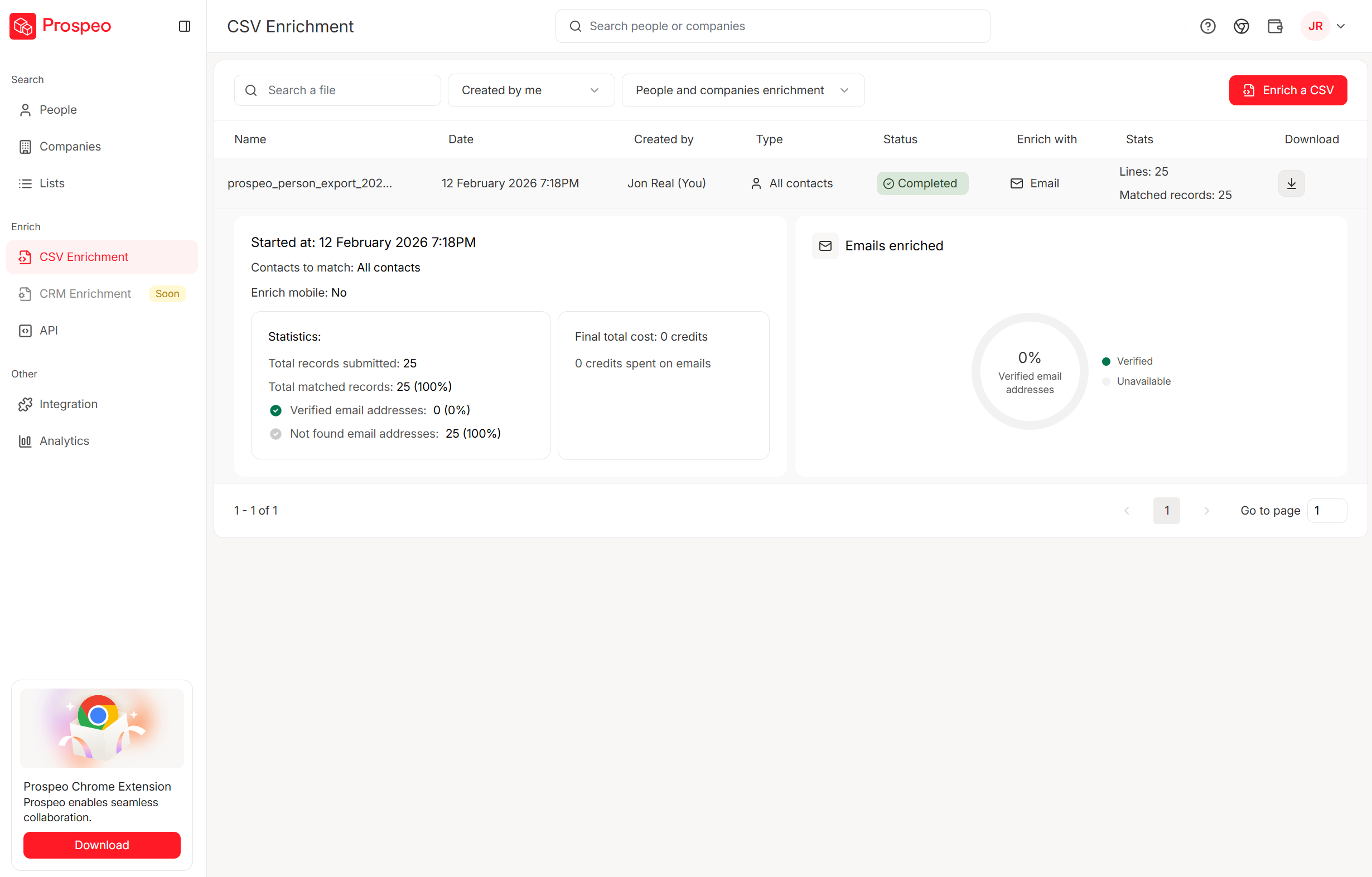
We've seen this pattern repeatedly: a team applies the Theory of Constraints to their pipeline and discovers the primary constraint isn't closing skills. It's that reps don't have enough verified contacts to fill the top of the funnel. Prospeo fixes this fast - upload a CSV, enrich it against 300M+ profiles with 98% email accuracy, and give reps verified emails and direct dials instead of making them hunt. One customer, Snyk, cut their bounce rate from 35-40% to under 5% and saw AE-sourced pipeline jump 180%.
If you're comparing vendors, see our breakdown of data enrichment services.
6. Approval and Contract Friction
The buyer says yes, then the deal sits in legal review for three weeks. CPQ tools like DealHub, PandaDoc, and Proposify reduce pricing approval delays. E-signature platforms can turn a week-long contract back-and-forth into a same-day turnaround. Pre-approve discount bands so reps don't need to escalate every deal.
Skip this section if your average deal is under $10k - contract friction rarely stalls smaller deals. Focus on the five bottlenecks above instead.
How to Find Your Bottleneck
The pipeline velocity formula turns your entire funnel into a single number:
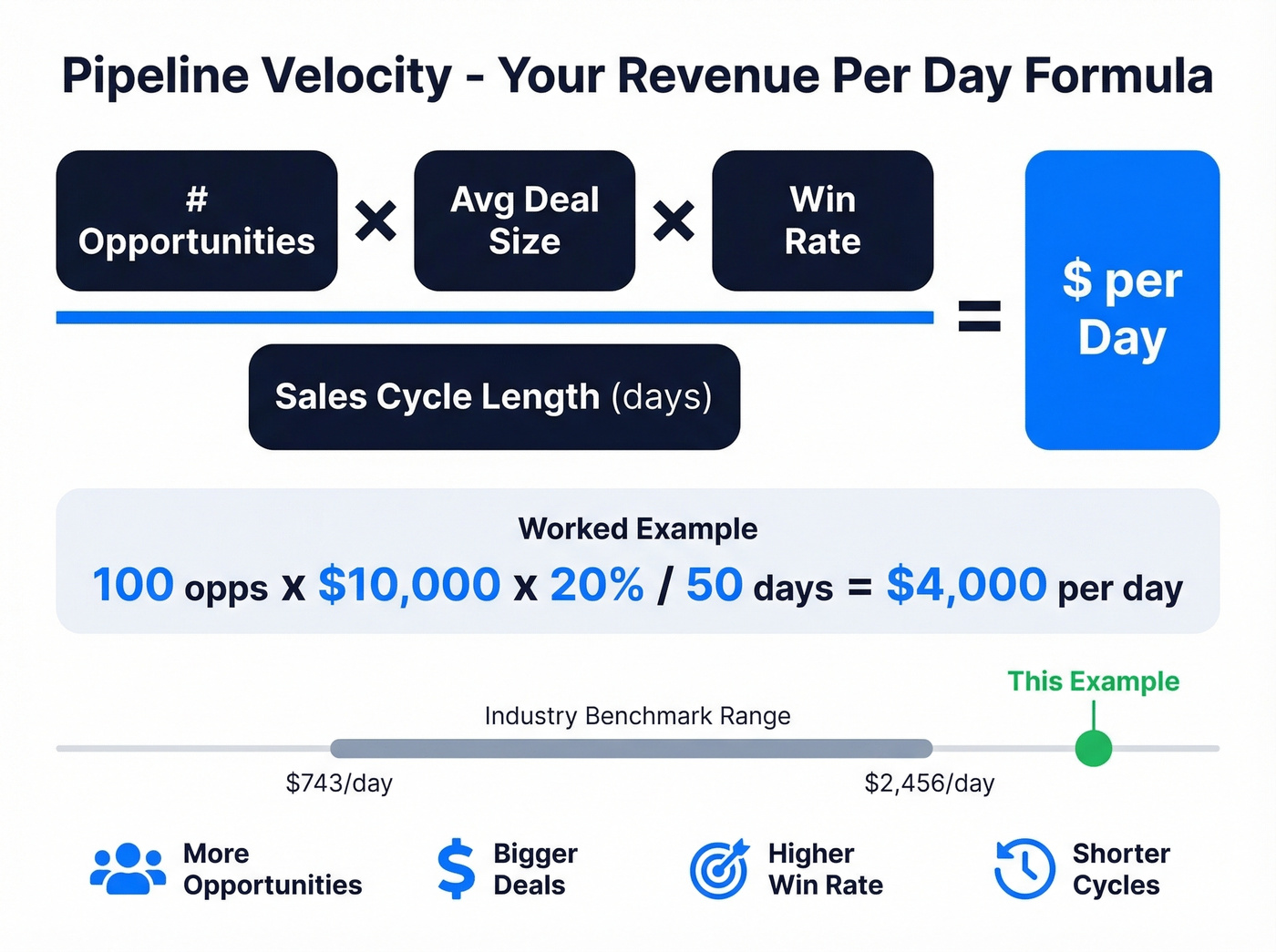
(# Opportunities x Avg Deal Size x Win Rate) / Sales Cycle Length = Revenue per Day
A worked example: 100 opportunities x $10,000 average deal x 20% win rate / 50 days = $4,000/day. Benchmarks range from $743-$2,456/day depending on industry. If you're below that, one of the four levers is broken. For context, software averages a 90-day cycle while enterprise deals over $500k stretch to 270 days.
To go deeper on what “healthy” looks like, compare against broader pipeline health metrics, not just velocity.
Pull your stage conversion rates and compare against these benchmarks:
| Stage | Benchmark |
|---|---|
| Visitor to Lead | ~1.4-2.0% |
| Lead to MQL | 31-41% |
| MQL to SQL | 13-21% |
| SQL to Opportunity | 30-59% |
| Opportunity to Close | 22-30% |
| Overall lead to customer | 2-5% |
The MQL-to-SQL transition is typically the biggest constraint in B2B funnels. That's where qualification problems, bad data, and slow follow-up converge - and where most pipeline stalls compound into real revenue loss.
One more diagnostic worth running: look for zombie deals. In many pipelines, the age of deals won is roughly half the age of deals lost. If your average winner closes in 90 days but your pipeline is full of 180-day opportunities, those are zombies. Remove them. They inflate your pipeline coverage metrics and hide the real conversion rates underneath.
Fix One Thing First
The instinct is to fix everything simultaneously. Don't.
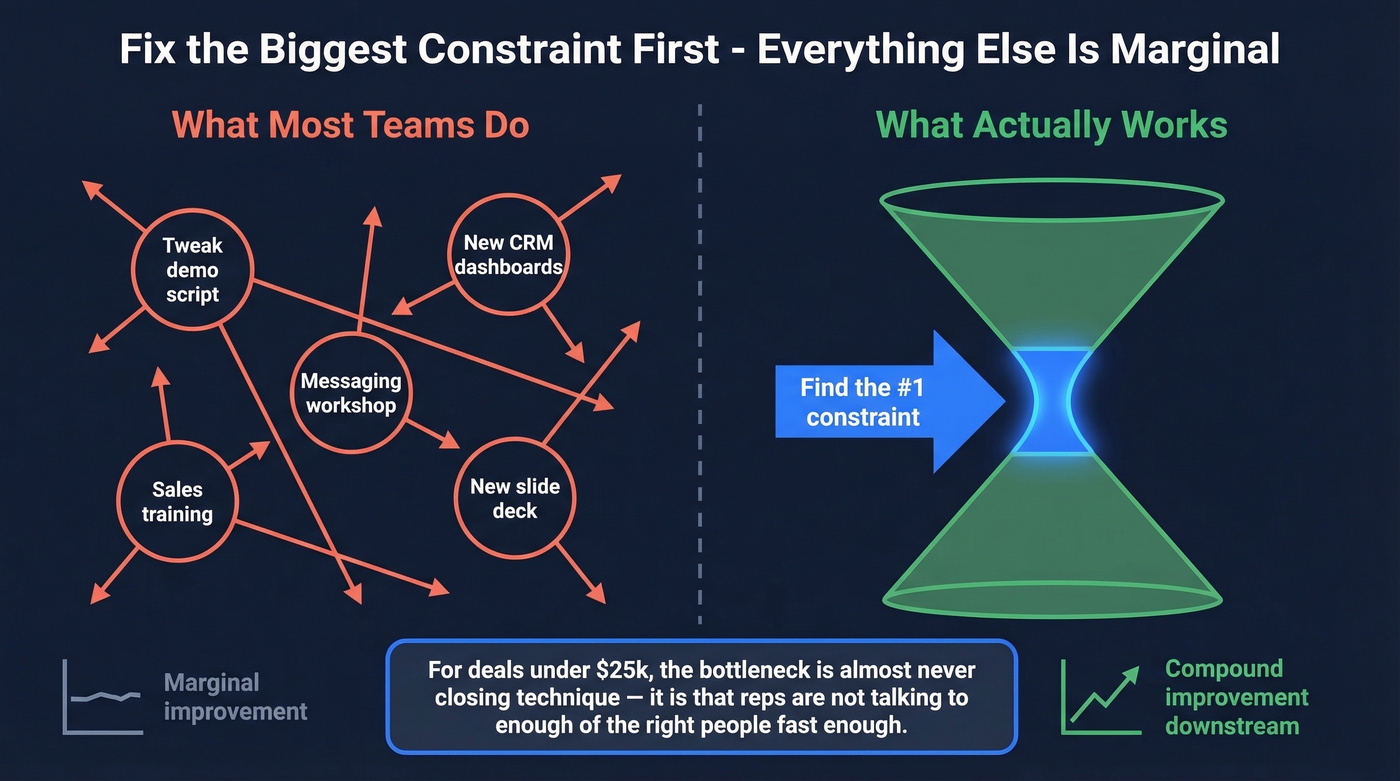
The Theory of Constraints says there's always one primary constraint, and improving anything else yields marginal returns until that constraint is resolved. We've watched teams spend months optimizing their demo script when the real problem was that 40% of their emails bounced before anyone saw the invite.
Our take: If your average deal is under $25k, the bottleneck is almost never your closing technique. It's that reps aren't talking to enough of the right people fast enough. Speed-to-lead plus data quality is the highest-ROI fix for most teams. Everything downstream improves when reps reach the right people on the first attempt.
If you need more top-of-funnel volume without wrecking quality, use proven sales prospecting techniques and standardize what “good” looks like.
Let's be honest - most pipeline "strategy" sessions turn into debates about messaging and positioning when the actual constraint is mechanical. Fix the plumbing before you repaint the walls.
Snyk's 50 AEs cut bounce rates from 35-40% to under 5% and grew AE-sourced pipeline 180%. The bottleneck wasn't skills - it was data. At $0.01 per email, Prospeo removes the top-of-funnel constraint so reps spend their 28% selling time actually selling.
Unclog your pipeline for a penny per lead.
FAQ
What is a sales bottleneck?
A sales bottleneck is a pipeline stage where deals slow down or stall disproportionately, reducing overall revenue velocity. Every pipeline has at least one - the key is identifying which stage shows the steepest conversion drop-off relative to industry benchmarks.
How do I find bottlenecks in my pipeline?
Pull stage conversion rates from your CRM and compare them to benchmarks (13-21% MQL-to-SQL, 22-30% Opportunity-to-Close). The stage with the biggest drop-off is your primary constraint. Calculate pipeline velocity to quantify the revenue impact in dollars per day.
What's the biggest cause of lost deals?
Indecision - not competitors. 40-60% of B2B deals end in "no decision." Multi-threading into the buying committee and arming champions with internal business cases is the best countermeasure.
How does bad contact data stall a pipeline?
Reps waste hours hunting emails and dialing dead numbers instead of selling. Sequences bounce, deliverability tanks, and pipeline generation stalls. Tools like Prospeo solve this with 98% email accuracy and 125M+ verified mobiles - returning reps to actual conversations instead of data cleanup.
What is pipeline velocity?
It's the revenue your pipeline generates per day: (Opportunities x Deal Size x Win Rate) / Cycle Length. Benchmarks range from $743-$2,456/day. It's the single best metric for quantifying how bottlenecks affect revenue.