

How to Win More Sales Deals (Without Hiring More Reps)
Monday pipeline review: 15 sales deals "in forecast," and you already know 10 of them are fiction. The champion changed jobs, the "decision-maker" was never a decision-maker, and half your follow-ups are going to dead inboxes.
The gap between what's in your CRM and what's actually closable is where revenue goes to die. Fix the gap, and you win more deals with the same team.
What Actually Moves Win Rate
Most deals don't die in negotiation. They die earlier - before you ever get a real buyer on a real timeline.
- Data that works: verified emails and direct dials, refreshed often enough to keep up with job changes.
- Timing that isn't random: prioritize accounts showing in-market behavior.
- Ruthless qualification: fewer "maybe" deals, more real ones.
Anatomy of a B2B Deal
Most B2B sales deals follow the same progression. Your stage names can differ; the failure points don't.
| Stage | What Happens |
|---|---|
| Lead | Raw contact enters the system |
| MQL | Contact hits an engagement threshold (downloads, page visits, etc.) |
| SQL | Sales accepts and begins outreach |
| Discovery | Rep uncovers pain, budget, timeline |
| Proposal | Formal solution and pricing shared |
| Negotiation | Terms, legal, procurement |
| Closed-Won | Signed deal, revenue booked |
A typical B2B deal cycle is measured in months, not weeks, and it usually involves multiple stakeholders. Treat every deal like a mini-campaign: one-thread deals are fragile, and fragile deals don't close. A solid deal management workflow treats each stage as a checkpoint - not just a label in the CRM.
Why Deals Die (The Big Three)
1) Bad Data
Here's the ugly truth: you can't "objection-handle" a bounced email.
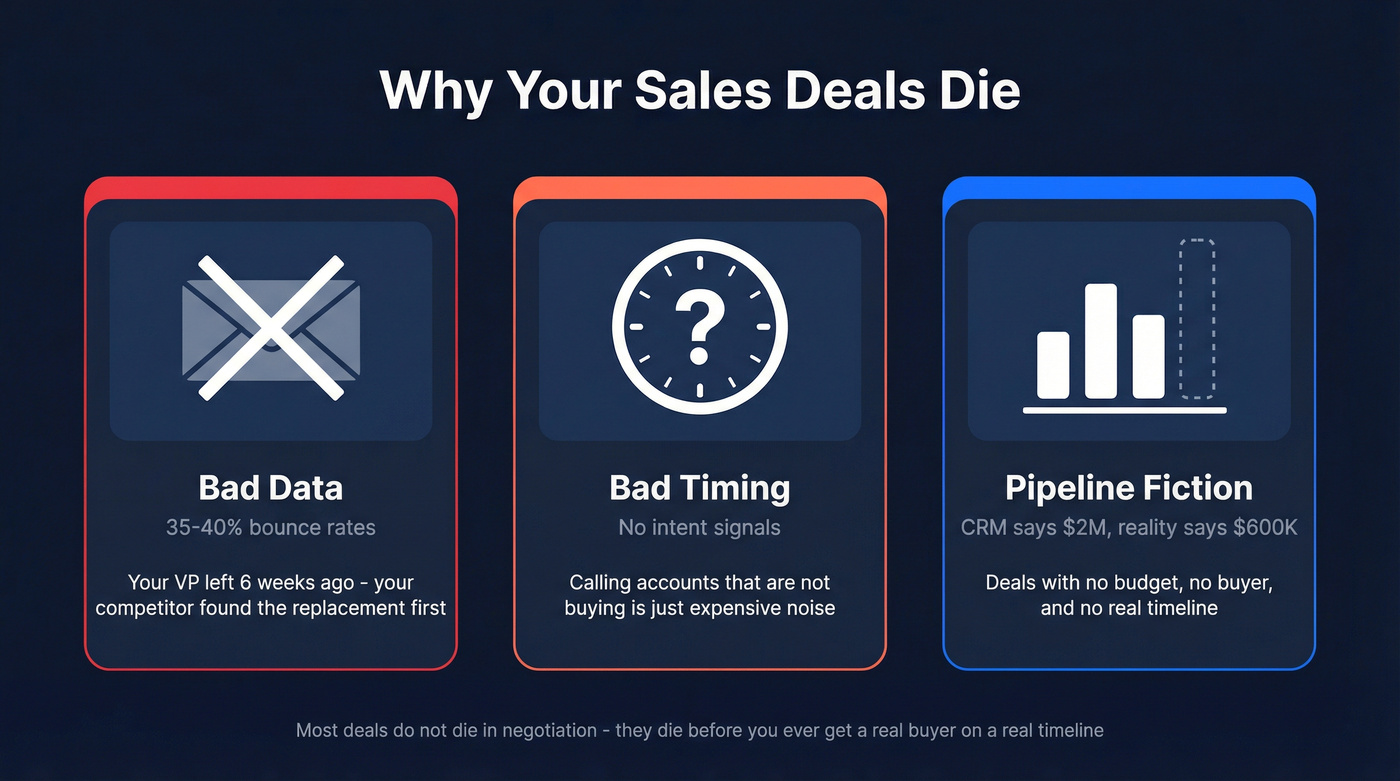
We've seen teams running bounce rates in the 35-40% range before fixing their data foundation. That means nearly 4 out of every 10 outbound emails never arrive - pure wasted effort. Picture this, because it happens constantly: an $80K deal stalls, the rep keeps "following up," and the real reason is simple. The VP left six weeks ago. Your competitor reaches the replacement first, and your deal quietly dies.
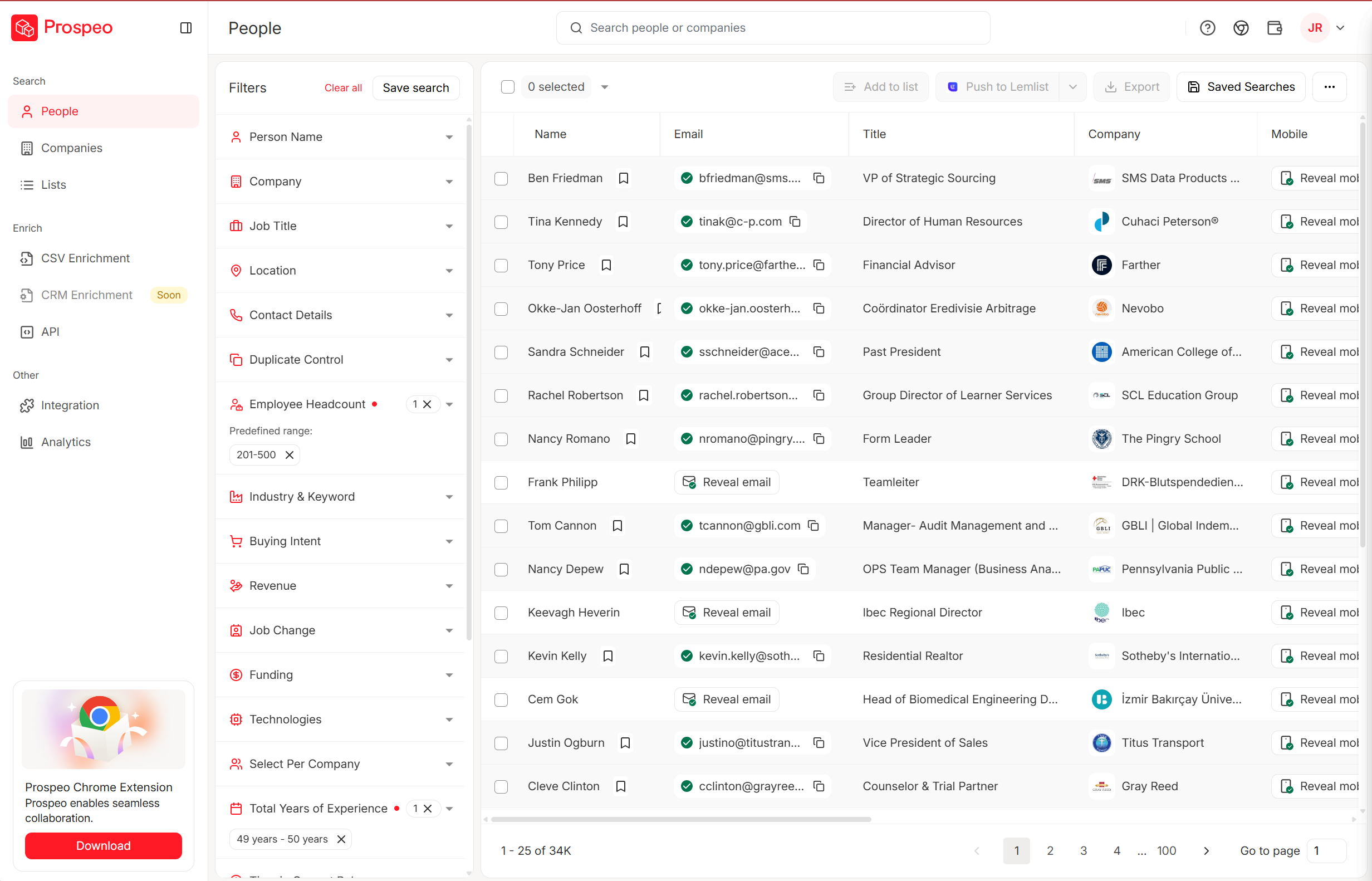
Prospeo is the cleanest fix we've found for this specific problem: 98% verified email accuracy, a 7-day refresh cycle, 143M+ verified emails, and 125M+ verified mobile numbers. Snyk cut bounce rates from the high 30s to under 5%, and Meritt tripled pipeline from $100K to $300K per week after rebuilding their outbound data foundation. Pricing is credit-based and transparent - roughly $0.01 per verified email, no contracts.
2) Bad Timing
Even perfect contact data won't save you if you're calling accounts that aren't buying.
Intent signals solve the "why now?" problem. When you focus reps on accounts already researching your category, conversations start faster and pipeline moves with less pushing. Tracking 15,000 intent topics (powered by Bombora) makes it straightforward to build lists that aren't just "ICP," but ICP + in-market. Layering email engagement data - opens, clicks, replies - adds another timing signal that tells you which prospects are warming up versus which are politely ignoring you.
3) Pipeline Fiction
This is the most expensive lie in B2B sales.
Your CRM says $2M. Reality says $600K. The difference is made of:
- "Great call!" deals with no budget
- "They love us!" deals with no economic buyer
- "Next quarter" deals that have been "next quarter" for two quarters
Let's be honest: most teams don't have a closing problem - they have a "letting bad deals live too long" problem. The fix isn't more follow-ups. It's forcing clarity early.

Meritt tripled pipeline from $100K to $300K/week. Snyk cut bounce rates from 35% to under 5% with 50 AEs. Both started by replacing stale data with 143M+ verified emails refreshed every 7 days - at roughly $0.01 per email.
Stop losing deals to dead inboxes. Start with data that actually delivers.
Qualification Frameworks (Pick One)
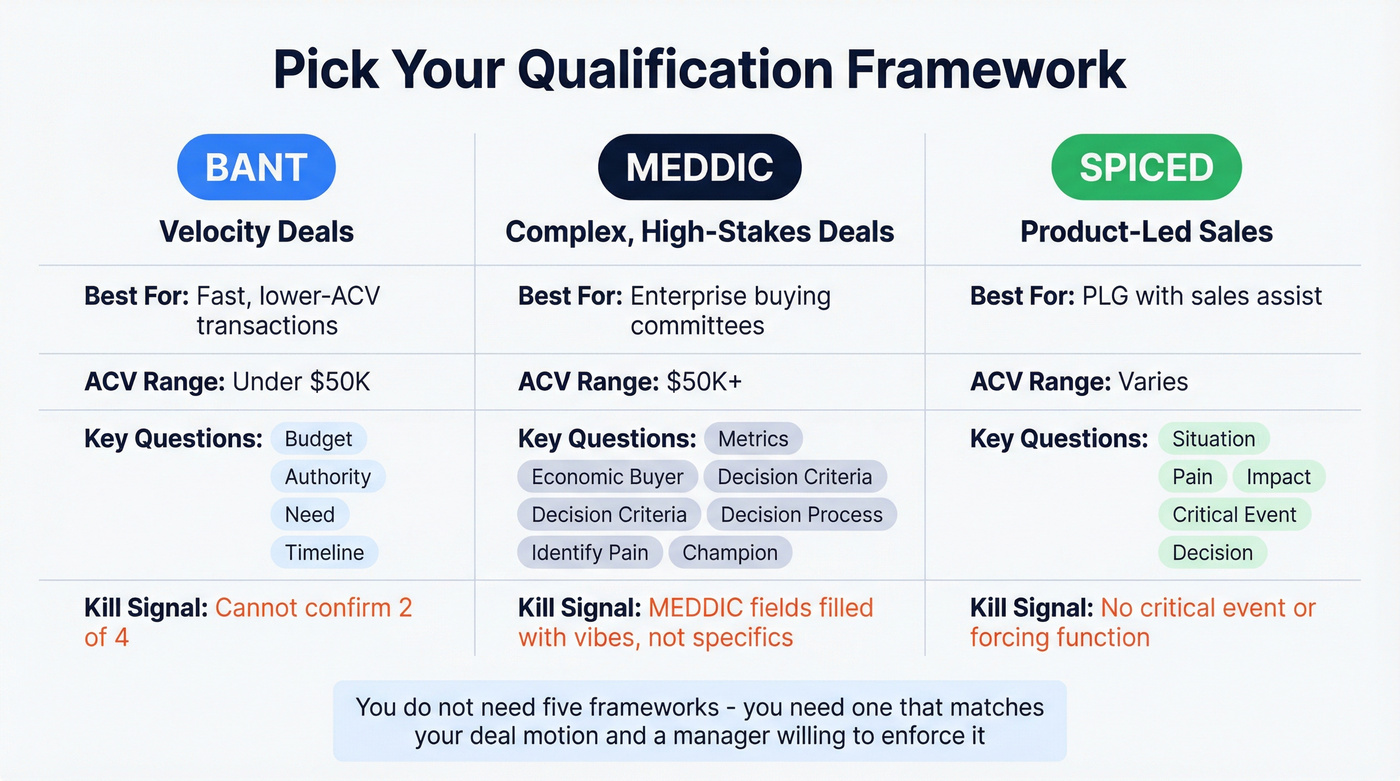
You don't need five frameworks. You need one that matches your deal motion and a manager willing to enforce it.
BANT (Velocity Deals)
BANT is the only framework you need for straightforward, lower-ACV transactions.
Use it when the goal is speed: confirm Budget, Authority, Need, and Timeline in one clean pass. If you can't get credible answers to two of the four, it's not a deal - it's a lead. Skip this if your average deal size is above $50K and involves a buying committee; BANT won't give you enough depth to navigate those rooms.
MEDDIC (Complex, High-Stakes Deals)
If you sell enterprise and you're not running MEDDIC or a close cousin, you're freelancing.
MEDDIC wins because it forces you to map reality: the Economic Buyer, the Decision Process, the Decision Criteria, and whether you have a real Champion. We've watched enterprise teams cut "surprise losses" simply by refusing to advance stages until MEDDIC fields were filled with specifics, not vibes. For a deeper breakdown, HubSpot's MEDDIC explainer is a solid starting point.
SPICED (Product-Led Sales)
The best part of SPICED is one question: "What's the critical event?"
If there's no deadline, no trigger, no forcing function, you don't have a real opportunity - you have a user who's comfortable. SPICED keeps PLG teams honest by tying the conversation to Impact and a Decision anchored to a real moment in the business.
Generating Deals Worth Closing
Pipeline volume is easy. Pipeline that closes is a craft.
Start with verified contacts
If your outbound motion is built on stale records, you're not prospecting - you're burning reputation. In head-to-head comparisons, teams that switch from legacy data to verified, frequently refreshed sources book 26% more meetings. That's not magic. That's deliverability plus reaching the right person. If you're rebuilding your stack, start with data enrichment that keeps records current.
Use intent to prioritize reps
Your best reps shouldn't spend prime hours "educating the market" one cold account at a time. Build a weekly list of accounts showing in-market behavior, then run tight sequences and calls against that list. You'll feel the difference immediately: fewer "we're not looking," more "we're evaluating." This pairs well with sales prospecting techniques that keep reps focused on high-signal accounts.
Multi-thread early
Most deals don't die because the product is wrong. They die because your one contact disappears.
Multi-threading is straightforward: identify the economic buyer, the day-to-day owner, the technical evaluator, and procurement early, then build light relationships with each. This is where browser-based prospecting tools shine - while you're researching an account, a Chrome extension can surface verified emails and mobiles without turning "finding contacts" into a separate admin project. Prospeo's extension is built for exactly that workflow, with 40,000+ users already running it.
Keep your CRM from decaying
Data decay is constant. Job changes, new phone numbers, reorgs, acquisitions.
Continuous enrichment keeps your pipeline real. Best-in-class enrichment workflows return usable contact data on 80%+ of records, and the practical outcome is what matters: fewer dead opportunities caused by dead contacts, and fewer reps "working" accounts that no longer exist in the same form. If you want a tighter operating rhythm, build around pipeline health instead of raw activity.
Metrics That Predict Revenue
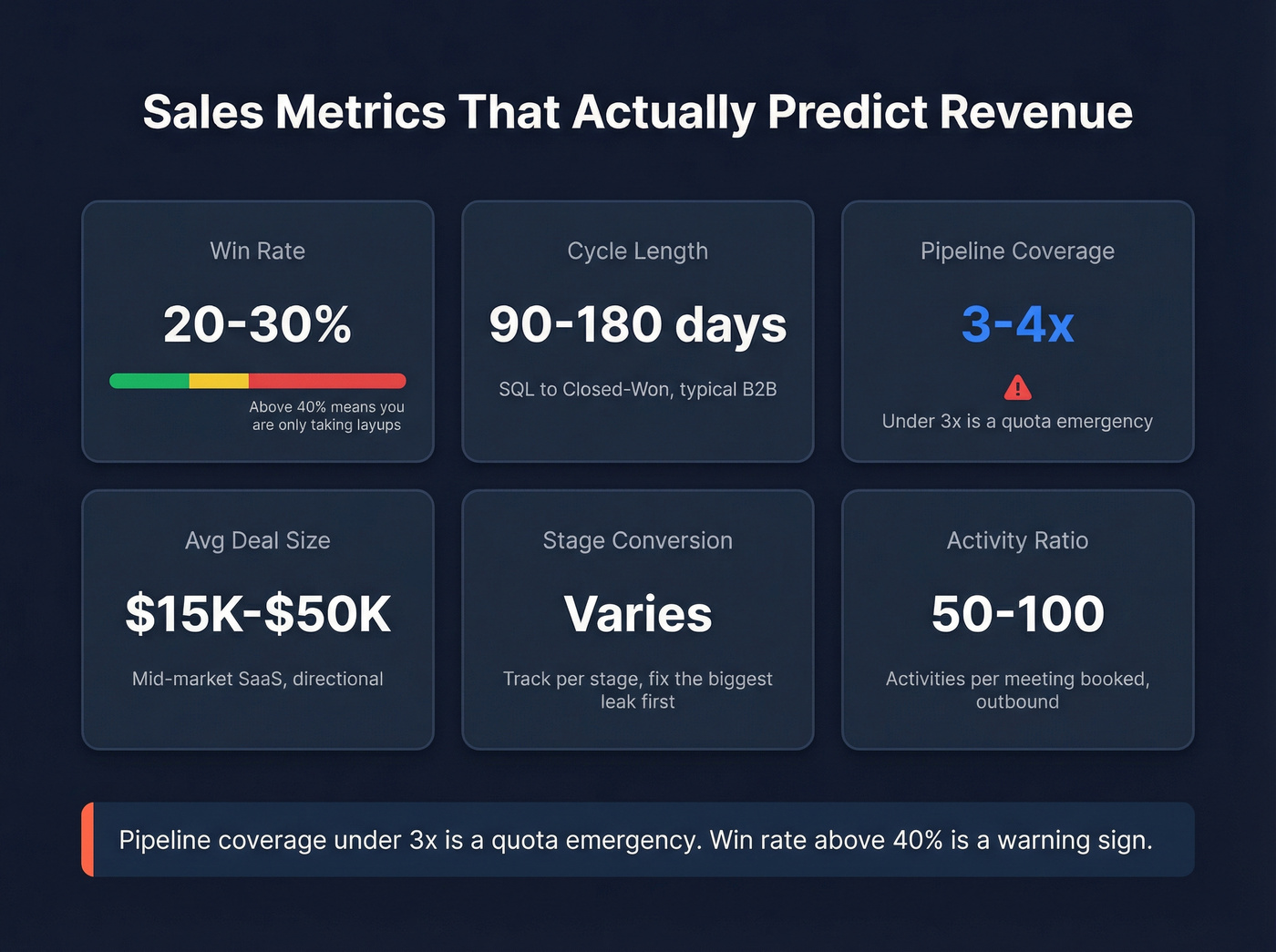
Most dashboards are busy. A few metrics are actually predictive.
| Metric | What It Measures | Benchmark |
|---|---|---|
| Win Rate | Deals closed / deals created | 20-30% (B2B baseline) |
| Cycle Length | Days from SQL to Closed-Won | 90-180 days (typical B2B) |
| Pipeline Coverage | Pipeline value / quota | 3-4x minimum |
| Avg Deal Size | Revenue per closed deal | $15K-$50K (mid-market SaaS, directional) |
| Stage Conversion | % moving between stages | Track per stage; fix the biggest leak first |
| Activity Ratio | Activities per outcome | 50-100 activities per meeting booked (outbound) |
Two opinions we'll defend. Pipeline coverage under 3x is a quota emergency. You can't "close harder" if the math is broken. And win rate above 40% is a warning sign - it usually means you're only taking layups and ignoring the winnable middle. To pressure-test your numbers, compare against sales pipeline benchmarks and sales conversion rate ranges.
Spend five minutes on r/sales and you'll see the same pattern: reps drowning in activity, managers celebrating "pipeline added," and quarters missed because the pipeline was never real. For broader benchmarks and how teams are structuring sales operations, Salesforce's State of Sales report is worth bookmarking.
Winners vs. Pipeline Tourists
Look - sales methodologies don't close deals. Execution does.
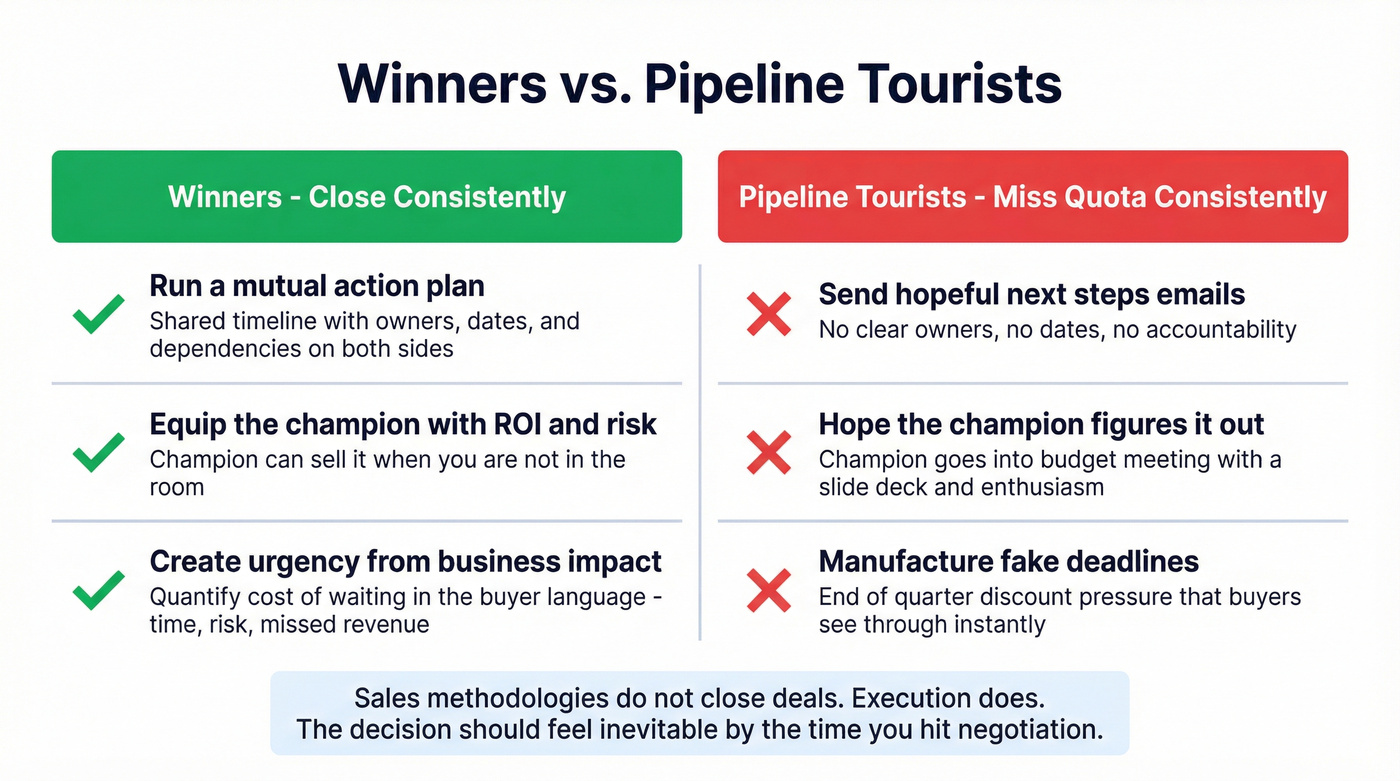
The reps who consistently win sales deals do three unsexy things better than everyone else:
They run a mutual action plan. Not a "hopeful next steps" email - a shared timeline with owners, dates, and dependencies. Every meeting ends with clear action items assigned to both sides. If your follow-ups are weak, steal a few sales follow-up templates and standardize them.
They equip the champion. Your champion needs a tight internal story: ROI, risk, and why you over alternatives. If they can't sell it when you're not in the room, you don't have a deal. I've seen $200K opportunities evaporate because the champion went into a budget meeting with nothing but a slide deck and enthusiasm. This is where sales deck storytelling pays for itself.
They create urgency from business impact. No fake deadlines. Quantify the cost of waiting in the buyer's language - time, risk, missed revenue, compliance exposure. The best closers spend more energy making Discovery brutally clear than they do on any closing technique. By the time you hit negotiation, the decision should feel inevitable. If you need a clean process to enforce, use a simple sales process optimization checklist.
Multi-threading requires finding 3-5 stakeholders per deal fast. Prospeo's Chrome extension gives you verified emails and direct dials from any company page or CRM in one click - 40,000+ sales pros already use it to close more deals.
Every contact you can't reach is a deal your competitor will close first.
FAQ
How long does a typical B2B sales deal take?
Most B2B deals close in 90-180 days for mid-market, and enterprise cycles often stretch past two quarters when procurement and security reviews get involved. Shorter cycles usually signal smaller contract values or a strong champion driving internal consensus.
What's a good win rate?
A healthy B2B win rate is 20-30%. Below 20%, qualification is loose or targeting is off. Above 40%, you're likely playing too safe and leaving winnable revenue on the table by avoiding competitive opportunities.
How much pipeline coverage do I need?
Aim for 3-4x pipeline coverage against quota. If you close 25% of qualified opportunities, you need roughly four times your target sitting in real, active pipeline to hit the number consistently.
Why do deals stall mid-pipeline?
Most stalls trace back to three causes: you lost the economic buyer, your champion can't drive internal consensus, or your contact data went stale and you're chasing ghosts. Multi-threading and continuous enrichment prevent a huge chunk of "mysterious" stalls that aren't mysterious at all.
What's the fastest way to increase deal velocity?
Stop spending prime selling time on accounts that aren't buying. Tighten qualification, focus reps on in-market accounts using intent signals, and make mutual action plans non-optional. Velocity improves when your pipeline is real and next steps are owned by both sides.