

Sales Trends 2026: The Numbers Behind What's Actually Working
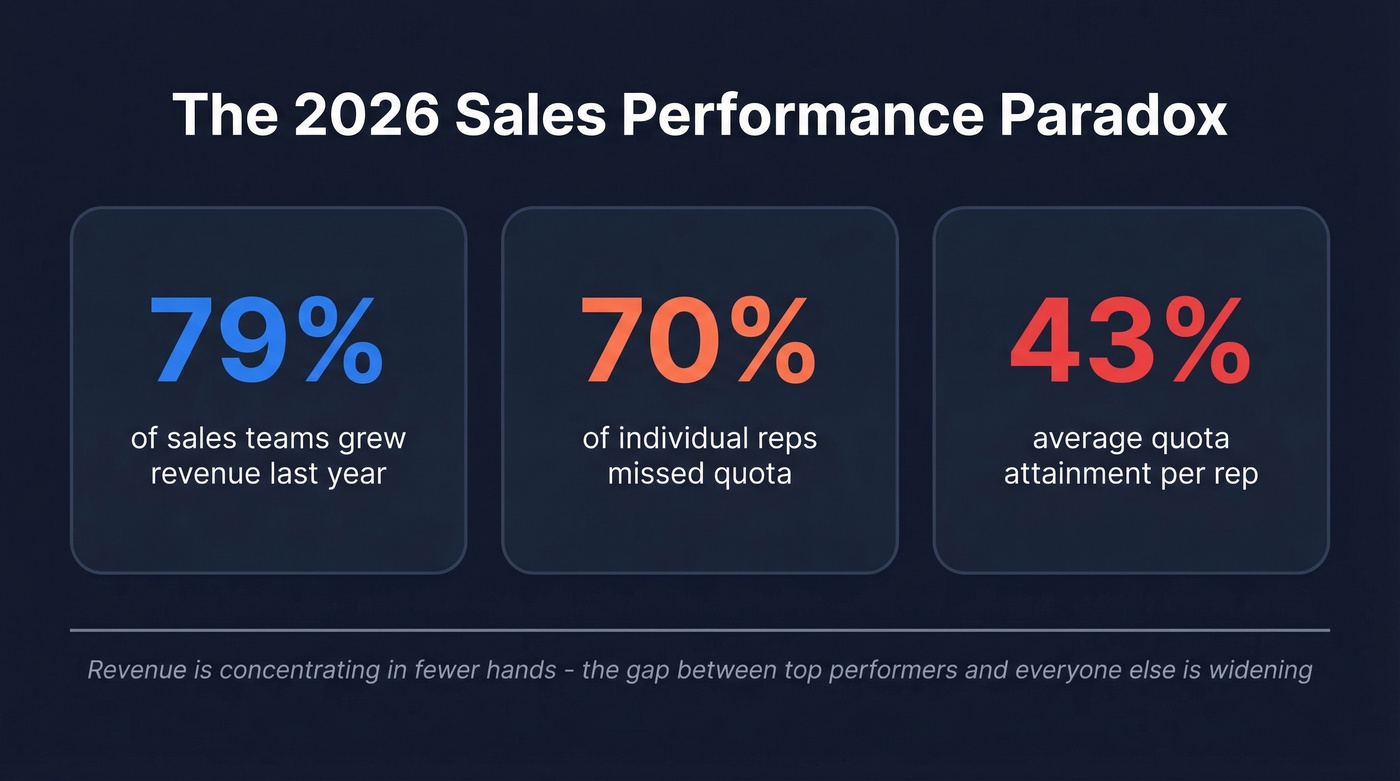
79% of sales teams grew revenue last year. Sounds great - until you learn that up to 70% of individual reps missed quota, with average attainment hovering around 43%. That's not a contradiction. It's a concentration problem: fewer reps are closing more deals, and the widening gap between top performers and everyone else is the defining sales trend of 2026.
The Performance Paradox
Three things define the teams pulling ahead right now:
- Buyer self-serve dominance. 61% of B2B buyers prefer a rep-free experience. If your outbound isn't hyper-relevant, you're invisible.
- Signal-based selling. Volume is dead. Signal-based approaches delivered 57% more revenue with 46% fewer leads.
- Data quality as a moat. AI personalization, multi-threading, tight cadences - all of it fails if you're emailing dead addresses or calling wrong numbers.
If you change one thing this quarter, fix your contact data. Prospeo verifies emails at 98% accuracy on a 7-day refresh cycle, which means your outbound actually lands instead of bouncing into the void. If you want a deeper breakdown of list hygiene, see our email deliverability guide.

Signal-based selling delivered 57% more revenue - but only when reps actually reach the right buyers. Prospeo's 98% email accuracy and 7-day refresh cycle means your outbound lands instead of bouncing. At $0.01 per email, there's zero reason to let bad data sabotage your cadences.
Stop optimizing hooks on top of dead email addresses.
What's Changing in B2B Sales
Buyers Have Left the Building
61% of B2B buyers now prefer a completely rep-free buying experience. 73% actively avoid suppliers who send irrelevant outreach, and 69% report inconsistencies between what's on your website and what your reps say - another reason they'd rather self-serve.
Buying groups now average around 10-11 stakeholders, and enterprise deals often hit 15+. Here's the kicker: 69% of buyers only engage a salesperson once they've already made their decision. Your job isn't to educate anymore. It's to be the vendor they already trust when they're ready to buy, which means your digital presence, content, and reputation do the heavy lifting long before a rep picks up the phone. (If you're tightening targeting, start with an ideal customer profile you can actually score.)
AI Adoption - The Great Divide
The AI conversation in sales has split into two camps. A ZoomInfo survey of 1,000+ GTM professionals found that about 20% use AI daily, 29% weekly - and 32% never use it at all. That's not a slow adoption curve. That's a bifurcation.
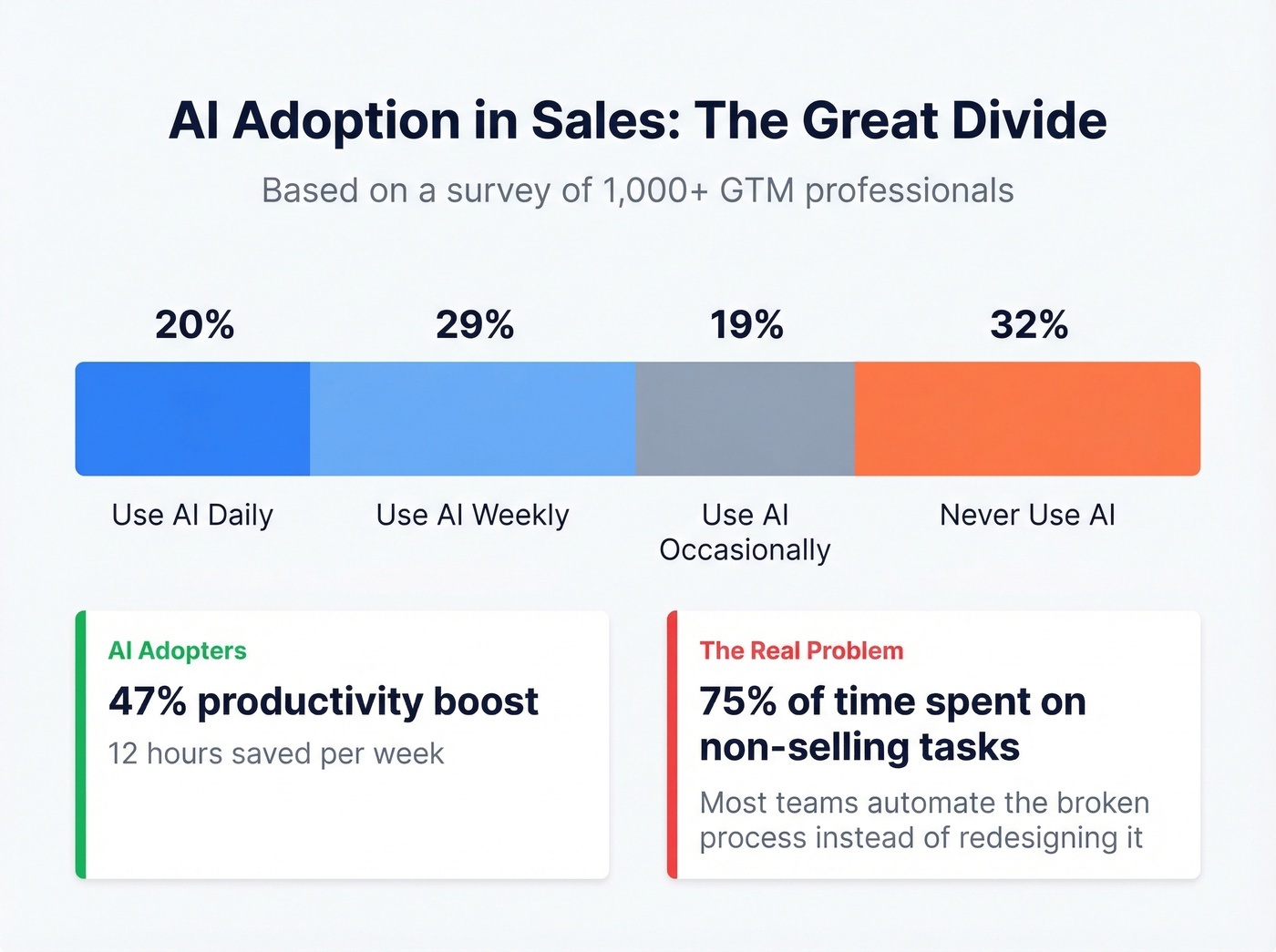
Adopters report a 47% productivity boost and 12 hours saved per week. But here's where most teams get it wrong. Sellers spend only about 25% of their time actually selling. The other 75% goes to admin, CRM updates, and research. Most teams bolt AI onto the broken 75% instead of redesigning the process to reclaim it. Bain estimates that real process redesign - not just automation - can drive 30%+ improvement in win rates. That's the difference between a marginal efficiency gain and a real performance jump. (If you're operationalizing this, a sales process optimization pass usually beats adding another tool.)
Signal-Based Selling Replaces Volume
The spray-and-pray era is over. A GTM Partners study highlighted in G2's research showed signal-based approaches delivered +45% higher conversion rates and +57% more revenue - with 46% fewer leads. One customer generated 90% of their pipeline from just 25% of their leads.
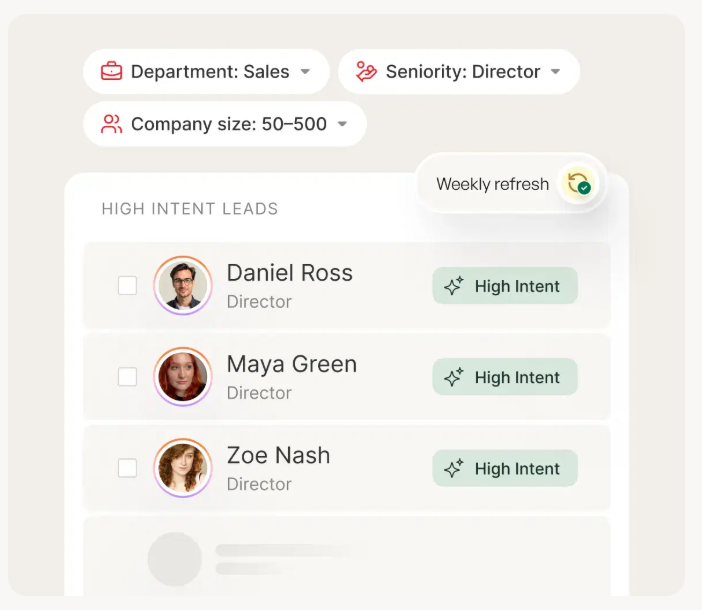
When 69% of buyers only engage once they've already decided, the teams identifying in-market signals - job changes, tech stack shifts, funding rounds, content consumption - get the only shots that matter. The volume playbook felt productive because it generated activity metrics. Signal-based selling feels slower. The math doesn't lie: fewer, better-targeted touches convert at multiples of mass outreach. If you need a practical framework, use a buying signals scoring model.
Hot take: If your average deal size is under $15K, you probably don't need a $30k-$100k/year intent platform. Start with job-change and funding signals - they're free or cheap - and layer on from there.
Outbound Isn't Dead - Spray-and-Pray Is
Here's what actually works in cold outbound right now:
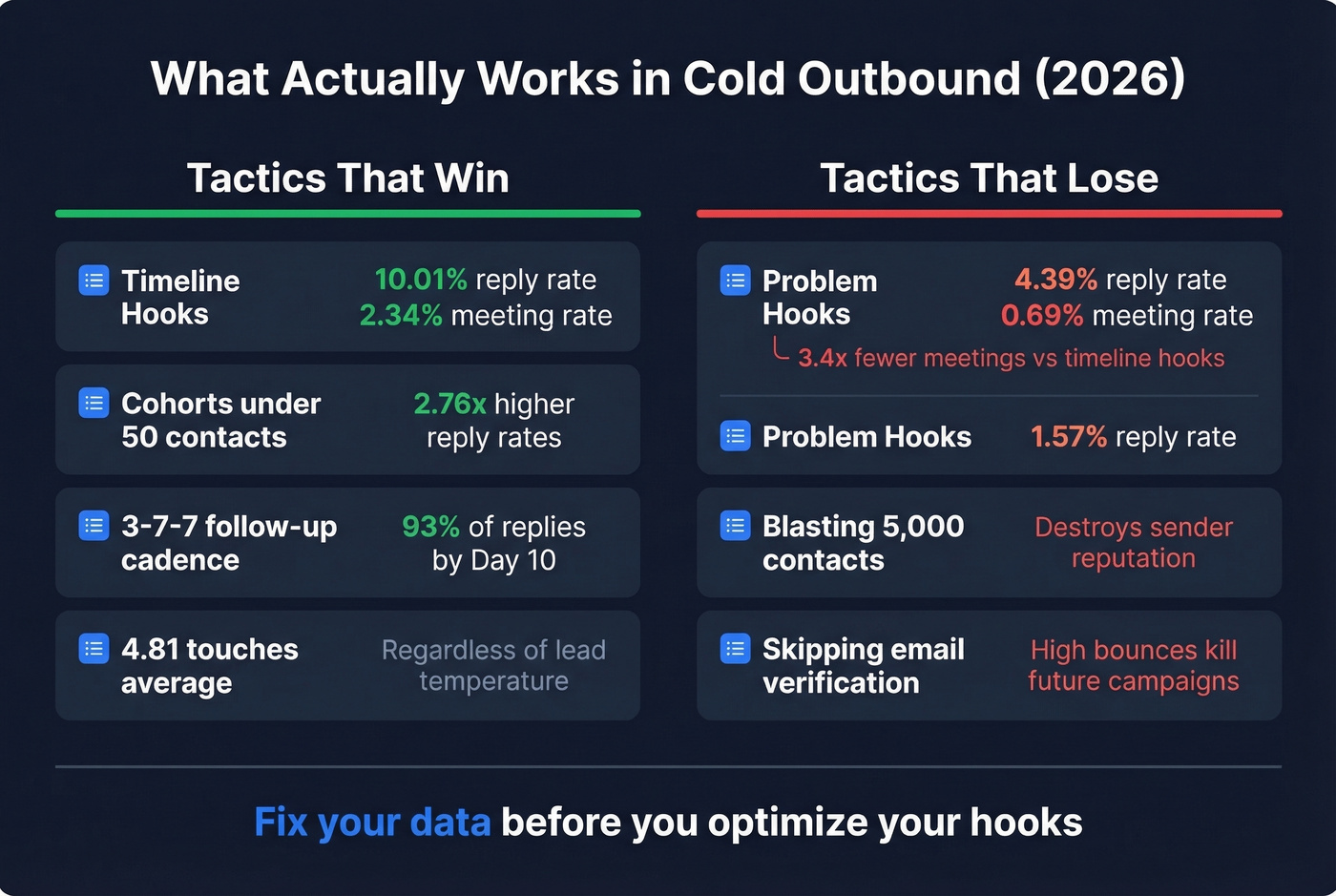
- Timeline hooks pull a 10.01% reply rate and 2.34% meeting rate. Problem hooks? 4.39% reply and 0.69% meetings. That's a 3.4x difference in meetings booked from the same send volume.
- Cohorts of 50 contacts or fewer increase reply rates by 2.76x.
- A 3-7-7 follow-up cadence captures 93% of replies by Day 10. (If you want plug-and-play copy, grab these sales follow-up templates.)
- It takes 4.81 touches to get a response, regardless of lead temperature.
What kills outbound is blasting 5,000 contacts with the same template, skipping verification - high bounce rates destroy sender reputation and hurt every future campaign - and over-automating without personalization. 54% of outbound teams say identifying quality leads, not sending more emails, is their biggest challenge. If you're seeing deliverability issues, start by fixing sender reputation and monitoring email bounce rate.
Before you optimize hooks and cadence, verify your list. At $0.01 per email, there's no excuse for sending to unverified contacts.
Multi-Threading Is Non-Negotiable
A conversation intelligence analysis of 1.8 million opportunities found that closed-won deals have roughly 2x as many buyer contacts engaged compared to lost deals. For deals over $50K, multi-threading boosts win rates by 130%.
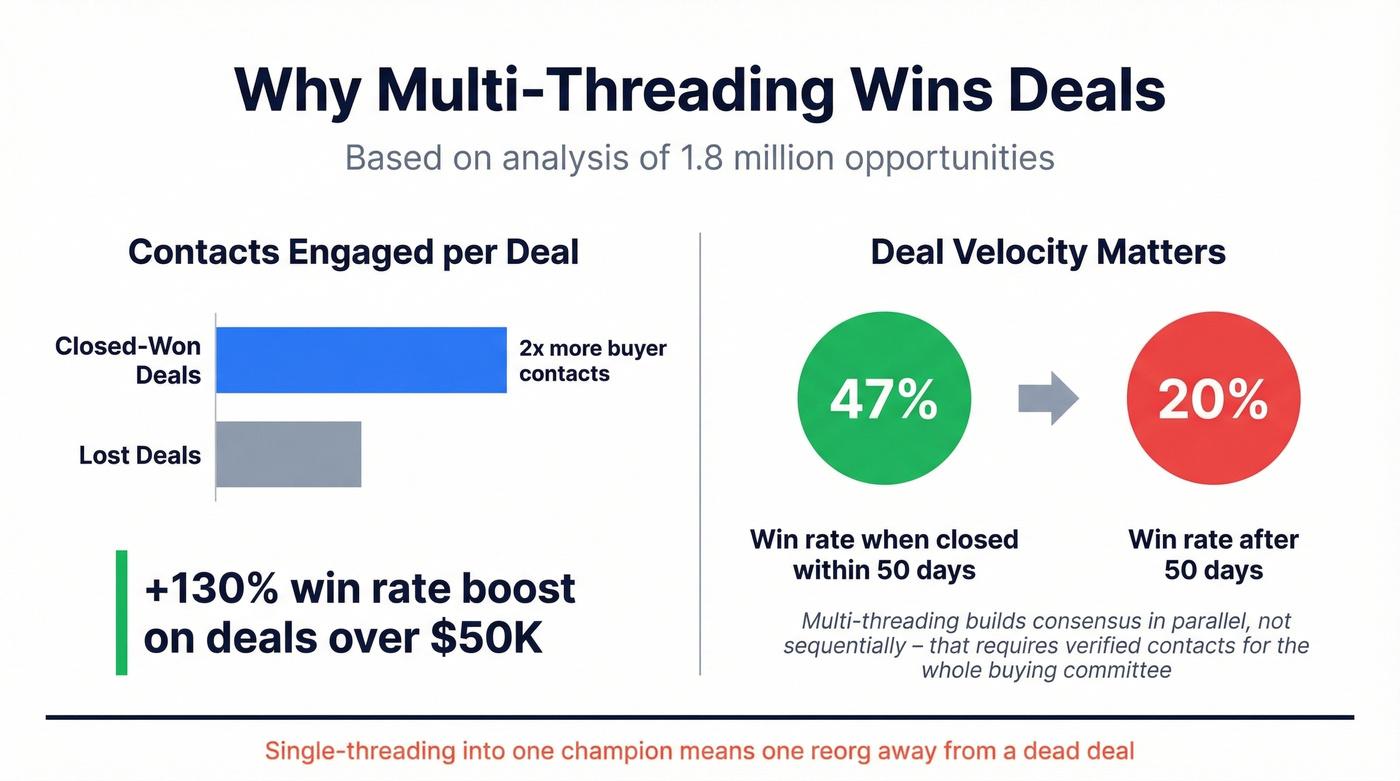
We've seen this pattern repeatedly in our own outbound work: reps who single-thread into a champion feel like they're making progress, but they're one reorg away from a dead deal. Outreach's data shows that opportunities closed within 50 days have a 47% win rate. After 50 days, that drops to 20%. Multi-threading accelerates deals because you're building consensus in parallel, not sequentially - and that requires having verified contact info for multiple stakeholders in the same account, not just one champion's email. (For a full playbook, see account-based selling.)
Social Selling Hits a Wall
Social DMs still outperform cold email per-message - 10.3% reply rate versus 5.1% across 70,000+ campaigns. On paper, that's a 2x advantage. In practice, the channel is hitting diminishing returns.
One practitioner on r/b2bmarketing shared detailed funnel math from 75,000 messages across 10 automated profiles: 60,000 invites, 13,200 accepts, 4,700 replies, 75 intro calls. That's 0.13% conversion from invite to call. They shifted to manual outreach on 2 profiles and found about 80% of new business now comes from referrals.
Let's be honest: social selling works for personal brand building and warm relationships. As a scalable outbound channel, it's overhyped.
What These Trends Mean for Your Team
Every trend above circles back to the performance paradox from the intro: revenue is up, but most reps are falling behind. The gap isn't talent - it's process.
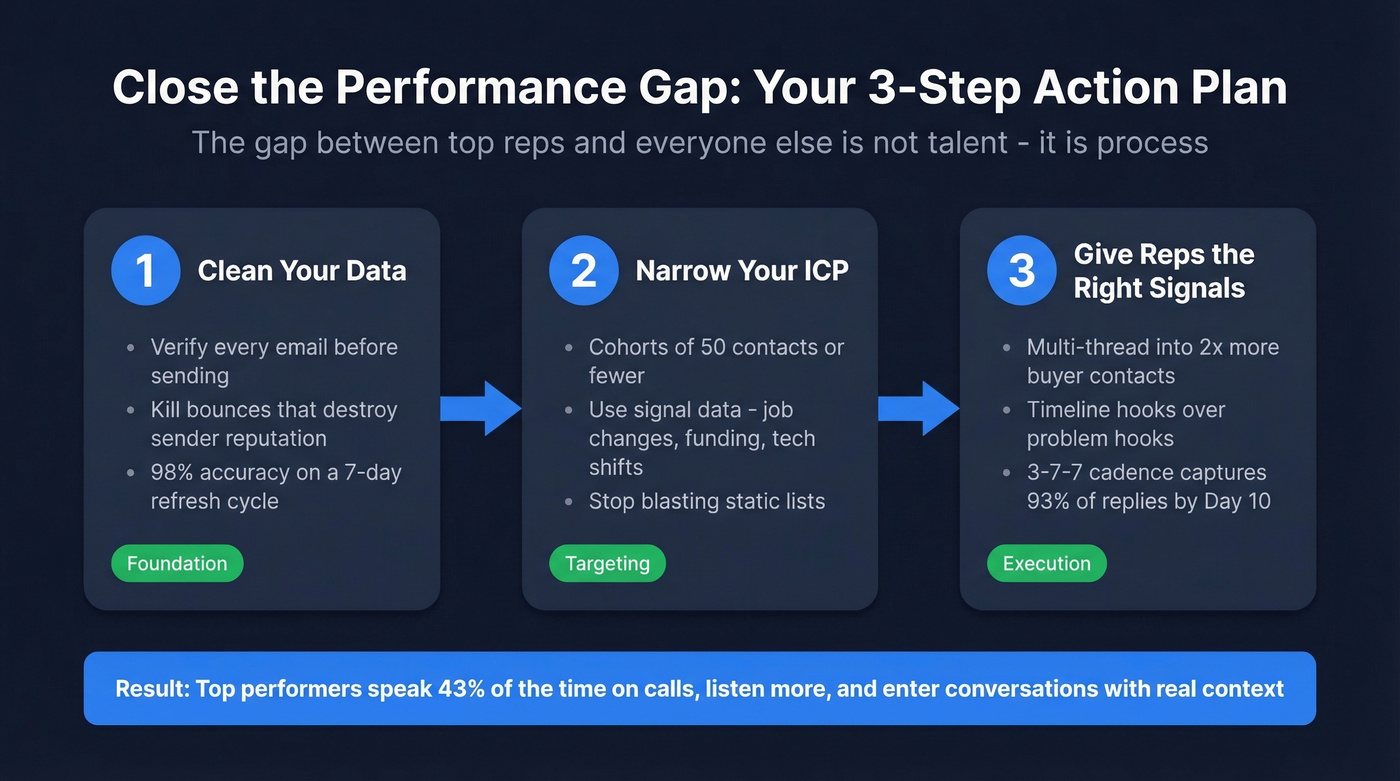
Top-closing reps speak 43% of the time on calls versus 65% for average performers, per Gong's data. They listen more because they've done better research, targeted the right accounts, and entered conversations with relevant context. That's a process advantage built on better data and tighter targeting. (If you're building a repeatable system, start with these sales prospecting techniques.)
We've tested this across dozens of outbound campaigns: the teams that fix data quality first see results within weeks, not quarters. The shift in B2B sales isn't about flashy tools - it's redesigning the process so your team spends more of that 75% non-selling time actually selling. Start with three things: clean your data, narrow your ICP, and give reps the signals they need to prioritize the right accounts.
Multi-threading boosts win rates by 130% on $50K+ deals - but you need verified contact info for every stakeholder, not just one champion. Prospeo gives you 300M+ profiles with 30+ filters to map entire buying committees, plus 125M+ verified mobile numbers when email isn't enough.
Build multi-threaded account plans with contacts that actually connect.
FAQ
What's the biggest sales trend in 2026?
Buyer self-serve dominance. 61% of B2B buyers prefer a rep-free experience, and 73% actively avoid irrelevant outreach. The shift is from volume-based selling to signal-based, data-driven engagement where reps enter conversations later but with far more relevant context.
Is cold email still effective in 2026?
Yes, with tight targeting. Teams using cohorts under 50 contacts with timeline hooks see 10%+ reply rates and 2.34% meeting rates. The difference is segmentation and verified data, not volume.
How is AI changing sales in 2026?
AI adopters report a 47% productivity boost and save 12 hours weekly, but 32% of GTM pros still never use it. The real impact comes from process redesign - reclaiming the 75% of time sellers spend on admin, CRM updates, and research rather than actual selling.
What is signal-based selling?
Signal-based selling targets prospects showing active buying intent - job changes, funding rounds, tech stack shifts, content consumption - instead of blasting static lists. It delivers 57% more revenue with 46% fewer leads, making it the highest-ROI prospecting approach available right now.