

How to Build a Social Sales System That Actually Converts
An SDR team we worked with spent a full month "doing social selling" - liking posts, sending connection requests, sharing the occasional article. They booked two meetings. Two. The problem wasn't effort. It was the absence of a social sales system: a repeatable framework that turns engagement into revenue instead of just activity metrics.
Here's the thing - 84% of B2B marketers say LinkedIn delivers the best organic results of any platform. And yet most teams treat it like a digital Rolodex instead of a revenue channel. That gap between potential and execution is exactly what a system closes.
The quick version: five stages, 60 minutes a day, three tools. Optimize your profile. Target based on signals. Engage before you pitch. Convert warm prospects with verified contact data. Measure and optimize weekly. That's the skeleton - let's put muscle on it.
What Is a Social Sales System?
It's not a collection of tips. It's a repeatable operating framework with defined stages, daily cadences, KPI benchmarks, and a tech stack that connects them. Ad-hoc social selling depends on individual motivation and produces wildly inconsistent results. A system runs whether your top rep is on vacation or not.
Five Stages of the Framework
Stage 1 - Profile & Brand Foundation
Your profile needs to sell before you do. LinkedIn's SSI score is built around four pillars, and "establish your professional brand" is the one most reps neglect.
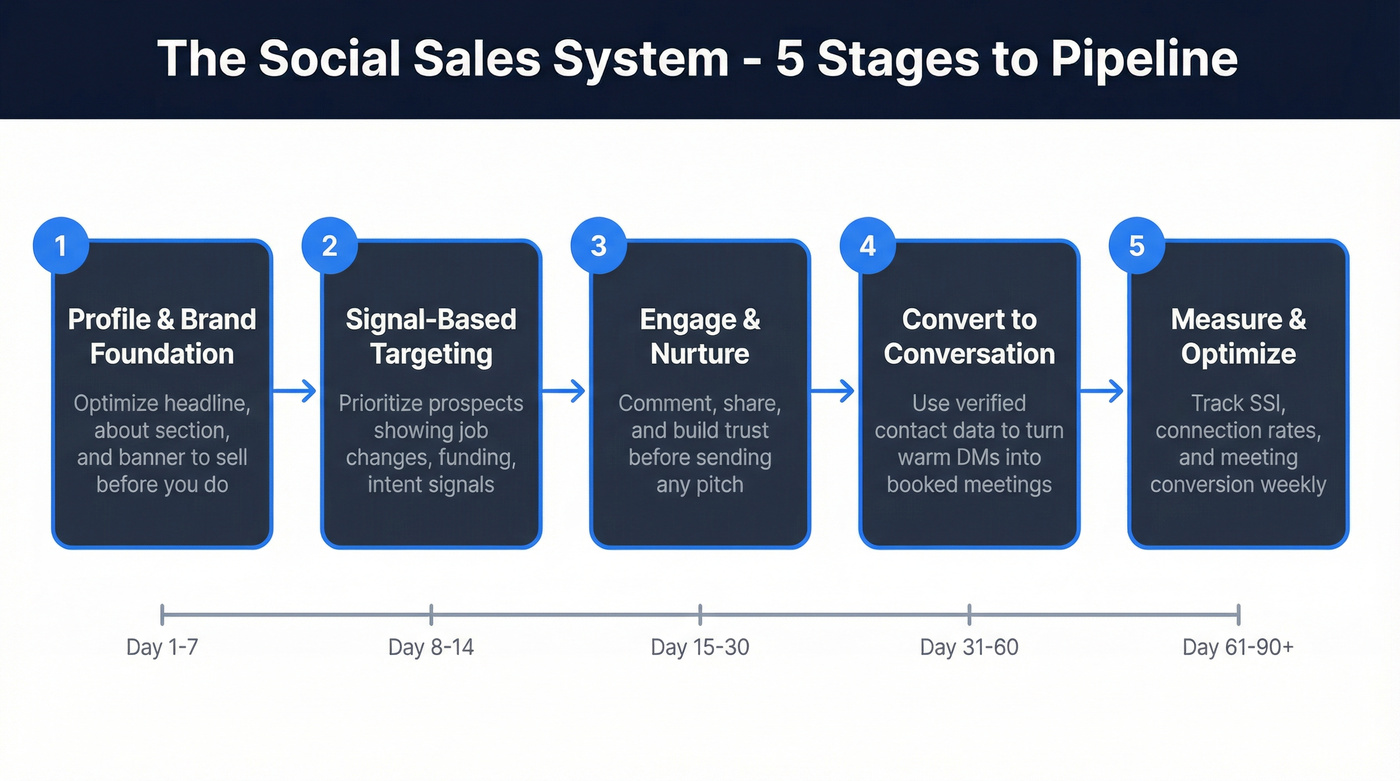
Headline: Lead with the problem you solve. "Helping SaaS teams cut churn by 30%" beats "Account Executive at Acme" every time. About section: Write in first person, include a clear CTA - book a call, download a resource, whatever moves the conversation forward. Banner image: A branded banner with a value prop signals you're serious. The default blue gradient signals you're not.
Stage 2 - Signal-Based Targeting
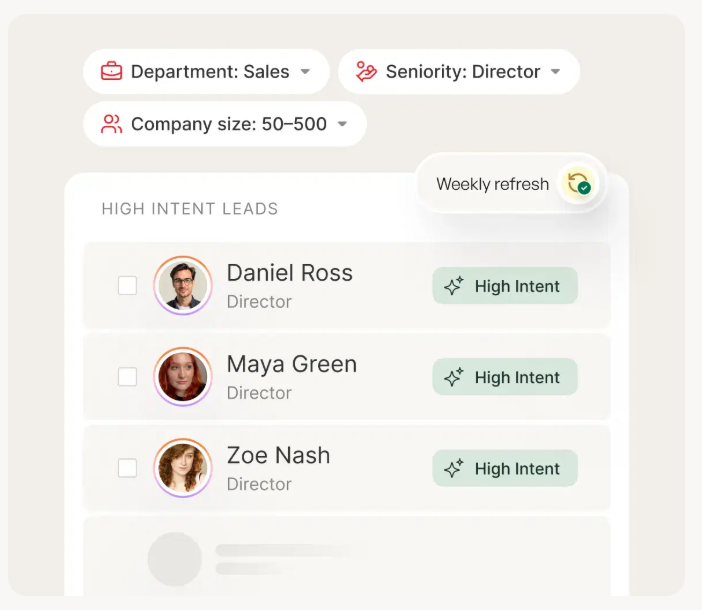
Static prospect lists decay fast. Signal-based selling - deciding who to contact based on real-time triggers - is what separates modern systems from 2019-era playbooks.
The signals that matter most: a new VP means new budget, a funding round means cash to spend, a tech stack shift means active evaluation, and intent data showing research activity around your category means someone is already looking. When you prioritize these prospects, you're reaching people in motion rather than cold contacts who'll file your message under "ignore." We've found that even a rough signal-based filter cuts wasted outreach by half compared to static list-building.
Stage 3 - Engage & Nurture
Engage with a prospect's content a few times before you send a connection request. Share their posts with a genuine take. Reference something specific they said when you reach out.
Don't pitch-slap. The connection request that opens with "I noticed you're a VP of Sales and I'd love to show you our platform" is the fastest way to get ignored. HubSpot's research found that 35% of sellers say social delivers their highest-quality leads and 42% say it generates their best cold outreach response rates. But those numbers come from reps who build trust before asking for anything.
Your prospects can smell AI-generated content from a mile away. Write like a human, have an actual opinion, and encourage your team to share company content in their own voice - employee advocacy compounds fast when it's authentic.
Stage 4 - Convert to Conversation
Here's where most social selling efforts die.
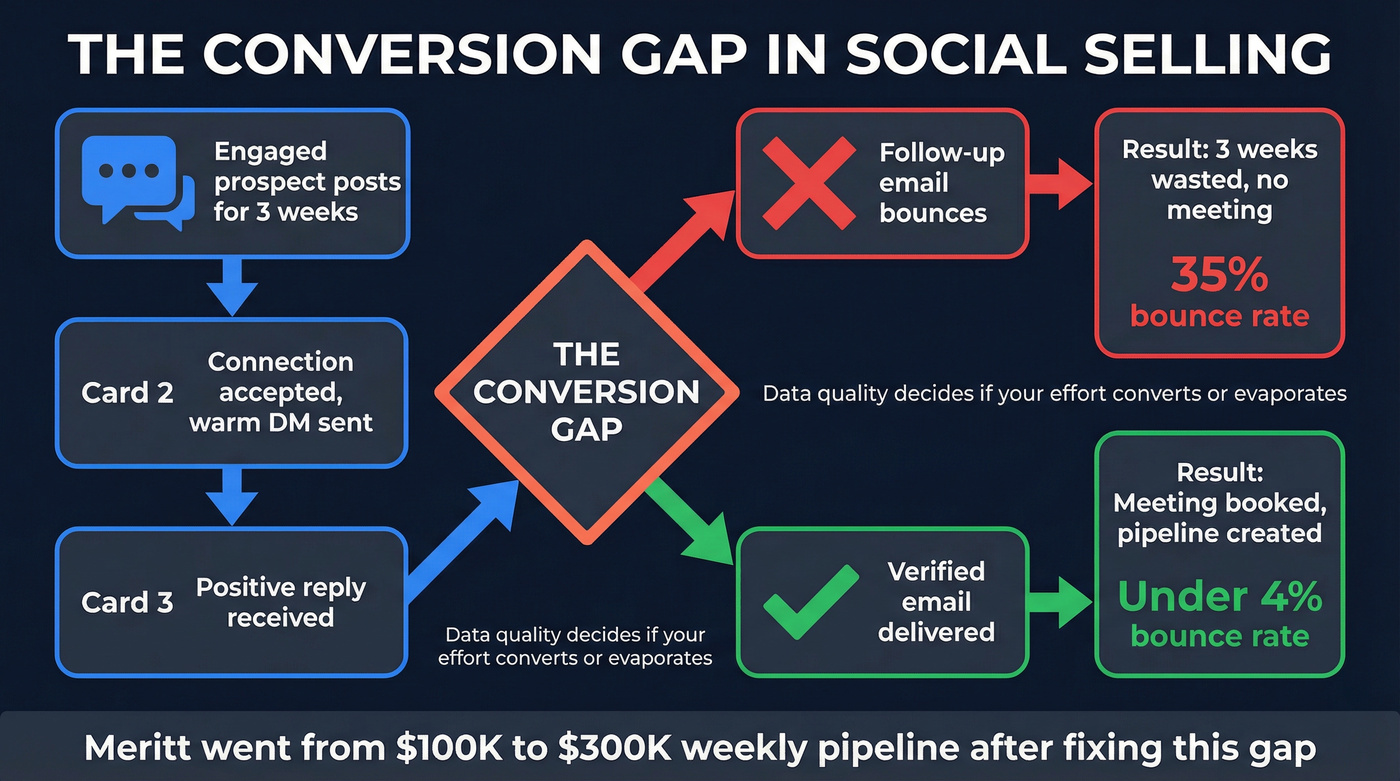
You've engaged a VP's posts for three weeks. They accepted your connection request. You send a warm DM, get a positive reply, fire off a follow-up email - and it bounces. Three weeks of relationship-building, gone because of a bad email address.
This is the conversion gap, and data quality is what decides whether your effort converts or evaporates. Meritt tripled their weekly pipeline from $100K to $300K after switching to verified contact data, partly because their bounce rate dropped from 35% to under 4%. Warm social conversations became booked meetings instead of dead-end bounces. That's the difference a data layer makes.

Stage 5 - Measure & Optimize
| Metric | Target Range |
|---|---|
| Connection acceptance | 20-35% |
| DM reply rate | 5-15% |
| Meeting rate (from connects) | 1-3% |
For content engagement context, Social Insider's latest benchmarks across 70M posts show TikTok at 3.70%, Instagram at 0.48%, Facebook at 0.15%, and X at 0.12%. B2B LinkedIn content engagement runs higher than Facebook and X when targeting is tight.
Check your SSI score at linkedin.com/sales/ssi. Typical averages land around 58-65. Aim for 70+ if you want consistent visibility and stronger relationship-building. And here's the stat that gets you budget: 65% of marketing leaders say they need to prove social supports business goals to get leadership buy-in. Build your dashboard around connection-to-meeting conversion, not vanity metrics.

You just spent three weeks warming up a prospect on LinkedIn. Don't let a bounced email kill the deal. Prospeo gives you 98% accurate emails and 125M+ verified mobiles refreshed every 7 days - so your social sales system converts engagement into booked meetings, not dead ends.
Stop losing warm prospects to bad data. Start converting them.
Daily Social Selling Cadence
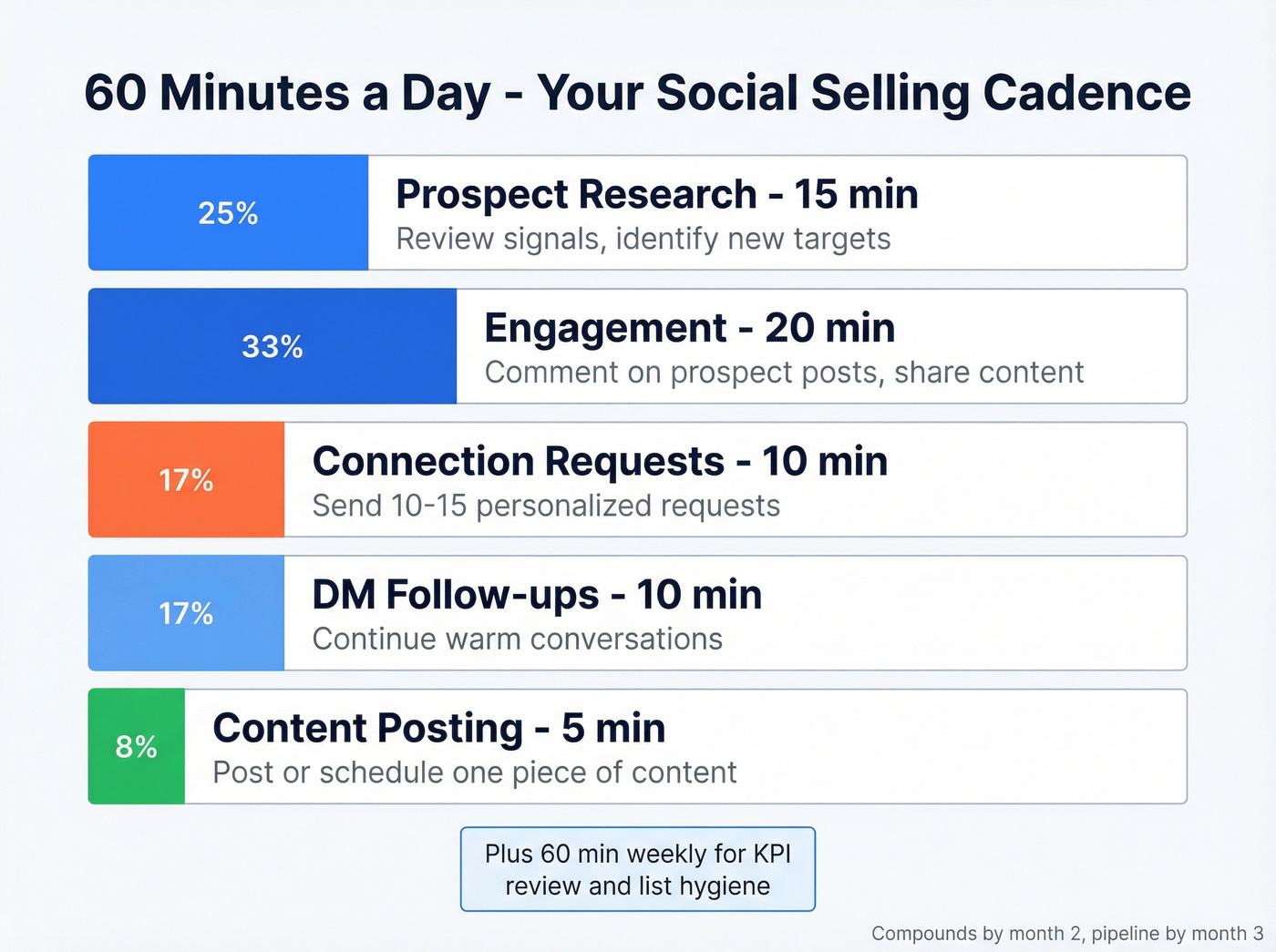
Most guides tell you to "be consistent on social." Great. Here's what consistent actually looks like - sixty minutes, time-blocked:
| Block | Duration | Activity |
|---|---|---|
| Prospect research | 15 min | Review signals, identify new targets |
| Engagement | 20 min | Comment on prospect posts, share content |
| Connection requests | 10 min | Send personalized requests (10-15/day) |
| DM follow-ups | 10 min | Continue warm conversations |
| Content posting | 5 min | Post or schedule one piece of content |
Add a weekly 60-minute review for KPI tracking and list hygiene. Let's be honest: the first 30 days often feel unproductive. That's normal. The system compounds in month two, and by month three you'll have a pipeline that didn't exist before. Teams that go in sporadic bursts never reach that inflection point.
The Right Tech Stack
You'll see guides recommending 8-12 tools. That's how you guarantee your team uses none of them. Keep it to three, maybe four.
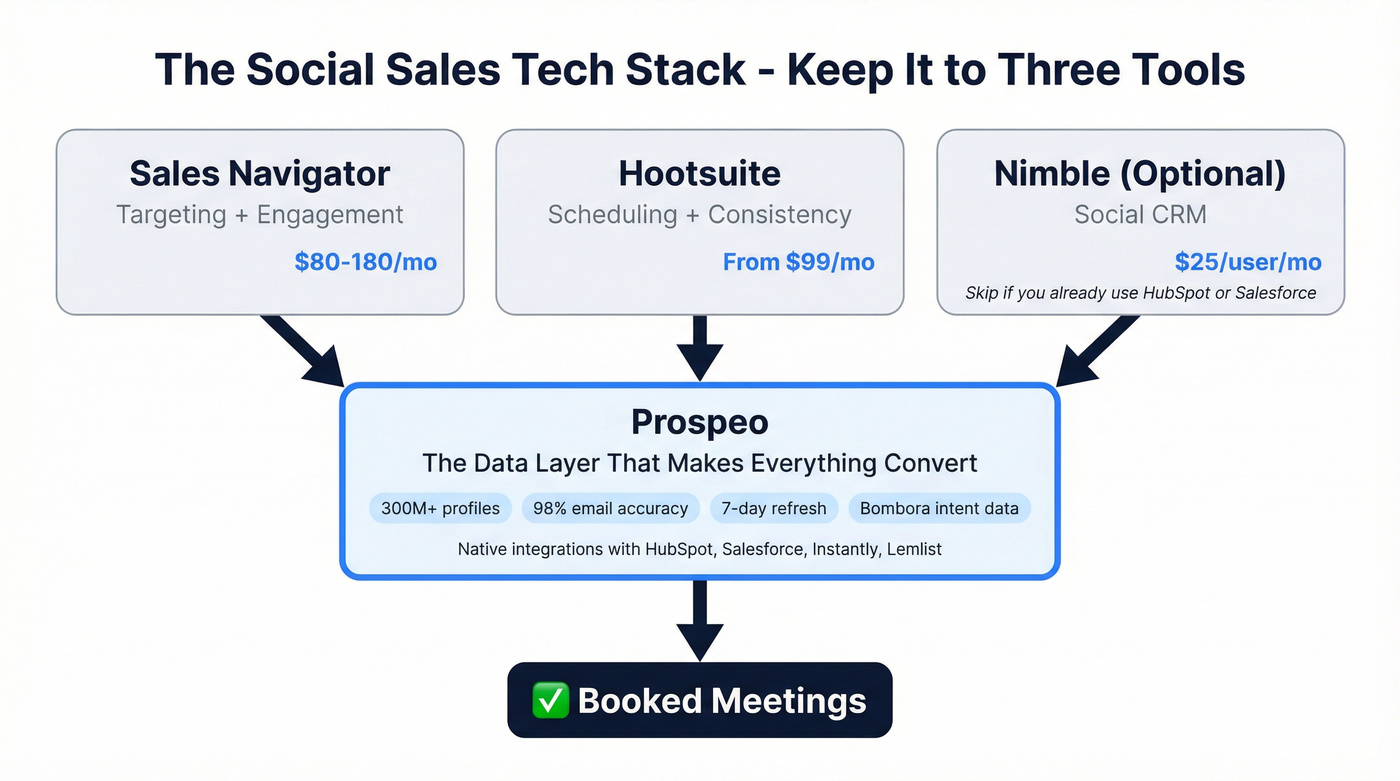
| Tool | Function | Price |
|---|---|---|
| Sales Navigator | Targeting + engagement | ~$80-180/mo depending on tier |
| Hootsuite | Scheduling + consistency | Starts around ~$99/mo |
| Nimble (optional) | Social CRM | $25/user/mo |
Prospeo is the data layer that makes the rest of the stack work. Search 300M+ professional profiles by 30+ filters - including buyer intent powered by Bombora across 15,000 topics - pull verified contacts with 98% email accuracy, and push them straight to your sequencer via native integrations with HubSpot, Salesforce, Instantly, or Lemlist. You can engage brilliantly on social, but if your follow-up emails bounce, none of it converts. With a 7-day data refresh cycle versus the 6-week industry average, the contacts you pull are current, not stale.
Skip Nimble if your team already lives in HubSpot or Salesforce - adding another CRM layer just creates friction.
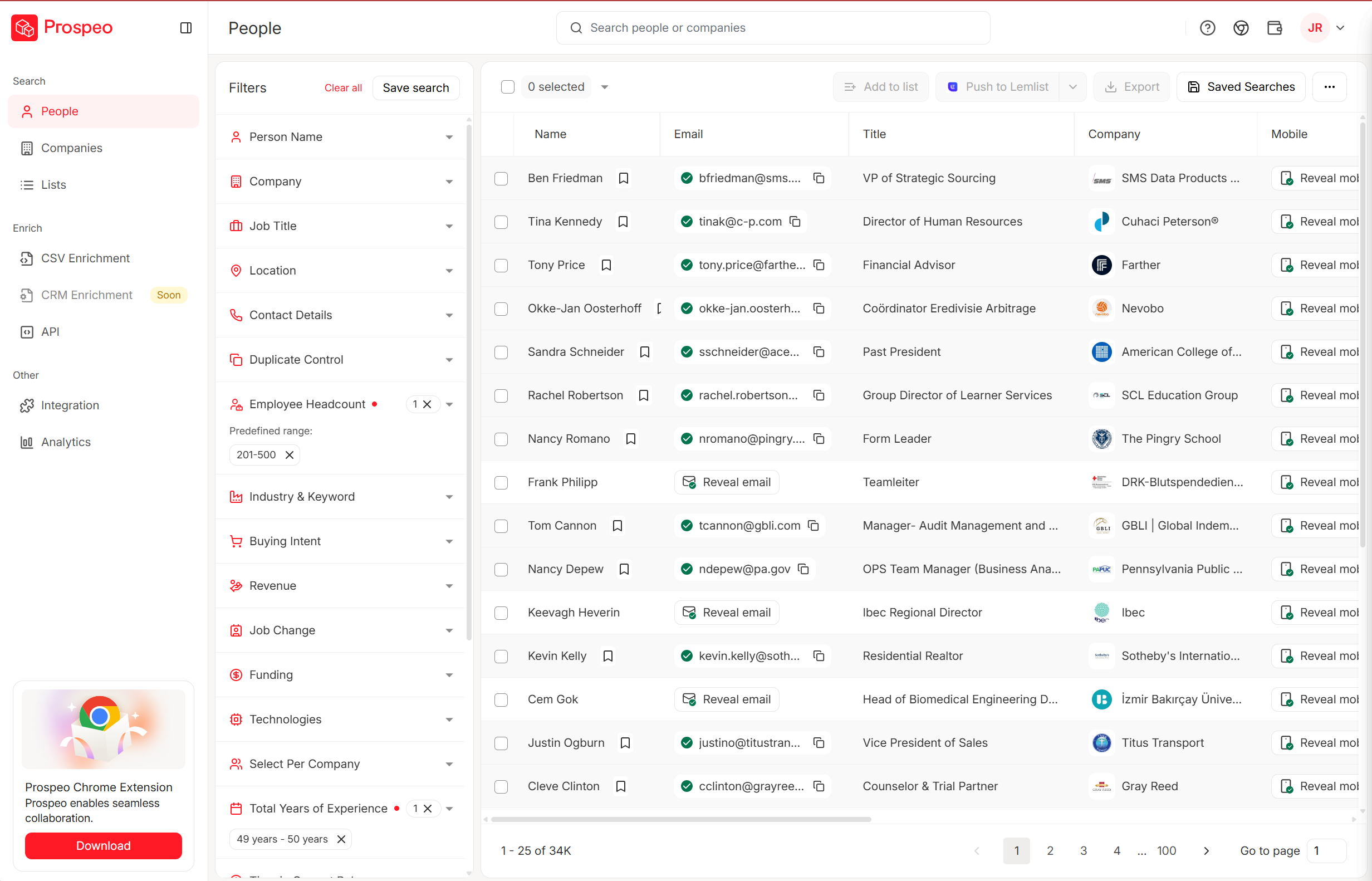
Signal-based targeting is the backbone of a modern social sales system. Prospeo lets you filter 300M+ profiles by buyer intent across 15,000 Bombora topics, tech stack, funding, job changes, and 30+ other signals - then push verified contacts straight to HubSpot, Salesforce, or your sequencer.
Find in-market buyers before your competitors even notice them.
FAQ
What's a good LinkedIn SSI score for sales reps?
Typical averages land around 58-65. Aim for 70+ for consistent visibility and stronger relationship-building. Check yours at linkedin.com/sales/ssi. Reps above 70 tend to appear in more search results and get higher connection acceptance rates.
How long before a social sales system produces pipeline?
Expect measurable pipeline impact in roughly 60-90 days. The first 30 days build visibility, weeks 5-8 generate conversations, and booked meetings follow in month three. In our experience, teams that stick to the daily 60-minute cadence see results faster than those who go in bursts - and the ones who quit at day 21 never find out what they missed.
What separates a system from ad-hoc social selling?
A system has defined stages, daily time blocks, KPI benchmarks, and tool integrations that run regardless of who's executing. Ad-hoc selling depends on individual motivation and produces inconsistent results. The five-stage framework above is designed to remove that variability so pipeline doesn't disappear when your best rep takes a vacation.