Website Lead Generation: The Data-Backed Playbook for 2026
Only 22% of businesses are satisfied with their conversion rates. That means nearly four out of five companies know their website is underperforming - and haven't fixed it yet. The gap between "we get traffic" and "we get leads" is where most website lead generation strategies go to die.
The average website converts at 2-3%. Dedicated landing pages hit 6.6%. The difference isn't traffic volume. It's execution. This playbook covers the seven highest-impact levers for turning your website into a lead-generating machine, backed by real conversion data and case studies from companies that actually moved the needle.
The Five Highest-Impact Moves (Quick Version)
If you're short on time:

Fix your page speed. A 1-second delay costs you 7% of conversions. Pages loading in 1 second convert 3x higher than 5-second pages. This is the cheapest win on the list.
Rethink your forms. "Fewer fields" isn't always better. In one case study, a multi-step form with 30+ questions hit a 53% conversion rate. Context matters more than field count.
Deploy lead magnets that match funnel stage. Interactive quizzes drive 68% more opt-ins than static PDFs. ROI calculators have been tied to 45% of total revenue for one company.
Time your popups by traffic source. Paid visitors get popups at 0-5 seconds. Organic visitors at 15-30 seconds. Second-page-view triggers hit 28.98% conversion rates.
Turn anonymous visitors into verified contacts. Only 2-3% of visitors fill out forms. For the other 97%, visitor identification tools reveal which companies are browsing your site - then a B2B data platform like Prospeo lets you pull verified emails at 98% accuracy for the decision-makers at those companies, at roughly $0.01 per lead.
Organic leads cost 30-50% less than paid across every industry. The real opportunity isn't buying more traffic - it's converting what you already have.
Why Most Lead Generation Funnels Leak (And the Numbers That Prove It)
68% of companies haven't even identified their funnel. That stat alone explains most of the problem.

You can't fix leaks you haven't mapped.
Here's where the water's dripping out: the average B2B site converts at 3.6%. B2C does slightly better at 3.9%. But those are averages - B2B SaaS sits at a painful 1.7%, while eCommerce hits 4.3%. If you're in SaaS and comparing yourself to "average website conversion rates," you're benchmarking against the wrong number.
The average form conversion rate is just 1.7%, and calls convert at 1.2%. Your two primary conversion mechanisms each fail 98%+ of the time. Of the people who do start filling out a form, 81% abandon it before submitting. 67% never come back. Your form isn't just a conversion tool - it's an active repellent for two-thirds of the people who engage with it.
Mobile drives 82.9% of website traffic but converts 8% worse than desktop. If your site isn't mobile-optimized, you're losing the majority of your audience before they even see your CTA. And 53% of mobile users abandon pages that take more than 3 seconds to load - so even if your form is perfect and your offer is compelling, half your mobile visitors never see it.
Here's a stat that should reframe how you think about scale: 50% of qualified leads aren't ready to purchase at first contact. Even your best visitors need nurturing infrastructure, not just a demo button.
The pattern is clear. Most websites don't have a traffic problem. They have a conversion architecture problem - slow pages, bad forms, generic CTAs, and zero strategy for the 97% of visitors who leave without identifying themselves.

Your website converts 2-3% of visitors. For the other 97%, Prospeo identifies the companies browsing your site and gives you 98%-accurate emails for decision-makers - refreshed every 7 days, at roughly $0.01 per lead.
Stop optimizing forms for the 3%. Start reaching the 97% who left.
Conversion Rate Benchmarks You Should Actually Know
Before you optimize anything, you need to know what "good" looks like for your industry:

| Industry | Avg. Conv. Rate |
|---|---|
| eCommerce | 4.3% |
| Legal Services | 4.2% |
| Healthcare | 3.5% |
| HVAC Services | 3.2% |
| Financial Services | 2.9% |
| Real Estate | 2.6% |
| Manufacturing | 2.4% |
| B2B SaaS | 1.7% |
eCommerce leads because the audience is transactional - they showed up to buy. B2B SaaS trails because you're dealing with longer sales cycles, multiple decision-makers, and buyers who need 6-12 touches before they'll fill out a demo form.
For B2B software specifically, there's a counterintuitive pattern: companies with 25,000+ monthly visitors see demo request rates fall below 1%, while earlier-stage companies with less traffic convert at higher rates. More traffic doesn't automatically mean more leads. It often means more unqualified traffic diluting your conversion rate.
The more important benchmark: dedicated landing pages convert at a 6.6% median rate versus 2-3% for general website pages. That's a 3-5x difference. If you're sending paid traffic to your homepage instead of a purpose-built landing page, you're lighting money on fire.
Desktop landing pages convert at 12.1% vs mobile's 11.2% - an 8% relative advantage - despite mobile driving the vast majority of traffic. The takeaway isn't "ignore mobile." It's "your mobile experience probably sucks, and fixing it is a multiplier."
One more number worth internalizing: email traffic converts at 19.3%, nearly double paid search.
Your email list isn't just a nurture channel. It's your highest-converting traffic source.
Seven Tactics That Actually Move the Needle
These seven tactics are ordered by impact-to-effort ratio. Page speed is first because it's the cheapest fix with the most reliable payoff. The later tactics require more setup but deliver compounding returns.
1. Page Speed - The Invisible Conversion Killer
A 1-second delay in page load time reduces conversions by 7%. Pages loading in 1 second convert 3x higher than pages loading in 5 seconds. Conversion rates drop 4.42% per additional second during the first 5 seconds. And 53% of mobile users leave if your page takes more than 3 seconds.
Put that in dollar terms: for a $10M/year eCommerce site, improving load time by 2 seconds translates to roughly $400K in additional revenue. That's not a marketing initiative - that's an engineering ticket that pays for itself in a quarter.
The fix is usually straightforward. Compress images, lazy-load below-the-fold content, minimize JavaScript, use a CDN. Run your site through Google PageSpeed Insights right now. If you're above 3 seconds on mobile, that's your first project - before you touch a single form field or CTA button.
I've seen teams spend months A/B testing button colors while their site loads in 4.5 seconds on mobile. Fix the foundation first.
2. Forms That Convert - Why "Fewer Fields" Is Bad Advice
Every marketing blog says the same thing: reduce form fields to boost conversions. The data tells a different story.

A ConversionXL study found that reducing form fields actually caused a 14% drop in conversions. The fields they removed were ones users wanted to interact with. When they tested field labels instead, conversions jumped 19.21%.
MarketingExperiments ran a test where a 15-field form saw a 109% uplift over an 11-field control. A membership form saw conversions increase 226% when they added more questions. And then there's WhatIsMyComfortZone.com: a multi-step form with 30+ questions achieved a 53% conversion rate. Multi-step forms specifically have driven 35% more conversions for BrokerNotes, 59% more for Vendio, and 214% more for an astroturf company.
The principle isn't "fewer fields." It's "every field should feel relevant to the value being exchanged."
If someone's requesting a custom quote, they expect to answer detailed questions. Removing those fields doesn't reduce friction - it reduces confidence.
Where "fewer fields" does work: gating a PDF download or newsletter signup. Nobody wants to give you their phone number, company size, and annual revenue for a whitepaper. Five fields or fewer doubles conversion rates in those contexts.
For email signup forms specifically, remember the three P's from Orbit Media's framework: prominence (is the form visible without scrolling?), promise (does the user know exactly what they'll get?), and proof (is there a subscriber count or testimonial nearby?). Most signup forms fail on at least two of these.
The real move is multi-step forms. Break a long form into 3-4 screens. Each step feels manageable. Users who complete step one are psychologically committed to finishing. You can qualify leads progressively - capture email on step one, then ask qualifying questions on steps two and three.
3. Lead Magnets - What's Working in 2026
Use these:
Interactive quizzes. One eCommerce client replaced a static PDF with a product-fit quiz and saw a 68% increase in lead opt-ins. Quizzes work because they promise personalized results - people want to know their "score."
ROI and cost calculators. Palisade Fence Co.'s "Project Cost Estimator" was directly tied to 45% of total revenue. Calculators work because they deliver immediate, tangible value before the prospect talks to sales.
Free tools and templates. A lead-gen template kit drove 72% more email captures than a traditional downloadable guide in A/B testing.
Skip these:
- Generic PDFs with no personalization. "The Ultimate Guide to X" has declining engagement rates across every platform.
- Lead magnets that don't match funnel stage. A pricing calculator for someone who just discovered your category is premature. A blog-style ebook for someone comparing vendors is too shallow.
- Anything that requires effort without delivering immediate value. If the user has to read 40 pages before getting the insight, they won't.
Best lead magnets by industry:
| Industry | Best Lead Magnets | Why It Works |
|---|---|---|
| B2B SaaS | ROI calculators, quizzes, guided audits | Buyers need to justify spend internally |
| eCommerce | Product-fit quizzes, gift finders | Personalization drives purchase confidence |
| Local Services | Project cost estimators, booking incentives | Immediate dollar value removes friction |
4. Popups and Exit-Intent - The Data Behind the Annoyance
Yes, popups are annoying. They also work.

The average popup conversion rate across 1.24 billion displays is 2.1%. That's 26.4 million emails collected in a single year from one platform alone. But the averages hide massive variance based on trigger type:
| Trigger Type | Avg. Conv. Rate |
|---|---|
| Click-triggered | 22% |
| 2nd page view | 28.98% |
| Exit-intent | 2.81% (top: 19.26%) |
| Timer-based | 4.42% |
| Scroll-based | 2.64% |
Click-triggered popups - where the user actively clicks something to open the offer - convert at 22% because the intent is already there. Second-page-view popups hit 28.98% because the visitor has demonstrated engagement.
Exit-intent averages 2.81%, but top performers reach 19.26%. The gap between average and top is where execution matters: compelling copy, relevant offer, clean design.
Timing is everything. The optimal delay is 6-10 seconds, but segment by traffic source. Paid traffic gets popups at 0-5 seconds (they're already primed by the ad). Organic visitors need 15-30 seconds to orient themselves. Direct traffic falls in between at 10-15 seconds.
Gamified popups - the "Wheel of Fortune" style - consistently hit 3.5%+ conversion rates. Countdown timers on mobile boost conversions by 112.93%. And Broomberg's case study showed that adding popups after 100 seconds on blog content generated 72% more leads.
The mistake isn't using popups. It's using the same popup for every visitor on every page at the same time.
5. AI Chatbots - Conversational Lead Capture
Shoppers who engage with an AI chatbot convert at 12.3% versus 3.1% for those who don't. That's a 4x difference - and it makes sense. A chatbot catches people at the moment of highest intent and removes the friction of navigating to a form.
58% of users abandon a chat or website if they don't get a response within 2 minutes. That's the bar. If you're relying on human agents during business hours, you're losing every lead that shows up at 9 PM on a Tuesday.
EcoTech Solutions saw this play out directly: response time dropped from 3.2 minutes to 0.9 seconds after deploying an AI chatbot. Monthly leads jumped from 320 to 588 - an 84% increase. Conversion rate went from 12% to 21%.
But chatbots aren't magic. 47% of them still fail to correctly identify high-intent leads. The difference between a chatbot that generates pipeline and one that annoys visitors is qualification logic. Your bot needs to ask the right questions, route hot leads to sales immediately, and gracefully hand off complex queries to humans.
On pricing: Intercom's Fin AI Agent runs $0.99 per resolution, with base plans starting at $29/month per seat. Tidio hits a 67% AI resolution rate for eCommerce. The tooling is getting better and cheaper every quarter.
Here's the thing: if your average deal size is below $15K, you don't need a fancy chatbot with custom AI training. A simple bot that asks three qualifying questions - budget, timeline, decision-maker status - and books a meeting will outperform 90% of the over-engineered solutions we've seen teams spend months building.
6. SEO - The Compounding Lead Engine
~60% of B2B businesses say SEO has the biggest impact on their lead generation efforts. The cost data backs it up:
| Industry | Organic CPL | Paid CPL |
|---|---|---|
| B2B SaaS | $164 | $310 |
| Legal | $516 | $784 |
| Manufacturing | $415 | $691 |
| Healthcare | $320 | $401 |
| HVAC | $69 | $115 |
Organic leads cost 30-50% less than paid across every single industry. And email traffic - which SEO feeds through newsletter signups - converts at 19.3%, nearly double paid search.
The tradeoff is time. SEO yields meaningful results in 6+ months. But unlike paid channels, the returns compound. A blog post ranking for a high-intent keyword generates leads for years without additional spend. A Google Ads campaign stops the moment you stop paying.
The keyword test that matters for lead generation: "Can this keyword bring me potential customers?" A post ranking for "best CRM for real estate agents" brings buyers. A post ranking for "what is CRM" brings students. Every page on your site should map to a specific stage in the buyer journey.
Nearly half of marketers say organic search is their most profitable channel. The ones who disagree are usually the ones who gave up at month four.
7. Turning Anonymous Visitors Into Contacts
Here's the math that should frustrate you: only 2-3% of website visitors convert through forms. The other 97% leave without a trace. You spent money getting them there - through SEO, ads, content, social - and they vanished.
Visitor identification tools like Dealfront reveal which companies are visiting your site. That's useful, but it's only half the equation. Knowing that "Acme Corp visited your pricing page" doesn't help unless you can reach the right person at Acme Corp with a verified email and direct dial.
This is where a B2B data platform closes the loop. Once you know which companies are showing interest, you pull targeted contact lists of the decision-makers at those companies - filtered by job title, department, seniority, and buyer intent signals - then reach out while the interest is fresh.
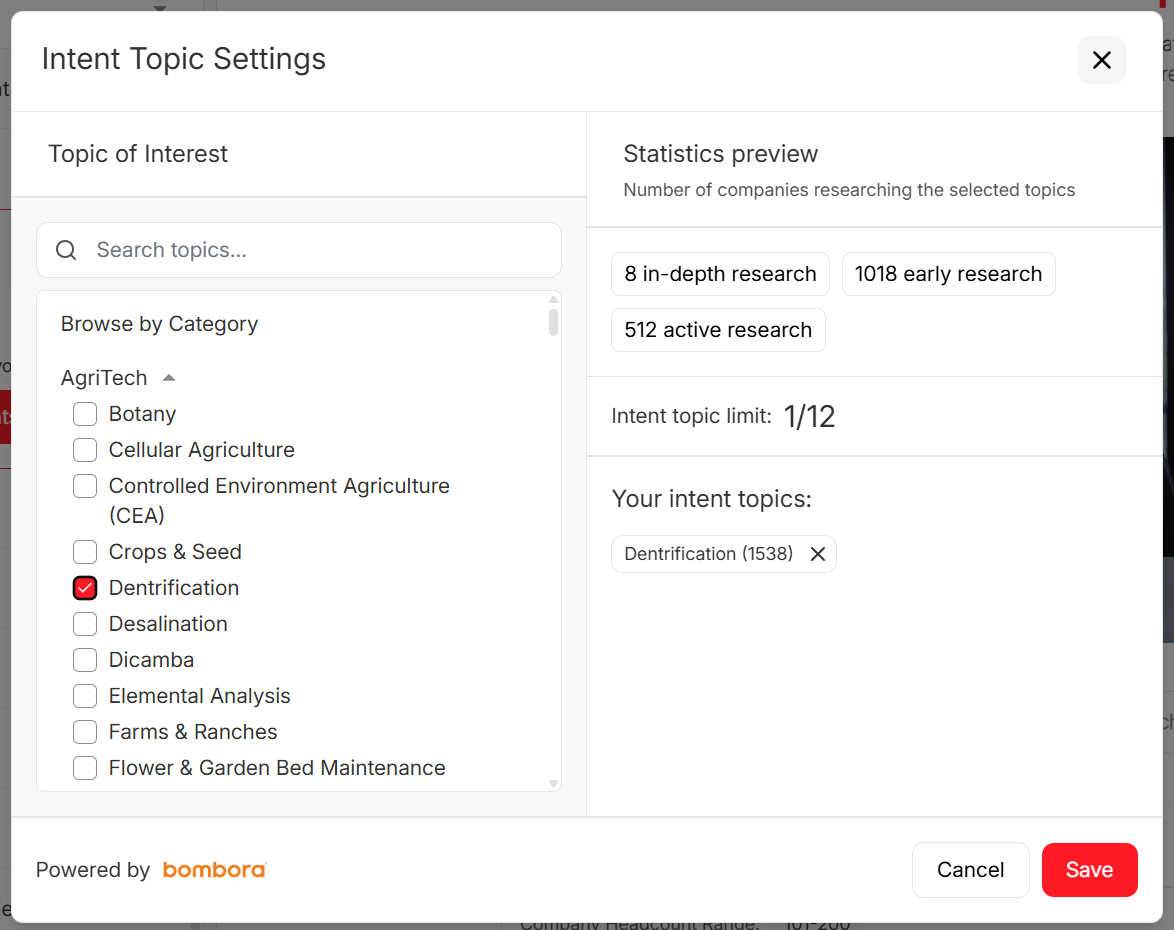
The key is data freshness and accuracy. Stale data means bounced emails, burned sender reputation, and wasted sales time. Look for platforms with weekly data refresh cycles (the industry average is 6 weeks) and multi-step email verification that includes spam-trap removal and catch-all handling.
Your website generates interest. The question is whether you have the infrastructure to act on it before that interest goes cold.
A/B Testing - Small Changes, Outsized Results
You don't need more traffic. You need to convert the traffic you have.
WorkZone changed their customer testimonial logos from color to black and white next to a demo request form. Result: 34% increase in form submissions, verified at 99% statistical significance over a 22-day test. The color logos were distracting from the CTA. Nobody would've guessed that without testing.
Going (the travel deals company) changed their CTA from "Sign up for free" to "Trial for free." One word. 104% increase in premium trial starts. The word "trial" implied access to something valuable. "Sign up" implied giving something away.
Ubisoft simplified their Buy Now page for a game launch. 12% lift in lead generation over a 3-month test. Fewer choices, clearer path.
Later achieved a 60% average conversion rate on gated content landing pages, generating 100,000+ new leads. Their secret wasn't one test - it was continuous iteration.
Personalized CTAs convert 202% better than generic ones. AI-powered personalization delivers a 40% lift on top of that. "Submit" and "Learn More" are conversion killers. "Get My Free Audit" wins every time.
If you want a repeatable testing cadence, use an A/B testing framework built for lead gen (not vanity metrics).
The Cost of Leads - What You Should Be Paying
Here's what leads actually cost by industry, broken down by channel:
| Industry | Blended CPL | Paid CPL | Organic CPL |
|---|---|---|---|
| eCommerce | $91 | $98 | $83 |
| HVAC | $92 | $115 | $69 |
| B2B SaaS | $237 | $310 | $164 |
| Healthcare | $361 | $401 | $320 |
| Manufacturing | $553 | $691 | $415 |
| Legal | $649 | $784 | $516 |
| Financial Svcs. | $653 | $761 | $555 |
| Higher Ed | $982 | $1,261 | $705 |
The average B2B CPL across all channels is $84. Google Ads runs $70.11 per lead. LinkedIn averages $110 - 57% higher than Google Search, but the targeting precision for B2B often justifies the premium.
The benchmark that matters most: a healthy LTV:CAC ratio of 3:1 or higher. If your average deal is worth $10K and it costs $3,300 to acquire that customer, you're in good shape. If it costs $5K, you've got a problem.
Look, here's what nobody tells you about CRO economics: companies running continuous A/B testing programs achieve 223% ROI on their optimization investments. Even a 1% increase in conversion rate can raise leads and revenue by 30-50% when compounded across every page, form, and CTA. The cheapest lead you'll ever get is the one you generate by converting existing traffic better.
Common Mistakes That Kill Website Lead Generation
Targeting anyone with a pulse. As one practitioner on r/b2bmarketing put it: stop chasing tire-kickers. After filtering based on intent and verified data, they saw "fewer leads, more conversations, better close rates."
Ignoring mobile optimization. Mobile drives 82.9% of traffic. If your forms, CTAs, and page load times aren't optimized for mobile, you're losing the majority of your audience.
Using generic CTAs. "Submit" and "Learn More" are conversion killers. Personalized CTAs convert 202% better. "Get My Free Audit" beats "Submit" every time.
No trust signals. Missing SSL certificates, no reviews, vague privacy policies. 67% of customers prefer self-service - but they won't self-serve on a site they don't trust.
Ignoring page speed. 53% of mobile users leave after 3 seconds. Test your speed before you test anything else.
Same popup timing for every visitor. Paid traffic and organic traffic have completely different intent levels. Segment your popup triggers by source or you're leaving conversions on the table.
Using unverified contact data for outbound. This one burns domains. If you're scraping emails from random sources and blasting sequences, your sender reputation takes the hit. Multi-step verification with spam-trap removal and honeypot filtering exists for exactly this reason. Bad data doesn't just waste time - it damages your ability to reach anyone.
Not offering self-service options. 67% of customers prefer self-service over talking to a rep. If your only conversion path is "book a demo," you're filtering out the majority of interested buyers.

Every tactic in this playbook improves your conversion rate by percentages. Prospeo's visitor identification + 300M verified contacts database lets you capture leads your forms never will - with 30+ filters to target the exact buyers you want.
Fix the biggest leak in your funnel - the visitors who never fill out a form.
FAQ
What's a good website conversion rate?
The average website converts at 2-3%, while dedicated landing pages hit a 6.6% median. Industry matters: B2B SaaS benchmarks at 1.7%, eCommerce at 4.3%, and legal services at 4.2%. Anything consistently above your industry average is "good" - but the real target is landing page-level performance across your key pages.
How long does SEO take to generate website leads?
SEO typically takes 6+ months to produce meaningful results, but organic leads cost 30-50% less than paid and compound over time. ~60% of B2B businesses say SEO has the biggest impact on lead generation. A ranking blog post generates leads for years without additional spend.
Do popups actually work for lead generation?
Yes. The average popup converts at 2.1% across 1.24 billion displays, and exit-intent top performers hit 19.26%. The key is timing: 6-10 second delays work best, segmented by traffic source - paid visitors at 0-5 seconds, organic at 15-30 seconds. Second-page-view triggers reach 28.98%.
What's the cheapest way to get verified B2B leads from a website?
Combine visitor identification tools with a B2B data platform for roughly $0.01 per verified contact. Compare that to industry CPLs of $84-$982 through paid channels, and verified B2B data becomes the cheapest lead source in your stack - assuming you have the outbound workflow to act on it. Free tiers let you test before committing.
What's the best lead magnet for B2B websites?
Interactive tools outperform static content every time. ROI calculators, quizzes, and guided audits drive significantly more opt-ins than PDFs. One company tied 45% of total revenue to a cost estimator tool. Match the lead magnet to funnel stage - a pricing calculator for late-stage buyers, an industry quiz for early-stage awareness.