

BDR vs SDR: What's the Real Difference? (2026 Benchmarks)
Ask six sales leaders to define "SDR" and "BDR" and you'll get at least four different answers. A T2D3 analysis found that six major sources define SDR as the inbound role while two others flip it entirely. So what is the difference between BDR and SDR, and does it actually matter for your org design, hiring, and comp planning?
Here's the short version: SDR = inbound lead qualification, BDR = outbound prospecting. Most companies under $50M ARR combine them into one hybrid role anyway. The title matters far less than the motion - look at whether the job description says "inbound" or "outbound" and ignore the acronym. Under $5M ARR, just hire a hybrid and specialize later.
SDR vs BDR Responsibilities
| Dimension | SDR (Inbound) | BDR (Outbound) |
|---|---|---|
| Lead source | Marketing-generated + inbound requests | Self-sourced / cold outbound |
| Daily focus | Qualify & convert inbound interest | Prospect & create new opportunities |
| Calls/day | 40-50 | 40-50 |
| Emails/day | 10-40 | 10-40 |
| Primary KPI | Meetings held + speed-to-lead | Meetings set + pipeline created |
| SDR-to-AE ratio | 1:2.4 | 1:2.4 |
| Avg. ramp time | 3.0 months | 3.0 months |
| Avg. tenure | 1.9 years | 1.9 years |
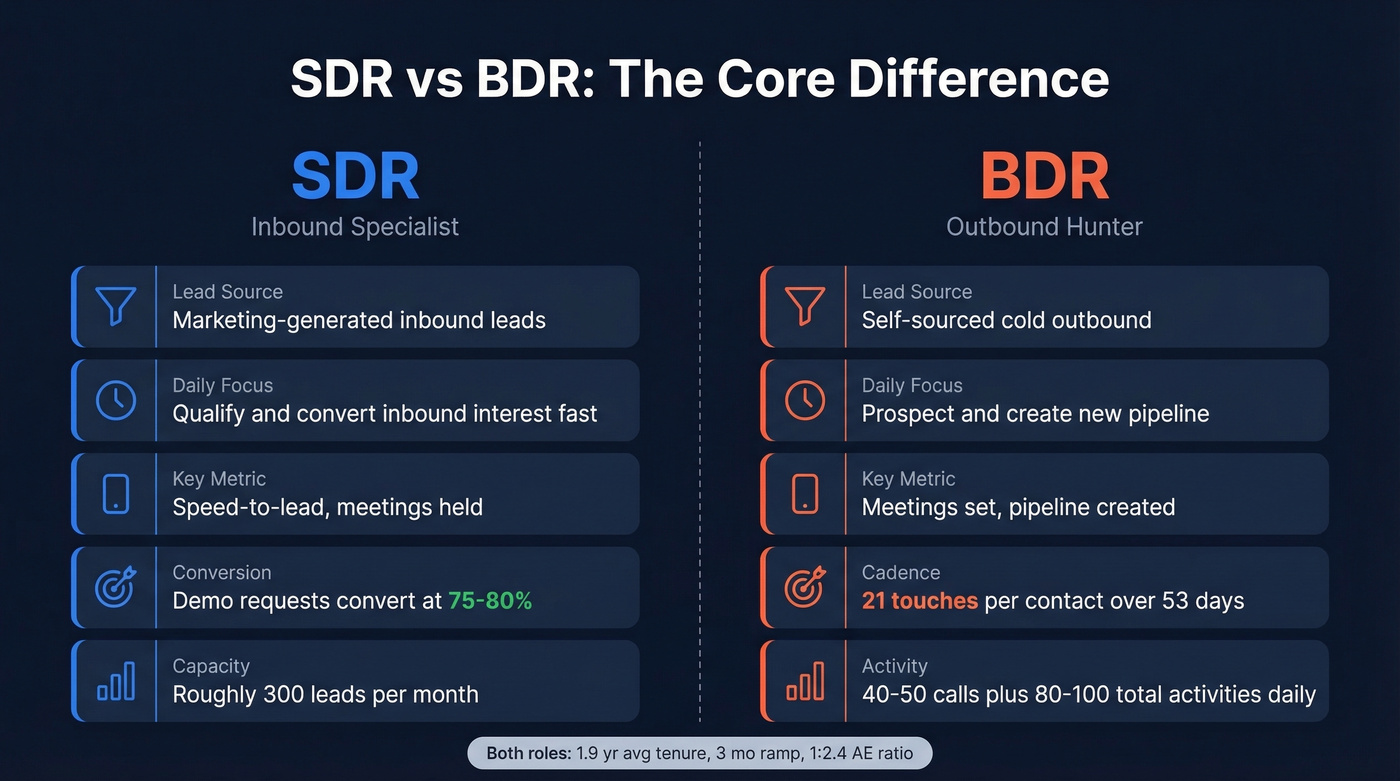
The ratio, ramp, and tenure figures come from the Bridge Group 2025 Sales Development Report across 351 B2B companies. They're among the most widely used org-design benchmarks available, and understanding these numbers at this level of detail is what separates a well-designed sales org from one that's guessing.
What SDRs Actually Do
SDRs work inbound leads - demo requests, content downloads, webinar signups - and convert them into qualified meetings. High-intent leads like demo requests convert at 75-80%, while low-intent content downloads sit around 5-10%. One inbound SDR can handle roughly 300 leads per month. The role isn't about hustle. It's about speed-to-lead.
What BDRs Actually Do
BDRs are the hunters. 85% focus primarily on outbound, and the cadence intensity reflects that - the average BDR makes 21 attempts per contact across 5 social touches, 8 calls, and 8 emails over a 53-day cadence. A common benchmark is 40-50 calls per day and 80-100 total activities.
The 6sense benchmark report found BDRs hit roughly 88% of quota on average, but that number hides a massive gap: supported BDRs with good tools, coaching, and clean data hit 95%, versus 80% for those left to figure it out alone. 60% of BDRs now use AI tools for research and email drafting, but the role isn't going away - it's evolving. If you're building the outbound motion, start with a clear BDR program and track the right BDR KPIs.

BDRs average 21 attempts per contact across 53 days. Every bounce and dead number compounds that waste. Prospeo's 98% email accuracy and 125M+ verified mobiles on a 7-day refresh cycle mean your reps spend those touches reaching real buyers - not voicemails on disconnected lines.
Stop burning cadence steps on stale data. Start connecting.
2026 Compensation Benchmarks
| Experience | OTE Range | Pay Mix |
|---|---|---|
| Entry (0-1 yr) | $70K-$75K | 70/30 |
| Mid (1-3 yrs) | $80K-$90K | 65/35 |
| Senior (3-5+ yrs) | $90K-$100K+ | 60/40 |
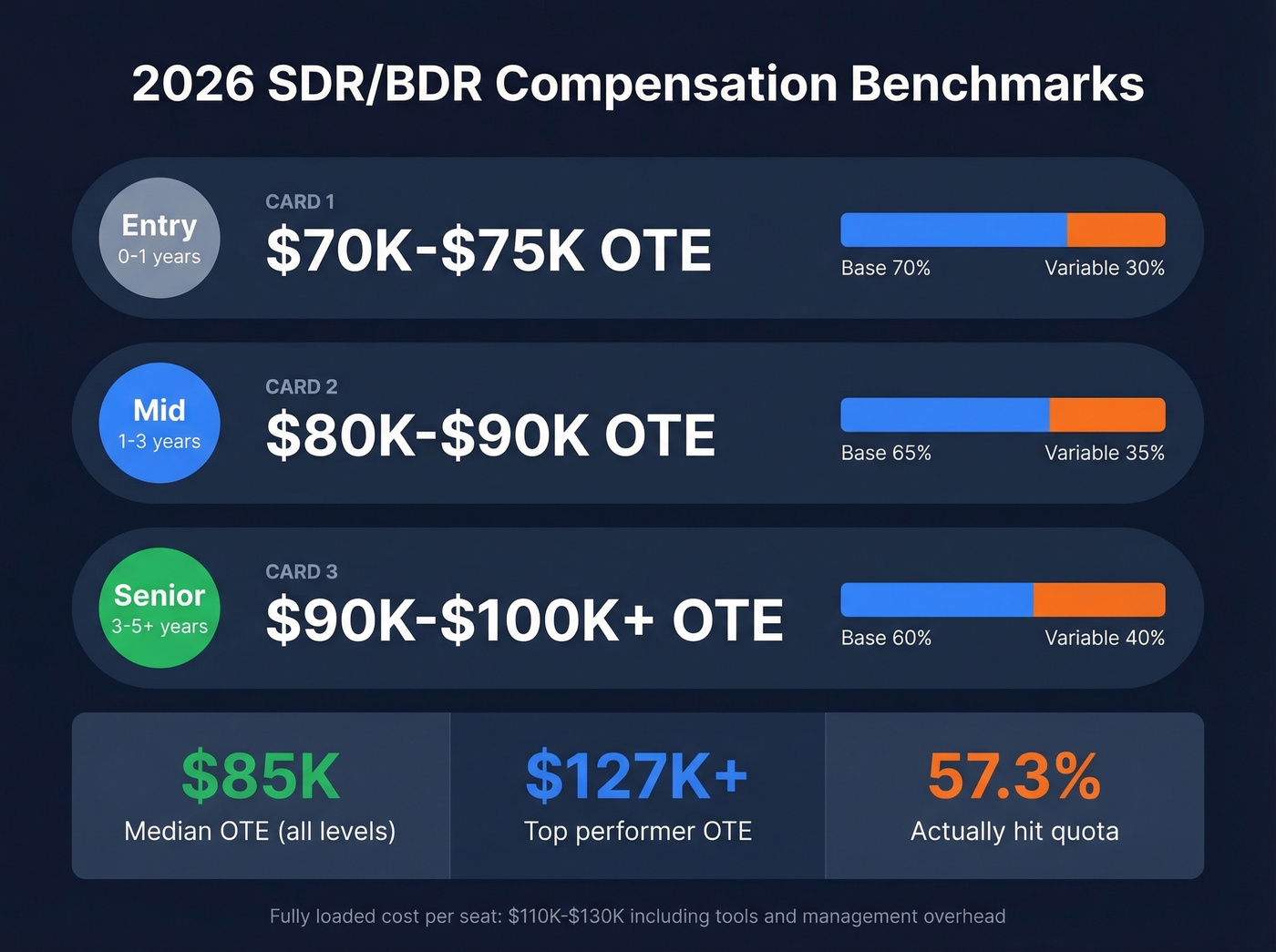
These bands reflect experience tiers. RepVue's 2026 data puts the overall median at $85K OTE across all levels, with top performers clearing $127K+. Only 57.3% hit quota - the role is harder than most comp plans assume.
In our experience, the fully-loaded cost of $110K-$130K per seat (including tools and management overhead) catches most hiring managers off guard. Budget against that number, not just OTE. And if you're splitting inbound from outbound, outbound meetings should pay roughly 2x to reflect the difficulty gap. For a deeper comp and quota setup, align this with quota-setting best practices and a clean sales incentive plan.
Career Paths
Let's be honest - ask any SDR or BDR who's been in the seat six months and they'll tell you the title on their profile matters less than whether their leads are inbound or outbound. But the exit options are the same either way. Burnout is real. Average tenure is just 1.9 years, and promotion timelines have stretched roughly 28% post-pandemic.
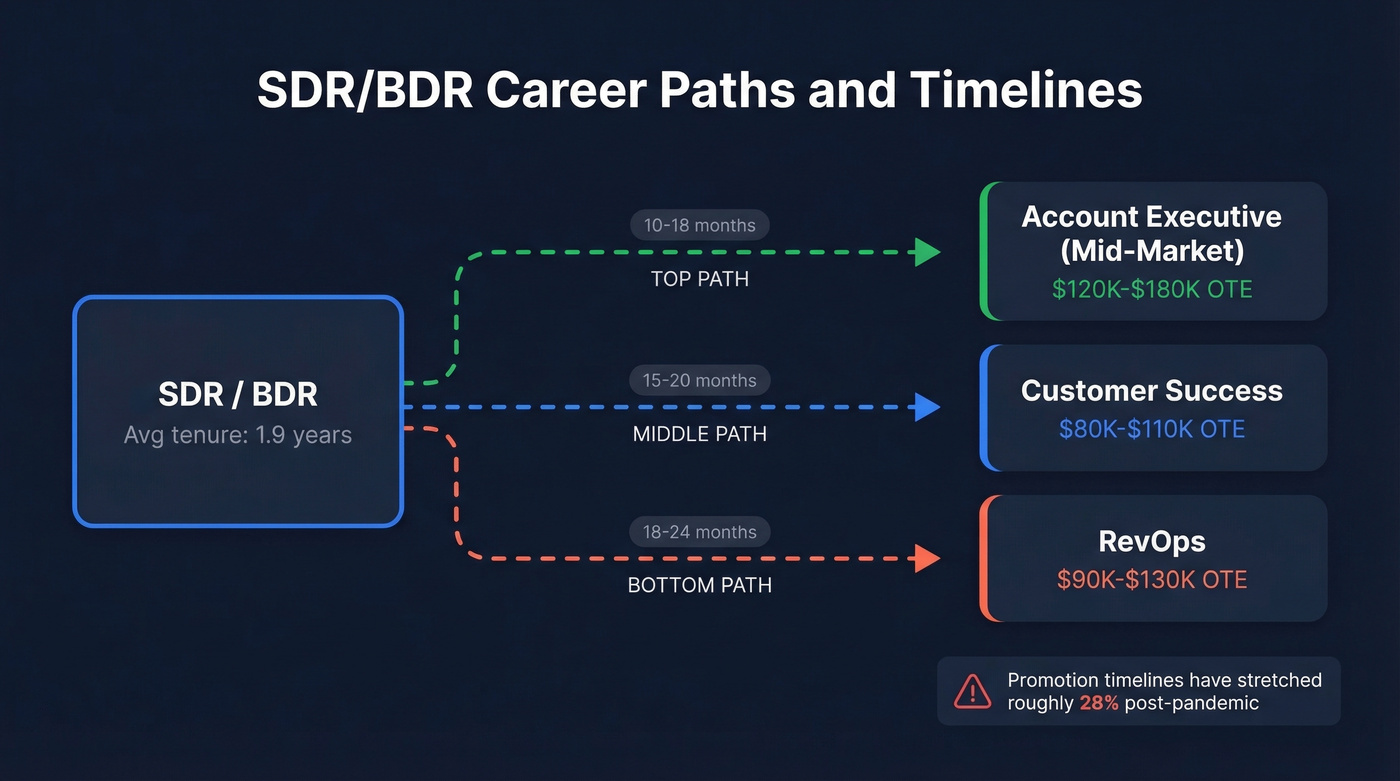
- AE (mid-market) - 10-18 months, OTE $120K-$180K
- Customer Success - 15-20 months, $80K-$110K
- RevOps - 18-24 months, $90K-$130K
The SDR/BDR seat is a training ground for the entire revenue org, not just a stepping stone to closing. If you're mapping promotions, use a structured SDR to AE path and formal SDR onboarding.
The Data Problem Nobody Talks About
Here's the thing: most SDR/BDR teams don't have a coaching problem or a hiring problem. They have a data problem. 71% of sales dev teams deliver less than half their pipeline targets. BDRs making 50 calls a day on stale numbers and bouncing emails off bad addresses aren't building pipeline - they're burning activity hours for nothing.
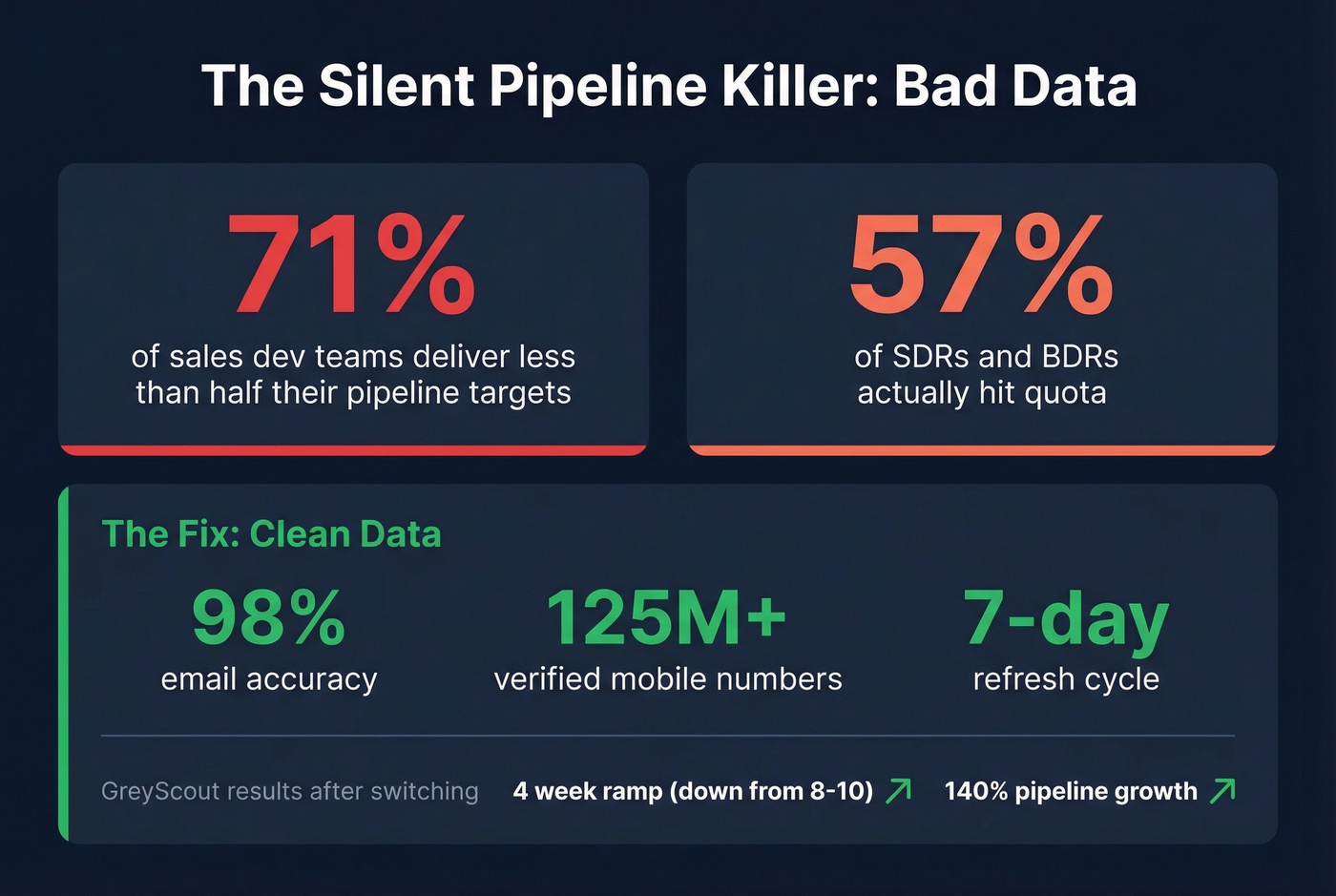
We've seen this pattern repeatedly. A team hires well, builds solid sequences, and still misses quota because a meaningful share of their contact data is dead on arrival. The fix isn't more coaching or more reps - it's cleaner data. Prospeo delivers 98% email accuracy and 125M+ verified mobile numbers on a 7-day refresh cycle, so reps actually reach the people they're targeting. One customer, GreyScout, cut rep ramp time from 8-10 weeks down to 4 and saw pipeline jump 140% after switching. If you're trying to prevent this upstream, treat it like a RevOps system: keep CRM data clean and standardize sales activity reporting.

Only 57% of SDRs and BDRs hit quota - and bad data is the silent killer. GreyScout cut rep ramp time in half and grew pipeline 140% after switching to Prospeo. At $0.01 per email with no contracts, cleaner data costs less than one wasted rep-hour per week.
Give your reps data that actually connects them to buyers.
FAQ
Can one person be both an SDR and a BDR?
Yes - most companies under $50M ARR combine the roles. The rep handles both inbound and outbound, typically splitting 60/40 toward outbound. Define the motion first, pick the title second.
Which role pays more?
BDR OTE runs slightly higher because outbound is harder. Best-practice plans pay 2x per outbound meeting versus inbound. The gap is typically $5K-$10K at most companies, though top outbound performers clearing $127K+ skew the average upward.
Is BDR higher than SDR?
Neither is "higher." They're parallel roles with different motions. Seniority depends on the company's org chart, not the acronym. Both lead to AE, CS, or RevOps within 10-24 months.
What tools do SDRs and BDRs need?
A CRM like Salesforce or HubSpot, a sequencing tool like Outreach or Salesloft, and a verified data provider. Data quality matters most - if your reps are wasting dials on dead numbers, nothing else in the stack matters. Skip tools that don't verify on a weekly refresh cycle; stale data from monthly or quarterly refreshes is the single biggest source of wasted BDR activity.