

What to Say in a Sales Meeting (Stage-by-Stage Talk Tracks)
You're 30 seconds into a first meeting with a VP of Operations. She's already glancing at her second monitor. You've got one sentence to earn the next 25 minutes - and you're blanking on what to say that actually matters. The usual playbook covers internal team standups, not sitting across from a buyer who's deciding whether you're worth their time.
Here's what works, stage by stage, with exact words you can steal.
Three Things to Memorize
Memorize a permission-based opener, 3-5 discovery questions from a framework that fits your deal size, and the "engaged prospect" close. That covers 80% of meetings.
Talk Tracks Beat Rigid Scripts
Rigid scripts make you sound like a robot reading a teleprompter. Talk tracks - flexible conversation guides with key phrases you've internalized - are fundamentally different. Structured calls that hit specific talking points convert 27% better than unstructured ones, and new reps ramp 39% faster with proven talk tracks to lean on.
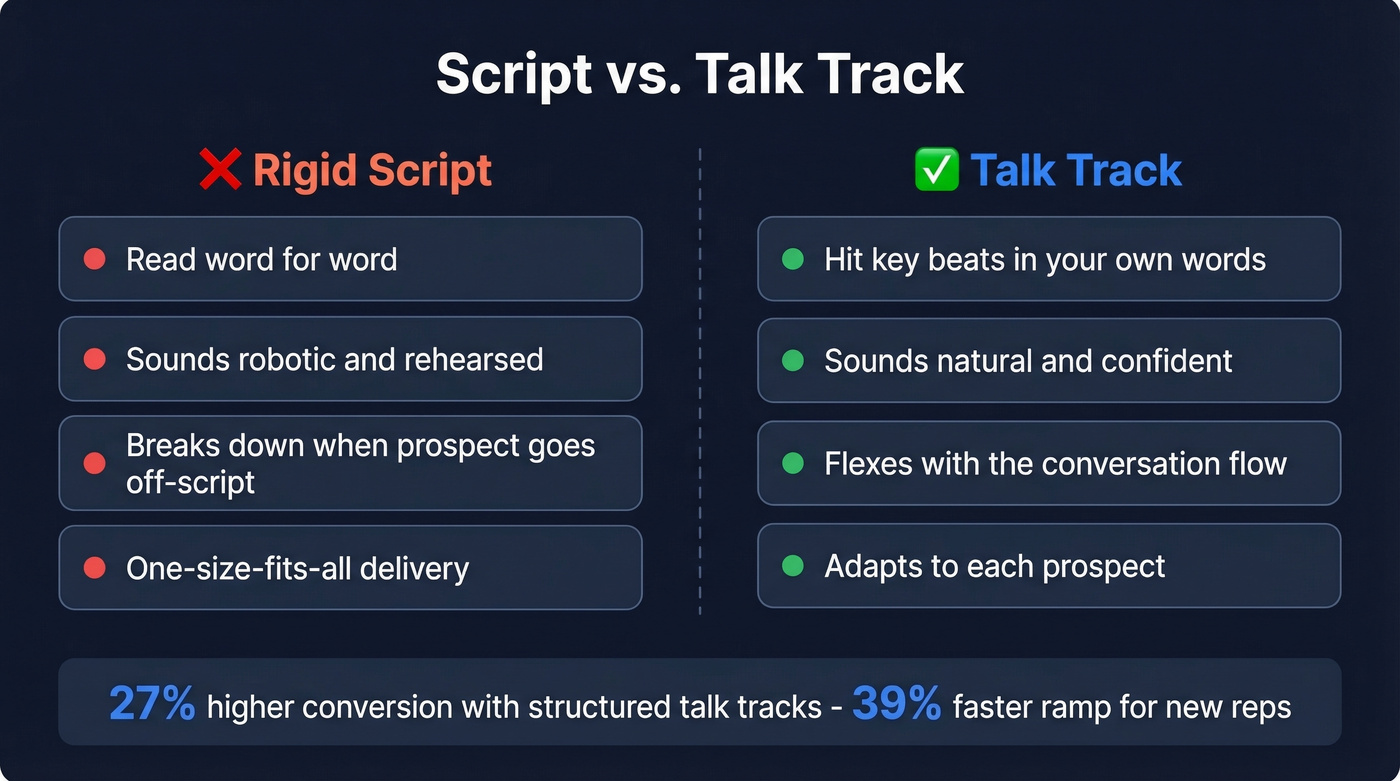
A script says "read this word for word." A talk track says "hit these beats, in roughly this order, using language that feels like yours." Every phrase below is a talk track. Make it your own.
How to Plan a Sales Meeting Before You Open Your Mouth
The best talk track won't save a meeting you walked into unprepared. Here's the thing: most blown meetings aren't lost in the room. They're lost in the 10 minutes of prep you skipped.
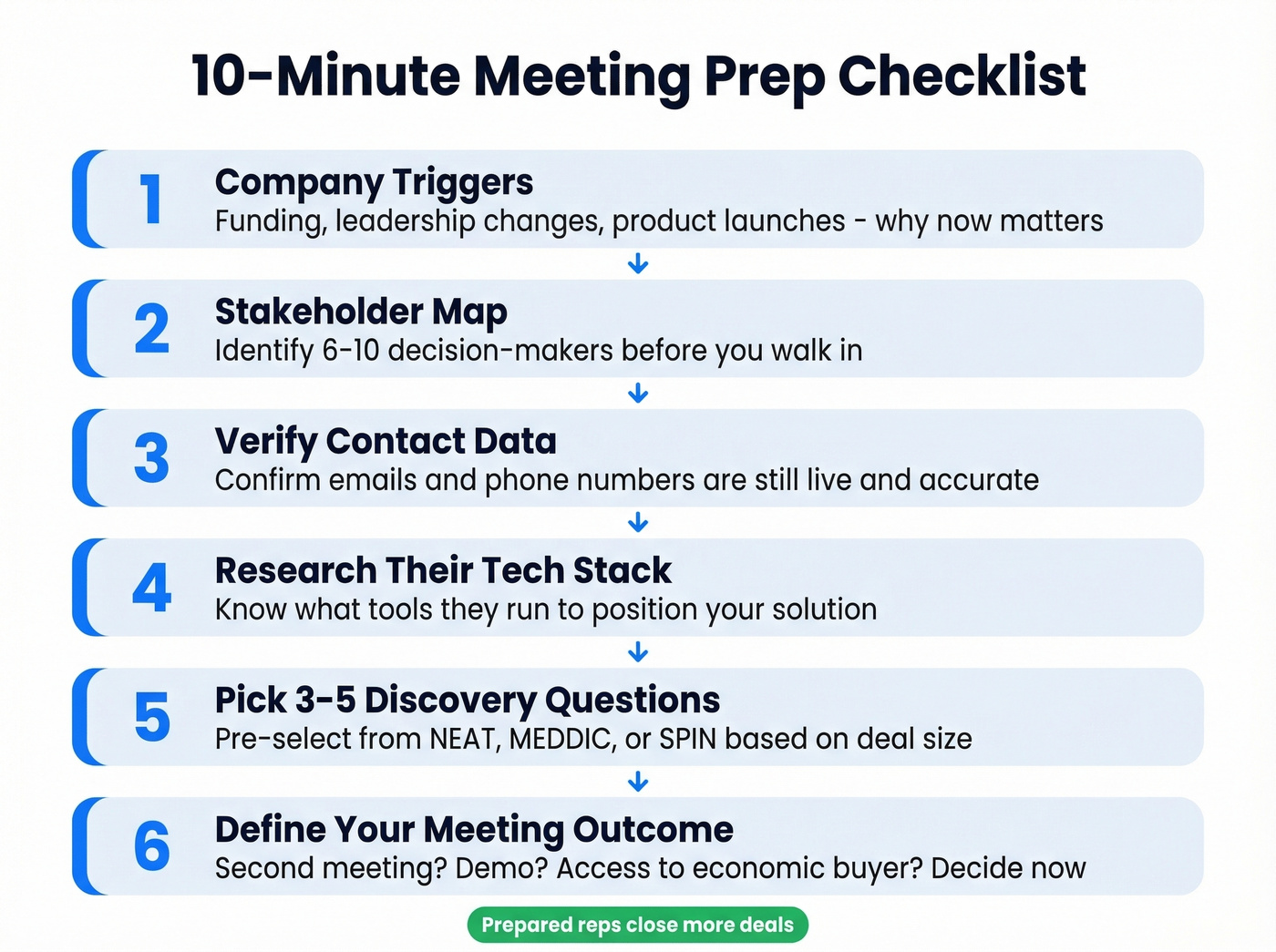
- Company triggers: Recent funding, leadership changes, earnings calls, product launches - anything that signals why now matters. (If you want a system, use sales triggers instead of random Googling.)
- Stakeholder map: B2B buying committees average 6-10 decision-makers. Know who else is involved before you walk in.
- Verified contact data: If the mobile number you pulled three months ago is disconnected, you're dead on arrival. We use Prospeo for this - it refreshes contact data every 7 days and hits 98% email accuracy, so the info you prepped with is still live when you need it. (More on data enrichment if you're building this into your stack.)
- Their tech stack: What tools are they running? It shapes how you position your solution. (This gets easier with firmographic and technographic data.)
- 3-5 discovery questions: Pre-selected from the framework section below.
- A clear meeting outcome: Second meeting? Demo? Access to the economic buyer? Decide before you dial.

The First 60 Seconds
The opening isn't about being clever. It's about earning permission to keep talking.
The Permission Opener is simple: "I know you weren't expecting my call - can I get 30 seconds to see if this conversation is worth your time?" It's honest, gives the prospect control, and makes it easy to say yes. If you want something even simpler, just ask "How are you?" - Gong data shows it increases cold-call success rates by 10%. Disarming precisely because it's human.
Two more options worth testing. The Transparency Opener: "For full transparency, this is a well-researched sales call. I've done my homework on [company]. Is now a bad time for a two-minute chat?" Names the elephant in the room and builds instant credibility. And The Micro-Yes Opener: "There are two ways companies typically work with us - [option A] and [option B]. Which one would you want to hear about first?" Gets an early "yes" and hands the prospect a choice.
Pick one. Practice it until it doesn't sound rehearsed. Then move into discovery.

You just read that blown meetings start with the 10 minutes of prep you skipped. Stale contact data is the silent killer - disconnected numbers, bounced emails, wasted openers. Prospeo refreshes every record every 7 days and delivers 98% email accuracy, so your meeting prep actually holds up when you walk in the room.
Stop opening meetings with dead data. Start with contacts that connect.
Discovery Questions That Separate Good Reps from Great Ones
Pick Your Framework
| Framework | Best For | Watch Out |
|---|---|---|
| BANT | Inbound triage, SMB | Too seller-centric for complex deals |
| MEDDIC | Enterprise, 6+ stakeholders | Overkill for SMB |
| CHAMP | Consultative mid-market | Requires genuine curiosity |
| NEAT | Modern B2B, informed buyers | Less known, fewer resources |
| SPIN | Complex solution selling | Situation questions feel lazy if the info is public |
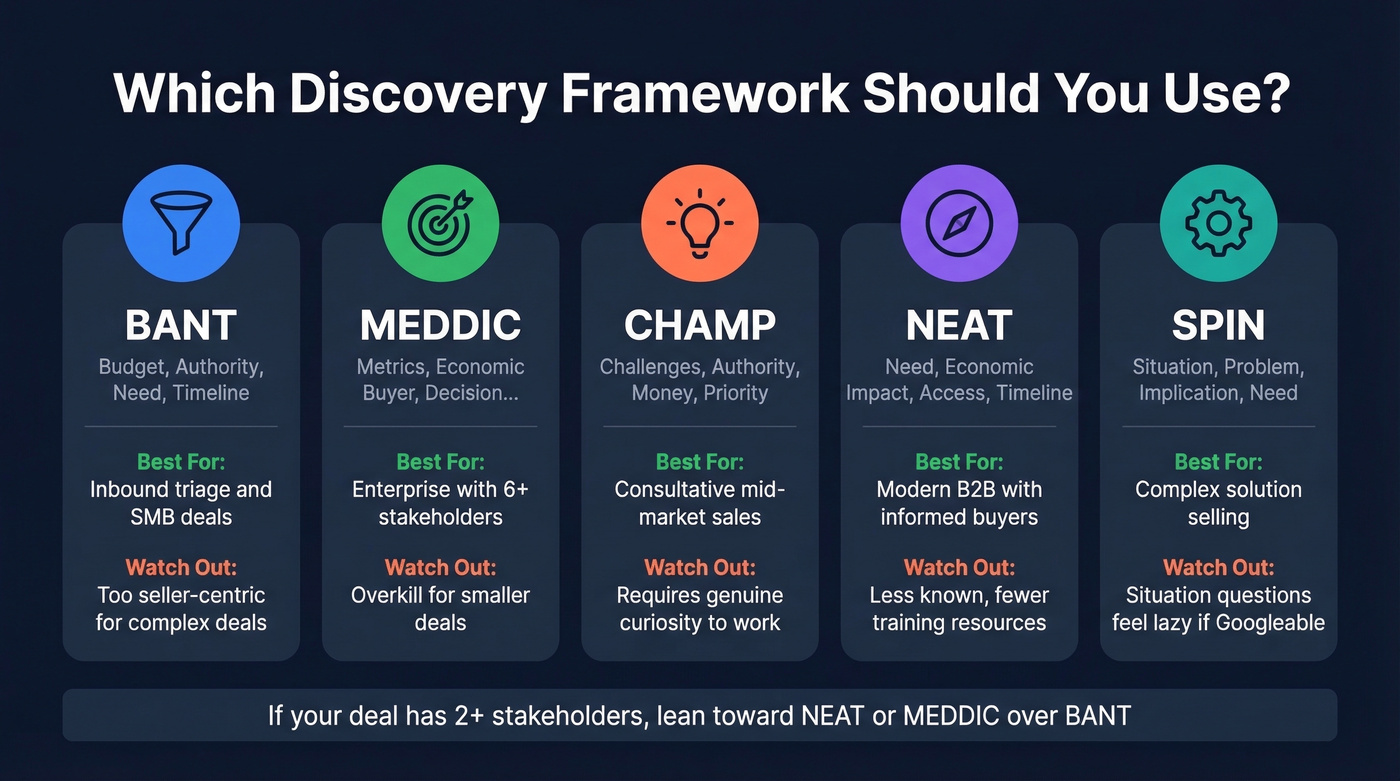
Let's be honest: a lot of legacy qualification frameworks were designed for an era when buyers had less information up front. Today, many prospects show up already educated, having read your case studies and compared your pricing page against two competitors before you even got on the call. If your average deal involves more than two stakeholders, NEAT or MEDDIC will serve you better. BANT still works for qualifying inbound leads quickly - just don't pretend it's a discovery framework.
Five Questions Worth Memorizing
You don't need 50 questions. You need five great ones and the discipline to shut up after asking them.
- "Walk me through how you're handling [problem area] today."
- "What's most important to you in a solution for this?"
- "Why is solving this important right now?"
- "Who else would need to weigh in before a decision gets made?"
- "What happens if you don't fix this in the next quarter?"
The consensus on r/sales is clear: the best discovery reps ask fewer questions and listen harder. Aim to talk less than 40% of the time. That ratio alone separates reps who close from reps who "had a great conversation" that goes nowhere.
The Pivot: Questions to Solution
Don't talk about your product until after rapport and discovery. When you've earned enough context, bridge naturally:
"You mentioned [specific pain point] - let me show you exactly how we solve that."
Or try: "I noticed you [downloaded our pricing overview / visited our integrations page]. Were you just exploring, or comparing it with something in your current setup?"
Presenting Value (Not Features)
Lead with outcomes tied to what they told you in discovery - not features. "You mentioned your team spends X hours on [task]. Our customers typically cut that by [percentage]." Reference their words back to them. It proves you listened and makes the solution feel custom, even if it's the same pitch you give everyone. (If you want a deeper framework, see how to add value in sales.)
Describing Your Company in Under 30 Seconds
When it's time for your company description, keep it tight. Two or three sentences max. Buyers don't want your origin story; they want to know why your company is relevant to the problem they just described. A strong company intro ties directly back to the pain you uncovered in discovery: "We help [type of company] solve [specific problem]. [X number] of teams like yours use us to [outcome]." That's it. Anything longer and you've lost the thread. (Need examples? Steal from these sample elevator pitches.)
What Kills Meetings Fast
In our experience, the meetings that die fastest share the same mistakes. Demoing 15 features before asking a single question. Arguing with objections instead of acknowledging and redirecting. Ending with the lazy "So, any questions?" instead of a specific next step. And - this one drives us crazy - asking situation questions you could've Googled, like "How many employees do you have?" when it's right there on their website.
Skip the research shortcuts. They cost you credibility you can't get back.
Closing the Meeting: Scripts for 3 Scenarios
35% of salespeople say closing is the hardest part of the process. But closing starts in discovery - if you've qualified well, the close just confirms what both sides already know. Deals closed within 50 days have a 47% win rate; after 50 days, it drops below 20%. Don't let a good meeting die without a next step. (If you want a full process, follow the steps to close a sale.)
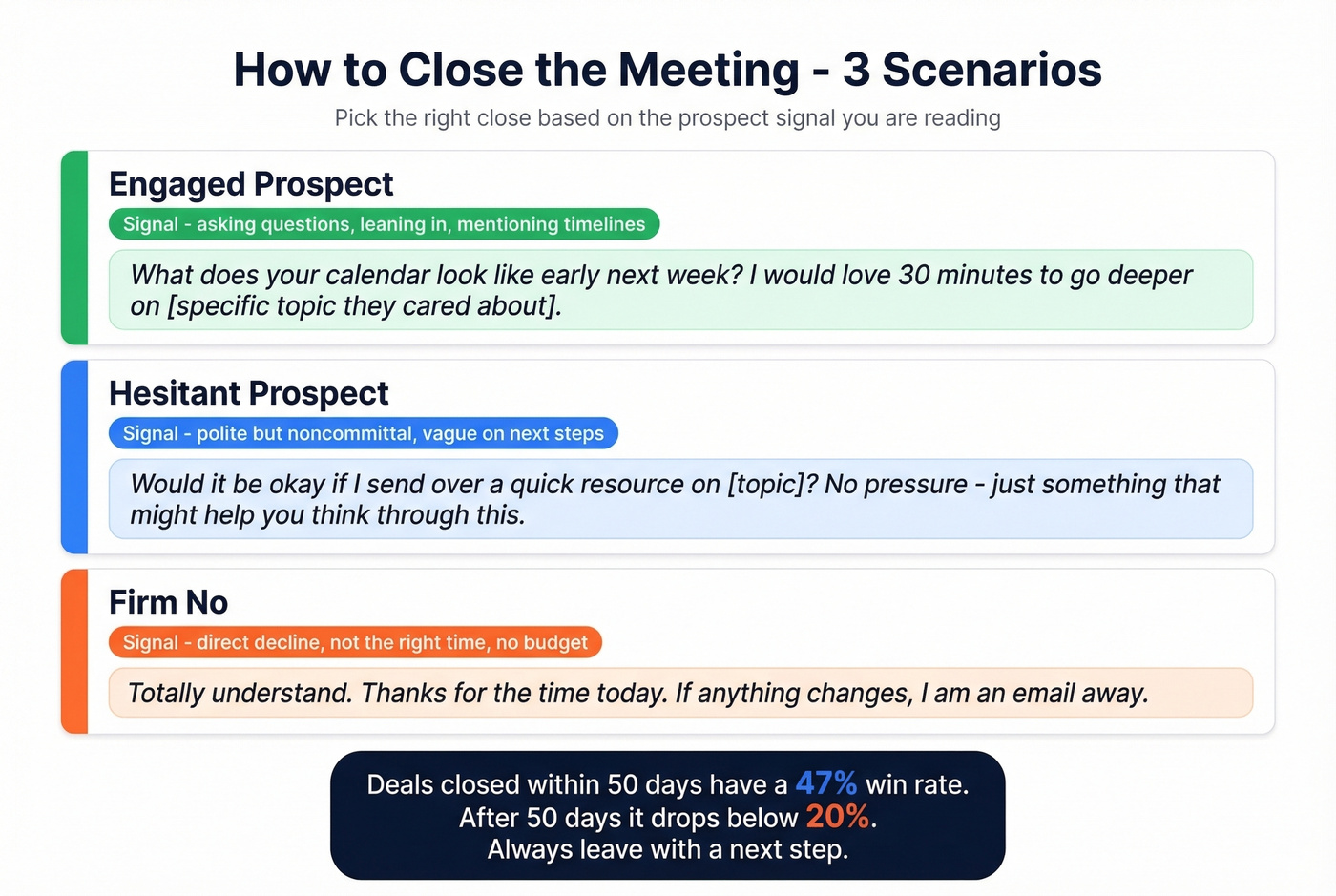
Engaged prospect: "What's your calendar look like early next week? I'd love 30 minutes to go deeper on [specific topic they cared about]."
Hesitant prospect: "Would it be okay if I send over a quick resource on [topic]? No pressure - just something that might help you think through this."
Firm no: "Totally understand. Thanks for the time today. If anything changes, I'm an email away." Don't burn the bridge. We've seen deals come back to life months later from a single well-timed follow-up.
Knowing what to say in a sales meeting matters - but only if you're sitting across from the right person with accurate contact information. Preparation and delivery work together. (To keep momentum after the call, use these sales follow-up templates.)
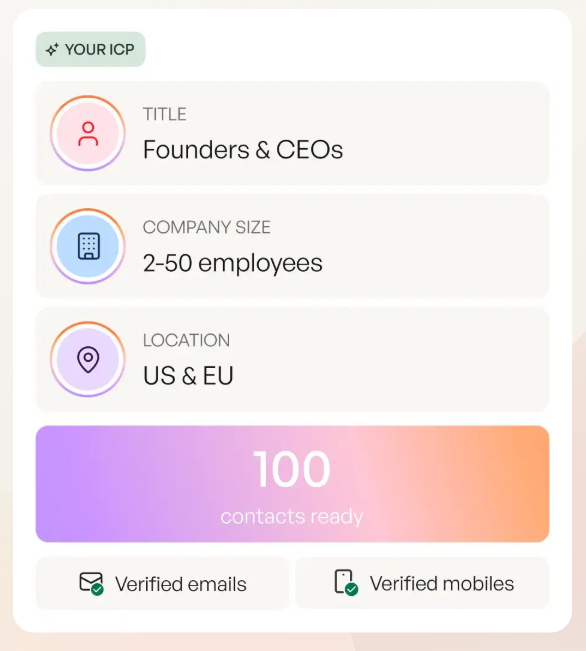
Great discovery questions don't matter if you never reach the buyer. B2B committees run 6-10 deep - you need verified emails and direct dials for every stakeholder. Prospeo gives you 300M+ profiles, 125M+ verified mobiles, and 30+ filters to map the full buying committee before your first call.
Map the entire buying committee in minutes, not days.
FAQ
How long should a first sales meeting be?
Aim for 25-30 minutes. First meetings should be discovery-heavy, not pitch-heavy. If you're talking more than 40% of the time, you're losing the prospect. Shorter meetings with clear next steps beat hour-long demos every time.
Should I use a script or wing it?
Neither. Use a talk track - a flexible conversation guide with key phrases memorized, not read verbatim. Structured calls convert 27% better than unstructured ones. The goal is sounding prepared, not rehearsed.
How do I prepare for a sales meeting in 10 minutes?
Verify the contact's email and phone are still valid, review recent company news or triggers, and pick 3-5 discovery questions from a framework that fits your deal size. That's enough to walk in confident and relevant.
What's the biggest mistake reps make in sales meetings?
Pitching before discovering. Reps who demo 15 features before asking a single question lose the room fast. Lead with curiosity - ask about the prospect's pain, timeline, and decision process - then tie your solution directly to what they told you.