

10 Steps to a Sales Call That Actually Closes
It's 4:15 PM on a Tuesday. You've got one call left, you're underprepared, and you wing it. That call goes nowhere - and you know it the second you hang up.
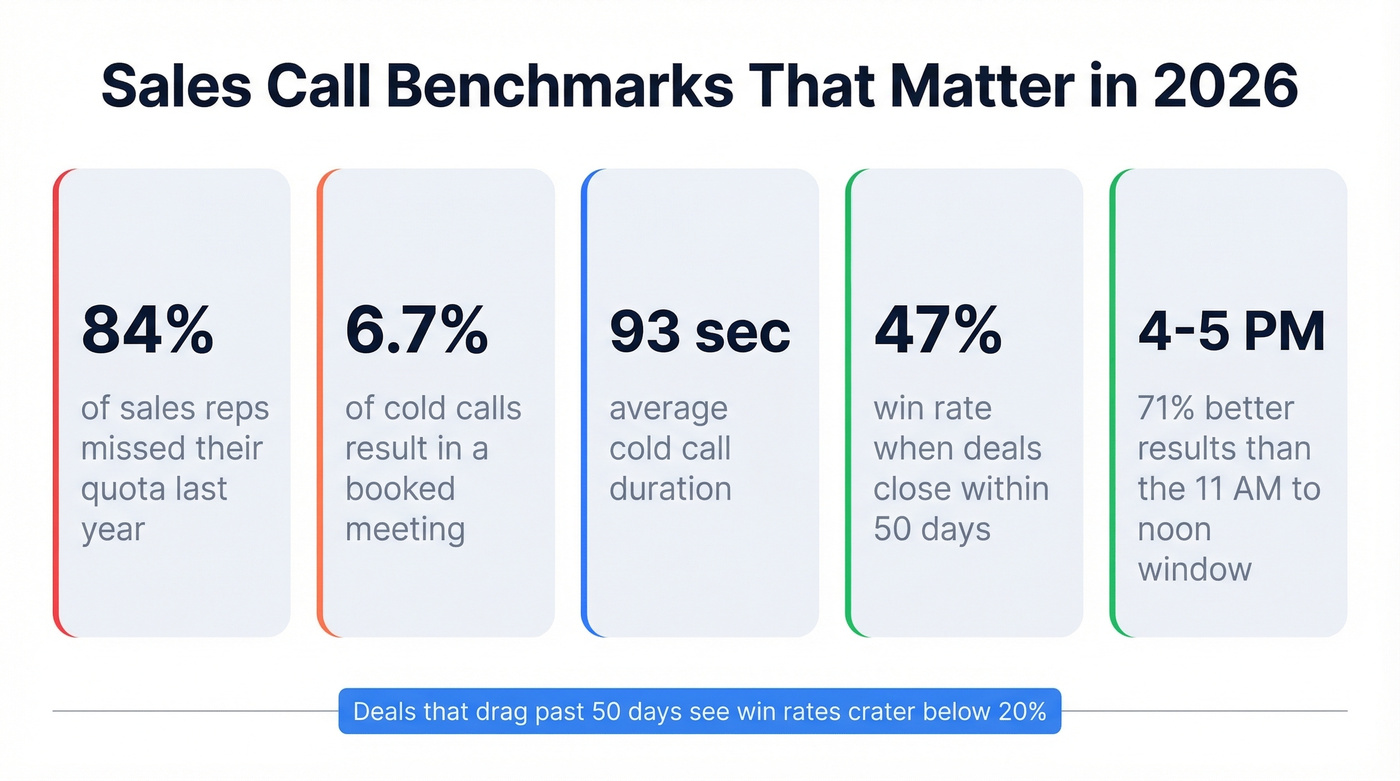
84% of sales reps missed their quota last year. The benchmark for cold calls that actually result in a booked meeting sits at a brutal 6.7%. Only 32% of reps say they've received excellent sales training, which means the other 68% are stitching together a process from YouTube videos and whatever their manager mentioned in a 1:1 six months ago. The reps who beat those numbers aren't more talented. They follow a repeatable process. Here are the 10 steps that separate a call that closes from one that wastes everyone's afternoon.
The Quick Version
- Research the prospect and verify your contact data before you dial.
- Open with something specific - never "just following up."
- Listen 70% of the call. Ask SPIN questions. Let the prospect talk themselves into the problem.
- Lock a concrete next step before you hang up. Deals closing within 50 days win at 47%; after that, win rates crater below 20%.
- Send a specific follow-up within 2 hours so your recap stays sharp.

Step 2 of your sales call process - verifying contact data - determines whether the other 9 steps even matter. Prospeo gives you 98% email accuracy and 125M+ verified mobile numbers with a 30% pickup rate, refreshed every 7 days. Start with 75 free emails per month.
Stop winging calls to dead numbers. Verify before you dial.
The 10 Steps to a Sales Call
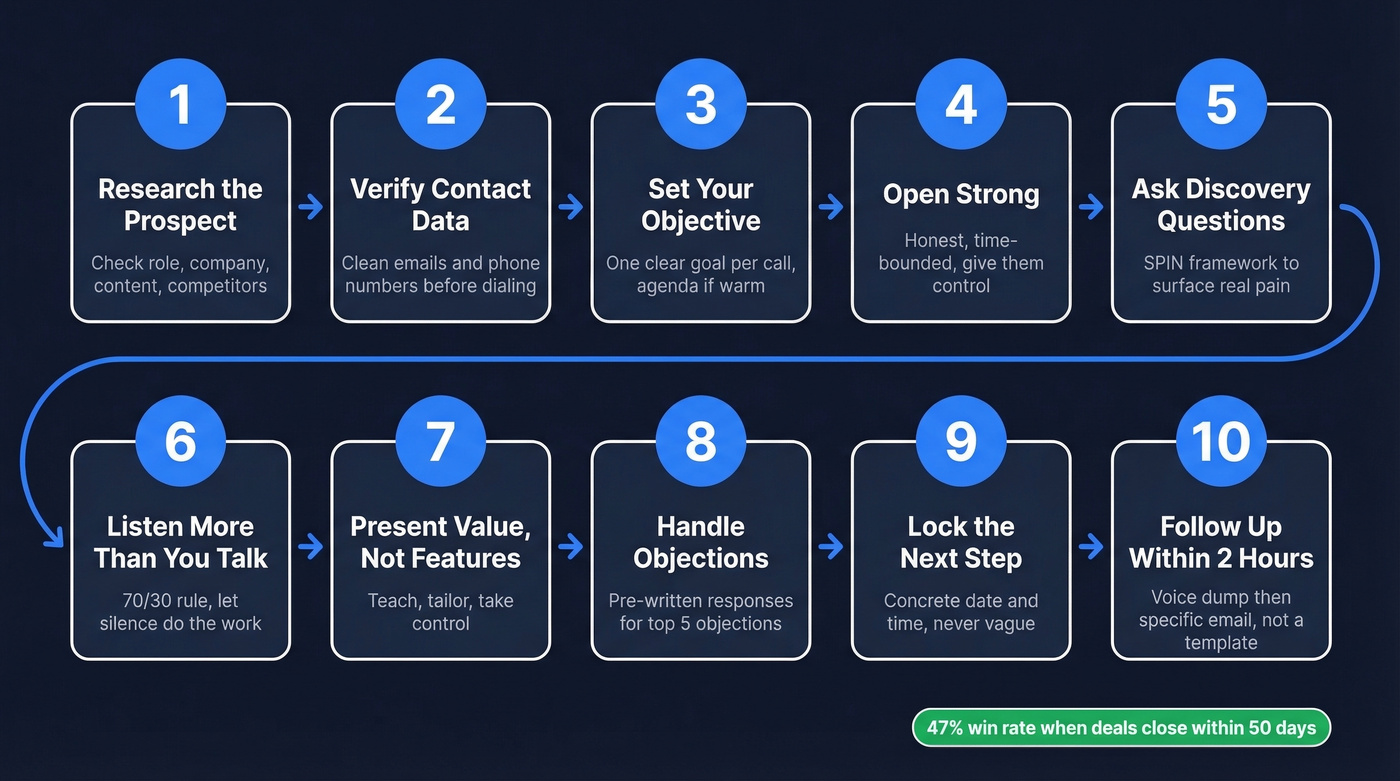
Step 1: Research the Prospect
Before every call, check the prospect's tenure in their current role, who their company sells to, any recent content they've published, and what competitors might already be in the deal. We've watched reps double their first-call-to-second-call conversion just by spending five minutes on this. The difference-maker is never a better script. It's better prep.
If you want a repeatable way to do this, start with an ideal customer profile and work backward into what you need to learn before the call.
Step 2: Verify Your Contact Data
None of that research matters if you're dialing a dead number or emailing a bounce. Run your list through a verification tool like Prospeo before your call block - 98% email accuracy and 125M+ verified mobile numbers with a 30% pickup rate. The free tier gives you 75 emails per month, enough to clean a week of targeted outreach without paying a dime.
If you're seeing bounces, fix the root cause (not just the list) by tightening your email deliverability basics.

Step 3: Set Your Objective and Agenda
Every call needs one clear objective - qualifying, booking a demo, or reaching the economic buyer. Decide before you dial.
For warm calls and scheduled discovery sessions, send a brief agenda ahead of time so decision-makers can review and show up ready to talk substance. Cold calls don't get this luxury, obviously, but you still need that internal objective locked in your head before you hit the number.
If you're not sure what "qualified" should mean, use a simple lead scoring model so your objective is consistent across reps.
Step 4: Open Strong
The average cold call lasts 93 seconds. You don't have time for a slow warmup. Try this: "Hi [Name], I know I'm catching you cold - can I borrow three minutes? If it's not relevant, I won't call again." It works because it's honest, time-bounded, and gives the prospect control.
What NOT to say: "Just following up," "Is this a good time?", "I'm just reaching out to...," or "Is this [Name]?" You should already know who you're calling.
If you want more openers that don't sound like a script, steal a few talk tracks and adapt them to your market.
Step 5: Ask Discovery Questions
Discovery is where you earn the right to present anything. The best calls follow the SPIN framework - built from [35,000+ analyzed sales calls](https://www.huthwaiteinternational.com/blog/origins-of-spin-selling):
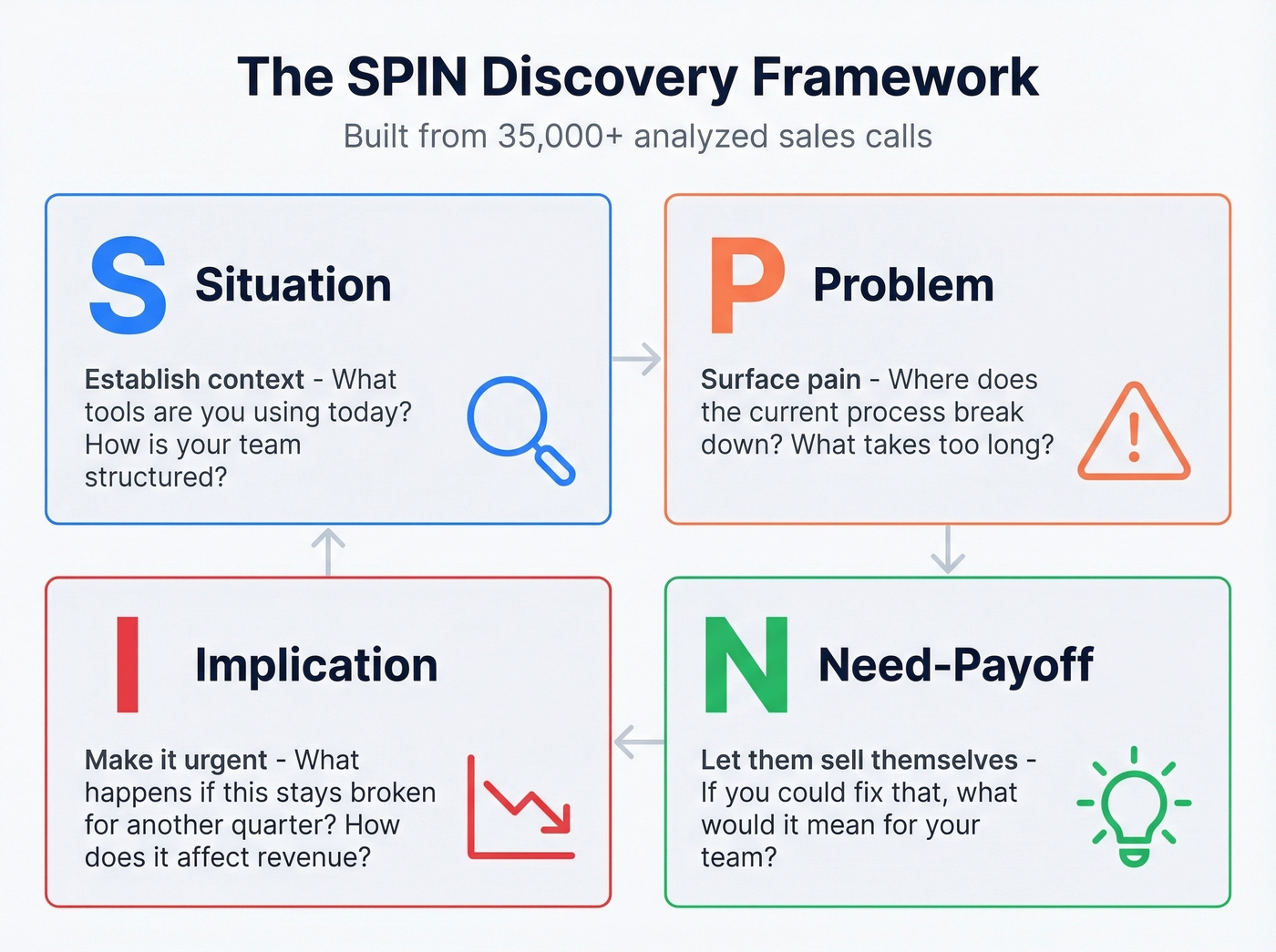
- Situation questions establish context.
- Problem questions surface pain.
- Implication questions make it urgent.
- Need-Payoff questions let the prospect articulate the value of solving it themselves.
For enterprise deals, [layer in MEDDIC] to map the decision process and find your champion. But don't try to run both frameworks simultaneously on a first call - pick the one that matches the deal complexity and commit.
If you need a deeper bank of prompts, keep a short list of discovery questions next to your call notes.
Step 6: Listen More Than You Talk
Here's the thing: if you're talking more than 30% of the call, you're not selling - you're performing. The 70/30 rule exists because the best discovery happens when you shut up. Pause after questions. Let silence do the work. In our experience, the reps who struggle most with this are the ones who know the product best - they can't resist jumping in with a feature explanation the moment they hear a keyword. Resist.
If your team struggles with this consistently, it's usually a sales training problem, not a personality problem.
Step 7: Present Value, Not Features
Lead with the problem you've uncovered, not the product you're selling. [The Challenger Sale framework] - built from research on 6,000+ reps - calls this Teach, Tailor, Take Control. Teach them something new about their own problem, tailor it to their situation, then take control of the next step.
And mirror their language. If they said "pipeline visibility," don't respond with "AI-powered revenue intelligence platform." That disconnect kills trust faster than a bad demo.
If you want a simple way to pressure-test your messaging, build a one-page set of sales battle cards for the most common problems you hear.
Step 8: Handle Objections
Objections aren't rejections - they're uncertainty about value. Pre-write your top 5 responses and keep them visible during calls.
| Type | Objection | Rebuttal |
|---|---|---|
| Budget | "Too expensive" | "What's the cost of not solving this?" |
| Authority | "Need to check with my boss" | "What would help them say yes?" |
| Need | "Using a competitor" | "What's working? What isn't?" |
| Timing | "I'm busy right now" | "Two minutes - I'll stop if it's not relevant." |
There's a real distinction between obstructions ("I'm busy") and genuine objections ("we're locked into a contract through Q3"). Treat the first as a timing problem and the second as a value conversation. Confusing the two wastes everyone's time.
If objections are showing up too early, you may need to reduce your sales objection rate by tightening qualification and positioning.
Step 9: Lock the Next Step
Deals that close within 50 days hit a 47% win rate. Every call that ends with "let's circle back next week" is a deal bleeding momentum. Offer concrete options: "Does Wednesday at 2 PM or Friday morning work?"
Vague endings are where deals go to die.
If you want a broader framework beyond this call, map your process to clear steps to close a sale.
Step 10: Follow Up Within 2 Hours
The moment you hang up, do a 90-second voice dump into your phone. Capture the prospect's concerns, timeline, budget range, and decision-maker name. Then write a specific follow-up email within two hours. If you wait four hours, you'll forget half the details and your follow-up will read like a template.
One practitioner in an r/sales thread called this the single highest-ROI habit they'd built - and we agree. The CRM can wait; batch your updates at end of day. The follow-up email can't wait.
If you want plug-and-play language, keep a few sales follow-up templates ready so you can personalize fast.
Mistakes That Kill Sales Calls
We've seen the same five mistakes sink calls over and over:
- Pitching to the wrong stakeholder. If they can't sign or influence the deal, you're practicing, not selling.
- Failing to qualify early. Ask whether budget, authority, and timeline exist before you invest 30 minutes in a demo walkthrough.
- Talking more than 30%. If you're monologuing, you've lost them.
- Not preparing for objections. The same five come up on 80% of calls. Write your responses in advance and drill them until they sound natural.
- Sending generic follow-ups. Waiting too long turns a warm conversation into a cold template - and it's where reps leave the most money on the table.
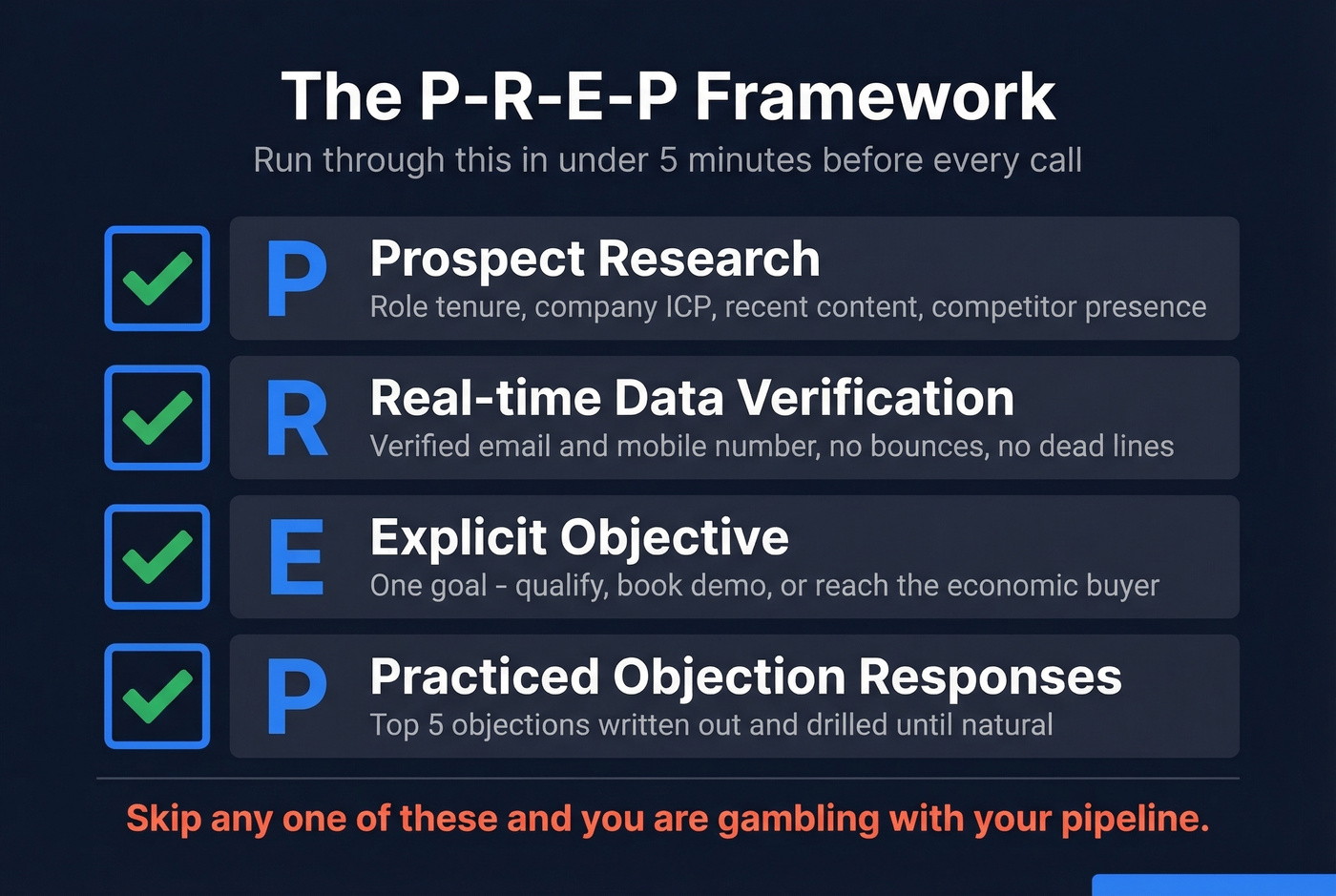
Let's make this simple. Before every call, run through what we call the P-R-E-P framework: Prospect research, Real-time data verification, Explicit objective, Practiced objection responses. If you can check all four boxes in under five minutes, you're ready to dial. Skip any one of them and you're gambling with your pipeline.
Deals that close within 50 days win at 47%. Every bounced email and wrong number bleeds momentum from that clock. Prospeo's verified data at $0.01 per email means your follow-up from Step 10 actually lands - and your next call connects to a real decision-maker.
Lock the next step faster when every contact is verified.
FAQ
How long should a sales call last?
Discovery calls typically run 15-30 minutes - long enough to qualify and uncover pain, short enough to respect everyone's calendar. Cold calls average 93 seconds, so the goal there is earning a longer conversation, not cramming your pitch into one. Duration matters less than locking a concrete next step before you hang up.
What's the best time to make sales calls?
Calling between 4-5 PM yields 71% better results than the 11 a.m. to noon window. That said, track your own connect rates by time slot and adjust. Your prospects' habits matter more than industry averages.
How do I verify contact data before calling?
Run your list through a bulk verification tool before each call block, not during it. Prospeo's free tier lets you verify 75 emails per month, and its mobile finder covers 125M+ numbers globally - enough to keep a weekly outreach cadence clean without signing an enterprise contract.